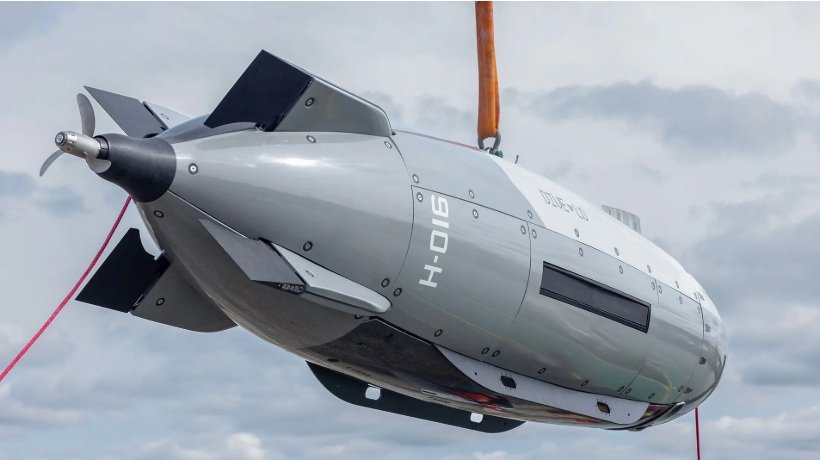
Iran says its Revolutionary Guards captured a US-made autonomous underwater drone near the Strait of Hormuz. Washington acknowledges losing the vehicle but says it was an older model that had malfunctioned more than a day earlier and carried no classified sonar, radar or sensitive data.
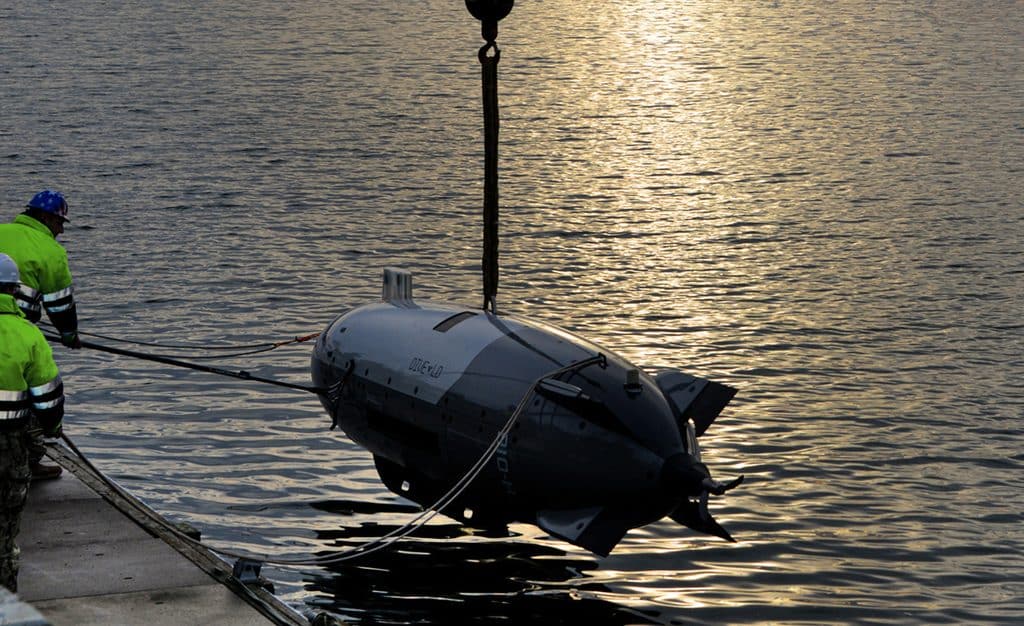
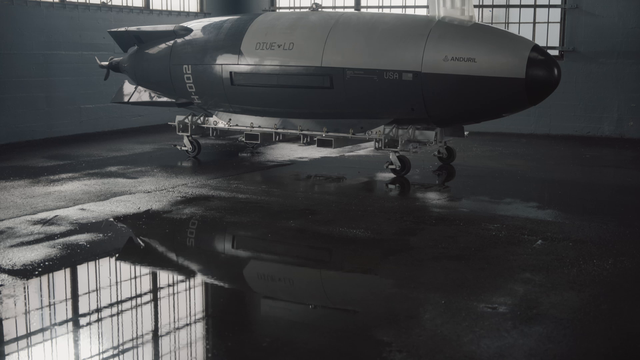
Iran’s Islamic Revolutionary Guard Corps (IRGC) said Tuesday that its naval forces seized an American autonomous underwater vehicle near the entrance to the Strait of Hormuz, identifying it as an Anduril Dive-LD.
Iranian state media released images of the recovered vehicle and described the operation as a major intelligence and military success.
The first visuals have been released of the American Dive-LD unmanned submarine, seized by Iran’s Islamic Revolution Guards Corps (IRGC) early on Tuesday. pic.twitter.com/ump8zQZt7c
— IRNA News Agency ☫ (@IrnaEnglish) September 8, 2026
The United States has acknowledged that one of its underwater drones was lost but disputes Tehran’s description of the incident as the capture of an operational, highly sensitive military system. US Central Command said the vehicle had been malfunctioning for more than a day while surveying regional waters in support of ongoing operations.
The circumstances of the recovery have not been independently verified. What is confirmed is that an American-made Dive-LD is now in Iranian possession, giving Tehran an opportunity to examine a US-built autonomous undersea platform.
What Is the Anduril Dive-LD?
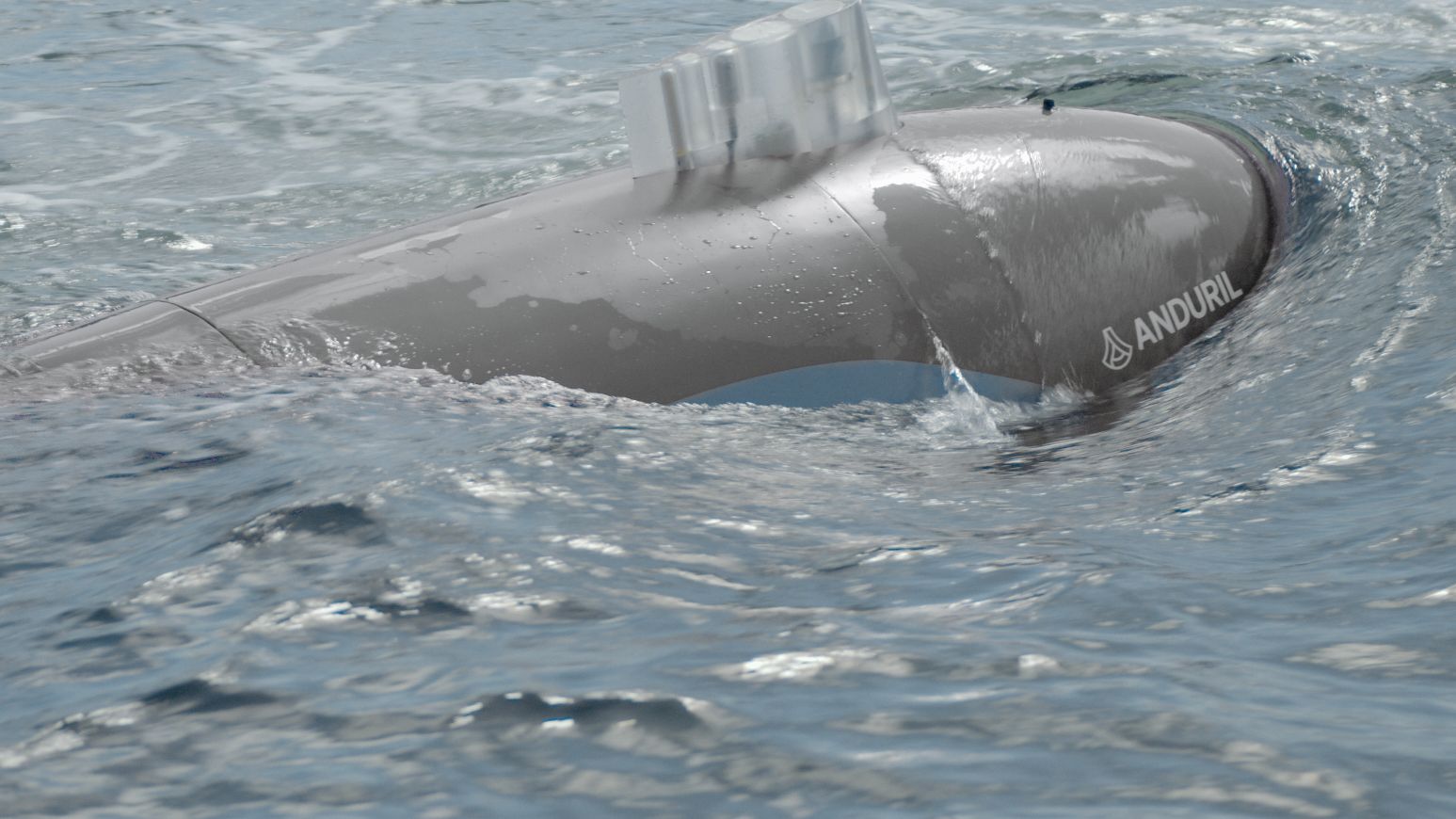
The Dive-LD is a large-diameter autonomous underwater vehicle developed by California-based defence technology company Anduril.
Unlike a conventional submarine, it operates without a crew and is designed for long-duration missions in environments where sending manned platforms would be risky.
Anduril lists the vehicle at approximately 5.8 metres (19 feet) long and 1.2 metres (4 feet) in diameter, with a maximum operating depth of 6,000 metres and endurance of up to 10 days. The company says its open software, mechanical and electrical interfaces allow different sensors and payloads to be rapidly integrated.
The platform can support missions including:
- Intelligence, surveillance and reconnaissance;
- Seabed mapping;
- Mine warfare;
- Hydrographic surveying;
- Pipeline and cable inspection; and
- Other specialised undersea missions.
Its modular design means the vehicle itself does not necessarily indicate what mission it was performing or what sensors it carried when it was lost.

Iran’s Claim vs. the Pentagon’s Account
The two sides have presented sharply different versions of the incident.
Iran says the IRGC deliberately captured one of the most advanced unmanned underwater systems operated by the US military during a complex intelligence and operational mission.
Washington says the vehicle was an older, defective model that had been effectively disabled for more than a day.
The US military also says it did not carry classified sonar or radar equipment and was not collecting sensitive information. Anduril has confirmed the loss and described Dive-LD as an “attritable autonomous system” designed to operate in dangerous environments where losing the vehicle is an accepted possibility.
That distinction matters.
Iran’s account presents the event as a successful intelligence operation against an advanced American system. The US account portrays it as the loss of an older unmanned platform whose compromise carries limited intelligence consequences.
Neither side has publicly provided enough evidence to independently resolve all aspects of the incident.
Why the Dive-LD Is Important
The strategic value of an autonomous underwater vehicle is different from that of a conventional aerial drone.
An AUV must navigate in an environment where GPS does not work normally underwater and radio communications are severely limited. It therefore depends on autonomous navigation, onboard sensors and other methods of determining its position and surroundings.
That makes the software, navigation architecture, sensors and power-management systems important elements of the platform.
For Iran, an intact vehicle could therefore provide an opportunity to study how the United States approaches autonomous undersea operations.
That does not mean Tehran could simply reproduce the Dive-LD.
Reverse engineering a complex AUV requires expertise in advanced materials, propulsion, batteries, sensors, software, autonomy and precision manufacturing. Examining a finished vehicle can reveal engineering choices, but it does not automatically provide the industrial capability required to reproduce them.
Could Iran Recover Useful Data?
Potentially, but the extent remains unknown.
If onboard computers or storage systems remained accessible, Iranian engineers could theoretically examine aspects of the vehicle’s navigation, mission-management and sensor architecture.
The vehicle could also contain mission data gathered before it malfunctioned, depending on what equipment it carried and how its systems were configured.
That could potentially include environmental or seabed information.
But there is no public evidence that Iran has recovered classified US data from the vehicle, and the Pentagon specifically says the particular Dive-LD did not carry sensitive data or classified sonar or radar equipment.
Claims that Iran has therefore obtained major US military secrets should be treated cautiously unless further evidence emerges.
Why the Strait of Hormuz Matters
The location of the incident gives the episode additional significance.
The Strait of Hormuz is one of the world’s most strategically important maritime chokepoints, linking the Persian Gulf with the Gulf of Oman and the wider Arabian Sea.
The waterway has become a major arena of confrontation between Iran and the United States, with military forces, commercial shipping and surveillance assets operating in an increasingly contested environment.
Underwater systems add another dimension to that competition.
AUVs can map seabeds, inspect infrastructure, monitor maritime environments and conduct other missions without exposing a crewed vessel to the same risks.
For Iran, the presence of a US autonomous underwater vehicle near Hormuz also highlights the extent to which Washington is using unmanned systems to maintain surveillance and operational awareness in the region.
The Bigger US Push Into Undersea Autonomy
The loss of the Dive-LD comes as the US military expands its use of autonomous maritime systems.
Anduril’s own undersea portfolio includes the larger Dive-XL, while the company describes its broader approach as a family of autonomous systems designed to work across deep-water and littoral environments.
The attraction for the US military is clear: unmanned systems can conduct dangerous missions without placing sailors aboard the vehicle.
They can also provide additional surveillance and sensing capacity alongside conventional submarines and surface ships.
But the Dive-LD incident exposes the other side of that equation.
A vehicle designed to operate without a crew can be lost without warning, malfunction in contested waters and potentially fall into the hands of an adversary.
That makes cybersecurity, data protection and anti-tamper measures increasingly important parts of autonomous military technology.
Iran’s Own Interest in Unmanned Maritime Warfare
Iran is also developing and deploying unmanned maritime systems, making the recovery of an American AUV particularly relevant to Tehran.
Iran has invested heavily in drones across multiple domains, including maritime systems, and has sought ways to expand surveillance and strike capabilities without relying exclusively on conventional crewed platforms.
Studying a foreign AUV could therefore provide useful comparative information for Iranian engineers, even if it does not allow them to reproduce the American platform.
The incident is consequently not just about one lost vehicle. It reflects a wider technological competition over who can operate most effectively beneath the surface.
A New Dimension of Drone Warfare
The Dive-LD episode shows how the drone revolution is moving beyond the skies.
Military powers are increasingly developing autonomous systems for:
- Underwater surveillance;
- Mine detection and clearance;
- Seabed mapping;
- Infrastructure monitoring;
- Maritime reconnaissance; and
- Other missions traditionally performed by crewed platforms.
The underwater environment makes autonomy particularly challenging, but it also makes unmanned systems attractive because of the risks involved in sending human crews into contested waters.
As these platforms become more capable, their presence is likely to increase around strategic chokepoints, naval bases, undersea cables and other sensitive maritime infrastructure.
What the Incident Really Means
Iran’s capture of the Dive-LD is significant, but the available evidence does not support the more dramatic interpretation that Tehran has necessarily obtained America’s most sensitive undersea technology.
The US says the vehicle was older, malfunctioning and lacked classified mission equipment. Anduril has also emphasized that Dive-LD is an attritable platform designed for dangerous operations where vehicle loss is possible.
At the same time, losing an intact autonomous vehicle in contested waters is not insignificant.
Iran now has physical access to a US-built AUV whose design, components and potentially onboard systems can be examined.
The episode therefore illustrates both sides of autonomous warfare: unmanned systems can keep personnel out of danger, but when they fail, they can themselves become intelligence targets.
More importantly, the incident points to a growing contest beneath the surface of the world’s most strategically important waterways.
The next phase of naval warfare will not be fought only by submarines and warships. Increasingly, autonomous machines will map the seabed, monitor maritime traffic, inspect infrastructure and gather intelligence—often without a human crew ever setting foot aboard.
In the Strait of Hormuz, that future is already taking shape.