


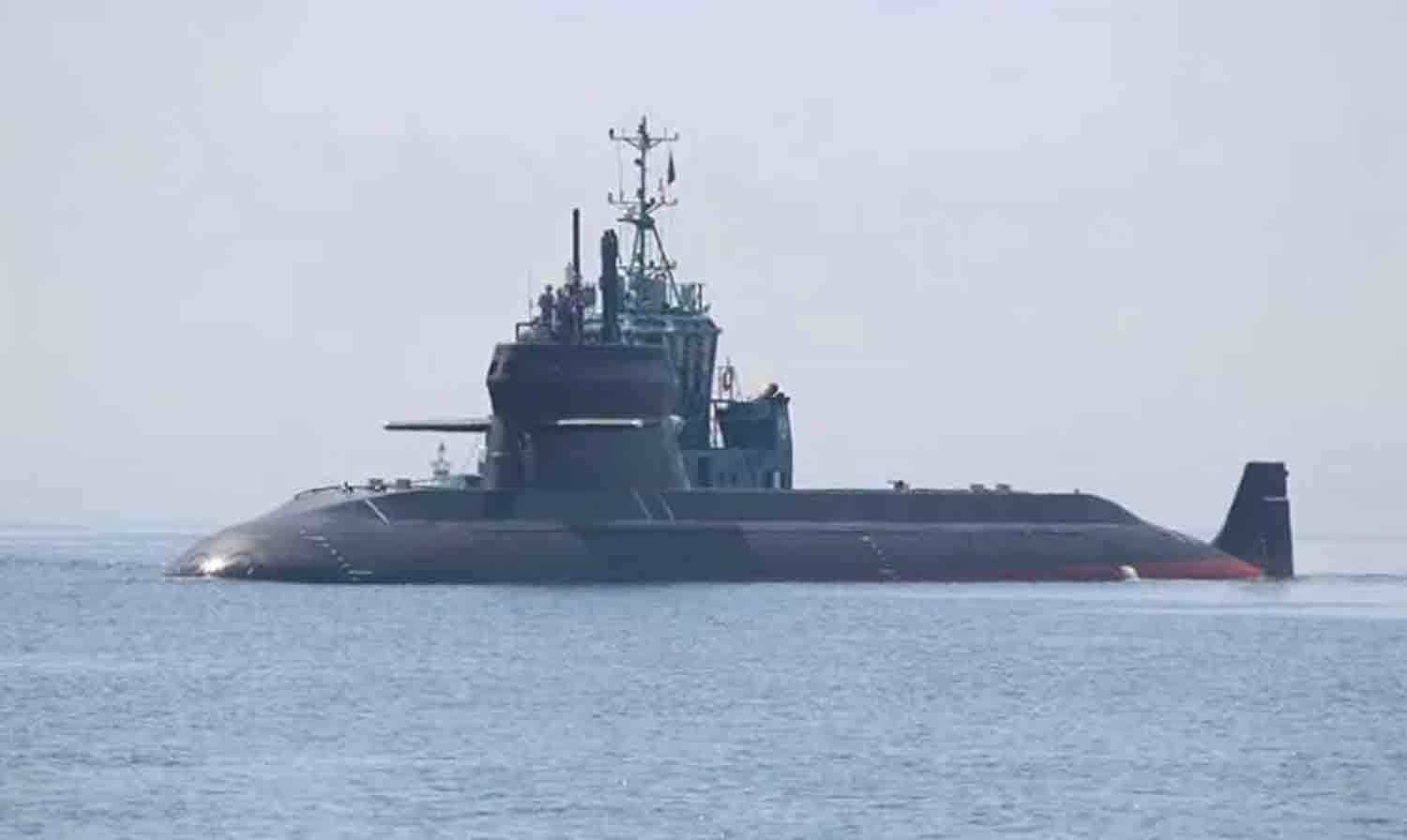
Pakistan’s expanding Hangor-class submarine fleet is emerging as a significant challenge for the Indian Navy, according to retired Indian Vice Admiral Sanjay Mahindru, former Deputy Chief of Naval Staff and the first commanding officer of India’s nuclear-powered submarine INS Arihant.
Mahindru has described Pakistan’s planned fleet of eight Hangor-class submarines as a “massive headache” for the Indian Navy, arguing that the challenge will not simply be about the number of submarines India possesses.
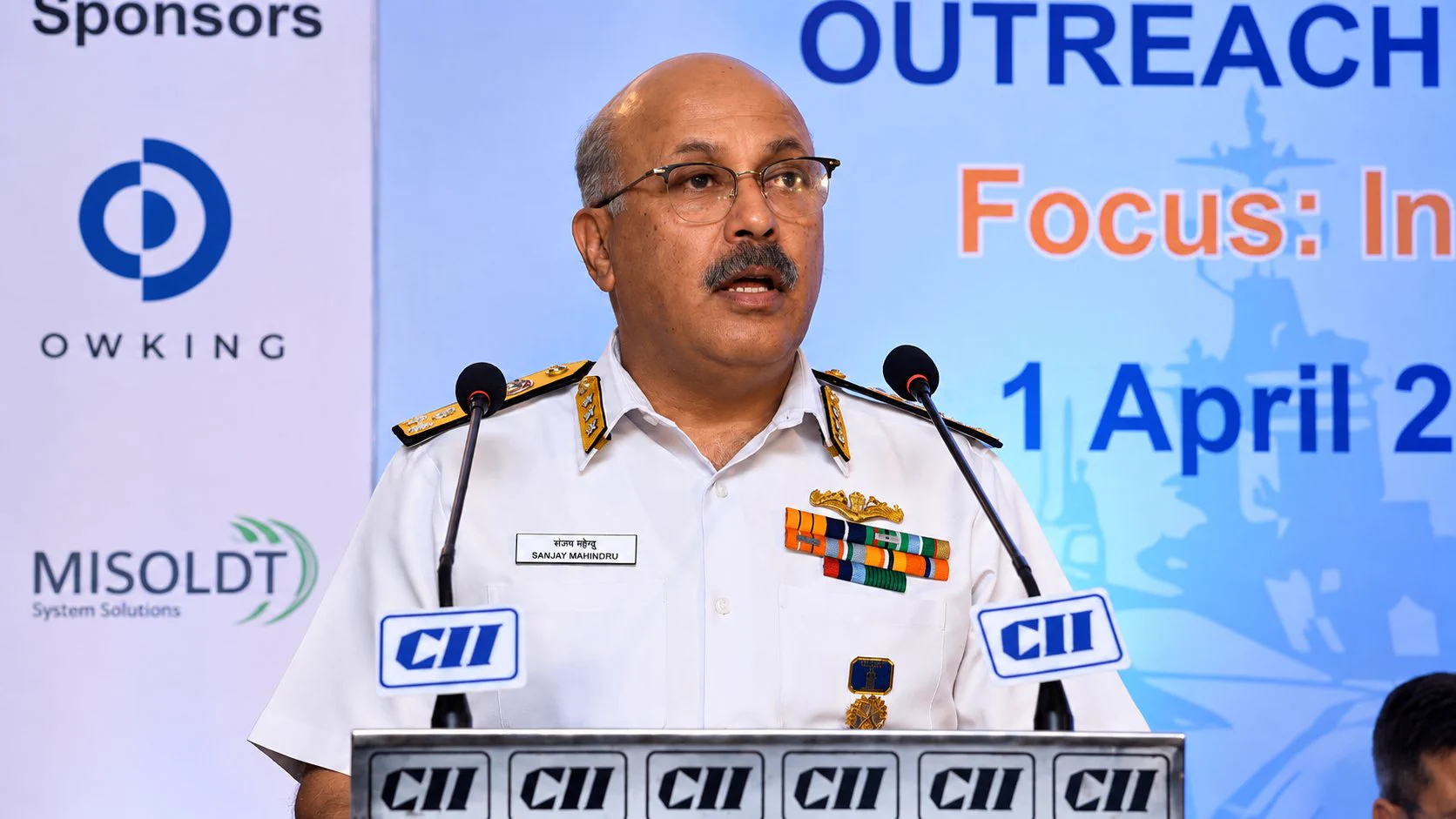
The larger issue, he suggested, is the ability to detect, identify and continuously track multiple concealed submarines operating across India’s maritime approaches.
His assessment highlights an important feature of modern naval warfare: a submarine does not need to defeat an opposing fleet in a conventional engagement to impose a strategic cost.
It can influence an adversary simply by remaining difficult to find.
For India, that means additional demands on maritime patrol aircraft, anti-submarine helicopters, surface combatants, sonar systems, underwater sensors and command networks.
Mahindru said eight Pakistani submarines could potentially allow four or five boats to be at sea simultaneously, creating multiple concealed threats against warships, naval bases, sea lanes and maritime infrastructure.
That does not mean Pakistan would achieve overall naval superiority.
India continues to possess a considerably larger maritime force, including a substantial surface fleet, maritime aviation, surveillance infrastructure and nuclear-powered submarines.
The significance of the Hangor programme is different: it can increase the operational price India must pay to operate confidently in waters where Pakistani submarines may be present.
Why Pakistan’s Hangor programme matters
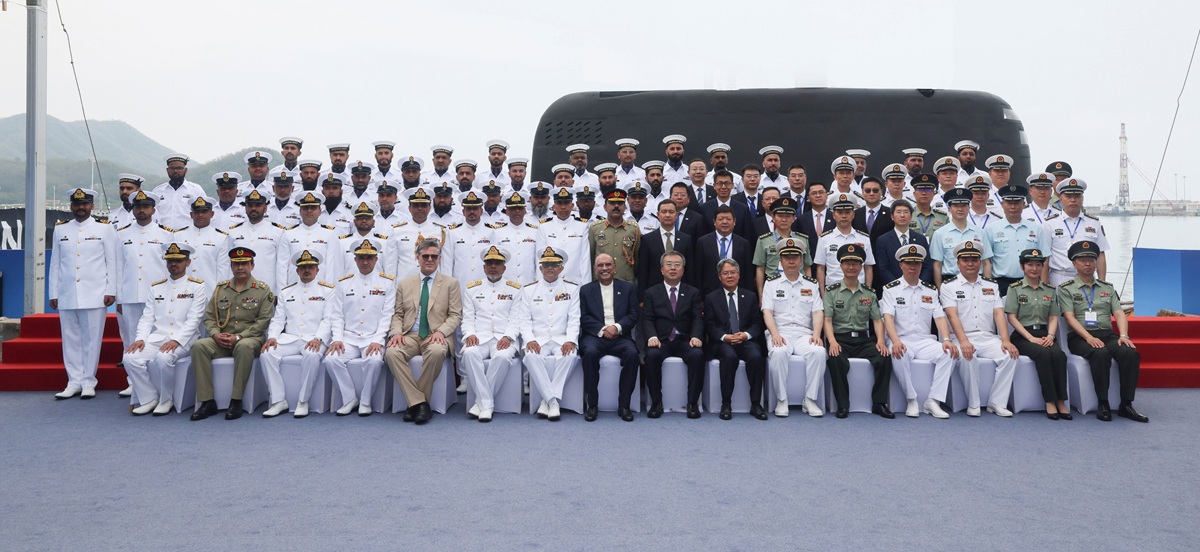
Pakistan ordered eight Hangor-class submarines from China under a programme estimated at roughly $4 billion to $5 billion.
Four are being constructed in China and four in Pakistan, making the programme one of the most important elements of Pakistan Navy’s current modernisation effort.
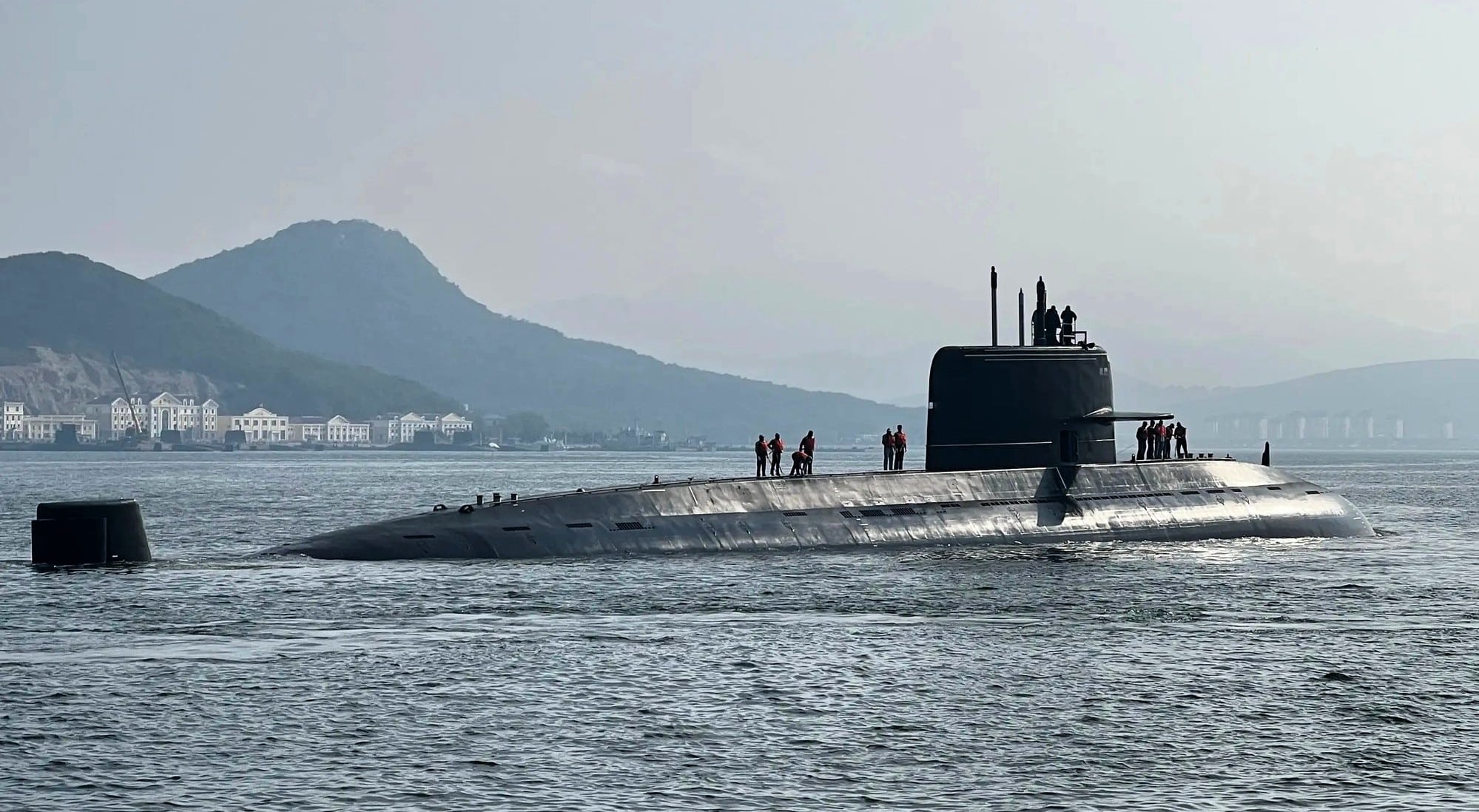
The first submarine, PNS/M Hangor, was commissioned at Sanya, China, on April 30, 2026. It subsequently arrived in Karachi in June, where the Pakistan Navy highlighted its advanced combat systems, sensors, air-independent propulsion and enhanced stealth features.
The eight-boat programme is based on China’s S26 export design, derived from the Type 039A/B Yuan family.
The significance of the programme extends beyond the acquisition of individual platforms. Four boats are being built domestically, providing Pakistan with experience in the construction and support of modern conventional submarines.
For Islamabad, the objective is not to match India’s fleet ship-for-ship.
It is to strengthen sea denial and make hostile naval operations against Pakistan more difficult and expensive.
AIP gives the Hangor greater underwater endurance
One of the most important features of the Hangor-class is air-independent propulsion, or AIP.
Conventional diesel-electric submarines periodically need to recharge their batteries using their diesel engines, which requires access to atmospheric air through snorkelling.
AIP allows a submarine to generate power while remaining submerged for much longer periods without relying on that regular exposure.
The Hangor’s Stirling-cycle AIP system is designed to reduce the need for frequent snorkelling and consequently increase underwater endurance.
That does not make the submarine invisible.
Every submarine produces acoustic signatures, and its detectability depends on machinery, speed, oceanographic conditions, crew discipline and tactical behaviour.
But greater submerged endurance gives a submarine more opportunities to remain concealed, reposition and wait for favourable conditions.
For an anti-submarine warfare force, that increases the size of the search problem.
The real Indian challenge is finding the submarines
Mahindru’s most important observation was that submarine warfare is not simply a contest between submarines.
His warning focuses on underwater domain awareness.
If Pakistan eventually has several Hangor boats available for patrols at the same time, India will have to maintain surveillance across a wide maritime area.
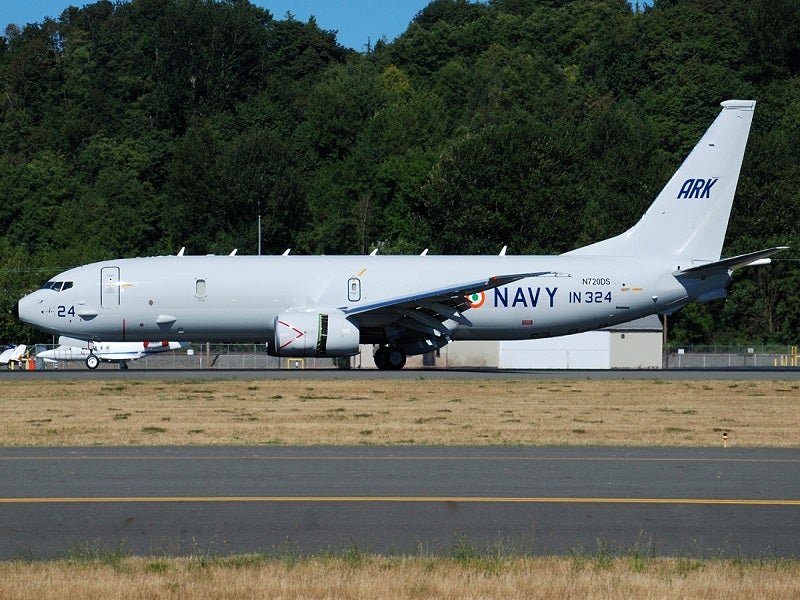
Its anti-submarine warfare architecture includes P-8I maritime patrol aircraft, MH-60R helicopters, surface warships, sonobuoys and towed-array sonar systems.
But each additional submarine creates another potential contact that must be detected, classified and tracked.
That can produce a disproportionate resource burden.
A maritime patrol aircraft searching for one uncertain acoustic contact may spend hours investigating a false signal.
A surface formation may have to alter its route because a submarine’s location cannot be established with confidence.
A helicopter may have to remain on station longer.
Additional sonobuoys may have to be deployed.
The submarine does not need to attack anything for these costs to accumulate.
The uncertainty itself becomes part of the weapon.
Pakistan’s geography favours a sea-denial strategy
The northern Arabian Sea provides Pakistan with a comparatively favourable environment for defensive submarine operations.
Pakistani submarines can operate from bases close to the country’s principal maritime infrastructure while benefiting from supporting intelligence, communications, maintenance and air-cover arrangements.
Indian naval forces approaching the Pakistani coast would have to consider multiple possible submarine patrol areas and transit routes.
The potential targets would not necessarily be major surface combatants alone.
A submarine could monitor or threaten naval formations, shipping approaches, logistics routes and maritime infrastructure.
Pakistan could also combine submarines with shore-based anti-ship missiles, maritime aircraft, mines and surface vessels.
Such a combination would create a layered anti-access and area-denial environment in which India would have to manage several different threats simultaneously.
This is the strategic logic behind Pakistan’s investment in conventional submarines.
It does not require control of the Indian Ocean.
It requires the ability to make specific operating areas sufficiently dangerous and uncertain to constrain an adversary’s freedom of manoeuvre.
The weapons add another layer of uncertainty

The Hangor-class is expected to be equipped with heavyweight torpedoes and can employ anti-ship weapons, although the precise Pakistani configuration and operational availability of individual weapons are not fully public.
Pakistan’s Babur-3 submarine-launched cruise missile is frequently discussed in connection with its submarine force.
Open-source reporting has associated the missile with a range of around 450 kilometres, but the exact status of its integration and routine operational deployment aboard Hangor-class boats remains unclear.
That distinction is important.
A weapon’s technical compatibility with a submarine does not necessarily establish that it has been fully integrated, deployed or routinely carried on operational patrols.
The same caution applies to assessments of the Hangor’s exact acoustic signature and combat-system performance, much of which remains classified.
Could Pakistan take the Hangor beyond the Arabian Sea?
A more ambitious possibility would be Pakistani submarine deployments into the Bay of Bengal.
Such a move would represent a significant expansion of Pakistan Navy’s conventional undersea operating area.
The Bay of Bengal is strategically important to India because it contains major naval facilities and sea lanes and provides access toward the Andaman and Nicobar Islands and the approaches to the Malacca Strait.
India also monitors Chinese naval and submarine activity in the eastern Indian Ocean.
A Pakistani submarine appearing in the wider Bay of Bengal environment would therefore create another surveillance problem for New Delhi.
Even an intermittent deployment could require additional P-8I sorties, helicopters, surface escorts and underwater sensors.
The strategic effect would come partly from uncertainty.
Indian planners would have to account for a possible Pakistani submarine while simultaneously monitoring Chinese activity and protecting India’s own naval assets.
But the operational difficulties for Pakistan would be considerable.
A submarine operating thousands of kilometres from its principal support infrastructure needs reliable logistics, communications, maintenance capacity, crew endurance and accurate oceanographic intelligence.
Transit itself could expose the boat to Indian surveillance.
For that reason, occasional long-range patrols may be more realistic than maintaining a permanent Pakistani submarine presence in the Bay of Bengal.
India’s conventional submarine gap
The Hangor programme is becoming more relevant because India has spent years attempting to expand its conventional submarine fleet.
India’s Project 75(I) programme calls for six AIP-equipped conventional submarines. The original request for proposals was issued in 2021, with the programme intended to provide modern submarines equipped with AIP, advanced weapons, sensors and countermeasures.
By 2026, India and Germany were moving toward a major Project 75I agreement, with German shipbuilder thyssenkrupp Marine Systems and Mazagon Dock Shipbuilders expected to build the submarines in India.
But submarine construction is a long-cycle business.
Even after a contract is signed, construction, systems integration, sea trials, crew training and certification can take years.
That means the regional undersea balance can change before new boats actually enter service.
India’s existing Kalvari-class fleet provides modern conventional submarine capability, while the country’s nuclear-powered submarine programme adds another dimension.
But the number of submarines available for a particular mission at a particular time is more important than the nominal fleet inventory.
The real contest is availability
This is where the Hangor programme and India’s submarine plans converge.
Eight Pakistani submarines do not automatically mean eight operational boats.
Some will inevitably be undergoing maintenance, training or refit.
Likewise, India’s larger overall naval resources do not guarantee that every aircraft, helicopter, surface ship or submarine will be available when required.
Operational readiness therefore becomes more important than headline fleet numbers.
For Pakistan, the challenge will be generating enough trained crews and maintaining sufficient engineering and dockyard capacity to keep its Hangor fleet at sea.
For India, the challenge is maintaining enough anti-submarine warfare assets to cover a growing number of possible submarine contacts.
The underwater contest is consequently becoming a readiness and endurance contest as much as a platform competition.
India needs a network, not just more submarines
Mahindru’s warning points toward a broader requirement for India: persistent underwater domain awareness.
An effective anti-submarine warfare network would need to combine P-8I maritime patrol aircraft, MH-60R helicopters, shipborne and towed sonar, seabed sensors, unmanned underwater systems, satellite information and electronic intelligence.
But collecting data is not enough.
The information must be rapidly fused into a reliable maritime operating picture.
A possible submarine contact has to be distinguished from merchant traffic, fishing vessels, biological activity, seabed noise and other sources of acoustic interference.
That requires trained operators, large acoustic databases, secure communications and command systems capable of rapidly converting detection into tracking.
The challenge therefore extends well beyond the submarine itself.
It becomes a competition between sensors, data, people, logistics and decision-making systems.
Pakistan has its own vulnerabilities
Pakistan’s submarine programme should not be treated as an automatic transformation of the naval balance.
The Hangor fleet will depend on engine reliability, battery performance, AIP availability, crew training, weapons readiness, communications and maintenance infrastructure.
Local construction of four submarines also presents a demanding industrial challenge.
Generating a sustained patrol cycle across eight boats will require a substantial support organisation.
The difference between possessing eight submarines and having four or five continuously available for operations could therefore be considerable.
This is an important limitation when assessing the future undersea balance.
The nuclear question requires caution
The potential association between Pakistan’s submarine force and the Babur-3 submarine-launched cruise missile introduces another strategic consideration.
A nuclear-capable sea-launched missile, if fully operationally deployed, could contribute to Pakistan’s broader retaliatory capability.
But uncertainty over the operational status and integration of such systems means analysts should avoid treating every Hangor deployment as nuclear-related.
Dual-capable systems can also create escalation risks.
During a crisis, India could face uncertainty over whether a Pakistani submarine movement represents a conventional mission or a strategic one.
That could increase pressure for surveillance and tracking, potentially creating a cycle in which efforts to locate submarines themselves become a source of escalation.
For both countries, clear signalling and crisis-management mechanisms would therefore be important.
China-Pakistan cooperation adds strategic depth
The Hangor programme also reflects the increasingly sophisticated defence relationship between Pakistan and China.
Four submarines are being constructed in China and four in Pakistan, creating an element of technology transfer and domestic industrial participation.
The first Hangor’s commissioning in China was presented by Pakistan as a major milestone in naval modernisation, while Pakistan Navy leadership highlighted the submarine’s advanced sensors, weapons and AIP capability.
The programme therefore represents more than a purchase of eight submarines.
It contributes to Pakistan’s ability to develop and sustain modern undersea warfare capabilities and strengthens the country’s broader naval relationship with China.
For India, the development also needs to be viewed within the wider Indian Ocean environment, where Chinese naval activity is itself an important planning factor.
Sea denial, not sea control
The most realistic near-term consequence of the Hangor programme is stronger Pakistani sea denial, rather than Pakistani sea control.
Pakistan does not have to dominate the Indian Ocean.
It needs to ensure that an adversary cannot operate close to Pakistan’s maritime approaches without accepting substantial anti-submarine warfare risks.
That is a fundamentally different objective from building a fleet capable of controlling the ocean.
A relatively small number of capable submarines can have an outsized effect if they remain difficult to locate.
This is why Mahindru’s assessment is important.
His warning effectively acknowledges that India’s larger naval fleet does not automatically eliminate the threat posed by a smaller but increasingly capable Pakistani submarine force.
The undersea balance is changing
India retains major advantages in naval size, maritime aviation, surveillance infrastructure, surface combatants and nuclear-powered submarines.
Pakistan’s approach is more focused on conventional undersea warfare, concealment and sea denial.
The two strategies therefore do not have to be symmetrical.
Pakistan can seek to raise the operational cost of Indian naval activity without attempting to match India’s fleet across the Indian Ocean.
India’s response will depend heavily on its ability to build a persistent underwater surveillance network while accelerating its conventional submarine replacement programme.
Pakistan, meanwhile, will have to demonstrate that the Hangor fleet can generate sustained operational availability rather than simply accumulate commissioned hulls.
That is ultimately why the retired Indian admiral’s warning carries weight.
Pakistan’s Hangor-class submarines do not need to overturn the Indian naval balance to change India’s calculations. They only need to make the underwater battlespace uncertain enough that every Indian naval operation requires additional surveillance, additional escorts and additional caution.
The emerging competition between the two navies will therefore be fought not only through submarines and warships, but through detection, concealment, endurance, readiness and information dominance beneath the surface of the Arabian Sea.


