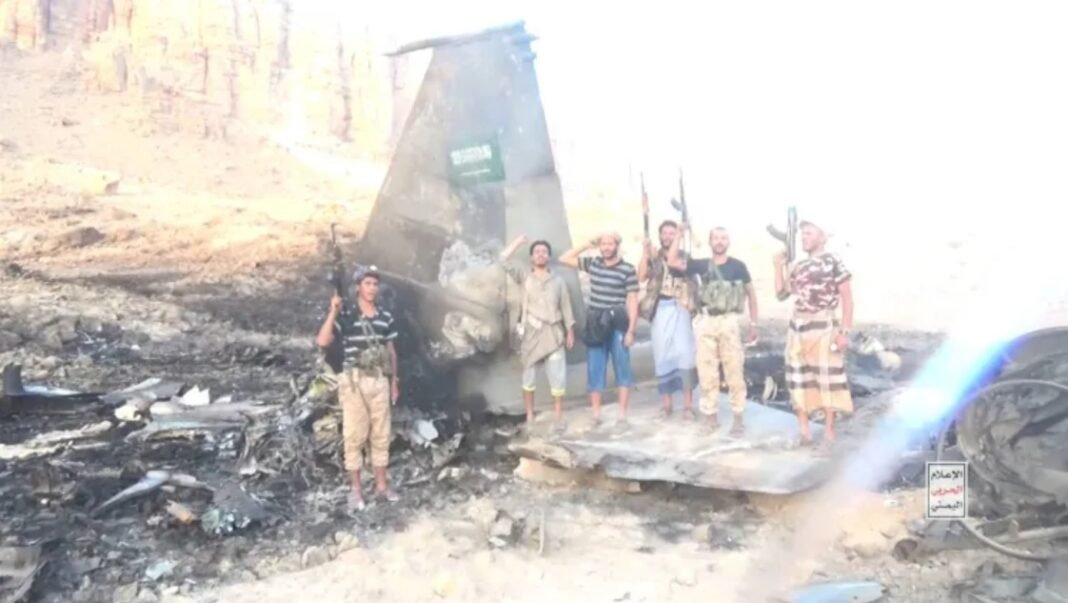
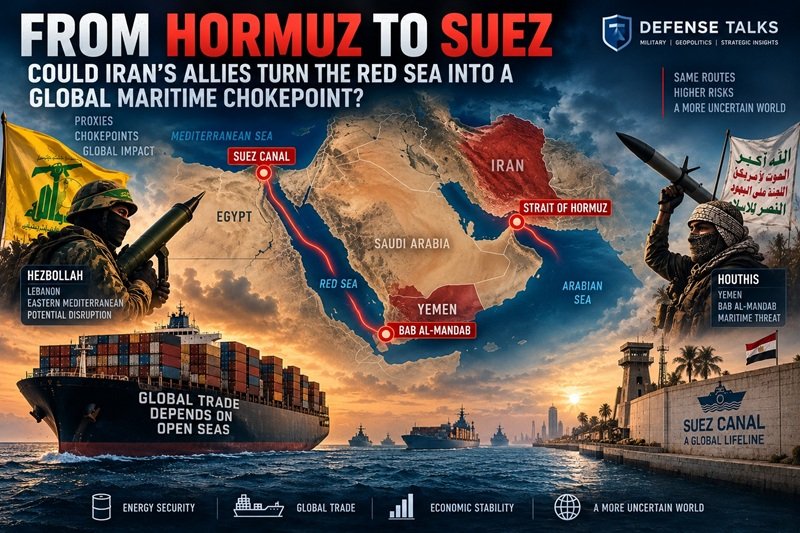
A wider Iran-Yemen conflict could put Hormuz, Bab al-Mandab and Suez under pressure at the same time — but Hezbollah would face major geographic and operational limits in any attempt to threaten the canal
The next stage of the Iran-Yemen conflict may not be decided only by missiles striking military bases or drones attacking oil infrastructure. The more consequential battlefield could be the maritime corridor linking the Gulf to the Mediterranean.
The possibility deserves attention because the region’s major maritime chokepoints are now becoming connected to the same conflict.
At the eastern end is the Strait of Hormuz, through which a large share of the world’s oil and gas trade passes. At the southern entrance to the Red Sea is Bab al-Mandab, where the Houthis have rapidly expanded their military presence. At the northern end of the Red Sea sits the Suez Canal, the shortest maritime route between Asia and Europe.
A prolonged regional war could therefore create a chain of pressure running from Hormuz to Suez.
The scenario is sometimes described in its most dramatic form as an attempt by Iran’s allies to “close the Suez Canal.” That formulation needs qualification. Hezbollah does not control the canal, does not have a direct geographical position from which it could simply shut it and faces substantial military and political constraints in Lebanon.
But Suez does not have to be physically closed to become strategically unusable.
If attacks, mines, missiles, drones, sabotage or the perceived risk of attacks make shipping companies and insurers unwilling to use the Red Sea corridor, commercial vessels can be diverted. The economic effect can resemble a closure even when the canal itself remains operational.
That is the more serious scenario.
Bab al-Mandab is already under pressure
The most immediate threat to the Suez route comes from Yemen rather than Lebanon.
In recent weeks, Houthi forces have expanded their presence along Yemen’s Red Sea coast, including the capture of the strategic port of Mokha and Mayun Island near Bab al-Mandab. The developments have increased concern over one of the world’s most important maritime chokepoints.
Reuters reported that Iranian arms, funding and tactical assistance have played an important role in the Houthi advance, while Tehran denies directly directing Houthi military operations.
The military geography is significant.
Mayun Island, also known as Perim, sits in the Bab al-Mandab Strait. Control of territory and military positions around the strait does not automatically mean the Houthis can stop all shipping, but it potentially gives them greater ability to monitor, threaten and disrupt vessels using the waterway.
The International Maritime Organization has continued to monitor attacks affecting commercial shipping in the Red Sea and has repeatedly condemned attacks on merchant vessels, emphasising the risks to ships, cargo and seafarers.
The Houthis therefore already possess something much more valuable than a theoretical ability to threaten maritime traffic: a demonstrated capability to alter the behaviour of commercial shipping.
Suez can remain open and still become a problem

This distinction is central to understanding the scenario.
During previous Houthi attacks, many shipping companies avoided the Red Sea and diverted vessels around the Cape of Good Hope. The result was longer voyages, higher fuel consumption, increased insurance costs and additional pressure on global supply chains.
Recent developments show how quickly those calculations can change.
This week Maersk and Hapag-Lloyd were resuming additional services through the Suez Canal, but both companies’ decisions remain dependent on the stability of the regional security environment.
That tells us something important.
Commercial shipping decisions are ultimately risk calculations.
A ship does not need to be sunk for a route to become commercially unattractive. If insurers increase premiums sharply, naval escorts become necessary, crews face elevated risks and operators cannot guarantee safe passage, shipping companies can simply choose another route.
The Cape of Good Hope then becomes the alternative.
But that alternative comes at a substantial cost.
Recent analysis has shown that rerouting Saudi oil from the Red Sea around Africa can add weeks to voyages to Asian markets. AP reported that a route from Saudi Arabia’s western coast to South Korea could take roughly 54 days instead of about 24 days when the shorter Suez route is available.
That is why the real strategic objective would not necessarily be “close Suez.”
It would be to make the Suez route sufficiently risky that global shipping begins avoiding it.
Where does Hezbollah fit into this scenario?
This is the most speculative part of the analysis.
Hezbollah is an Iranian-aligned organisation based in Lebanon and has historically been one of Tehran’s most important regional partners. However, the organisation has been significantly weakened by years of conflict and remains primarily focused on the Lebanon-Israel theatre.
Its geographical position also matters.
Hezbollah cannot simply move forces from Lebanon into Egypt and seize the Suez Canal. Egypt controls the canal and has powerful armed forces responsible for its security.
A literal Hezbollah attempt to capture or physically close Suez would therefore be an extremely different proposition from the Houthi campaign around Bab al-Mandab.
The more plausible hypothesis is indirect.
If the Iran conflict expands dramatically, Iran-aligned actors could potentially create pressure at different points of the maritime system. The Houthis could threaten the southern Red Sea and Bab al-Mandab. Other regional groups could threaten oil infrastructure or logistics networks. Hezbollah’s role, if it became involved, would more plausibly centre on the eastern Mediterranean and the Israel-Lebanon theatre rather than a direct operation against Suez.
In other words, Hezbollah does not need to reach Suez to contribute to a wider maritime crisis.
The real danger is a chain reaction
Imagine the regional conflict developing along several simultaneous axes.
Iran places pressure on Hormuz.
The Houthis threaten shipping around Bab al-Mandab.
Iran-aligned groups attack infrastructure supporting Gulf energy exports.
The Lebanon-Israel front expands, creating additional pressure in the eastern Mediterranean.
Shipping companies begin reassessing the entire route between the Indian Ocean and Mediterranean.
At that point, the problem becomes larger than any individual attack.
The maritime chain itself becomes unreliable.
This is why the current Houthi advance matters so much.
The Houthis are positioned at the southern gateway to the Red Sea, while the Suez Canal is at its northern end. Recent reporting has already described Iranian influence over the Houthi offensive as giving Tehran additional leverage over maritime routes. The National reported that Iran-mediated discussions had even involved an understanding under which vessels travelling north through the Red Sea toward Suez would not be targeted by the Houthis.
If accurate, that detail is revealing.
It suggests that maritime access itself can become a bargaining instrument.
Iran does not need to control Suez

There is a larger strategic principle behind this.
A state or its allies do not necessarily need physical control of a chokepoint to derive strategic leverage from it.
They can threaten the approaches.
They can raise the cost of using it.
They can make insurers nervous.
They can force naval escorts.
They can create uncertainty about the next attack.
And they can make commercial operators choose a longer route.
That is precisely why the combination of Hormuz and Bab al-Mandab is so important.
The Strait of Hormuz affects the movement of energy from the Gulf into the wider Indian Ocean. Bab al-Mandab determines access between the Arabian Sea and Red Sea. Suez then connects that Red Sea route to the Mediterranean and European markets.
Disrupt one point and shipping can sometimes adapt.
Put several points under simultaneous pressure and the alternatives become considerably more expensive.
The Houthis are already demonstrating the model
The Houthi campaign provides a practical example of how relatively limited military forces can have an impact much larger than their conventional combat power.
The group does not need a navy comparable with a major power.
It can use missiles, drones, surveillance, mines and asymmetric tactics to increase the perceived risk of commercial passage.
The economic effect is then multiplied by the decisions of shipping companies, insurers and commodity traders.
The earlier disruption of Red Sea shipping demonstrated precisely this mechanism. S&P Global estimated that the Red Sea carries a significant share of global maritime trade and that rerouting can add substantial costs to individual voyages.
The current situation could become more serious because the Houthis now have a stronger territorial position around the southern Red Sea than they did during the earlier phase of the crisis.
But there are major limits to the scenario
A serious analysis should also examine why the “Suez closure” scenario may not materialise.
First, Egypt would have a direct interest in keeping the canal open. Suez Canal revenues are strategically important to the Egyptian economy, giving Cairo a powerful incentive to defend the waterway.
Second, the canal is not an undefended maritime passage. Any direct attempt to attack or obstruct it would trigger an international response.
Third, the Houthis and Hezbollah have different geographic positions and military roles. Treating all Iranian-aligned groups as one centrally controlled military force would oversimplify the region.
Fourth, Iran itself has strategic reasons to avoid losing all control over escalation. Maritime disruption can generate leverage, but uncontrolled disruption can also produce international military intervention and economic consequences that ultimately hurt Iran and its partners.
Finally, shipping companies have alternatives.
They are expensive, but the existence of the Cape of Good Hope route means that Suez is not an all-or-nothing chokepoint in the same way that some landlocked infrastructure can be.
The consequence would therefore probably be higher costs and longer transit times rather than the complete disappearance of global maritime trade.
What would trigger a genuine Suez crisis?
Several developments would dramatically raise the risk.
A sustained Houthi campaign against commercial shipping would be one.
A major attack on a large container ship or tanker near Bab al-Mandab would be another.
Mining of the Red Sea approaches would represent a major escalation.
The appearance of more sophisticated anti-ship missiles or drones would increase the threat further.
And if the Lebanon-Israel front simultaneously expanded while Iran maintained pressure around Hormuz, shipping companies could begin treating the entire eastern Mediterranean-to-Indian Ocean route as one interconnected security problem.
That would be the point at which the Suez issue moves from a theoretical scenario into a major global economic concern.
What it means for Pakistan
For Pakistan, this maritime geography is particularly important.
Pakistan sits on the Arabian Sea and depends heavily on uninterrupted maritime trade. Any sustained disruption extending from Hormuz through the Red Sea would affect shipping costs, insurance premiums, delivery times and potentially energy prices.
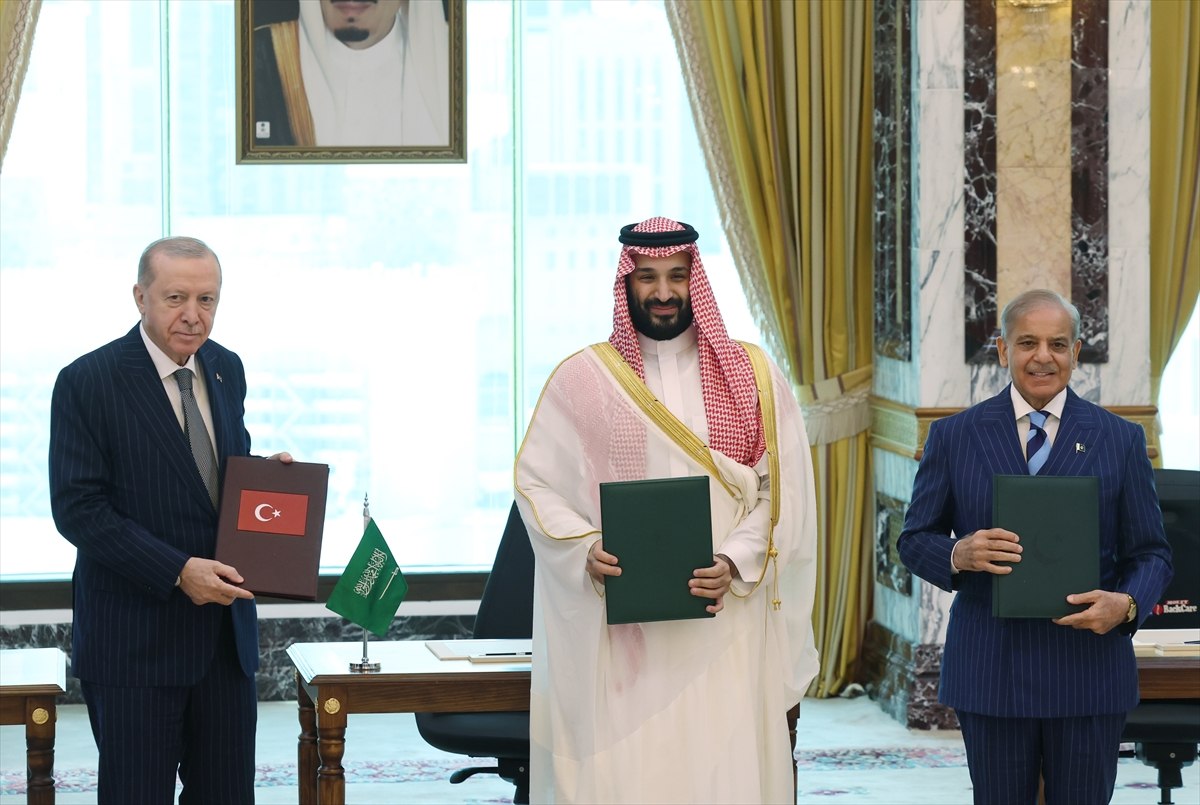
Pakistan also has a direct strategic relationship with Saudi Arabia and has recently entered the Makkah Joint Defence Agreement with Saudi Arabia and Türkiye.
That makes the evolution of the Red Sea crisis relevant to Islamabad even if Pakistani forces are not directly involved in the Yemen conflict.
A prolonged maritime disruption could also increase the importance of alternative routes through the Arabian Sea, including Pakistan’s own ports.
But there is another complication.
If the crisis expands across multiple maritime chokepoints, the Indian Ocean itself becomes more strategically important. Naval forces from outside the region would have stronger incentives to increase their presence, while regional states would have to balance maritime security with the risk of becoming directly involved in the wider conflict.
The more realistic scenario: a “functional closure”
The phrase “Hezbollah closes the Suez Canal” is therefore probably too simplistic.
The more credible scenario is a functional closure of the wider Suez route caused by cumulative insecurity.
The Houthis are already positioned at Bab al-Mandab.
Iran has demonstrated its ability to exert pressure around Hormuz.
Iran-aligned groups elsewhere in the region can create additional security problems.
And Hezbollah, despite its limitations, remains part of the broader Iranian-aligned regional network and could become relevant if the Lebanon front expands.
None of this proves that Tehran has a plan to close Suez.
There is no reliable evidence establishing such a Hezbollah operation.
But it does demonstrate why the maritime geography of the current conflict deserves closer attention.
The strategic contest may ultimately be less about capturing individual pieces of territory and more about controlling the risk surrounding the world’s most important commercial routes.
From Hormuz to Suez

The most consequential development in the current Iran-Yemen confrontation may therefore be the gradual linking of maritime pressure points.
Hormuz is under pressure from the Iranian side.
Bab al-Mandab is increasingly exposed to Houthi military power.
The Red Sea has already experienced major shipping disruption.
And Suez remains the critical bridge between Asian and European maritime trade.
A wider war could connect all four.
That does not mean Suez is about to be closed, nor does it mean Hezbollah possesses the capability to shut the canal.
The more credible concern is that Iran-aligned forces could contribute to a security environment in which using the Suez route becomes increasingly expensive and risky.
For global shipping, that distinction may ultimately matter less than it appears.
A canal can remain physically open while commercial traffic disappears.
And if that happens simultaneously with disruption around Hormuz and Bab al-Mandab, the consequences would extend far beyond the Middle East — reaching energy markets, freight rates, supply chains and consumers from Asia to Europe.
The next phase of the regional conflict will therefore be watched not only for what happens on land or in the air, but for whether the world’s maritime chokepoints begin functioning as a connected strategic battlefield.