
India warns new US tariffs over Russian oil could affect bilateral ties as Washington gains authority to impose tariffs of up to 100% on major buyers of Russian energy

The United States has opened a new and potentially difficult chapter in its relationship with India after the US House of Representatives passed legislation giving President Donald Trump sweeping authority to impose tariffs of up to 100 percent on countries continuing to purchase Russian energy.
India has responded by warning Washington that the new measures could have consequences for bilateral relations, while defending its right to secure affordable and reliable energy from multiple sources.
The Lindsey O. Graham Sanctioning Russia and Iran Act of 2026 passed the House by 262-159 on September 16, after clearing the Senate by 86-11 in August. The legislation has now been sent to President Trump for his signature.
The measure is aimed primarily at increasing economic pressure on Russia over the war in Ukraine. But its potential impact extends well beyond Moscow because the legislation gives the US president authority to impose steep tariffs on countries that continue to buy significant amounts of Russian energy.
India and China are among the major countries exposed to that authority.
For New Delhi, the dispute is no longer simply about Russian oil.
It is increasingly about energy security, trade negotiations, strategic autonomy and the future direction of India-US relations.
India warns Washington over impact on bilateral ties
India’s Foreign Ministry said Thursday that New Delhi had taken note of the passage of the legislation and had raised the issue with US officials during recent months.
The ministry said India had “very clearly articulated” the potential implications of the proposed measures for both the bilateral relationship and international energy markets.
New Delhi also reiterated that it remains committed to securing energy for its population through diversified sources and would continue purchasing supplies according to market conditions.
India further said it would take all necessary measures to protect its trade and economic interests and would work with trade and industry bodies to deal with the consequences of the legislation.
The warning represents a significant change in the tone of the dispute.
India and the United States have spent more than two decades building a strategic relationship that now encompasses defence, technology, trade, maritime security and cooperation in the Indo-Pacific.
Yet Russian oil has emerged as a point where the interests of the two countries diverge sharply.
The 100% tariff is not automatic
One point needs to be made clear.
The House vote does not itself impose a 100 percent tariff on Indian exports.
The legislation gives President Trump authority to impose tariffs of up to that level on countries falling within the bill’s criteria. The actual level, timing and application would depend on presidential action and the mechanisms contained in the legislation.
The measure also includes presidential waiver authorities under specified circumstances.
That gives Washington substantial negotiating leverage.
For India, however, the possibility alone is significant.
A tariff of that magnitude on Indian exports to the US would potentially affect sectors deeply integrated with the American market. It could also complicate the trade negotiations that Washington and New Delhi have been conducting for months.
That is why India’s warning came within hours of the House vote.
Why Russian oil has become so important to India
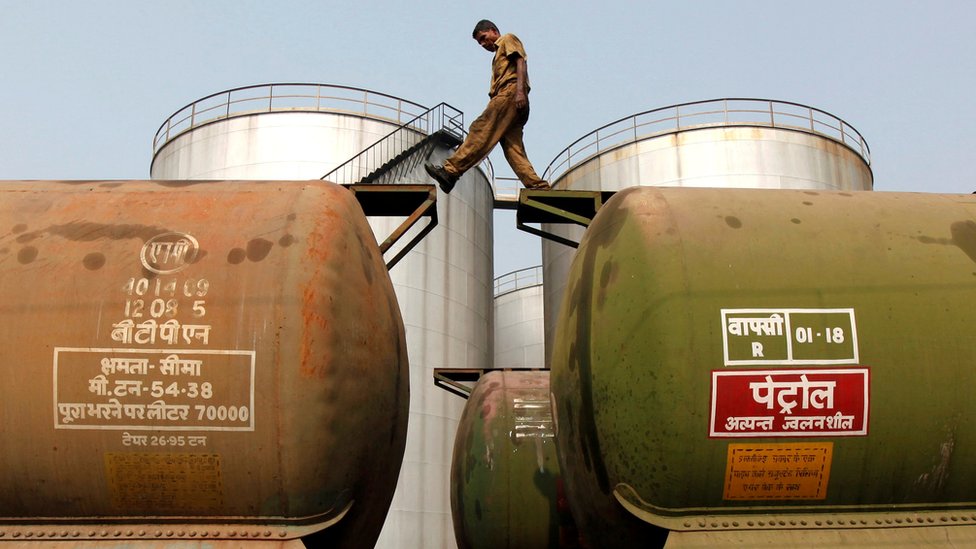
India is the world’s third-largest oil importer and has increasingly relied on Russian crude since Moscow’s full-scale invasion of Ukraine in 2022.
Western sanctions and restrictions on Russian energy trade created an opportunity for Indian refiners to purchase Russian crude at competitive prices.
New Delhi has consistently argued that its approach is driven by energy security rather than political alignment with Moscow.
For a country with a huge population and rapidly growing energy requirements, affordable crude is a major economic consideration.
Indian refiners have already arranged crude supplies for September and October that include Russian oil, according to people familiar with the purchases cited in the latest reporting.
Two Indian refining sources told Reuters that refiners want the government to engage with Washington because new tariffs could sharply increase costs. They also argued for some form of relaxation or transition mechanism that would allow existing transactions to be completed and potentially establish a quota for Russian oil purchases rather than immediately imposing the full tariff threat.
The timing is particularly difficult because global energy markets are already facing disruption from the wider Middle East conflict.
If Russian supplies are reduced at the same time that other sources are under pressure, Indian refiners could face higher crude costs.
That could affect refinery margins and, depending on government policy, domestic fuel prices.
The trade negotiations make the dispute more serious
The Russian-oil issue is now directly colliding with another major India-US negotiation: the effort to reach a bilateral trade agreement.
After months of discussions, the two countries have not yet reached a final consensus on the terms of a broader trade deal.
The latest tariff threat adds another layer of pressure to those negotiations.
Indian trade analyst Ajay Srivastava, founder of the Global Trade Research Initiative and a former Indian trade official, argued that Washington could use the tariff threat to push New Delhi toward reducing Russian oil purchases while also seeking concessions in the trade negotiations.
That is an interpretation rather than an established US policy objective, but it reflects the concern among Indian trade analysts that energy policy and market-access negotiations could become increasingly interconnected.
The timing of the next round of diplomacy is therefore important.
Indian Commerce and Industry Minister Piyush Goyal is scheduled to travel to the United States later this month for the G20 Trade Ministers’ Meeting in Milwaukee, where he is expected to hold bilateral discussions with US Trade Representative Jamieson Greer. Trade negotiations are expected to be part of those discussions.
The Russian oil dispute is now likely to be difficult to separate from those talks.
India-US relations have changed dramatically in two decades
The current dispute is particularly notable because it comes after a long period of strategic convergence.
India-US relations began moving decisively closer around the turn of the century. The relationship expanded from limited strategic cooperation into a broad partnership covering defence, trade, technology, space and maritime security.
The United States designated India a Major Defense Partner in 2016, and defence cooperation expanded through agreements covering logistics, secure communications and military interoperability. US defence trade with India grew from almost zero in 2008 to more than $20 billion by 2020, according to the US State Department.
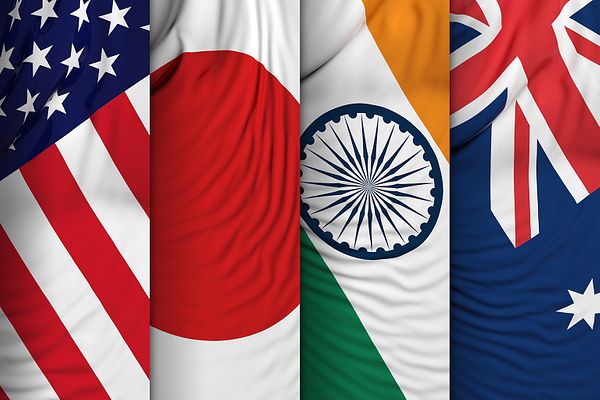
The two countries also developed increasingly close cooperation through the Quad, alongside Japan and Australia, while military exercises such as Malabar became more sophisticated.
Washington has openly supported India’s emergence as a major power and an important partner in the Indo-Pacific.
By 2024, the US State Department described the relationship as having expanded dramatically across defence, trade, technology and other areas, with bilateral trade exceeding $200 billion.
Defence-industrial cooperation also moved into a new phase, including discussions about co-production and technology transfer. In 2023, Washington and New Delhi launched a roadmap for defence industrial cooperation and advanced discussions on production of GE F414 engines in India.
This history makes the current dispute more significant.
The countries are not adversaries. They have developed extensive strategic cooperation.
But they are also not treaty allies, and India has never abandoned its policy of maintaining strategic autonomy.
Russian oil is now testing exactly how much room that autonomy still has under growing American economic pressure.
The Russia problem exposes a fundamental difference

Washington increasingly views Russia through the lens of the Ukraine war and the need to restrict Moscow’s energy revenues.
India views Russian energy through a different calculation.
New Delhi must balance relations with Washington against energy prices, refinery economics, national demand and its longstanding relationship with Moscow.
Russia also remains important to India’s defence sector after decades of military cooperation and equipment purchases.
That history cannot simply be separated from India’s current strategic calculations.
India’s position therefore creates a contradiction for Washington.
The United States wants India to play a larger strategic role in the Indo-Pacific at a time of growing competition with China.
At the same time, Washington is seeking to reduce India’s economic interaction with Russia.
The new sanctions legislation brings those two objectives into direct tension.
China makes Washington’s calculation even more complicated
The legislation also highlights the different ways Washington approaches India and China.
China is the largest strategic competitor of the United States and remains one of the world’s biggest purchasers of Russian energy.
India, by contrast, is increasingly viewed by Washington as a strategic partner in Asia and an important counterweight in the Indo-Pacific.
Yet both countries can potentially face the same tariff instrument because of their purchases of Russian energy.
This creates an unusual situation in which an American measure designed to increase pressure on Moscow could also impose economic costs on a country Washington simultaneously wants to draw closer strategically.
The long-term impact will depend heavily on how the Trump administration uses the authority Congress has provided.
Indian refiners are already looking for a way out
The response from India’s refining industry shows why the issue cannot be treated simply as a diplomatic disagreement.
Indian refiners are reportedly seeking a negotiated arrangement rather than an abrupt end to Russian purchases.
Their concerns are straightforward.
Replacing Russian crude could increase input costs, particularly when international energy markets are already affected by conflict and supply disruptions.
Refiners are also concerned about their margins because fuel prices can be politically and economically sensitive in India.
A transition period or a negotiated quota for Russian crude could therefore be more manageable for the industry than an immediate tariff shock.
The Indian government’s statement that it will protect its trade and economic interests suggests that New Delhi is preparing for negotiations rather than simply accepting Washington’s position.
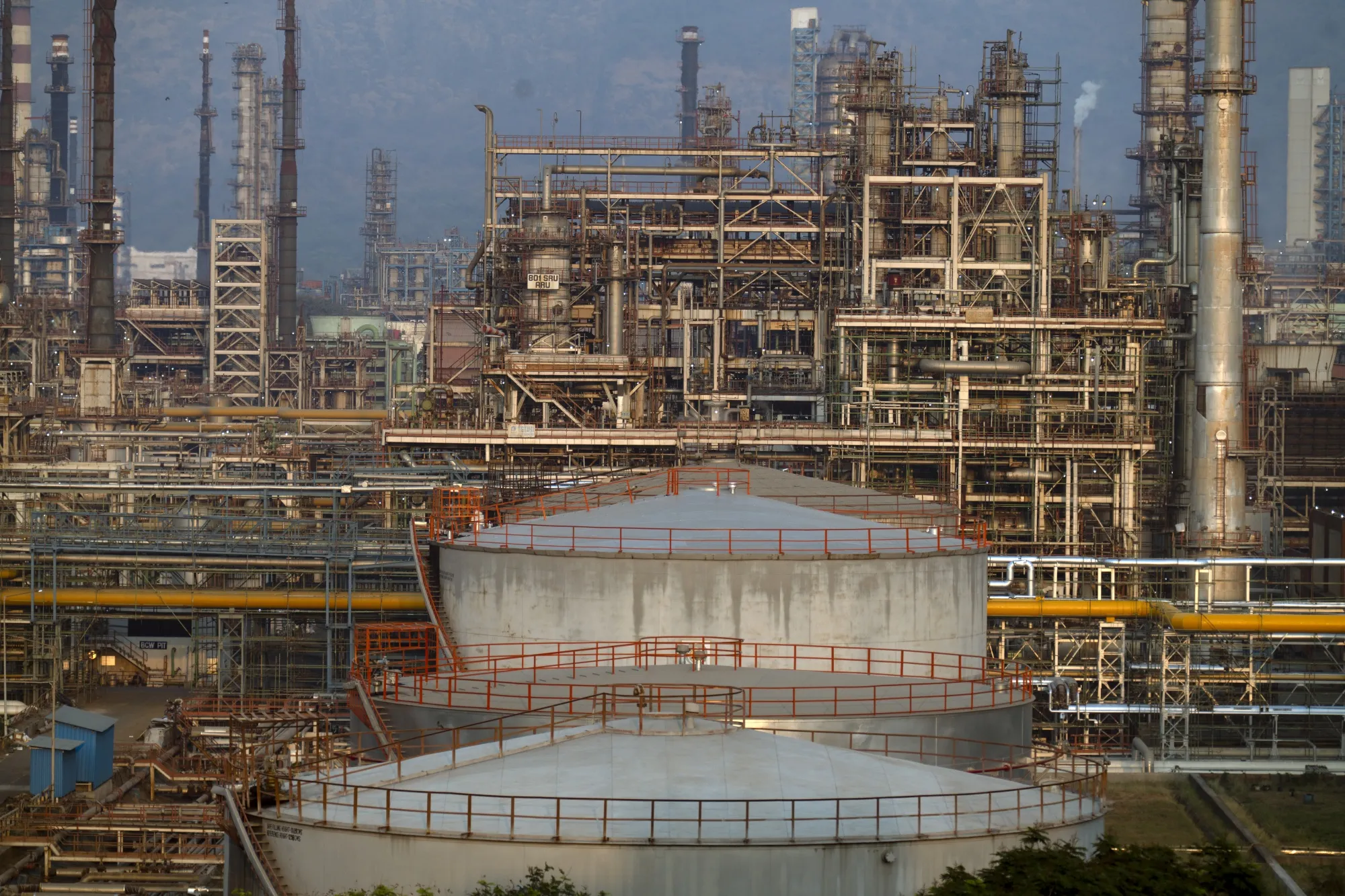
Could the tariff threat reshape India’s oil strategy?
It could.
If President Trump eventually imposes substantial tariffs, India would face pressure to increase purchases from alternative suppliers.
Those could include the United States, Gulf producers and other major exporters.
That would potentially create opportunities for US energy exporters while reducing India’s exposure to Russian crude.
But there is a limit to how quickly such a shift can happen.
Oil markets are global, refinery configurations matter, shipping costs vary and supply contracts cannot always be rewritten overnight.
India also has to consider the price of replacement crude.
If the replacement supply is significantly more expensive, the economic cost could be substantial.
This is why New Delhi is likely to seek flexibility before making a major change to its Russian oil purchases.
What this means for the India-US strategic partnership
The dispute does not mean the India-US strategic partnership is ending.
The two countries still share significant interests in maritime security, critical technology, defence production, supply-chain diversification and the Indo-Pacific.
Those interests are much broader than Russian oil.
But the current confrontation exposes a structural weakness in the relationship: strategic cooperation does not automatically produce agreement on foreign-policy priorities.
India wants access to US technology, markets and defence cooperation while retaining freedom to manage relations with Russia and other major powers.
Washington increasingly wants India to align more closely with American strategic objectives, particularly as competition with China intensifies.
The Russian-oil dispute tests how those two approaches can coexist.
A difficult choice for New Delhi
India now faces several possible paths.
It can reduce Russian oil purchases and move closer to Washington’s position.
It can seek exemptions, quotas or a transition period.
It can increase energy purchases from the United States and other suppliers as part of a broader trade arrangement.
Or it can continue defending its existing energy policy and accept the possibility of higher US tariffs.
None of these options is cost-free.
The decision will involve energy prices, refinery economics, export access, trade negotiations and India’s wider foreign-policy strategy.
For Washington, the calculation is similarly complicated.
A very aggressive tariff policy could pressure India over Russian energy, but it could also complicate a strategic relationship that the United States has spent years strengthening.
The next India-US meeting could be crucial
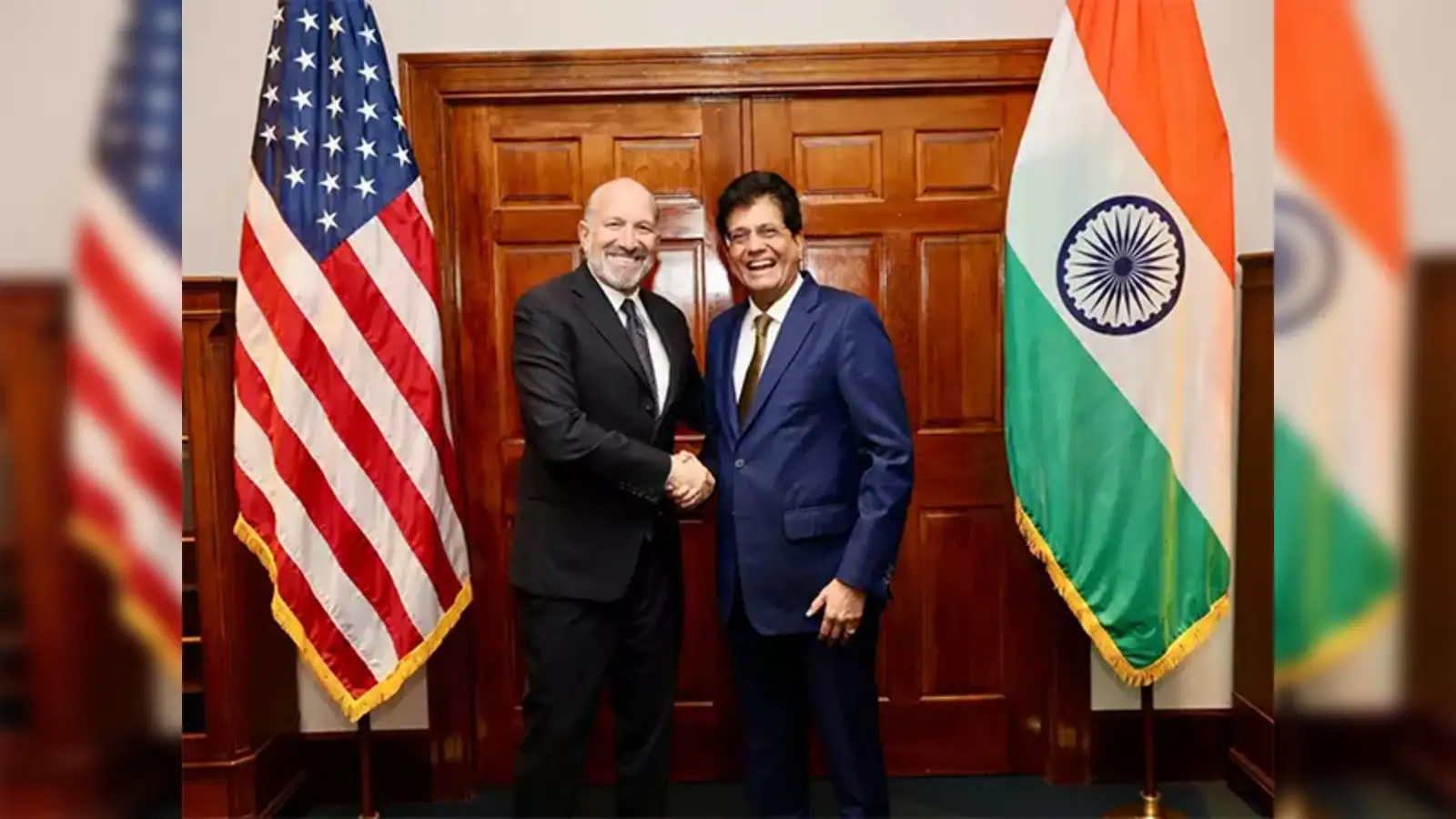
The upcoming G20 Trade Ministers’ Meeting in Milwaukee now takes on additional importance.
Piyush Goyal’s expected discussions with USTR Jamieson Greer will take place against the backdrop of the House vote, India’s warning over bilateral relations and continuing negotiations over a trade agreement.
The central issue will not simply be whether India continues buying Russian oil.
The broader question will be whether Washington and New Delhi can separate their disagreements over Russia from the wider strategic partnership.
If the two governments negotiate a transition mechanism or other accommodation, the dispute could remain a difficult but manageable part of the relationship.
If Washington moves rapidly toward punitive tariffs and India responds with countermeasures or a harder negotiating position, the consequences could spread into trade, technology and strategic cooperation.
India-US relations enter a new test
The House passage of the Lindsey Graham sanctions bill has therefore created a new pressure point in one of Washington’s most important Asian relationships.
The legislation is designed to increase the economic cost of Russia’s energy trade and pressure countries that continue to purchase Russian oil and gas.
For India, however, the issue touches a much broader set of interests.
New Delhi is defending energy security while warning that US measures could affect bilateral relations and international energy markets. Indian refiners are seeking flexibility as they prepare for potentially higher costs, while trade officials face a difficult negotiation with Washington.
At the same time, the strategic foundations of the India-US relationship remain substantial.
That is what makes the current dispute important.
India and the United States have spent two decades building a strategic partnership. Russian oil is now testing the limits of that partnership — not because the two countries have suddenly become strategic rivals, but because their interests on Russia, energy security and economic pressure are no longer easily reconciled.
The next moves by President Trump and the Indian government, particularly around the upcoming trade talks, will determine whether the dispute remains a negotiating battle over Russian oil or develops into a wider strain on the India-US relationship.