The Trump administration is expanding its military options around Iran, with the USS Theodore Roosevelt heading toward the Middle East and a reported plan to deploy an additional Marine division as Washington weighs whether diplomacy with Tehran can prevent another major escalation.
The move comes as President Donald Trump has publicly left the door open to renewed and potentially heavier attacks on Iran after the November U.S. midterm elections.
A U.S. official told The Jerusalem Post on Thursday that the Trump administration had decided to deploy the USS Theodore Roosevelt to the U.S. Central Command area of operations along with an additional Marine division.
However, the latest publicly available U.S. Navy reporting adds an important qualification: Theodore Roosevelt is expected to relieve the USS George Washington, rather than simply create a permanent third-carrier presence in the region.
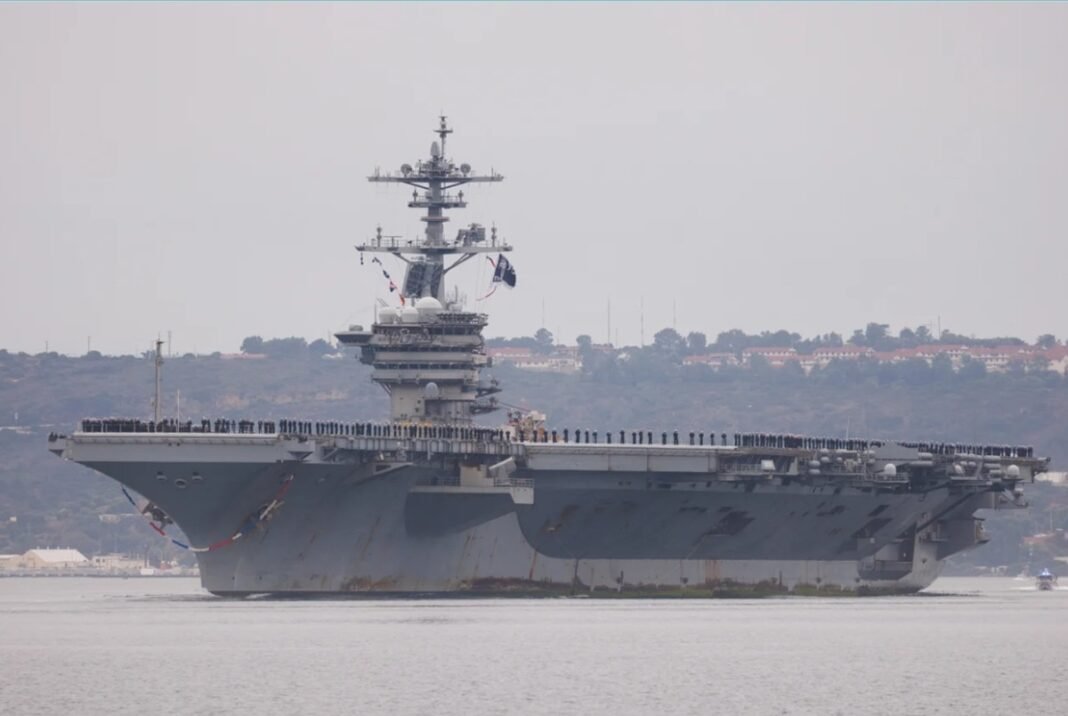
Theodore Roosevelt departed San Diego on September 27 with Carrier Air Wing 11 and is expected to move toward the U.S. Central Command area. The Navy has maintained a two-carrier presence in the region during the conflict with Iran.
USS Theodore Roosevelt begins Middle East deployment

Theodore Roosevelt left San Diego on September 27 as the flagship of Carrier Strike Group 9.
According to USNI News, the strike group includes Theodore Roosevelt, Carrier Air Wing 11, Destroyer Squadron 23 and the guided-missile cruiser USS Chosin. Its air wing includes F/A-18E/F Super Hornets, F-35C fighters, EA-18G Growlers, E-2D Hawkeye aircraft and MH-60 helicopters.
The carrier’s movement follows months of extended U.S. naval operations connected to the conflict with Iran.
The Navy has already been dealing with unusually long deployments. USNI News reported in August that families of Theodore Roosevelt sailors were preparing for a deployment lasting more than seven months, reflecting expectations of sustained operations in the region.
The current plan is for Theodore Roosevelt to move into the Central Command area and relieve the Japan-based USS George Washington, which entered the U.S. 5th Fleet area in August.
Two U.S. carriers are already operating in the region
The latest fleet tracking data provides a clearer picture of the U.S. military posture.
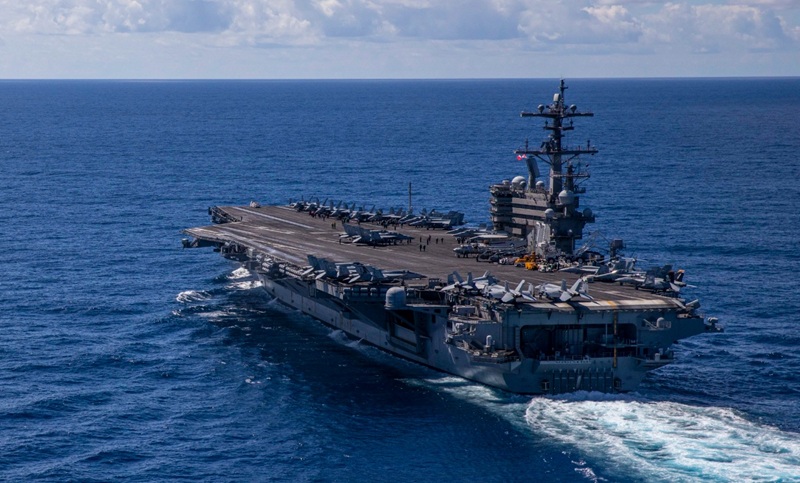
As of September 28, the USS George Washington and USS George H.W. Bush carrier strike groups were operating in the Arabian Sea in support of U.S. operations in the Middle East.
The amphibious assault ship USS Boxer was also operating in the Arabian Sea with the Boxer Amphibious Ready Group and the 11th Marine Expeditionary Unit. Several independently deployed U.S. warships were operating across the region.
This means Washington already possesses a substantial naval force close to Iran.
Theodore Roosevelt’s arrival would therefore be best understood as part of a broader effort to maintain carrier-based combat power while managing the rotation of forces rather than simply adding another carrier indefinitely.
Trump’s latest warning puts Iran on notice
The military movement coincides with Trump’s latest comments about the possibility of renewed attacks on Iran.
In an interview with TIME published October 1, Trump said renewed large-scale bombing of Iran after the November midterm elections was possible.
Trump also rejected Iran’s latest proposal, saying it was not sufficient to meet Washington’s demands. He declined to provide details about potential future targets, citing the sensitivity of military operations.
The comments are significant because they establish a clear political and military timeline.
Trump is not announcing a new offensive, but he is keeping the option of renewed military action open if negotiations fail.
That position is being accompanied by the movement and rotation of U.S. military forces, giving Central Command additional capabilities if the confrontation escalates.
Additional Marine forces could broaden US options
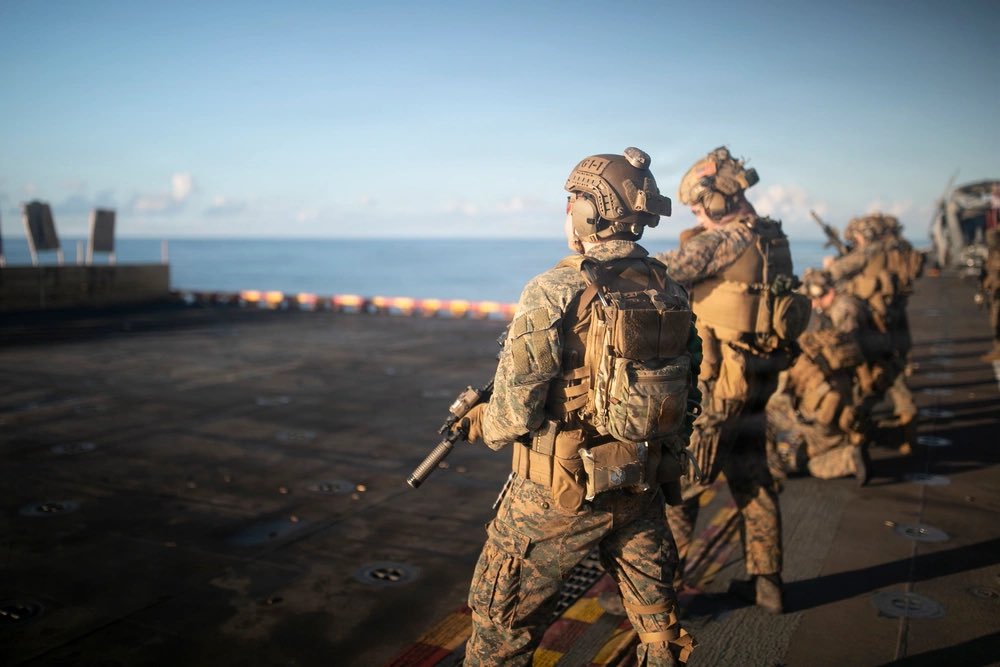
The reported deployment of a second Marine division would add another important layer to the U.S. military posture.
Marine formations can provide capabilities beyond carrier-based air operations, including force protection, amphibious operations, evacuation missions, maritime security and limited expeditionary operations.
The U.S. already has Marines operating in the region.
USNI News reported that the 11th Marine Expeditionary Unit is deployed with the Boxer Amphibious Ready Group in the Arabian Sea.
The reported arrival of additional Marine forces would therefore give U.S. commanders more manpower and operational flexibility at a time when Washington is simultaneously maintaining naval, air and ground-support capabilities around the region.
It does not, by itself, establish that the United States has decided to launch a ground invasion of Iran.
Pentagon planning has focused on multiple contingencies
The current force movements follow months of U.S. military planning for different scenarios involving Iran.
U.S. naval planners have already prepared for prolonged carrier deployments because of the conflict.
Theodore Roosevelt was selected for an extended deployment after the Navy faced unusually long carrier operations involving the USS Abraham Lincoln. USNI News reported that Lincoln spent more than eight months in the Middle East before beginning its return journey to the United States.
The broader U.S. posture includes carrier aviation, destroyers, amphibious forces, fighter aircraft, electronic-warfare platforms and surveillance capabilities.
George Washington’s carrier air wing currently includes F/A-18E/F Super Hornets, F-35C fighters, EA-18G Growlers and E-2D Hawkeye aircraft, giving the carrier group a combination of strike, air-defense, electronic-warfare and airborne command capabilities.
That combination is particularly relevant in any potential confrontation with Iran because U.S. forces would have to account for Iranian missiles, drones, coastal defenses and threats to shipping.
Strait of Hormuz remains a major military concern
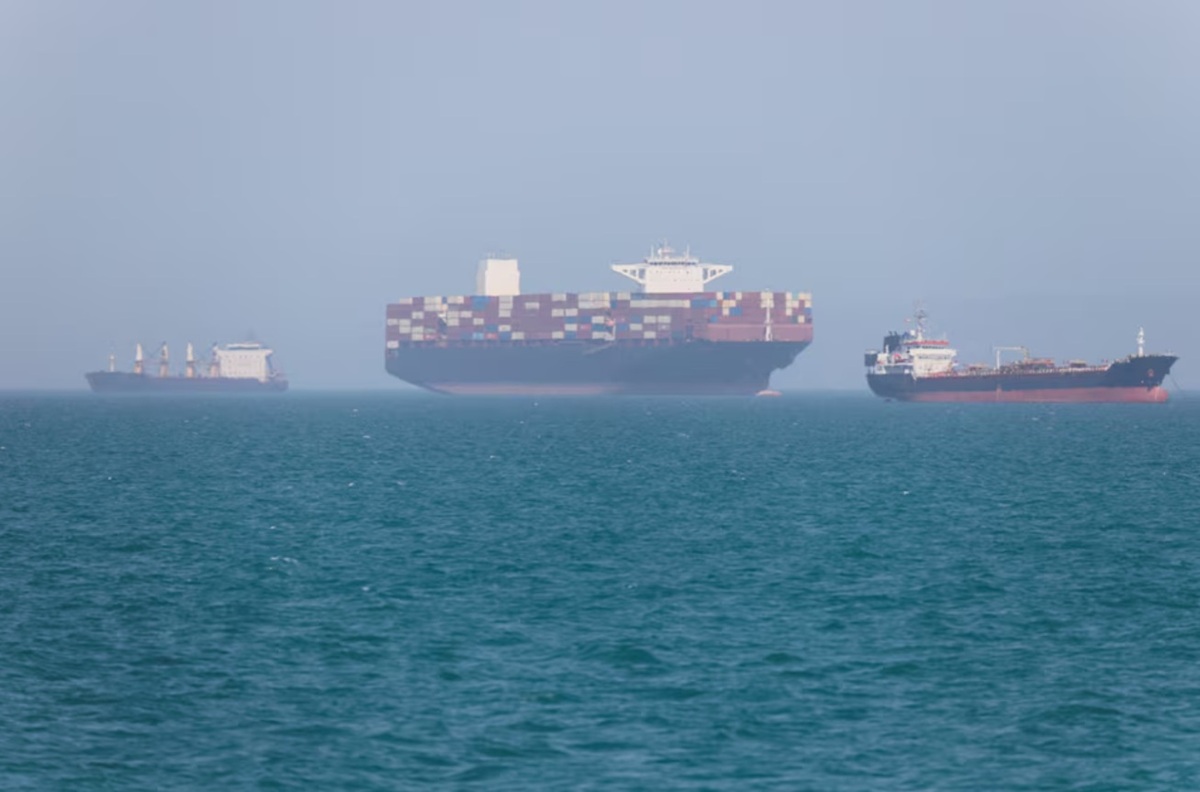
The Strait of Hormuz remains one of the most important factors behind the U.S. military posture.
The waterway connects the Persian Gulf with the Gulf of Oman and is critical to global energy shipments.
Any major escalation involving Iran could therefore affect not only military forces but also commercial shipping and energy markets.
U.S. naval forces operating in the Arabian Sea and nearby waters provide Washington with the ability to conduct maritime security missions while maintaining options for responding to threats against American forces and shipping.
For Iran, however, the concentration of U.S. naval power close to its coastline also creates a much larger military target set.
Iran prepares for possible renewed escalation
Tehran is also preparing for the possibility that the conflict could intensify.
Reuters reported on October 1 that senior Iranian commanders were developing plans for a stronger response if the United States attacks again. Iranian officials told Reuters that possible responses could extend beyond U.S. military targets to American allies and interests outside the Middle East.
Iranian-aligned groups in Lebanon, Yemen and Iraq have reportedly been placed on standby for potential coordinated action.
At the same time, Tehran has continued diplomatic efforts.
Iran recently transmitted a de-escalation proposal through Qatari mediators that included demands involving sanctions, the blockade and attacks. Trump rejected the proposal as inadequate, according to Reuters.
The result is a growing gap between the military preparations on both sides and the diplomatic effort to prevent another major round of fighting.
Why the Theodore Roosevelt deployment matters
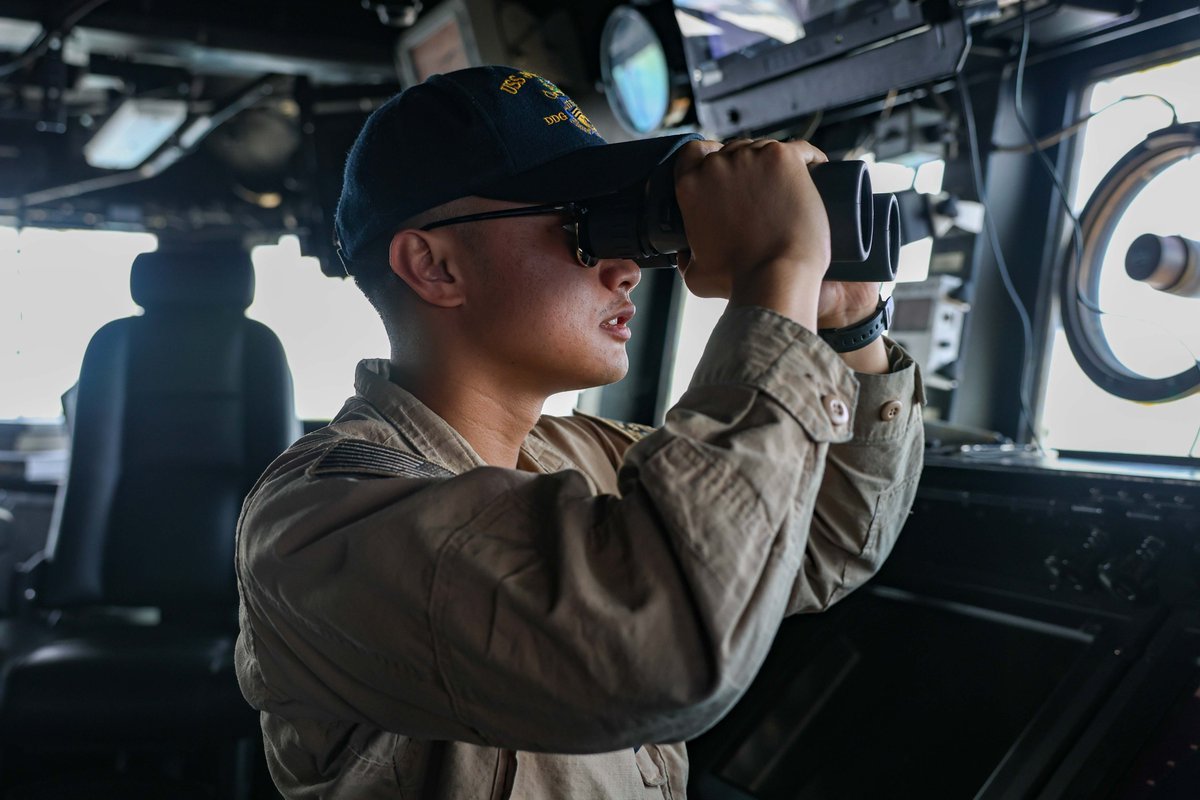
The importance of Theodore Roosevelt is not simply its size.
The carrier brings a complete strike group and a large combat aviation component.
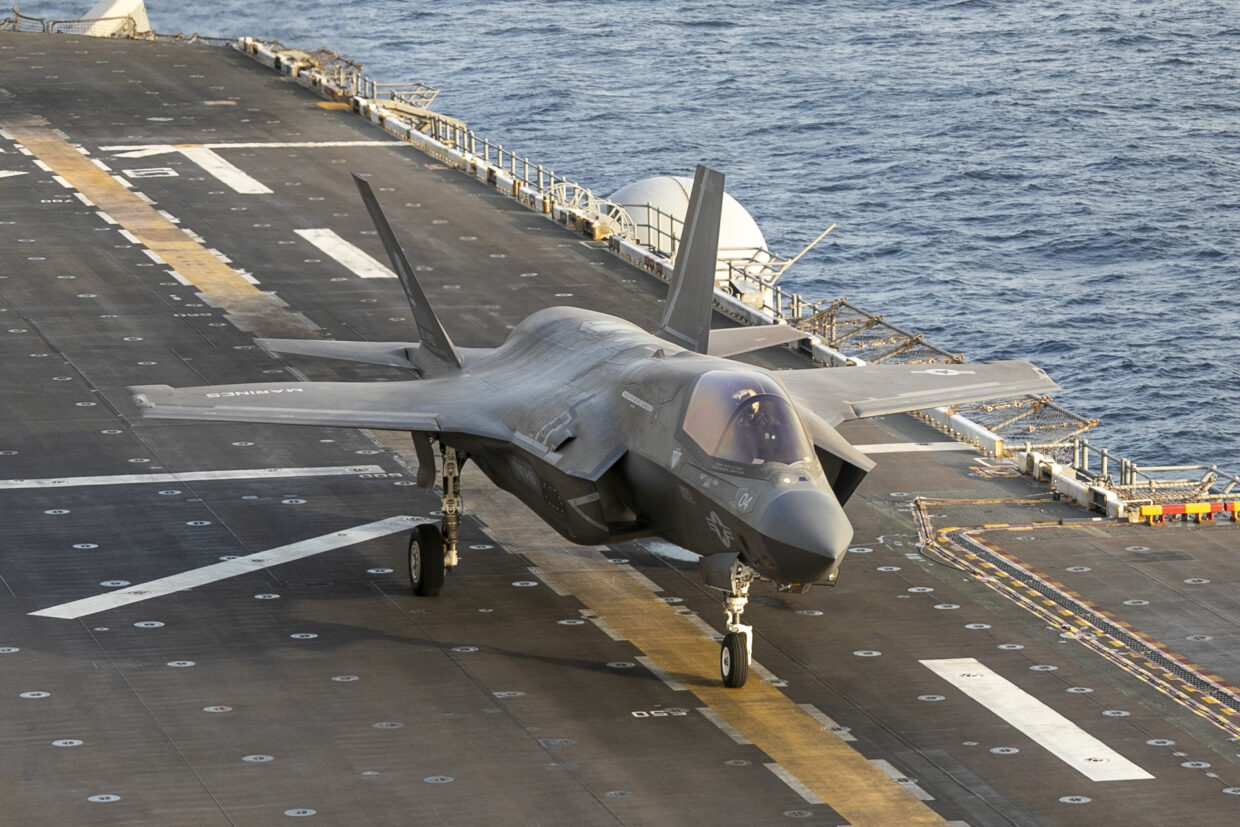
Its Carrier Air Wing 11 includes F-35C stealth fighters, F/A-18E/F Super Hornets, EA-18G Growlers and E-2D Hawkeyes. The combination gives U.S. commanders capabilities for strike missions, air defense, electronic warfare, surveillance and command and control.
The carrier also provides an additional mobile airbase that does not depend on a single regional land installation.
That matters in a conflict with Iran because Iranian missile and drone forces have demonstrated the ability to threaten fixed military infrastructure.
A carrier group operating offshore gives U.S. planners another option for sustaining air operations while reducing dependence on individual land bases.
The real question is force rotation or preparation for escalation
The latest developments should therefore be read carefully.
Theodore Roosevelt’s deployment is confirmed, but available Navy reporting indicates that it is expected to replace the USS George Washington, rather than automatically create a long-term three-carrier deployment.
The reported Marine deployment is a separate development and could increase the number of options available to U.S. Central Command.
At the same time, Trump’s latest public comments have kept the possibility of renewed attacks on Iran alive.
Taken together, the developments show Washington maintaining a substantial military posture while leaving diplomacy open.
For Iran, the message is equally clear: the United States retains significant naval and air power close to the region, while Tehran is preparing for a possible second phase of the confrontation.
US-Iran tensions enter a critical phase
The coming weeks will provide important indicators of Washington’s intentions.
The movement of Theodore Roosevelt toward the Central Command area, the reported Marine deployment, the status of the George Washington and George H.W. Bush carrier groups, and any additional movement of aircraft or warships will provide clues about the Pentagon’s evolving force posture.
Trump’s comments also put the November 3 midterm elections on the strategic timeline.
If diplomacy produces an agreement, the current military buildup could function primarily as deterrence and force protection.
If negotiations collapse, however, the United States already has substantial forces positioned to respond quickly.
For now, the evidence points to a U.S. military posture designed to preserve multiple options rather than a confirmed decision for another major offensive.
The central development is therefore not simply the arrival of another aircraft carrier. It is the combination of carrier rotation, additional Marine forces, extended deployments and Trump’s renewed warning that military action against Iran could intensify after the midterm elections.
That combination ensures that the military and diplomatic tracks of the U.S.-Iran confrontation will remain closely linked in the weeks ahead.