Iran’s ability to rebuild its missile and drone arsenal is increasingly drawing attention to a supply-chain question that extends well beyond Iran’s damaged military facilities: how much of the industrial base needed for regeneration can Tehran continue to obtain from abroad?
A new investigation by The Wall Street Journal, based on Iranian customs records, indicates that Chinese suppliers sent roughly 1,300 shipments of dual-use components to Iran’s Defense Ministry during the first six months of 2026. The consignments included electronics, GPS equipment, electric motors and aircraft-engine components that can have civilian applications but can also be incorporated into unmanned aerial vehicles, missile systems and other military equipment.
The findings are significant because they come as Iran attempts to restore parts of its military-industrial capacity following months of intense U.S. and Israeli strikes and amid restrictions on Iranian maritime trade.
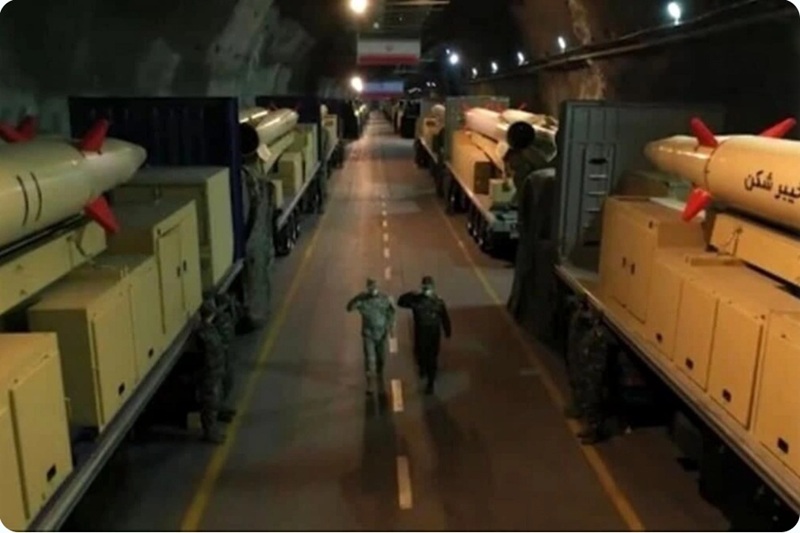
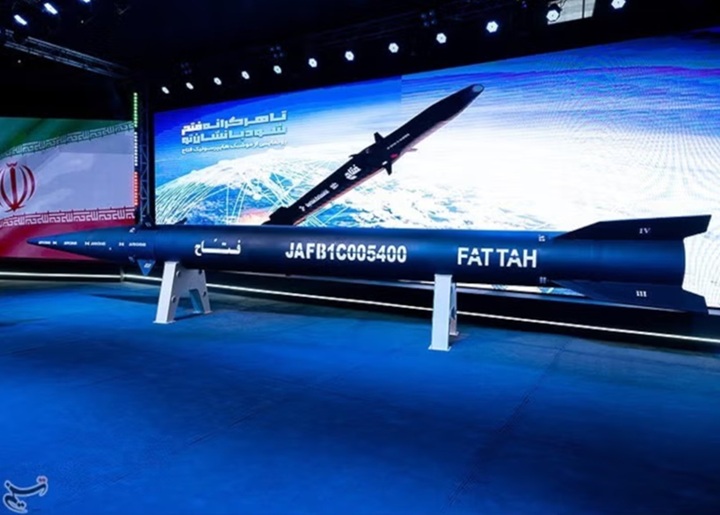
Recent reporting has indicated that Iran has already resumed limited ballistic-missile production using stockpiled components at underground facilities. That suggests that destroying visible production infrastructure does not necessarily eliminate the underlying industrial capability.
The 1,300-Shipment Pipeline
According to Iranian customs data reviewed by the Wall Street Journal, approximately 1,300 shipments from Chinese suppliers reached Iran’s Defense Ministry during the first half of 2026.
The recorded shipments reportedly included:
- GPS and satellite-navigation equipment
- Electric motors
- Electronic components
- Aircraft-engine components
- Other industrial and dual-use equipment
- Chemical compounds associated with missile production
The distinction between civilian and military goods is important. A motor, navigation system, electronic component or industrial chemical can have legitimate commercial applications while also being useful to a defense industry.
That makes the supply chain considerably harder to disrupt than a conventional arms shipment.
The Journal reported that some Iranian customs declarations referred to Article 119 of Iran’s customs regulations, a provision associated with tariff exemptions for defense-related imports.
The customs records therefore provide a picture of procurement activity, but they do not by themselves establish that every Chinese company involved knowingly supplied military equipment or that every component was ultimately incorporated into weapons.
That distinction is crucial when assessing the scale of Chinese involvement.
Mahan Air Emerges as a Critical Link
The supply chain also appears to have shifted as Iran’s maritime trade came under increasing pressure.
Flight-tracking data cited in the reporting showed a major increase in Mahan Air’s cargo activity between China and Iran after the conflict intensified. The Iranian airline, already under U.S. sanctions, reportedly increased flights linking Tehran with Chinese cities including Beijing, Shanghai and Guangzhou.
The reported increase was striking. According to flight-tracking data cited by the Journal, Mahan Air’s flights on those routes rose from around four per week in early March to roughly 27 per week by late April.
The significance goes beyond aviation.
When maritime routes become more difficult or expensive, air cargo becomes more attractive for relatively high-value, compact components such as electronics, precision equipment and specialized industrial parts.
The U.S. Treasury has separately described Mahan Air as a major logistics channel for Iran’s Islamic Revolutionary Guard Corps and has accused the airline of facilitating the movement of military equipment and UAV-related material. In July 2026, Washington sanctioned additional individuals and entities linked to Mahan Air’s international network.
Chinese Chemicals and Iran’s Missile Industry
The Chinese connection is not limited to electronics and mechanical components.
U.S. sanctions records have previously documented procurement networks moving chemical inputs from China to Iran for use in ballistic-missile propellant production.
In April 2025, the U.S. Treasury sanctioned a network accused of procuring sodium perchlorate and dioctyl sebacate from China for Iran’s Islamic Revolutionary Guard Corps. Treasury said these materials can be used in solid-propellant rocket motors and missile-related production.
In a later enforcement action, the Treasury Department said another procurement network had obtained hundreds of metric tons of missile-propellant ingredients from China since 2023, including sodium chlorate, sodium perchlorate and sebacic acid. The network was linked by Washington to Parchin Chemical Industries, part of Iran’s Defense Industries Organization.
These cases illustrate why the supply-chain issue is different from conventional arms transfers.
Iran does not necessarily need foreign suppliers to manufacture an entire missile.
It needs access to the raw materials, specialized chemicals, electronics, machinery and components that allow its domestic production system to continue functioning.
Iran’s Missile Industry Was Never Entirely Dependent on Imports
At the same time, it would be misleading to portray Iran’s missile and UAV programs as Chinese-built systems.
Iran has spent decades developing its own missile and drone industries. Much of the design, engineering, assembly and production infrastructure is located inside Iran, with considerable indigenous technical knowledge and manufacturing experience.
That means an external supply cutoff would not automatically eliminate Iran’s weapons capabilities.
Instead, it could affect the speed, scale, cost and sophistication of regeneration.
This distinction has become increasingly important following reports that Iran has resumed limited ballistic-missile production.
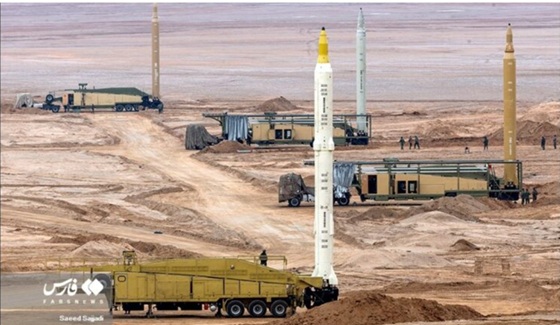
A September Wall Street Journal report, cited by Reuters, said Iranian forces were assembling ballistic missiles from existing components in underground facilities, although in smaller quantities than before the war. U.S. and Middle Eastern officials reportedly identified activity at several underground sites, including the Khojir missile complex.
The implication is that Iran can use surviving inventories and dispersed infrastructure to restart portions of production even after major strikes.
Why Dual-Use Technology Creates a Sanctions Problem
The dual-use nature of the Chinese shipments creates one of the most difficult problems for U.S. efforts to constrain Iran.
Finished ballistic missiles are relatively easy to identify.
A shipment of electric motors is not.
The same applies to:
- navigation equipment;
- industrial chemicals;
- machine tools;
- electronic components;
- aircraft parts;
- communications equipment;
- precision manufacturing equipment.
Many of these products have legitimate civilian markets.
Consequently, enforcement depends not simply on identifying the physical item but on establishing who is purchasing it, who is financing it, where it is going and how it will ultimately be used.
This creates opportunities for procurement networks involving trading companies, intermediaries and transshipment points.
China’s Position
Beijing rejects the characterization that it is improperly supporting Iran’s war effort.
Chinese officials have repeatedly said that China complies with its international obligations and opposes unilateral U.S. sanctions. In March, Chinese Foreign Ministry spokeswoman Mao Ning said Beijing opposed U.S. and Israeli military strikes against Iran and supported resolving disputes through political and diplomatic means.
In September, Foreign Ministry spokesman Guo Jiakun said China “strictly fulfills its due international obligations” when asked about allegations concerning Chinese assistance to Iran.
That position leaves an important distinction between China’s official policy and the activities of individual Chinese companies or trading networks.
The existence of Chinese-origin goods in Iran does not automatically establish direction by the Chinese government.
But repeated U.S. sanctions against Chinese-based procurement networks demonstrate that Washington considers at least some China-linked supply chains relevant to Iran’s military capabilities.
The Timing Is Increasingly Important
The issue is becoming particularly sensitive because President Donald Trump and Chinese President Xi Jinping are meeting amid wider disputes involving trade, Taiwan, technology and Iran.
Reuters reported that China’s economic relationship with Iran and alleged sanctions-evasion networks are among the sensitive issues surrounding the U.S.-China relationship.
At the same time, Russia and China recently vetoed a U.N. Security Council resolution seeking to extend the mandate of independent monitoring of sanctions on Iran. The move ended the mechanism that had been intended to provide international scrutiny of sanctions violations.
That does not establish that Beijing intends to facilitate Iranian weapons production.
It does, however, illustrate the widening gap between Washington’s sanctions strategy and Beijing’s approach to Iran.
Why Destroying Iranian Facilities May Not Be Enough
The central strategic problem is therefore broader than the destruction of missile factories.
A missile-production ecosystem consists of multiple layers:
Raw materials → chemicals → industrial machinery → electronics → guidance components → assembly → testing → storage → deployment.
Strikes against one layer can leave other layers intact.
Iran can also disperse production, move sensitive work underground, stockpile components and use civilian-looking procurement channels.
Recent evidence of underground missile assembly reinforces that point.
The result is a potentially lengthy contest between Iran’s ability to regenerate its arsenal and Washington’s ability to identify and disrupt the external supply chains supporting that regeneration.
China May Be the Most Important External Supply Question
The available evidence does not support a simple description of China as the direct supplier of Iran’s missile and drone arsenal.
It does support a narrower but significant conclusion: China-linked commercial networks have emerged repeatedly in U.S. investigations involving Iranian procurement of dual-use technology and missile-related materials.
The latest customs data adds another layer by showing the scale of reported Chinese-origin shipments reaching Iran’s Defense Ministry during the first half of 2026.
For Tehran, this matters because rebuilding a military-industrial base does not require importing finished weapons. It requires maintaining access to the industrial ecosystem that makes domestic production possible.
For Washington, that creates a difficult policy choice.
A campaign focused only on Iranian factories may leave the international procurement network largely intact. But attempting to close every channel for dual-use Chinese goods would bring the issue directly into the already complicated U.S.-China relationship.
That is why the China-Iran supply chain is becoming one of the most consequential dimensions of the wider confrontation.
The Bigger Picture
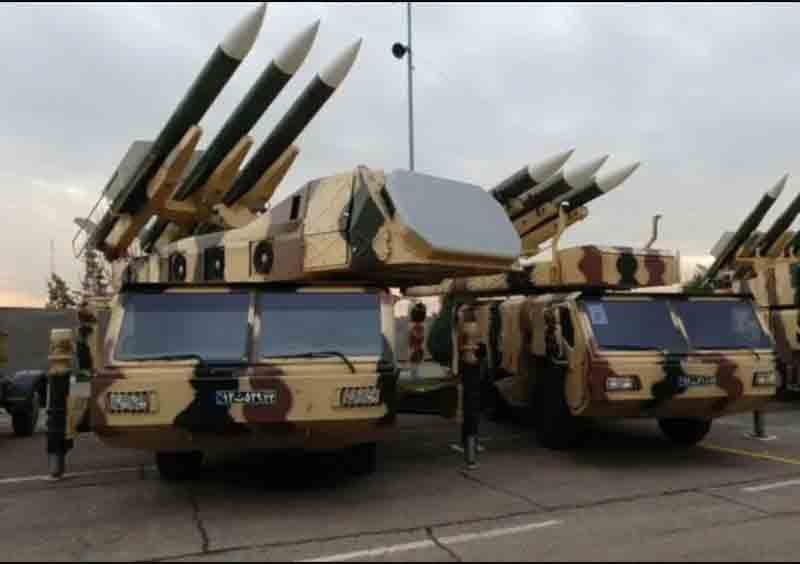
Iran’s missile and UAV capabilities are rooted primarily in domestic expertise, accumulated industrial infrastructure and years of indigenous development. Foreign supply chains nevertheless appear to provide important inputs that can help Tehran replenish damaged stocks and maintain production.
The new customs data does not prove that China is manufacturing Iran’s weapons.
It shows something more nuanced: Iran’s ability to regenerate military capabilities is connected to an international commercial ecosystem in which Chinese-origin goods occupy a significant place.
As long as those channels remain available, even at higher cost and through more complicated routes, Iran’s defense industry retains avenues for regeneration.
The emerging contest is therefore not simply about whether Iran’s missile factories can be destroyed.
It is about whether the networks supplying the factories can also be disrupted.
And that question ultimately reaches beyond Tehran—to Chinese manufacturers, trading companies, cargo routes, financial networks and, increasingly, the strategic relationship between Washington and Beijing.