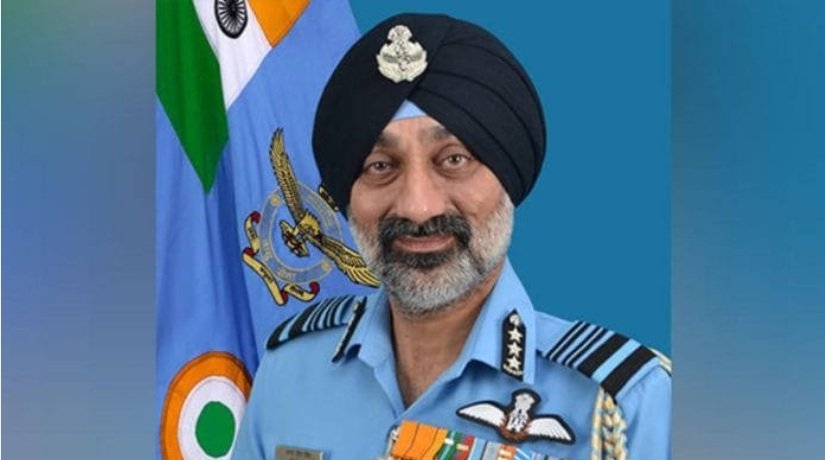
India’s struggle to expand its fighter fleet has come into sharper focus after Indian Air Force chief Air Chief Marshal AP Singh warned that New Delhi may have to consider foreign fifth-generation fighter options if the indigenous AMCA programme faces further delays.
Speaking at his annual press conference in New Delhi ahead of India’s Air Force Day, Singh said the IAF needed to accelerate the development of the Advanced Medium Combat Aircraft (AMCA) and warned that delays could force the service to examine alternatives.
Pakistan, China 5th Gen Fighter Jet cooperation is “cause of concern” but Pakistan “kuch khas kar nahi paya hai” due to lack of integration, says IAF Chief AP Singh pic.twitter.com/jkLx0ZTH0e
— Sidhant Sibal (@sidhant) October 3, 2026
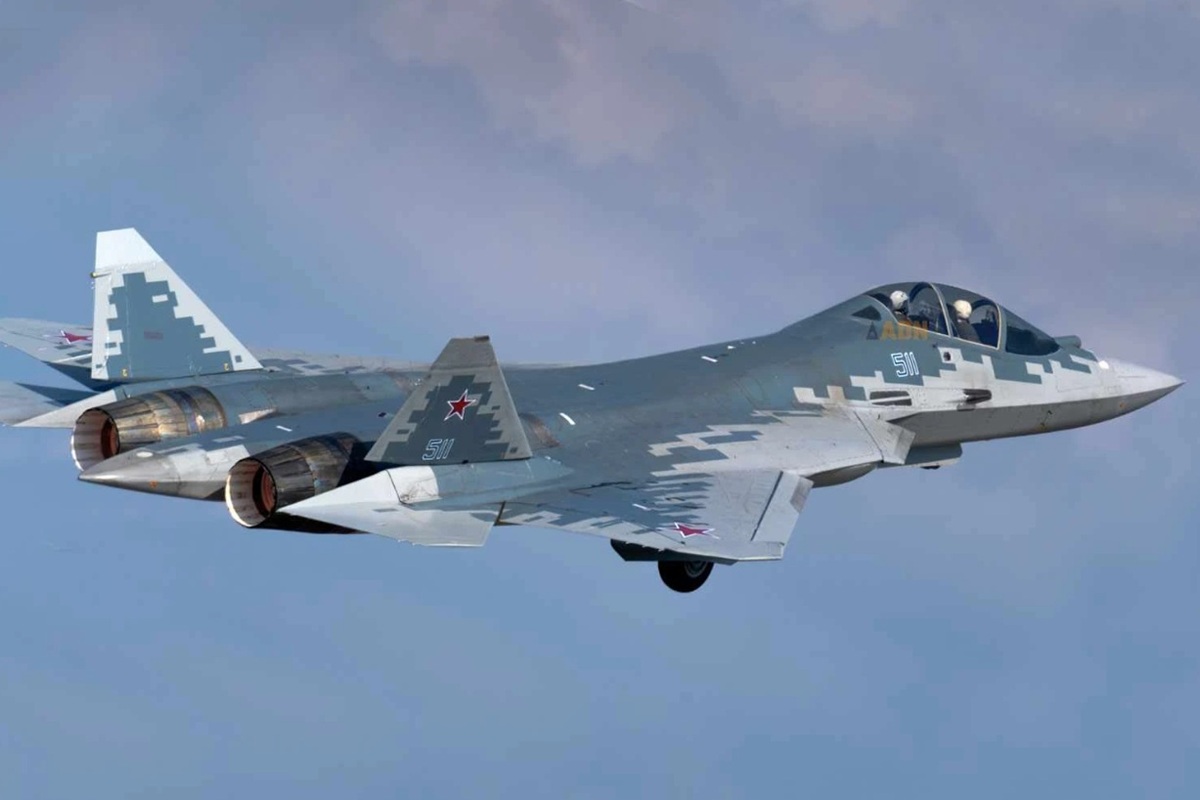
Russia has already offered India its Su-57 fifth-generation fighter, Singh confirmed, although he stressed that no decision has been taken on acquiring the Russian aircraft.
The comments expose a significant challenge for the IAF: India is pursuing an ambitious indigenous stealth fighter while simultaneously facing a shortage of combat squadrons and a growing requirement to replace ageing aircraft.
The issue has become particularly sensitive because Singh himself acknowledged that Pakistan could acquire Chinese fifth-generation aircraft in the near future.
IAF chief acknowledges Pakistan’s fifth-generation fighter plans
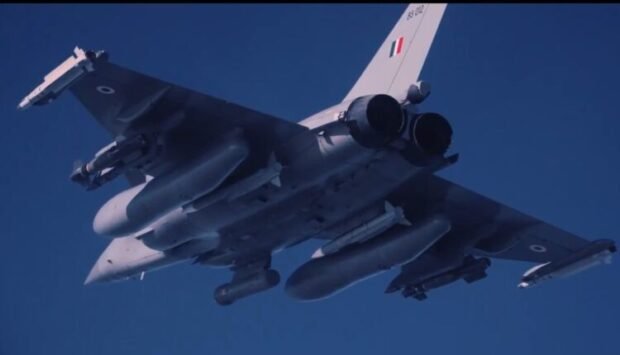
Singh was directly asked about China’s expanding fifth-generation fighter fleet and reports that Pakistan could acquire Chinese stealth aircraft.
His response was notable.
The IAF chief acknowledged that reports suggested Pakistan could obtain Chinese fifth-generation aircraft and said there were reports that Pakistani pilots were already undergoing training in China.
He described the development as a “cause for concern” for India, while arguing that the aircraft itself would not automatically determine the outcome of an air campaign.
Singh emphasized that modern air combat depends on the integration of aircraft with sensors, weapons, command-and-control systems and other capabilities rather than on a single platform.
His comments are significant because they effectively acknowledge that India’s planning is now taking Pakistan’s potential fifth-generation capability into account.
At the same time, Singh argued that the IAF had the capability to counter such a threat, at least until Pakistan fully integrates the new aircraft into its wider combat system.
That qualification is important.
It shifts the discussion from a simple J-35 versus Indian fighter comparison to the broader question of networked air warfare.
Pakistan’s J-35 programme remains a major factor
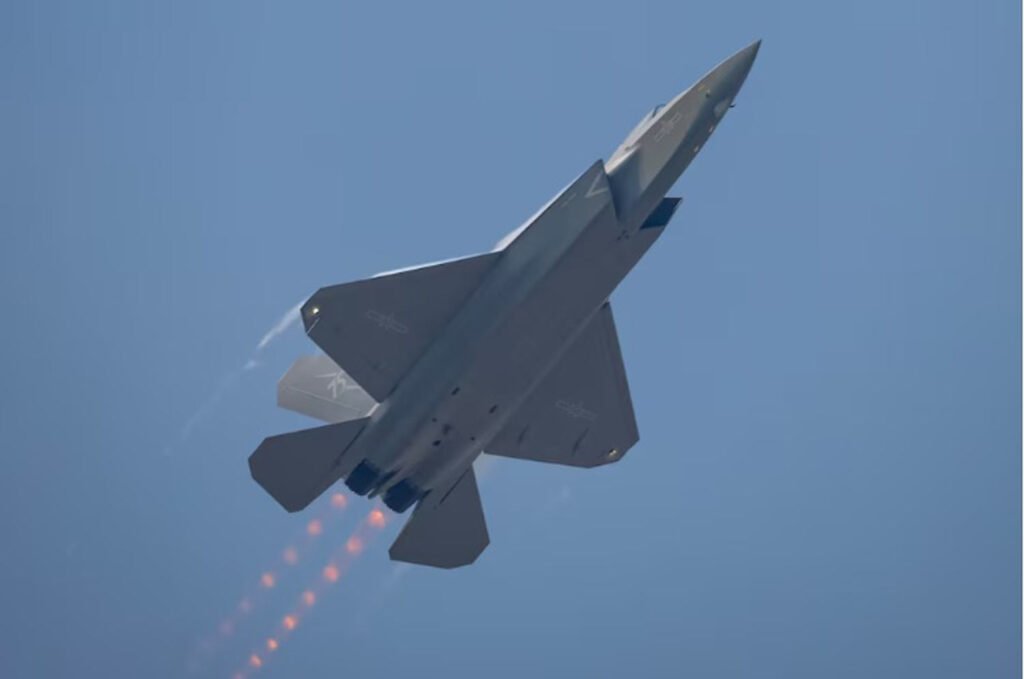
Pakistan’s reported acquisition of China’s Shenyang J-35 has been discussed for several years.
Pakistan officially acknowledged in 2025 that China had offered the country J-35 aircraft, along with other advanced defence systems.
Janes reported that the package discussed by Pakistan included up to 40 J-35 fifth-generation fighters, as well as KJ-500 airborne early-warning aircraft and the HQ-19 air-defence system.
The programme has since moved forward through various stages of preparation.
The emergence of the J-35AE export configuration in Chinese state-media coverage has further strengthened indications that China is preparing the aircraft for foreign customers, with Pakistan widely regarded as the leading candidate.
However, an important distinction remains.
There is still uncertainty surrounding the exact number of aircraft, delivery schedule and operational induction timeline.
Claims circulating online about Pakistani J-35s already arriving in large numbers have not been reliably confirmed.
Therefore, the most defensible description is that Pakistan is pursuing the J-35 capability and has been linked to training and acquisition preparations, but the precise operational status remains subject to confirmation.
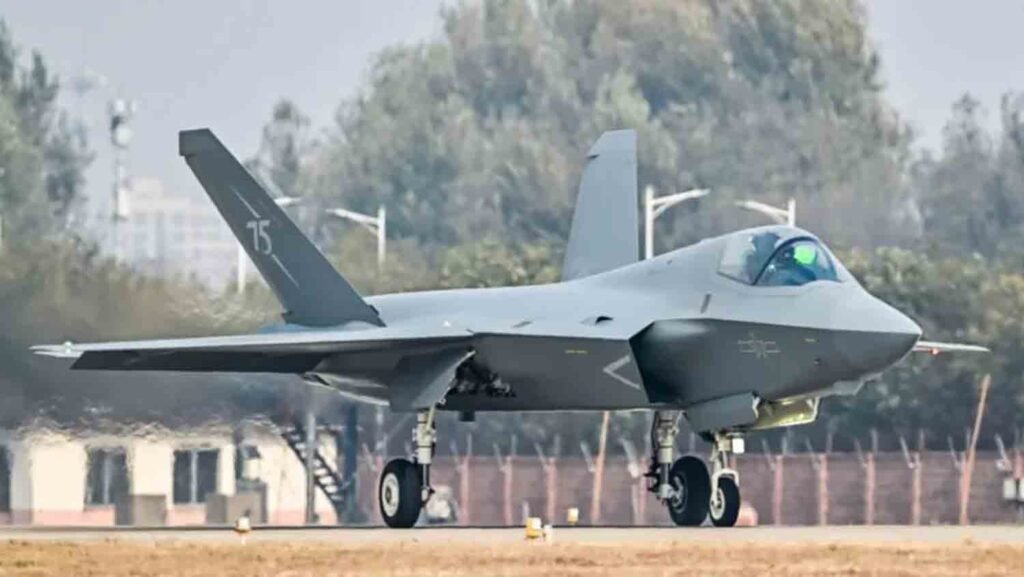
Why the J-35 matters to India’s airpower planning
The J-35 would represent a significant change in Pakistan’s combat-aircraft inventory if and when it becomes operational.
It is designed as a fifth-generation stealth fighter, incorporating a reduced radar signature, internal weapons carriage and modern sensor and data-link capabilities.
But the aircraft itself would be only one component of the capability.
A stealth fighter becomes significantly more useful when integrated with:
- airborne early-warning and control aircraft;
- long-range air-to-air missiles;
- electronic warfare;
- ground-based air-defence systems;
- data links;
- satellite and other surveillance systems;
- secure command-and-control networks;
- tanker and logistics support.
This is precisely why Singh emphasized system integration rather than focusing only on individual fighter platforms.
For Pakistan, the wider Chinese ecosystem around the J-35 is therefore more relevant than the aircraft’s specifications alone.
IAF’s fighter numbers remain a major problem
Singh also openly acknowledged the IAF’s declining fighter strength.
According to current reporting, the Indian Air Force has around 29 fighter squadrons, compared with an authorized strength of 42.
Singh said the IAF needs to receive approximately 36 to 40 fighter aircraft every year for the next several years to address the shortfall.
That gap has existed for years.
India has retired older aircraft while replacement programmes have moved more slowly than originally planned.
The MiG-21 fleet, once one of the central elements of Indian tactical aviation, was finally retired in 2025.
The problem for India is therefore not simply the absence of a fifth-generation aircraft.
It is the simultaneous need to:
- replace retired fighters;
- increase squadron numbers;
- introduce Tejas Mk1A;
- develop Tejas Mk2;
- conclude the MRFA programme;
- develop AMCA;
- integrate drones and autonomous systems;
- modernize weapons and electronic warfare.
That creates considerable pressure on India’s procurement system.
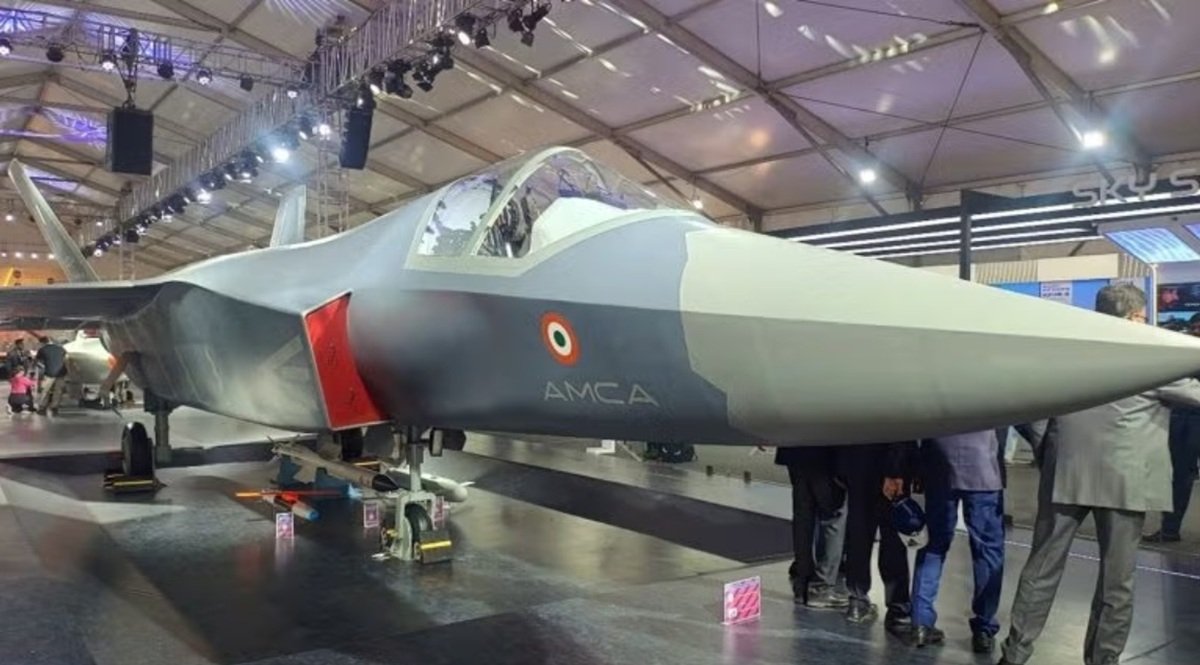
AMCA is India’s long-term answer
The Advanced Medium Combat Aircraft remains India’s principal indigenous answer to the fifth-generation fighter requirement.
The programme is being developed by the Aeronautical Development Agency with industrial participation.
In May, India’s Defence Ministry issued a request for proposals to private-sector companies for the development and production of AMCA prototypes.
Three private-sector groupings were shortlisted, involving Tata Advanced Systems, Larsen & Toubro and Bharat Forge-led interests.
The programme’s development timeline remains demanding.
Reporting on the RFP indicated that the first prototype is expected to fly within 30 months of contract signing, with several prototypes planned as part of the development phase.
But even if development proceeds according to schedule, operational induction is still years away.
That is precisely the problem highlighted by Singh.
The IAF needs more aircraft now, while AMCA is a long-term programme.
Russia’s Su-57 enters the discussion again
Russia’s Su-57 is therefore becoming relevant as a potential interim solution.
Russian President Vladimir Putin offered India the possibility of acquiring and jointly producing the Su-57 earlier this year.
Moscow proposed technology cooperation and production in India as part of the offer.
But India has not committed to the aircraft.
Defence Secretary RK Singh said in September that the government had taken no decision on acquiring the Su-57.
The Air Chief’s latest statement therefore does not represent a decision to buy the Russian aircraft.
Instead, it signals that the IAF wants the government to keep alternative options available if AMCA does not move quickly enough.
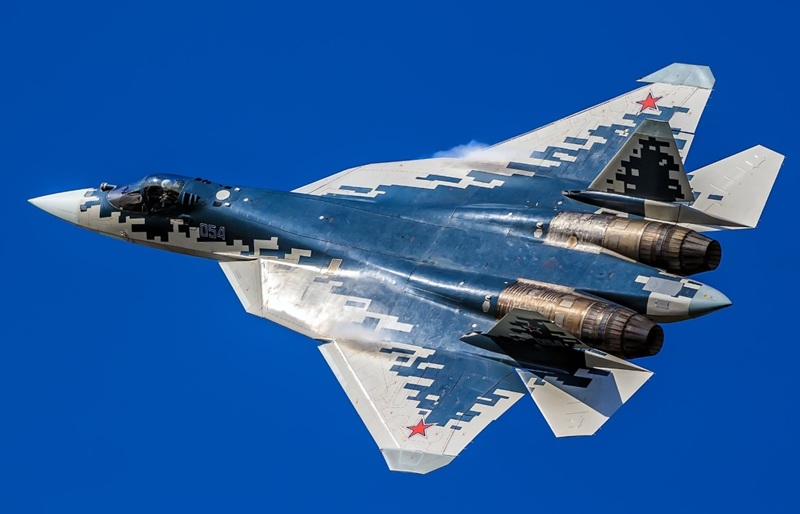
Why the Su-57 would be an unusual choice for India
The Su-57 option would represent a significant shift from India’s current procurement direction.
India previously participated in discussions with Russia over a joint fifth-generation fighter programme, commonly known as the Fifth Generation Fighter Aircraft project.
New Delhi eventually withdrew from the programme amid disagreements over cost, technology transfer, development responsibilities and performance requirements.
Russia subsequently developed the Su-57 independently.
The renewed Russian offer therefore represents a return to a concept that India previously abandoned.
There is also a broader strategic consideration.
India has spent years attempting to diversify its defence procurement beyond Russia, particularly as supply-chain and geopolitical complications associated with the Ukraine war have affected Russian defence exports.
An Su-57 acquisition could therefore provide India with a relatively rapid route to a fifth-generation capability but would also deepen dependence on another major Russian combat-aircraft ecosystem.
India’s Rafale fleet cannot solve the fifth-generation gap
India currently operates French Rafale fighters, which provide advanced 4.5-generation capabilities.
The Rafale is a sophisticated multirole aircraft, but it is not a fifth-generation stealth fighter.
That distinction is increasingly important as China expands its fleet of J-20 and J-35 aircraft and Pakistan pursues the J-35.
The IAF is therefore attempting to solve two different problems at once:
Near-term problem: increase the number of available combat aircraft.
Long-term problem: obtain a credible fifth-generation capability.
MRFA and additional Rafale aircraft address the first problem more quickly than AMCA.
AMCA is intended to address the second.
MRFA could provide another bridge
Singh also indicated that India’s Multi-Role Fighter Aircraft (MRFA) programme could potentially be finalized during the current financial year, although he stressed that the outcome depends on several factors.
The programme is intended to strengthen the IAF’s fighter fleet with additional multirole aircraft.
The Rafale is widely expected to remain central to India’s discussions because India already operates the type.
However, the broader competition has historically involved several Western and Russian fighter manufacturers.
The challenge is that MRFA aircraft, regardless of which platform India eventually selects, would still not eliminate the fifth-generation gap.
Instead, they would provide additional fourth-generation-plus capability while AMCA is developed.
The IAF is trying to fill several gaps simultaneously
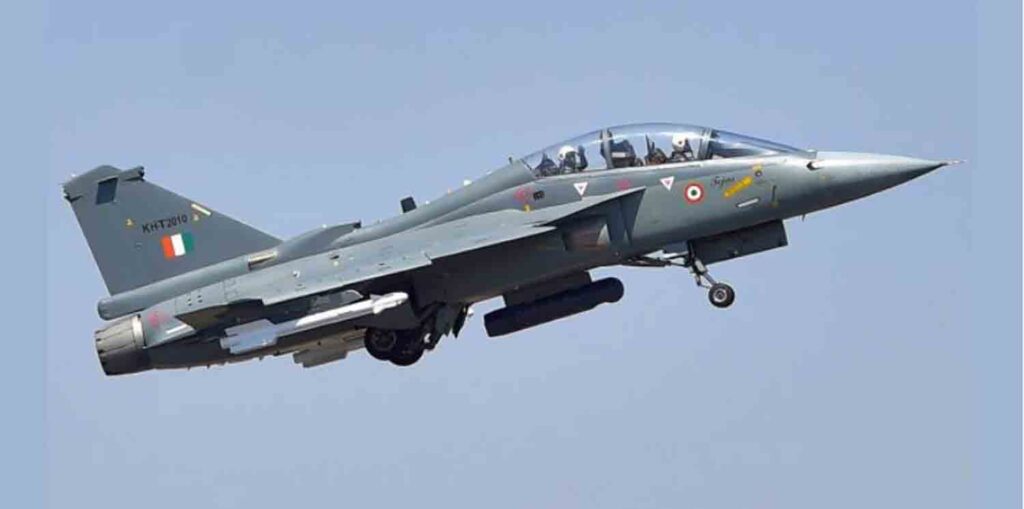
Singh’s comments reveal the scale of India’s modernization challenge.
The IAF is simultaneously pursuing:
Tejas Mk1A:
A light fighter intended to increase fleet numbers and replace older aircraft.
Tejas Mk2:
A larger indigenous multirole fighter intended to provide greater capability.
MRFA:
A foreign multirole fighter acquisition aimed at increasing squadron strength.
AMCA:
India’s indigenous fifth-generation stealth fighter.
Drones and loitering munitions:
An expanding unmanned capability integrated with conventional aircraft and other weapons.
The problem is synchronization.
If one programme slips, pressure increases on the others.
That is why Singh’s warning about AMCA alternatives is more significant than a simple procurement comment.
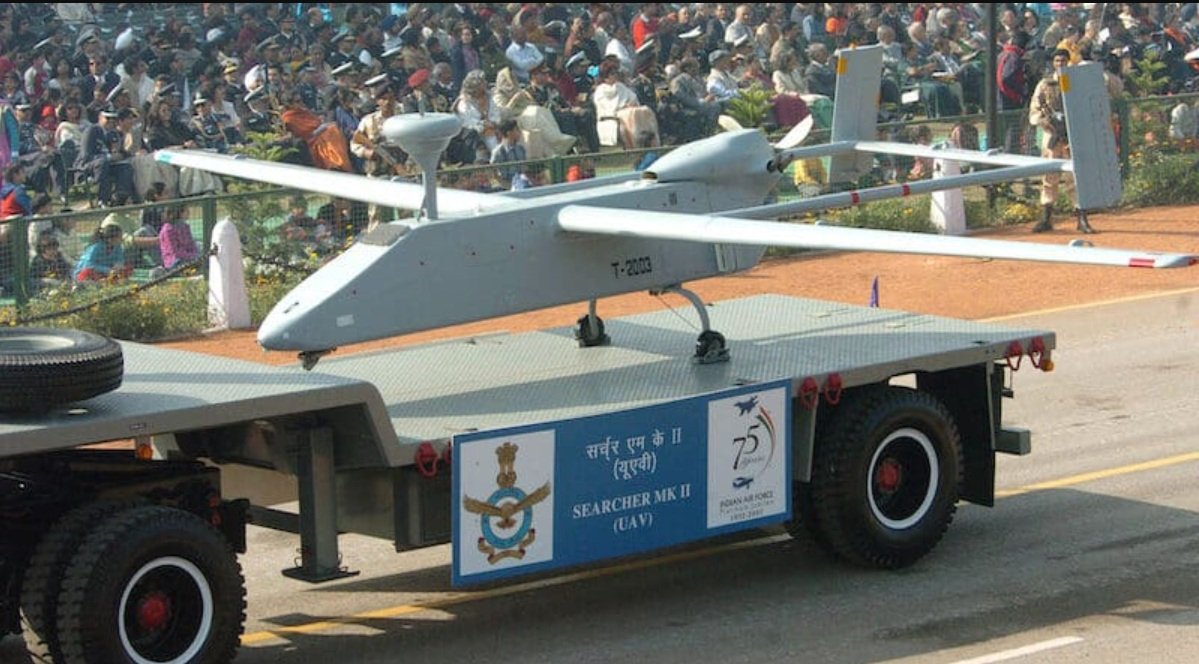
IAF does not want a separate drone force
Singh also outlined India’s approach to unmanned warfare.
He rejected the idea of creating a completely separate drone force, describing drones and loitering munitions as an evolutionary development that should be integrated with existing combat capabilities.
The concept is increasingly important in modern air warfare.
Instead of treating drones as an independent arm, the IAF wants unmanned systems to operate alongside fighters, missiles, electronic-warfare platforms and other weapons.
This approach is consistent with the broader evolution toward network-centric warfare.
The experience of the Ukraine war, the Middle East and recent South Asian air operations has demonstrated the growing importance of relatively inexpensive unmanned systems operating alongside sophisticated aircraft.
AI becomes central to India’s air strategy
Singh also said the IAF wants to build an AI-augmented force.
His emphasis was not on replacing human decision-makers.
Instead, he said artificial intelligence should assist commanders and operators while humans remain within the decision-making chain.
This could involve AI-supported:
- sensor fusion;
- target identification;
- threat detection;
- electronic warfare;
- mission planning;
- predictive maintenance;
- air-defence coordination;
- unmanned-system control.
The development points toward a future in which the effectiveness of a fighter fleet depends increasingly on the network surrounding the aircraft.
That is particularly relevant to the India-Pakistan air-power competition.
The real competition is moving beyond the fighter jet
Singh’s comments about Pakistan’s prospective fifth-generation capability are revealing because he specifically emphasized integration.
That is also the central issue for Pakistan.
A J-35 alone would not transform the Pakistan Air Force.
Its value would depend on how effectively it is connected with the PAF’s existing sensors, command-and-control architecture, airborne early-warning platforms, electronic warfare capabilities, long-range missiles and ground-based systems.
The same principle applies to India’s future AMCA.
An advanced aircraft without an effective combat network cannot deliver its full potential.
This is why the emerging competition between India and Pakistan is increasingly becoming a contest between air-combat systems, rather than simply aircraft numbers.
Pakistan’s Chinese ecosystem is attracting Indian attention
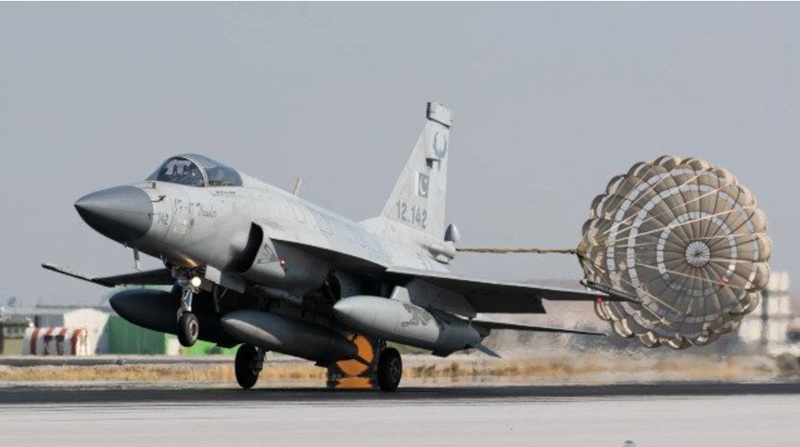
India’s concern is also linked to the wider evolution of China’s defence cooperation with Pakistan.
Pakistan and China have already cooperated extensively on the JF-17 Thunder, which forms a major part of Pakistan’s modern fighter fleet.
Pakistan also operates the Chinese J-10C, while the PAF continues to modernize its JF-17 fleet.
The potential addition of the J-35 would create another layer in that architecture.
The aircraft could eventually be integrated with other Chinese-origin systems, including airborne early warning and air-defence capabilities.
Janes reported in 2025 that China’s offer to Pakistan included the J-35 alongside KJ-500 and HQ-19 systems.
This is why the Indian Air Chief’s remarks focused on system integration rather than simply the J-35’s individual performance.
What Singh’s comments reveal about India’s dilemma
The IAF chief’s statements expose three simultaneous pressures on India.
1. India lacks an operational fifth-generation fighter
China has fielded fifth-generation aircraft, while India is still developing AMCA.
Pakistan is pursuing a Chinese fifth-generation platform.
That leaves India attempting to close a capability gap through an indigenous programme that remains years from operational deployment.
2. India’s fighter squadron strength is below its authorized target
Singh’s acknowledgment of around 29 squadrons against an authorized 42 highlights the numerical problem.
Even successful development of AMCA will not immediately solve the shortage.
India therefore needs additional aircraft before its indigenous stealth fighter becomes operational.
3. Procurement delays are affecting several programmes
India has repeatedly faced delays in fighter development and acquisition.
The result is a difficult procurement cycle in which ageing aircraft are retired while replacements take years to arrive.
Singh’s call for a “whole-of-nation approach” reflects the urgency with which the IAF now views these programmes.
Does this mean India will buy the Su-57?
No.
Singh’s comments should not be interpreted as confirmation of an Indian Su-57 purchase.
What has changed is that the IAF chief has publicly stated that an alternative fifth-generation option may need to be considered if AMCA is delayed.
Russia has already placed the Su-57 on the table.
India’s government has not announced a decision.
The distinction is important because the Su-57 would involve major questions involving cost, production, technology transfer, weapons integration, logistics and India’s broader defence relationship with Russia.
What it means for Pakistan
From Pakistan’s perspective, the most important aspect of Singh’s remarks is the explicit acknowledgement that the IAF is monitoring Pakistan’s potential move into the fifth-generation fighter category.
Singh did not dismiss the potential Pakistani capability.
Instead, he argued that India’s broader system integration would allow it to counter the threat.
That makes India’s accelerated push for AMCA, MRFA, AI, drones and networked warfare particularly relevant to Pakistan’s own modernization plans.
The emerging competition is therefore unlikely to be determined by stealth aircraft alone.
Pakistan’s ability to integrate its fighters with airborne early warning, electronic warfare, air-defence and long-range weapons will be equally important.
India faces a race against time
The central challenge for New Delhi is timing.
AMCA may eventually provide India with an indigenous fifth-generation fighter.
But the IAF needs aircraft before AMCA becomes operational.
MRFA could help.
Tejas Mk1A can help.
Tejas Mk2 could eventually help.
A Russian Su-57 acquisition could theoretically provide a faster fifth-generation capability.
But every option involves trade-offs.
The IAF therefore finds itself attempting to modernize several layers of its air force simultaneously while dealing with an existing fighter-squadron shortfall.
The wider South Asian air-power competition
The latest statements point toward a new phase in the India-Pakistan air-power competition.
The previous generation of the contest centred heavily on fourth-generation and 4.5-generation aircraft such as the F-16, JF-17, J-10C, Su-30MKI and Rafale.
The next phase is likely to involve:
- fifth-generation aircraft;
- long-range air-to-air missiles;
- airborne early-warning aircraft;
- electronic warfare;
- unmanned combat aircraft;
- loitering munitions;
- AI-supported command systems;
- integrated air defence;
- satellite and networked surveillance.
That makes the traditional question of “which fighter is better?” increasingly inadequate.
The more important question is which side can build the more resilient and integrated combat system.
Bottom line
Air Chief Marshal AP Singh’s latest comments are significant because they amount to an unusually direct acknowledgment of the pressures facing India’s fighter modernization programme.
India wants AMCA to become its indigenous fifth-generation solution.
But the IAF does not want to wait indefinitely.
The service is simultaneously pushing Tejas Mk1A, Tejas Mk2 and MRFA while expanding drone and AI capabilities.
Russia’s Su-57 is now being kept on the table as a potential alternative if AMCA slips further.
At the same time, Singh’s remarks show that Pakistan’s reported move toward China’s J-35 is now part of India’s air-power calculations.
For Pakistan, the development is worth watching closely.
The important issue is not whether the IAF chief has admitted that India is “defeated” by a future Pakistani fighter — he has not.
Rather, his remarks reveal something more concrete: India recognizes that its fighter numbers and fifth-generation capability are under pressure, and New Delhi is considering multiple ways to close the gap before AMCA becomes operational.
The next stage of the South Asian air-power competition will therefore be fought not only in aircraft factories, but in sensors, data links, electronic warfare, missiles, AI, airborne early warning and the ability to integrate all of them into a single combat network.