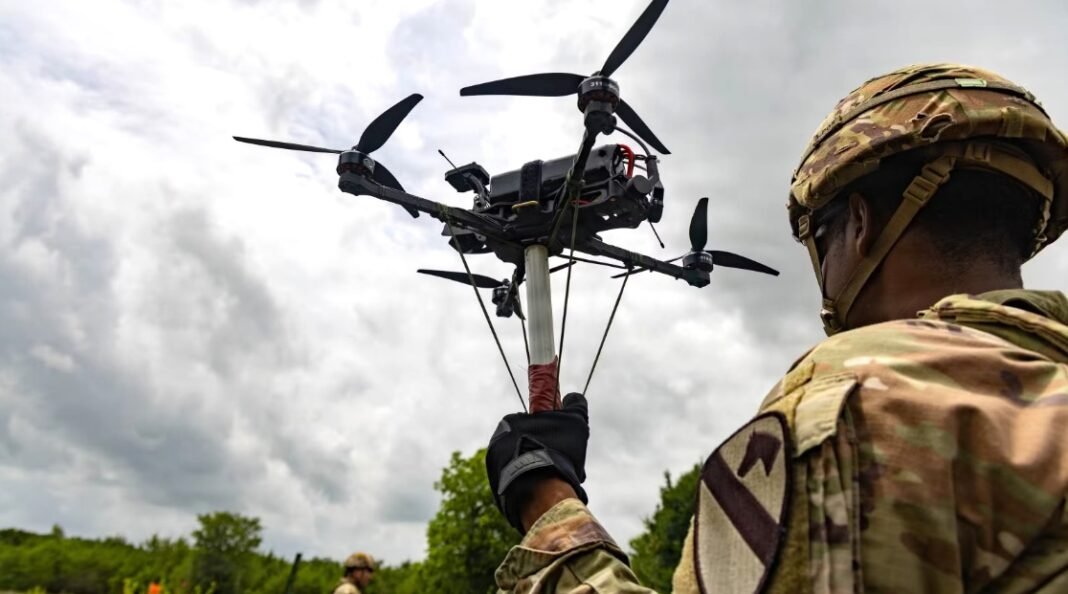
Iran’s Islamic Revolutionary Guard Corps has warned that Tehran is prepared for a long-term war and would fundamentally change its military response if the United States launches another attack.
IRGC spokesman Brigadier General Hossein Mohebbi said Iran would change both the weapons used and the geography of the conflict, while striking targets that have not previously been attacked.
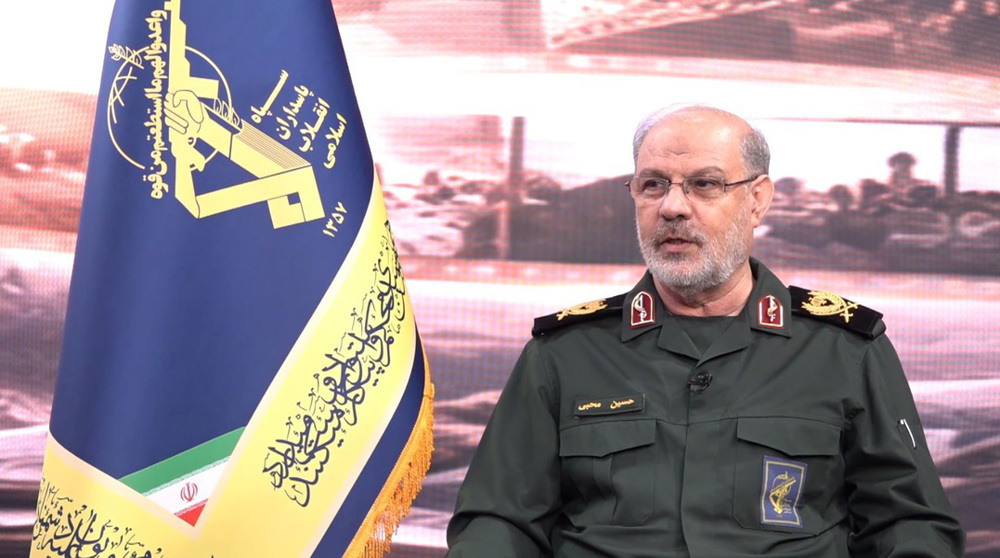
“If a new aggression occurs, we will certainly change the weaponry and the geography of the war,” Mohebbi said, according to Iranian media reports. He added that Iran would introduce new weapons with new capabilities and that the resulting changes would surprise the world.
The statement represents one of the clearest recent indications that Tehran believes a future phase of the conflict could look significantly different from the fighting already seen between Iran, the United States and Israel.
Iran says new targets have already been identified
Mohebbi said Iranian military planners had already identified targets that were not attacked during earlier phases of the conflict.
“Our targets are no longer the same targets as before. We have identified new targets that have not yet been attacked,” he said.
Iran has not disclosed the locations or categories of those targets.
That leaves open several possibilities, but there is no independent evidence at this stage that Tehran has selected any particular new city, military base, port or energy facility.
Based on the pattern of the conflict, however, a broader Iranian targeting concept could potentially include additional US military infrastructure, regional logistics and command facilities, air bases, maritime assets or other support infrastructure connected to US operations.
What are Iran’s “new weapons”?
This is the most important unanswered part of Mohebbi’s warning.
The IRGC spokesman said Iran has produced weapons during the conflict and before it, and that some systems described by him as strategic weapons were not used during previous stages. He did not identify them.
Therefore, it would be premature to claim that Iran is preparing to use a particular missile.
However, Iran possesses several classes of weapons that could theoretically form part of a more diversified response.
1. New or upgraded ballistic missiles
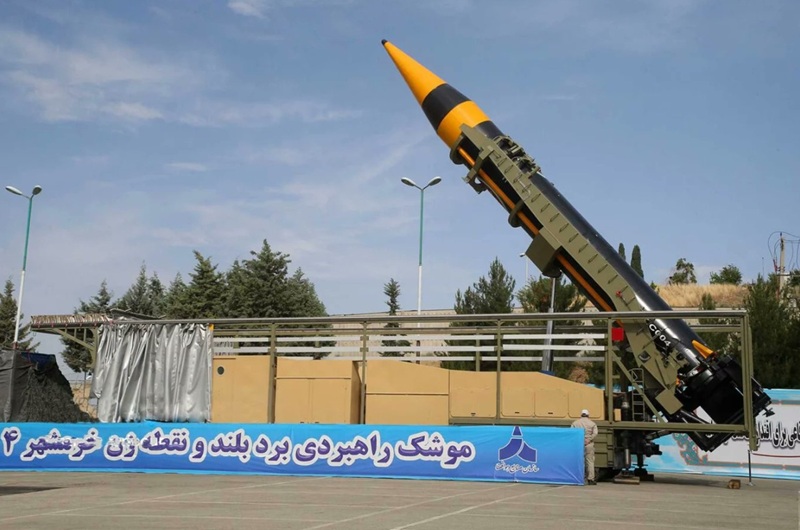
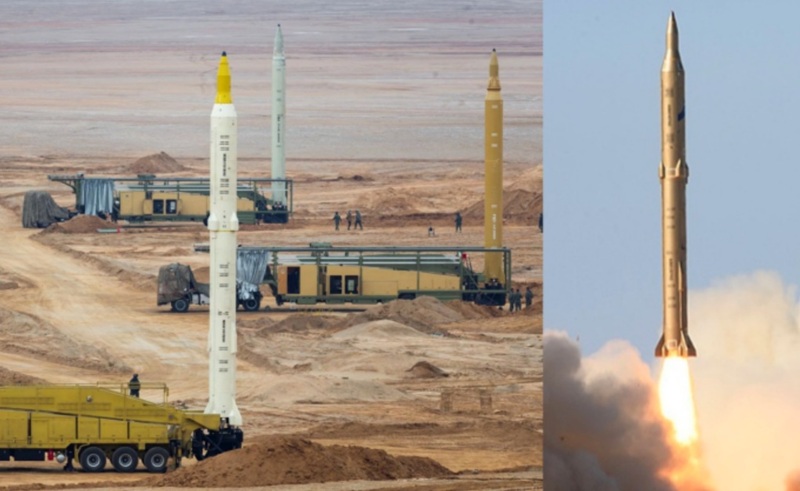
Iran has one of the Middle East’s largest and most diverse ballistic-missile arsenals. Publicly documented systems include the Sejjil, Shahab-3, Emad, Ghadr, Khorramshahr and Kheibar Shekan families.
The Sejjil is particularly notable because it uses solid fuel, while Iran has continued to work on improving missile precision, survivability and range. CSIS says Iran’s missile force includes thousands of ballistic and cruise missiles and that Tehran has continued efforts to improve precision and lethality.
Iran has also publicly discussed moving beyond its longstanding roughly 2,000-kilometre missile-range benchmark. Analysts at the Critical Threats Project reported in July that Iranian officials had discussed extending missile ranges, while Tehran has previously attempted to strike targets much farther away.
That does not mean Iran now possesses an operational intercontinental missile. Rather, it shows that longer-range strike capability has become part of the strategic discussion in Tehran.
2. Hypersonic and maneuvering missiles
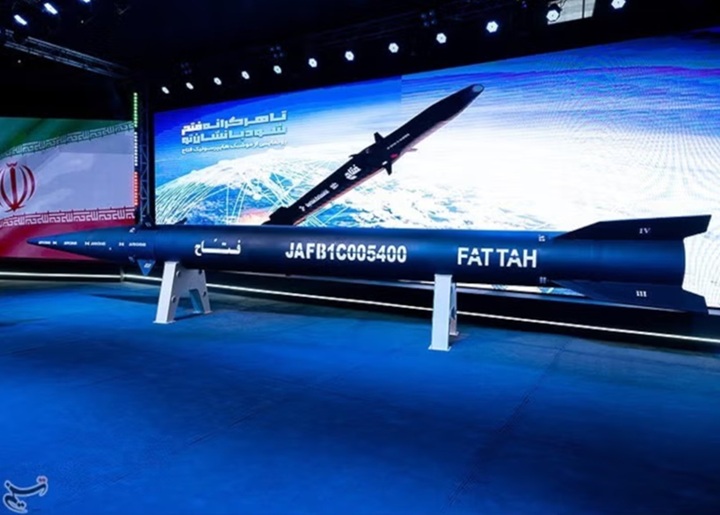
Iran has repeatedly highlighted its Fattah family of missiles as part of its high-end strike capability.
The significance of such systems is less about the label “hypersonic” and more about the combination of speed, maneuverability and the difficulty they can create for missile-defense systems.
Iran has also continued to develop ballistic missiles with maneuvering re-entry capabilities.
But there is currently no Iranian statement linking Fattah or another named missile specifically to Mohebbi’s latest warning.
3. Cruise missiles and anti-ship weapons
Another possibility is an expanded use of cruise missiles and anti-ship systems.
Iran has a broad family of land-attack and anti-ship cruise missiles, including systems such as Paveh, Soumar, Hoveyzeh and various Quds-derived systems.
This category becomes particularly significant because the Strait of Hormuz remains at the centre of the confrontation.
A future conflict could therefore involve greater emphasis on maritime denial, coastal missile batteries, drones and anti-ship weapons rather than relying exclusively on ballistic-missile attacks.
Again, that is an assessment of the capability Iran possesses, not confirmation of what the IRGC intends to use.
4. A new air-defence system is already being reported
There is, however, one genuinely new capability that has appeared in recent Iranian battlefield claims.
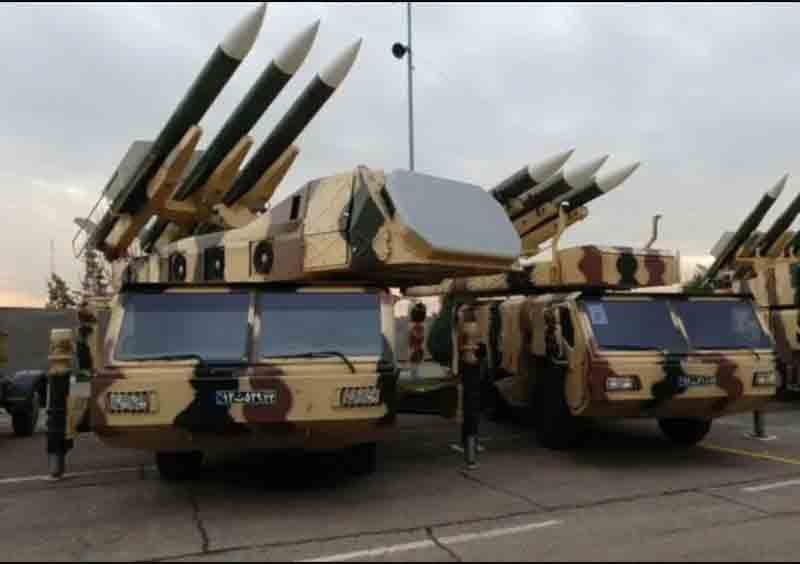
Iran’s Revolutionary Guard said on September 21 that its forces had shot down a US MQ-1 drone over the Strait of Hormuz using a new advanced air-defence system operated by the IRGC Aerospace Force and integrated into Iran’s wider air-defence network.
Iran had made similar claims about MQ-1 interceptions earlier in September, saying the drones were being engaged by a newly deployed air-defence system.
The important point is that Iran has not publicly disclosed the name or full technical specifications of this system.
That makes the MQ-1 incident particularly relevant to Mohebbi’s statement about “new weapons.”
It demonstrates that Iran may be introducing or deploying capabilities that were not widely identified publicly before the current phase of the conflict.
Could Iran use its missile arsenal differently in a new war?

Possibly.
Iran’s earlier attacks have demonstrated a combination of ballistic missiles, cruise missiles and drones. Iranian state media has previously reported the use of systems including Khorramshahr, Kheibar Shekan, Fattah and Qader missiles alongside drones.
A future Iranian campaign could therefore place greater emphasis on mixed salvos involving different missile and drone types.
The military logic would be to complicate the task of defending forces by presenting different kinds of aerial threats simultaneously.
Iran’s missile force also offers Tehran the ability to threaten US military infrastructure across a broad area of the Gulf and surrounding region. Reuters previously documented Iranian systems such as Sejjil, Ghadr, Shahab-3, Khorramshahr and Emad, with several systems capable of reaching targets across the region.
But whether Iran has held back a specific weapon for a future attack remains impossible to independently establish from the latest statement.
What could Iran mean by changing the “geography of the war”?
This may be more significant than the weapons warning.
Mohebbi explicitly said Iran would change the geography of the conflict.
That could mean that a future confrontation would not remain concentrated on the same Iranian, Israeli and Gulf locations that have already been targeted.
The conflict has already spread across multiple theatres, including the Persian Gulf, Yemen and Red Sea approaches. Recent Houthi attacks on Saudi Arabia have further complicated the regional security picture. Reuters reported that the continuing conflict has severely disrupted shipping through both the Strait of Hormuz and Bab el-Mandeb.
Iran’s warning could therefore signal an intention to make a future response geographically broader.
Potential categories could include:
- additional US military facilities in the region;
- maritime forces operating around the Gulf;
- logistics and supply infrastructure;
- command-and-control facilities;
- air bases supporting operations against Iran;
- other regional military infrastructure linked to the US campaign.
None of these locations has been identified by Iran as one of its “new targets.” They are categories that fit the broader meaning of Mohebbi’s warning.
Strait of Hormuz remains a major pressure point
The warning comes as commercial traffic through the Strait of Hormuz has fallen sharply.
Reuters reported that only 17 commodity vessels transited the waterway over the weekend, compared with 37 the previous week and an estimated pre-war average of about 125 large commercial vessels per day.
Other reporting based on Kpler tracking data put the number of visible commodity vessels at 12, illustrating the difference between datasets and tracking methodologies. Some Middle Eastern oil exports are continuing on tankers whose transponders are switched off.
The distinction is important: the fall in visible, trackable shipping does not mean all oil movement through the waterway has stopped.
The continued disruption nevertheless gives Iran a major source of strategic leverage because Hormuz is one of the world’s most important energy chokepoints.
Iran claims US bases have already suffered damage
Mohebbi also argued that US military bases across the region had already come under Iranian missile and drone attacks.
Iranian officials have repeatedly claimed significant damage to American military infrastructure. Separately, a US government watchdog assessment reported substantial damage to American military facilities during the war, including losses involving aircraft and drones. AP reported that the assessment covered damage to US bases in countries including Kuwait, Bahrain and Saudi Arabia and that up to 30 MQ-9 Reapers were lost or damaged during the reporting period.
The two sides continue to characterize the military results very differently, so claims of operational success should be attributed rather than presented as independently established facts.
Iran’s warning comes amid renewed diplomatic activity
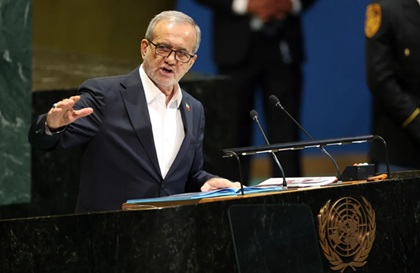
The military warning is being issued at the same time as diplomatic activity is increasing.
Iranian President Masoud Pezeshkian is scheduled to travel to New York on Tuesday for the United Nations General Assembly, according to Iranian state media.
Iranian Foreign Minister Abbas Araghchi has also travelled to New York for the UN meetings.
US President Donald Trump has indicated that he would be open to meeting Pezeshkian, adding an unusual diplomatic dimension to a confrontation that remains militarily volatile.
The simultaneous military warnings and diplomatic movements suggest that Tehran is keeping both pressure and negotiation channels open.
Pakistan’s Mohsin Naqvi heads to Tehran
The regional situation also has direct implications for Pakistan.
Pakistan’s Interior Minister Mohsin Naqvi left for Tehran on Monday for talks with Iranian officials as Islamabad continues diplomatic engagement amid the widening regional crisis. Anadolu reported that his visit would focus on the evolving regional situation and discussions with Iranian leadership.
The visit is particularly significant because Pakistan maintains relations with both Iran and Saudi Arabia while the regional conflict is increasingly affecting Gulf security and the wider Muslim world.
Pakistan’s diplomatic position has also become more important following the Makkah Joint Defence Agreement with Saudi Arabia and Türkiye. Pakistan’s Foreign Ministry has described the agreement as defensive and focused on collective deterrence and regional stability.
Islamabad has simultaneously emphasized diplomacy and de-escalation in dealing with the Iran-related crisis.
Iran’s message: the next phase could be different
The most important element of Mohebbi’s statement is not the promise of a particular missile.
Iran is deliberately keeping the details ambiguous.
The IRGC has confirmed three things:
- Iran says it is prepared for a prolonged conflict.
- Iran says it possesses weapons that have not yet been used in the conflict.
- Iran says it has identified targets that have not previously been attacked.
It has not, however, named those weapons or targets.
The recent Iranian claim involving a new air-defence system is one concrete indication that previously undisclosed or newly deployed capabilities may be entering the battlefield. At the same time, Iran’s established ballistic and cruise-missile arsenal gives Tehran several options for changing the character and geography of any future confrontation.
For now, the strongest conclusion supported by the available evidence is that Tehran is preparing to make any renewed US offensive more difficult and less predictable, while keeping the precise nature of its planned response deliberately undisclosed.
The next major indicators will be whether Iran identifies the new air-defence system, publicly unveils another missile or drone capability, or provides any indication of what it means by the “new targets” mentioned by the IRGC.