New Pentagon-Led Framework Targets Unauthorized Drone Incursions Over Military Bases, Critical Infrastructure and Civilian Airspace, With High-Energy Lasers and Electronic Countermeasures Among the Technologies Under Evaluation
The United States has launched a major interagency initiative to strengthen its defences against unauthorized and potentially hostile drones, bringing five federal departments under a coordinated framework for evaluating and deploying counter-unmanned aircraft systems (C-UAS).
The Departments of Defense, Transportation, Homeland Security, Energy and Justice signed a memorandum of understanding (MOU) on November 9, 2026, establishing a unified federal process for testing, assessing and deploying technologies designed to detect, track, disable or take control of dangerous drones.
Led by the White House Task Force to Restore American Airspace Sovereignty, the agreement reflects growing concern in Washington over unauthorized drone activity around military installations, government facilities, border regions, energy infrastructure and other sensitive locations.
The initiative also seeks to address a major operational challenge: counter-drone systems must be capable of neutralizing aerial threats without disrupting commercial aviation, civilian communications, radar or navigation equipment.
The Federal Aviation Administration (FAA) and Federal Communications Commission (FCC) will play important roles in the process, helping ensure that new technologies meet aviation and communications safety requirements before deployment.
Five Federal Departments Establish Unified Counter-Drone Framework
The memorandum brings together agencies that previously handled different aspects of drone security, creating a more coordinated approach to the growing unmanned aerial threat.
Each department contributes a distinct capability.
- Department of Defense: Provides military counter-drone technology, operational expertise and protection for military installations and sensitive defence facilities.
- Department of Homeland Security: Addresses drone threats along the US border, against federal personnel and around critical national security infrastructure.
- Department of Transportation: Coordinates transportation-sector requirements and civilian aviation considerations.
- Department of Energy: Supports protection of energy infrastructure and facilities considered vital to national security.
- Department of Justice: Coordinates law enforcement responses, investigations and prosecutions involving dangerous or unlawful drone activity.
The agencies will share technical requirements, testing information and operational data to accelerate the evaluation of counter-drone technologies.
According to the US Department of Transportation, the framework is intended to reduce bureaucratic delays while ensuring that counter-drone capabilities can be introduced without creating additional risks for civilian aviation.
Transportation Secretary Sean Duffy described the initiative as a whole-of-government approach to protecting American airspace against emerging threats.
Pentagon Expands Focus on Military Bases and Critical Infrastructure
The growing use of small unmanned aerial systems has complicated security operations around military facilities and sensitive national infrastructure.
Unlike conventional aircraft, small commercial drones can operate at low altitudes, use relatively inexpensive components and be difficult to distinguish from legitimate civilian activity.
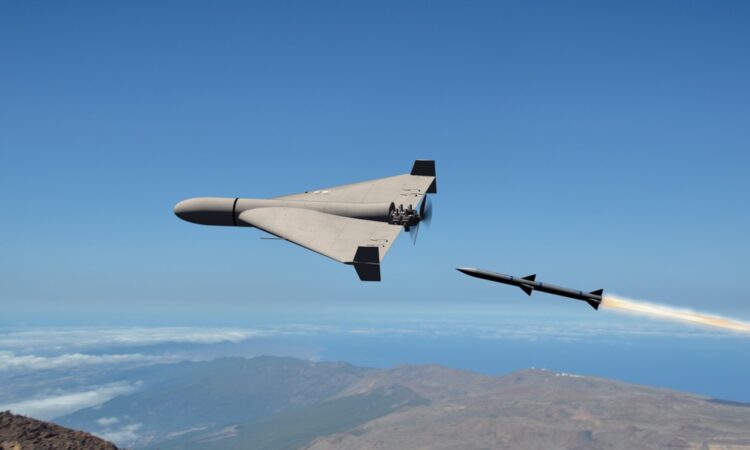
They can potentially be used for reconnaissance, surveillance, weapons delivery, smuggling and disruption of critical infrastructure.
Recent unauthorized drone activity around sensitive American installations has increased pressure on federal agencies to establish a coordinated response.
One reported example involved drone activity around Fort McNair in Washington, D.C., which heightened security concerns because of the installation’s sensitive location.
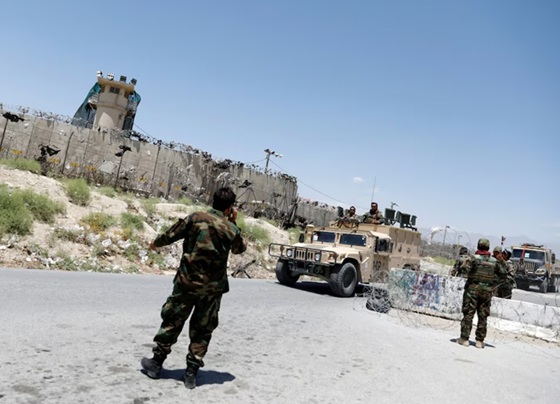
The Pentagon is also concerned about unmanned aircraft operating near military training facilities, airfields, logistics centres and other installations.
The new agreement is intended to improve the government’s ability to identify potential threats, coordinate responses and deploy appropriate countermeasures.
More Than 1,000 Drone Incursions Reported Monthly Along US-Mexico Border
The US-Mexico border has become one of the most important areas driving Washington’s counter-drone expansion.
According to Reuters, US security officials have reported more than 1,000 drone incursions monthly along the southern border.
American authorities have increasingly raised concerns about Mexican criminal organizations using unmanned aircraft to monitor law enforcement movements, observe trafficking routes and transport drug packages.
Such activity creates a challenge for border security agencies because commercial drones are inexpensive, readily available and capable of operating beyond the immediate reach of conventional surveillance systems.
In October 2026, the FAA imposed temporary flight restrictions prohibiting unauthorized drone activity up to 400 feet above ground level along the US-Mexico border. The restricted area extends one nautical mile north of the international boundary.
The restrictions reflect the growing use of airspace-control measures as part of the American response to drone-related security threats.
The November memorandum expands the institutional framework supporting these operations, potentially making it easier for agencies to evaluate and introduce additional counter-drone capabilities.
High-Energy Lasers Become Part of America’s Counter-Drone Strategy
One of the most significant technological dimensions of the initiative is the use of directed-energy weapons, particularly high-energy laser systems.
Unlike conventional missile-based air defence systems, laser weapons use concentrated energy to damage or disable a target.
They offer several potential advantages against small drones, including rapid engagement, precision and a lower marginal cost per engagement once the system is operational.
However, their effectiveness depends on factors such as atmospheric conditions, target distance, tracking accuracy and the drone’s construction.
The Pentagon has already demonstrated high-energy laser counter-drone capabilities along the southern border.
In April 2026, the FAA and Pentagon completed a safety assessment of a high-energy laser system intended for counter-drone operations. The assessment examined whether the system could be operated without creating unacceptable risks for passenger aircraft.
The latest interagency agreement builds on that work by establishing a broader process for assessing additional counter-drone technologies.
The framework is not limited to lasers. It also covers systems capable of detecting, tracking, stopping or taking control of unauthorized drones.
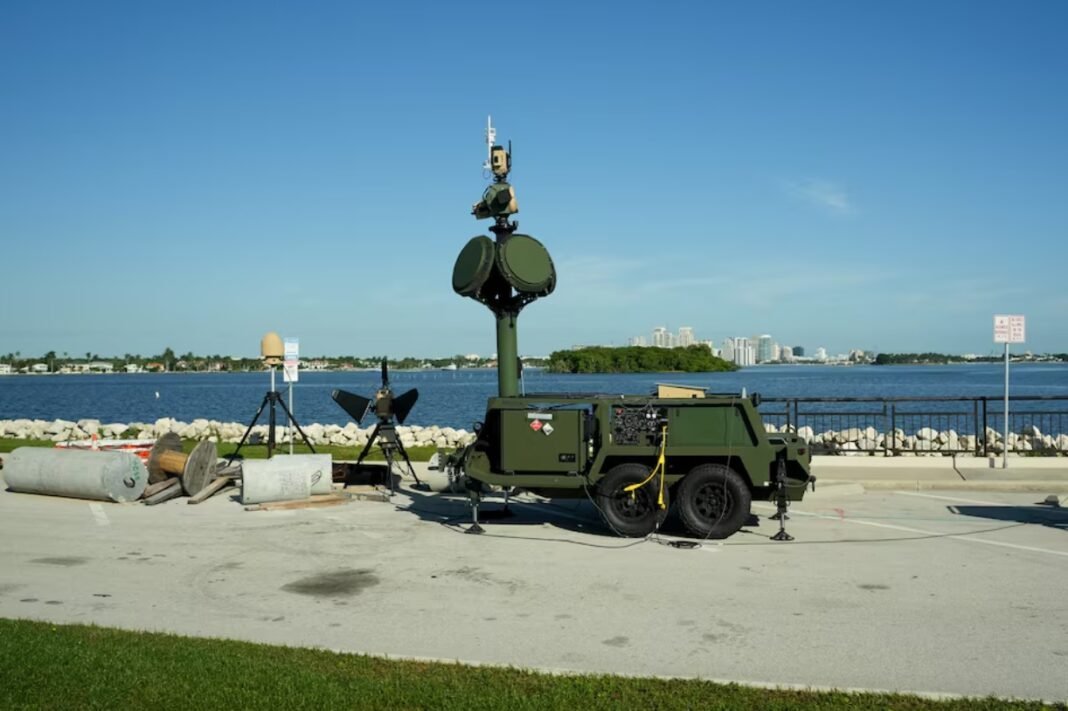
These capabilities could include radar-based detection, electro-optical and infrared sensors, electronic countermeasures and other kinetic or non-kinetic interception systems.
FAA to Review Counter-Drone Deployments and Protect Civilian Aviation
A major challenge for the United States is ensuring that counter-drone operations do not create additional threats to civilian aircraft.
Some counter-drone technologies rely on radio-frequency interference, electronic jamming or other methods that can affect navigation signals and communications.
Such interference could create serious safety concerns around airports, commercial aviation routes and transportation infrastructure.
The FAA will therefore conduct safety risk assessments of proposed systems and examine whether adequate airspace deconfliction procedures are in place.
It will also provide technical guidance and identify potential risks associated with specific deployments.
Where necessary, the agency can introduce additional protective measures, including restrictions on airspace.
An important feature of the agreement is the ability to accelerate reviews of systems that have already been assessed. Reuters reported that the FAA had approved more than 1,000 counter-drone coordination requests involving the Pentagon and Homeland Security.
FAA officials also indicated that familiar systems could potentially be reviewed within 24 hours when they are ready for deployment.
The FCC will contribute expertise concerning communications and spectrum requirements, an important consideration when electronic countermeasures are involved.
El Paso Airport Incident Exposed Coordination Problems

The new agreement also follows a February 2026 incident involving counter-drone operations near El Paso, Texas.
The FAA temporarily halted flights at El Paso International Airport after Customs and Border Protection used a Department of Defense high-energy laser system before the required aviation safety review had been completed.
The shutdown order was lifted after approximately eight hours following intervention by the White House.
Reuters subsequently reported that the military used the laser system to shoot down a Customs and Border Protection drone, prompting the FAA to expand flight restrictions around Fort Hancock, Texas.
The incident exposed the operational difficulties of deploying advanced counter-drone technology in areas where military, border-security and civilian aviation activities overlap.
It also demonstrated why federal coordination is essential before deploying systems that could affect the wider airspace environment.
The new memorandum seeks to establish a more consistent process for preventing similar coordination problems.
FBI Expands Counter-Drone Operations Ahead of Major Public Events
The Department of Justice and FBI are also important participants because drone threats are not limited to military installations or border regions.
Large public gatherings, sporting events, government ceremonies and other mass events can become potential targets for unauthorized unmanned aircraft.
FBI Director Kash Patel said the bureau had seized more than 700 drones during the FIFA World Cup through cooperation with state and local law enforcement agencies.
The FBI has also developed specialized counter-UAS training capabilities through its National Counter-UAS Training Center.
Attorney General Todd Blanche highlighted a separate security concern, stating that the FBI had arrested five men accused of planning to deploy drones carrying explosives around a White House event during the summer.
These cases demonstrate why counter-drone planning increasingly involves intelligence gathering, law enforcement, aviation authorities and military technology.
The new framework is designed to improve coordination between these institutions while strengthening the ability to respond to threats before they reach sensitive locations or public gatherings.
Analysis: Counter-Drone Defence Becomes a Core Element of National Security
The American initiative reflects a broader transformation in modern air defence.
The proliferation of inexpensive unmanned aircraft has created an asymmetric security challenge for military forces and law enforcement agencies.
A drone that costs only a fraction of a conventional missile or aircraft can potentially force a defender to deploy expensive detection and interception systems.
The challenge is particularly significant when multiple drones operate simultaneously, approach from different directions or exploit the difficulty of distinguishing hostile aircraft from legitimate civilian activity.
For the United States, the solution increasingly involves layered counter-UAS architecture rather than reliance on a single interception technology.
This approach combines radar, electro-optical sensors, electronic warfare, command-and-control networks, high-energy lasers and conventional air defence systems.
The November 9 memorandum is important because it addresses the institutional side of this transformation. It seeks to ensure that federal agencies can share information, evaluate emerging technologies and deploy capabilities through a common framework.
There are, however, important limitations.
The memorandum does not itself establish a new nationwide drone-detection network, guarantee funding for every proposed system or create unlimited new legal authority to disable civilian drones. The participating agencies must continue to operate within applicable legal, regulatory and aviation-safety requirements.
The real test will be whether the agreement accelerates operational deployment while preventing interference with civilian aviation and communications.
For the Pentagon, the initiative also carries implications beyond American territory. Counter-drone technologies and integrated airspace protection are becoming increasingly important for US military bases, overseas installations and allied security partnerships.
The experience gained through border operations and the protection of domestic infrastructure could influence future American counter-UAS deployments in other regions.
The central message is clear: Washington is treating unauthorized drones as a growing national security challenge that requires coordinated military, law enforcement and civilian aviation responses.
The new framework marks an important step towards integrating those capabilities into a more unified American airspace defence system.