Afghanistan is once again emerging as a strategic arena in the competition between major powers, with Bagram Air Base at the centre of a growing geopolitical debate involving the United States, China, Russia, Iran and the Taliban government.
What initially appeared to be President Donald Trump’s interest in recovering a former American military installation has developed into a much broader strategic question: could Washington use Afghanistan to regain intelligence access to a region increasingly influenced by China, Russia and Iran?
Behind the debate lies a combination of military positioning, intelligence gathering, counterterrorism operations and regional power competition. Reports of secret US-Taliban contacts over Bagram have raised questions about the possibility of a renewed American presence in Afghanistan, while China’s growing diplomatic and economic engagement with Kabul has added another dimension to the situation.
There have also been claims about intercepted communications involving possible US-Taliban discussions on intelligence activities against China and the creation of an anti-Iran proxy network. However, these particular allegations have not been independently verified by credible public reporting and should not be treated as established facts.
Nevertheless, the developments surrounding Bagram reveal an important strategic reality: Afghanistan remains too geographically important for major powers to ignore.

Trump’s Bid to Recover Bagram Air Base
The latest phase of the Bagram debate gained momentum in September 2025, when President Donald Trump publicly declared that Washington wanted to regain control of the airbase.
Speaking alongside British Prime Minister Keir Starmer in London on September 18, Trump described Bagram as strategically important because of its proximity to China.
“We’re trying to get it back,” Trump said, making clear that recovering the facility was an American objective.
The remarks followed reporting by The Wall Street Journal on September 19, 2025, which revealed that Trump administration officials had been discussing the possibility of restoring a limited US military presence at Bagram with Taliban representatives.
According to the report, the discussions were being led by Adam Boehler, the US special envoy for hostage affairs.
The proposed arrangements reportedly extended beyond military cooperation and included:
- A possible American military presence at Bagram.
- The use of the facility for counterterrorism operations.
- Discussions about prisoner exchanges.
- Potential economic cooperation.
- Broader security arrangements between Washington and Kabul.
The report did not establish that an agreement had been reached. Taliban officials had not accepted the proposal, and Afghanistan’s position on foreign military deployments remained a major obstacle.
Why Bagram Matters in the US-China Strategic Competition

Bagram is not simply another military airfield. Its location makes it an important potential platform for military access and intelligence activities across Afghanistan and the wider region.
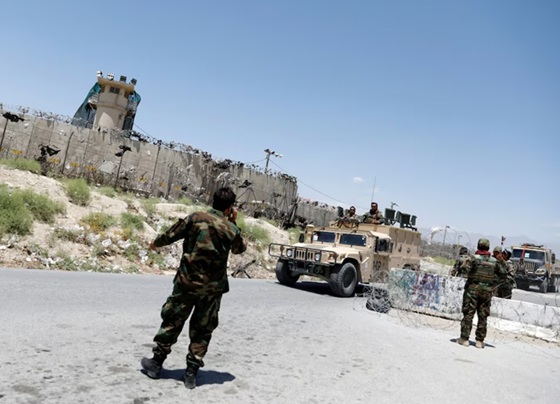
Located in Parwan province, approximately 50 kilometres north of Kabul, the airbase was the principal American military installation during much of the US-led war in Afghanistan.
It offers a substantial runway, extensive infrastructure and a location that historically supported large-scale military operations.
For Washington, recovering access to Bagram could potentially provide several strategic advantages:
- A forward operating location for regional counterterrorism operations.
- Greater flexibility for military aircraft and logistical operations.
- An additional platform for intelligence collection and regional surveillance.
- Improved operational access to parts of Central and South Asia.
- A potential position from which to monitor developments involving China, Iran and regional militant networks.
Trump has repeatedly highlighted China’s proximity as a major reason behind his interest in the facility.
However, the geographical argument requires some clarification.
Bagram is approximately 800 kilometres from China’s border, according to reporting by Al Jazeera. It is not literally an hour away from China’s nuclear weapons production facilities, as Trump’s remarks suggested.
The distance between Bagram and China’s Lop Nur nuclear testing area in Xinjiang is substantially greater.
This geographical distinction matters because the strategic value of Bagram should not be confused with claims that it offers immediate physical access to China’s nuclear infrastructure.
Its potential importance lies in broader regional positioning, surveillance opportunities and intelligence access.
Intelligence Gathering: Is Washington Seeking Access to China’s Western Frontier?
One of the most significant questions surrounding the Bagram debate concerns intelligence gathering.
The United States already possesses extensive satellite surveillance, signals intelligence and electronic intelligence capabilities for monitoring China’s military developments.
However, access to a strategically located airbase could potentially complement these capabilities by providing additional operational flexibility.
Bagram’s geographical position places it within a broader strategic environment involving:
- China’s Xinjiang region and its western security infrastructure.
- Central Asian countries increasingly connected to Chinese economic and security initiatives.
- Pakistan and the China-Pakistan Economic Corridor.
- Iran and its regional military networks.
- Afghanistan’s evolving security relationships with neighbouring countries.
A renewed American presence could potentially support intelligence activities directed towards regional military movements, cross-border militant networks and developments affecting US interests.
Yet there is an important distinction between the potential intelligence value of Bagram and the claim that Washington has already negotiated a specific surveillance arrangement with the Taliban.
The Wall Street Journal report established that discussions about a possible American return had taken place. It did not establish that the Taliban had agreed to provide intelligence access against China.
Indeed, the report quoted a former senior Pentagon official who questioned whether reoccupying Bagram would provide a significant intelligence advantage over the existing US satellite and electronic surveillance systems.
This suggests that Bagram’s strategic value may be broader than simply collecting intelligence on China.
It could provide Washington with an additional instrument of regional military and diplomatic leverage.
The Alleged US-Taliban Intelligence Channel: What Is Actually Known?
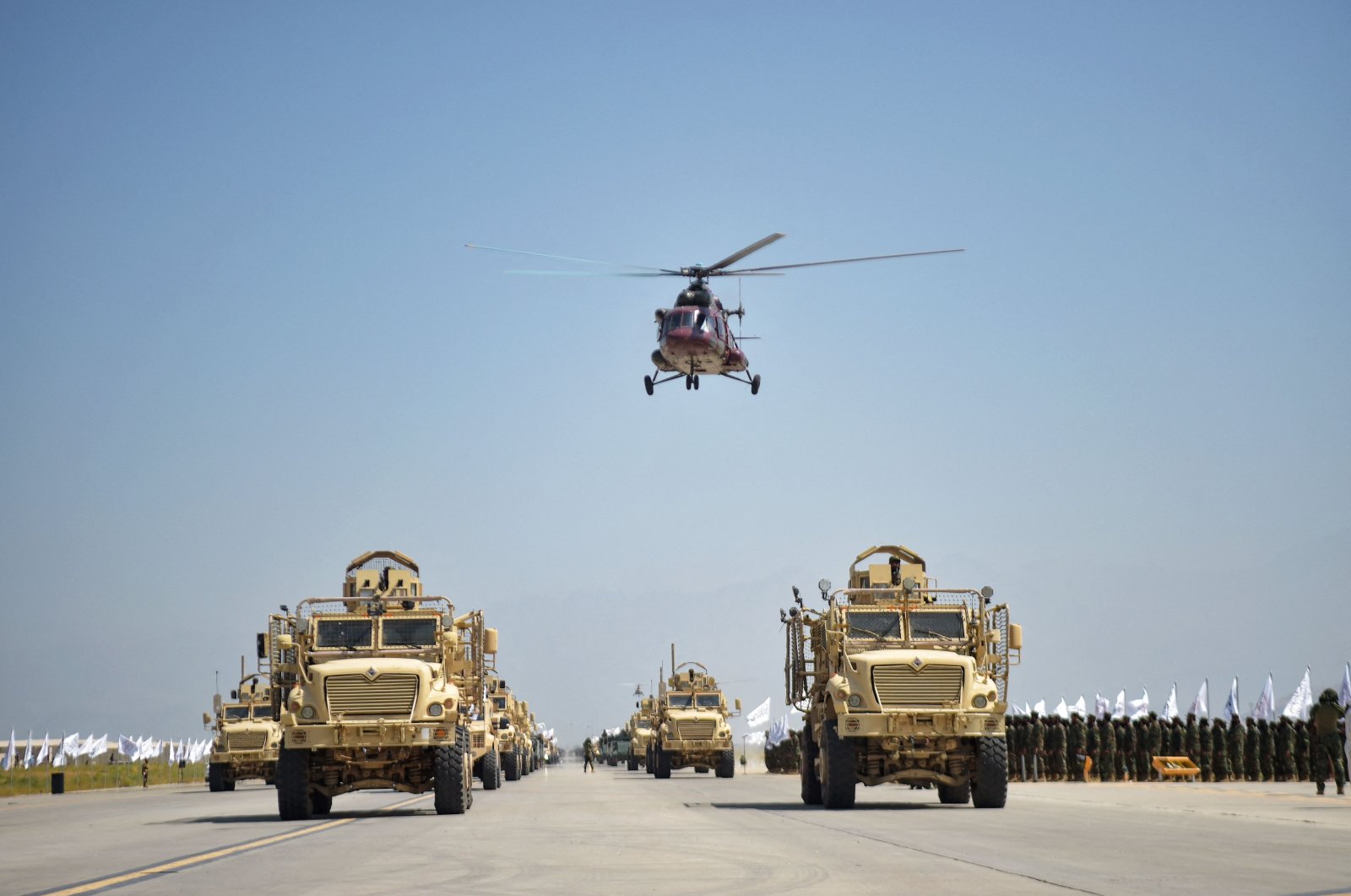
Claims have circulated suggesting that intercepted communications revealed backchannel discussions between American and Taliban representatives involving intelligence cooperation against China.
Some versions of these claims go further, suggesting that Washington explored the possibility of using Taliban-controlled territory for intelligence operations targeting Chinese strategic interests.
However, the public evidence remains limited.
No independently authenticated intercepted communications, official transcripts or independently corroborated intelligence documents have established that such an agreement was discussed or concluded.
What is independently documented is that the United States and the Taliban maintained channels of communication after the 2021 withdrawal.
These contacts included discussions involving American citizens detained in Afghanistan, prisoner exchanges, security concerns and broader diplomatic engagement.
The September 2025 Bagram negotiations, as reported by the Wall Street Journal and Reuters, provide further evidence that Washington was exploring options for renewed engagement with Kabul.
It is therefore reasonable to examine the possibility of intelligence cooperation as part of the wider strategic debate.
It would not, however, be responsible to present alleged intercepted communications as confirmed evidence without access to the original material or reliable independent verification.
Iran: Could Afghanistan Become Another Front in Regional Competition?
The Iran dimension adds another layer to the Bagram controversy.
The United States has longstanding security concerns involving Iran’s missile capabilities, regional military networks and relationships with armed groups across the Middle East.
Afghanistan’s geographical position also gives it potential relevance to intelligence activities concerning Iran.
A US military or intelligence presence in Afghanistan could theoretically improve Washington’s ability to monitor developments along Iran’s eastern approaches.
This possibility has generated speculation about whether the Taliban could become part of a broader American strategy to contain Iranian influence.
More controversial claims suggest that American officials may have discussed helping to develop an Afghan-based proxy force against Iran.
At present, there is no independently verified public evidence establishing that Washington offered the Taliban such assistance or negotiated the creation of an anti-Iran proxy network.
Several factors make this allegation particularly difficult to establish.
First, the Taliban’s ideological and political relationship with Iran is complicated. Despite historical differences and occasional tensions, both sides have maintained diplomatic engagement and share concerns over certain regional security developments.
Second, the Taliban government is attempting to preserve its independence and avoid becoming a military instrument of any external power.
Third, an American-backed anti-Iran armed network operating from Afghanistan would risk creating serious diplomatic and security consequences for Kabul.
Nevertheless, Iran is likely to view any potential American military or intelligence return to Afghanistan through the wider regional security equation.
For Tehran, the prospect of renewed American access to a country bordering its eastern frontier would be strategically sensitive.
The distinction remains important: the potential consequences are real, but the alleged proxy arrangement remains unverified.
China, Russia, Iran and Pakistan: A Common Front Against Foreign Military Bases
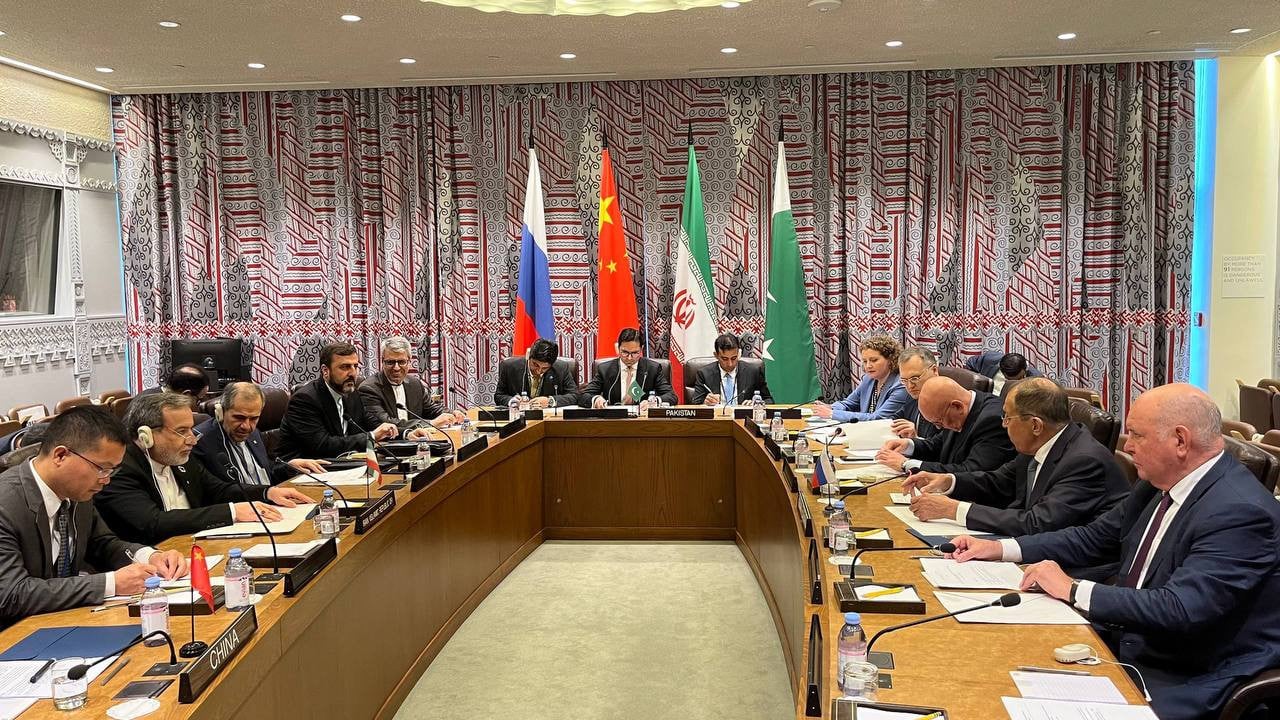
The strongest evidence of the regional implications of the Bagram debate emerged in September and October 2025.
On September 25, foreign ministers and representatives of China, Russia, Iran and Pakistan held their fourth quadrilateral meeting on Afghanistan on the sidelines of the United Nations General Assembly in New York.
Their joint statement emphasised Afghanistan’s sovereignty, independence and territorial integrity.
More significantly, the four countries opposed the re-establishment of military bases in and around Afghanistan by countries they considered responsible for the country’s current situation.
The statement also addressed terrorism, regional stability, economic cooperation and the need for Afghan territory not to be used against neighbouring countries.
This was particularly important because the four countries have different political and security interests but found common ground on preventing another foreign military presence in Afghanistan.
The diplomatic opposition became even more visible during the Moscow Format meeting on Afghanistan on October 7, 2025.
The meeting brought together ten countries, including Russia, China, Iran, Pakistan, India and Central Asian states.
The joint statement described attempts by countries to deploy military infrastructure in Afghanistan and neighbouring states as unacceptable because they would not serve regional peace and stability.
Although the statement did not explicitly name the United States or Bagram, its timing and context made the regional concerns clear.
Taliban Foreign Minister Amir Khan Muttaqi also reiterated that Afghanistan would not accept a foreign military presence.
The position demonstrated that opposition to an American return to Bagram extended beyond the Taliban government itself.
China’s Expanding Engagement with Kabul
China’s position in Afghanistan has evolved considerably since the US withdrawal in August 2021.
Unlike Washington, Beijing has pursued a policy centred on diplomatic engagement, economic opportunities and regional security cooperation.
China has several strategic interests in Afghanistan:
- Preventing militant groups from using Afghan territory to threaten Chinese interests.
- Protecting Xinjiang against cross-border militant activity.
- Expanding regional connectivity through infrastructure and trade.
- Exploring Afghanistan’s mineral resources.
- Maintaining diplomatic influence in Kabul.
- Preventing Afghanistan from becoming a platform for hostile foreign intelligence or military operations.
Beijing has also sought to integrate Afghanistan into wider regional economic and diplomatic arrangements.
Chinese companies have expressed interest in Afghanistan’s mineral and energy resources, while Beijing has maintained communication with Taliban representatives on security and economic matters.
China’s concerns are not limited to the possibility of American military activity.
The security situation inside Afghanistan is also a major issue.
The September 25 quadrilateral statement specifically identified several militant organisations, including Islamic State Khorasan Province (IS-K), Al-Qaeda, the Eastern Turkistan Islamic Movement (ETIM), Tehrik-i-Taliban Pakistan (TTP), Jaish al-Adl and the Balochistan Liberation Army (BLA), among others.
The inclusion of ETIM is particularly significant for Beijing because China considers militant activity connected to its Xinjiang region a major national security concern.
For China, Afghanistan must remain sufficiently stable to prevent militant networks from exploiting its territory.
A renewed American military presence could complicate this strategy and introduce another layer of great-power competition into the country’s security environment.

Russia’s Concerns: Preventing an American Return to Central Asia
Russia also has strong reasons to oppose the establishment of a new American military foothold in Afghanistan.
Moscow considers Central Asia part of its traditional strategic security environment.
The presence of American forces in Afghanistan would potentially provide Washington with renewed access to a region where Russia has historically maintained considerable military and political influence.
Russian concerns include:
- The possibility of expanded American intelligence activities near Central Asian states.
- The potential impact on Russian military and security arrangements in the region.
- The possibility of Afghanistan becoming a platform for renewed Western influence.
- The security implications of instability and militant movements across Central Asia.
Russia’s position also reflects its growing coordination with China and Iran on regional security issues.
The September 2025 quadrilateral meeting and October Moscow Format consultations demonstrated that Moscow is prepared to work with regional partners to oppose military arrangements that could undermine Afghanistan’s sovereignty.
However, this does not mean that China, Russia and Iran have identical objectives in Afghanistan.
Their cooperation is largely driven by overlapping security concerns and a shared interest in preventing the country from becoming a base for hostile external operations.
The Taliban’s Strategic Dilemma: Engagement Without Losing Sovereignty
The Taliban government faces a difficult balancing act.
On one side, Afghanistan remains economically isolated, faces international sanctions and requires investment, financial assistance and diplomatic engagement.
On the other, accepting a renewed American military presence could undermine the Taliban’s political legitimacy and create serious tensions with regional partners.
The Taliban leadership is therefore attempting to maintain relations with multiple powers without formally aligning itself with any single strategic bloc.
Its relationships with China, Russia, Iran, Pakistan, India and the United States are shaped by different economic and security calculations.
Accepting an American military presence at Bagram would carry particularly high political costs.
The Taliban fought a two-decade insurgency against US-led forces before returning to power in August 2021.
Allowing American troops to return to the same military installation could create internal political divisions and raise questions about the movement’s commitment to Afghan sovereignty.
Furthermore, neighbouring countries could interpret such an arrangement as a direct security challenge.
The Taliban has therefore maintained a public position rejecting the re-establishment of foreign military bases.
The central question is whether Washington can obtain meaningful security cooperation from Kabul without demanding a permanent military footprint.
A New Academic Perspective: The Emergence of ‘Great Game 3.0’
An important academic contribution to this debate appeared in August 2026.
Researchers John Harrison, Amit Kumar and Christian Kaunert published an accepted research paper titled Probing Bagram: US Force Projection and Taliban Diplomacy in a Multipolar Afghanistan in the academic journal Middle East Policy.
The research examines reports concerning a US Air Force C-17A Globemaster III aircraft entering Afghan airspace in April 2025 and potentially approaching or briefly using Bagram Air Base.
Importantly, the researchers do not claim to have forensically established the aircraft’s precise movements. Instead, they examine the episode as a potentially significant strategic signal.
Their analysis suggests that US strategy could be moving towards more flexible, intelligence-driven force projection rather than a return to large-scale territorial occupation.
The paper also examines the Taliban’s potential willingness to engage with external powers despite its public opposition to foreign military deployments.
The researchers describe the evolving competition as a form of Great Game 3.0, in which influence is increasingly exercised through intelligence access, diplomatic leverage, strategic positioning and security partnerships.
This is an important analytical framework for understanding why Bagram has regained geopolitical significance.
The competition is no longer necessarily about controlling Afghanistan through a permanent military occupation. It may increasingly involve securing access, influencing decision-making and shaping the regional security environment.
What Does the Bagram Debate Mean for Pakistan?
For Pakistan, the developments surrounding Bagram deserve particular attention.
Afghanistan’s geographical position makes it directly relevant to Pakistan’s western security environment, its relationship with China and the wider balance of power in South Asia.
Three major considerations stand out.
1. Security along Pakistan’s western frontier
Pakistan has repeatedly raised concerns about militant groups operating from Afghan territory, particularly the Tehrik-i-Taliban Pakistan.
Any renewed foreign intelligence or military activity in Afghanistan could change the security calculations of regional actors.
Islamabad would need to assess whether such developments contribute to counterterrorism cooperation or introduce additional instability along its western frontier.
2. China-Pakistan strategic cooperation
China is Pakistan’s major strategic and economic partner, and the China-Pakistan Economic Corridor remains an important component of their bilateral relationship.
Any expanded American intelligence presence in Afghanistan would be examined in Islamabad through its potential implications for China’s western security environment and regional connectivity.
However, it would be premature to conclude that a US presence at Bagram would automatically threaten CPEC.
The actual implications would depend on the nature, scale and objectives of any American deployment.
3. Regional strategic balance
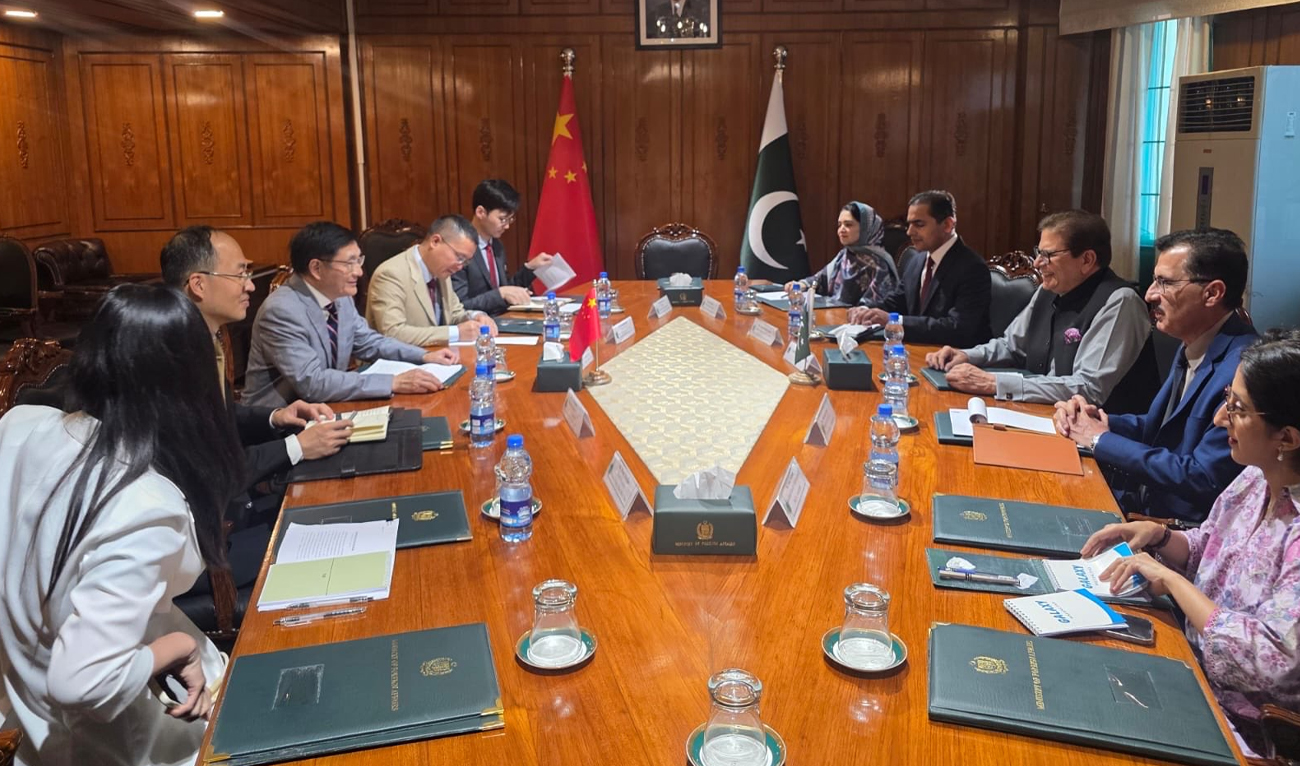
Pakistan’s participation in the September 2025 quadrilateral meeting with China, Russia and Iran demonstrated its interest in maintaining Afghanistan as an independent and stable regional state.
Islamabad has strong reasons to oppose arrangements that could turn Afghanistan into another arena for military competition among external powers.
For Pakistan, the most important priority remains preventing Afghan territory from being used against its neighbours and ensuring that regional security arrangements do not produce additional instability.
Can the United States Actually Return to Bagram?
Despite Trump’s statements and the reported discussions, regaining Bagram would be a complicated undertaking.
The Taliban has publicly rejected the idea of allowing American forces to return.
Any deployment would require extensive logistical arrangements, security guarantees, political agreements and potentially a substantial military commitment.
Former US officials have also questioned the feasibility of the proposal.
Reuters reporting in October 2025 cited concerns that retaking the base could resemble a renewed military invasion and require more than 10,000 troops alongside advanced air defence systems.
Such a deployment would create enormous political and operational challenges.
It could also trigger a stronger diplomatic response from China, Russia, Iran and other regional countries.
Washington therefore faces a fundamental choice: seek a negotiated arrangement for limited security access or abandon the idea of a physical military return and continue relying on existing intelligence and surveillance capabilities.
The latter option may be more practical, but it would not necessarily provide the same degree of operational flexibility.
Conclusion: Bagram Is About More Than an Airbase
The renewed attention surrounding Bagram reflects a broader transformation in the geopolitical competition over Afghanistan.
For the United States, the facility represents a potential opportunity to regain strategic access to a region where its direct military presence disappeared in 2021.
For China, the possibility of a renewed American foothold near its western strategic environment raises questions about security, intelligence activities and regional influence.
Russia and Iran share concerns about the expansion of American military infrastructure in Afghanistan, while Pakistan seeks to prevent developments that could undermine its western security environment or complicate its strategic partnership with Beijing.
The Taliban, meanwhile, is attempting to extract diplomatic and economic benefits from its relationships with competing powers without surrendering its independence.
Whether Washington eventually secures access to Bagram remains uncertain.
But the strategic debate surrounding the airbase has already exposed the competing interests shaping Afghanistan’s future.
The central question is no longer simply whether the United States can return to Bagram.
It is whether Afghanistan can avoid becoming the centre of another prolonged confrontation between major powers, this time driven not only by military occupation but also by intelligence competition, regional positioning and the struggle for influence across Eurasia.
For Pakistan, China, Russia and Iran, the stakes extend far beyond the airbase itself.
Bagram may once again become a symbol of the new Great Game in Afghanistan — but the real contest is over who shapes the region’s future security architecture.