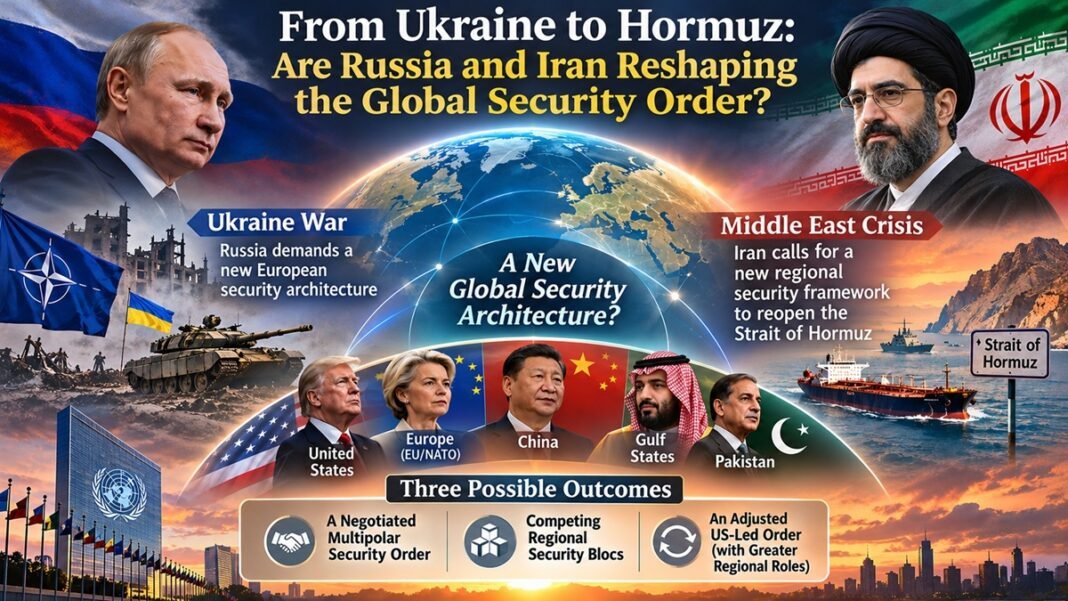
Russia is demanding a new European security architecture as part of a settlement to the Ukraine war, while Iran is advocating a regional security framework that would redefine the management of the Persian Gulf and the Strait of Hormuz. Although the two countries are pursuing separate strategic objectives, their demands point towards a common geopolitical question: Is the US-led international security system entering a period of structural transformation?
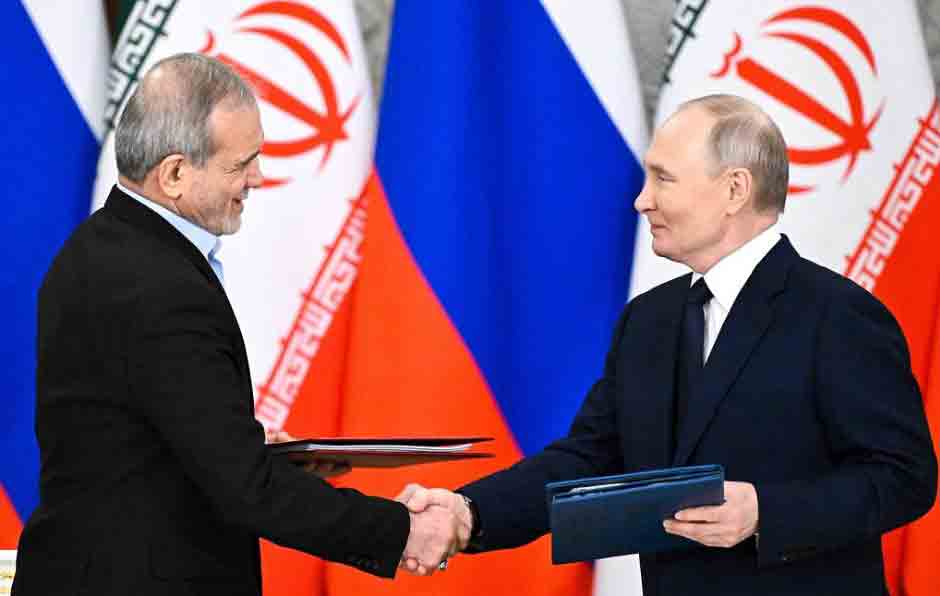
The wars in Ukraine and the Middle East are increasingly raising questions that extend far beyond territorial disputes, ceasefire negotiations and military operations. At the centre of both conflicts is a contest over the distribution of power, the role of external military forces and the authority to determine the security arrangements of strategically important regions.
Russia wants European security negotiations to address NATO’s military presence, the strategic balance along its borders and the future relationship between Moscow and Western capitals. Iran, meanwhile, wants a Middle Eastern security arrangement in which regional countries assume greater responsibility for stability, including the security of the Strait of Hormuz, rather than depending primarily on American military protection.
These are not coordinated proposals, nor is there evidence that Moscow and Tehran are developing a common global security blueprint. Their strategic interests, geographical priorities and political objectives are different.
Nevertheless, the parallel demands reveal an important development: major regional powers are increasingly challenging the assumption that international security should be organised primarily around the strategic preferences of established Western powers.
The question is whether these two conflicts could eventually accelerate the emergence of a new global security architecture.
Russia’s demands go beyond a ceasefire in Ukraine
For Moscow, the Ukraine war has never been exclusively about the territory under Russian or Ukrainian control. The conflict is also connected to Russia’s longstanding opposition to NATO’s eastward expansion and what it considers the deterioration of its strategic security environment following the Cold War.
Russia has repeatedly argued that European security cannot be guaranteed by arrangements that disregard its military and political concerns.
Its demands have included restrictions on NATO’s military expansion, limitations on Western military deployments near Russian territory and legally binding security guarantees.
The latest diplomatic discussions have brought this broader question back into negotiations.
Russia’s position is that a durable settlement must address the underlying security disputes that contributed to the confrontation, rather than simply suspend military operations along the current front lines.
However, this approach faces a fundamental obstacle. Ukraine and European governments reject the idea that Moscow should have the authority to determine the foreign policy or security partnerships of neighbouring countries.
For Ukraine, the central issue is protection against renewed Russian military intervention. For European governments, the principle of national sovereignty and the right of countries to choose their own security arrangements remain essential.
This creates a fundamental disagreement over the meaning of European security.
Moscow wants a revised strategic balance that recognises Russian interests. Kyiv wants credible protection against further aggression. European capitals want to preserve their independence and collective defence arrangements.
Consequently, negotiations over Ukraine are increasingly connected to a much wider question: What should the European security order look like after the Cold War arrangements have been fundamentally challenged?
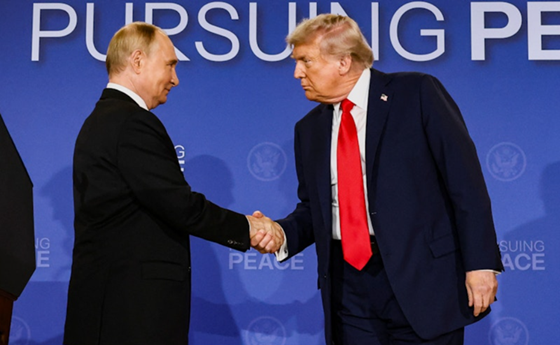
Iran wants a different security arrangement for the Middle East
A similar debate is developing in the Middle East, although the underlying circumstances are different.
For decades, American military power has played a central role in the security architecture of the Persian Gulf. Washington maintains military installations, defence partnerships and strategic relationships with several Gulf countries.
This arrangement has provided regional partners with an important security guarantee, but it has also created a system heavily dependent on American military involvement.
The confrontation involving Iran, the United States and Israel has exposed vulnerabilities within this structure.
Missile attacks, drone warfare, damage to military installations and the threat of disruption around the Strait of Hormuz have demonstrated that even a substantial American military presence cannot eliminate the risks of regional escalation.
Iran’s argument is that a sustainable security system must be developed by the countries of the region themselves.
Tehran has advocated arrangements that reduce dependence on external military deployments and establish regional mechanisms for managing security disputes.
Its approach also reflects a broader strategic objective: ensuring that Iran’s security interests and regional influence are recognised in any future settlement.
The Strait of Hormuz has become central to this debate.
The waterway is one of the world’s most strategically important maritime passages. Its disruption can affect international energy markets, shipping costs and the economic interests of countries across Asia, Europe and beyond.
Iran’s geographical position gives it considerable leverage, but the interests of other coastal states and international maritime users cannot be ignored.
Oman, Saudi Arabia, the United Arab Emirates and other Gulf countries have their own security priorities. They are unlikely to accept a framework that places the management of regional security exclusively under Iranian influence.
A sustainable arrangement would therefore require cooperation rather than the replacement of one dominant security provider with another.
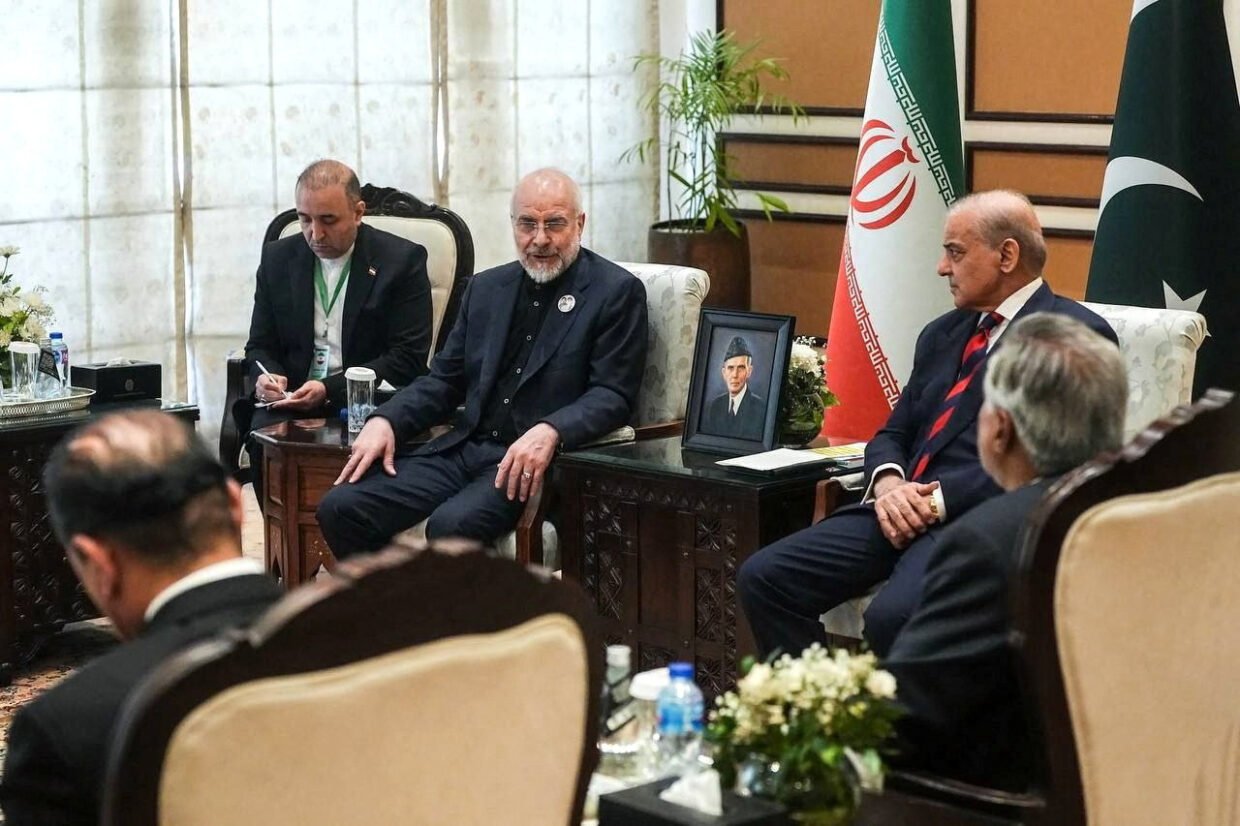
The Strait of Hormuz: From a maritime crisis to a question of global governance
The future of the Strait of Hormuz could become one of the most important tests of whether a regional security architecture can emerge independently of traditional great-power arrangements.
The debate is no longer simply about reopening the waterway after military escalation. It concerns the mechanisms through which maritime security, navigation rights, crisis communication and regional cooperation should be maintained.
Iran and Oman have discussed arrangements involving maritime coordination, navigational safety and cooperation over the restoration of secure shipping.
Such initiatives could provide a foundation for broader regional discussions involving other Gulf states.
However, there is an important legal distinction.
The Strait of Hormuz is governed by international maritime law, and the rights of international shipping cannot be disregarded in the name of regional security.
Any future arrangement must respect the applicable provisions of the United Nations Convention on the Law of the Sea and the legal rights and obligations of coastal and maritime states.
This is particularly important because the security of Hormuz is not exclusively a Middle Eastern concern.
China, India, Pakistan, Japan, South Korea and European economies all have significant interests in uninterrupted energy supplies and maritime trade.
A regional security mechanism that accommodates these interests could eventually become an important example of cooperative maritime governance.
The common factor: A challenge to the US-led security system
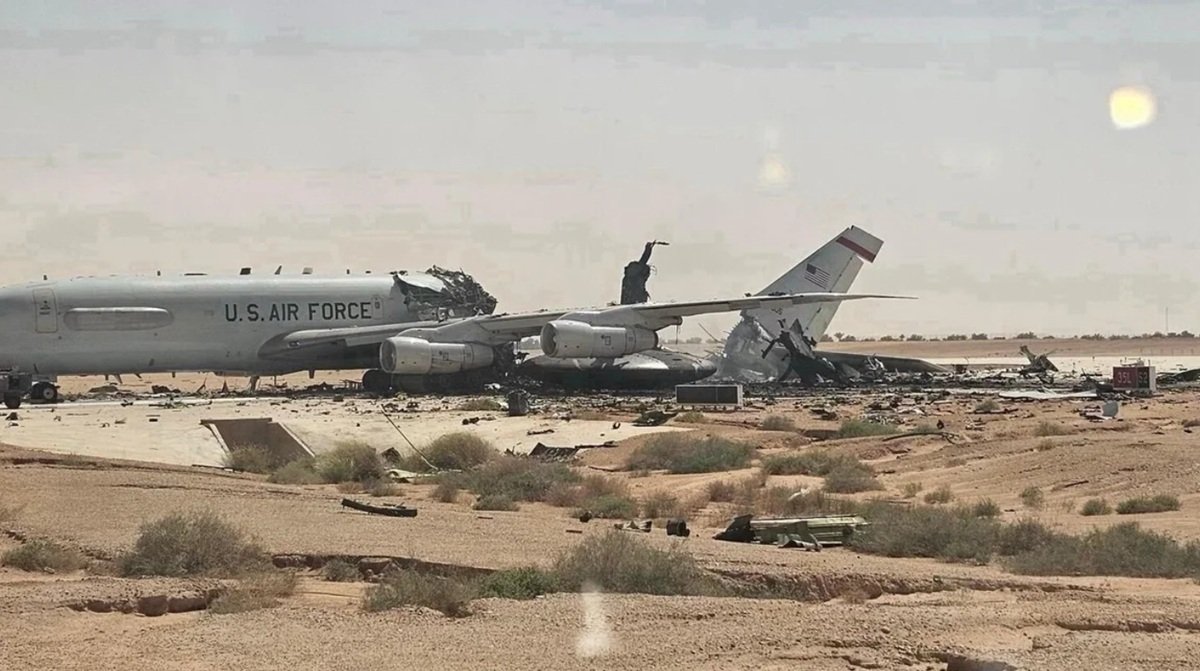
The most significant connection between the Ukraine and Iran conflicts is not a military alliance between Moscow and Tehran. It is the growing challenge to the existing distribution of international security power.
In Europe, NATO remains the central collective-defence organisation, with the United States providing substantial military capabilities and strategic guarantees.
In the Middle East, American military deployments and defence partnerships remain fundamental to the security calculations of several Gulf states.
Both systems are now facing questions about their long-term effectiveness.
Russia is challenging the military and political arrangements that emerged after the Cold War. Iran is questioning the sustainability of a Gulf security structure that relies heavily on external military protection.
The two challenges are different, but both raise the issue of whether regional security can remain sustainable when major regional powers consider themselves excluded from the arrangements governing their strategic environments.
This does not mean American influence is disappearing.
The United States continues to possess extensive global military capabilities, advanced technology, economic influence and an extensive network of defence partnerships.
Rather, the emerging question is whether Washington can maintain the same degree of influence over regional security decisions as it has exercised in previous decades.
The answer may increasingly depend on the willingness of regional powers to accept American leadership and the ability of Washington to provide credible security guarantees.
China: The power that could benefit from a changing security environment
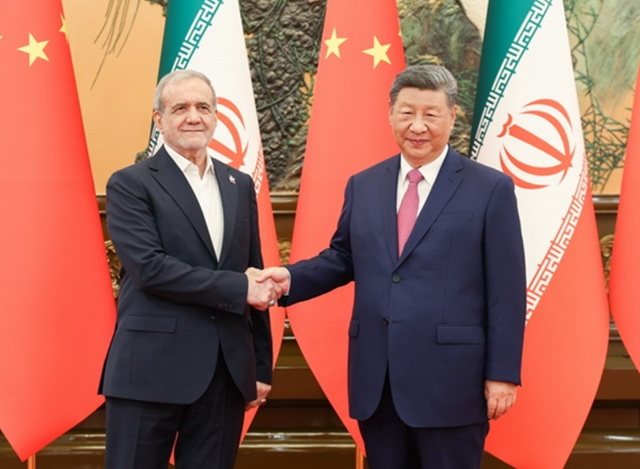
China is an important factor in both conflicts because it has strategic interests in Europe, Russia and the Middle East.
Beijing maintains a significant economic relationship with Russia while also seeking stable relations with European countries. It has little interest in a prolonged European war that disrupts international trade and increases economic uncertainty.
In the Middle East, China’s interests are even more directly connected to regional stability.
The Persian Gulf is essential to China’s energy security, and the Strait of Hormuz is a critical passage for international energy supplies.
Beijing also maintains relationships with Iran, Saudi Arabia and other Gulf countries.
Its diplomatic role in facilitating the 2023 Saudi-Iran rapprochement demonstrated that China can contribute to regional diplomacy without assuming the military responsibilities traditionally associated with American leadership.
This distinction is important.
China may be interested in expanding its diplomatic influence, but that does not mean it is prepared to replace the American military presence in the Gulf or assume responsibility for protecting international shipping.
Beijing’s approach is more likely to involve economic partnerships, diplomatic mediation, strategic cooperation and participation in multilateral institutions.
For China, a more multipolar security environment could provide additional diplomatic opportunities while reducing the ability of any single power to dominate international decision-making.
However, Beijing would also face considerable risks if regional conflicts continued to threaten energy supplies and commercial shipping.
Its preference is therefore likely to be a more balanced international system without the instability that could accompany the collapse of existing security arrangements.
Europe faces an uncomfortable strategic reality
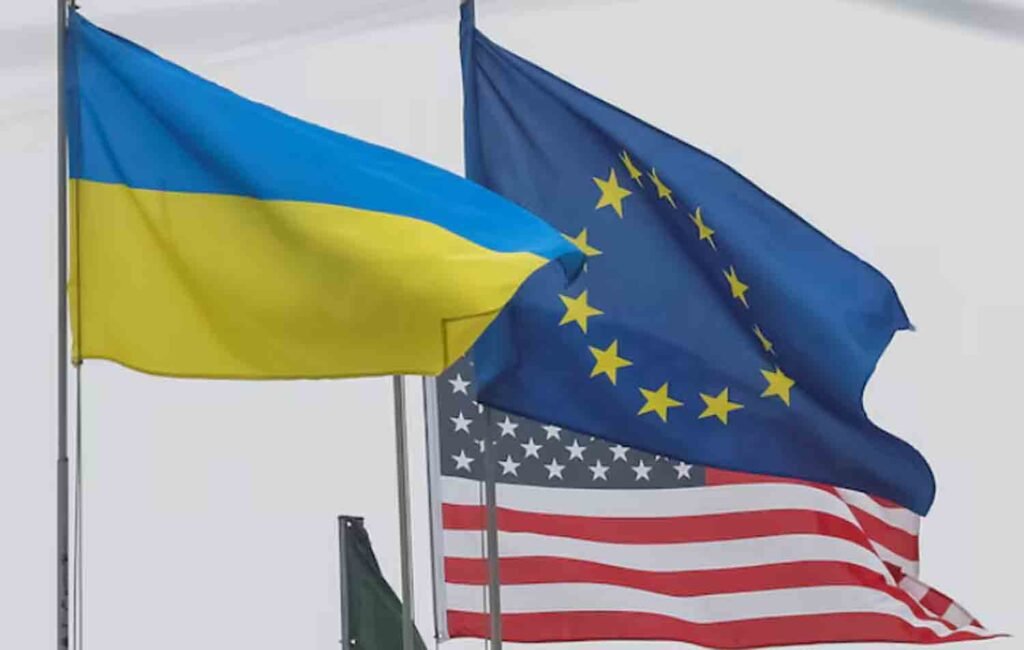
Russia’s demands have also created a difficult strategic situation for European governments.
The Ukraine war has reinforced the importance of NATO, but it has simultaneously encouraged European countries to reconsider their dependence on American military capabilities.
A greater European defence role is becoming increasingly important, particularly as Washington reassesses its global military commitments.
Three broad possibilities are emerging.
First, a more European NATO: European members could assume greater responsibility for conventional defence while maintaining American strategic and nuclear guarantees.
Second, an independent European defence capability: The European Union could expand its defence-industrial cooperation, military coordination and capacity to respond to regional crises.
Third, a wider European security arrangement: European governments could eventually explore new mechanisms for arms control, military transparency, crisis communication and negotiations with Russia.
These possibilities are not mutually exclusive.
However, the Russian demand for a new European security architecture does not guarantee that the resulting arrangement would favour Moscow.
In fact, the war has encouraged several European countries to increase defence spending and strengthen military cooperation.
Russia may therefore achieve a revision of the European security debate without obtaining the strategic concessions it seeks.
This is an important distinction between influencing the international agenda and successfully determining its outcome.
BRICS, the SCO and the changing international balance

The growing influence of platforms such as BRICS and the Shanghai Cooperation Organisation also reflects dissatisfaction with the traditional distribution of international power.
These organisations provide countries outside the Western alliance system with additional opportunities for diplomatic coordination, economic cooperation and political representation.
Russia, China and Iran are members of both organisations, while Pakistan is a member of the SCO and BRICS.
Their significance should not be exaggerated.
Neither BRICS nor the SCO currently provides a substitute for NATO’s collective-defence system or a comprehensive framework for Middle Eastern maritime security.
They also contain countries with different strategic priorities and, at times, competing interests.
Nevertheless, they demonstrate that international cooperation is no longer organised exclusively through Western-led institutions.
A future security architecture may consequently involve several overlapping arrangements rather than one dominant global structure.
Regional organisations could address local conflicts, while larger international platforms provide mechanisms for diplomatic coordination and cooperation between major powers.
The United Nations would remain essential because international legitimacy, sovereignty and the peaceful settlement of disputes cannot be replaced by informal agreements between powerful countries.
What does the emerging security debate mean for Pakistan?
Pakistan has a particularly important geographical and diplomatic position in this changing environment.
It maintains strategic relations with China, a longstanding defence partnership with Saudi Arabia, diplomatic and security interests involving Iran and an important relationship with the United States.
Pakistan is also a member of BRICS and the Shanghai Cooperation Organisation.
This combination gives Islamabad an opportunity to contribute to discussions about regional stability without necessarily aligning itself with a single geopolitical bloc.
The Strait of Hormuz is especially important for Pakistan because of its dependence on imported energy and the importance of maritime trade routes to its economy.
Any prolonged disruption could increase energy costs, place pressure on foreign exchange reserves and create additional economic challenges.
A stable regional arrangement involving Iran and the Gulf states would therefore serve Pakistan’s direct economic and strategic interests.
Islamabad could also contribute to confidence-building, diplomatic communication and regional maritime discussions.
However, Pakistan must carefully balance its relationships.
A security arrangement that alienates Gulf partners, damages relations with Iran or creates unnecessary tensions with Washington would not serve its national interests.
The wider lesson is that middle powers must increasingly protect their strategic autonomy through diversified diplomatic relationships rather than dependence on a single international power centre.
Three possible outcomes: A new world order or competing security blocs?
The future of the international security system will depend heavily on the outcome of negotiations in Ukraine and the Middle East.
Three broad scenarios are possible.
1. A negotiated multipolar security architecture
The most constructive possibility would involve the development of regional arrangements that recognise the security interests of competing powers while protecting the sovereignty of smaller states.
In Europe, this could involve renewed arms-control negotiations, military transparency, crisis-management mechanisms and credible guarantees for Ukraine.
In the Middle East, it could produce a regional security forum involving Iran, Saudi Arabia, Oman and other Gulf countries, with provisions for maritime security and military de-escalation.
The United States, China, Russia and European powers could support these arrangements through diplomatic engagement.
Such a system would not eliminate geopolitical competition, but it could reduce the risk of military confrontation.
2. Competing regional security blocs
A less favourable outcome would be the consolidation of competing regional arrangements.
Europe could develop more independent military capabilities, while Russia strengthens its strategic relationships with China, Iran and other partners.
In the Middle East, Iran and some regional partners could promote one security framework, while Gulf Arab states maintain close military relationships with the United States.
China could expand its diplomatic and economic influence without becoming a direct military guarantor.
The result would be a more fragmented international system in which countries increasingly organise security around competing power centres.
3. Adjustment rather than replacement of American leadership
A third possibility is that the existing international security system survives but undergoes significant adjustments.
The United States could maintain its central role in NATO and Middle Eastern defence arrangements while encouraging regional partners to assume greater responsibility.
European countries could increase their military capabilities without abandoning NATO.
Gulf states could diversify their security partnerships while continuing to depend on American military cooperation.
Iran could gain greater diplomatic recognition of its regional security concerns without fundamentally transforming the regional balance of power.
This scenario would represent an evolution of the existing order rather than its replacement.
The greatest challenge: Security for major powers versus sovereignty for smaller states
Any attempt to create a new international security architecture will face a fundamental contradiction.
Major powers want security guarantees that protect their strategic interests. Smaller countries want assurances that their sovereignty will not be compromised by agreements negotiated over their heads.
This contradiction is visible in both conflicts.
Russia argues that its security concerns must be recognised in European arrangements. Ukraine insists that its sovereignty and freedom to determine its future cannot be sacrificed.
Iran wants regional security arrangements that reduce external military influence. Gulf Arab states, however, will insist that their own security interests and independence receive equal consideration.
A sustainable international system cannot resolve these differences by simply recognising the demands of the strongest military powers.
It must establish reciprocal obligations, credible guarantees, peaceful dispute-resolution mechanisms and respect for international law.
The 1975 Helsinki Final Act offers a useful historical precedent. During the Cold War, rival political and military blocs agreed on principles of sovereignty, territorial integrity, cooperation and confidence-building.
The subsequent development of the Organization for Security and Co-operation in Europe demonstrated that competing powers could establish mechanisms for managing their disagreements without first resolving every underlying political dispute.
A comparable approach could provide useful lessons for future negotiations in Europe and the Middle East.
However, it would require meaningful participation by all directly affected countries, not merely agreements between Washington, Moscow and Tehran.
Conclusion: The real contest is over who writes the rules of global security
The Ukraine and Iran conflicts may eventually be remembered not only for their military consequences but also for the questions they raised about the international distribution of power.
Russia is challenging the European security arrangements established after the Cold War. Iran is questioning the structure of Gulf security and the role of external military forces in the Middle East.
China’s growing diplomatic influence, Europe’s search for greater defence autonomy and the increasing importance of regional organisations are adding further momentum to this debate.
These developments do not establish the existence of a coordinated Russian-Iranian plan to replace the US-led international system. Nor do they suggest that American global influence is about to disappear.
What they demonstrate is that the existing security architecture is under increasing pressure from different directions.
The most plausible emerging outcome is a more complex international system in which regional security arrangements coexist with established global institutions, and where major powers must negotiate more frequently with countries that were previously expected to operate within an established hierarchy.
For Russia, the objective is to secure recognition of its strategic interests in Europe. For Iran, it is to establish a regional security framework that recognises its position and reduces external military influence. For China, the changing environment offers opportunities to expand diplomatic influence. For the United States and its allies, the challenge is to preserve their strategic position while adapting to a more competitive world.
Ultimately, the future of global security will not be determined simply by which power wins the current wars.
It will be determined by whether the settlements that follow establish a system based on reciprocal security, international law and respect for national sovereignty—or one in which competing major powers simply replace the existing hierarchy with new spheres of influence.
**The Ukraine and Middle East wars may not create a new world order by themselves. But they could become the turning points that accelerate its emergence.