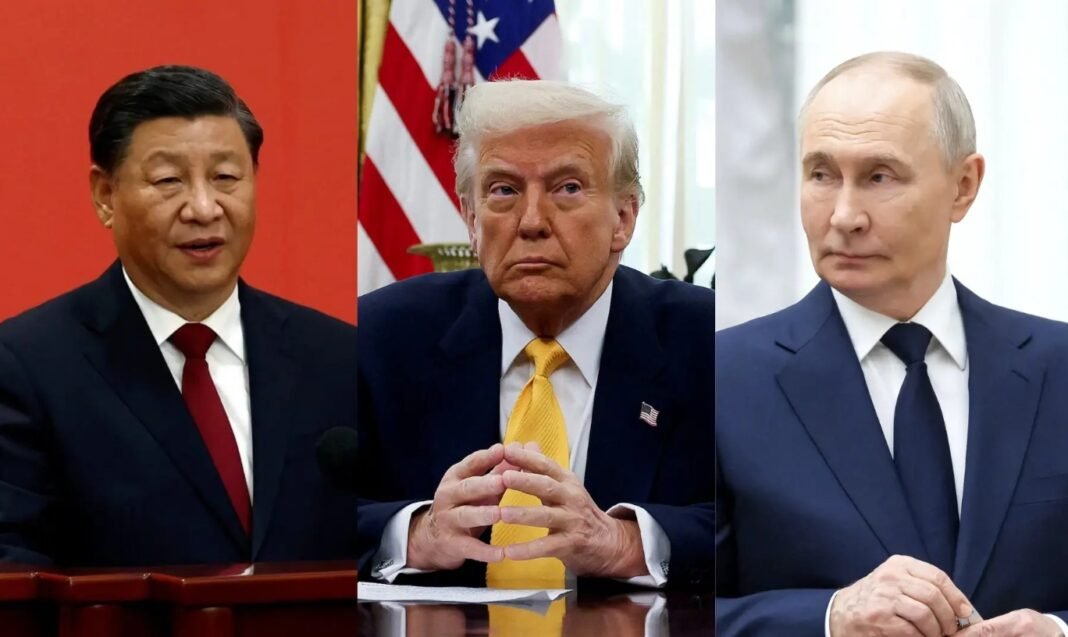
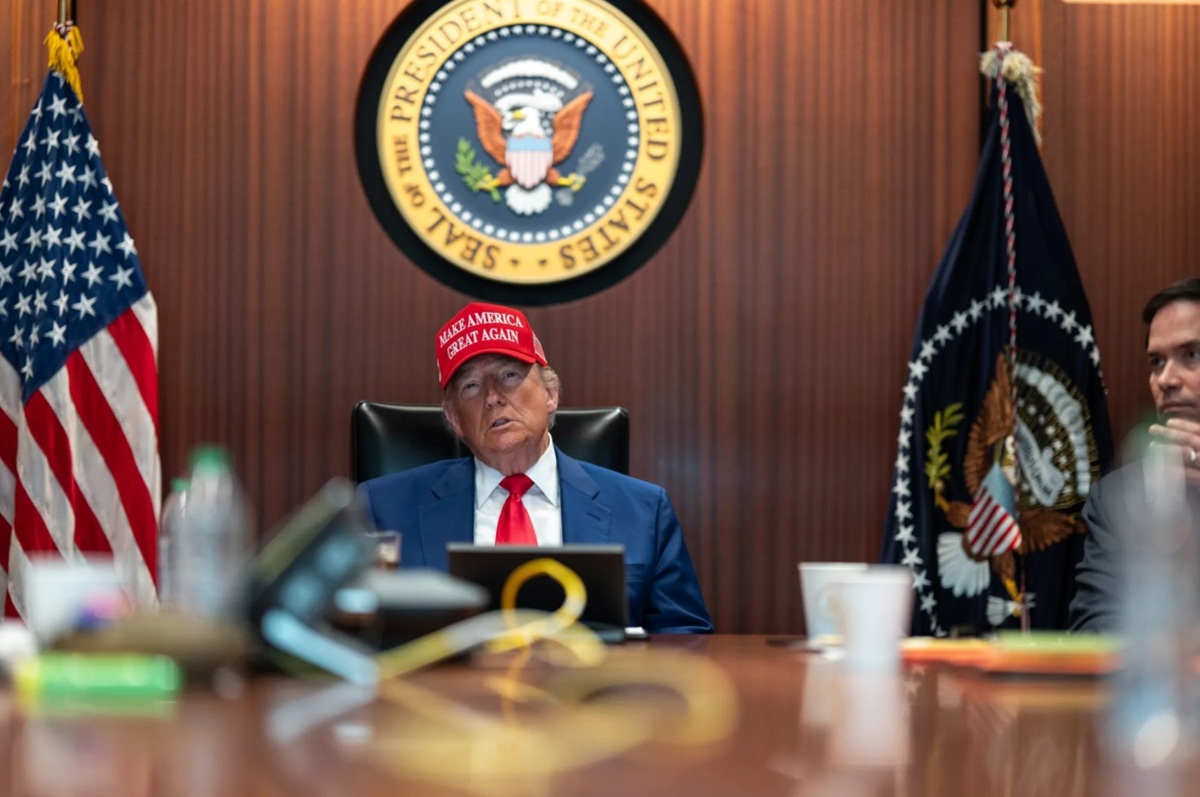
US President Donald Trump has intensified speculation about a possible new military escalation against Iran after sharing two messages defending American troops and warning that the political consequences of defeat could be worse than those of war.
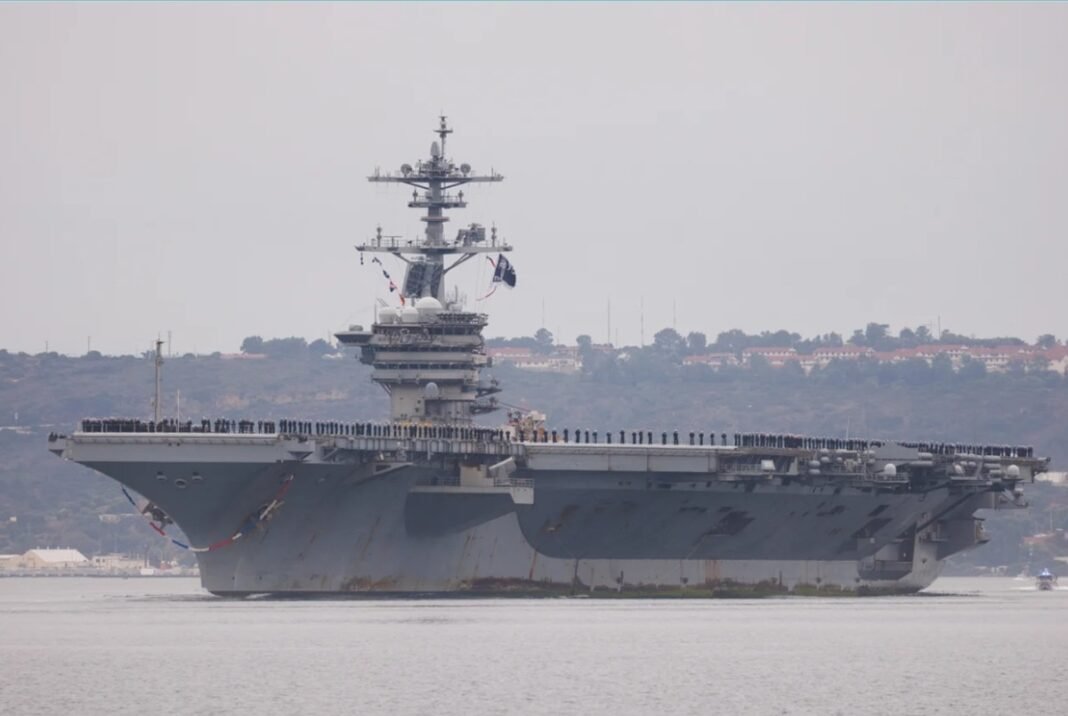
The messages appeared as the Pentagon reinforced its military presence in the Middle East, with the USS Theodore Roosevelt aircraft carrier arriving in the US Central Command (CENTCOM) area of responsibility. The deployment brings the number of American aircraft carrier strike groups in the region to three, while reports indicate that another 9,000 to 10,000 US sailors and Marines are being sent towards the Middle East.
The military buildup comes at a particularly sensitive diplomatic moment, just days before Trump is scheduled to meet Chinese President Xi Jinping and Russian President Vladimir Putin in Shenzhen on November 19.
The convergence of presidential messaging, military reinforcement and high-level diplomacy has raised an important question: Is Trump preparing to resume large-scale military operations against Iran before meeting Xi and Putin, or is Washington using its expanding military presence to increase pressure on Tehran?
Trump Reposts Warning That Defeat Could Be Worse Than War
On November 15, Trump shared a video showing American soldiers kneeling in prayer beside military aircraft. The video carried the message, “May God protect our troops. Say AMEN.”
The same day, the US president also reposted a Wall Street Journal opinion article titled “If You Think War Is Unpopular, Wait Till You See Defeat”, written by Republican Senator Tim Sheehy and published on November 10.
The article argues that although military conflicts carry substantial political costs, withdrawing from a confrontation without achieving strategic objectives could have even more damaging consequences for American interests.
Sheehy specifically defends the ongoing US confrontation with Iran, arguing that an American retreat could allow Tehran to rebuild its military capabilities and restore its regional influence.
The argument invokes historical lessons from previous American military engagements, particularly the political consequences of decisions involving national security and military commitments.
Trump’s decision to amplify this argument is significant because the Iran conflict has become increasingly unpopular domestically.
However, neither social media post constitutes an official announcement of a new military operation. Their significance lies in the political message they communicate: the administration is publicly defending the strategic rationale for continuing the confrontation despite its domestic political costs.
Third US Aircraft Carrier Arrives in CENTCOM Region

The most significant development is the growing American military presence in the Middle East.
The USS Theodore Roosevelt arrived in the CENTCOM area of responsibility on November 15, according to a US official cited by The National.
Its arrival brings the number of American aircraft carrier strike groups in the region to three.
The deployment includes:
- USS George H.W. Bush
- USS George Washington
- USS Theodore Roosevelt
The Roosevelt’s arrival is particularly important because the carrier had initially been expected to relieve the USS George Washington, which remains in the region for the moment.
If all three carrier strike groups remain deployed, Washington will have an unusually substantial concentration of naval aviation and supporting capabilities in the Middle East.
Each carrier strike group provides a combination of fighter aircraft, surveillance capabilities, missile-defence systems and escort vessels.
This gives US commanders greater flexibility in conducting air operations, protecting maritime routes and responding to potential Iranian attacks.
The deployment should not automatically be interpreted as confirmation of an imminent bombing campaign. Aircraft carriers can also serve deterrence, force protection and maritime security objectives.
Nevertheless, their concentration significantly expands Washington’s military options.
Pentagon Reportedly Sending Up to 10,000 Additional Troops

The naval buildup is accompanied by additional Marine and naval deployments.
According to a Wall Street Journal report cited by Arab News, the Pentagon is sending an additional 9,000 to 10,000 personnel towards the Middle East.
The deployment includes the USS Makin Island Amphibious Ready Group and Marines from the 13th Marine Expeditionary Unit.
The ships, aircraft, sailors and Marines are expected to reach the region by the end of November.
The additional personnel would reinforce an American military presence that already exceeds 50,000 troops across the Middle East, according to US officials cited in the reporting.
The amphibious component is particularly noteworthy.
Unlike a conventional aircraft carrier deployment, an amphibious ready group provides additional capabilities for expeditionary operations, maritime security, evacuations and the protection of strategic installations.
It does not mean Washington is preparing a ground invasion of Iran. However, it provides American commanders with additional operational flexibility should the confrontation expand.
The timing is important because the reported deployment coincides with discussions inside the Trump administration about potentially resuming military strikes after the November midterm elections.
Trump Weighs Further Attacks Despite Regional Pressure for Restraint
Despite the military reinforcement, Washington has not publicly confirmed a decision to resume large-scale strikes against Iran.
A November 14 Reuters report offered an important insight into Trump’s calculations.
According to three people familiar with the matter, Trump told senior advisers that he might refrain from further attacks if Iran or the Iran-backed Houthis did not provoke the United States.
The report said Trump had alternated between threatening renewed military action and considering a reduction in hostilities.
Saudi Crown Prince Mohammed bin Salman and Turkish President Recep Tayyip Erdogan reportedly urged Trump not to resume attacks, arguing that economic pressure and sanctions were already damaging Iran.
However, Trump made no commitment to either leader.
The same report indicated that Israeli officials continued pressing for another military campaign, while American intelligence assessments raised questions about whether further strikes would substantially change Tehran’s negotiating position.
There are therefore two competing developments within Washington’s Iran policy.
On the military side, the Pentagon is reinforcing its regional presence and maintaining the capacity for further operations.
On the diplomatic side, Trump is considering whether economic pressure, maritime restrictions and negotiations could achieve objectives without another major bombing campaign.
This suggests that Washington is maintaining military options while leaving diplomatic channels open.
November 19 China Summit: A Diplomatic Deadline for Trump?
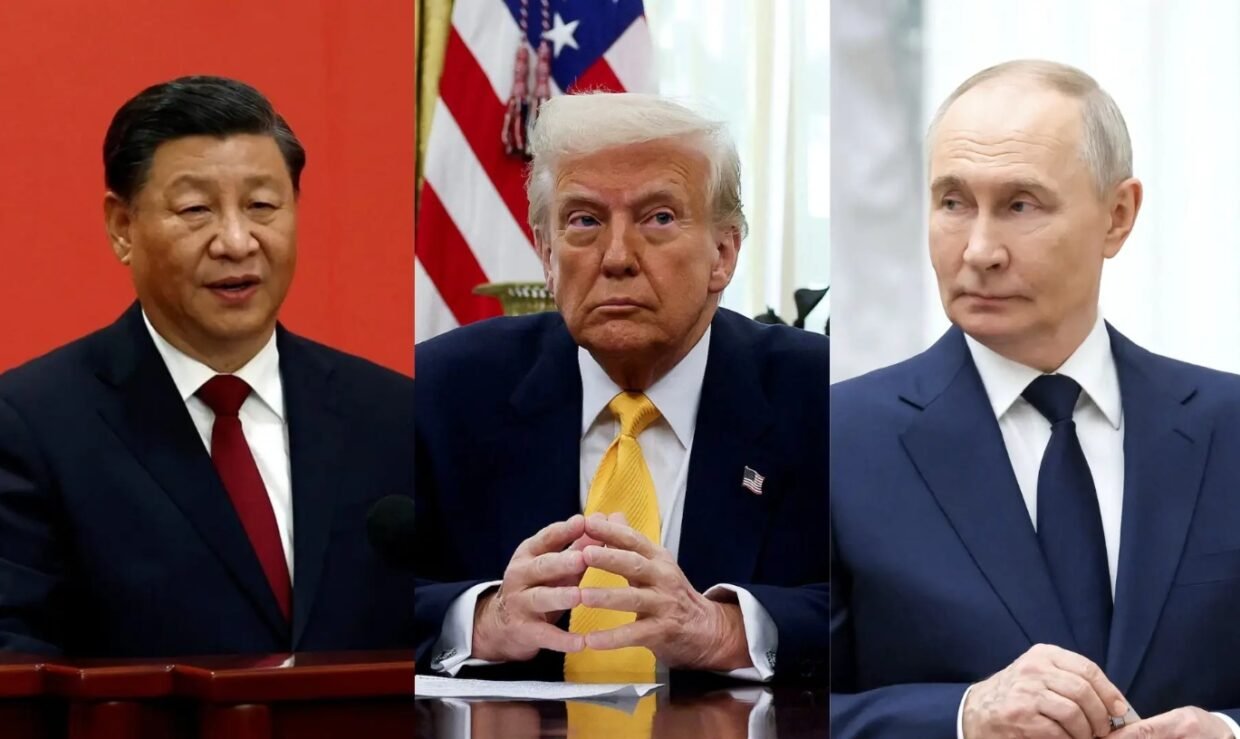
The timing of the military developments becomes even more significant when viewed alongside the upcoming meeting between Trump, Xi Jinping and Vladimir Putin.
China confirmed on November 16 that the three leaders will hold their first trilateral summit in Shenzhen on November 19.
The meeting will take place alongside the Asia-Pacific Economic Cooperation (APEC) summit.
Beijing described the gathering as having groundbreaking significance, with discussions expected to cover international peace, strategic stability and relations between the three major powers.
According to US officials, Trump intends to discuss nuclear arms reductions and the Iran conflict.
Ukraine is not expected to be a central subject of the trilateral discussions.
The meeting presents a complicated diplomatic challenge for Washington.
China has significant economic and energy interests in the Middle East, while Russia maintains strategic relations with Tehran.
Both countries have reasons to oppose a wider regional conflict that could destabilise energy markets and increase international tensions.
For Trump, the meeting offers an opportunity to discuss Iran directly with the two powers that possess considerable diplomatic influence in the region.
The question is whether Washington wants to enter the meeting with a negotiated diplomatic framework or with a stronger military position that could increase pressure on Tehran.
Could Trump Launch New Strikes Before the China Summit?
There are three broad scenarios that could shape the coming days.
Scenario One: Renewed Military Strikes Before November 19
Trump could authorise additional military operations before travelling to China.
Such a move would demonstrate that Washington is prepared to use force despite the political and economic costs of the conflict.
It could also increase American leverage in discussions with Xi and Putin.
However, launching a major military campaign immediately before a historic trilateral meeting could complicate Trump’s diplomatic objectives and provoke further Iranian retaliation.
Scenario Two: Military Pressure Continues While Diplomacy Takes Priority
Washington could maintain its expanded military deployment without immediately launching another major offensive.
This approach would preserve American operational options while allowing Trump to discuss Iran with Xi and Putin.
China could be encouraged to use its economic and diplomatic influence to facilitate negotiations, while Russia could be involved in discussions over regional security and the future of the confrontation.
This scenario would allow Trump to pursue military deterrence and diplomacy simultaneously.
Scenario Three: Renewed Attacks After the Summit
A third possibility is that Trump postpones any major decision until after the November 19 meeting.
This could give Washington additional time to assess the positions of Beijing and Moscow, evaluate Iranian responses and consider the military and economic consequences of another offensive.
However, there is currently no confirmed agreement or evidence that Trump has decided to wait until after the summit.
Would the Xi-Trump-Putin Summit Survive a New US-Iran Escalation?

The November 19 meeting is officially confirmed, but a significant military escalation could complicate its diplomatic atmosphere.
A limited exchange of attacks would not necessarily prevent the summit from taking place.
However, a wider confrontation involving Iranian attacks on American bases, Gulf infrastructure or international shipping could create substantial diplomatic and security complications.
China has strong economic reasons to avoid prolonged instability in the Persian Gulf, particularly because of its energy requirements and commercial interests.
Russia also has strategic interests in preventing the conflict from developing in a way that undermines its regional position.
For Xi Jinping, the meeting offers an opportunity to demonstrate China’s diplomatic influence.
For Putin, it provides an opportunity to engage directly with Washington and Beijing on major international security issues.
Trump, meanwhile, could use the gathering to discuss nuclear arms control and the Iran conflict with both leaders.
A major military escalation would therefore complicate the summit, but would not automatically make its cancellation inevitable.
Beijing has already confirmed the meeting, and there is no official indication as of November 16 that it will be postponed.
What the Military Buildup Means for Iran and the Middle East
The concentration of American naval and amphibious forces has consequences beyond the immediate US-Iran confrontation.
Iran faces a growing American military presence in a region where the security of maritime routes, military bases and energy infrastructure is already under pressure.
Any renewed exchange of attacks could extend beyond Iranian territory.
American installations across the Gulf, Israeli military facilities and commercial shipping routes could become exposed to further escalation.
The Strait of Hormuz is particularly important because of its role in international energy transportation.
A prolonged disruption could affect oil prices, shipping costs and energy-importing economies across Asia.
For Pakistan, the consequences would be especially significant.
Pakistan imports substantial quantities of energy and remains economically exposed to increases in international oil prices. A wider US-Iran confrontation could raise fuel costs, increase pressure on foreign-exchange reserves and complicate regional diplomatic calculations.
It could also create additional security challenges for Gulf countries hosting American military installations and for countries seeking to maintain balanced relations with both Washington and Tehran.
The conflict therefore carries implications far beyond the battlefield.
Conclusion: Is Trump Preparing for War or Using Military Pressure to Force Iran’s Hand?
Trump’s latest messages, the arrival of a third US aircraft carrier in the CENTCOM region and reports of additional military deployments have created a serious environment of uncertainty around the Iran conflict.
The military buildup demonstrates that Washington is maintaining the capacity to intensify operations.
At the same time, Reuters reporting indicates that Trump has considered holding off on further attacks if Tehran does not provoke the United States.
The November 19 trilateral summit in China adds another dimension to the situation.
Trump will have an opportunity to discuss Iran with Xi Jinping and Vladimir Putin at a moment when American military pressure is increasing and regional governments are urging restraint.
The decisive question is whether Washington intends to use its military advantage to negotiate from a stronger position or whether the administration is preparing to resume a broader military campaign.
One thing is clear: the days surrounding the November 19 summit could become an important test of whether military pressure, economic coercion and great-power diplomacy can prevent another major escalation in the Middle East.
As of November 16, no new American offensive has been officially announced.