
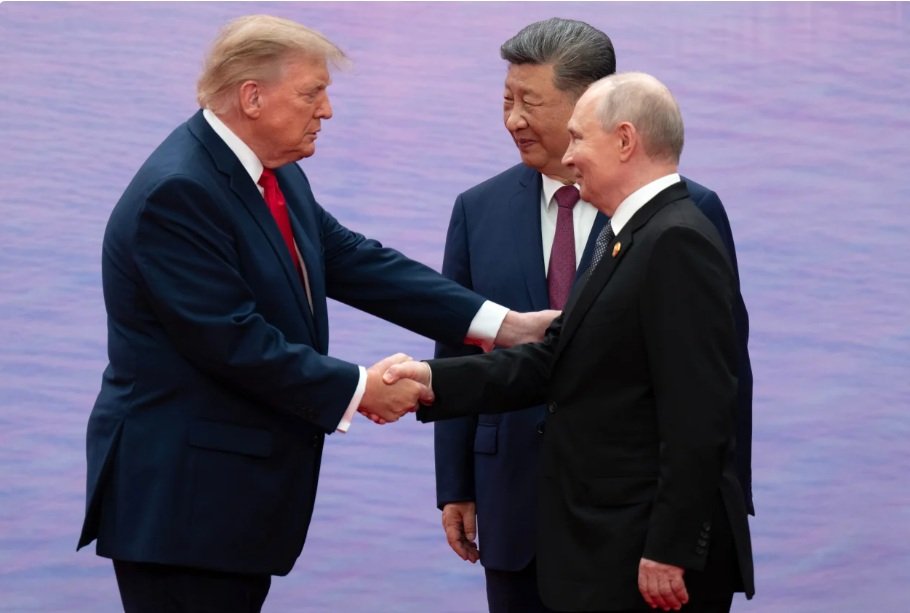
The same day US President Donald Trump meets Russian President Vladimir Putin and Chinese President Xi Jinping in China, two of his most influential diplomatic representatives, Steve Witkoff and Jared Kushner, are expected to join European and Ukrainian officials in Berlin for discussions on the future of the Ukraine war.

The diplomatic coincidence is raising important questions about the changing balance of international relations, the future of transatlantic cooperation and Europe’s position in negotiations that could reshape its security environment.
On Thursday, November 19, Trump is scheduled to participate in an unprecedented trilateral meeting with Putin and Xi on the sidelines of the Asia-Pacific Economic Cooperation (APEC) summit in Shenzhen, China. Meanwhile, Witkoff and Kushner are expected in Berlin for a meeting of the Coalition of the Willing, bringing together European leaders and representatives of Ukraine to discuss security guarantees, economic recovery and the next phase of negotiations to end Russia’s war.
The two diplomatic engagements are being described by the US administration as part of a coordinated effort rather than unrelated initiatives.
A US official told Reuters that Washington is maintaining regular communication with Ukrainian and European partners while simultaneously engaging Moscow. The Berlin discussions will focus on developing credible post-war security guarantees for Ukraine, advancing a comprehensive economic recovery plan and preparing for another round of multilateral negotiations.
The timing, however, carries significance beyond the immediate Ukraine peace process.
For the first time, the leaders of the United States, Russia and China are expected to meet together while American envoys engage European governments over a war that has fundamentally changed the continent’s security calculations.
The emerging diplomatic arrangement raises a central question: Is Washington attempting to manage major-power relations through separate negotiating channels, and is Europe preparing to assert greater strategic independence in determining its own security future?
Trump, Putin and Xi: A New Diplomatic Triangle
The planned meeting in Shenzhen represents an extraordinary diplomatic moment.
The leaders of the United States, Russia and China represent three of the world’s most consequential military, economic and nuclear powers.
Although Washington, Moscow and Beijing have maintained diplomatic engagement through bilateral and multilateral channels, a joint meeting involving all three presidents at this level would be unprecedented.
According to the White House, discussions are expected to include nuclear disarmament and arms control, an issue that has become increasingly important following the expiration of the New START treaty between Washington and Moscow in February 2026.
Trump has also identified Iran as a subject for discussion and indicated that Ukraine could feature in the wider conversation.
However, US officials have suggested that the principal Ukraine negotiations are being conducted through a separate diplomatic channel involving Washington, Kyiv and Moscow.
This distinction is important.
The China meeting is intended to address broader strategic questions involving nuclear weapons, international security and relations between the three powers. The Ukraine negotiations, meanwhile, require detailed discussions about territorial questions, security guarantees, sanctions and the future relationship between Russia and European countries.
The three leaders therefore have overlapping interests but not necessarily identical negotiating priorities.
For Putin, the meeting provides an opportunity to engage directly with the American president and demonstrate that Russia remains a central participant in international diplomacy despite Western sanctions and its continuing war in Ukraine.
For Xi, hosting the meeting offers an opportunity to reinforce China’s position as a major diplomatic power and strengthen its ability to engage simultaneously with Washington and Moscow.
For Trump, the summit provides an opportunity to pursue nuclear arms control, manage relations with China and Russia, and demonstrate his administration’s diplomatic role in multiple international crises.
The meeting’s symbolic importance could be considerable, although major agreements should not be assumed before the discussions take place.

Why Are Witkoff and Kushner Going to Berlin?
While Trump engages Putin and Xi in China, his two influential envoys will be involved in discussions with European and Ukrainian representatives.
Steve Witkoff, Trump’s special diplomatic envoy, has become a central figure in the administration’s efforts to negotiate an end to the Ukraine war.
Jared Kushner, Trump’s son-in-law, has also emerged as an important informal diplomatic representative despite not holding a formal position within the administration.
His involvement reflects Trump’s preference for relying on trusted personal representatives in sensitive international negotiations.
Both men have recently engaged directly with Russian President Vladimir Putin in Moscow and participated in discussions involving Russian, Ukrainian and American representatives in Abu Dhabi.
Their expected participation in Berlin indicates that Washington wants European governments involved in the next phase of the negotiations.
According to a US official cited by Reuters, the discussions will focus on three major areas:
Post-war security guarantees: Developing arrangements that could prevent another Russian attack on Ukraine following a potential peace agreement.
Economic recovery: Preparing a comprehensive framework for rebuilding Ukraine’s economy, infrastructure and industrial capacity after years of war.
Future negotiations: Coordinating positions among Washington, Kyiv and European governments before the next round of multilateral discussions.
The discussions are particularly important because Russia and Ukraine remain divided over fundamental questions.
Moscow continues to demand control over Ukraine’s Donbas region, while Kyiv remains reluctant to surrender territory. These differences make a comprehensive peace settlement difficult even as diplomatic engagement intensifies.
Europe’s Biggest Concern: Decisions About European Security Without Europe

The Berlin meeting has a significance that extends beyond Ukraine’s immediate future.
For European governments, the central concern is that an agreement between Washington and Moscow could establish new security arrangements on the continent without sufficient European participation.
The war in Ukraine has already transformed European defence planning, increased military spending and forced governments to reconsider their dependence on American security guarantees.
The possibility of Trump negotiating directly with Putin has therefore created considerable unease among European policymakers.
European leaders want to ensure that any eventual settlement addresses their security concerns and does not create conditions for another Russian military confrontation.
German Chancellor Friedrich Merz has repeatedly emphasised the importance of European participation in negotiations.
He has argued that Germany and its European partners must have a place in discussions concerning the future of the continent.
The Berlin meeting, organised with French President Emmanuel Macron and British Prime Minister Andy Burnham, is intended to coordinate European positions under the Coalition of the Willing framework.
The coalition brings together countries supporting Ukraine and seeking arrangements that could help secure a future ceasefire or peace agreement.
Its work includes discussions about military assistance, security guarantees and the possibility of contributing to arrangements for monitoring a future ceasefire.
The emerging European position is not necessarily a rejection of American leadership. Rather, it reflects an increasing recognition that Europe must have the diplomatic, military and economic capacity to protect its own interests.
Is Europe Moving Towards Strategic Autonomy?
The parallel diplomatic engagements have revived an important debate about European strategic autonomy.
For years, European governments have discussed reducing their dependence on the United States in defence, military technology and strategic decision-making.
However, the Ukraine war has exposed the practical limitations of European military capabilities, particularly in areas such as intelligence, surveillance, strategic airlift, missile defence and logistical support.
The changing American approach towards European security has accelerated this debate.
European governments increasingly recognise that their security cannot depend entirely on the political preferences of whichever administration occupies the White House.
This does not mean Europe is preparing to abandon NATO or establish a completely separate military alliance.
Instead, the emerging objective is to strengthen Europe’s ability to act independently when necessary while maintaining the transatlantic security relationship.
The Coalition of the Willing is one expression of this approach.
Its members are exploring how European countries could contribute to security arrangements in Ukraine, including possible ceasefire monitoring and other measures designed to deter renewed Russian aggression.
However, significant questions remain unanswered.
Would European countries deploy military personnel to Ukraine after a ceasefire? Which governments would participate? What would the rules of engagement be? Would the United States provide intelligence, logistical and military support?
These questions demonstrate that Europe’s ambition for greater strategic responsibility still faces substantial political and military challenges.
The Russia-China Relationship Adds Another Dimension
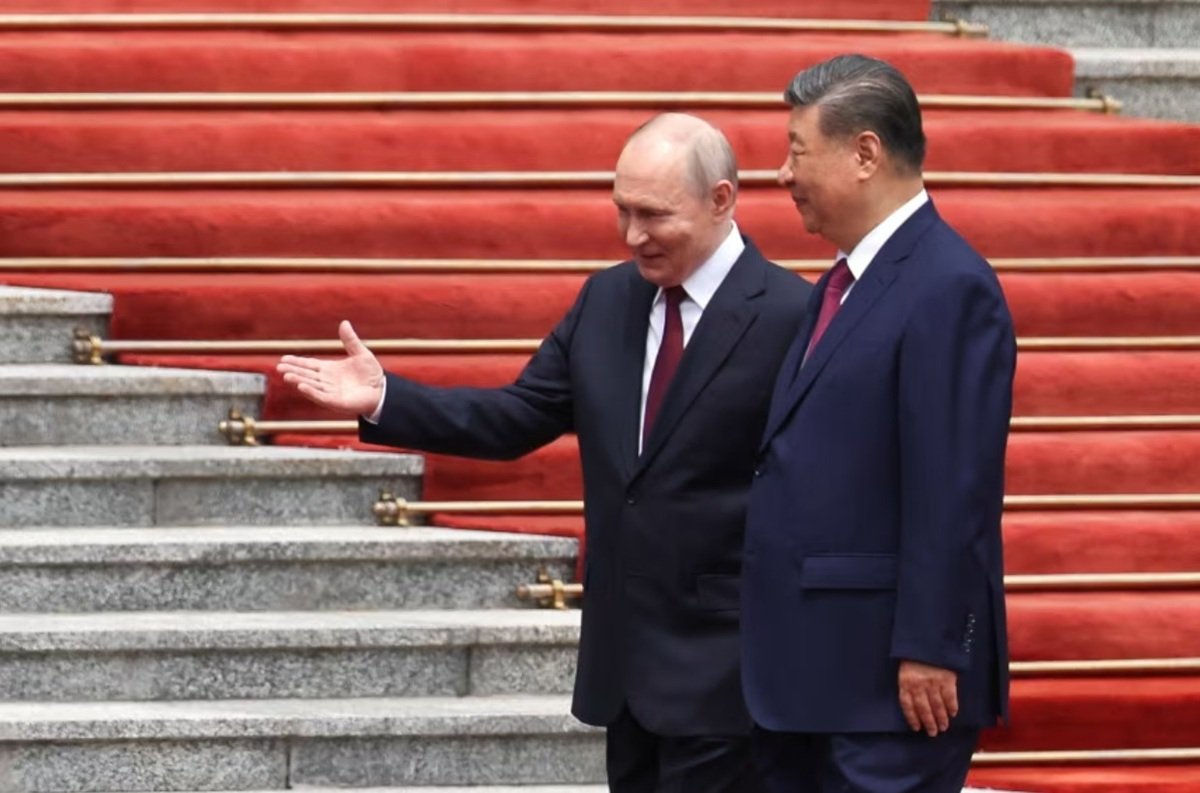
The presence of Putin and Xi alongside Trump is also significant because Russia and China have developed an increasingly close strategic relationship.
Since the beginning of Russia’s full-scale invasion of Ukraine in February 2022, Moscow has become more economically dependent on Beijing.
China has maintained extensive trade relations with Russia, including energy purchases, while the two countries have continued military and diplomatic engagement.
Their relationship is not a formal mutual-defence alliance, but it provides both countries with important strategic advantages.
For Russia, relations with China help reduce the economic pressure associated with Western sanctions.
For Beijing, its relationship with Moscow provides strategic depth in its dealings with Washington, although China also has strong economic reasons to avoid an uncontrolled deterioration in relations with the United States.
The Shenzhen meeting therefore gives Xi an opportunity to position China as an indispensable participant in discussions concerning international security.
It also raises questions about whether Beijing could eventually play a more direct role in efforts to end the Ukraine war.
China has previously presented its own proposals for a political settlement, although its position has faced criticism from Western governments over its close relationship with Moscow.
For now, the immediate diplomatic track remains centred on negotiations involving the United States, Russia and Ukraine.
Ukraine’s Future Remains the Central Test

Despite the significance of the diplomatic activity, the fundamental obstacles to ending the war remain substantial.
Russia and Ukraine continue to disagree over territory, security arrangements and the political conditions of a settlement.
Moscow wants control over the Donbas region, while Kyiv fears that territorial concessions without enforceable security guarantees could leave the country vulnerable to another invasion.
The question of future NATO membership is also central to the dispute.
Russia opposes Ukraine’s NATO ambitions, while Ukraine considers Western security commitments essential to preventing another Russian attack.
The United States and European governments are therefore attempting to develop alternative arrangements that could provide Ukraine with meaningful security assurances.
These could involve military assistance, long-term defence cooperation, intelligence sharing and commitments by participating countries to respond to future aggression.
However, the precise nature of these guarantees remains a matter for negotiation.
The economic dimension is equally important.
Rebuilding Ukraine will require substantial international financing, infrastructure investment and long-term support for its industrial and energy sectors.
This is why the Berlin discussions are not limited to military security. They also seek to establish the economic foundations of a post-war settlement.
Is Washington Pursuing Two Separate Diplomatic Tracks?
The simultaneous meetings in Shenzhen and Berlin suggest that the Trump administration is pursuing a multi-track diplomatic strategy.
One track involves direct engagement with Russia and China on major international issues, including nuclear security and strategic relations.
The second focuses on Ukraine, with American representatives working alongside Kyiv and European governments to develop proposals for a settlement.
This arrangement could allow Washington to pursue broader relations with Moscow and Beijing without excluding European governments from discussions directly affecting their security.
However, an important disagreement has emerged over the extent of European participation in future negotiations.
Following their recent meeting with Putin, Witkoff and Kushner indicated that Russia was prepared to allow European representatives to participate in the next phase of negotiations.
The White House also suggested that a parallel discussion about European security could take place.
However, Kremlin foreign policy adviser Yuri Ushakov disputed the claim that Moscow had agreed to such an arrangement.
This disagreement illustrates how difficult it may be to establish a common negotiating framework.
It also suggests that Europe’s presence at the table remains a political and diplomatic issue rather than an already settled arrangement.
A Changing International Landscape Without a New World Order
The significance of these parallel diplomatic engagements should not be reduced to predictions about an entirely new world order.
The international system is not being replaced by a single new arrangement overnight.
What is becoming increasingly visible is a more complicated distribution of diplomatic influence.
The United States remains a major military and economic power, but it is increasingly required to manage competing priorities across Europe, the Middle East and the Indo-Pacific.
China is expanding its economic and diplomatic influence while attempting to avoid a direct confrontation with Washington.
Russia continues to use its military capabilities, energy resources and diplomatic relationships to maintain influence despite its confrontation with Western governments.
Europe, meanwhile, is attempting to convert its economic weight and collective political influence into greater strategic capacity.
These developments suggest a shift towards more flexible diplomatic arrangements in which countries engage in different combinations depending on the issue under discussion.
The Ukraine war is one example of this changing environment.
Washington is engaging Moscow directly, European governments are seeking a greater negotiating role, and Beijing remains an influential international actor with its own interests in the conflict’s outcome.
Rather than a clearly defined new world order, the emerging picture is one of overlapping power centres, competing interests and increasingly complex diplomatic relationships.
What Comes Next?
The meetings in Shenzhen and Berlin could provide important indications of how the Ukraine peace process will develop.
The immediate questions concern whether Trump can maintain momentum in negotiations with Putin, whether Moscow will accept meaningful European participation and whether Kyiv can secure credible guarantees against renewed Russian aggression.
The Berlin meeting will also test Europe’s ability to present a coordinated position rather than allowing individual governments to pursue separate diplomatic approaches.
For the United States, the challenge will be to balance its strategic engagement with Russia and China against its commitments to European security and Ukrainian sovereignty.
For Europe, the central issue is whether it can move beyond calls for a seat at the negotiating table and develop the military, economic and political capacity required to influence the outcome.
The coincidence of the two meetings is therefore more than a diplomatic curiosity.
It reflects a growing recognition that the future of European security, relations between major powers and the international balance of influence are increasingly interconnected.
The decisive question is not simply who meets whom in Shenzhen or Berlin. It is whether these separate diplomatic channels can produce a settlement that is acceptable to Ukraine, addresses European security concerns and establishes a durable framework for relations between Russia and the West.