Britain is taking a major step beyond simply supplying weapons to Ukraine. By allowing MBDA to declassify information on British components of the SCALP/Storm Shadow cruise missile, London is helping Kyiv build the foundations of a domestic long-range strike industry. The move could eventually reduce Ukraine’s dependence on finite Western missile stocks, expand its ability to strike deep inside Russia and reshape Europe’s defence-industrial relationship with Kyiv. But Ukraine faces an equally serious problem: a critical shortage of air-defence interceptors.
Britain’s decision to release classified information connected to the SCALP/Storm Shadow cruise missile marks a significant change in the way Western military assistance to Ukraine is being structured.

The immediate headline is that Britain will allow defence company MBDA to declassify information on British-made components of the SCALP missile, enabling France and Ukraine to move toward local production and assembly in Ukraine. The announcement was made as British Prime Minister Andy Burnham visited Kyiv on Ukraine’s Independence Day.
But the deeper story is much bigger than Storm Shadow.
For more than four years, Ukraine has depended heavily on Western governments for advanced weapons. Increasingly, however, Kyiv is trying to turn Western technology, Ukrainian engineering and wartime experience into a domestic defence-production system.
That transition could ultimately prove more important than any individual missile shipment.
Ukraine is already producing long-range drones and indigenous missiles, while France has agreed to licensed Ukrainian production of SCALP and other weapons. A July Franco-Ukrainian declaration also envisaged Ukrainian production of AASM guided bombs, SCALP cruise missiles and eventually Aster 30 air-defence missiles.
The emerging model is therefore:
Western technology + Ukrainian industry + domestic production + battlefield experience.
That could give Ukraine a much more sustainable long-range strike capability.
Britain Is Moving From Supplying Ukraine to Helping Ukraine Manufacture Weapons
The distinction is crucial.
Britain is not simply announcing another shipment of Storm Shadow missiles.
Instead, London is allowing MBDA to release classified information concerning British components of the SCALP system.
That information is intended to help France and Ukraine establish production and assembly capabilities inside Ukraine.
This represents a significant evolution in Western military assistance.
The earlier model was:
Britain makes missile → Britain supplies missile → Ukraine fires missile.
The emerging model is:
Britain and France transfer technology → Ukraine builds industrial capacity → Ukraine produces weapons locally.
That is strategically more sustainable.
Imported missile stocks are finite.
A production capability can potentially continue generating weapons for years.
France Had Already Opened the Door for Ukrainian SCALP Production

The British announcement did not come out of nowhere.
In July, France and Ukraine signed a joint declaration covering the licensed production of several weapons systems.
France authorised licensed production of SCALP missiles in Ukraine before the end of 2026, along with AASM precision-guided weapons. The same declaration outlined plans for Ukrainian production of Aster 30 missiles and cooperation on the development of indigenous anti-ballistic interceptors.
Britain’s latest decision is therefore an important piece of a larger industrial puzzle.
Because SCALP and Storm Shadow share Franco-British technology, British-controlled information was one of the remaining barriers to deeper localisation.
Why Storm Shadow/SCALP Is So Important
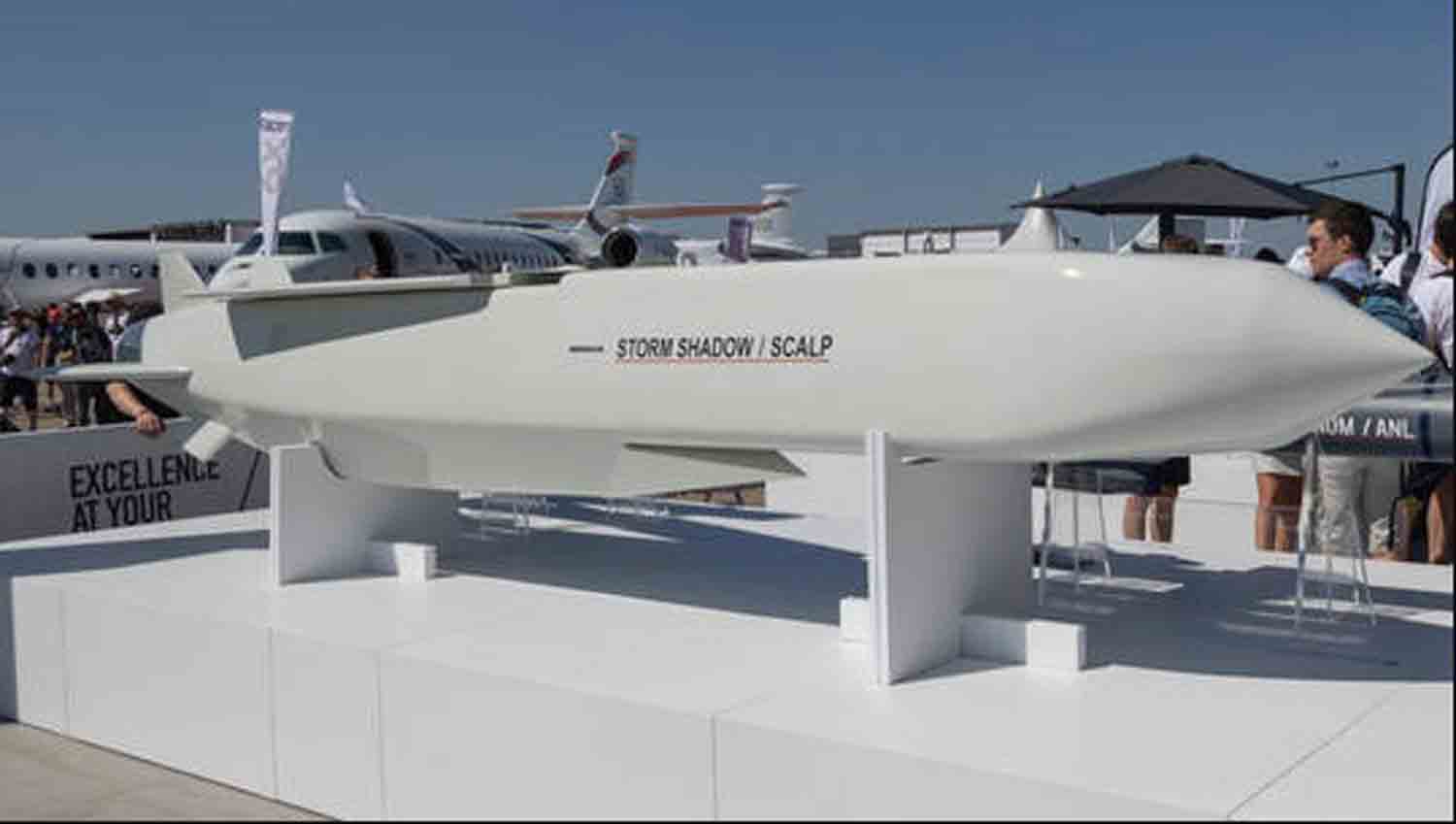
SCALP is the French version of the missile known as Storm Shadow in British service.
It is a long-range, air-launched cruise missile designed for deep precision strikes against important fixed targets.
Its value lies not simply in range.
It combines:
- stand-off attack;
- terrain-following flight;
- precision navigation;
- sophisticated terminal guidance;
- and a penetrating warhead designed for hardened targets.
That makes it fundamentally different from the cheaper long-range drones Ukraine has increasingly deployed.
A drone may be ideal for attacking an exposed fuel depot or industrial facility.
A sophisticated cruise missile is much more suitable for a hardened command facility, deeply protected military site or other high-value target.
Ukraine Already Knows What Storm Shadow Can Do
The proposed production programme is not an experiment.
Ukraine has already used Storm Shadow/SCALP extensively during the war.
The weapons have been employed against Russian military targets and became particularly significant after Western restrictions on their use against targets inside Russia began to loosen.
Their battlefield employment demonstrated that Ukraine could use Western long-range strike technology to reach targets far beyond the immediate front.
That experience is now feeding into Ukraine’s own missile-development programmes.
The Real Story Is Ukraine’s Defence-Industrial Revolution
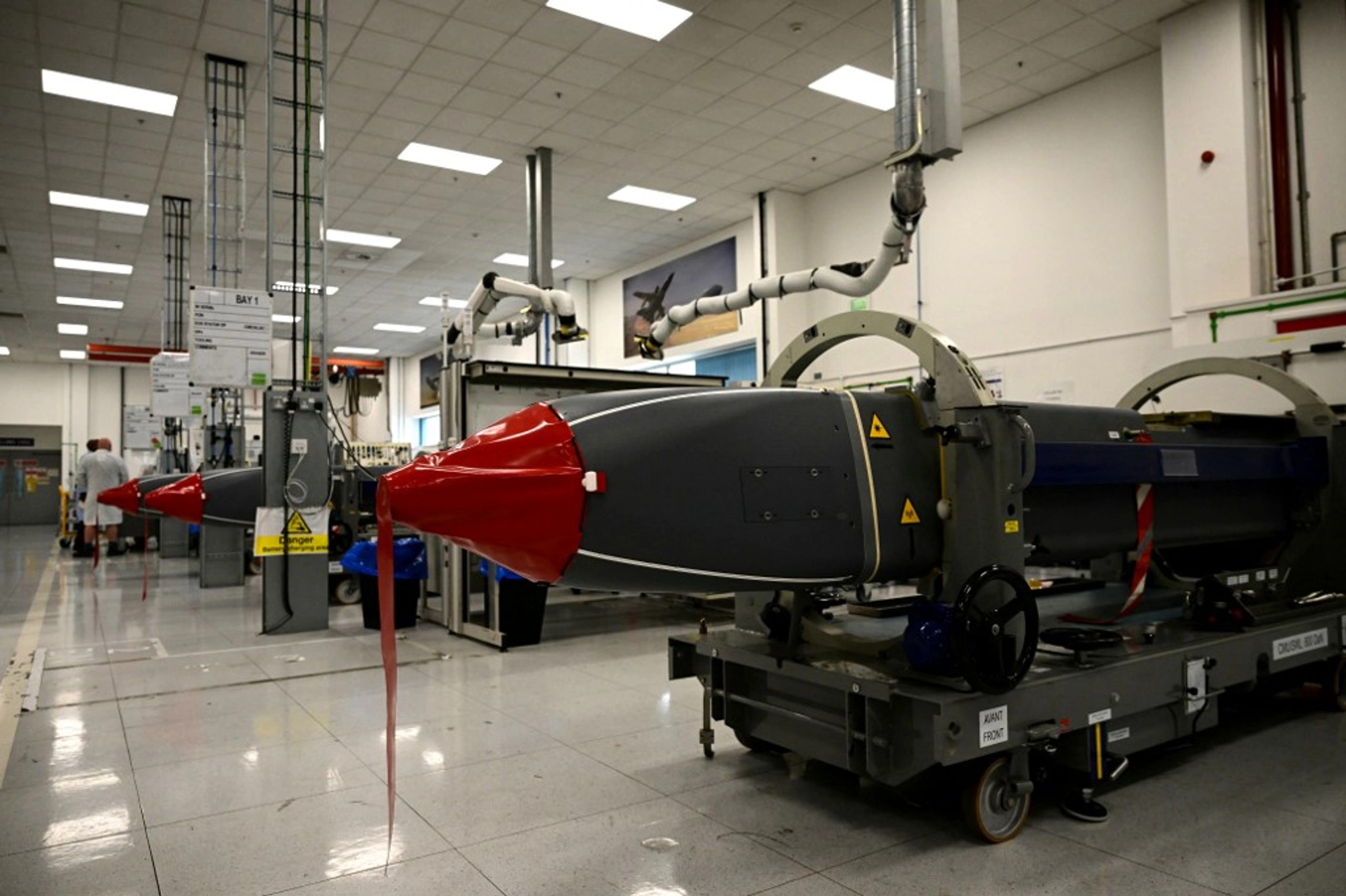
Ukraine’s wartime defence industry has changed dramatically.
Before the full-scale invasion, Ukraine possessed important defence-industrial capabilities but was not a major producer of modern long-range precision weapons.
The war forced an extraordinary acceleration.
Ukrainian companies are now producing:
- long-range attack drones;
- cruise missiles;
- naval drones;
- electronic-warfare systems;
- robotic systems;
- short-range missiles;
- and increasingly sophisticated strike weapons.
The country is effectively using the war as a laboratory for rapid defence innovation.
Recent reporting indicates that Ukrainian companies are producing large numbers of drones and that domestic missile production is expanding as well.
Flamingo Shows Ukraine’s Ambition
The clearest example is the FP-5 Flamingo cruise missile developed by Ukrainian company Fire Point.
Reuters previously reported that Ukraine had developed a family of long-range strike systems, including the Flamingo, with a reported range of up to 3,000 kilometres.
The Guardian reported in July that Fire Point was producing roughly 100 long-range Flamingo missiles per month, alongside thousands of drones.
If that production figure is sustained and independently verified, it represents a remarkable industrial achievement for a country fighting a major war.
It also changes the strategic calculation.
Ukraine would no longer be entirely dependent on the number of Storm Shadows, ATACMS or other Western weapons sitting in foreign warehouses.
It could increasingly build its own long-range strike inventory.
Ukraine Is Trying to Turn Russia’s Geography Against It
This is where the long-range missile programme becomes strategically interesting.
Russia’s vast territory has historically been a major military advantage.
Distance creates strategic depth.
Military-industrial facilities can be positioned far from the front.
Command centres, fuel infrastructure and logistics hubs can operate hundreds or even thousands of kilometres away.
But long-range drones and missiles change the equation.
The farther Ukraine can strike, the more Russian territory potentially becomes part of the military battlespace.
That creates a difficult problem for Moscow.
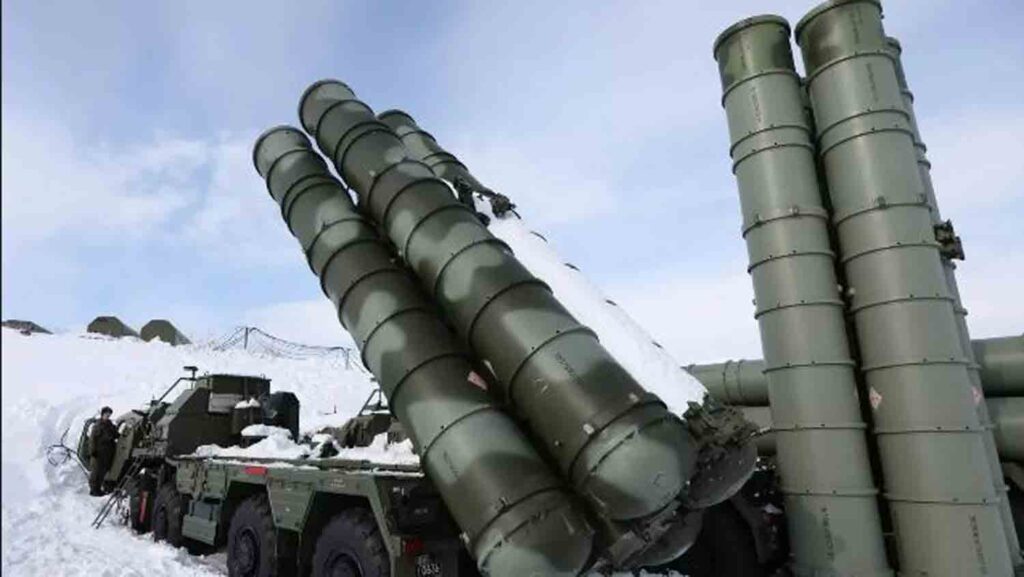
It cannot realistically protect every industrial plant, fuel depot, military facility, logistics hub and airfield across such an enormous territory with high-end air-defence systems.
Ukraine’s Strategy Is Increasingly About Stretching Russian Air Defence
This does not mean Ukraine can overwhelm Russia everywhere.
But it can create a targeting dilemma.
Imagine Russia must defend:
- military bases;
- ammunition depots;
- oil refineries;
- command centres;
- airfields;
- missile-production facilities;
- railway hubs;
- energy infrastructure.
If Ukrainian drones and missiles can reach increasingly distant targets, Russia has to distribute its air-defence resources across a much larger area.
That can create gaps.
The strategy is therefore not simply:
“Destroy Russia.”
It is also:
“Force Russia to defend everything.”
That is a much more sustainable way for a smaller country to exploit a larger adversary’s geographic weaknesses.
The SCALP Programme Adds a Different Layer
Ukraine’s domestic weapons and Western systems can complement one another.
A future Ukrainian strike architecture could include:
Long-range drones
Large numbers at comparatively lower cost.
Indigenous cruise missiles
Longer-range weapons produced inside Ukraine.
SCALP/Storm Shadow
Western-designed precision weapons for high-value targets.
Ballistic weapons
Fast strike systems designed to compress the enemy’s reaction time.
Intelligence systems
Satellites, drones, electronic intelligence and other sensors to identify targets.
Together, these create a much more complex strike ecosystem.
This Is More Important Than a Single Missile
The key development is therefore not:
“Ukraine will build Storm Shadow.”
The more important development is:
“Ukraine is becoming a producer of advanced long-range strike weapons.”
SCALP production would become one component of that larger industrial system.
That could eventually allow Ukraine to mix Western and indigenous weapons according to cost, availability and mission requirements.
It would also give Ukrainian engineers direct access to Western manufacturing standards and technology.
But Local Production Will Not Happen Overnight
There is a danger of exaggerating the announcement.
Declassifying technical information does not mean Ukraine can immediately manufacture large numbers of complete SCALP missiles.
Modern cruise missiles contain hundreds or thousands of components, including:
- propulsion systems;
- guidance electronics;
- sensors;
- control systems;
- warhead components;
- navigation systems;
- software;
- specialist materials.
Some of these components may continue to be imported.
The exact division of labour between Ukrainian, French and British industry has not yet been fully disclosed.
That means licensed production should not automatically be interpreted as complete Ukrainian self-sufficiency.
The real measure of success will be how much of the production chain Ukraine eventually localises.
Production in Ukraine Also Creates a New Target for Russia
The strategic benefit comes with an obvious vulnerability.
Russia has already targeted Ukrainian defence-industrial infrastructure.
A Ukrainian missile-production network would therefore become an important Russian military target.
The response may be to disperse production.
Instead of one huge missile factory, Ukraine could develop a network of smaller facilities specialising in different components.
That would make the industrial system harder to destroy.
Ukraine’s broader defence industry has already moved toward decentralised production, a trend that could become even more important for missile manufacturing.
Ukraine’s Biggest Problem Is Not Long-Range Strike
Here lies the paradox.
Ukraine is becoming increasingly capable of striking deep inside Russia.
But it is simultaneously struggling to defend itself against Russian missile attacks.
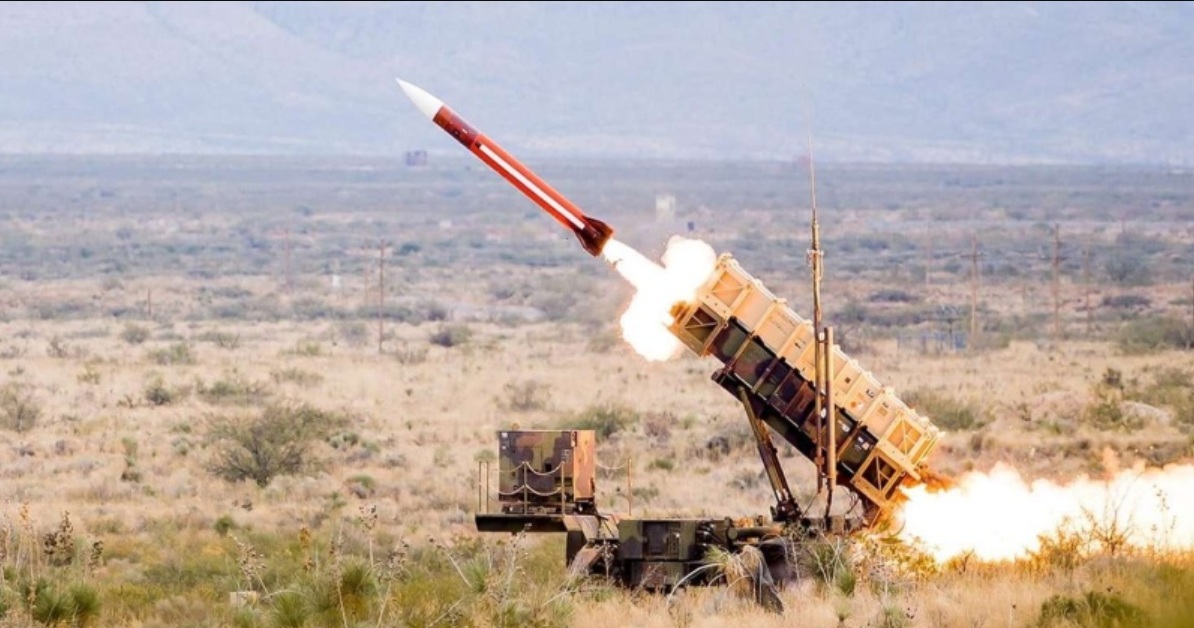
That is particularly evident in the shortage of Patriot interceptors.
Recent Russian attacks have demonstrated the problem.
On August 20, Russia launched a major attack involving cruise missiles, ballistic and hypersonic missiles and 168 drones, according to Ukrainian authorities. The attack killed 17 people in Kyiv and the surrounding region, while Ukrainian President Volodymyr Zelenskyy again warned that shortages of air-defence missiles were costing lives.
Earlier attacks were even more revealing.
Ukrainian officials reported periods in which the country had virtually no available interceptors for some ballistic threats.
This exposes a fundamental weakness.
Ukraine is building the ability to attack deeper, but it does not have enough high-end defensive missiles to guarantee protection of its own cities.
The Missile Defence Problem Is Harder Than the Offensive Missile Problem
This is an important distinction.
An offensive drone or missile can be relatively inexpensive compared with the interceptor required to destroy it.
A defender has to detect the incoming weapon, track it, calculate its trajectory and launch an interceptor with extremely high precision.
Against ballistic missiles, the reaction window can be only minutes or even seconds.
That creates an unfavourable economic equation.
Russia can launch large numbers of relatively inexpensive drones.
Ukraine may have to spend an expensive interceptor to stop each serious threat.
This is why Ukraine needs both more offensive weapons and a much larger air-defence industrial base.
France Is Trying to Fill Part of the Air-Defence Gap
The Franco-Ukrainian agreement is significant in this respect.
France and Italy are working with Ukraine on SAMP/T NG and Aster 30 capabilities, while France has also committed to supporting Ukrainian development of indigenous anti-ballistic interceptors.
France has also pledged to accelerate deliveries of air-defence equipment amid Ukraine’s urgent shortage of interceptors.
This suggests that European assistance is gradually moving toward a more balanced model:
offensive missiles + defensive interceptors + radar + local production.
That is much more sustainable than simply sending individual weapons from national stockpiles.
The Patriot Lesson Is Especially Important
The Patriot situation demonstrates why Ukraine wants domestic production.
Even when political leaders approve weapons transfers, production capacity remains a constraint.
Patriot interceptors are already heavily demanded because of conflicts involving Russia and the Middle East.
Reuters reported that Ukraine’s expected Patriot deliveries in 2026 were substantially below earlier years, highlighting the pressure on Western interceptor stocks.
President Donald Trump had earlier supported the idea of Ukraine producing Patriot interceptors, but implementation remained complicated and would take time.
The lesson for Kyiv is obvious:
A country cannot build its long-term defence strategy around another country’s surplus.
Ukraine needs its own industrial capacity.
Europe Has Reached the Same Conclusion
The issue is not limited to Ukraine.
European countries have discovered during the war that their own missile and ammunition stocks were insufficient for a prolonged high-intensity conflict.
That is why MBDA itself has been expanding production.
The company said in March 2026 that its missile production had doubled between 2023 and the end of 2025, with another 40% increase planned for 2026 and €5 billion in planned investment for 2026–30.
This is an important indicator.
Europe is moving from peacetime defence production toward a much larger industrial base.
Ukraine’s inclusion in that ecosystem could accelerate the process.
Ukraine Could Become a European Defence-Industrial Hub
This is perhaps the most underappreciated consequence.
Ukraine is accumulating something that few other European countries possess:
four years of continuous experience in large-scale modern warfare.
Its engineers are working under battlefield conditions.
Its companies are rapidly modifying systems.
Its military is providing immediate feedback.
Its drone manufacturers are producing at scale.
Its missile developers are learning from actual combat.
If Ukraine survives the war and retains this industrial ecosystem, it could emerge as one of Europe’s most important defence-technology centres.
That would make Ukraine strategically valuable to Europe even after the fighting eventually stops.
The War Is Becoming a Contest of Production
The Russia-Ukraine war is increasingly demonstrating that modern warfare is not only about individual weapons.
It is about production capacity.
Who can build more?
Who can replace losses?
Who can adapt faster?
Who can secure components?
Who can maintain supply chains?
Who can protect factories?
Who can mobilise private industry?
That is why the British decision matters.
It contributes to Ukraine’s industrial endurance, rather than merely adding another batch of weapons to the battlefield.
The New Equation: Technology Transfer Instead of Donations
This could become the defining model of European support for Ukraine.
Instead of:
“Here are 100 missiles.”
The model becomes:
“Here is the technology, licensing, expertise and industrial support to help you manufacture missiles.”
The second approach is slower initially.
But over time it can be far more powerful.
It gives Ukraine greater control over production.
It reduces dependence on foreign stockpiles.
It creates jobs and industrial capacity.
And it allows European defence companies to expand their own production ecosystems.
Russia’s Response Will Probably Be More Than Diplomatic
Moscow has already condemned the British move.
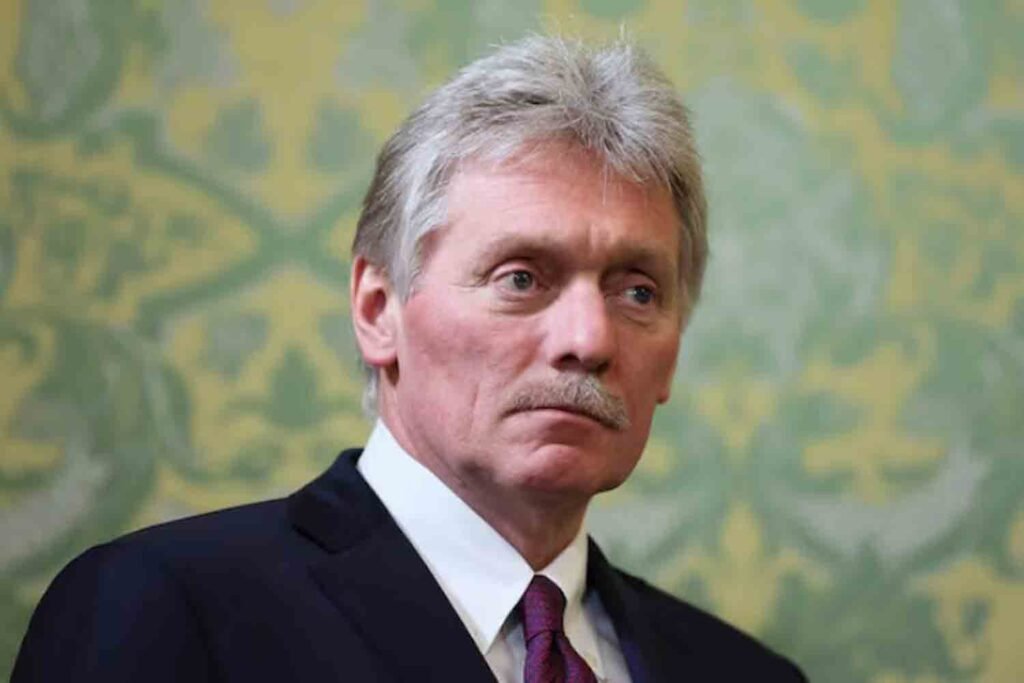
Kremlin spokesman Dmitry accused Britain of escalating the conflict and said Russia was collecting intelligence on missile-production facilities in Ukraine.
That warning should be taken seriously.
A Ukrainian SCALP production programme would almost certainly be considered a high-value military target by Russia.
The security of production facilities will therefore become a major part of the programme.
Britain Is Also Sending a Message to Europe
There is another dimension.
The UK is outside the European Union, but British defence companies remain deeply embedded in European weapons programmes.
MBDA itself is a multinational European missile company.
The SCALP/Storm Shadow programme is one of the clearest examples of British and French defence technology being intertwined.
Britain’s latest move therefore demonstrates that European defence cooperation cannot be neatly separated by EU membership.
The war is pushing Britain, France and Ukraine toward deeper practical defence-industrial cooperation.
The Real Test Will Be Production Numbers
Ultimately, headlines about “blueprints” or “declassified technology” matter less than output.
The critical questions over the next two years will be:
When does Ukrainian production actually begin?
How many missiles can Ukraine produce?
How much of the missile can be made domestically?
Which components remain imported?
Can production survive Russian strikes?
Can output increase quickly during wartime?
Those answers will determine whether the programme becomes strategically transformative or remains largely symbolic.
Ukraine Is Building a Layered Missile Industry
The most important development is therefore the convergence of several programmes.
Ukraine now has:
indigenous long-range missiles
plus
long-range attack drones
plus
French SCALP production plans
plus
European air-defence cooperation
plus
domestic interceptor development
plus
rapidly expanding private defence companies.
This is beginning to resemble a genuine national defence-industrial ecosystem.
The Offensive-Defensive Imbalance Could Still Hurt Ukraine
There is, however, a major strategic danger.
If Ukraine focuses heavily on long-range offensive weapons while remaining dependent on foreign air-defence interceptors, it could create an asymmetric vulnerability.
Russia could continue launching large missile and drone attacks against:
- power infrastructure;
- transport networks;
- industrial facilities;
- cities;
- and defence factories.
Ukraine could retaliate against Russian military and industrial targets.
But retaliation does not necessarily protect the Ukrainian population.
For that reason, air defence may ultimately be more strategically important to Ukraine’s survival than another long-range missile programme.
Both are necessary.
Europe’s €6.1 Billion Decision Adds Context
The broader European picture is also changing.
On August 24, the European Commission approved an additional €6.1 billion in financial support for Ukraine’s defence, including air defence, missiles, ammunition and radar systems.
That is significant because it suggests European support is increasingly shifting toward the exact capabilities Ukraine needs to sustain a prolonged high-intensity conflict.
The combination of money + technology + industrial partnerships could matter more than individual weapons deliveries.
What This Means for the Russia-Ukraine War
The war is moving toward a model in which both sides increasingly try to attack the other’s military-industrial base.
Russia is expanding missile production and attempting to overwhelm Ukrainian air defences.
Ukraine is developing long-range missiles and drones to reach deeper into Russia.
The battlefield is therefore expanding geographically.
The front line remains important, but the strategic contest increasingly extends hundreds or even thousands of kilometres behind it.
That is why missile production has become almost as important as missile deployment.
What This Means for NATO

There is also a wider NATO lesson.
If Ukraine becomes capable of producing sophisticated missiles at scale, NATO members gain access to an industrial partner with extensive combat experience.
Ukraine’s defence industry could eventually become integrated into Europe’s broader rearmament effort.
That would have consequences for:
- missile production;
- drone warfare;
- electronic warfare;
- robotics;
- counter-drone systems;
- air defence;
- and precision strike.
The war is effectively accelerating Europe’s military-industrial learning curve.
The Bottom Line: Ukraine Is Trying to Stop Being a Customer
Britain’s decision to release classified information on British components of SCALP/Storm Shadow should be understood as part of a much larger transformation.
Ukraine is trying to move from being primarily a customer of Western weapons to becoming a producer of advanced Western-compatible weapons.
The SCALP programme is important because it combines:
British technology + French industrial capability + Ukrainian manufacturing + Ukrainian combat experience.
But it is only one part of the story.
Ukraine is already developing indigenous long-range systems such as the Flamingo, expanding drone production and pursuing domestic missile-defence technologies.
France has also opened a pathway for Ukrainian production of SCALP and Aster 30 systems, while Europe is increasing financial support for Ukrainian air defence and missile procurement.
The strategic objective is becoming clear:
build an Ukrainian defence industry capable of sustaining the war even when foreign stockpiles run low.
That could prove far more consequential than any individual Western weapons package.
But there is an equally important warning.
Ukraine’s ability to strike deep inside Russia is growing faster than its ability to defend itself against Russia’s most dangerous missile attacks.
The Patriot shortage has exposed that imbalance.
So Ukraine’s real challenge is not simply building more offensive missiles.
It is building a complete national missile ecosystem:
long-range strike + drones + intelligence + radar + electronic warfare + air defence + interceptors + industrial capacity.
If Kyiv can achieve that, Britain’s Storm Shadow technology transfer will be remembered not as another weapons announcement, but as one of the steps that helped transform Ukraine into a self-sustaining European defence-industrial power.
And that is the real strategic story behind Britain’s decision.