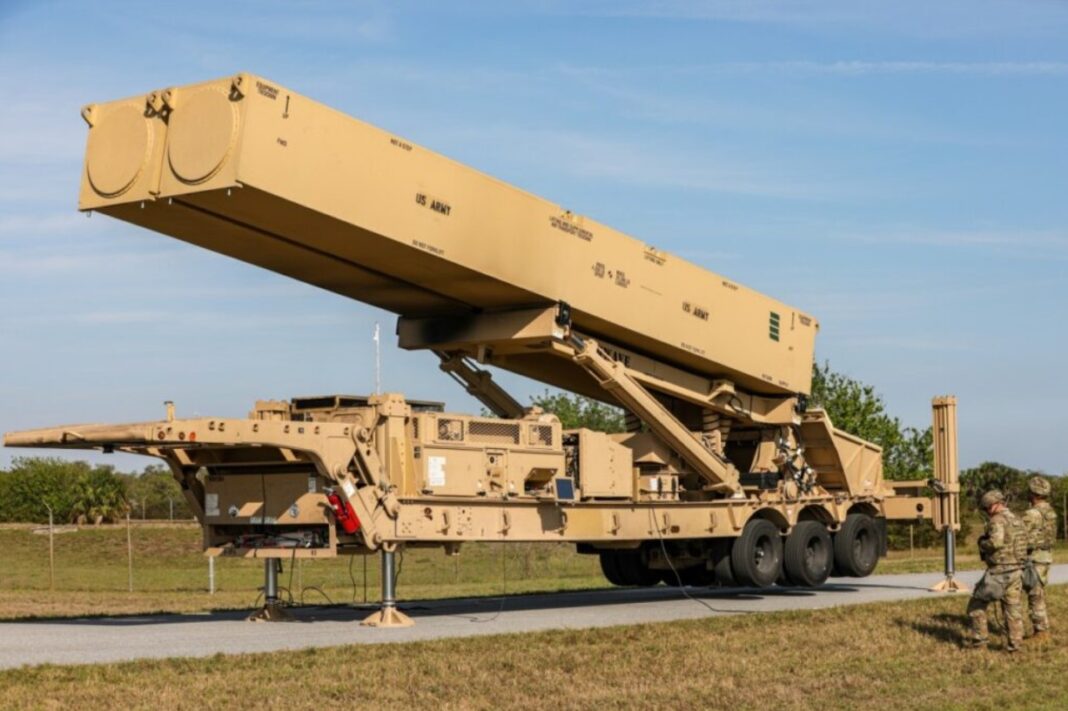
The US Army has completed fielding its first Dark Eagle hypersonic missile battery, marking a major milestone in Washington’s effort to develop conventional long-range strike capabilities. After years of technical and production delays, the system is now ready for deployment, potentially strengthening America’s ability to threaten high-value military targets deep inside heavily defended territory.
The United States has reached a significant milestone in its hypersonic weapons programme, with the US Army declaring its first Long-Range Hypersonic Weapon (LRHW), known as Dark Eagle, fully fielded and ready for operational deployment.
Lieutenant General Frank Lozano, the US Army’s Program Acquisition Executive for Fires, confirmed the development in an interview with Breaking Defense on November 19, published on November 25, 2026.
Describing the system’s readiness, Lozano said the battery was “fully fielded” and “ready to go”, adding that it represented a globally deployable military capability.
The announcement marks an important transition for a programme that has experienced years of development challenges, testing complications and production delays. More importantly, it introduces a new dimension into the US Army’s long-range conventional strike capabilities at a time when Washington is increasingly concerned about China’s expanding military power and Russia’s advanced missile arsenal.
According to publicly available programme information, Dark Eagle has a reported range of approximately 2,775 kilometres (1,725 miles) and travels at hypersonic speeds exceeding Mach 5.
What is the Dark Eagle hypersonic missile?

Dark Eagle is the US Army’s ground-launched Long-Range Hypersonic Weapon, designed to strike time-sensitive and heavily defended targets at considerable distances.
Unlike conventional ballistic missiles that follow a relatively predictable flight trajectory, Dark Eagle uses a boost-glide configuration.
Its two-stage rocket booster accelerates a Common Hypersonic Glide Body (C-HGB) to extremely high speeds before releasing it into the atmosphere. The glide vehicle then travels towards its target while maintaining hypersonic velocity and performing manoeuvres.
This flight profile is particularly significant because it complicates an adversary’s ability to predict the weapon’s trajectory and calculate an effective interception solution.
Hypersonic weapons are generally defined by their ability to travel at speeds exceeding Mach 5, or five times the speed of sound. However, speed alone does not make a weapon difficult to intercept. Its manoeuvrability, flight profile, detection characteristics and the defender’s sensor and interceptor network also matter.
Dark Eagle is designed to combine high speed with manoeuvrability, giving American commanders another option for striking targets that may be difficult to engage using conventional long-range weapons.
The system is intended to carry conventional rather than nuclear warheads. Its precise terminal performance, accuracy and operational flight characteristics remain classified.
Dark Eagle specifications and operational configuration
The publicly reported specifications highlight the weapon’s intended role in America’s long-range strike architecture.
| Capability | Publicly reported information |
|---|---|
| Official designation | Long-Range Hypersonic Weapon (LRHW) |
| Programme name | Dark Eagle |
| Type | Ground-launched boost-glide weapon |
| Reported range | 2,775 km (1,725 miles) |
| Speed | Above Mach 5 |
| Propulsion | Two-stage rocket booster |
| Glide vehicle | Common Hypersonic Glide Body |
| Warhead | Conventional |
| Launch platform | Mobile ground-based launchers |
| Battery configuration | Four launchers, eight missiles |
| First operational battery | US Army |
A complete battery includes four transporter-erector-launchers, each designed to carry two missiles, alongside a battery operations centre and associated support vehicles.
This mobile configuration provides the Army with the ability to relocate launch equipment and establish firing positions in different operational environments.
The precise deployment location of the first fully fielded battery has not been publicly confirmed by the Army.
Why Dark Eagle matters in the US-China military competition
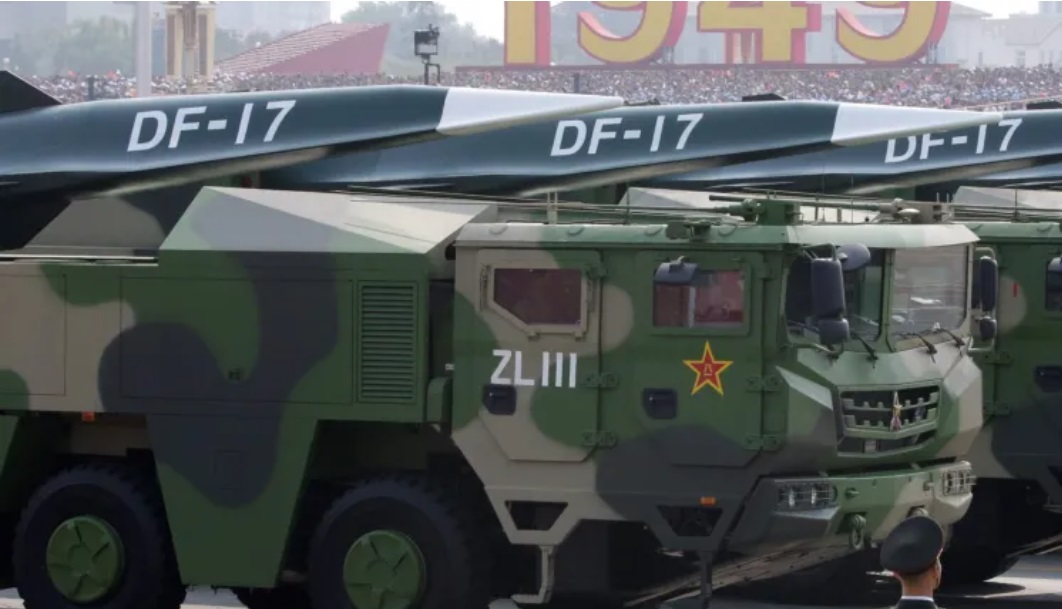
The Indo-Pacific is likely to be one of the most important strategic theatres for Dark Eagle.
China has invested heavily in long-range precision missiles, hypersonic glide vehicles, integrated air defence systems and anti-access/area-denial capabilities.
These systems are designed to complicate the movement and deployment of American forces, particularly around Taiwan and the western Pacific.
Washington’s challenge is not simply to maintain a military presence in the region but also to preserve the ability to strike important targets when operating against an opponent with increasingly sophisticated defensive capabilities.
Dark Eagle could help address this challenge.
With a reported range of 2,775 kilometres, the system offers the US Army a ground-based strike option against selected military targets within its operational reach.
Potential target categories could include command-and-control infrastructure, missile-related facilities, logistics nodes and other high-value military installations. Actual targeting options would depend on intelligence, operational positioning, rules of engagement and political authorisation.
Its importance becomes clearer when considered alongside the US Army’s Multi-Domain Task Force concept.
These formations are designed to integrate land-based fires with intelligence, surveillance, reconnaissance, electronic warfare, space and cyber capabilities.
Dark Eagle would operate as part of this wider architecture rather than as an isolated missile system.
In a potential Indo-Pacific confrontation, the combination of intelligence networks, forward-positioned forces and long-range precision weapons could provide American commanders with additional options for disrupting an adversary’s military operations.
However, geographical reach should not be confused with guaranteed access. The system’s actual effectiveness would depend on launcher positioning, survivability, targeting intelligence and the ability to maintain communications in a contested environment.
Russia also remains a central consideration
Although the Indo-Pacific provides an important operational context, Dark Eagle also has implications for America’s deterrence posture towards Russia.
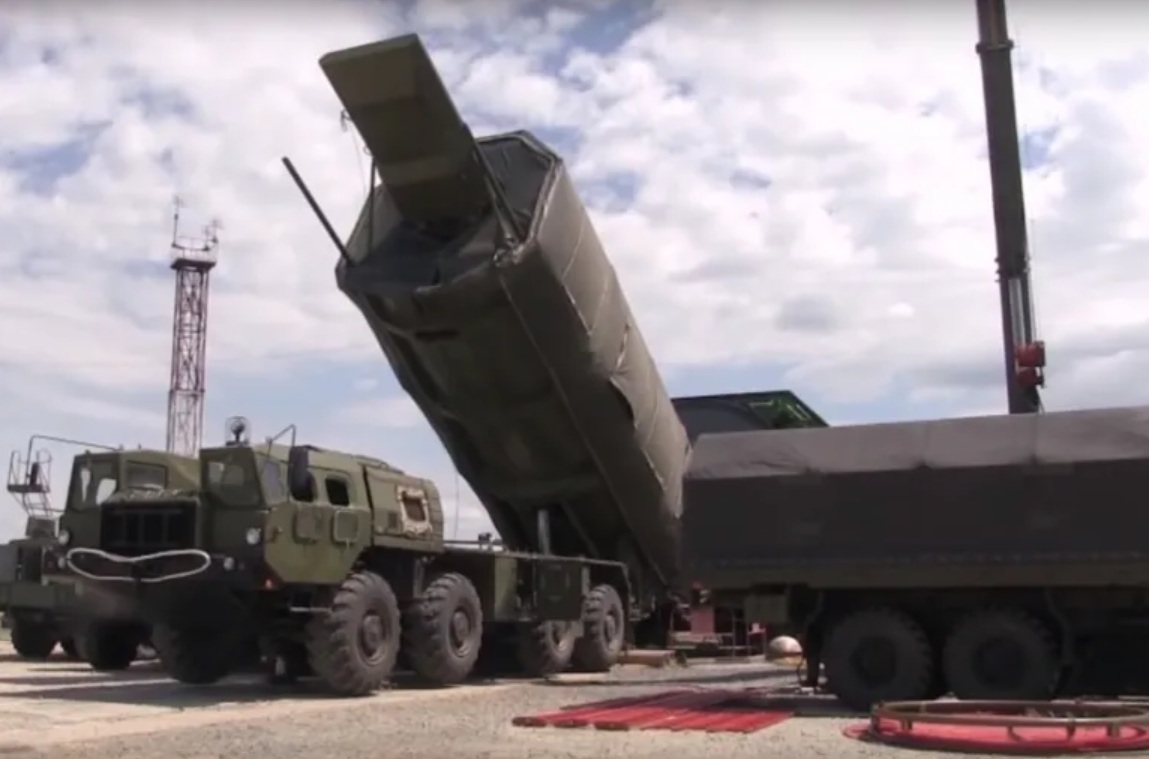
Moscow has developed and deployed several advanced missile systems, including the Kinzhal air-launched ballistic missile and the Avangard hypersonic glide vehicle.
Russia’s missile capabilities have contributed to a broader reassessment of conventional and strategic deterrence in Europe.
Dark Eagle provides Washington with another potential means of holding high-value military infrastructure at risk without relying exclusively on aircraft, naval platforms or conventional cruise missiles.
Its ground-launched configuration could also complicate an adversary’s defensive planning by introducing another launch platform into the American strike architecture.
Nevertheless, Dark Eagle is not a direct technological equivalent of every Russian or Chinese hypersonic weapon. The systems differ in their propulsion, launch platforms, missions and operational concepts.
The broader significance is that the United States is moving from hypersonic research and development towards deploying an actual military capability.
Years of delays before operational deployment
Dark Eagle’s operational milestone is particularly important because the programme has experienced considerable delays.
The Army initially intended to field the first battery much earlier, but technical difficulties, missile production issues and testing requirements affected the schedule.
According to the US Government Accountability Office’s 2026 assessment, earlier problems included missile quality issues, production bottlenecks and difficulties at contractor facilities.
The Army and Navy also needed to demonstrate the missile’s performance through an integrated launch sequence involving the weapon and its ground equipment.
A successful end-to-end flight test in December 2024 represented an important breakthrough.
Further testing and production work continued during 2025 and 2026.
The Congressional Research Service and Government Accountability Office have both documented the programme’s development challenges, highlighting the difference between delivering launch equipment and achieving a fully fielded battery with missiles.
The latest announcement by Lozano therefore represents more than a routine procurement update. It indicates that the Army believes it has overcome enough of the earlier obstacles to declare its first battery ready for deployment.
The next challenge will be expanding production and building additional operational batteries.
US Army plans to expand Dark Eagle deployment
The first operational battery is only the beginning of the Army’s wider programme.
Lozano confirmed that the Army is working to field its second and third batteries. He also indicated that production of the third battery was already more than halfway complete.
The Army hopes to accelerate the fielding of subsequent batteries compared with the lengthy process involved in the first unit.
This is strategically important because a single battery provides a relatively limited number of ready-to-fire missiles.
A larger force would offer greater flexibility in geographical positioning, operational availability and the ability to sustain long-range strike operations.
Dark Eagle is also linked to the US Navy’s Conventional Prompt Strike programme, which uses a common hypersonic glide body.
The Army’s system is designed for mobile ground launchers, while the Navy intends to integrate its version into selected naval platforms, including Zumwalt-class destroyers and Virginia-class submarines.
This common technological foundation could help the Pentagon develop complementary land-based and sea-based hypersonic capabilities.
However, the Army and Navy still face separate integration, testing and production requirements.
The limitations behind America’s hypersonic breakthrough
Despite its significance, Dark Eagle should not be viewed as an unstoppable weapon.
Hypersonic missiles are difficult to defend against, but they are not inherently invulnerable.
Their effectiveness depends on several interconnected factors, including early warning systems, tracking networks, communications, navigation accuracy and the availability of suitable interceptors.
Another important consideration is production capacity.
The first fully fielded battery represents a significant achievement, but developing a sustainable stockpile requires consistent manufacturing, quality control and substantial financial investment.
The programme’s earlier production problems demonstrate that developing advanced missile technology is only one part of the challenge. Manufacturing it reliably and delivering it at scale can be equally difficult.
There is also the question of cost. Hypersonic weapons are considerably more technologically demanding than many conventional precision-guided munitions. Their operational value will ultimately have to be assessed against their acquisition costs and the missions for which they are most suitable.
Furthermore, the operational assessment process remains important. The Pentagon’s FY2025 testing report established plans for additional operational assessment work during FY2026. Full fielding should therefore not be confused with the completion of every possible test or the establishment of a large operational inventory.
What Dark Eagle means for the future of military deterrence
The declaration of the first Dark Eagle battery as fully fielded highlights an important change in American military planning.
For decades, long-range conventional strike capabilities were primarily associated with the US Air Force and Navy. The introduction of a ground-launched hypersonic system gives the Army a more prominent role in the strategic strike equation.
It also reflects a wider shift towards multi-domain military operations in which land-based missile systems, satellites, intelligence networks, cyber capabilities and naval and air assets operate as interconnected elements.
For China, the development adds another consideration to its military calculations in the Indo-Pacific. For Russia, it reinforces Washington’s efforts to restore and expand conventional long-range strike capabilities.
However, the real strategic impact will not be determined by the speed of the missile alone.
It will depend on how many systems the United States can produce, where they can be deployed, how effectively they can be integrated into military operations and whether they can survive in an environment where adversaries are actively attempting to locate and neutralise them.
Dark Eagle’s first operational battery is therefore an important milestone in the hypersonic arms competition, but not its conclusion. The more consequential development will be the transition from a limited initial capability to a sustainable force that can operate across multiple theatres.