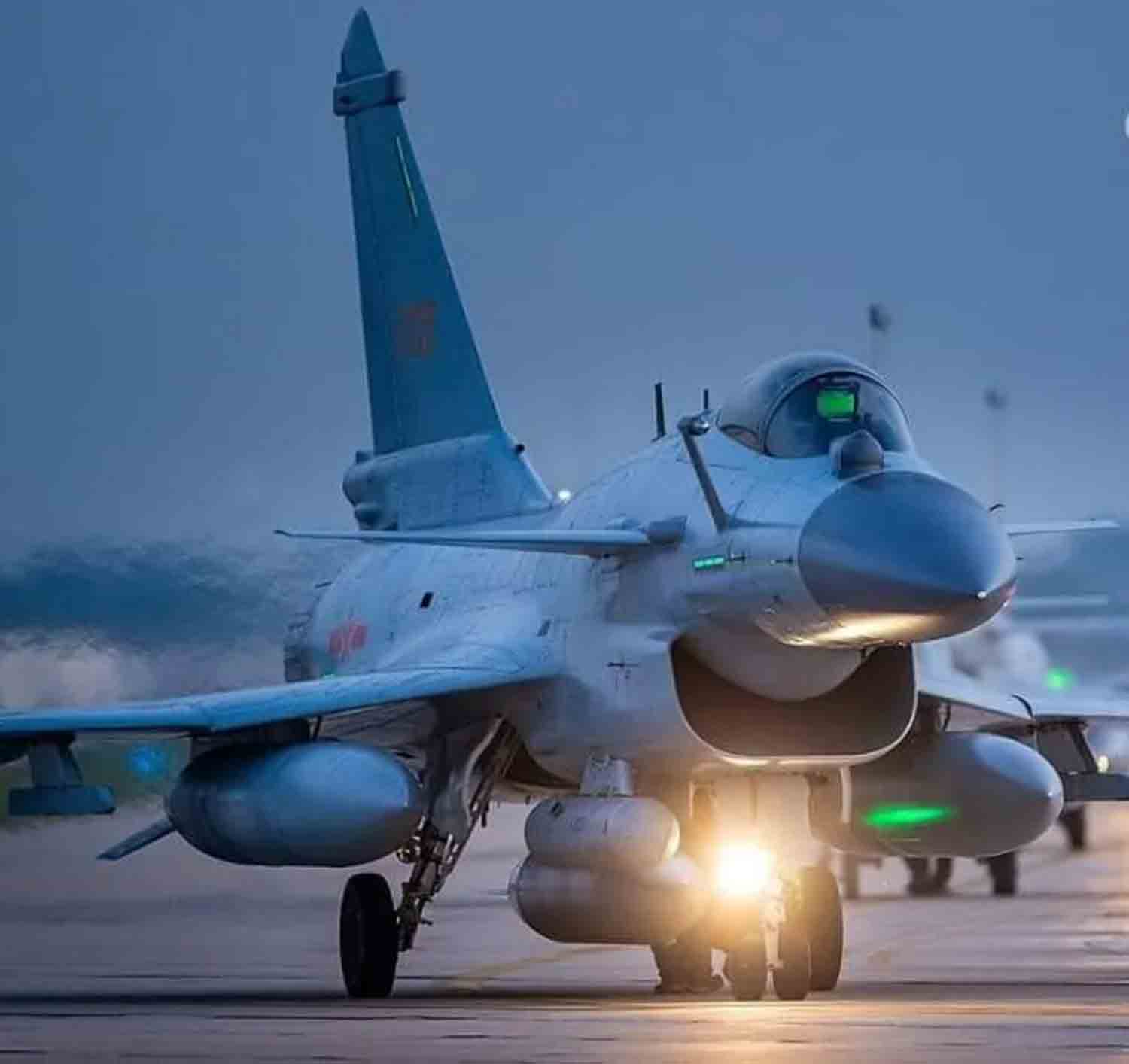

President Donald Trump has now sent the U.S.-Saudi civil nuclear agreement to Congress, but the most important question surrounding the deal is no longer whether Saudi Arabia will get American nuclear technology.
It is whether Trump can use that technology as leverage to achieve something Washington has wanted for years: Saudi Arabia formally recognizing Israel.
The administration says the 30-year nuclear agreement will only move forward if Riyadh joins the Abraham Accords. The agreement has therefore become much more than an energy project. It is now a bargaining instrument in Trump’s attempt to reshape the political order of the Middle East.
But there is a problem with that strategy.
Saudi Arabia also has leverage.
Riyadh wants nuclear power, American technology and a deeper strategic relationship with Washington. But it does not necessarily need to accept every American condition to pursue those objectives. If negotiations become too restrictive, Saudi Arabia has alternatives, including cooperation with China, Russia, South Korea, France and other nuclear powers.
That makes the Saudi nuclear agreement a potentially dangerous game of leverage between two countries that both believe they have something the other desperately wants.
And the outcome could influence the Middle East for decades.
The real story is not the reactor
The immediate headline is straightforward: Trump has submitted the nuclear agreement to Congress and retained his demand that Saudi Arabia normalize relations with Israel.
Congress now has 90 session days to review the agreement. If lawmakers do not reject it during that period, it can enter into force; if Congress does pass a resolution of disapproval, Trump could veto it, meaning opponents would need a two-thirds majority to override him.
But the congressional clock obscures the larger strategic question.
Why is Trump attaching Israel normalization to a nuclear agreement that was originally negotiated as a separate U.S.-Saudi strategic and commercial arrangement?
The answer appears to be that Trump sees the nuclear relationship as one of the few major incentives capable of moving Riyadh.
Saudi Arabia has wanted access to American nuclear technology for years. The Biden administration also explored a nuclear agreement with Riyadh and attempted to incorporate Saudi-Israeli normalization into a broader package.
That effort collapsed after the October 2023 Hamas attack and the subsequent Gaza war transformed the regional political environment.
Trump is now attempting to revive the same basic bargain under different circumstances.
The difference is that the United States is putting the nuclear card visibly on the table.
Trump may be betting that Saudi Arabia needs America more than America needs Saudi Arabia
This is the core calculation behind the White House strategy.
Saudi Arabia wants to develop a domestic nuclear industry. It wants American reactors and American expertise, and Washington wants U.S. companies to occupy a central position in what could become a multibillion-dollar, decades-long nuclear market.
The U.S. Energy Department has described the agreement as a major opportunity for American companies, workers and supply chains while emphasizing nuclear safety and nonproliferation.
For Trump, that creates an attractive package.
Washington can offer Saudi Arabia access to one of the world’s most advanced civilian nuclear industries while asking Riyadh for something of enormous strategic value to the United States and Israel: formal recognition of Israel.
The logic is simple:
You want the reactors. We want normalization.
But Saudi Arabia may not see the bargain in such simple terms.
Riyadh can calculate that the nuclear relationship is itself strategically valuable to Washington. American companies want the contracts. The United States wants to prevent Saudi Arabia from turning toward rival suppliers. Washington also wants to maintain its influence over Saudi energy and security policy.
That gives Mohammed bin Salman bargaining power of his own.
The question, therefore, is not simply whether Saudi Arabia needs the United States.
It is whether the United States needs to keep Saudi Arabia inside the American nuclear system.
What happens if Riyadh says no?
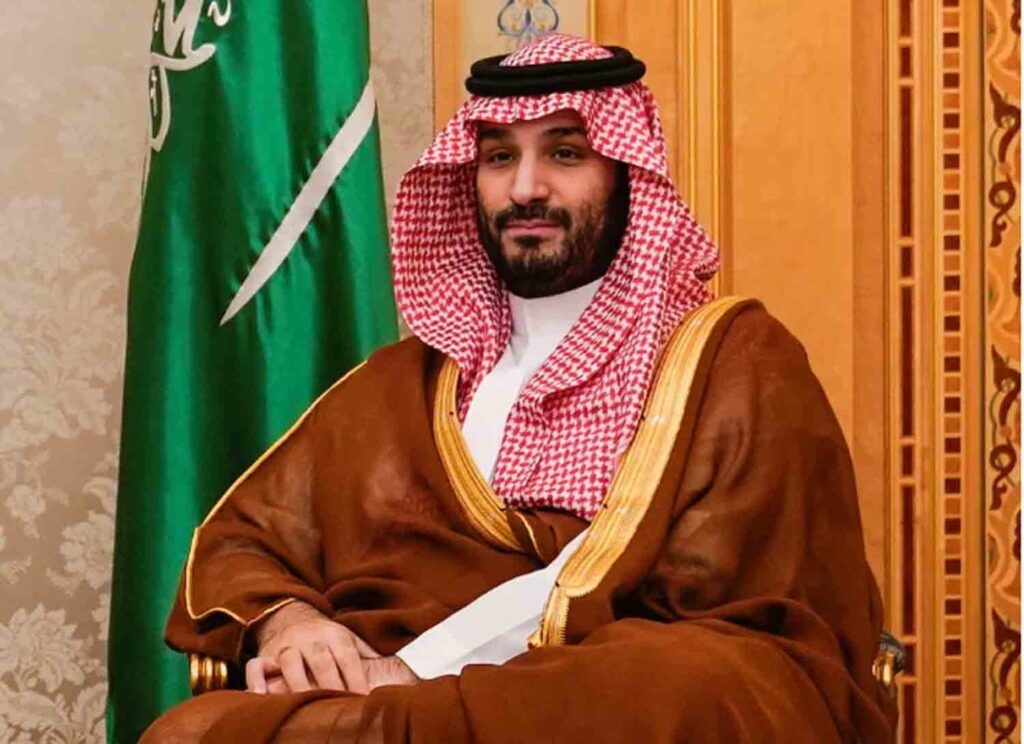
This is the scenario that could define the next stage of the dispute.
Suppose Saudi Arabia refuses to join the Abraham Accords because Washington and Jerusalem cannot meet its conditions on Palestinian statehood.
Does Trump simply cancel the nuclear agreement?
That would create a strategic dilemma.
Saudi Arabia could slow down its nuclear ambitions, but it could also seek partnerships elsewhere. Analysts have already identified China, Russia, South Korea, France and other nuclear suppliers as possible alternatives if the U.S. relationship becomes politically difficult.
That possibility is important.
China has already developed a deep economic relationship with Saudi Arabia. Beijing has also expanded its political role in the Gulf and has positioned itself as a partner for countries seeking to diversify away from exclusive dependence on Washington.
A U.S. nuclear deal that fails could therefore produce an unintended consequence: more Chinese influence over Saudi Arabia’s future nuclear infrastructure.
That would be a remarkable outcome for a policy designed to strengthen American influence.
The China factor changes Trump’s calculation
The nuclear competition is not occurring in a vacuum.
Saudi Arabia has spent years pursuing a foreign policy based increasingly on strategic diversification. Riyadh remains deeply connected to Washington, but it has simultaneously expanded relations with Beijing, Moscow and other powers.
That does not mean Saudi Arabia is preparing to replace the United States with China.
It means Riyadh has learned to avoid putting all of its strategic eggs in one basket.
If Washington says that Saudi nuclear cooperation is conditional on Israel normalization, Beijing can potentially present itself as a less politically conditional partner.
That does not automatically make Chinese nuclear cooperation preferable for Riyadh. American technology, financing, safety standards, expertise and geopolitical backing carry substantial advantages.
But the existence of alternatives strengthens Saudi Arabia’s negotiating position.
Trump therefore has to be careful.
The harder Washington pushes, the greater the possibility that Riyadh concludes that the cost of accepting American political conditions is higher than the benefit of remaining dependent on American nuclear technology.
The hidden nuclear question: enrichment
The most consequential part of the dispute may not be Israel at all.
It may be uranium enrichment.
A conventional civilian nuclear program is not inherently a weapons program. Countries can operate nuclear power plants under international safeguards.
The problem begins when a country develops capabilities that can potentially be used for both civilian and military purposes.
Uranium enrichment is one such capability.
The United Arab Emirates accepted restrictions on enrichment and spent-fuel reprocessing in its 2009 nuclear agreement with Washington. That arrangement has long been viewed as the benchmark for U.S. nuclear nonproliferation policy.
The Saudi agreement has generated greater controversy because it does not simply reproduce the UAE model.
Reports indicate that the agreement provides for a two-year U.S.-Saudi study of whether uranium enrichment in Saudi Arabia would be commercially viable and necessary. One reported model would involve a facility operated by U.S. companies, with sensitive technology not transferred to Saudi authorities.
That distinction is crucial.
Washington appears to be trying to find a middle ground:
Give Saudi Arabia the benefits of an enrichment industry while keeping the most sensitive technology under American control.
Supporters can argue that this gives the United States more oversight than allowing Saudi Arabia to build an independent enrichment program.
Critics respond that nuclear arrangements can last for decades, while political conditions can change in a matter of years.
A government that accepts American supervision today may seek greater independence tomorrow.
That is why nonproliferation experts remain concerned.
The Iran problem makes the issue much bigger
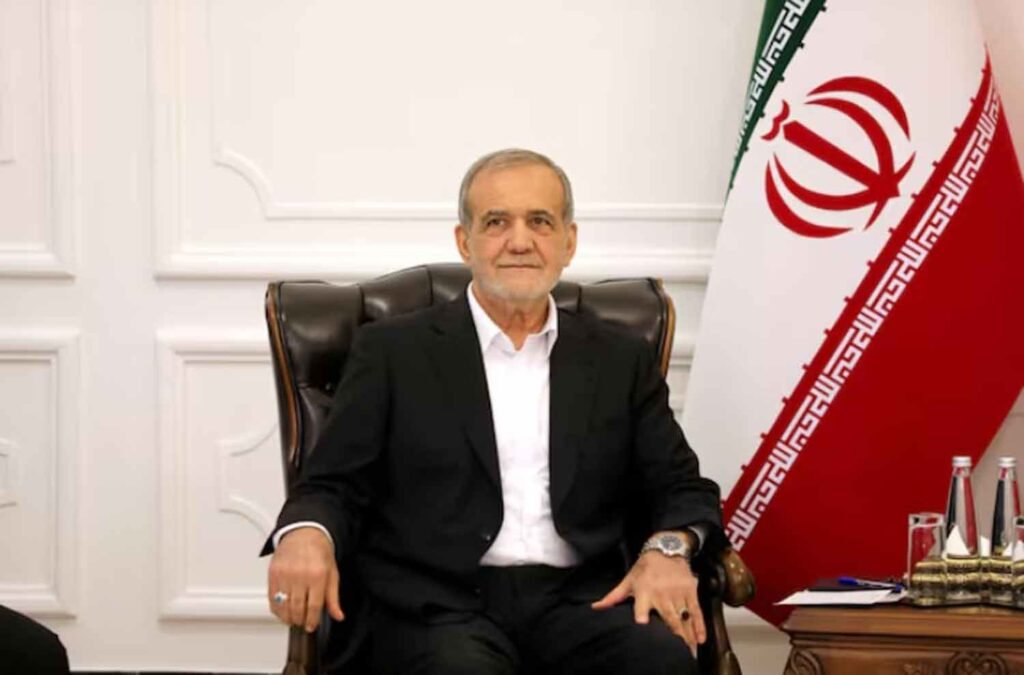
There is another actor sitting quietly in the background of this entire negotiation: Iran.
Saudi Arabia’s nuclear ambitions cannot be understood without considering the kingdom’s long-running strategic rivalry with Tehran.
Saudi leaders have previously warned that if Iran develops nuclear weapons, Saudi Arabia would consider its own options.
That statement gives the Saudi nuclear program a strategic significance beyond electricity generation.
If Iran remains capable of developing sensitive nuclear capabilities while Saudi Arabia acquires similar infrastructure, the region could enter a new phase.
Instead of one country with advanced nuclear capabilities, there could eventually be several.
That is precisely the scenario American nonproliferation policy has traditionally tried to prevent.
And it creates a paradox for Trump.
The administration wants to strengthen Saudi Arabia as a strategic partner against regional threats. But giving Riyadh greater nuclear capabilities could eventually create a new strategic problem.
The United States would have to manage both objectives simultaneously.
Israel may support the condition — but that does not mean normalization is close
Israel has strong reasons to welcome Trump’s demand.
A Saudi nuclear program with an enrichment pathway creates concerns in Israel about a possible future regional arms race. Israeli leaders have also strongly opposed the spread of nuclear fuel-cycle capabilities in the Middle East.
At the same time, Saudi recognition of Israel would represent a major diplomatic prize.
Saudi Arabia is not another small Gulf state.
It is the political and economic heavyweight of the Arab world, the custodian of Islam’s two holiest cities and a country with enormous influence across the Muslim world.
If Riyadh joined the Abraham Accords, it would give the normalization project a significance far greater than the earlier agreements with the UAE, Bahrain and Morocco.
But normalization requires more than an American demand.
Saudi Arabia has repeatedly linked recognition of Israel to a credible and irreversible pathway toward Palestinian statehood.
That condition became even more politically important after the Gaza war.
And this is where Trump’s strategy encounters its hardest obstacle.
Netanyahu and Riyadh are not starting from the same map
The Trump administration can offer Saudi Arabia a nuclear partnership.
But it cannot simply erase the Palestinian issue.
Saudi leaders have domestic, regional and religious considerations that make an unconditional normalization agreement difficult.
At the same time, the Israeli government has resisted Palestinian statehood in terms that satisfy Saudi Arabia.
This produces a three-way negotiation:
Washington wants normalization.
Riyadh wants Palestinian guarantees.
Israel wants normalization without accepting conditions it regards as strategically unacceptable.
Trump can pressure Saudi Arabia, but he cannot easily make those three positions compatible.
That is why the nuclear agreement may ultimately become a bargaining mechanism rather than a straightforward pathway to normalization.
Scenario one: Saudi Arabia accepts Trump’s bargain
The most dramatic outcome would be a Saudi decision to join the Abraham Accords.
If that happens, Trump could claim one of the most significant diplomatic victories of his presidency.
Saudi normalization could lead to expanded trade, investment, tourism, technology cooperation and security arrangements involving Israel and Gulf states.
It could also strengthen the emerging regional alignment against Iran.
The United States would gain a deeper strategic relationship with Riyadh, while American nuclear companies could secure a major long-term market.
For Israel, the diplomatic benefits would be enormous.
But Saudi Arabia would demand something in return.
That could mean American security guarantees, advanced weapons, economic incentives and a meaningful political framework for Palestinian statehood.
In other words, normalization would probably not be a simple Saudi concession.
It would be a much larger bargain.
Scenario two: Riyadh delays normalization but keeps negotiating
This may be the more realistic near-term outcome.
Saudi Arabia could avoid an outright rejection while refusing to sign normalization until the Palestinian question moves.
That would allow negotiations to continue without forcing either side to abandon its position.
The nuclear agreement could remain in a state of political suspension while diplomats work on the larger package.
This would also give Riyadh time.
Saudi Arabia could assess the congressional debate, the future of the Gaza conflict, Israeli politics and the wider regional balance before making a final decision.
For Mohammed bin Salman, there may be little reason to rush.
If the United States genuinely wants the kingdom’s participation, time can increase Saudi leverage.
Scenario three: Trump separates the nuclear and diplomatic tracks
Another possibility is that the administration eventually creates a practical distinction between the nuclear agreement and normalization.
The White House could continue insisting politically that Saudi recognition of Israel is necessary while allowing technical nuclear cooperation to proceed in stages.
That would give both sides room to compromise without either publicly backing down.
Such an approach could be especially useful if Congress becomes more concerned about nonproliferation than about the diplomatic condition.
It would also prevent the United States from losing the Saudi nuclear market to competitors.
The problem is that separating the tracks would weaken Trump’s leverage over Riyadh.
Once Saudi Arabia has secured the nuclear relationship, Washington would have fewer incentives to offer — and fewer ways to pressure the kingdom.
Scenario four: Congress turns the agreement into a nuclear proliferation battle
The congressional review could become the biggest obstacle.
Lawmakers are likely to focus on enrichment, reprocessing, inspection mechanisms and the long-term ability of the United States to prevent the Saudi program from becoming a weapons pathway.
The full agreement is classified, an unusual feature that has already increased scrutiny.
The political debate could therefore move away from Trump’s Israel strategy and toward a much older American question:
How much nuclear technology should Washington be willing to export to a strategically important but potentially nuclear-capable partner?
If Congress demands stronger safeguards, the Saudi government could resist.
If Washington refuses Saudi demands, Riyadh could look elsewhere.
The congressional process therefore has the potential to reshape the agreement itself.
Scenario five: Saudi Arabia builds a multi-country nuclear strategy
The most consequential long-term possibility may be one that receives less attention.
Saudi Arabia could use the American agreement as the foundation of its nuclear program while simultaneously maintaining relationships with other nuclear powers.
That would fit Riyadh’s broader foreign-policy strategy.
Saudi Arabia does not necessarily have to choose between Washington and Beijing.
It could seek American reactors, Chinese infrastructure or research cooperation, European expertise and other international partnerships.
Such diversification would make Saudi Arabia less dependent on any single supplier.
For Washington, that would be strategically uncomfortable.
The United States could still remain Saudi Arabia’s primary security partner, but its ability to shape the kingdom’s nuclear choices would be reduced.
The bigger question: who has the stronger leverage?
This is ultimately the central question behind Trump’s nuclear gamble.
At first glance, Washington appears to hold the cards.
The United States controls access to American nuclear technology and wants Saudi Arabia to recognize Israel.
But Riyadh has cards of its own.
Saudi Arabia controls access to one of the world’s most important energy markets, has enormous financial resources, occupies a strategically vital position and can cultivate relationships with multiple global powers.
Most importantly, Riyadh can wait.
Trump has a political incentive to produce visible diplomatic achievements.
Saudi Arabia does not face the same deadline.
That difference could become decisive.
If Trump needs a Saudi-Israeli breakthrough within a specific political window, Riyadh may gain additional leverage simply by refusing to hurry.
The next five years could matter more than the next 90 days
The congressional review is important, but the real consequences of this agreement will unfold over years.
A 30-year nuclear cooperation agreement is much longer than a presidential term, a congressional majority or even the political life of individual leaders.
That raises an uncomfortable question.
What happens when Trump is no longer president?
What happens if Saudi Arabia normalizes relations with Israel under one American administration but later wants greater nuclear independence?
What happens if Iranian nuclear capabilities expand?
What happens if Israel’s political position changes?
What happens if Saudi Arabia and China become even more closely integrated economically?
A nuclear agreement must survive all of those possibilities.
That is why today’s political conditions cannot be treated as permanent safeguards.
A new Middle East nuclear order could be taking shape
The ultimate significance of the U.S.-Saudi agreement may be its impact on the regional nuclear balance.
For decades, the Middle East has operated under an uncomfortable nuclear asymmetry: Israel is widely believed to possess nuclear weapons but maintains a policy of ambiguity, while Iran has developed advanced nuclear capabilities without openly declaring a weapons program.
Saudi Arabia now wants a sophisticated civilian nuclear capability.
Turkey, Egypt and other regional states could eventually reconsider their own nuclear strategies if the regional environment changes.
The danger is not that every civilian nuclear reactor will become a bomb program.
The danger is that more states could acquire the technological infrastructure that makes a future weapons decision easier.
That is why the Saudi agreement is being watched so closely by nonproliferation experts.
It may establish a precedent.
Trump’s gamble could succeed — or backfire
Trump’s strategy is built around a powerful assumption: that Saudi Arabia wants American nuclear technology badly enough to make a historic concession on Israel.
That assumption may prove correct.
But there is another possibility.
Riyadh may decide that normalization is too politically costly without a Palestinian settlement and that it can maintain its nuclear ambitions through a diversified international strategy.
If that happens, Trump could discover that the nuclear agreement is not simply leverage over Saudi Arabia.
It is also leverage that Saudi Arabia can use against Washington.
The United States wants to prevent Saudi Arabia from drifting toward rival nuclear suppliers. Saudi Arabia wants to prevent the United States from using nuclear cooperation to dictate its foreign policy.
Both sides therefore have incentives to keep negotiating.
And that may be the most likely outcome.
What to watch next
The next phase will be determined by several developments rather than a single congressional vote.
First, watch how Congress reacts to the classified agreement and whether lawmakers demand disclosure of its enrichment and inspection provisions.
Second, watch Saudi statements on Israel. Any movement away from Riyadh’s requirement for a Palestinian pathway would be significant.
Third, watch Israel’s response. If Israeli leaders oppose concessions required by Saudi Arabia, Trump’s diplomatic package could become increasingly difficult to complete.
Fourth, watch China. Any major Saudi nuclear cooperation with Beijing would indicate that Riyadh is preparing a genuine alternative to Washington.
Fifth, watch Iran. Any major development in Iran’s nuclear capabilities could dramatically strengthen the argument inside Saudi Arabia for retaining greater nuclear options.
The reactor deal may be the beginning, not the end
Trump has put the Saudi nuclear agreement on a congressional track, but that does not mean the most difficult part is over.
In reality, the hardest bargaining may only be beginning.
The United States wants to sell nuclear technology while limiting proliferation risks. Trump wants to turn that technology into leverage for Saudi-Israeli normalization. Israel wants normalization but fears the long-term consequences of Saudi nuclear capabilities. Saudi Arabia wants nuclear power, greater strategic autonomy and a Palestinian settlement before recognizing Israel.
Those objectives overlap in some areas and collide in others.
The central strategic mistake would be to assume that Riyadh is merely waiting to accept Washington’s offer.
Saudi Arabia is negotiating from a position of growing confidence, with multiple international relationships and an increasingly independent foreign policy.
Trump may have placed the nuclear card on the table.
But he has not necessarily won the hand.
The coming months will show whether the Saudi nuclear agreement becomes the bridge to a historic Saudi-Israeli normalization deal — or the beginning of a much wider contest over who controls the future nuclear architecture of the Middle East.