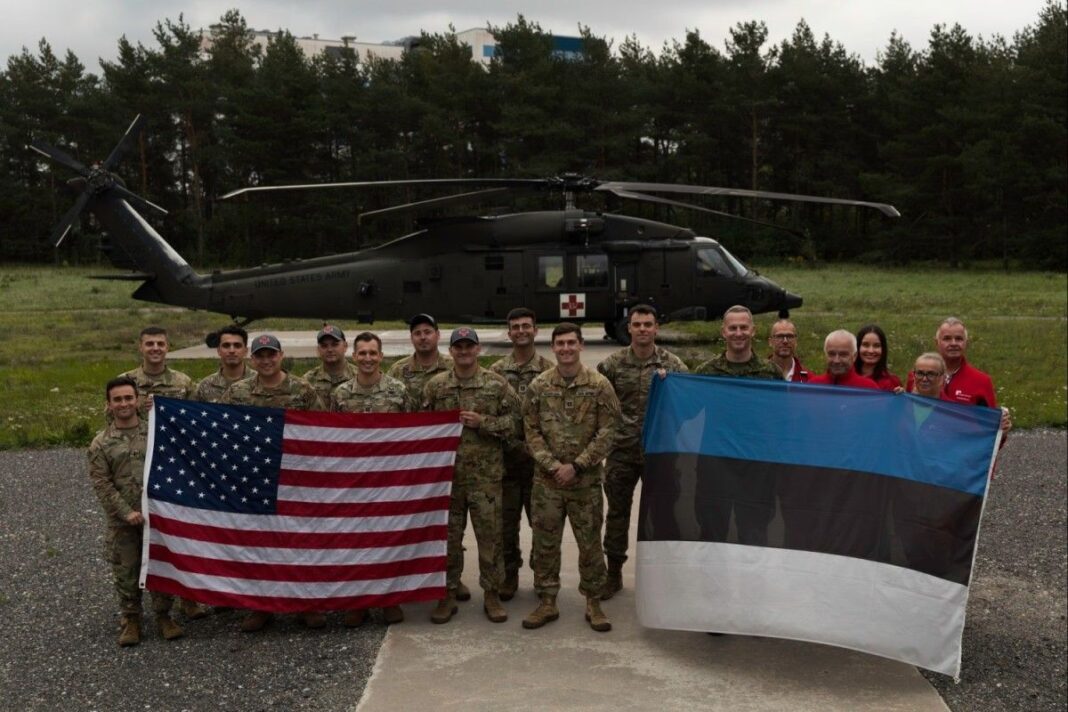
The United States has significantly reduced its military presence in Estonia, with most rotational forces leaving the Baltic nation as Washington reassesses its long-term force posture across Europe. While a fresh contingent of American troops is expected to arrive later this summer, Estonian officials say there are currently no confirmed plans for a continued U.S. deployment beyond the end of 2026.
According to Estonian Defence Minister Hanno Pevkur, the next U.S. rotation will remain in Estonia until the end of this year. However, decisions regarding future deployments will depend largely on the Pentagon’s ongoing strategic review of U.S. military commitments worldwide.
The U.S. has almost completely withdrawn its troops from Estonia as part of a review of its military presence in Europe, according to ETV.
It is reported that only a small portion of U.S. personnel—mainly support units—remain in the country at this time. pic.twitter.com/P6iPDKk8Mn
— SCOTT BOLSHEVIK (@scottbolshevik) July 6, 2026
US Military Presence in Estonia Falls Below 100 Troops
Until recently, between 500 and 700 U.S. soldiers were stationed in Estonia on a rotational basis. They operated primarily from Tapa Military Base, one of NATO’s key military hubs in the Baltic region, along with several other training facilities.
That presence has now been reduced to fewer than 100 personnel, marking one of the smallest American troop footprints in Estonia since rotational deployments began more than a decade ago.
Despite the reduction, Estonian officials stressed that the bilateral defense agreement governing the deployment of U.S. forces remains fully intact, with no changes to the legal framework for future rotations.
Pentagon Review to Shape Future U.S. Deployments
Speaking after meetings with NATO’s Supreme Allied Commander Europe and the Commander of U.S. Army Europe and Africa, Defence Minister Hanno Pevkur confirmed that another U.S. rotation is scheduled to arrive later this summer.
However, he acknowledged that neither the size of the incoming force nor its long-term mission has been finalized.
Those decisions are expected to be made following the Pentagon’s comprehensive six-month review of U.S. global force posture. The review is examining whether American military resources should increasingly shift toward the Indo-Pacific while European allies assume greater responsibility for regional security.
Defense analysts say the review reflects Washington’s evolving strategic priorities, particularly the growing challenge posed by China, while continuing to deter Russian aggression in Europe.
Estonia Faces Strategic Uncertainty
Kalev Stoicescu, chairman of Estonia’s Parliamentary National Defence Committee, said the Baltic states currently remain in a strategic “waiting period” as Washington determines its future military posture.
According to Stoicescu, decisions regarding U.S. troop deployments ultimately depend on American national interests rather than the defense spending levels of individual NATO allies.
He argued that if U.S. forces remain in Europe, they should continue to be positioned on NATO’s eastern flank, where they provide a visible deterrent against potential Russian aggression.
NATO’s Eastern Flank Remains a Priority
Although American troop numbers have temporarily declined, Estonia remains protected under NATO’s Article 5 collective defense commitment and continues to host multinational NATO battlegroups led by allied nations.
The alliance has substantially reinforced its eastern defenses since Russia’s annexation of Crimea in 2014 and expanded those efforts further following Russia’s full-scale invasion of Ukraine in 2022.
NATO has increased troop numbers, enhanced air policing missions, strengthened integrated air and missile defense, and expanded military exercises across Estonia, Latvia, Lithuania, and Poland.
Pevkur emphasized that Estonia will continue relying on its own armed forces alongside NATO’s multinational presence regardless of future U.S. deployment decisions.
Part of a Wider U.S. Military Realignment in Europe
The reduction in Estonia comes amid broader adjustments to America’s military footprint across Europe.
Earlier this month, Lithuania completed the scheduled departure of more than 1,000 U.S. troops and their equipment following the end of a routine rotational deployment supporting NATO’s eastern defenses.
Meanwhile, reports indicate the Pentagon is considering withdrawing approximately 5,000 U.S. personnel from Germany over the next six to twelve months. The proposed reduction could include an Army combat brigade and a missile unit previously planned for deployment in Europe.
Officials have stressed that these moves do not represent a withdrawal from NATO but rather part of a broader review intended to optimize U.S. force posture while maintaining alliance commitments.
Why Estonia Matters to NATO
Estonia occupies a strategically important position on NATO’s northeastern frontier, sharing a 294-kilometer border with Russia. Alongside Latvia and Lithuania, it forms the alliance’s Baltic defense line, making it one of NATO’s most closely watched regions.
Since rotational U.S. deployments began in 2014, American troops have regularly participated in joint exercises with Estonian forces, improving interoperability and reinforcing NATO’s deterrence posture.
Previous U.S. rotations in Estonia were typically drawn from brigades already stationed in Poland and Romania. Deploying an entirely new brigade to the region would require extensive planning and could take several years.
Outlook
For now, Estonia expects another U.S. military rotation later this year, but the longer-term future of America’s presence remains uncertain.
Much will depend on the Pentagon’s global force posture review and broader U.S. strategic priorities, including balancing commitments in Europe with increasing security challenges in the Indo-Pacific.
While troop numbers fluctuate, NATO officials continue to emphasize that the alliance’s commitment to defending its eastern members remains unchanged, even as Washington evaluates how best to allocate its military resources worldwide.