A drone attack that damaged two gas tankers in Egyptian waters has triggered new concerns about the security of the Suez Canal and the Sumed Pipeline, two of the world’s most critical energy transit routes.
The incident occurred Wednesday near Damietta Port on Egypt’s Mediterranean coast. Although no group has claimed responsibility, the strike comes at a time when regional shipping routes are already under intense pressure due to the ongoing Iran conflict and Houthi attacks in the Red Sea.
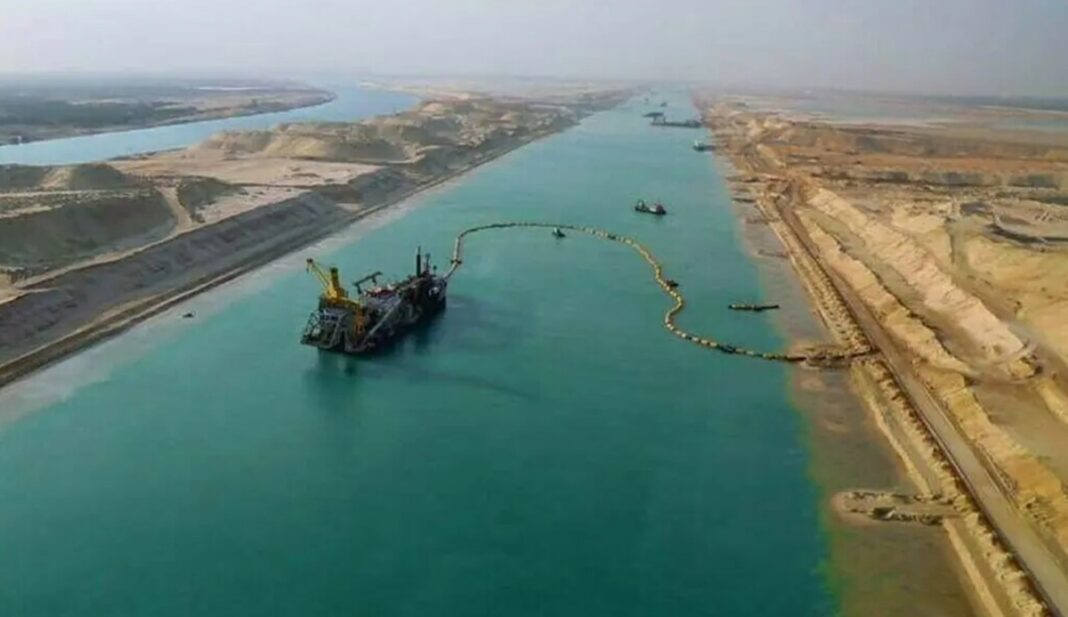
While the attack did not directly target the Suez Canal, analysts warn it highlights growing risks to one of the world’s busiest maritime chokepoints.
Iran Drone Strike Targets U.S. Gas Tanker at Egypt’s Damietta Port
In a dramatic escalation threatening to draw new fronts into the Middle East conflict, a drone strike hit the U.S.-owned liquefied natural gas (LNG) floating storage tanker Energos Winter at Egypt’s Mediterranean… pic.twitter.com/y30KEjyjDh
— ME24 – Middle East 24 (@MiddleEast_24) July 31, 2026
Suez Canal Becomes Vital Alternative to Hormuz
Since fighting intensified around Iran, shipping through the Strait of Hormuz has declined dramatically. Before the conflict, nearly 20% of global oil and LNG supplies passed through the strategic waterway.
Saudi Arabia responded by rerouting most of its crude exports through its Yanbu terminal on the Red Sea, avoiding the Persian Gulf. However, renewed Houthi threats and attacks targeting shipping near Bab el-Mandeb have forced another shift in regional oil logistics.
As a result, increasing volumes of Saudi crude are now traveling north through the Red Sea, crossing Egypt via the Suez Canal and the Sumed Pipeline before reaching Mediterranean markets.
This route has become one of the few remaining reliable export corridors for Gulf energy shipments.
Saudi Oil Flows Through Sumed Pipeline Rise Sharply
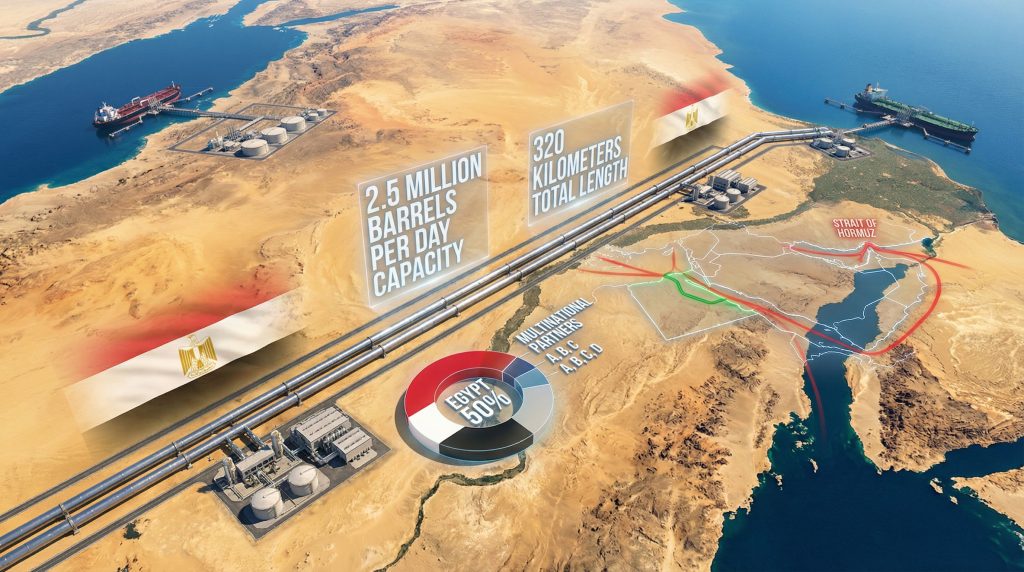
Shipping data shows that crude transported through Egypt’s Sumed Pipeline has increased significantly in recent weeks.
Pipeline loadings climbed from approximately 19.5 million barrels in April to nearly 28.8 million barrels in July, reflecting the growing importance of Egypt’s energy infrastructure.
The Sumed Pipeline carries oil from the Red Sea terminal at Ain Sokhna to Sidi Kerir on Egypt’s Mediterranean coast, allowing crude to bypass the Suez Canal’s size limitations for supertankers.
Industry analysts expect additional Saudi shipments to rely on this route if instability around Hormuz and Bab el-Mandeb continues.
Oil Tankers Increasingly Head North
Market intelligence firms report a clear shift in tanker movements.
More crude carriers are sailing north through the Red Sea toward Egypt instead of heading south through Bab el-Mandeb.
According to shipping analysts:
- Northbound crude tanker traffic has increased significantly.
- Southbound shipments through Bab el-Mandeb have fallen sharply.
- Only about 43% of Yanbu crude exports now head south, compared with 81% in June.
- Several vessels continue operating with tracking systems turned off due to regional security concerns.
Meanwhile, dozens of tankers have accumulated near Port Said, waiting to transit the Suez Canal.
Drone Strike Raises Insurance and Shipping Risks
Although energy markets have not yet priced in a direct disruption to the Suez Canal, maritime security experts believe the Damietta attack could increase insurance costs.
Higher Additional War Risk Premiums are expected for vessels operating near Egyptian waters because insurers now face greater uncertainty regarding attacks on energy infrastructure.
Shipping companies are reportedly reviewing security procedures for vessels operating near Egypt’s Mediterranean ports.
Analysts note that even without a closure of the canal, higher insurance costs and security measures would increase transportation expenses for global energy markets.
Could the Suez Canal Become the Next Strategic Target?

Iran has repeatedly warned that Middle Eastern energy exports could face broader disruption if Iranian oil shipments continue to be restricted.
Meanwhile, Yemen’s Houthi movement has declared a blockade targeting Saudi shipping and has demonstrated the capability to launch long-range drones and missiles across the region.
Security experts caution that while there is currently no evidence of an imminent attack on the Suez Canal itself, the latest strike illustrates how vulnerable regional infrastructure has become during the widening conflict.
Former Egyptian officials emphasize that the canal remains heavily protected by Egyptian security forces.
Longer Routes Mean Higher Costs for Asia
For Asian energy importers, changing shipping routes are creating significant logistical challenges.
Instead of sailing through Bab el-Mandeb toward the Indian Ocean, many cargoes now travel north through the Suez Canal before circling Africa to reach Asian markets.
This detour:
- More than doubles voyage times to Northeast Asia.
- Delays crude deliveries by several weeks.
- Raises fuel consumption and freight costs.
- Increases overall transportation expenses for refiners.
Very Large Crude Carriers (VLCCs) also face operational limitations because they cannot fully transit the Suez Canal while fully loaded. Many must partially unload through the Sumed Pipeline before continuing their journeys.
Oil Markets Watching Suez More Closely Than Ever
Despite the Damietta drone strike, oil prices declined slightly as traders focused on diplomatic developments involving Iranian-Omani talks over the Strait of Hormuz.
However, analysts stress that any future attack directly affecting the Suez Canal would have immediate global consequences.
The canal has become an increasingly important backup route as both the Strait of Hormuz and Bab el-Mandeb face persistent security threats.
Any disruption could trigger:
- Sharp increases in global oil prices.
- Higher freight and shipping insurance costs.
- Longer delivery times.
- Fresh inflationary pressure on energy-importing economies.
Strategic Importance of the Suez Canal Growing
With conflict reshaping traditional Middle Eastern energy routes, the Suez Canal and Sumed Pipeline are becoming indispensable links in global oil supply chains.
As uncertainty continues around Hormuz and Bab el-Mandeb, the security of Egypt’s maritime infrastructure is likely to remain a major focus for energy markets, shipping companies, and governments worldwide.
Even isolated incidents such as the Damietta drone attack are now capable of influencing global risk assessments, highlighting how closely interconnected regional conflicts and international energy security have become.