India and the United States are heading toward a potentially important diplomatic encounter at the 2026 G20 Summit in Miami, but the road to the meeting is being complicated by growing disagreements over trade, Russian oil and Washington’s accusations that India is part of a wider network helping Chinese goods circumvent U.S. tariffs.
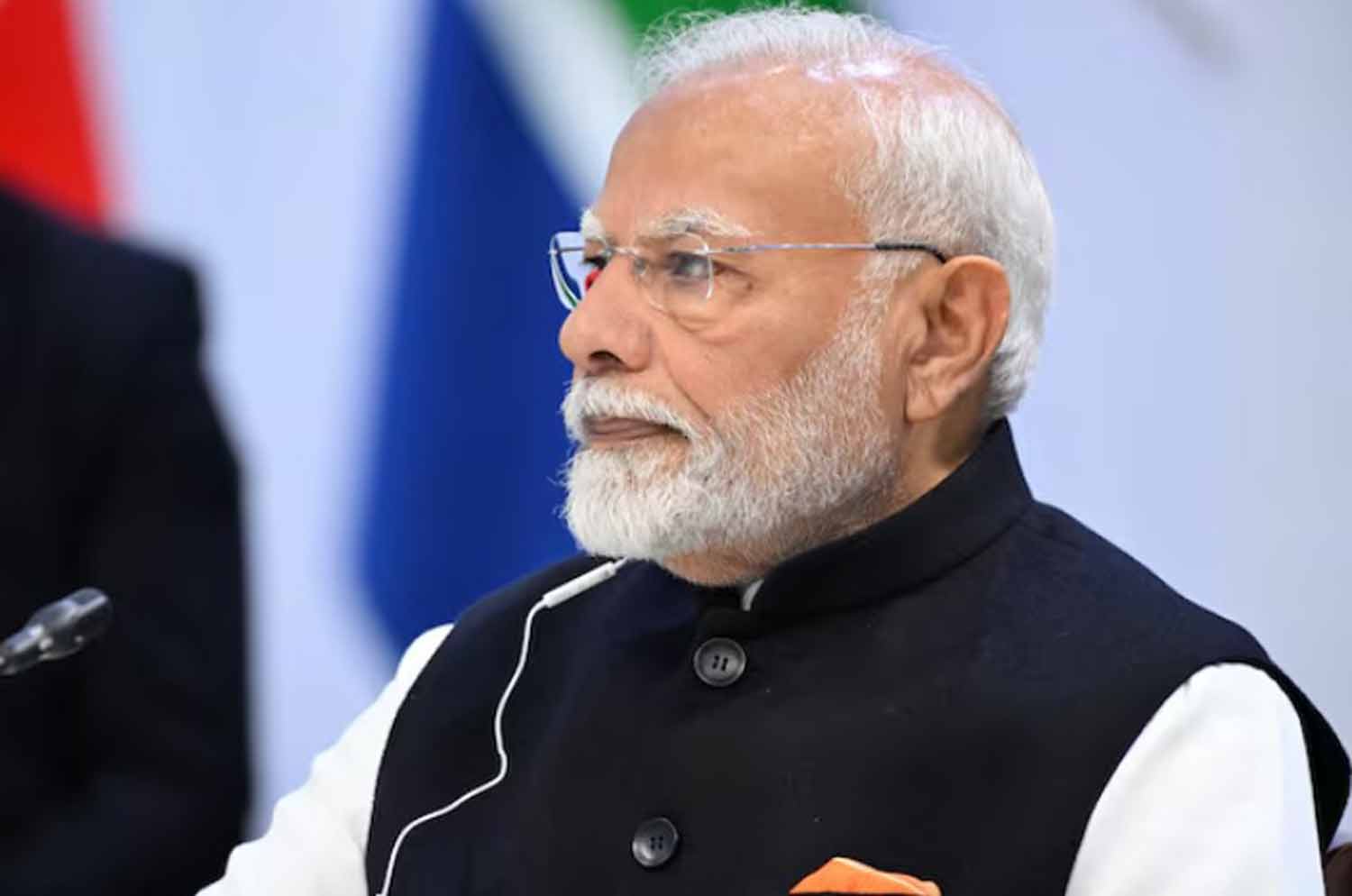
Indian media reports suggest Prime Minister Narendra Modi is expected to travel to the United States in December for the G20 summit. U.S. Ambassador to India Sergio Gor said in June that Modi would attend, although Indian authorities had not at that point formally confirmed the visit.
The timing could prove significant. The India-US relationship remains strategically important in the Indo-Pacific, but economic disputes are increasingly testing the political relationship.
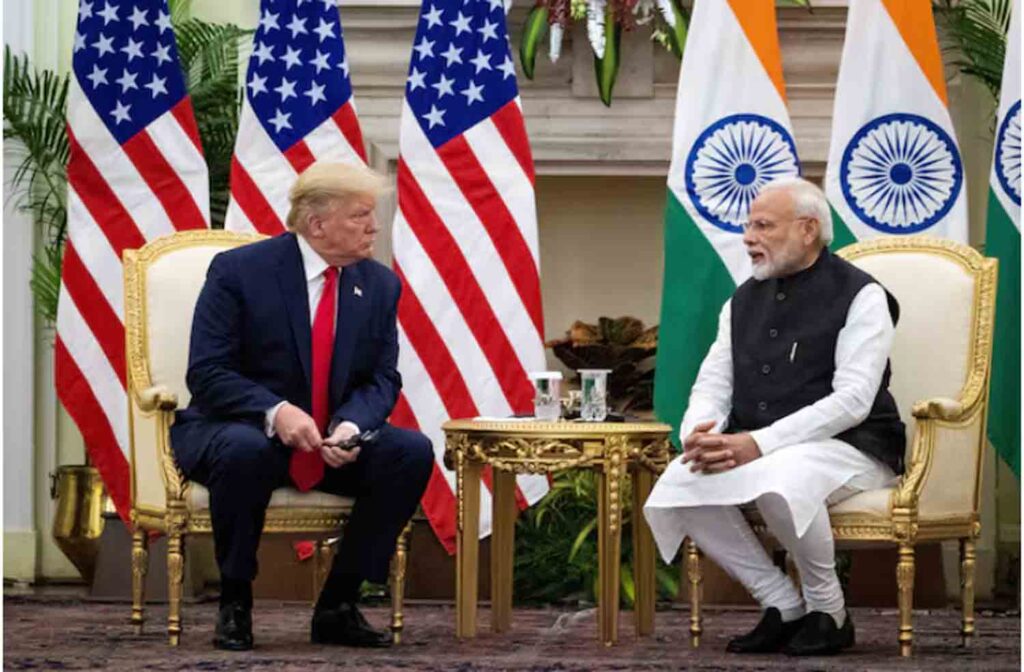
The two issues highlighted by the Indian reports—Russian oil and alleged Chinese transshipment through India—could become major subjects in the bilateral conversation before Modi and U.S. President Donald Trump meet in Miami.
Modi’s Expected Miami Visit Comes at a Difficult Moment
The 2026 G20 Leaders’ Summit is scheduled for December 14-15 in Miami, marking the first time the United States has hosted the leaders’ summit since 2009.
According to the Indian media report, preparations for Modi’s participation are already being discussed, including arrangements for the prime minister and his official delegation.
The visit would provide Trump and Modi with an opportunity to address several disputes simultaneously rather than allowing them to develop into separate crises.
The relationship has important strategic foundations, including:
- defence cooperation;
- the Quad;
- technology partnerships;
- supply-chain diversification;
- Indo-Pacific security;
- energy cooperation;
- trade and investment.
The White House has also previously described the bilateral trade relationship as part of a broader effort to build more resilient supply chains.
The problem is that strategic cooperation and economic friction are now developing in parallel.
The Russian Oil Problem Is One of Washington’s Biggest Concerns
India’s continued purchases of Russian crude have become a major irritant in Washington.
The issue has acquired additional significance because the U.S. Congress has been considering legislation that could give the administration substantial authority to impose additional tariffs on major buyers of Russian energy.
Reuters reported in July that a revised version of the proposed Russia sanctions legislation contemplated tariffs of up to 100% on major Russian oil and gas buyers, while also giving the president potential waiver authority.
For India, the issue is particularly sensitive because Russian crude has become a major component of its energy-import mix.
Recent Indian reporting citing the Global Trade Research Initiative said Russia accounted for more than half of India’s crude imports by mid-August 2026.
That makes an abrupt reduction in Russian oil purchases economically difficult.
India therefore faces a delicate calculation:
Washington wants India to reduce its dependence on Russian energy, while New Delhi wants to preserve affordable energy supplies and strategic autonomy.
The New “Great Transshipment Scam” Accusation
The second dispute may be even more politically complicated.
The Trump administration has released a report titled “The Great Transshipment Scam: Rise, Scope, and Costs”, accusing more than 40 countries of helping Chinese exporters circumvent U.S. tariffs by routing goods through third countries.
India is among the countries identified by Washington.
The U.S. argument is essentially that China’s direct exports to America may appear to have declined because some Chinese goods are being routed through other countries before entering the U.S. market.
The practice is known as transshipment.
It can involve legitimate processing and supply-chain activity, but it becomes unlawful when companies deliberately misrepresent the country of origin or use third-country routes to evade applicable duties.
The Trump administration estimates that tariff-evasion through transshipment could be costing the United States billions of dollars in lost revenue annually.
India Rejects the Simplistic Interpretation
Fat little chance under the likes of Modi, Doval and Jaishankar that India will stand up to the US for doing something wrong to it. pic.twitter.com/7BabP62Vya
— Sushant Singh (@SushantSin) August 18, 2026
The Indian newspaper commentary accompanying the report raises an important counterargument.
Its basic position is that being identified as a country through which Chinese goods may pass does not automatically prove that India is systematically laundering Chinese exports into the United States.
The commentary specifically questions whether the U.S. evidence establishes illegal transshipment in the Indian cases cited.
It points to Indian industrial capacity and argues that rising exports of products such as compressors could reflect genuine Indian manufacturing rather than Chinese goods simply being relabelled.
This distinction is crucial.
There are at least three different scenarios:
1. Genuine Indian manufacturing
Chinese components or machinery may be incorporated into products that undergo substantial manufacturing in India before export.
That is normal international trade.
2. Chinese inputs plus legitimate Indian value addition
An Indian product may contain Chinese components while still legally qualifying under applicable rules of origin.
Again, this is not automatically tariff fraud.
3. Illegal transshipment
Chinese goods are routed through India, undergo little or no meaningful transformation and are falsely declared as Indian-origin products to avoid U.S. tariffs.
That would be a very different matter.
The central question is therefore not whether Chinese goods pass through India, but whether the origin declaration is fraudulent.
Why India’s Response Matters
The second Indian newspaper article argues that New Delhi should respond factually rather than react emotionally.
That is strategically important.
If Washington’s allegations remain unanswered, they could become embedded in U.S. trade policy and eventually affect:
- customs inspections;
- country-of-origin rules;
- tariffs;
- anti-circumvention investigations;
- Indian exporters’ compliance costs;
- future trade negotiations.
The United States has already indicated that it intends to use more sophisticated tools, including AI-supported customs enforcement, to identify suspicious trade patterns.
That means Indian exporters could face greater scrutiny even if the Indian government disputes Washington’s broader conclusions.
India’s Export Story Provides a Complicated Counterargument
The Indian commentary makes another important point: India’s exports to the United States have to be examined product by product.
A rise in Indian exports does not automatically indicate transshipment.
India has developed significant production capacity in sectors including:
- engineering goods;
- pharmaceuticals;
- chemicals;
- automotive components;
- machinery;
- textiles;
- electronics;
- industrial equipment.
The expansion of Indian manufacturing means some increase in exports to the United States can be explained by genuine production shifting toward India.
At the same time, India’s growing trade relationship with China means Chinese components and intermediate goods are increasingly embedded in Indian supply chains.
Therefore, the debate cannot be reduced to “Chinese goods versus Indian goods.”
The real issue is where substantial transformation takes place and how country of origin is legally established.
The US-China Trade War Is Pulling India Into the Dispute
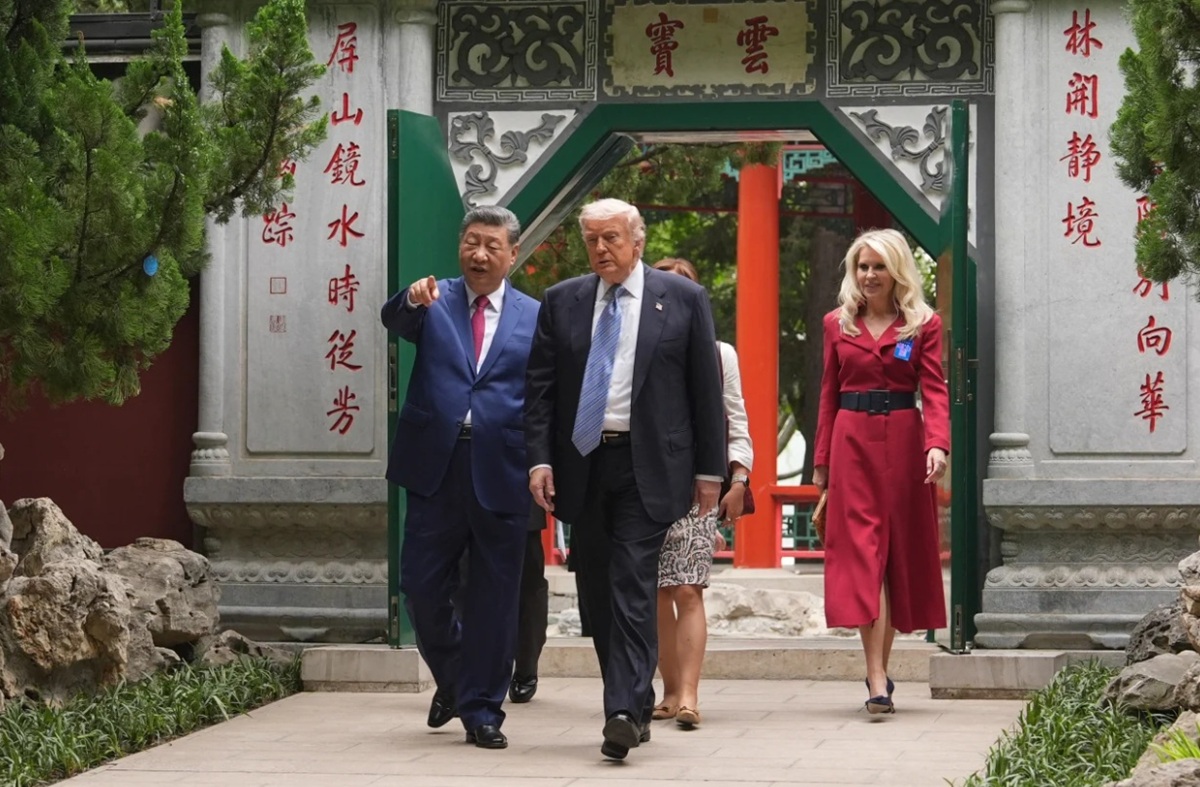
This is perhaps the biggest geopolitical significance of the transshipment controversy.
Washington’s primary target is China.
The U.S. has spent years attempting to reduce China’s ability to circumvent American trade restrictions imposed under Section 301 and other trade authorities.
The White House’s new report argues that Chinese manufacturers adapted to the tariff regime by expanding production and routing some exports through third countries.
That creates a difficult situation for countries such as India.
New Delhi wants to benefit from the China+1 strategy, in which global companies diversify production away from China.
But if Indian exports to the United States increasingly contain Chinese inputs, Washington may scrutinize them more aggressively.
India could therefore benefit economically from supply-chain diversification while simultaneously becoming exposed to American anti-circumvention investigations.
The India-US Trade Deal Becomes Even More Important
The two countries have already been negotiating a broader trade framework.
In February 2026, Washington and New Delhi announced a framework for an interim reciprocal trade agreement, describing it as a step toward a broader bilateral trade agreement involving market access and supply-chain resilience.
By June, U.S. Ambassador Sergio Gor said the negotiations were in their final stages and expressed optimism that the agreement would be concluded.
The subsequent disputes over Russian oil and transshipment make the negotiations more complicated.
Washington wants:
- greater market access;
- stronger enforcement against tariff circumvention;
- reduced dependence on Russian energy;
- greater alignment with U.S. economic priorities.
India wants:
- predictable access to the U.S. market;
- protection for sensitive domestic sectors;
- continued energy flexibility;
- recognition of its strategic autonomy.
The two positions are not necessarily irreconcilable, but they require negotiation.
Why the Miami G20 Could Become a Major India-US Test
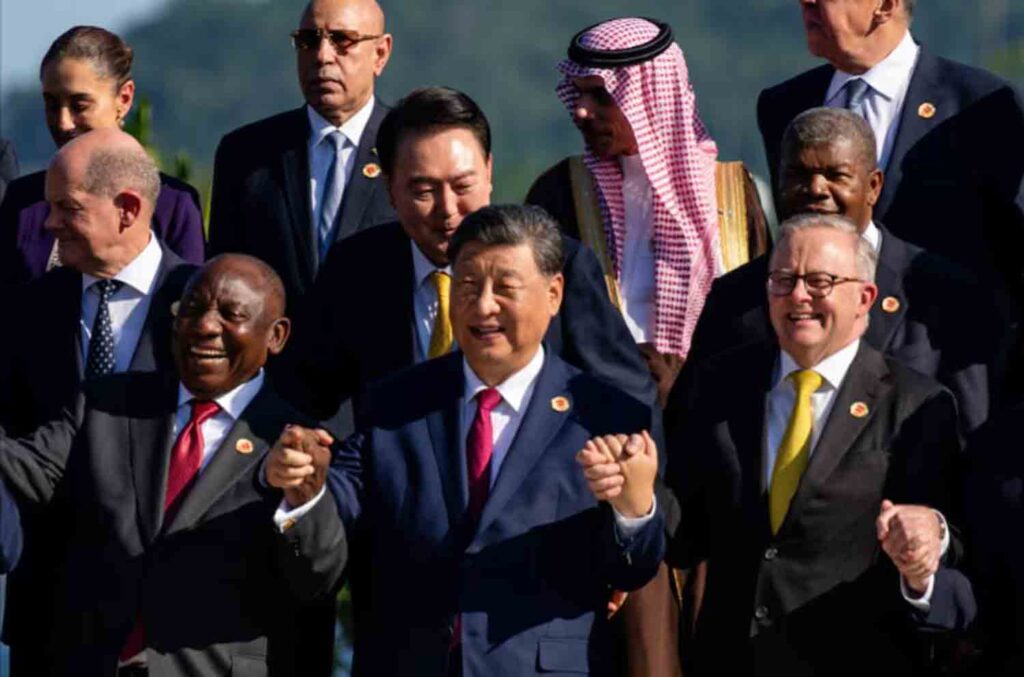
The G20 meeting provides a much larger diplomatic platform than a bilateral trade negotiation.
Trump and Modi could use the summit to discuss:
Trade
A final or revised framework for bilateral economic relations.
Russian oil
Potential exemptions, waivers or mechanisms that reduce the impact of sanctions on India’s energy security.
China
Coordination on supply chains, technology and economic security.
Indo-Pacific
Expansion of the Quad and maritime security cooperation.
Defence
Further cooperation in advanced military technology and defence production.
Critical minerals
Reducing dependence on Chinese-controlled supply chains.
Artificial intelligence
Cooperation in emerging technologies and digital infrastructure.
The Strategic Relationship Is Bigger Than the Trade Disputes
Despite the current friction, it would be misleading to describe India-US relations as collapsing.
The two countries have developed a much broader strategic partnership over the past two decades.
The relationship now extends into:
- defence technology;
- intelligence cooperation;
- space;
- semiconductors;
- telecommunications;
- critical minerals;
- maritime security;
- artificial intelligence;
- nuclear energy.
The Quad remains another important pillar of cooperation involving India, the United States, Japan and Australia.
U.S. Ambassador Sergio Gor has also emphasized the importance Washington places on making Quad ministerial engagement more regular.
But Washington Is Becoming Less Patient
The emerging pattern is important.
The Trump administration appears increasingly willing to separate strategic partnership from economic concessions.
In other words, being an important security partner does not necessarily guarantee favorable treatment on trade.
That is a significant change in the political environment.
India may be valued as an Indo-Pacific strategic partner while simultaneously being pressured over:
- Russian oil;
- tariffs;
- market access;
- trade imbalances;
- Chinese supply chains.
This is the central contradiction facing the relationship.
What India Should Do About the Transshipment Allegations
The strongest response would probably be technical rather than political.
New Delhi could seek:
- The specific shipment-level evidence behind the U.S. allegations.
- Product-by-product clarification of the cases involving India.
- Joint customs verification mechanisms.
- Greater transparency in country-of-origin certification.
- A bilateral mechanism for resolving disputed shipments.
- Protection for legitimate Indian manufacturers from blanket penalties.
That would allow India to challenge unsupported allegations without appearing to defend genuine customs fraud.
What Could Happen Before the Miami Summit?
| Issue | Current Situation | Potential December Outcome |
|---|---|---|
| Modi’s Miami visit | Expected, according to U.S. ambassador | Bilateral Trump-Modi meeting |
| Trade agreement | Negotiations ongoing | Possible breakthrough or revised framework |
| Russian oil | Major U.S. concern | Waiver, compromise or continued dispute |
| Transshipment allegations | India named among countries scrutinized | Customs dialogue and verification |
| China | Major strategic competitor | Greater supply-chain cooperation |
| Quad | Expanding security cooperation | Further institutionalization |
| Defence ties | Strong strategic foundation | New technology and procurement initiatives |
The Bigger Geopolitical Picture
The significance of these disputes goes beyond India and the United States.
India is simultaneously trying to maintain relationships with:
- the United States;
- Russia;
- Europe;
- Japan;
- Gulf states;
- China and other Asian economies.
This is the essence of India’s strategic autonomy.
Washington, however, increasingly expects strategic partners to align with U.S. economic-security priorities, particularly where China and Russia are concerned.
That creates a structural tension.
India wants multi-alignment.
The United States increasingly wants strategic alignment.
The difference will not necessarily destroy the partnership, but it will make negotiations more transactional.
Final Assessment
The two Indian media reports reveal a larger story than either headline suggests.
Prime Minister Narendra Modi’s expected visit to Miami for the December G20 Summit comes at a moment when the India-US strategic relationship remains strong but its economic foundation is under pressure.
The Russian oil dispute tests India’s strategic autonomy.
The transshipment allegations test India’s export credibility.
The trade negotiations test whether both sides can separate legitimate commercial competition from broader geopolitical disagreements.
And the G20 provides a potential deadline for resolving at least some of these differences.
The United States needs India as an important Indo-Pacific partner and as a potential alternative manufacturing and supply-chain hub to China.
India needs access to the world’s largest consumer market, American technology and investment, and a stable strategic relationship with Washington.
That mutual dependence gives both governments an incentive to compromise.
But the emerging message from Washington is clear: strategic partnership with India does not mean exemption from Trump’s trade and economic-security agenda.
The Miami G20 could therefore become more than another leaders’ summit. It may become an important test of whether the India-US relationship can move from a primarily strategic partnership toward a more durable economic and geopolitical bargain.