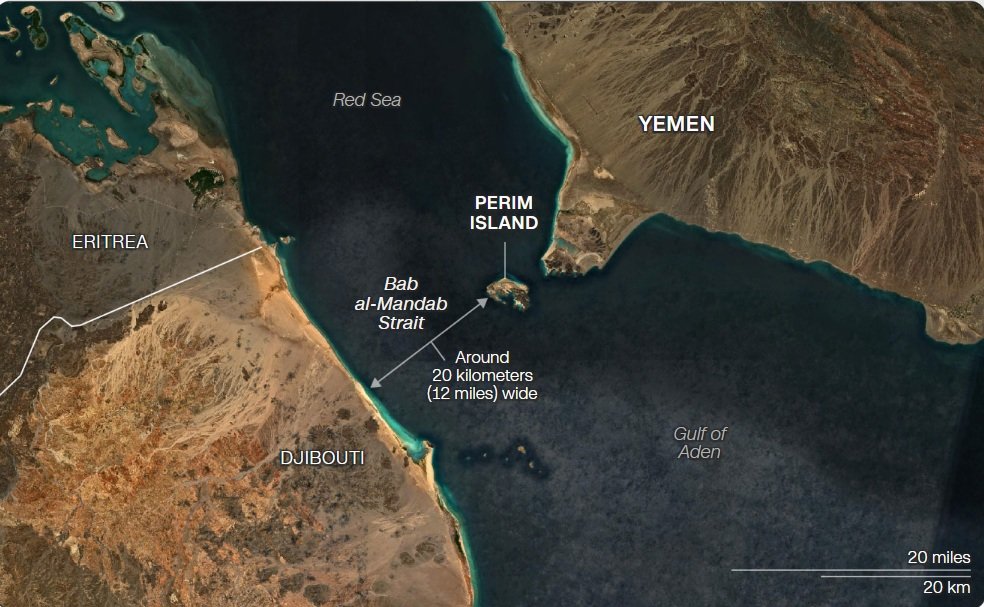
Iran’s ballistic-missile attack on a U.S.-used air base in Jordan has exposed a difficult reality for modern air warfare: an air-defense system can intercept most incoming missiles and still suffer meaningful damage to the aircraft it is supposed to protect.
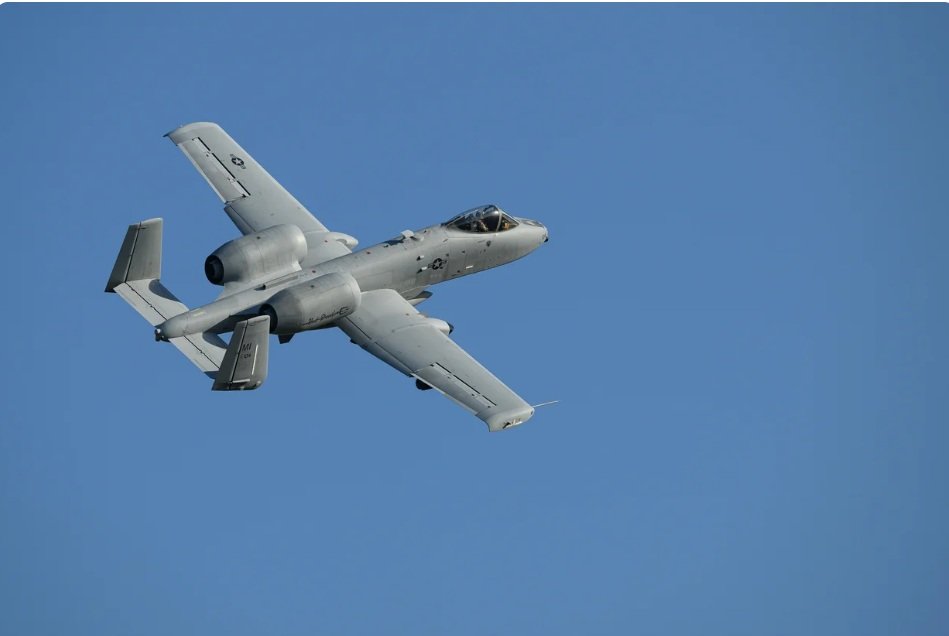
Multiple U.S. military aircraft were damaged when Iran targeted Muwaffaq Salti Air Base, also known as Al-Azraq, in Jordan. One A-10 Thunderbolt II suffered severe damage, reportedly losing a wing, while around eight F-15E Strike Eagles sustained lighter damage but were subsequently returned to service, according to people familiar with the incident cited by CBS News and Air & Space Forces Magazine.
The damage came after Iran launched a ballistic-missile barrage against Jordan on September 8, in retaliation for the wider U.S.-Iran escalation.
Jordan says its air defenses engaged 20 Iranian ballistic missiles and intercepted 18 of them, while the remaining two fell in unpopulated areas. No casualties were reported by the Jordanian Armed Forces.
That means the reported interception rate was about 90 percent.
Yet American aircraft were still damaged.
The apparent contradiction is important because it shifts the debate from simply asking how many missiles were intercepted to a more consequential military question: Could the defended base continue generating combat power after the attack?

What happened at Muwaffaq Salti Air Base?
The attack targeted Muwaffaq Salti Air Base near Azraq, a strategically important Jordanian installation used by U.S. forces for regional air operations.
Iran’s Islamic Revolutionary Guard Corps claimed its missiles struck areas associated with the maintenance, preparation and deployment of U.S. fighter aircraft, including facilities connected with F-15, F-16 and F-35 operations. Those broader Iranian claims have not been independently verified.
What is independently more significant is the subsequent reporting on actual aircraft damage.
Air & Space Forces Magazine reported that an A-10 suffered severe wing damage and that approximately eight F-15E Strike Eagles sustained lighter damage. The F-15s remained serviceable and were returned to operations.
The A-10 damage is potentially more serious at the individual-aircraft level. A missing or destroyed wing represents major structural damage and would normally require extensive repair or replacement.
The F-15s present a different picture. Their reported return to service suggests that the immediate effect on U.S. fighter availability was limited, despite the number of aircraft affected.
No U.S. fatalities have been reported from this particular attack.

Did Iran penetrate Jordan’s air defenses?
Not necessarily.
This is one of the most important distinctions in assessing the attack.
Jordan officially says 18 of the 20 incoming ballistic missiles were intercepted and destroyed, with two falling in unpopulated areas.
The reported aircraft damage does not, by itself, prove that one or more Iranian ballistic missiles passed through the air-defense network intact.
An interception can destroy or disrupt an incoming missile while still producing debris, fragmentation or other effects that reach the defended area. The exact circumstances of the aircraft damage have not been publicly established.
It remains unclear whether the A-10 and F-15s were struck directly, damaged by missile fragments, or affected by debris from an interception.
That distinction could eventually determine how military analysts assess the performance of Jordanian and U.S. air defenses.
For now, the evidence supports two conclusions at the same time:
Jordan appears to have intercepted the overwhelming majority of the incoming missiles, while Iran nevertheless succeeded in causing physical damage to U.S. aircraft at the targeted installation.
Those findings are not mutually exclusive.
The real measure of air defense is combat output
The incident highlights a broader problem with judging missile-defense systems solely by interception percentages.
For a military base, the objective is not simply to destroy incoming missiles.
It is to keep the base functioning.
An airfield must continue to support aircraft parking, maintenance, weapons loading, fuel distribution, command and control, runway operations and sortie generation after an attack.
If an air-defense system destroys 18 of 20 missiles but the remaining effects damage aircraft, fuel facilities, runways or maintenance infrastructure, the base can still suffer an operational setback.
That is why the condition of the aircraft matters more than the headline interception figure.
The reported return of the damaged F-15s to service is therefore significant. It indicates that the aircraft damage did not necessarily translate into a lasting loss of U.S. fighter capacity.
The A-10, however, appears to represent a more substantial individual loss.

Why Muwaffaq Salti matters
Muwaffaq Salti is not simply another military airfield.
The base has become an important hub for U.S. air operations in the Middle East and supports combat aircraft as well as intelligence, surveillance and reconnaissance activities.
Its location in Jordan also makes it strategically valuable because it provides the United States with a relatively secure operating position close to several potential theaters of conflict.
The presence of U.S. aircraft there has made the base an increasingly important target as Iran seeks to impose costs on American forces without limiting its attacks to the Gulf.
The latest strike follows an intensifying cycle of direct U.S.-Iran attacks.
The United States recently destroyed five Iranian oil tankers after Iranian forces repeatedly targeted U.S. naval assets. Iran subsequently launched ballistic missiles toward Jordan and intensified attacks elsewhere in the region.
The attack on Muwaffaq Salti therefore needs to be understood as part of a widening regional campaign rather than an isolated missile strike.
Iran’s changing missile strategy
The Jordan attack also comes at a time when Iran is increasingly using ballistic missiles to put pressure on American forces and regional partners.
Recent Iranian attacks have included attempts to strike U.S. military and naval assets, while Tehran has simultaneously threatened maritime traffic around the Strait of Hormuz. The escalation has pushed oil prices above $100 a barrel and increased concerns about disruptions to global energy supplies.
For Iran, ballistic missiles offer a way to impose costs across a wide geographical area without requiring large numbers of aircraft to penetrate U.S. or allied airspace.
For the United States and its partners, that creates a difficult defensive equation.
Fixed military bases are powerful because they concentrate logistics, aircraft, weapons, maintenance and personnel.
They are also vulnerable for exactly the same reason.
The vulnerability of aircraft on the ground
A modern fighter can be extremely difficult to destroy once airborne.
On the ground, the equation changes.
Aircraft spend significant periods parked, being serviced, armed, refuelled or prepared for missions. Even hardened shelters cannot eliminate all risks when an adversary can launch repeated ballistic-missile salvos.
That is why air forces increasingly rely on several layers of survivability:
- ballistic-missile defenses;
- hardened aircraft shelters;
- aircraft dispersal;
- rapid relocation between bases;
- deception and decoys;
- redundant command-and-control systems;
- rapid runway and infrastructure repair;
- and the ability to generate sorties from alternative locations.
Missile defense is therefore only one part of base protection.
The Muwaffaq Salti attack demonstrates why.
The Patriot problem: winning the interception battle can still be expensive
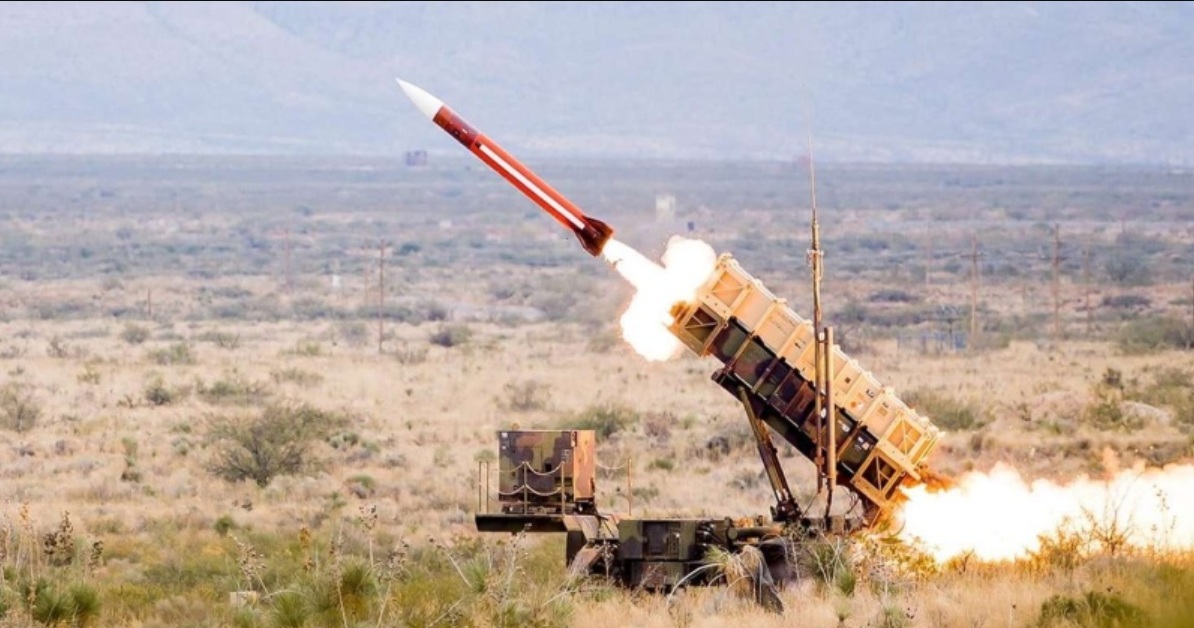
CBS News also reported that U.S. forces in Jordan fired more than 30 Patriot interceptors during the attack.
That highlights another problem: the cost-exchange ratio of missile defense.
A defender may successfully intercept incoming ballistic missiles, but each engagement consumes an interceptor that must eventually be replaced.
If Iran can launch large salvos at relatively low cost while forcing the United States and its allies to expend expensive defensive missiles, repeated attacks can create pressure even without achieving a high penetration rate.
This becomes particularly important when American forces are simultaneously defending bases, ships and critical infrastructure across multiple theaters.
A prolonged missile campaign therefore becomes partly a contest of inventories, industrial capacity and logistics.
What remains unknown
Several critical details of the Jordan attack remain unresolved.
It is not publicly established which missile or missiles caused the aircraft damage.
It is also unclear whether the A-10 was hit directly or damaged by fragments or debris.
There is no publicly released U.S. assessment establishing that an Iranian ballistic missile penetrated the Jordanian air-defense network intact.
The exact locations of the damaged aircraft and the condition of nearby base infrastructure have also not been fully disclosed.
Those details matter.
A direct hit by an intact ballistic missile would indicate a different defensive outcome from aircraft damaged by fragmentation following a successful interception.
Satellite imagery, debris analysis, aircraft maintenance assessments and future U.S. or Jordanian investigations could provide a clearer picture.
Until then, claims about a complete Iranian penetration of Jordan’s air defenses should be treated cautiously.
Iran can claim damage, Jordan can claim interception success
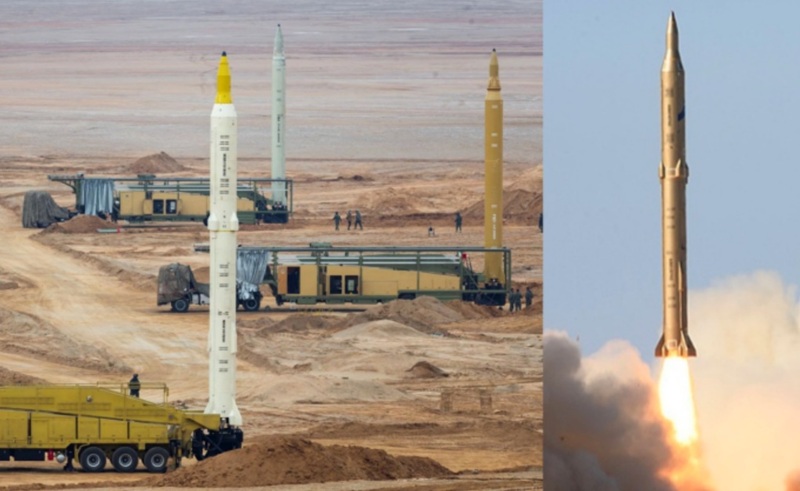
The competing narratives are straightforward.
Jordan can point to the interception of 18 out of 20 ballistic missiles and the absence of reported casualties.
Iran can point to physical damage inflicted on U.S. military aircraft at the base it targeted.
Neither fact cancels the other.
The strongest evidence-based assessment is that Iran caused real damage at a U.S.-used Jordanian air base despite a high reported interception rate.
That is militarily significant even if the F-15s quickly returned to service.
It demonstrates that ballistic-missile attacks can impose operational costs without completely overwhelming an air-defense network.
The bigger lesson for U.S. forces
The Muwaffaq Salti strike reinforces a lesson that has become increasingly important across the Middle East: air-defense effectiveness cannot be measured only by how many missiles are shot down.
The more important question is whether an air base can continue producing combat sorties after repeated attacks.
If aircraft remain operational, runways remain usable, fuel and weapons systems function and maintenance crews can continue working, the defender has largely preserved its combat power.
If aircraft are destroyed or critical infrastructure is repeatedly damaged, even a high interception rate can become strategically insufficient.
The reported F-15 damage appears to have had limited lasting consequences because those aircraft returned to service.
The A-10 damage is more consequential, but it remains only one aircraft in a much larger U.S. regional airpower structure.
The real concern would emerge if Iran develops the capacity to repeat such attacks frequently enough to force the United States to disperse aircraft, consume large quantities of interceptors and repeatedly repair forward bases.
A new phase in the U.S.-Iran war
The Jordan strike comes as the conflict is expanding across several fronts.
Iran is challenging U.S. military forces, maritime traffic and regional partners at the same time that Washington is trying to maintain pressure on Tehran’s oil exports and protect shipping routes.
The Houthis are also intensifying attacks against Saudi Arabia, while the Strait of Hormuz remains at the centre of the wider confrontation. Oil prices have already risen sharply as traders price in the risk of prolonged disruption.
That makes the attack on Muwaffaq Salti strategically important beyond the aircraft damaged on the runway.
It shows that Iran retains the ability to threaten American military infrastructure well beyond the immediate Gulf theatre.
And it underscores the growing importance of base survivability in a war increasingly defined by long-range missiles, drones and attacks on fixed infrastructure.
Bottom line
Iran did not need to destroy the Muwaffaq Salti Air Base to make the attack consequential.
Jordan says it intercepted 18 of 20 Iranian ballistic missiles, demonstrating a substantial defensive success. But the reported damage to an A-10 and roughly eight F-15s shows that a high interception rate does not necessarily mean a base has escaped operational consequences.
The unanswered question is whether the aircraft were damaged by direct missile impacts or by effects from intercepted weapons.
That distinction will determine how the strike is ultimately judged.
For the United States, however, the broader warning is already clear: as long as aircraft remain concentrated at fixed bases within ballistic-missile range, even strong air defenses cannot remove the need for dispersal, hardening, redundancy and rapid recovery.