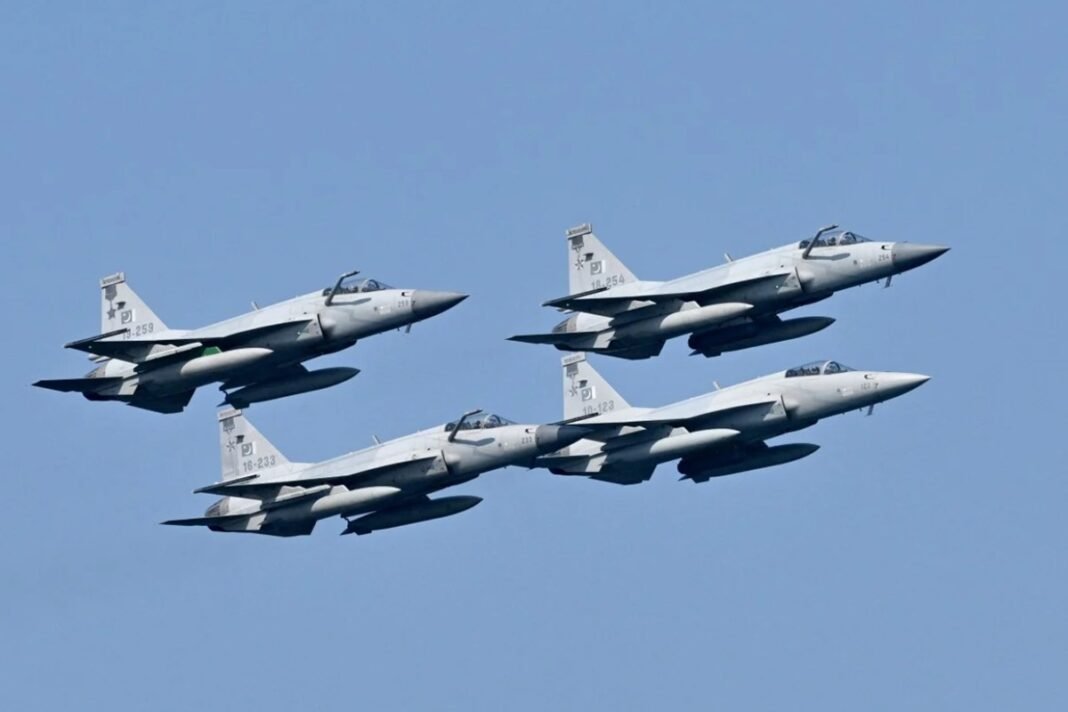
A New York Times report has raised fresh questions over Pakistan’s military role in the escalating Yemen conflict, claiming that Pakistan Air Force fighter jets have been used in operations against the Houthis. Pakistani officials have publicly described Islamabad’s role more cautiously, however, emphasizing support, reconnaissance and the defence of Saudi Arabia rather than a Pakistani ground offensive inside Yemen.
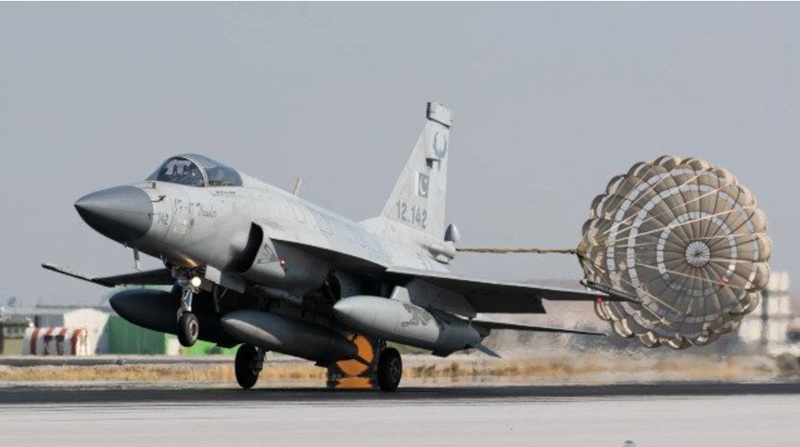
According to the report, a senior Pakistani military official, speaking anonymously, said Pakistan Air Force fighter aircraft had been involved in strikes against Houthi targets. A second Pakistani official described the mission as air support aimed at countering Houthi drone and missile threats, while ruling out a Pakistani ground operation inside Yemen.
The claim has not been publicly confirmed by Pakistan’s military. It should therefore be treated as reported information rather than an officially acknowledged Pakistani air campaign.
The report comes as the Saudi Arabia-Pakistan-Türkiye Makkah Joint Defence framework moves rapidly from political commitment toward operational cooperation following a sharp escalation in Yemen.
Pakistan’s military role comes under new scrutiny
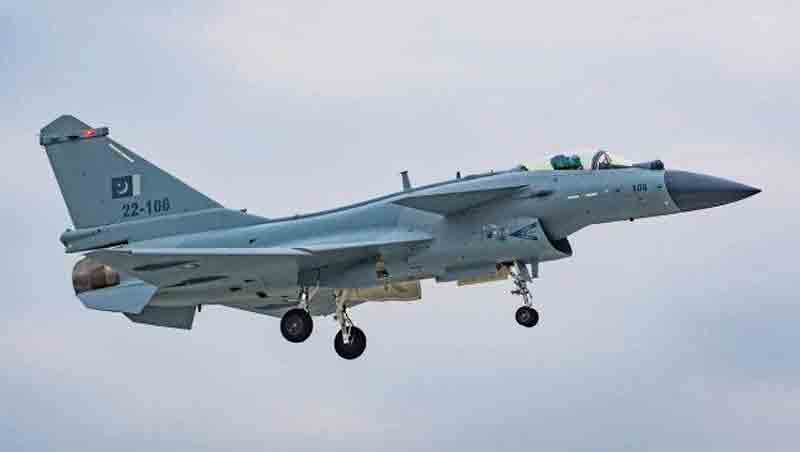
The reported involvement of Pakistani fighter jets would represent a significant development if independently confirmed.
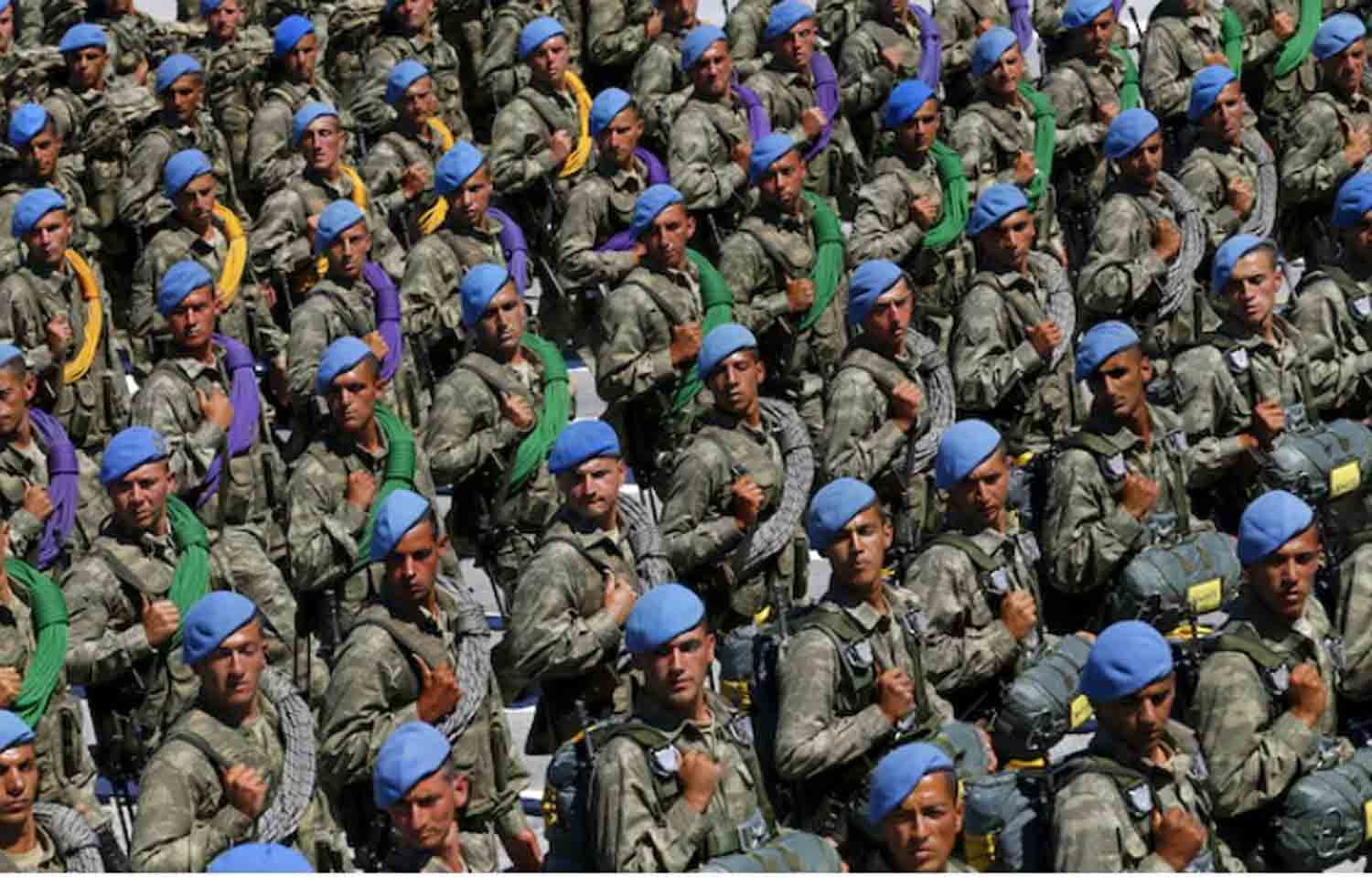
Pakistan has historically maintained a substantial defence relationship with Saudi Arabia, including military training, advisory roles and the deployment of Pakistani personnel to the kingdom. The two countries also signed a Strategic Mutual Defence Agreement in September 2025.
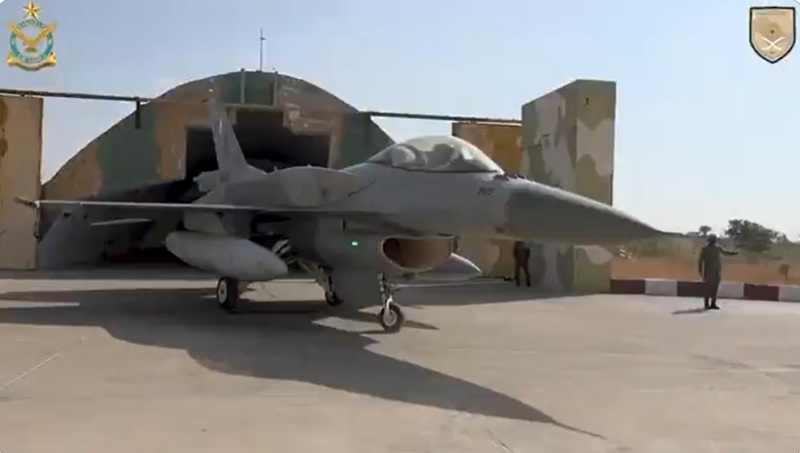
More recently, Saudi Arabia confirmed the arrival of Pakistani military personnel, including fighter and support aircraft, at King Abdulaziz Air Base in the Eastern Province.
Pakistan has not disclosed the size or precise composition of its military presence in Saudi Arabia.
The country’s Defence Minister Khawaja Asif has also drawn a distinction between supporting Saudi Arabia and directly conducting offensive operations in Yemen.
Speaking from Riyadh on October 5, Asif said Pakistani and Turkish forces were playing a supporting role, including reconnaissance, while Saudi forces were conducting the combat operations and retaking territory in Yemen.
That statement is important when assessing the new NYT report.
If Pakistani fighter aircraft have indeed participated in missions connected to the Yemen campaign, the question becomes whether those aircraft were conducting defensive missions over Saudi territory, providing air cover, conducting reconnaissance or directly striking Houthi targets inside Yemen.
Publicly available information does not yet establish that distinction conclusively.
What DG ISPR told CNN
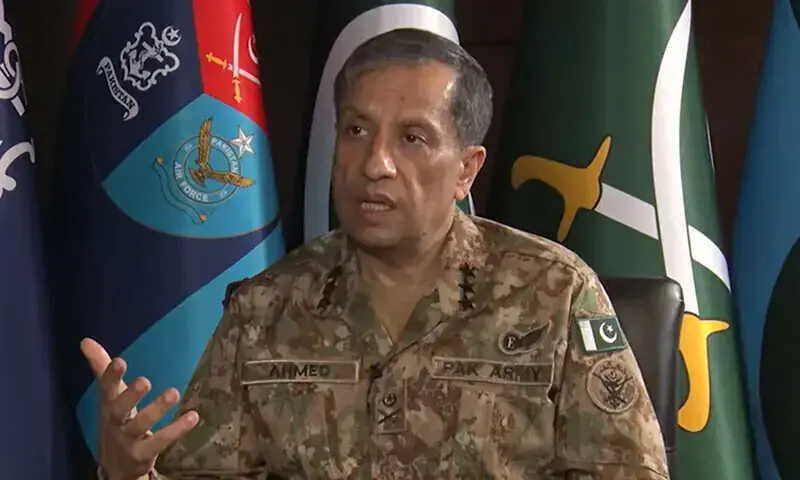
The latest reporting also needs to be considered alongside an interview given by Inter-Services Public Relations Director General Lieutenant General Ahmed Sharif Chaudhry to CNN.
In the interview, DG ISPR confirmed that Pakistani forces were already present in Saudi Arabia.
He told CNN that Pakistani forces were there in multiple capabilities and domains, while emphasizing that the military relationship with Saudi Arabia predates the newly established Makkah Alliance by decades. CNN subsequently reported that the Pakistani military did not disclose how many personnel were present or whether they could participate in operations across the border into Yemen.
The significance of the CNN interview is that Islamabad has now publicly acknowledged an existing Pakistani military presence in Saudi Arabia, but has not publicly provided operational details.
Radio Pakistan reported that Gen. Ahmed Sharif said Pakistani troops had been in Saudi Arabia for decades and served in multiple capabilities and domains. He also emphasized that the Makkah Alliance did not emerge in isolation but was built on an established diplomatic, political and military relationship among Pakistan, Saudi Arabia and Türkiye.
Does this mean Pakistan is fighting the Houthis?
Not necessarily — and this distinction is critical.
There are currently three different levels of Pakistani involvement that should not be conflated:
- Defending Saudi territory against Houthi missiles and drones.
- Supporting Saudi military operations through reconnaissance, intelligence, logistics or air support.
- Directly conducting offensive strikes against Houthi targets inside Yemen.
The first two have received public acknowledgment from Pakistani officials.
The third is what the latest NYT report alleges, but Pakistan has not publicly confirmed it.
That makes the report potentially significant but not sufficient on its own to establish that the Pakistan Air Force has formally entered an offensive air campaign in Yemen.
Makkah Defence Pact changes the strategic equation
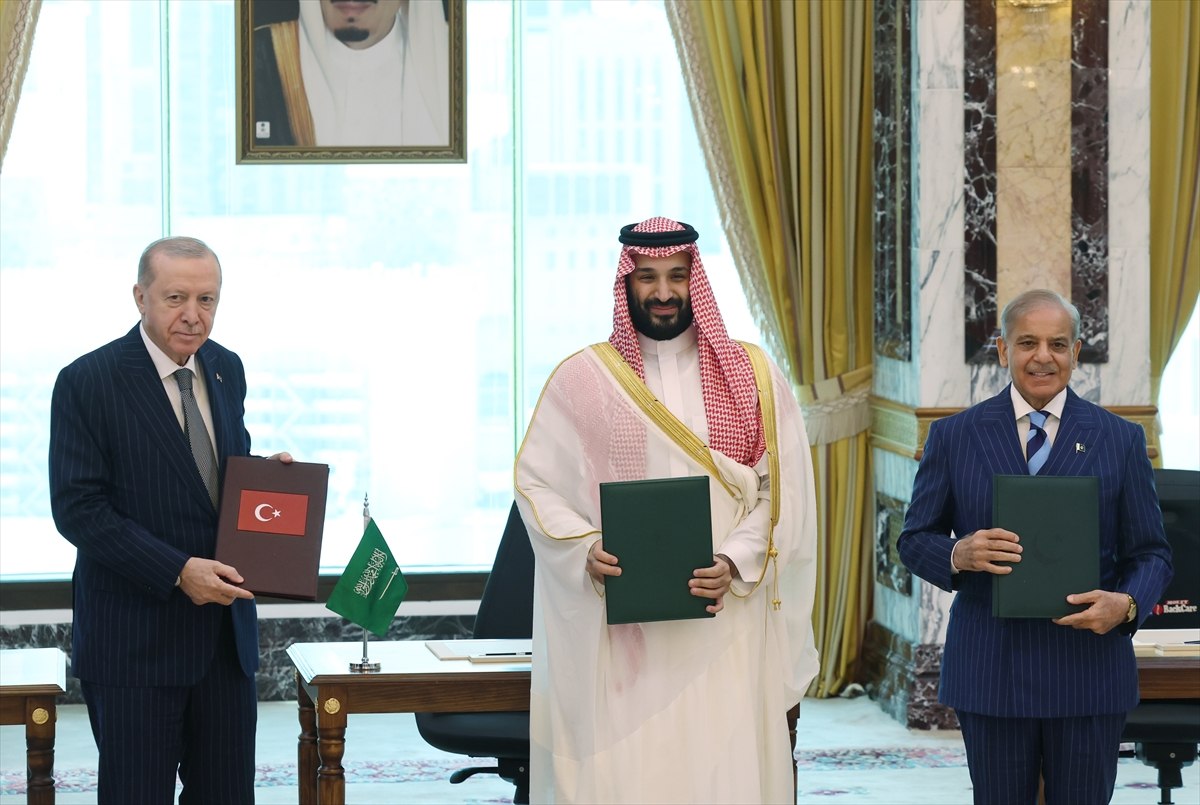
The development comes only days after Saudi Arabia, Pakistan and Türkiye agreed to begin implementing their collective-defence commitments under the Makkah Joint Defence Agreement.
At an emergency meeting in Riyadh on October 5, the three countries agreed to move immediately toward practical implementation of the pact and take measures to provide agreed military forces and capabilities for rapid deployment in Saudi Arabia.
The statement did not disclose troop numbers, aircraft numbers or detailed operational assignments.
The agreement is nevertheless significant because it establishes a collective-security framework under which an armed attack on one member is treated as an attack on all three.
CNN highlighted the speed with which the arrangement has moved from its signing to practical military coordination.
Why Pakistan’s air power could be important
If the NYT account is confirmed, Pakistan’s contribution would give Saudi Arabia another layer of air capability at a particularly sensitive moment.
The current conflict involves:
- Ballistic missiles
- Cruise missiles
- One-way attack drones
- Air-defence operations
- Intelligence, surveillance and reconnaissance
- Airfield protection
- Critical infrastructure protection
The Houthis have demonstrated an ability to threaten Saudi airports and strategic infrastructure.
Reuters reported that attacks on King Khalid International Airport in Riyadh and Abha airport killed three people and wounded dozens, while the Saudi-led coalition subsequently said it had struck more than 80 Houthi military sites.
The threat is therefore no longer limited to the traditional Saudi-Yemen border.
It increasingly involves Saudi airspace, airports, energy infrastructure and strategic transportation routes.
Pakistan’s fighter aircraft already have a Saudi connection
Pakistan’s air-force relationship with Saudi Arabia is longstanding.
Pakistan has historically trained Saudi pilots and provided military assistance to the kingdom. Pakistani personnel have also served in Saudi Arabia for decades.
The current deployment is therefore not the creation of an entirely new military relationship.
Instead, the Makkah Alliance is providing a new political and strategic framework for an existing defence relationship.
Al Jazeera reported that Pakistan’s military has trained Saudi personnel since the 1960s and that a 1982 agreement formalised the deputation of Pakistani troops to the kingdom. It also reported that Saudi Arabia confirmed the arrival of Pakistani fighter and support aircraft in April.
The 2015 Yemen precedent matters
Pakistan has faced this exact strategic question before.
In 2015, Saudi Arabia requested Pakistani military participation in its intervention against the Houthis.
Pakistan’s parliament ultimately voted for neutrality in the Yemen conflict, while simultaneously declaring that Pakistan would defend Saudi Arabia if its territory or the holy sites were threatened.
That historical precedent is highly relevant today.
The current situation is different because Saudi territory is now directly under missile and drone threat, while Pakistan, Saudi Arabia and Türkiye have established a formal collective-defence framework.
CNN also highlighted the contrast between Pakistan’s 2015 parliamentary decision and the much more integrated security relationship developing today.
Saudi forces lead the Yemen offensive
Another important point is that the current offensive inside Yemen is being publicly attributed primarily to Saudi-backed Yemeni forces and Saudi air power.
CNN reported that Saudi Arabia is providing air power to the Yemeni government forces conducting the counteroffensive against the Houthis.
Reuters reported that Saudi-backed forces were attempting to regain strategic territory around the Bab al-Mandeb Strait, an area critical to Red Sea shipping and energy flows.
The Saudi-led operation has reportedly involved a large number of aircraft, with Saudi coalition spokesman Major General Turki al-Malki saying around 100 fighter jets were supporting the counteroffensive.
This creates an important distinction:
Saudi Arabia is conducting the main offensive campaign, while Pakistan and Türkiye are being positioned as additional pillars of Saudi defence and support.
Whether Pakistani aircraft have crossed from support into direct offensive strikes is the unresolved question.
Pakistan’s possible “air support” role
If the NYT report is accurate, the phrase “air support” could cover several different activities.
It could include:
- Combat air patrols over Saudi territory
- Escort missions
- Counter-drone operations
- Interception of incoming missiles or aircraft
- Intelligence and reconnaissance
- Airborne surveillance
- Protection of Saudi airbases
- Support to Saudi-led operations
Direct attacks against Houthi positions inside Yemen would represent a considerably greater level of Pakistani involvement.
The difference is strategically and politically important because Islamabad has consistently described the Makkah framework as defensive.
Pakistan’s Deputy Prime Minister and Foreign Minister Ishaq Dar has previously emphasized that the agreement is defensive in nature and does not have an offensive agenda.
The latest Houthi attacks increase pressure on Pakistan

The escalation is also making a purely defensive posture more difficult to maintain.
Reuters reported that Houthi attacks recently struck Saudi airports, killing three people and injuring dozens. The Houthis have also continued missile and drone attacks against Saudi targets.
A fresh Houthi claim on October 8 said a ballistic missile had targeted King Khalid International Airport in Riyadh, with the group claiming that airport operations were disrupted. Saudi authorities’ confirmation of the Houthi claim was not established in the source reporting available at publication time.
This means the strategic environment is changing quickly.
Every successful Houthi strike on Saudi territory increases pressure on Riyadh’s partners to contribute more directly to the kingdom’s defence.
Türkiye is also expanding its support
Pakistan is not the only Makkah Alliance member facing pressure to increase its involvement.
Reuters reported on October 7 that Türkiye was providing primarily technical and defensive support to Saudi Arabia, including military equipment, intelligence sharing and weapons systems. The reporting also cited assistance involving drone operators, logistics and intelligence, surveillance and reconnaissance capabilities.
Ankara’s parliament has yet to ratify the broader pact, meaning the precise scale of any future Turkish military deployment remains uncertain.
The emerging division of responsibilities could therefore see:
Saudi Arabia: primary combat role in Yemen
Pakistan: defensive, reconnaissance and potentially air-support capabilities
Türkiye: air defence, electronic warfare, ISR, technical and logistical support
That structure would allow the three countries to strengthen Saudi deterrence without immediately creating a large-scale foreign ground intervention in Yemen.
What the NYT report could mean for Pakistan
If independently confirmed, the use of Pakistani fighter aircraft against Houthi targets would mark a major evolution in Islamabad’s role.
It would mean Pakistan had moved beyond simply protecting Saudi territory and had begun contributing combat air power to the Saudi-led campaign.
That could have consequences beyond Yemen.
Iran is closely watching the Makkah Alliance because Pakistan has historically attempted to maintain working relations with both Saudi Arabia and Iran.
Tehran has already expressed concern about reports suggesting Pakistani participation in the Yemen war.
For Islamabad, therefore, the challenge is to support Saudi Arabia under its new defence commitments while avoiding an uncontrolled expansion of the conflict.
Pakistan’s likely red line: no ground war
The available reporting points toward a distinction that Pakistan appears keen to preserve.
There is a substantial difference between:
“We will defend Saudi Arabia”
and
“We will launch a ground offensive inside Yemen.”
The second scenario would represent a much larger strategic commitment.
The latest reporting does not establish that Pakistan intends to deploy ground forces for offensive operations against the Houthis.
Indeed, the NYT report itself, according to the account provided, specifically says the second Pakistani official ruled out a ground offensive.
That suggests that even if Pakistani air assets are being used, Islamabad may be seeking to keep its involvement primarily within an air, defensive and support framework.
The bigger strategic picture
The emerging Pakistan role needs to be understood within the rapidly changing Middle Eastern security environment.
The Makkah Alliance was created only recently, but the escalation in Yemen has forced its members to confront its collective-defence provisions much earlier than many observers might have expected.
Pakistan now has forces in Saudi Arabia.
Türkiye is expanding technical and defensive assistance.
Saudi Arabia is conducting the main military campaign.
And the Houthis are continuing to demonstrate that they can impose costs on Saudi territory.
That makes the reported Pakistani fighter-jet involvement particularly significant.
But until Islamabad officially confirms that Pakistani aircraft have carried out strikes against Houthi targets inside Yemen, the safest and most accurate formulation is that the New York Times has reported the involvement, while Pakistan has publicly confirmed its forces are in Saudi Arabia and has acknowledged supporting and reconnaissance roles without publicly confirming an offensive Pakistani air campaign in Yemen.
That distinction is essential for credible defence reporting.