
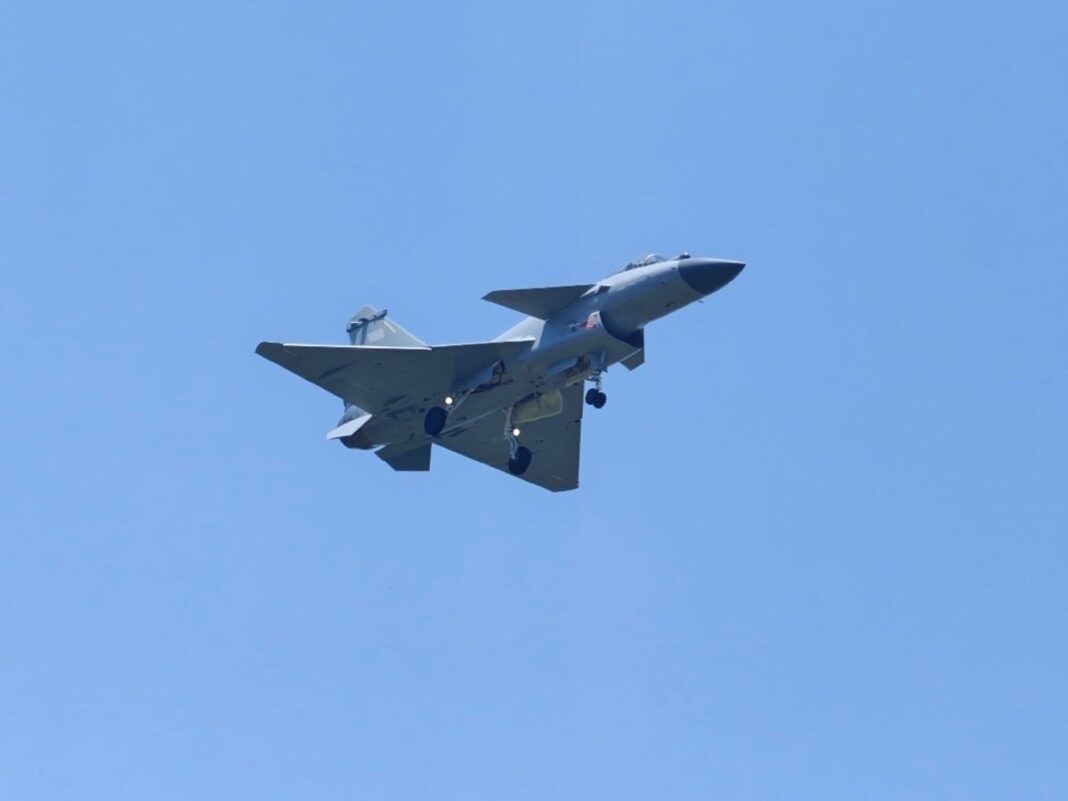
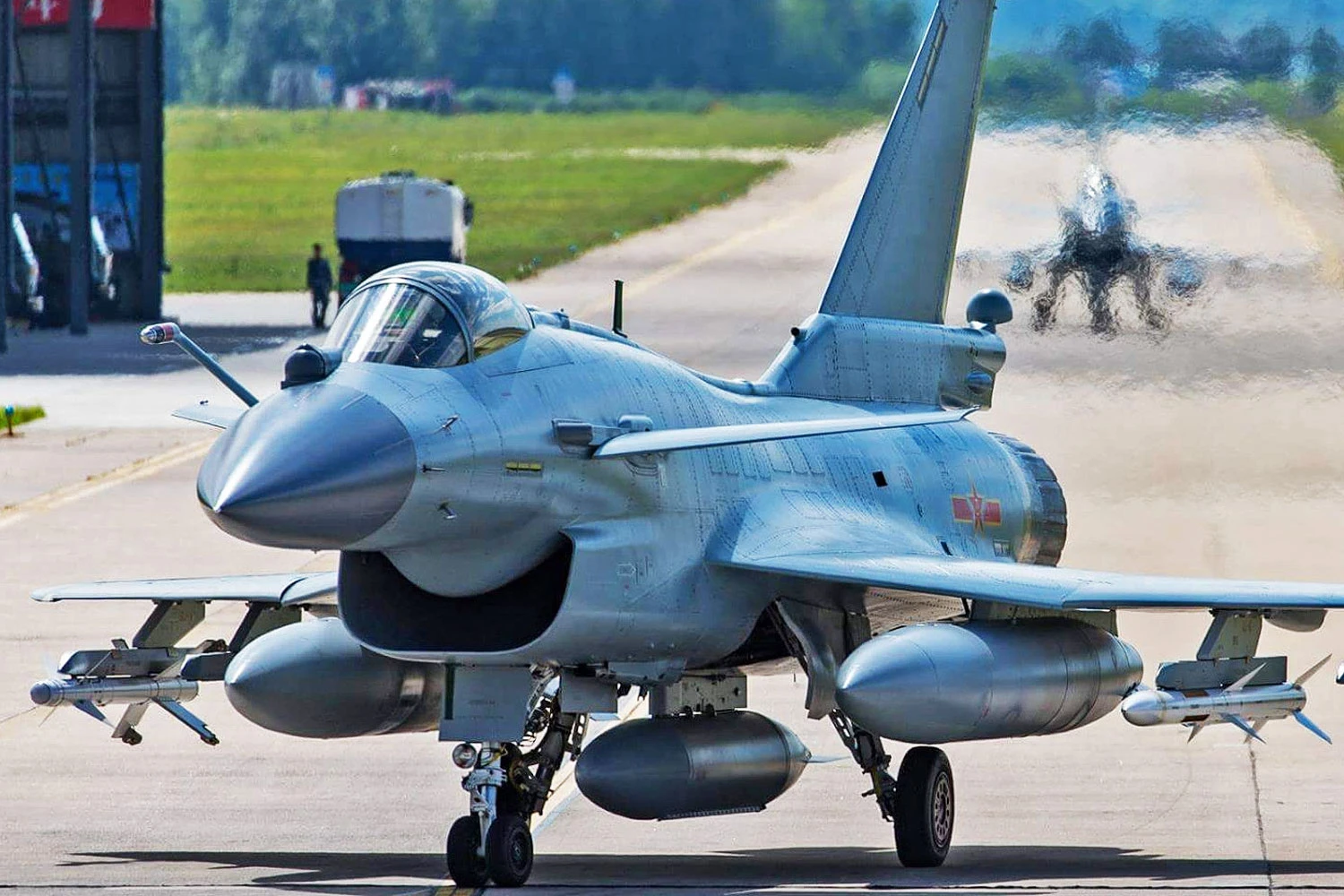
Bangladesh is moving ahead with plans to acquire the Chinese J-10CE fighter, giving one of South Asia’s smaller air forces an opportunity to introduce a modern multirole combat aircraft into its ageing fighter fleet.
Bangladeshi officials have confirmed that a draft agreement for the purchase has been prepared and submitted for approval. The procurement is expected to proceed either during the current fiscal year or in the following budget cycle, depending on the availability of funds.
The final number of aircraft has not been officially settled in public statements, although earlier reporting has pointed to a requirement for around 20 J-10CEs.
The decision is important not only for Bangladesh’s air force.
It also represents another step in China’s effort to establish the J-10CE as a serious alternative to Western fighter aircraft in the international market.
Why Bangladesh Wants the J-10CE
The Bangladesh Air Force operates a relatively small combat fleet compared with the major military powers surrounding it.
Its fighter inventory includes Chinese-origin F-7 aircraft as well as a limited number of Russian MiG-29s.
Much of that fleet is based on older technology.
The J-10CE would introduce a substantially more modern capability, including advanced avionics, modern radar, electronic warfare equipment and beyond-visual-range air-combat weapons.
That would allow Bangladesh to move from an air force dominated by older-generation fighters toward a more contemporary combat-aircraft structure.
The significance would therefore extend beyond simply adding another fighter type.
Dhaka would be acquiring an entire new technological ecosystem.
The May 2025 India-Pakistan War Changed the J-10CE Conversation
One reason the J-10CE has attracted particular attention in Bangladesh is the May 2025 India-Pakistan conflict.
During the fighting, Pakistan employed J-10CE fighters against Indian aircraft.
Pakistan subsequently claimed that its Chinese-made fighters had successfully engaged Indian aircraft using long-range air-to-air missiles.
India disputed aspects of Pakistan’s account and has acknowledged aircraft losses without accepting the full Pakistani version of events.
The precise combat record remains a matter of competing claims and incomplete public information.
But there is an important development that is harder to dismiss:
Bangladesh has itself acknowledged studying the aircraft’s performance during the conflict.
That suggests the May 2025 fighting became part of Dhaka’s assessment of the J-10CE.
For China, this is particularly valuable.
A fighter that has been associated with actual combat operations attracts more attention from potential customers than one known only through demonstrations and exercises.
The J-10CE Is Becoming China’s Main Export Fighter
China has spent years trying to expand its presence in the global combat-aircraft market.
The J-10CE is central to that effort.
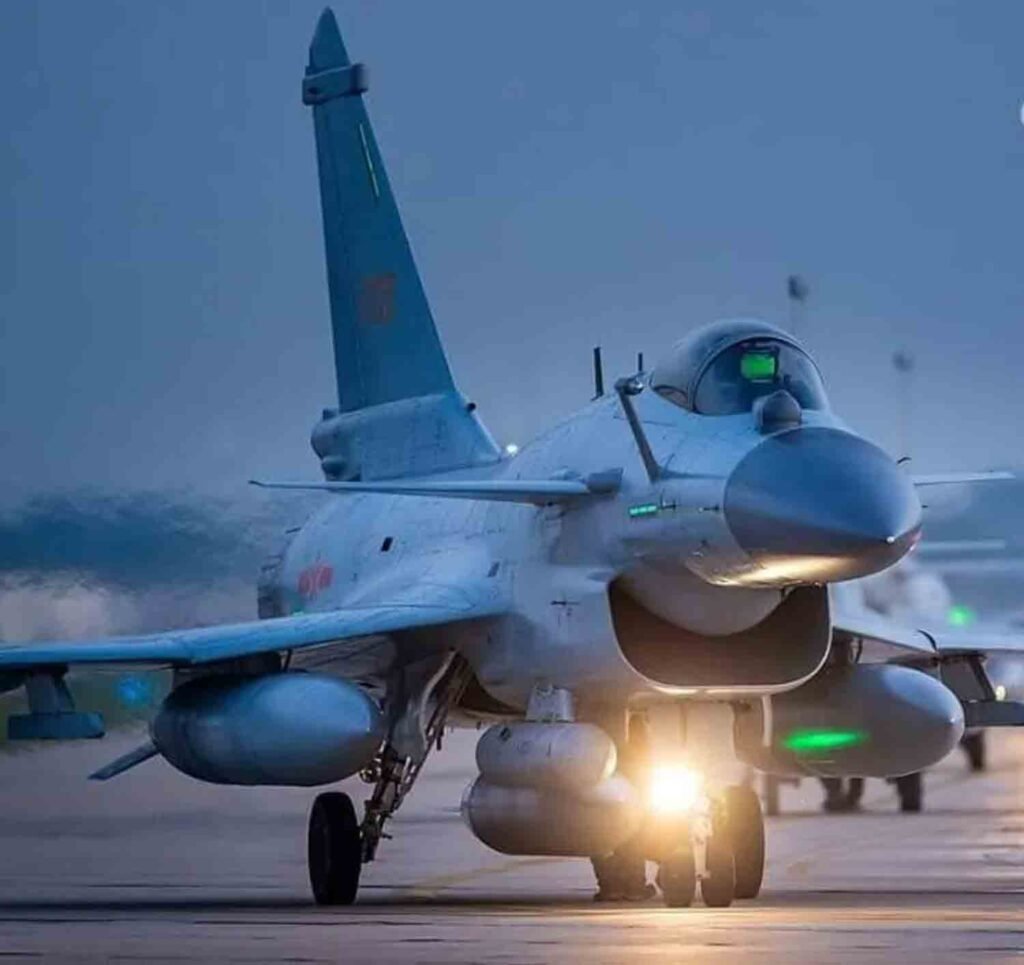
The aircraft is the export version of the J-10C, a fourth-generation-plus fighter operated by the People’s Liberation Army Air Force.
It combines a modern electronically scanned radar, digital avionics and compatibility with China’s increasingly sophisticated air-to-air and air-to-ground weapons.
The aircraft is also considerably more affordable than many Western alternatives.
That makes it attractive to countries that want a modern fighter but cannot—or do not want to—pay the acquisition and operating costs associated with aircraft such as the Rafale or F-35.

Pakistan Is the Key Reference Point for Bangladesh
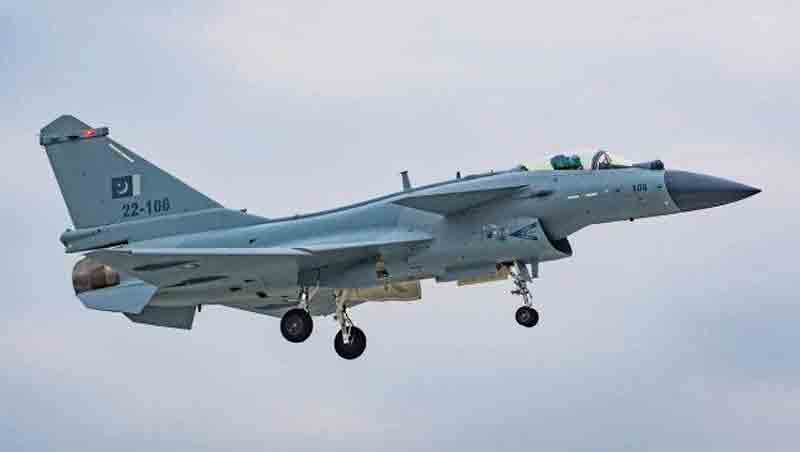
Pakistan’s experience is especially relevant because it is already operating the J-10CE.
Islamabad introduced the aircraft into service as part of its effort to strengthen its air-combat capability against India.
The Pakistan Air Force has integrated the J-10CE into a wider force structure that includes JF-17 fighters, F-16s and Chinese-origin air-defence and surveillance systems.
That provides Bangladesh with something that a catalogue or sales presentation cannot:
an existing regional operator with experience operating the aircraft.
For Dhaka, that could simplify aspects of training, logistics and operational assessment.
It also means Bangladesh would not be buying a platform with no regional operating history.
Pakistan Could Also Order More J-10CEs
The J-10CE’s role in Pakistan may grow further.
Recent reports and imagery indicate that additional J-10CE aircraft are being produced for the Pakistan Air Force.
Specialist defence reporting has identified new aircraft associated with Pakistan, including examples carrying a camouflage pattern that has generated speculation about their possible role.
The precise size and configuration of any additional Pakistani order have not been fully disclosed publicly.
But additional deliveries would reinforce the J-10CE’s position as an important component of Pakistan’s future fighter fleet.
That could also influence Bangladesh’s decision-making.
The more established the J-10CE becomes in Pakistan, the more mature the regional ecosystem around the aircraft becomes.
Bangladesh’s Purchase Would Deepen the China-Bangladesh Defence Relationship
The fighter deal should not be viewed in isolation.
China is already a major defence supplier to Bangladesh.
Bangladesh operates Chinese-origin aircraft, naval systems, armoured vehicles and other military equipment.
A J-10CE acquisition would therefore extend an existing relationship rather than create an entirely new one.
That matters because fighter aircraft create long-term dependence on the supplier.
Once a country purchases a modern combat aircraft, it also needs:
- spare parts;
- engines;
- weapons;
- simulators;
- pilot training;
- maintenance equipment;
- technical support;
- software updates;
- and future modernization.
A fighter contract can consequently shape defence relations for decades.
The Deal Could Include More Than Fighters
Bangladesh’s current modernization effort reportedly extends beyond the J-10CE.
Dhaka has also examined other aviation requirements, including attack helicopters and unmanned systems.
That creates the possibility of a wider Chinese package.
If Bangladesh combines the J-10CE with Chinese drones, air-defence systems, sensors and other equipment, the result could be a more integrated Chinese-origin air-combat architecture.
That would be more significant than the purchase of 20 fighters by itself.
Why China Has an Advantage in the Bangladesh Market
China can offer Bangladesh something that several Western suppliers cannot easily replicate:
a relatively low-cost fighter combined with a complete defence package.
There are also fewer political restrictions compared with some Western defence relationships.
For Bangladesh, that provides flexibility.
Dhaka can modernize its air force without becoming heavily dependent on a Western political relationship.
For Beijing, the benefits are equally clear.
A fighter sale strengthens China’s economic and strategic influence while creating long-term demand for Chinese weapons and military technology.
The J-10CE’s Weapons Are Part of the Attraction
The aircraft’s value cannot be separated from its weapons.
The J-10CE can employ China’s modern air-to-air missile family, including the PL-15, which is designed for long-range engagements.
That gives the aircraft a capability that older Bangladeshi fighters do not possess at the same level.
The important change is therefore not simply:
old fighter versus new fighter.
It is:
older radar and weapons architecture versus a modern sensor-and-missile network.
In contemporary air warfare, that difference can be decisive.
But Buying the Aircraft Is Only the Beginning
There is a tendency in defence reporting to measure air-power modernization by aircraft numbers.
That can be misleading.
A fleet of 20 advanced fighters is useful only if the country can maintain high operational availability.
Bangladesh would need to invest heavily in:
pilot training, maintenance infrastructure, weapons stocks, simulators, ground crews, secure communications and airfield facilities.
The long-term cost of the J-10CE programme could therefore be considerably higher than the aircraft purchase itself.
This is particularly important for a country with a relatively constrained defence budget.
The India Dimension
India will inevitably watch the Bangladesh J-10CE programme closely.
Bangladesh shares a long border with India, including sensitive areas around India’s northeast.
The introduction of modern fighters into Bangladesh would therefore alter the regional air-power equation, even if only at a limited scale.
But the development should not be exaggerated.
A Bangladeshi J-10CE is not a Chinese military aircraft.
There is no basis for assuming that the acquisition automatically means Chinese combat aircraft would be stationed in Bangladesh.
The more immediate consequence is that Bangladesh itself would gain a more capable air-combat platform.
That is strategically meaningful without requiring a larger Chinese military presence.
The Northeast India Factor
The location of Bangladesh makes its air-force modernization particularly interesting.
India’s northeastern states are connected to the rest of the country through the narrow Siliguri Corridor.
Any improvement in the military capabilities of neighbouring countries naturally attracts attention from Indian defence planners.
However, the J-10CE alone would not give Bangladesh the ability to dominate that region.
Air-power effectiveness depends on a much broader system involving:
- early-warning aircraft;
- ground radar;
- air-defence systems;
- electronic warfare;
- command and control;
- aerial refuelling;
- pilot proficiency;
- and weapons stocks.
Bangladesh would need to develop those supporting capabilities if it wanted to extract the maximum value from the J-10CE.
A Potential Shift in South Asian Air Power
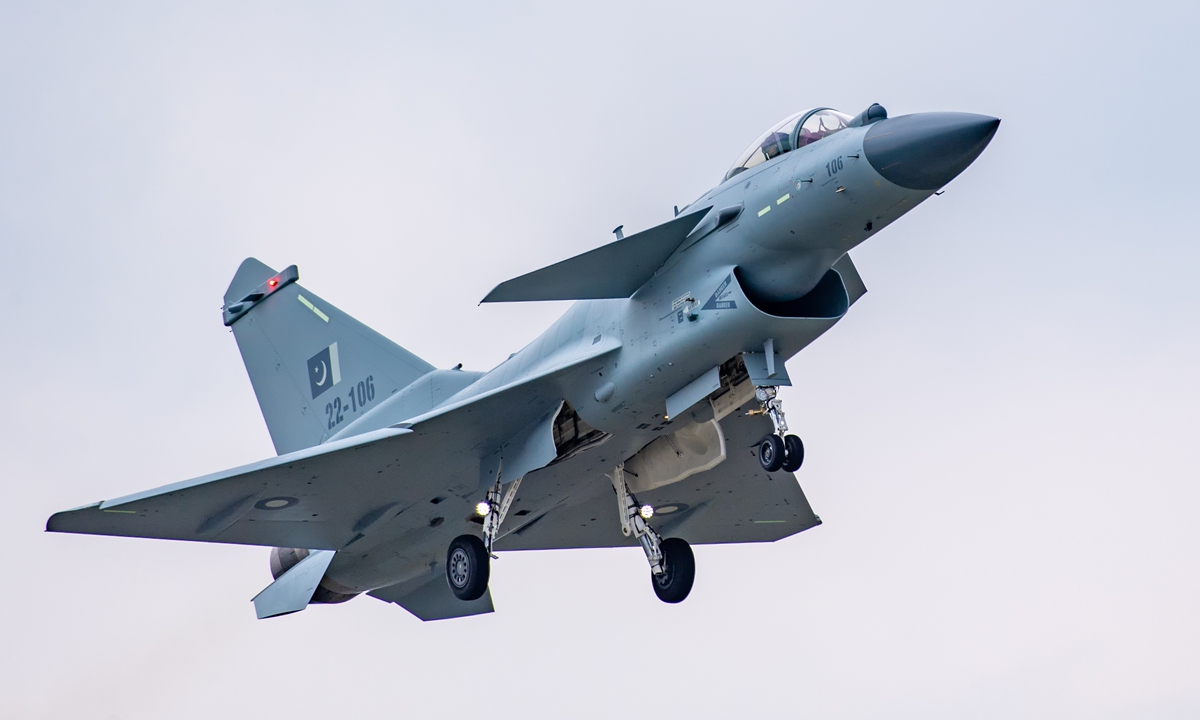
The proposed Bangladeshi acquisition is part of a broader change taking place in South Asian military aviation.
India is introducing and expanding modern combat-aircraft capabilities while pursuing its next-generation fighter programmes.
Pakistan is modernizing its fleet through Chinese cooperation.
Bangladesh is now considering a substantial move toward a modern Chinese fighter.
This creates a regional environment in which fourth-generation-plus fighters and long-range air-to-air missiles are becoming increasingly important.
The result is likely to be greater emphasis on beyond-visual-range combat rather than traditional close-range dogfighting.
China Benefits From a Regional User Base
For Beijing, the most valuable outcome may be the emergence of a wider J-10CE customer community.
Pakistan is already operating the aircraft.
If Bangladesh completes its acquisition, China will have another established South Asian operator.
That creates opportunities for:
- larger production runs;
- common training;
- weapons sales;
- spare-parts contracts;
- maintenance arrangements;
- upgrades;
- and potentially future joint exercises.
A fighter export programme becomes considerably more attractive when multiple countries operate the same aircraft.
The Combat Reputation Will Continue to Matter
The J-10CE’s future export prospects will partly depend on how international buyers interpret its performance in the 2025 India-Pakistan conflict.
The conflict generated competing claims from India and Pakistan, and not every battlefield claim has been independently verified.
But defence procurement decisions are rarely based solely on independently verified kill statistics.
Potential buyers examine the broader picture:
Did the aircraft operate effectively? Did its radar and missiles perform as expected? Did its pilots exploit the platform effectively? What lessons emerged?
Bangladesh’s decision to study the conflict suggests that these questions are already influencing procurement thinking.
Bangladesh Still Has to Complete the Process
Despite the growing momentum, the acquisition is not yet the same as having operational J-10CE squadrons.
The procurement still requires final approval, financing, contracting and delivery.
Questions remain over:
- the final number of aircraft;
- configuration;
- weapons package;
- delivery schedule;
- training arrangements;
- infrastructure;
- and total programme cost.
These details will determine how significant the acquisition ultimately becomes.
What Could the J-10CE Mean for Bangladesh?
If the programme is completed broadly as reported, Bangladesh would gain a modern multirole fighter capable of performing missions including:
- air defence;
- beyond-visual-range air combat;
- precision strike;
- maritime security;
- and tactical reconnaissance when supported by appropriate systems.
More importantly, it could become the centrepiece around which Bangladesh rebuilds its combat-air force.
That would make the acquisition one of the country’s most consequential defence decisions in years.
China Gets More Than a Fighter Customer
There is a strategic dimension for Beijing that goes beyond sales revenue.
A modern fighter creates long-term military relationships.
Bangladesh would require Chinese training, technical support, spare parts and weapons for years.
That gives China sustained influence within the Bangladesh Air Force.
The relationship could eventually extend into exercises, data links, air-defence integration and other areas.
For Beijing, that is the real value of defence exports.
Final Analysis
Bangladesh’s move toward the J-10CE is becoming one of the more important developments in South Asian military aviation.
The immediate reason is straightforward: Dhaka needs to replace or supplement an ageing fighter fleet with a modern multirole aircraft.
But the strategic implications are broader.
Pakistan has already demonstrated its willingness to rely heavily on Chinese combat aviation.
Bangladesh is now considering the same path.
That could gradually strengthen China’s position as the principal alternative supplier of advanced fighter aircraft in South Asia.
The development also illustrates a changing regional procurement equation.
Countries are no longer evaluating fighters only by speed, range or dogfighting performance. They are looking at the entire ecosystem:
radar + missile + electronic warfare + data links + training + support.
The J-10CE is attractive precisely because China can offer much of that ecosystem.
For Bangladesh, the immediate question is whether it can afford to build the supporting infrastructure required to operate the aircraft effectively.
For China, the question is whether the J-10CE can turn its early success in Pakistan into a sustained export market.
And for South Asia, the larger trend is already visible:
modern Chinese combat-aircraft technology is gaining a larger role in the region’s military balance.