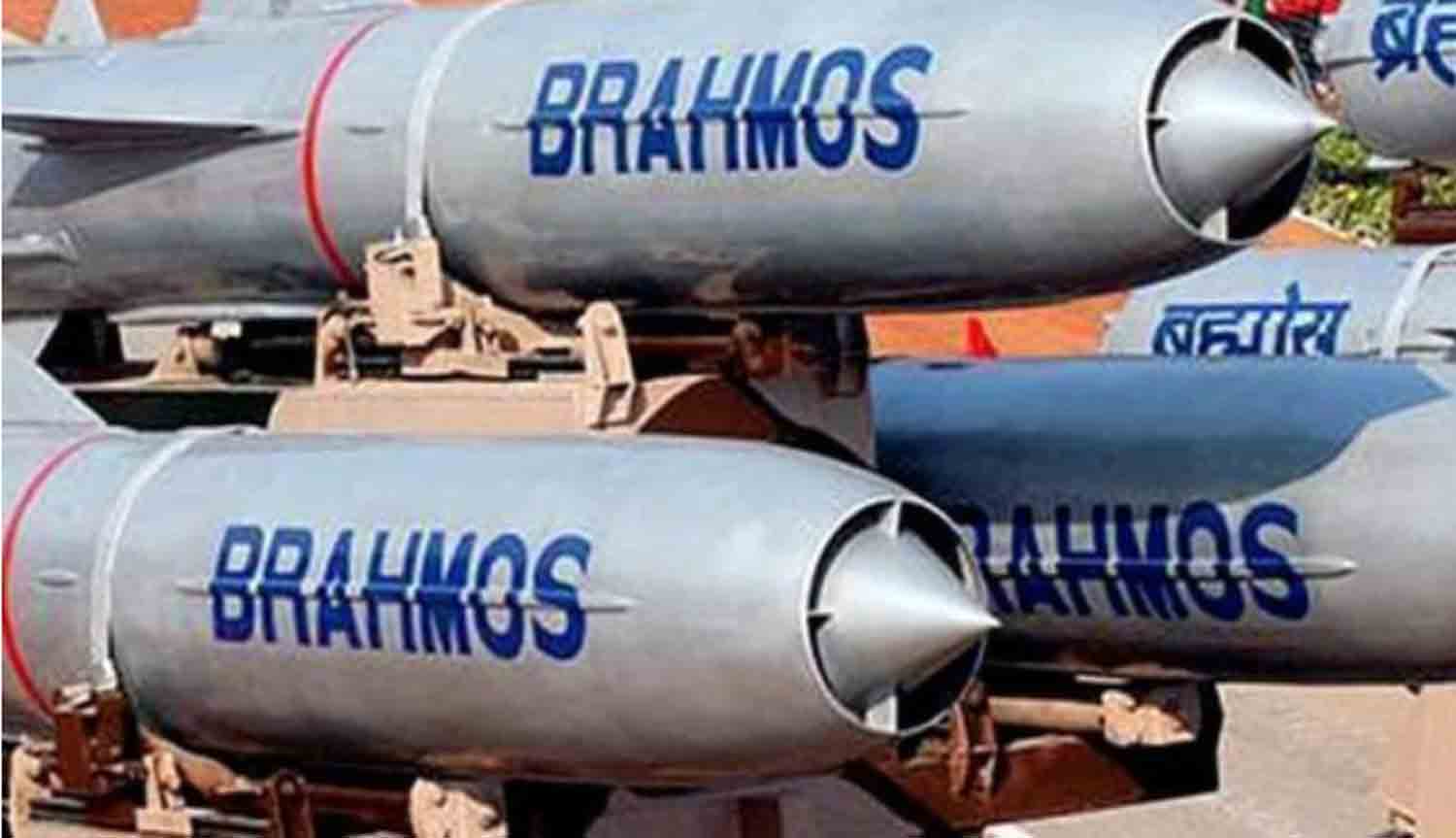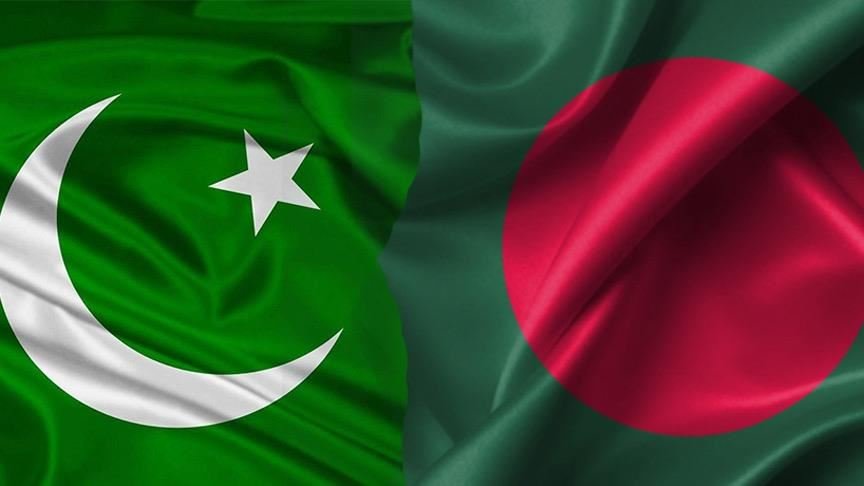
Pakistan-Bangladesh relations are entering a new phase, with military, defence and intelligence contacts expanding as Dhaka’s ties with New Delhi face fresh strains. A reported DGFI visit to Islamabad on August 15 has added another layer to the emerging South Asian geopolitical realignment.
A six-member delegation from Bangladesh’s military intelligence agency, the Directorate General of Forces Intelligence (DGFI), visited Pakistan on August 15, according to a report by The Economic Times. The delegation was reportedly led by Colonel Magfuz-ul-Bari and included officers from the Bangladesh Air Force and other military branches. The report comes after the DGFI director general, Major General Qaiser Rashid Chowdhury, reportedly visited Islamabad in April 2026.
Six member from Bangladesh intelligence body visits Pakistan as ISI eyes wider footprints in region. Pakistan-Bangladesh bonhomie initiated under Yunus regime continues under the current govt in Dhaka — My report — https://t.co/V0lX8DDx9d
— Dipanjan R Chaudhury (@DipanjanET) August 19, 2026
The latest Bangladesh-Pakistan intelligence contact is significant not because one delegation can by itself alter South Asia’s strategic balance, but because it comes against the backdrop of a much broader Pakistan-Bangladesh defence rapprochement, including high-level military exchanges, discussions over JF-17 fighter aircraft, training cooperation and growing security contacts.
At the same time, India-Bangladesh relations are facing one of their most difficult periods in years, particularly over former Prime Minister Sheikh Hasina’s continued presence in India and Dhaka’s demand for her extradition.
The result is an emerging strategic equation that New Delhi cannot comfortably ignore.
Bangladesh-Pakistan Intelligence Cooperation: What Is Actually Known?
The Economic Times has interpreted the August 15 DGFI visit as evidence of repeated efforts by Pakistan’s Inter-Services Intelligence (ISI) to expand its influence in Bangladesh and increase its footprint in India’s eastern neighbourhood.
That is an Indian media assessment, however, rather than an officially confirmed Pakistani objective.
There is currently no publicly available Pakistani or Bangladeshi statement establishing that the August 15 delegation was sent specifically to formulate an anti-India strategy.
This distinction is important.
What can be established is that:
- a six-member DGFI delegation reportedly travelled to Pakistan on August 15;
- the DGFI chief reportedly visited Islamabad in April;
- Pakistan and Bangladesh have significantly increased military contacts;
- Pakistan and Bangladesh have discussed a potential defence agreement;
- JF-17 fighter procurement has been discussed;
- military training and exchanges are expanding;
- Bangladesh’s relationship with India has become more contentious.
Taken together, these developments point to a genuine strategic thaw between Islamabad and Dhaka, even if the precise intelligence agenda of the latest visit remains undisclosed.
Why the August 15 DGFI Visit Is Important
The timing is particularly revealing.
Bangladesh is simultaneously managing difficult relations with India and developing new external partnerships.
For Pakistan, this creates an opportunity to rebuild a relationship that was severely damaged after 1971.
For Bangladesh, engagement with Pakistan offers another defence and diplomatic option.
For India, however, the development creates a new variable along its eastern frontier.
That is where the geopolitical significance becomes much larger than the visit itself.
Pakistan-Bangladesh Defence Ties Have Been Building for Months

The August DGFI visit is not an isolated event.
In October 2025, Pakistan’s then Chairman Joint Chiefs of Staff Committee, General Sahir Shamshad Mirza, visited Dhaka and met Bangladesh’s political and military leadership.
Bangladesh’s official channels said the discussions covered trade, investment and defence cooperation. The two sides also discussed expanding connectivity, while a maritime shipping route between Karachi and Chattogram had already begun operating.
General Mirza also met Bangladesh’s army, navy and air force chiefs during the visit, according to Bangladeshi reporting.
The significance of that visit was that Pakistan-Bangladesh defence cooperation was becoming institutional rather than purely diplomatic.
JF-17 Talks Give the Relationship a Military Dimension
The most visible development came in January 2026.
Bangladesh Air Force chief Air Chief Marshal Hasan Mahmood Khan travelled to Pakistan and held detailed discussions with Pakistan Air Force chief Air Chief Marshal Zaheer Ahmed Baber Sidhu.
Pakistan confirmed that the talks included potential procurement of JF-17 Thunder fighter aircraft for Bangladesh.
Pakistan also offered accelerated delivery of Super Mushshak trainer aircraft, along with training and long-term support.
This is strategically important because defence procurement creates relationships that can last for decades.
A fighter aircraft deal does not end when the aircraft are delivered.
It creates requirements for:
- pilot training;
- instructor training;
- maintenance;
- spare parts;
- weapons integration;
- technical personnel;
- simulators;
- upgrades;
- logistics;
- continuing military exchanges.
If Bangladesh eventually acquires JF-17s, Pakistan-Bangladesh military cooperation could therefore become considerably deeper and more institutionalised.
Bangladesh Is Not Simply “Choosing Pakistan”
This is an important qualification.
Dhaka’s expanding relationship with Islamabad should not automatically be described as a formal alignment against India.
Bangladesh has been pursuing a multi-vector foreign policy.
It has defence relationships with China, Türkiye and other countries and has also maintained extensive economic and diplomatic links with India.
Indeed, Bangladeshi reporting in January described Dhaka’s approach to the potential JF-17 deal as cautious, with the country considering multiple options for modernising its air force.
This suggests that Bangladesh is trying to increase strategic options rather than replace one patron with another.
That may actually be the most important change.
Why India Is Worried
India’s concern is fundamentally geographical.
Bangladesh sits directly beside India’s strategically sensitive Northeast.
India’s northeastern states include:
- Assam;
- Tripura;
- Meghalaya;
- Mizoram;
- Manipur;
- Nagaland;
- Arunachal Pradesh.
Bangladesh shares borders with several of these states and occupies a position that makes it extremely important for India’s internal security, border management and regional connectivity.
For decades, New Delhi benefited from a highly cooperative security relationship with Dhaka.
Under Sheikh Hasina, Bangladesh worked closely with India on counterterrorism and security issues, and New Delhi considered Dhaka an important partner in containing militant networks affecting India’s Northeast.
The political change in Bangladesh has altered that equation.
India’s Real Problem Is the Loss of Strategic Exclusivity
This is perhaps the most important way to understand New Delhi’s concern.
India does not necessarily need Bangladesh to be formally allied with Pakistan to feel strategically uncomfortable.
The problem begins when Pakistan gains institutional access to Bangladesh that India previously enjoyed to a much greater degree.
If Pakistan’s military and intelligence contacts with Dhaka continue to expand, India’s security planners will have to account for another external actor operating through a country that borders India’s Northeast.
That potentially affects:
- intelligence assessments;
- border security;
- counterterrorism;
- maritime surveillance;
- military planning;
- regional diplomacy.
The issue is therefore not simply Pakistan’s influence.
It is the changing balance of influence inside Bangladesh.
The Sheikh Hasina Factor Is Driving the India-Bangladesh Rift
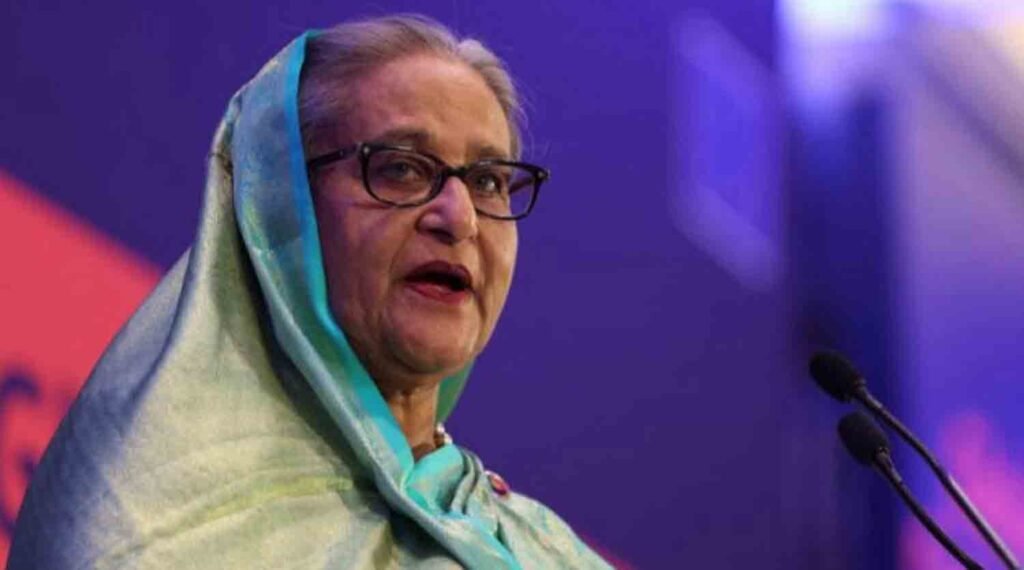
The deterioration in India-Bangladesh relations is closely linked to Sheikh Hasina.
Hasina fled Bangladesh for India in August 2024 after the collapse of her government.
Dhaka has repeatedly demanded her extradition.
Bangladesh’s government has also objected strongly to her public political activities from India.
On August 5, 2026, Hasina participated in a live media interaction from New Delhi, prompting a strong reaction from Dhaka. Bangladesh said the event damaged efforts to repair bilateral relations and renewed its call for her extradition.
The issue remains unresolved.
Bangladesh says India should act on the extradition request, while New Delhi has maintained that the matter is being examined through established legal procedures.
This dispute has now become a major obstacle to rebuilding trust.
Tarique Rahman’s India Visit Shows How Serious the Problem Has Become
The uncertainty surrounding Bangladesh Prime Minister Tarique Rahman’s proposed India visit is another indication of the diplomatic strain.
Dhaka has said that a conducive environment is needed for the visit, with the Sheikh Hasina extradition issue among the concerns being raised.
India, meanwhile, has publicly signalled that it wants Rahman to visit.
Indian High Commissioner Dinesh Trivedi said on August 18 that Prime Minister Narendra Modi wanted the proposed visit to be “memorable” and stressed the importance of direct engagement between the two leaders.
The contrasting positions demonstrate the diplomatic problem:
India wants to preserve its relationship with Bangladesh, while Bangladesh wants New Delhi to address issues it considers fundamental to the relationship.
This Creates Space for Pakistan
Every deterioration in India-Bangladesh relations creates additional diplomatic space for Pakistan.
Islamabad does not need to persuade Bangladesh to become an anti-India state.
It can gain strategically simply by becoming a credible alternative defence and diplomatic partner.
That means:
- military training;
- defence equipment;
- intelligence contacts;
- diplomatic coordination;
- trade;
- connectivity;
- maritime cooperation.
This is a much more sustainable strategy than attempting to construct an overt anti-India alliance.
The Bay of Bengal Dimension
The relationship also matters because Bangladesh is not only an eastern South Asian state.
It is a Bay of Bengal country.
Its location connects South Asia with:
- the Indian Ocean;
- Myanmar;
- Southeast Asia;
- major maritime trade routes.
Pakistan’s traditional strategic focus has been centred on the Arabian Sea and western South Asia.
A deeper relationship with Bangladesh potentially gives Islamabad greater diplomatic and military visibility farther east.
That does not mean Pakistan is establishing a military base or naval foothold in Bangladesh. There is no evidence of such a development.
But regular military exchanges, training and defence cooperation can gradually create greater strategic familiarity between the two armed forces.
The Rohingya Crisis Adds Strategic Importance
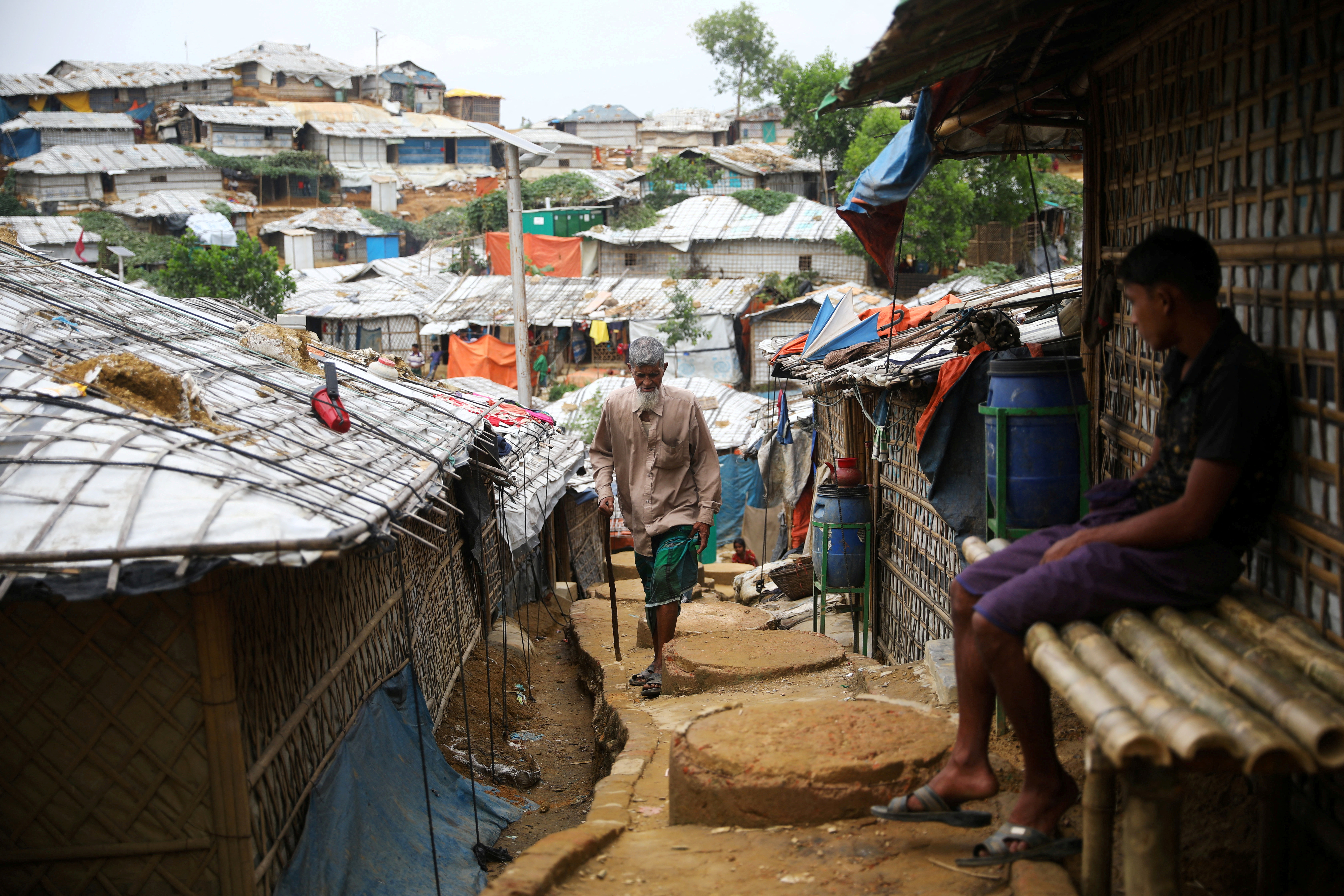
Bangladesh’s southeastern region is also adjacent to Myanmar and hosts a huge Rohingya refugee population.
The Cox’s Bazar-Teknaf area is therefore important for:
- border security;
- counter-trafficking;
- counterterrorism;
- humanitarian operations;
- maritime security;
- monitoring developments in Myanmar.
Any expansion of intelligence cooperation between Bangladesh and Pakistan could potentially include legitimate areas such as counterterrorism and transnational crime.
That is why it would be misleading to assume that every DGFI-ISI contact is necessarily directed against India.
Bangladesh has its own security concerns.
China’s Role Makes India’s Calculation More Difficult
The Pakistan-Bangladesh relationship also needs to be viewed alongside China’s role.
China is a major defence supplier to Bangladesh and an important economic partner.
Pakistan is itself China’s close strategic partner.
If Bangladesh increases defence cooperation with Pakistan while continuing its existing defence relationship with China, India’s concern could be less about a formal Pakistan-Bangladesh alliance and more about overlapping security networks.
In other words:
Pakistan + Bangladesh + China
does not automatically constitute a military bloc.
But from India’s perspective, closer interaction among these three countries could complicate New Delhi’s strategic planning.
Pakistan’s JF-17 Could Be the Most Tangible Long-Term Link
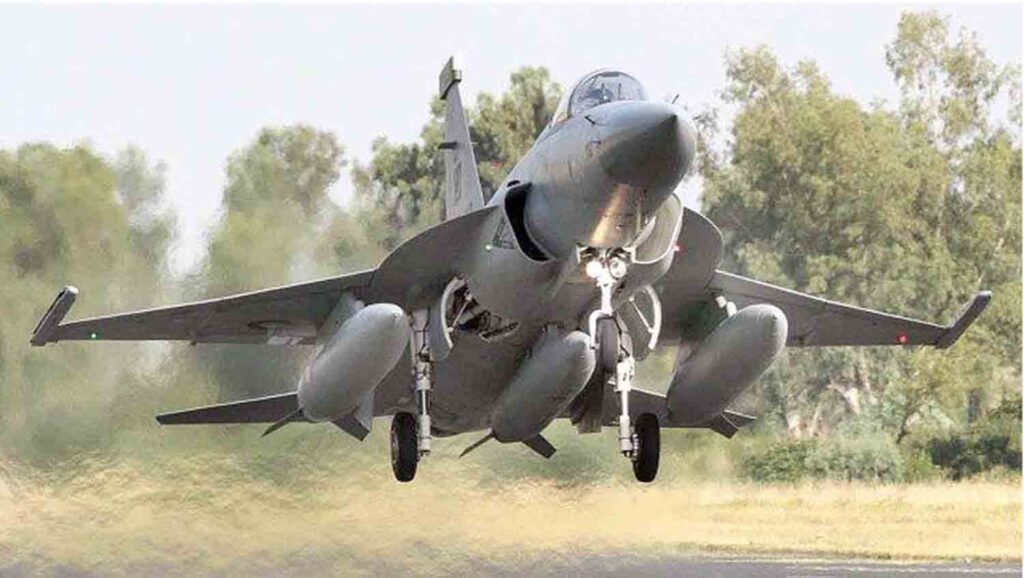
The potential JF-17 sale deserves particular attention.
If Bangladesh acquires the aircraft, Pakistan could become part of the Bangladesh Air Force’s long-term combat-aircraft ecosystem.
That would mean a relationship extending beyond diplomacy into:
aircraft → training → maintenance → weapons → upgrades → technical cooperation.
The JF-17 is jointly developed by Pakistan and China, which would also add a Chinese technological dimension to the relationship.
However, the JF-17 deal remains a potential procurement, not a confirmed operational deployment in Bangladesh. Pakistan officially confirmed discussions, but a final contract and delivery schedule would be required before drawing stronger conclusions.
The Intelligence Dimension Is Potentially More Important Than the Fighter Deal
Weapons sales are visible.
Intelligence cooperation is not.
Closer DGFI-ISI relations could potentially cover areas such as:
- counterterrorism;
- border intelligence;
- organised crime;
- cyber threats;
- extremist networks;
- maritime security;
- regional threat assessments.
The exact scope of the August 15 meeting is not publicly known.
What About India’s Northeast?
This is where Indian concerns become most acute.
India has historically worried about insurgency, illegal trafficking, border management and militant networks in its Northeast.
From India’s perspective, the risk calculation changes if Dhaka becomes less willing to automatically align with New Delhi’s security priorities.
The concern is therefore about uncertainty and reduced influence, rather than proof of an immediate security threat.
Pakistan Does Not Need to Militarise Bangladesh to Gain Strategic Benefits
There is another important point that often gets lost in Indian commentary.
Pakistan’s strategic gains from Bangladesh do not require military basing.
A much more realistic model is:
diplomatic access + defence exports + military training + intelligence contacts + economic connectivity.
That model is considerably less provocative and more sustainable.
It also allows Bangladesh to maintain its own strategic autonomy.
The Karachi-Chattogram Link Is Another Piece of the Puzzle
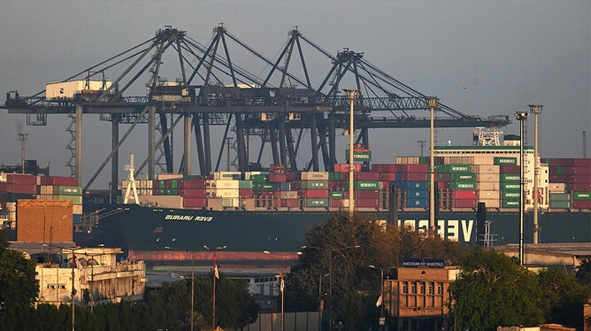
Pakistan-Bangladesh ties are also expanding beyond defence.
A two-way shipping route between Karachi and Chattogram began operations during the 2025 thaw, while officials also discussed expanding air connectivity.
This matters because economic connectivity can reinforce strategic relationships.
The more frequently officials, businesses, military personnel and institutions interact, the easier it becomes to develop long-term bilateral mechanisms.
This is why the current Pakistan-Bangladesh rapprochement should not be analysed solely through the lens of the DGFI and ISI.
It is a broader bilateral reset.
Is a Pakistan-Bangladesh Strategic Alliance Emerging?
It is too early to say.
There are certainly signs of growing cooperation.
But an alliance would require much more:
- formal security commitments;
- institutional intelligence mechanisms;
- sustained joint exercises;
- major defence procurement;
- long-term interoperability;
- political commitment across successive governments.
At present, the evidence supports a strategic rapprochement, not a formal military alliance.
That distinction is important.
What India Is Likely to Watch Next
The next developments will be much more revealing than the August 15 visit.
1. DGFI-ISI contacts
Will intelligence cooperation become regular and institutionalised?
2. JF-17 procurement
Will Bangladesh sign a contract for Pakistani-Chinese fighter aircraft?
3. Joint military exercises
Will Pakistan and Bangladesh move from exchanges to regular exercises?
4. Training programmes
Will Bangladeshi officers increasingly train in Pakistan?
5. Maritime cooperation
Will naval cooperation expand in the Bay of Bengal?
6. China-Pakistan-Bangladesh links
Will defence cooperation increasingly involve Chinese-origin systems?
7. India-Bangladesh diplomacy
Will the Hasina extradition dispute prevent the two governments from rebuilding trust?
These indicators will determine whether the current rapprochement becomes a durable strategic shift.
Pakistan-Bangladesh Relations: The Emerging Strategic Picture
| Area | Recent Development | Strategic Significance |
|---|---|---|
| Intelligence | DGFI delegation reportedly visited Pakistan on Aug. 15 | Indicates continuing intelligence-level engagement |
| Senior military contacts | Pakistan’s top military leadership visited Dhaka in Oct. 2025 | Institutional defence ties |
| Air force cooperation | Bangladesh Air Chief visited Pakistan in Jan. 2026 | Potential long-term aviation cooperation |
| JF-17 | Potential procurement discussed | Could create long-term Pakistan-Bangladesh defence linkage |
| Training | Super Mushshak and wider training cooperation discussed | Builds military interoperability |
| Trade/connectivity | Karachi-Chattogram shipping route operational | Expands bilateral interdependence |
| India relations | Dispute over Sheikh Hasina and extradition | Creates diplomatic space for Islamabad |
| China factor | Bangladesh already has substantial Chinese defence ties | Adds a wider regional dimension |
Why the Development Matters for Pakistan
From Pakistan’s perspective, stronger relations with Bangladesh have strategic value beyond India.
Bangladesh is:
- one of South Asia’s largest countries by population;
- a major regional economy;
- strategically located on the Bay of Bengal;
- an important defence market;
- politically influential in the Muslim world.
For Islamabad, rebuilding ties with Dhaka after decades of difficult relations represents a significant diplomatic opportunity.
The objective does not have to be an anti-India alliance.
A stronger relationship with Bangladesh simply gives Pakistan greater diplomatic and strategic depth in South Asia.
Why Bangladesh Benefits From the Relationship
Dhaka also has reasons to pursue the relationship.
Pakistan can offer:
- relatively affordable defence systems;
- military training;
- aviation cooperation;
- diplomatic support;
- access to another South Asian partner;
- expanded trade and connectivity.
Most importantly, Bangladesh can use relations with Pakistan to demonstrate that its foreign policy is no longer dependent on a single regional relationship.
That strengthens Dhaka’s negotiating position with India as well as other powers.
India’s Strategic Dilemma
India now faces a difficult choice.
It can interpret every Pakistan-Bangladesh contact through an adversarial lens, potentially pushing Dhaka further toward alternative partners.
Or it can recognise that Bangladesh has legitimate interests and rebuild the relationship through diplomacy, trade, connectivity and security cooperation.
New Delhi has significant advantages:
- geography;
- economic interdependence;
- border connectivity;
- energy links;
- cultural relations;
- proximity.
But those advantages only work if Bangladesh sees value in maintaining a close relationship.
India’s own foreign ministry has acknowledged the need for “positive, constructive and forward-looking” relations with Bangladesh based on mutual interests and reciprocity.
The Emerging India-Pakistan-Bangladesh Triangle
For decades, South Asian strategic analysis focused overwhelmingly on India-Pakistan rivalry.
Bangladesh was often treated as a secondary factor.
That is changing.
The emerging equation is increasingly:
India ↔ Bangladesh ↔ Pakistan
with China and Türkiye adding further external dimensions.
The critical question is whether Bangladesh remains a balancing actor or gradually becomes integrated into one side’s strategic network.
At present, the evidence points more toward balancing and diversification than formal alignment.
Final Assessment
The reported DGFI delegation visit to Pakistan on August 15 is significant because it comes at the intersection of three major developments: the expansion of Pakistan-Bangladesh defence relations, the possibility of deeper intelligence cooperation, and the deterioration of India-Bangladesh ties.
But the strongest conclusion is not that Bangladesh has joined an anti-India camp.
The stronger conclusion is that Bangladesh is expanding its strategic options, while Pakistan is successfully rebuilding a military and diplomatic relationship with Dhaka that had been largely dormant for decades.
The sequence is important:
senior military visits → defence cooperation → JF-17 discussions → training and connectivity → intelligence-level contacts.
If that sequence continues, Pakistan-Bangladesh relations could evolve from a diplomatic thaw into a durable strategic partnership.
For India, the concern is therefore not simply the ISI or the DGFI.
It is the possibility that New Delhi is losing the privileged strategic position it once enjoyed in Bangladesh while Pakistan is gaining institutional access to India’s eastern neighbourhood.
That could become particularly important for India’s Northeast and Bay of Bengal strategy.
For Pakistan, meanwhile, the opportunity is significant but should be handled carefully. Islamabad does not need to turn Bangladesh into an anti-India outpost. A more sustainable strategy is to build a relationship based on defence cooperation, intelligence dialogue, trade, training, connectivity and mutual strategic interests.
And for Bangladesh, the emerging policy appears to be one of strategic diversification rather than bloc politics.
The next major test will be whether the DGFI-ISI relationship becomes institutionalised, whether Bangladesh proceeds with the JF-17 procurement, and whether India and Bangladesh can overcome their dispute over Sheikh Hasina.
If those three developments move in the same direction, the consequences could extend well beyond bilateral relations.
South Asia may be entering a new strategic phase in which Bangladesh is no longer merely an eastern neighbour of India, but an increasingly important independent player in the India-Pakistan-China regional equation.