Friday, June 5, 2026
Home Blog Page 139

Trump blames Zelenskiy for war with Russia

0

Donald Trump, during a Thursday appearance, attributed the initiation of the war in Ukraine to President Volodymyr Zelenskiy, indicating a potential shift in U.S. policy towards Russia should he win the upcoming election on November 5. The former Republican president has consistently criticized Zelenskiy throughout his campaign, labeling him “the greatest salesman on Earth” for securing substantial U.S. military assistance since the onset of the conflict in 2022.

Additionally, Trump has reproached the Ukrainian president for not pursuing peace negotiations with Moscow, suggesting that Ukraine might need to relinquish some territory to achieve a settlement, a notion that Kyiv firmly rejects. On the PBD Podcast with Patrick Bet-David, Trump’s remarks escalated beyond his earlier critiques, asserting that Zelenskiy was not only responsible for the ongoing war but also for its inception, despite the fact that the conflict began with Russia’s invasion of Ukraine.

Trump expressed his willingness to assist, stating, “I feel a deep sympathy for those affected. However, he should never have allowed that war to commence. The war is a failure.” This remark followed a meeting in New York in September, where Zelenskiy shared his “victory plan” to conclude the conflict, a meeting both leaders characterized as amicable.

Nevertheless, Trump’s statements indicate that he may consider reducing aid to Ukraine if he wins against Vice President Kamala Harris, the Democratic candidate, on November 5. He has claimed he could resolve the conflict before assuming office in January, though he has not specified how he would achieve this.

In contrast, Harris has committed to maintaining support for Ukraine, framing its success as crucial to U.S. national security. She has consistently criticized Trump for his reluctance to confront Russian President Vladimir Putin.

Netanyahu’s commitment to war in Gaza and Lebanon has extinguished hopes for ceasefire

0
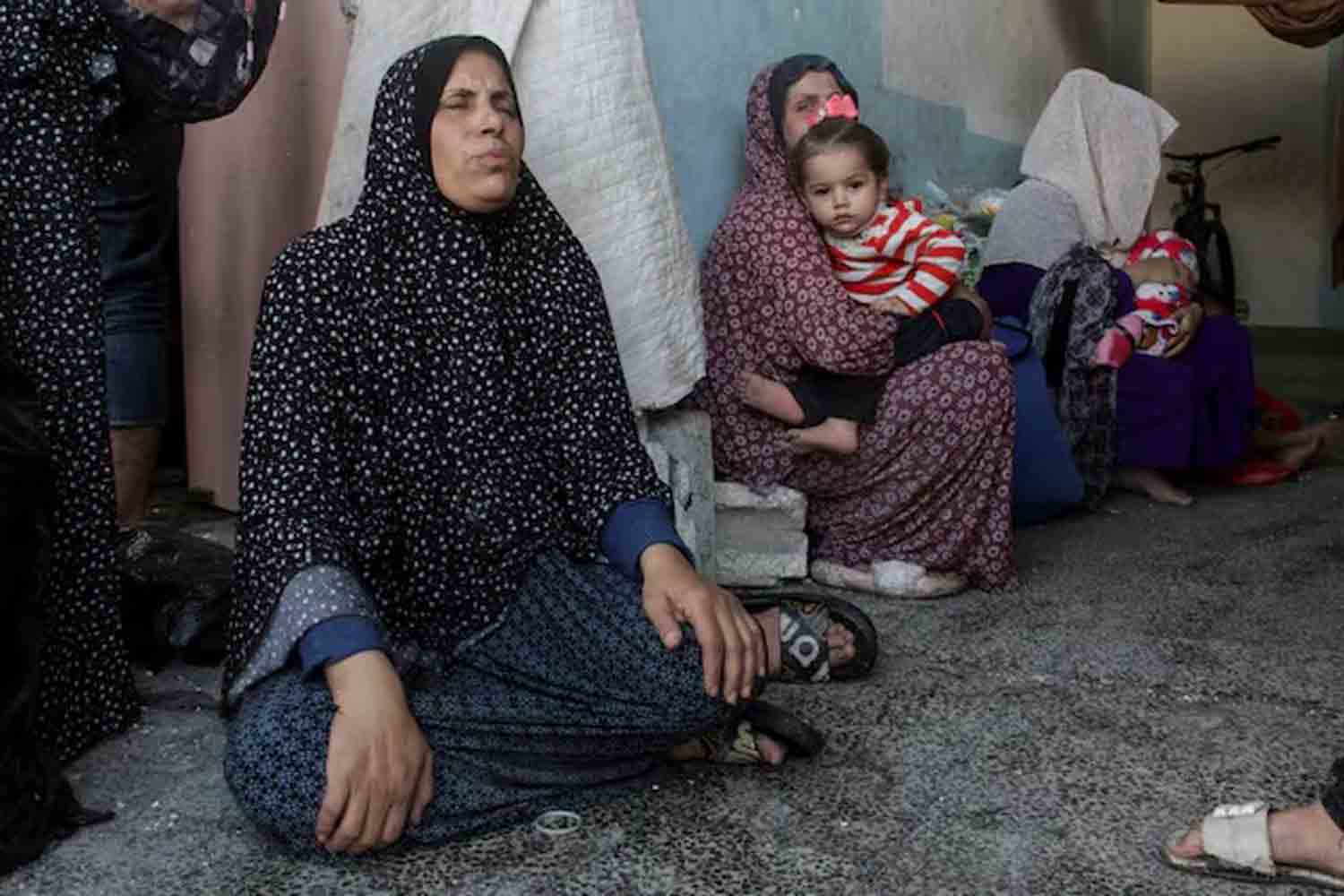
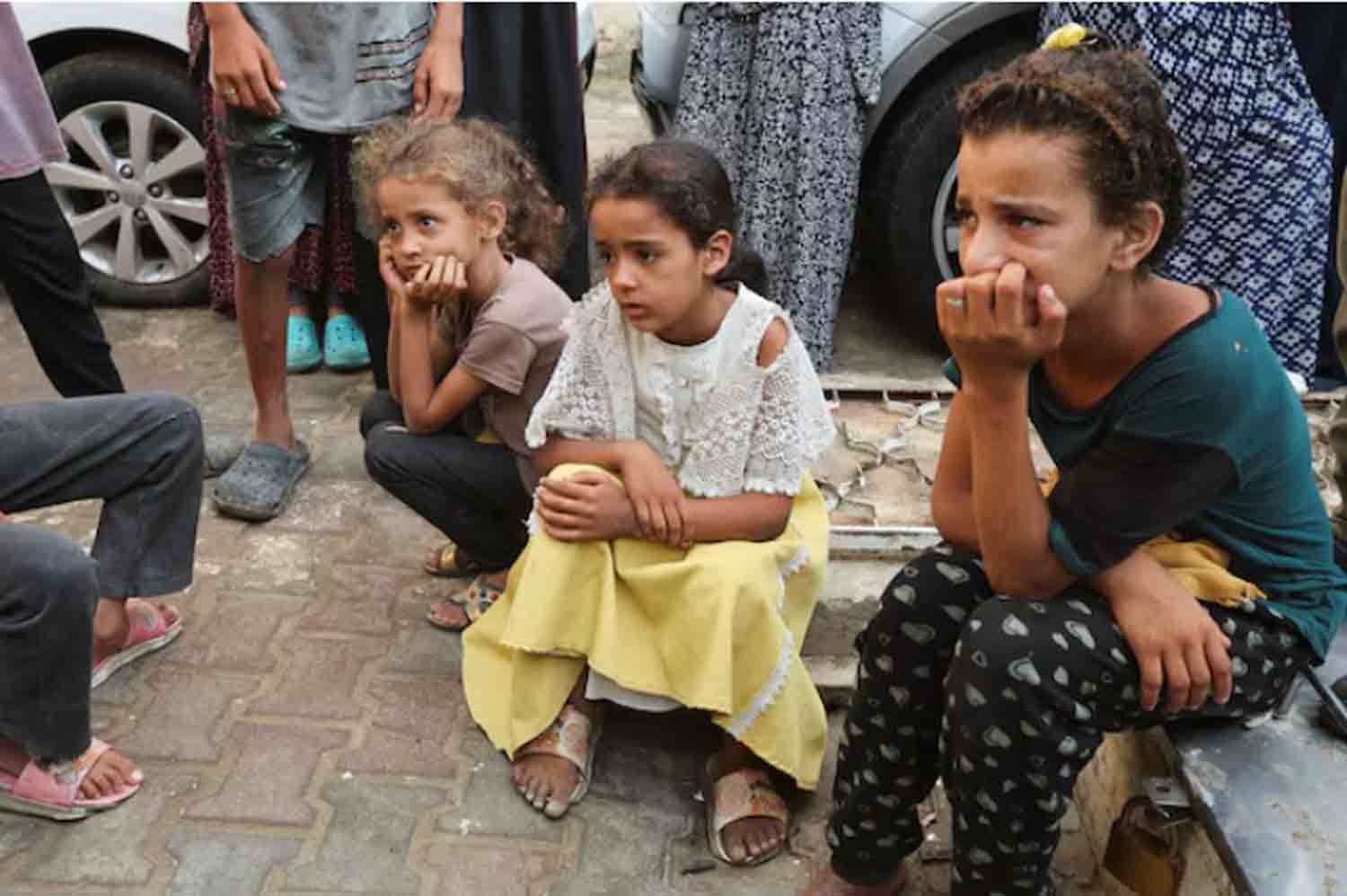
Children at tent camp for displaced people in Gaza

Prime Minister Benjamin Netanyahu‘s commitment to continue Israel’s military operations in Gaza and Lebanon has extinguished hopes that the death of Hamas leader Yahya Sinwar could lead to a resolution of the ongoing conflict in the Middle East, which has been escalating for over a year.

In response, the Lebanese militant group Hezbollah pledged to intensify its confrontations with Israel, while Iran asserted that the death of its Palestinian ally Sinwar would bolster “the spirit of resistance.”

Sinwar, who played a crucial role in orchestrating the October 7, 2023, attack that ignited the Gaza war, was killed by Israeli forces during an operation in the Palestinian territory on Wednesday, marking a significant moment in the protracted conflict. Netanyahu described Sinwar’s death as a pivotal achievement late Thursday but reiterated his intention to persist with military actions, which have recently expanded from targeting Hamas in Gaza to include an incursion into southern Lebanon and extensive bombardments across the region.

“The war, my dear ones, is not yet over,” Netanyahu stated to the Israeli public, emphasizing that hostages held by Hamas must be released before any cessation of hostilities. He remarked on the potential to dismantle what he termed the “axis of evil” and to forge a new future, alluding to Iran and its militant affiliates in Gaza, Lebanon, Syria, Iraq, and Yemen. This stance diverges sharply from that of Western leaders, including U.S. President Joe Biden, who suggested that Sinwar’s death could provide an opportunity to conclude the conflict.

The United States aims to initiate ceasefire discussions and facilitate the release of hostages, as stated by U.S. State Department spokesperson Matthew Miller, who noted that Sinwar had been unwilling to engage in negotiations.

He remarked, “That barrier has clearly been lifted. While it is uncertain whether Sinwar’s successor will agree to a ceasefire, it does eliminate what has been the primary hindrance to achieving one in recent months.”

A senior diplomat based in Lebanon expressed to Reuters that the expectation that Sinwar’s death would lead to an end to the conflict may have been overly optimistic.

“We had genuinely believed that removing Sinwar would mark a pivotal moment leading to the cessation of hostilities… that all parties would be inclined to disarm. Unfortunately, it seems we were mistaken once again,” the diplomat commented.

Despite months of attempts by the United States, Israel’s main ally, to negotiate ceasefires with Hamas and Hezbollah, these efforts have been unsuccessful as Israel continues its military operations. Meanwhile, Iran has appeared largely unable to counter Israel’s military strength, which includes U.S. weaponry.

The ongoing conflict has resulted in direct confrontations between Iran and Israel, including missile strikes on Israel in April and on October 1. Netanyahu has pledged to retaliate against the October attack, which resulted in minimal damage. Washington has urged Israel to be cautious in its targeting, specifically advising against strikes on Iranian energy facilities or nuclear sites.

TRACKED AND ELIMINATED

Following the assassination of political chief Ismail Haniyeh in Tehran in July, Sinwar emerged as the overall leader of Hamas. He was believed to be hiding within the extensive network of tunnels that Hamas has constructed beneath Gaza over the last twenty years.

Israeli troops, initially unaware they had engaged their primary adversary, killed him during a gunfight on Wednesday, according to Israeli officials. The military released drone footage purportedly showing Sinwar, seated in an armchair and covered in dust inside a devastated building. The drone tracked him as he lay dying, with the footage capturing him throwing a stick at the drone in a moment of apparent desperation.

While Hamas has not officially commented, sources within the organization have indicated that evidence suggests Sinwar was indeed killed. He was the architect of the October 7, 2023, attacks in southern Israel, which resulted in approximately 1,200 fatalities, according to Israeli authorities. In retaliation, Israel launched an invasion of Gaza, leading to the deaths of over 42,000 individuals, as reported by Palestinian officials.

Hezbollah, which began launching rockets at Israel in solidarity with Hamas on October 8, has become the focus of Israel’s escalating military operations in Lebanon, resulting in more than 2,000 deaths and the displacement of 1.2 million people.

Israel has successfully targeted several high-ranking Hamas leaders and has significantly weakened Hezbollah’s leadership through airstrikes in a matter of weeks.

These actions have struck a significant blow to what anti-Israeli factions refer to as the Axis of Resistance, a coalition of proxy militant groups that Iran has supported for decades throughout the region.

Despite Sinwar’s death, Iran has shown no indication that its support will wane. “The spirit of resistance will be strengthened,” stated its mission to the United Nations. Hezbollah also expressed defiance, declaring a “transition to a new and escalating phase in the confrontation with Israel.”

The Israeli military announced on Friday that it had eliminated Muhammad Hassin Ramal, the commander of Hezbollah in the Tayibe region of southern Lebanon.

Families of Israeli hostages expressed that although the death of Sinwar is a significant milestone, their sense of closure remains unfulfilled as long as captives are held in Gaza.

Avi Marciano, the father of Noa Marciano, who lost her life while in Hamas captivity, stated to Israeli broadcaster KAN, “The monster who took her from me, who bears the blood of all our daughters, has finally faced his reckoning.”

Who will be the successor of Yahya Sinwar and what will be the outcome of the Gaza conflict?

0

US intelligence agencies were actively working on Thursday morning to revise their evaluations regarding the potential successor to Hamas leader Yahya Sinwar, who may have been killed in an Israeli operation overnight.

US officials have long anticipated that eliminating Sinwar could provide Israel with the political leverage necessary to pursue a ceasefire. However, the identity of his successor could significantly influence Hamas’s willingness to engage in substantial negotiations with Israel aimed at halting the conflict and securing the release of hostages.

Current and former US officials have identified several potential candidates to succeed the elusive Sinwar, who has been the dominant figure within the organization for over a year.

If Mohammed Sinwar, Yahya’s brother, takes over, one US official remarked, “negotiations are totally screwed.” According to a former official, Mohammed shares his brother’s hardline stance and has been known to prioritize his vision over the welfare of Palestinian civilians. He has also been responsible for overseeing Hamas’s tunnel construction efforts.

However, given the exhaustion within the group, there may be a preference for an outsider who could be more amenable to negotiations, as noted by one source. In July, CNN reported that Sinwar faced pressure from his own commanders to cease the ongoing violence.

Another potential successor is Khalil Al Hayya, who has played a key role as a negotiator for Hamas during ceasefire discussions in Doha. Due to his experience, he is “probably who the US would want,” according to a former official. Al Hayya became the main negotiator following the July assassination of Ismael Haniyeh in Tehran, an act widely attributed to Israel.

A third possibility is Khaled Meshaal, a clear candidate for Hamas; however, his previous backing of a Sunni revolt against Syrian President Bashar al Assad makes this choice improbable. This incident created a divide between Hamas and its supporter, Shia-led Iran, and also hindered Meshaal’s aspirations for leadership.

Hamas sources say Yahya Sinwar may have been killed in Israeli operation

0

Hamas sources indicate that Yahya Sinwar may have been killed in an Israeli operation in Gaza.

Israeli police have stated that they are conducting DNA tests to verify whether Sinwar has indeed been killed.

A joint statement from the Israel Police Spokesperson’s Unit and the IDF Spokesperson’s Unit reads:

“In light of recent reports regarding the potential identification of Yahya Sinwar’s death, the Israel Police, IDF, and Shin Bet are diligently working to confirm his identity.”
“Currently, one of the several required evaluations has been completed for conclusive identification. Dental records have been sent to the police forensics lab, and DNA analysis is underway.”
“Once these procedures are finalized, we will be able to confirm the death. Additional information will be provided as it becomes available.”

Members of Israel’s security cabinet have been informed that Hamas leader Yahya Sinwar, who played a key role in the October 7, 2023 attack that initiated the Gaza conflict, is likely deceased, according to two officials familiar with the situation. The Israeli military is investigating the possibility that Sinwar, considered Israel’s most wanted adversary, was among three militants killed during an operation in the Gaza Strip.

Two Israeli broadcasters, KAN and N12 News, reported that Israeli officials indicated Sinwar has been killed. The Palestinian militant group Hamas has not yet issued a statement regarding this claim. Should this information be verified, Sinwar’s death would significantly bolster the Israeli military and Prime Minister Benjamin Netanyahu amid the ongoing conflict in the Palestinian territories, which has now extended into its second year. Israel has been conducting continuous airstrikes and ground operations aimed at achieving Netanyahu’s objective of dismantling Hamas.

On Thursday, Israeli airstrikes in northern Gaza resulted in the deaths of 19 Palestinians, including children at a school in the Jabalia camp, which is currently housing displaced individuals, according to a Gaza health ministry official who spoke to Reuters. Sinwar, who assumed leadership of Hamas after the assassination of political chief Ismail Haniyeh in Tehran last July, was thought to be hiding within the extensive network of tunnels constructed by Hamas over the last twenty years.

If confirmed, his death could escalate tensions in the Middle East, where the likelihood of a broader conflict has increased. Over the past month, Israel has initiated a ground campaign in Lebanon and is preparing a response to a missile attack on October 1, attributed to Iran, a supporter of both Hamas and Hezbollah in Lebanon. However, the elimination of the individual responsible for last year’s attack, which resulted in the deaths of 1,200 people in Israel and the capture of over 250 hostages, might also facilitate progress in stalled negotiations aimed at resolving the war he instigated, which has claimed the lives of more than 42,000 Palestinians.

Israel’s Army Radio reported that the incident took place during a ground operation in Rafah, located in the southern Gaza Strip, where Israeli forces killed three militants and retrieved their bodies. The report indicated that visual evidence pointed to the possibility that one of the deceased was Sinwar, and DNA testing is currently underway.

Israel possesses DNA samples from Sinwar from his previous incarceration in an Israeli prison. The statement noted, “At this stage, the identity of the terrorists cannot be confirmed.” Sinwar, known for his brutal enforcement actions against Palestinians suspected of collaborating with Israel, gained notoriety as a leader within the prison system.

After serving 22 years for orchestrating the abduction and murder of two Israeli soldiers and four Palestinians, he emerged as a figure of local admiration and quickly ascended within the ranks of Hamas, committing himself to the goal of eliminating Israel.

FALL BY THE SWORD

Amid speculation regarding Sinwar’s potential demise, Israeli Defence Minister Yoav Gallant shared a message on the social media platform X, featuring a biblical reference.
“‘You will pursue your enemies, and they will fall before you by the sword.’ – Leviticus 26. Our adversaries cannot evade us. We will track them down and eliminate them.”
The post included images of Hezbollah leader Hassan Nasrallah, who was assassinated in Beirut last month, and Hamas military chief Mohammed Deif, killed in August, with a vacant space for a third image positioned between them. All three figures were marked out in red.
Al-Majd, a Hamas-affiliated website that typically covers security matters, advised Palestinians to await updates regarding Sinwar directly from the group rather than relying on Israeli media, which it claimed sought to undermine their morale.
Israel has successfully targeted multiple Hamas commanders in Gaza, as well as high-ranking Hezbollah officials in Lebanon, including Nasrallah, inflicting significant damage on its primary adversaries.

MULTI-FRONT CONFLICT

On Thursday, Israeli airstrikes in northern Gaza resulted in the deaths of 19 Palestinians, including children, at a school located in the Jabalia camp, which is currently housing displaced individuals, as reported by a Gaza health ministry official to Reuters. The Israeli military stated that the strike targeted a gathering of militants from Hamas and the Islamic Jihad group within the compound, asserting that the operation was precise. Hamas, however, refuted claims that the school was being used for military purposes.

Additionally, Israel initiated a ground and air offensive in Lebanon earlier this month aimed at neutralizing Hezbollah, following a year in which the Iran-backed group launched attacks across the border in support of Hamas in Gaza. “War has become a part of our reality. We understand that Lebanon is rebuilt every decade, only to face destruction again,” remarked Abdelnaser, a resident displaced from the southern suburbs of Beirut, a stronghold of Hezbollah that has faced repeated Israeli bombardments.

According to the health ministry, Israeli actions in Lebanon have resulted in at least 2,350 fatalities over the past year, with more than 1.2 million individuals displaced. In contrast, approximately 50 Israelis, including both soldiers and civilians, have lost their lives during the same timeframe in northern Israel.

What key issues are on the agenda for the EU summit?

0

Migration will be a central focus at the EU summit on Thursday, with Poland advocating for a unified EU response to the use of migrants as a tool by Russia and Belarus against the EU and other nations. Polish officials are pressing for stricter regulations regarding the repatriation of irregular arrivals, according to diplomats.

Additional agenda items include reaffirming leaders’ steadfast support for Ukraine in its fight against Russia’s aggression, as well as calls for a ceasefire and a reduction of hostilities in the Middle East, as reported by EU diplomats.

However, the most intense discussions are expected to revolve around the management of irregular migrants entering the 27-member bloc, both overland from the east and by sea from the south. Many EU governments perceive this influx as a political and security challenge that is contributing to the rise of populist and far-right movements and impacting electoral outcomes. “Migration will … be a major point of discussion,” stated Charles Michel, the meeting’s chairman, in his invitation to EU leaders.

We will concentrate on specific actions aimed at curbing irregular migration, which include enhanced control of our external borders, improved partnerships, and strengthened return policies, he stated.

Last year, the number of irregular migrants entering Europe was less than one-third of the 1 million recorded during the 2015 migration crisis. According to data from the EU’s Frontex border agency, this figure further decreased to 166,000 in the first nine months of this year.

However, there was a significant increase in the number of individuals arriving at the EU’s border with Belarus, which rose by 192% year-on-year from January to September, totaling 13,195. Additionally, arrivals in the Spanish Canary Islands off the western coast of Africa doubled to 30,616, as reported by Frontex.

Diplomats have observed that despite the decline in irregular arrivals, public sentiment remains influenced by incidents such as the Solingen knife attack carried out by an Islamic State member in Germany last August.

MIGRATION PRIMARY POLITICAL CONCERN IN EU nation

Migration has emerged as a leading political issue across many EU nations, according to a senior EU diplomat, who noted that right-wing politicians have characterized incidents like Solingen as indicative of a failed immigration discourse. “Populist parties are exploiting fear to manipulate this topic for their advantage, necessitating action to counter this narrative,” the diplomat remarked.

In anticipation of potential public backlash against irregular migration ahead of elections next September, Germany has implemented border controls with all neighboring countries, effectively suspending the passport-free Schengen agreement. Other nations, including France, Denmark, Sweden, Austria, Italy, and Slovenia, have also enacted border checks.

Poland, facing presidential elections in May, is seeking to temporarily suspend asylum rights for migrants entering from Belarus, a move many view as contrary to the EU’s fundamental rights charter. Warsaw cites Finland’s recent suspension of asylum rights in response to migrants crossing from Russia as a precedent.

In May, the EU reached an agreement on a new framework for managing migration, known as the Migration Pact, but its full implementation is not expected until mid-2026, leaving the bloc in a challenging transitional phase. Complicating the situation further, the Migration Pact lacks mechanisms to address the “weaponization” of migration by nations such as Russia and does not resolve the contentious issue of repatriating migrants whose asylum claims have been denied.

In a significant shift from previous policies, the European Commission announced this week that it would propose the establishment of “return hubs” in non-EU countries for migrants lacking the right to remain in the EU, contingent upon agreements with those nations.

North Korea has officially classified South Korea as a “hostile state”

0

North Korea has officially classified South Korea as a “hostile state,” according to a report from its state media on Thursday. This announcement follows the national assembly’s constitutional amendment, which aligns with the leader’s commitment to abandon unification as a national objective.

The KCNA news agency from the North indicated that military forces had destroyed segments of road and rail connections with South Korea on Tuesday, describing this as a justified response to a state deemed hostile under the new constitutional framework.

As a result, 60-meter (66-yard) sections of both road and railway on the northern side of the border have been entirely obstructed, marking a step towards a “phased complete separation of its territory” from the South. KCNA stated, “This is an unavoidable and legitimate action in accordance with the DPRK Constitution, which explicitly identifies the ROK as a hostile state,” referring to North Korea as the Democratic People’s Republic of Korea and South Korea as the Republic of Korea.

KCNA reported a spokesperson from the defense ministry stating that the nation would implement additional measures to “permanently strengthen the sealed southern border,” although no further constitutional amendments ordered by leader Kim Jong Un were mentioned. A satellite image released by BlackSky, captured on Wednesday, revealed significant damage to the road leading to the city of Kaesong, marked by a large crack in the pavement and the surrounding area.

South Korea has “strongly condemned” the proposed constitutional changes and the designation of a hostile state, affirming its commitment to peaceful reunification, as stated by its Unification Ministry, which oversees relations with the North. In January, Kim called for a constitutional revision to remove unification as a goal in relations with the South, accusing Seoul of collaborating with the United States to undermine his communist regime and to clearly define its territorial boundaries.

Last week, North Korea’s Supreme People’s Assembly convened for two days, where it was anticipated that the constitution would be amended to officially recognize South Korea as a separate nation and a primary adversary. However, state media did not report on such an amendment, leading to speculation about a possible postponement of the constitutional changes.

North Korea has previously issued summaries of amendments after several days of delay; however, it was unusual for only one of the anticipated significant changes to be disclosed almost casually, according to Yang Moo-jin, President of the University of North Korean Studies.

As part of the constitutional revisions, it was anticipated that North Korea would redefine its territorial boundaries in a way that contradicts the Northern Limit Line, which has served as the de facto maritime border since the conclusion of the Korean War in 1953.

Yang noted, “They are likely aware of the extreme sensitivity surrounding the west coast border issue,” referencing the waters that have witnessed deadly confrontations in the past.

Tensions between the two Koreas have been rising since last year, with both parties declaring the 2018 agreement aimed at reducing military tensions as no longer in effect.

Recently, North Korea has escalated its hostile rhetoric, accusing South Korea of violating its airspace with drone flights and promising retaliation.

The South Korean government has refrained from confirming whether military or civilian drones were involved in the alleged incursions.

In response to North Korea’s detonations on roads and railways, South Korea’s military fired warning shots south of the border on Tuesday.

Last week, Pyongyang announced its intention to completely sever inter-Korean roads and railways and to further strengthen its positions along the border, marking a shift towards a “two-state” system that abandons its long-standing aspiration for unification.

Trudeau says India committed “a horrific mistake” by interfering in Canada’s sovereignty

0

Canadian Prime Minister Justin Trudeau stated on Wednesday that India committed “a horrific mistake” by believing it could interfere as aggressively as it allegedly did in Canada’s sovereignty. This statement came two days after Canada expelled six Indian diplomats, linking them to the assassination of a Sikh separatist leader in Canada and suggesting a wider campaign to target Indian dissidents within the country.

Trudeau’s remarks represent the most forceful stance he has taken in a year-long dispute that has severely strained bilateral relations. He emphasized, “The Indian government made a horrific mistake in thinking that they could interfere as aggressively as they did in the safety and sovereignty of Canada,” during an independent investigation into foreign interference in Canadian politics.

India’s foreign ministry released a brief two-line statement asserting that Trudeau’s remarks validated New Delhi’s position that Canada has not presented any evidence to back its claims against Indian diplomats.

“The blame for the harm caused to India-Canada relations rests solely with Prime Minister Trudeau,” the statement from the foreign ministry indicated. Trudeau mentioned that Ottawa might implement additional measures to safeguard Canadians but refrained from providing specifics. India has rejected the allegations of interference and has expelled six Canadian diplomats in a reciprocal action.

Taiwan believe China is enhancing its ability to transition from military exercises to a full-scale offensive

0

A senior security official from Taiwan has indicated that China is enhancing its ability to swiftly transition from military exercises to a full-scale offensive. This assessment reflects the Taipei government’s interpretation of Beijing’s recent military maneuvers surrounding the island. China, which considers Taiwan—governed democratically—as part of its territory, conducted extensive drills on Monday, asserting that these were intended as a warning against “separatist actions” in response to Taiwan President Lai Ching-te’s national day address last week.

For the past five years, Taiwan has reported nearly daily incursions by Chinese military forces in its vicinity, which include at least four significant rounds of military exercises and ongoing “joint combat readiness patrols.” The official, who spoke on the condition of anonymity to provide a more candid perspective, stated, “They are enhancing their capability to escalate military drills into actual conflict.”

Taiwan announced that a record number of 153 Chinese aircraft participated in recent military exercises, with an additional 25 Chinese navy and coast guard vessels coming unusually close to Taiwan’s 24-mile (39-km) contiguous zone. An official remarked, “Their proximity to Taiwan has intensified pressure on the island and reduced its response time.” The official further stated, “This exercise posed a greater threat to Taiwan than we have seen previously.”

During the exercise, an official reported that China launched two missiles toward an undisclosed inland region, without elaborating on the specifics. “While they did not target Taiwan with missiles this time, they did conduct missile launch drills,” the official noted.

China’s defense ministry has not yet responded to a request for comment. On Monday, it pledged to take necessary measures against Taiwan, and on Wednesday, the Taiwan Affairs Office stated that Beijing would never rule out the use of force regarding Taiwan.

A Taiwan official indicated that their intelligence had anticipated China’s drills and had positioned assets, including mobile missile launchers, in strategic locations prior to Beijing’s announcement of the military exercises early Monday morning. Lai and his administration dispute Beijing’s claims of sovereignty, asserting that only the people of Taiwan have the authority to determine their future. Lai has consistently proposed discussions, but China has dismissed these overtures.

REGULAR PATROLS

In a report presented to parliament on Thursday, Taiwan’s defense ministry indicated that China is currently conducting three to four “joint combat readiness patrols” each month in the vicinity of Taiwan. The ministry characterized this activity as a “provocation” that heightens the threat to Taiwan’s military. When questioned about the timing of China’s next military exercises, Taiwan’s Defense Minister Wellington Koo informed reporters that such drills could occur at any moment and under various pretexts.

“This clearly illustrates their hegemonic tendencies, which are evident to all,” Koo remarked. The military has incorporated strategies into its annual Han Kuang war games to address the need for a rapid response should China escalate its drills into an actual offensive, he noted.

A Taipei-based diplomat with knowledge of regional security matters expressed that Beijing’s military exercises pose a significant threat, as they enable China to swiftly enhance its mobilization and combat readiness. “The constant state of preparedness is escalating—transitioning from routine activities to drills and potentially to conflict can happen in an instant,” the diplomat, who wished to remain anonymous due to the sensitive nature of the topic, stated.

Since the Republic of China government retreated to Taiwan in 1949 following its defeat in the civil war against Mao Zedong’s communists, the island has remained under the looming threat of invasion by China’s People’s Liberation Army. However, the recent military exercises by China have not raised significant concern among most Taiwanese citizens, nor have they affected the island’s financial markets. In response to a lawmaker’s inquiry during a different parliamentary session on Thursday regarding the likelihood of war with China, Taiwan’s central bank governor Yang Chin-long assured that they have made “appropriate preparations,” though he did not provide further details.


Zelenskiy is set to present his “victory plan” to the European Union and NATO

0
Ukraine's President Volodymyr Zelenskiy appears at a joint press conference

Ukrainian President Volodymyr Zelenskiy is set to present his “victory plan” to the European Union and NATO on Thursday, advocating for an invitation to join NATO and a significant boost in military assistance for Ukraine’s efforts against Russia’s invasion.

The plan includes requests that have not yet been met by Ukraine’s allies, such as an invitation to the U.S.-led NATO military alliance and authorization to utilize Western weaponry for strikes deep within Russian territory.

Zelenskiy shared the plan with Ukraine’s parliament on Wednesday during a crucial period, as Russian forces make gains in the east, a harsh winter with power outages approaches, and the uncertainty surrounding the upcoming U.S. presidential election raises concerns about the continuity of Western support. On Thursday, he will take this plan, which he believes could lead to the end of the war “no later than next year,” to a summit of European Union leaders and a meeting of NATO defense ministers in Brussels.

He has already shared the five-point blueprint, which Zelenskiy indicated includes three confidential annexes, with prominent Western leaders, including U.S. President Joe Biden. While expressing strong support for Kyiv, none have fully endorsed the plan.

NATO Secretary General Mark Rutte remarked on Wednesday that the plan sends “a strong signal” from Zelenskiy, but he cautioned, “That doesn’t mean I can fully endorse the entire plan. That would be somewhat challenging, as there are numerous issues to consider.”

Rutte emphasized that NATO’s 32 member states would need to engage in detailed discussions about the plan to gain a clearer understanding. “There may be differing opinions on specific elements of the plan, but that does not imply a lack of support for Ukraine,” he stated.

NATO MEMBERSHIP CALL

NATO has announced that Ukraine will eventually become a member, although no specific timeline has been provided. However, Ukraine cannot join while engaged in active conflict, as this would involve the alliance directly in hostilities with Russia.

Russian President Vladimir Putin has pointed to Ukraine’s potential NATO membership as a justification for the invasion. In response, President Zelenskiy suggested that NATO could extend an invitation now, even if full membership is a future consideration.

“We recognize that NATO membership is a future issue, not an immediate one,” he stated to the Ukrainian parliament. “However, it is crucial for Putin to understand that his geopolitical strategies are failing. The Russian populace must realize that their leader has lost in the global arena.”

The Kremlin responded by stating it was premature to provide detailed commentary on the situation, but emphasized that Kyiv needed to “come to its senses” and acknowledge the futility of its current policies.

Zelenskiy also outlined a plan that includes the establishment of a “comprehensive non-nuclear strategic deterrence package” within Ukraine to safeguard against Russian threats and to diminish its military capabilities, though he did not provide further details. Additionally, the plan suggests that Western nations could assist in the development of Ukraine’s natural mineral resources and proposes that Ukrainian forces could take over some roles currently held by U.S. troops in Europe.

Biden ready to use U.S. military support for Israel as both an incentive and a deterrent

0
President Joe Biden speaks during the United Nations General Assembly

In the closing months of his presidency, Joe Biden is demonstrating a renewed readiness to leverage U.S. military support for Israel as both an incentive and a deterrent in its critical standoff with Iran and Iran-aligned militant factions. However, experts express uncertainty about whether this strategy will effectively meet Biden’s objectives, which include averting a wider regional conflict and compelling Israel to address the worsening humanitarian crisis in Gaza, especially with the U.S. presidential election approaching.

On Sunday, the Biden administration announced the deployment of approximately 100 troops to Israel, accompanied by a sophisticated U.S. anti-missile system. This deployment is notable as it coincides with Prime Minister Benjamin Netanyahu’s consideration of a retaliatory strike against Iran following an Iranian missile attack on October 1. Additionally, the administration issued a letter to Israel on the same day, emphasizing the need for immediate action to alleviate the humanitarian conditions in Gaza, warning that failure to do so could result in potential limitations on U.S. military assistance.

U.S. officials publicly assert that the seemingly contradictory actions align with established policies designed to ensure Israel’s security while also advocating for the protection of civilians amid the ongoing conflict in Gaza. However, both current and former officials privately recognize that these actions mark a significant increase in U.S. involvement in Israeli strategy, even as President Biden prepares to leave office. Israel has often resisted U.S. counsel, creating political challenges for the Biden administration, which is under pressure from some progressive activists within the Democratic Party to leverage U.S. influence to moderate Israel’s actions.

Aaron David Miller, a senior fellow at the Carnegie Endowment for International Peace, noted that the administration’s dual approach suggests that, despite appearances of inactivity, there is a clear strategy in play. He warned, however, that it is unlikely Washington will reduce its military support for Israel if tensions with Iran escalate. “As we approach the potential for significant escalation—considering both Israel’s response and Iran’s likely actions—it seems almost unimaginable that this administration would contemplate any serious limitations or conditions on military assistance,” he stated.

White House spokesperson John Kirby informed reporters on Tuesday that the letter was not intended as a threat; however, it seems that the Israeli authorities are treating the matters with seriousness. An Israeli official based in Washington stated, “The letter has been acknowledged and is currently under comprehensive review by Israeli security personnel.” On Wednesday, Israel announced that 50 aid trucks had been sent to northern Gaza from Jordan, which may be an initial response to the demands from the U.S.

A DEADLINE TO INCREASE AID

President Biden has made Israel’s defense a top priority following the outbreak of war initiated by Hamas militants, which resulted in approximately 1,200 fatalities, according to Israeli sources. Despite significant pressure from fellow Democrats, he has continued to supply arms to Israel, with the exception of 2,000-pound bombs, even as the conflict in Gaza has reportedly claimed 42,000 lives, as per Palestinian health authorities.

In April, the administration called for enhanced protections for civilians and aid workers in Gaza, a move that U.S. officials claim led to a temporary increase in aid deliveries to the region.

However, a letter sent on Sunday marked the clearest ultimatum to Prime Minister Netanyahu’s government since the onset of the Gaza conflict, specifying that Israel must take concrete actions within 30 days, including allowing at least 350 aid trucks to enter Gaza daily.

This development raises the possibility that Washington may consider making Israel ineligible for U.S. military assistance due to its restrictions on aid distribution, according to John Ramming Chappell, an advocacy and legal advisor at the Center for Civilians in Conflict. “It represents a small step towards a significant change,” he noted.

In response, Netanyahu held an emergency meeting on Wednesday to deliberate on increasing humanitarian aid to Gaza, with three officials present indicating that aid levels are expected to rise soon.

The decision to deploy the Terminal High Altitude Area Defense system (THAAD) is also seen as a significant move, according to former officials and analysts, aligning with a strategy to provide Israel with close military support to influence its military operations.

A former defense official characterized this deployment as a “paradigm shift,” given Israel’s historical approach to self-defense. It also heightens the stakes for the United States. “The U.S. is putting actual U.S. ‘skin in the game’ by placing U.S. forces inside Israel, which just two weeks ago faced 180 Iranian ballistic missiles,” the official stated.

Tensions in the Middle East have heightened as the region anticipates Israel’s reaction to a missile strike executed by Tehran earlier this month, which was a response to Israel’s military actions in Lebanon. President Biden has expressed his opposition to any Israeli attacks on Iran’s nuclear facilities and has raised concerns regarding potential strikes on energy infrastructure.

“This is likely an incentive aimed at persuading the Israelis to refrain from extensive military action,” stated Thomas Karako, director of the missile defense project at the Center for Strategic and International Studies, commenting on the possibility of Israel targeting nuclear and other significant sites. “Moreover, deploying a multi-billion dollar asset typically comes with certain conditions.”

The White House has not provided a direct answer regarding whether the deployment of THAAD to Israel was part of an agreement to dissuade Israeli strikes on Iranian oil or nuclear facilities.

The administration is under time pressure, as the 30-day period given by Biden for Israel to meet its demands will conclude after the U.S. elections on November 5. This timeline allows Netanyahu to determine the extent of his compliance, particularly if the Republican candidate he aligns with, former President Donald Trump, wins against Democrat Vice President Kamala Harris.

“Miller noted that Netanyahu may feel he is in a position of maximum influence, especially with the potential for a new president-elect who aligns more closely with his interests in the coming weeks.”

Xi says China is eager to be a partner and ally to U.S.

0
Chinese President Xi Jinping attends a presentation ceremony of national medals and honorary titles, at the Great Hall of the People.

Chinese President Xi Jinping emphasized that a fruitful partnership between China and the United States presents an opportunity for both nations to support each other’s growth rather than hinder it, as reported by state media on Wednesday.

“China is eager to be a partner and ally to the United States. This collaboration will not only benefit our two nations but also the global community,” Xi stated in a letter addressed to the 2024 annual awards dinner of the National Committee on U.S.-China Relations, according to a report from CCTV.

In his letter, Xi highlighted that the relationship between China and the U.S. ranks among the most significant bilateral relationships globally, influencing the future and fate of humanity. The two nations have faced tensions over national security issues, ongoing trade disputes, and China’s activities in the South China Sea, as well as increased military exercises near Taiwan. Over the past year, trade relations have deteriorated, focusing on matters such as restrictions on electric vehicles and advanced semiconductor technology.

Xi stated that China has consistently approached its relations with the United States based on the principles of mutual respect, peaceful coexistence, and win-win cooperation. He emphasized that the achievements of both China and the U.S. present opportunities for one another.

U.S. says it oppose Israeli air strikes in Beirut

0
A machinery clears rubble at a site of an Israeli strike, amid ongoing hostilities between Hezbollah and Israeli forces, in Beirut, Lebanon.

The United States, Israel‘s primary ally, expressed its opposition on Tuesday regarding the extent of the recent air strikes in Beirut, which have contributed to a rising death toll and heightened concerns about a potential escalation involving Iran. According to the U.N. refugee agency, Israeli military evacuation orders are impacting over a quarter of Lebanon, following Israel’s incursions into the southern region aimed at countering Hezbollah.

Several Western nations are advocating for a ceasefire between Israel and Lebanon, as well as in Gaza. However, the United States maintains its support for Israel, announcing the deployment of an anti-missile system and troops. On Tuesday, State Department spokesperson Matthew Miller conveyed that the U.S. had raised its concerns with Prime Minister Benjamin Netanyahu’s government regarding the recent air strikes.

He stated, “We have made it clear to the Israeli government that we have concerns about the scope and nature of the bombing campaign in Beirut over the past few weeks, and we oppose it,” reflecting a more critical stance than previously expressed by Washington.

Secretary of State Antony Blinken and Defense Secretary Lloyd Austin communicated with Israeli officials on Sunday, urging them to implement specific measures to address the escalating crisis in Gaza, with a request for action to be taken within 30 days, according to U.S. officials.

Israel has intensified its military operations against Hezbollah following incursions into Lebanon, which included the killing of key Hezbollah leaders, notably veteran secretary-general Hassan Nasrallah, marking a significant setback for the group in recent history.

On Tuesday, during a phone call with French President Emmanuel Macron, Israeli Prime Minister Netanyahu expressed his opposition to a unilateral ceasefire and conveyed his surprise regarding Macron’s proposal to convene a conference focused on Lebanon, as reported by Israeli sources. Netanyahu’s office issued a statement reminding the French President that the establishment of the State of Israel was not a result of a UN resolution but rather a victory achieved during the War of Independence.

The Elysee Palace has not yet responded to requests for comment. The two leaders have previously had disagreements, particularly concerning Macron’s advocacy for halting arms sales to Israel.

PAIN AND CEASEFIRE

As diplomatic negotiations remain stagnant, hostilities persist. On Tuesday, the Israeli military announced the capture of three members of Hezbollah’s elite Radwan forces, stating they have been transferred to Israel for further investigation. Hezbollah has yet to issue a statement regarding this development.

Naim Qassem, the deputy chief of Hezbollah, indicated earlier on Tuesday that the Iran-supported group intends to inflict “pain” on Israel while simultaneously advocating for a ceasefire.

“Following the ceasefire, based on an indirect agreement, settlers will return to the north, and additional measures will be established,” Qassem mentioned in a recorded address.

Israel has not provided an immediate response, maintaining that its operations in Lebanon are aimed at facilitating the return of tens of thousands of residents who were displaced from northern Israel due to Hezbollah’s assaults. Qassem warned that more Israelis would face displacement, stating that “hundreds of thousands, potentially over two million, will be at risk at any moment, on any day.”

According to the Lebanese health ministry, Israeli airstrikes have resulted in at least 2,350 fatalities over the past year and left nearly 11,000 injured, with more than 1.2 million people displaced. The reported figures do not differentiate between civilians and combatants but include numerous women and children.

The health ministry reported that on Monday, 41 individuals were killed and 124 were injured. Since the onset of the conflict, around 50 Israelis, including both soldiers and civilians, have lost their lives, as per Israeli sources.

These statistics highlight the significant toll on the Lebanese population as Israel seeks to dismantle the infrastructure of the Iran-backed militant group, a conflict that reignited a year ago when Hezbollah began launching rockets at Israel in solidarity with Hamas at the beginning of the Gaza war.

EVACUATION NOTICES

Rema Jamous Imseis, the Middle East director for the U.N. refugee agency, reported that repeated evacuation notices issued by Israel to numerous villages in southern Lebanon have now impacted over a quarter of the nation. “Individuals are responding to these evacuation requests, leaving with very few belongings,” she stated during a briefing in Geneva.

On Monday, Israel intensified its bombing campaign in Lebanon, resulting in the deaths of at least 22 individuals in a northern strike targeting a residence where displaced persons were taking refuge, according to health officials. Many of the victims were women and children from the same family.

Jeremy Laurence, spokesperson for the U.N. human rights office, urged for an investigation into the airstrike, expressing concerns regarding compliance with “the laws of war.” While Israel has not issued a statement regarding the incident, it maintains that it takes extensive measures to minimize civilian casualties.

Israel’s military focus in Lebanon has primarily been on the Bekaa Valley in the east, the outskirts of Beirut, and the southern regions, where U.N. peacekeepers have reported that Israeli fire has repeatedly struck their bases, resulting in injuries to peacekeeping personnel.

China says it will not renounce use of force regarding Taiwan

0

China has refrained from committing to renouncing the use of force regarding Taiwan, a stance that targets external interference and a small faction of separatists, as stated by the Taiwan Affairs Office on Wednesday following recent military exercises near the island.

China, which considers Taiwan—governed democratically—as part of its territory, conducted extensive drills around the island on Monday, which it described as a warning against “separatist actions” in light of Taiwan President Lai Ching-te’s national day address last week.

“We are committed to pursuing the possibility of peaceful reunification with the utmost sincerity and effort,” said Chen Binhua, spokesperson for the Taiwan Affairs Office, during a regular press briefing in Beijing. “However, we will not pledge to renounce the use of force,” he added. This position is specifically directed at the interference from “external forces,” referring to the United States and its allies, as well as the very small group of separatists in Taiwan, rather than the majority of the Taiwanese population, Chen clarified.

Taiwan’s administration firmly denies Beijing’s claims of sovereignty, asserting that the future of the island should be determined solely by its residents. During a press conference in Taipei on Wednesday, Tsai Ming-yen, the Director-General of Taiwan’s National Security Bureau, remarked that China’s military exercises have had the opposite effect of what was intended, drawing significant international criticism, particularly from the United States. “The military actions of the Chinese communists have inadvertently strengthened global support for Taiwan,” he stated.

In his speech on October 10, Lai emphasized that China does not have the authority to represent Taiwan, while expressing the island’s readiness to collaborate with Beijing on pressing issues such as climate change. This approach was characterized by Taiwan officials as a blend of firmness and a gesture of goodwill towards China. In response, Chinese spokesperson Chen criticized Lai for maintaining a “stubborn separatist position,” asserting that there was no genuine goodwill present.

Lai has consistently proposed discussions with China but has faced rejection. On Monday, China’s military indicated that additional drills near Taiwan could occur based on the degree of “provocation.” Tsai stated that the government is vigilant regarding potential military actions. “We cannot dismiss any possibilities,” he remarked. Over the last five years, China has routinely deployed warships and military aircraft in the vicinity of Taiwan, nearly every day.

In its daily report on Chinese activities from the past 24 hours, Taiwan’s defense ministry noted the detection of 22 Chinese military aircraft and five naval vessels on Wednesday morning.

China deployed a record 153 military aircraft during war games near Taiwan

0

China deployed a record 153 military aircraft during war games near Taiwan, according to the island’s government on Tuesday. They emphasized that such exercises conducted without prior notification pose a threat to regional stability. The one-day “Joint Sword-2024B” drill, which took place on Monday without advance warning, was characterized by China as a response to “separatist actions” following a national day address by Taiwan’s President Lai Ching-te that Beijing criticized.

Beijing considers Taiwan, which operates under a democratic government, to be part of its territory, a stance that Taipei firmly disputes, asserting that only the people of Taiwan have the authority to determine their own future. Taiwan’s Premier Cho Jung-tai expressed to reporters in Taipei that “any drills conducted without prior notice will significantly disrupt peace and stability throughout the region.” He added that “China’s military exercises not only impact Taiwan’s immediate vicinity but also have serious implications for international navigation rights and air and sea space, drawing the attention of other nations.”

In its daily report on Chinese military activities around the island over the past 24 hours, Taiwan’s defense ministry noted the detection of 153 military aircraft. By Monday afternoon, they had already indicated that the number of aircraft observed was a one-day record, having initially recorded 125.

A ministry report indicated that 28 of the aircraft had crossed the sensitive median line of the Taiwan Strait, which has historically acted as an unofficial boundary, although China does not acknowledge its existence.

Additional activity was noted in the waters off Taiwan’s southeastern coast, where a significant air base is located, as well as to the southwest, near the northern part of the South China Sea, which includes the Taiwan-controlled Pratas Islands.

The ministry also reported the presence of 14 Chinese navy vessels and 12 “official” ships, referring to coast guard and similar agency vessels. The drills conducted by China have raised alarms among the United States and its allies, with the Pentagon labeling them as “irresponsible, disproportionate, and destabilizing.”

DRILLS “BACKFIRED” ON CHINA

Taiwan has reported nearly daily instances of Chinese military activity in its vicinity over the past five years, with China conducting at least four significant military exercises since 2022. According to Kuan Bi-ling, the head of Taiwan’s Ocean Affairs Council, which oversees the coast guard, these pressure tactics from China have only strengthened support for Taipei.

“China’s military drills, aimed at exerting pressure on Taiwan and the global community, have instead resulted in increased international unity against China’s expansionist actions,” she stated on her Facebook page. “Relations across the Taiwan Strait have evolved; they are now central to international dynamics in the Indo-Pacific region.”

Taiwan’s justice ministry investigation bureau reported discovering numerous false online claims, including misleading statements about Taiwan’s military response times and allegations that ships transporting liquefied natural gas were compelled to turn back. The bureau described these messages as “cognitive manipulation” orchestrated by “overseas hacking groups” that infiltrated or compromised social media accounts, without directly attributing the actions to China.

During a visit to the Matsu islands, which are under Taiwan’s control and located across from China’s Fuzhou city, a senior official from Taiwan addressed the recent confrontations between the Chinese coast guard and Taiwanese vessels during Monday’s military exercises. Luo Wen-jia, the head of Taiwan’s Straits Exchange Foundation, emphasized that China should reflect on the type of nation it aspires to be.

“Mainland China ought to strive to be a civilized power on the global stage, fostering friendships rather than enmity, and aiming to be respected rather than feared,” he stated.

Despite Beijing’s military drills, most Taiwanese remain unfazed, having lived with the underlying threat of aggression since 1949, when the Republic of China government retreated to the island following its defeat in the civil war against Mao Zedong’s forces.

On the financial front, Taiwan’s benchmark stock index saw a rise of 0.3% on Monday and an increase of 1.4% on Tuesday, buoyed by expectations of impressive third-quarter earnings from TSMC, Asia’s most valuable publicly traded company, set to be announced on Thursday.

U.S. assured Lebanon that Israel will reduce its military operations in Beirut

0
Lebanon's caretaker Prime Minister Najib Mikati speaks during a press conference in Beirut, Lebanon.

U.S. officials have provided assurances to Lebanon that Israel will reduce its military operations in Beirut and its southern suburbs, according to Lebanon’s caretaker prime minister, Najib Mikati, on Tuesday.

Mikati stated in a written statement from his office that during discussions with American officials last week, they received a form of guarantee aimed at de-escalating tensions in these areas. He did not elaborate on the specifics of the assurances but emphasized that Washington is committed to exerting pressure on Israel to achieve a ceasefire.

Since late last week, Israel has refrained from conducting strikes in the southern suburbs of Beirut, following a period of near-daily attacks that resulted in significant destruction and numerous casualties. The area has seen targeted strikes against several high-ranking Hezbollah figures, including the death of leader Hassan Nasrallah in a major attack on September 27.

Mikati also noted that international efforts are ongoing to establish a ceasefire to halt the conflict between the Israeli military and Hezbollah.

Since October of the previous year, hostilities have been ongoing along Lebanon’s southern border with Israel, coinciding with Israel’s military actions in Gaza, which were initiated following Hamas’ assault on southern Israel.

In recent weeks, Israel has significantly intensified its bombing campaign in Lebanon, targeting Hezbollah’s strongholds in southern Lebanon, the southern suburbs of Beirut, and the eastern Bekaa region. Additional regions of Lebanon have also experienced bombardment.

Sweden plans to increase its armed forces by 27,000 personnel by 2030

0

Sweden plans to increase its armed forces by approximately 27,000 personnel by 2030, bringing the total to around 115,000, which will include both professional soldiers and conscripts. This expansion is part of a broader initiative to enhance defense spending, as announced by the government on Tuesday.

Last month, the center-right coalition revealed its intention to allocate an additional 170 billion Swedish crowns (approximately $16.41 billion) over the next five years, which will raise defense spending to 2.6% of GDP by 2028, up from the current 2.2%.

Defence Minister Pal Jonson emphasized that this legislation is crucial for improving military resilience and must be implemented swiftly, especially for NATO‘s newest member. He stated, “We must be able to respond more robustly and effectively to the evolving global landscape, particularly in light of Russia’s full-scale invasion of Ukraine,” during a press conference. In September, the government announced a 10% increase in defense spending for the next year, amounting to 138 billion crowns, which corresponds to 2.4% of GDP.

The Navy is set to enhance its fleet by upgrading its five Visby class corvettes with air defense systems and will initiate the acquisition of three larger Lulea Class corvettes. The Air Force will receive three additional Globaleye surveillance aircraft, upgraded versions of the JAS Gripen fighter jets, and Black Hawk helicopters.

Meanwhile, the Army plans to increase its inventory of tanks and armored vehicles, expand its drone capabilities, and acquire more Archer air-defense systems, according to government announcements.

Hezbollah says it intends to cause “pain” to Israel but also advocates ceasefire

0
Lebanese army soldier stands near destroyed vehicles at a site damaged by an Israeli air strike in the Christian-majority region of Aitou in north Lebanon.

Hezbollah’s deputy leader, Naim Qassem, stated on Tuesday that the Iran-supported organization intends to cause “pain” to Israel, while simultaneously advocating for a ceasefire amid ongoing hostilities in southern Lebanon. Israel has intensified its military actions against Hezbollah following incursions into the area, which included the killing of key Hezbollah figures, notably veteran secretary-general Hassan Nasrallah last month, marking a significant setback for the group.

Qassem emphasized, “The solution lies in a ceasefire; we are not expressing ourselves from a stance of weakness. If the Israelis reject this, we will persist.” He added that following a ceasefire, based on an indirect agreement, settlers would return to the north, and further measures would be established. Israel has not yet responded, but it maintains that its operations in Lebanon are aimed at ensuring the safe return of the many residents who were displaced from northern Israel due to Hezbollah’s assaults.

Qassem stated that Hezbollah maintains the right to launch attacks throughout Israel, citing similar actions taken by its adversary in Lebanon. He warned that an increasing number of Israelis would face displacement, with “hundreds of thousands, potentially exceeding two million, at risk at any moment, on any day.” He emphasized, “Our focus will be on targeting the Israeli military and its installations.”

On Monday, Prime Minister Benjamin Netanyahu affirmed that Israel would persist in its offensive against Hezbollah “relentlessly, across all of Lebanon – including Beirut.”

The U.N. refugee agency reported on Tuesday that Israel has issued military evacuation orders impacting over a quarter of Lebanon, following two weeks of Israeli military operations in southern Lebanon aimed at combating Hezbollah. These statistics highlight the significant toll on the Lebanese population as Israel seeks to undermine the Iran-backed militant group and dismantle its infrastructure amid the ongoing conflict.

Rema Jamous Imseis, the U.N. refugee agency’s Middle East director, noted that the latest Israeli evacuation orders affecting 20 villages in southern Lebanon have resulted in over a quarter of the nation being impacted. “People are responding to these evacuation requests, fleeing with almost nothing,” she remarked during a briefing in Geneva. According to the Lebanese government, Israeli airstrikes have resulted in at least 2,309 fatalities over the past year, with more than 1.2 million individuals displaced.

Since late September, the majority of casualties have occurred following Israel’s escalation of its military operations. The reported figures do not differentiate between civilians and combatants. According to Israeli sources, approximately 50 individuals, including both soldiers and civilians, have lost their lives.

On Monday, Israel intensified its bombing campaign in Lebanon, resulting in the deaths of at least 22 people due to an airstrike on a residence in the north, where displaced individuals had sought shelter from earlier strikes in the south, as reported by health officials.

Jeremy Laurence, spokesperson for the U.N. human rights office, indicated that among the 22 fatalities were 12 women and two children, referring to the airstrike in the predominantly Christian town of Aitou. He urged for an investigation into the incident, expressing concerns regarding compliance with “the laws of war.”

Local media reported that rescue teams continued to recover bodies from the debris in Aitou on Tuesday. While Israel has not issued a statement regarding the Aitou airstrike, it maintains that it takes extensive measures to minimize civilian casualties.

CONCERN REGARDING ATTACKS ON PEACEKEEPERS

Israel’s military operations in Lebanon have primarily concentrated on the Bekaa Valley in the east, the suburbs of Beirut, and the southern regions. U.N. peacekeepers have reported that Israeli fire has repeatedly struck their bases, resulting in injuries to some personnel.

According to Israel’s military, approximately 20 projectiles were launched from Lebanon into Israeli territory following sirens in the Haifa Bay and Upper Galilee areas, with some of these projectiles being intercepted.

The extensive displacement of people in Lebanon due to Israel’s military actions has raised fears of renewed sectarian conflict. Lebanon is home to over a dozen religious sects, and its political landscape is heavily influenced by sectarian affiliations. These divisions were a significant factor in the brutal civil war from 1975 to 1990, which claimed around 150,000 lives and involved neighboring countries.

Despite concerns regarding civilian casualties, the U.S. has continued to support Israel in its military engagements. The Pentagon announced that components for an advanced anti-missile system began arriving in Israel on Monday, with plans for it to be fully operational soon, as stated in a Tuesday announcement.

The conflict between Israel and Hezbollah reignited a year ago when the militant group began launching rockets at Israel in solidarity with Hamas at the onset of the Gaza war.

In the broader context, the Middle East remains vigilant for potential Israeli retaliation against Iran following a missile barrage on October 1, which was a response to Israel’s actions in Lebanon.

Israeli forces clearing landmines and constructing new barriers in Golan Heights

0

Israel appears to be preparing to intensify its ground operations against Hezbollah while enhancing its defensive measures. Reports indicate that Israeli forces have been clearing landmines and constructing new barriers along the border between the Israeli-occupied Golan Heights and a demilitarized zone adjacent to Syria, according to security sources and analysts.

This development implies that Israel may be planning to launch strikes against Hezbollah from a more easterly position along Lebanon’s border, while simultaneously establishing a secure zone that would allow for reconnaissance of the militant group and prevent any potential infiltration, the sources noted.

In addition to the reported demining efforts, sources speaking to Reuters—including a Syrian soldier in southern Syria, a Lebanese security official, and a U.N. peacekeeping representative—provided further insights indicating that Israel is relocating the fence of the demilitarized zone closer to the Syrian side and reinforcing its fortifications in the region. Military operations involving incursions from the Israeli-occupied Golan Heights and possibly from the demilitarized zone could escalate the ongoing conflict between Israel and Hezbollah, as well as its ally Hamas, which has already involved Iran and poses a risk of drawing in the United States.

Israel has been engaged in hostilities with Hezbollah, which is supported by Tehran, since the group initiated missile strikes across the Lebanese border in solidarity with Hamas following its lethal assault on southern Israel. This escalation prompted Israel to launch a military operation in Gaza.

In the past month, Israeli airstrikes have inflicted considerable damage on Hezbollah, and the group is now also facing ground assaults from the south and naval bombardments from the Mediterranean to the west.

By expanding its operations to the east, Israel aims to disrupt Hezbollah’s supply routes for arms, many of which traverse Syria, Lebanon’s eastern neighbor and an ally of Iran. Navvar Saban, a conflict analyst at the Istanbul-based Harmoon Center, noted that the military activities in the Golan Heights, a 1,200 square kilometer (460 square mile) plateau that overlooks Lebanon and borders Jordan, seem to be a strategy to “set the stage” for a larger offensive in Lebanon.

The ongoing events in Syria are primarily aimed at advancing Israel’s strategic interests in Lebanon, specifically targeting supply routes, warehouses, and individuals associated with Hezbollah’s supply lines, as stated by the source. Recent reports from a Syrian intelligence officer, a soldier stationed in southern Syria, and three high-ranking Lebanese security officials indicate that Israel has intensified its mine clearance and engineering operations in recent weeks.

FORTIFICATIONS

According to sources, demining efforts have escalated as Israel initiated ground operations on October 1 to combat Hezbollah in the rugged terrain that lies approximately 20 km (12 miles) west of northern Israel and southern Lebanon. Concurrently, Israel has increased its airstrikes in Syria, targeting areas including the capital and the Lebanese border. Reports indicate that Russian military units, which have been supporting Syrian forces in southern Syria, have vacated at least one observation post that overlooks the demilitarized zone, as stated by two Syrian sources and one Lebanese source.

All sources requested anonymity to discuss their observations of Israel’s military activities in the Golan Heights, a region that Israel captured from Syria in 1967. A Syrian soldier stationed in the south reported that Israel is extending the fence that separates the occupied Golan from the demilitarized zone (DMZ) and constructing fortifications near Syria to prevent any potential infiltration should tensions escalate. The soldier noted that Israel seems to be establishing “a buffer zone” within the DMZ. Additionally, a senior Lebanese security source informed Reuters that Israeli forces had excavated a new trench close to the DMZ in October.

Another senior Lebanese security official suggested that the demining operations could enable Israeli troops to “encircle” Hezbollah from the eastern side. For the past fifty years, the DMZ has been monitored by the U.N. Disengagement Observer Force (UNDOF), which is tasked with overseeing the separation of Israeli and Syrian forces following the 1973 conflict. A U.N. peacekeeping representative in New York confirmed that UNDOF had “recently observed some construction activity being carried out by Israeli military forces in the vicinity of the area of separation,” although further details were not available.

RUSSIA WITHDRAWS FROM OVERLOOK POINT

In response to inquiries regarding demining efforts, the Israeli military stated that it “does not comment on operational plans” and is currently engaged in combat against the terrorist organization Hezbollah to facilitate the safe return of residents in the northern region to their homes.

Requests for comments from UNDOF, Russia, and Syria went unanswered by Reuters. A report submitted to the U.N. Security Council on UNDOF’s activities, dated September 24 and reviewed by Reuters on October 4, noted violations from both sides within the demilitarized zone.

According to two Syrian sources and one Lebanese source, Russian forces have vacated the Tal Hara outpost, which is the highest point in Syria’s southern Daraa governorate and serves as a critical observation point. A Syrian military officer indicated that the withdrawal was a result of agreements with the Israelis aimed at avoiding conflict.

Syrian authorities, aligned with Iran’s ‘Axis of Resistance’, have attempted to remain neutral amid escalating regional tensions following Hamas’s assault on October 7 of the previous year. In January, Reuters reported that Assad had been advised against taking any supportive actions for Hamas due to threats from Israel. Additionally, Hezbollah has also refrained from increasing its military presence in the Syrian-held Golan Heights.

Iran warns it is capable of targeting U.S. bases and naval vessels

0

Brigadier-General Ebrahim Jabbari, an advisor to the chief commander of the Islamic Revolutionary Guard Corps, has stated that any military assistance from the United States to Israel in the event of an attack on Iran will result in retaliation.

“The Americans must understand that if they choose to enter the battlefield against Islamic Iran, our weapons will be capable of targeting their bases, interests, and naval vessels,” Jabbari remarked during an interview with Iran’s Press TV.

He emphasized that the US is “not at all prepared to confront us, the axis of resistance, and the Muslim world.” Nevertheless, Jabbari expressed skepticism about the likelihood of the US engaging in such a “foolish act.”

“While the Americans do support Israel, it is improbable that they would make the mistake of entering into a conflict with Iran. They consistently advise the [Israeli] regime against provoking the Islamic republic.”

Netanyahu informed the U.S. that any military response to Iran will focus solely on military installations

0
Prime Minister Benjamin Netanyahu

Israeli leaders, including Prime Minister Benjamin Netanyahu, have informed the United States that any military response to Iran will focus solely on military installations, avoiding oil and nuclear sites, as per a source familiar with the talks.

President Joe Biden, who has publicly expressed his disapproval of targeting Tehran’s nuclear and oil infrastructure, engaged in a confidential phone conversation with Netanyahu last week to discuss Israel’s military strategy. During this discussion, Netanyahu assured Biden that the focus would be on military objectives, according to the source.

The Washington Post was the first to report that Netanyahu had provided Biden with assurances regarding the exclusion of nuclear and oil facilities from potential strikes.

In response to this report, Netanyahu’s office stated that while it values U.S. perspectives, the final decision regarding Iran’s October 1 attack will be guided by Israel’s own national interests. American officials confirmed that they are maintaining close coordination with Israel as it formulates its response.

“We take into account the views of the United States, but our ultimate decisions will be based on our national interests,” Netanyahu’s office communicated via X.

The White House has not addressed Netanyahu’s alleged message regarding the avoidance of nuclear and oil facilities, but it previously characterized last week’s phone call between the leaders as “productive” and “direct.” This conversation marked their first interaction in nearly two months.

Israel’s considerations on how to react to Iran occur during a period of heightened tensions in the ongoing conflict, which has escalated from Gaza into Lebanon. White House officials are attempting to restrict Israel’s response to the recent missile attacks, aiming to avert a broader conflict.

Nevertheless, President Biden and other senior officials have affirmed Israel’s right to retaliate and indicated that they are in close communication with their Israeli counterparts as they contemplate their options.

A military strike on oil fields, which could lead to a surge in energy prices, would be particularly problematic just weeks before the U.S. elections, according to officials. Additionally, an attack on Iran’s nuclear sites could provoke a full-scale regional war, a scenario Biden is keen to avoid.

U.S. officials anticipate a restrained response from Israel, believing that the nation is not inclined to escalate the conflict with Iran. However, Biden’s influence over Netanyahu has been limited as he faces challenges in curbing the violence in Gaza and preventing a wider war.