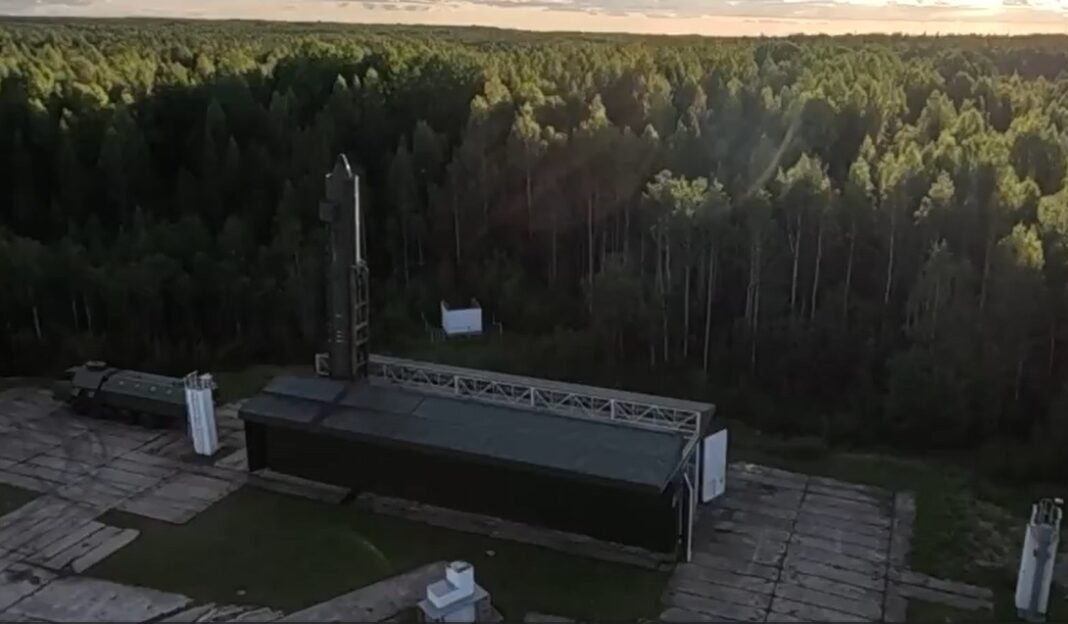
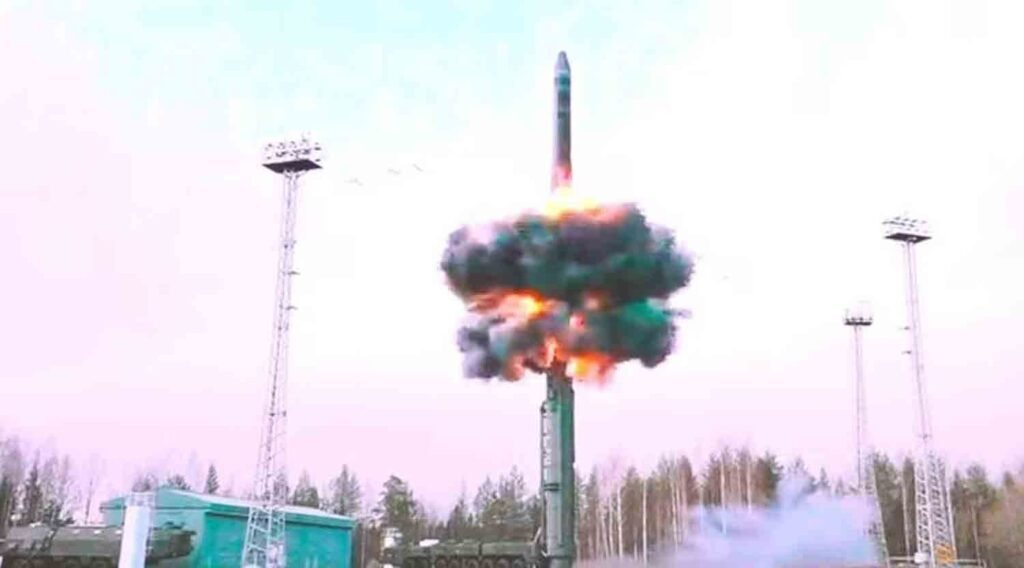
Russia has conducted another long-range ballistic missile test, sending a solid-fuel ICBM from Plesetsk toward the Kura test range in Kamchatka, according to the Russian Defense Ministry.
The ministry said the missile was launched from a mobile ground-based missile system, and that the training warheads reached their designated area. It also said Russian Strategic Missile Forces personnel practiced moving the launch battery to a remote location, preparing the system and carrying out the launch.
The missile’s exact designation was not disclosed.
That detail is important.
Russia operates several generations of strategic missiles, and publicly available information does not establish with certainty which missile was used in Friday’s launch. The combination of solid fuel, mobile basing and the Plesetsk-to-Kura trajectory is consistent with Russia’s Yars family, but the Russian Defense Ministry did not identify it as a Yars in its announcement.
The safest conclusion is therefore that Russia has demonstrated another operational test of its mobile ICBM force—not that a particular new missile has necessarily entered service.
What Was the Purpose of the Launch?
According to Moscow, the objective was to verify the missile system’s:
- tactical characteristics;
- technical performance;
- flight characteristics;
- operational procedures;
- and reliability under launch conditions.
The exercise also tested something that is central to Russia’s land-based nuclear deterrent: mobility.
Before the missile was fired, the launch battery was moved to a remote area.
That is not a minor detail.
A road-mobile ICBM is designed to complicate an adversary’s ability to locate and target it before launch.
Instead of remaining permanently associated with a fixed silo, the launcher can move between prepared and dispersed positions.
Russia’s Strategic Missile Forces have built a substantial part of their modernization strategy around this concept.
Why the Plesetsk-to-Kura Route Matters
Plesetsk, in Russia’s Arkhangelsk region, is one of Moscow’s principal strategic missile testing locations.
Kura, on Russia’s Kamchatka Peninsula, is the country’s established impact area for long-range ballistic missile tests.
The geography provides a particularly useful test environment because the missile can travel a very long distance across Russian territory before its training warheads descend into a controlled military range.
The route has been used repeatedly for Russian strategic missile testing.
Earlier this year, Russia also reported a Yars ICBM launch from Plesetsk toward Kura during a broader strategic nuclear exercise.
That history makes Friday’s launch part of an established testing pattern rather than an isolated event.
Russia Is Not Just Testing a Missile—It Is Testing the Nuclear Force
The most interesting element of the announcement is the combination of missile launch and redeployment training.
Russia did not simply fire an ICBM from a prepared position.
Its Strategic Missile Forces also practiced moving a mobile launch battery into a remote area and preparing it for launch.
That matters because strategic deterrence depends on more than the missile’s range or warhead.
It depends on whether the missile force can:
survive, move, communicate, launch and remain operational under wartime conditions.
A mobile ICBM is intended to make the first of those tasks more difficult for an adversary.
Is This the Yars?

There is a strong reason analysts will immediately look toward the RS-24 Yars.
The Yars is a Russian solid-fuel ICBM that exists in both silo-based and mobile versions.
The missile was developed from the technological lineage of the Topol-M and is a major component of Russia’s modern strategic rocket force. A specialist study by the Research Center for Nuclear Weapons Abolition and Reduction identifies the Yars as a three-stage solid-propellant ICBM.
Russia has previously conducted Yars launches from Plesetsk to Kura.
But there is an important caution:
Russia did not identify Friday’s missile as Yars.
This Is Different From the Sarmat Programme
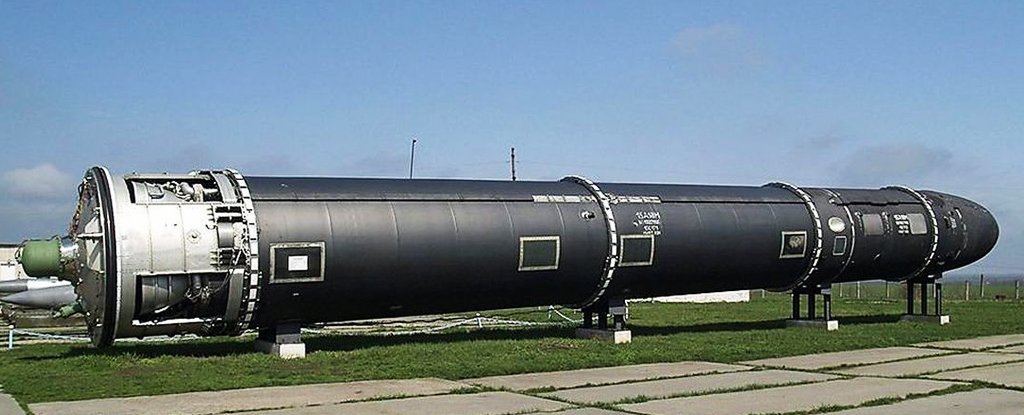
The launch should also not be confused with Russia’s RS-28 Sarmat programme.
Sarmat is a much larger, heavy, silo-based ICBM designed to replace the Soviet-era R-36M2 Voevoda.
Unlike the missile used in Friday’s announcement, Sarmat is a liquid-fuel, silo-based system.
Russia conducted a reported successful Sarmat test from Plesetsk in May 2026, although independent confirmation of the Russian government’s assessment was limited.
The distinction matters because Russia is modernizing several different components of its strategic missile force simultaneously.
The Sarmat programme addresses the heavy ICBM component.
Yars-type systems provide a more mobile, solid-fuel component.
Together they give Moscow a diversified land-based deterrent.
Why Solid Fuel Matters
Solid-fuel missiles have operational advantages.
They can generally be maintained in a ready-to-launch condition without the same fueling procedures associated with liquid-fuel systems.
That makes them particularly useful for mobile strategic systems.
A mobile solid-fuel ICBM can therefore combine:
high readiness + mobility + long range + nuclear payload capability.
Russia has invested heavily in this combination.
The United States is pursuing its own modernization programme through the LGM-35A Sentinel, which is intended to replace the Minuteman III ICBM force.
That means both major nuclear powers are spending heavily to maintain the land-based component of their strategic deterrents.
The Bigger Issue Is the End of the Old Arms-Control Framework
There is another reason today’s launch deserves attention.
The last remaining US-Russian strategic arms-control treaty, New START, expired in February 2026.
That removed the formal framework that had limited deployed US and Russian strategic nuclear arsenals for years.
The absence of legally binding limits creates a different strategic environment.
A missile test that would once have been viewed largely through the prism of treaty compliance is now taking place in an environment where both sides have greater freedom to determine the future size and composition of their strategic forces.
That does not mean Russia is suddenly preparing for nuclear war.
It means the strategic modernization race has fewer institutional guardrails.
Why Russia Keeps Testing Its ICBMs
A nuclear deterrent only works if its operator believes the systems will function when required.
Routine testing helps verify:
- missile reliability;
- guidance;
- propulsion;
- launch procedures;
- communications;
- crew readiness;
- and the broader command structure.
That is why major nuclear powers regularly conduct missile tests even when there is no immediate intention to use nuclear weapons.
The distinction between testing for deterrence and preparing for war is therefore crucial.
Friday’s launch, by itself, does not establish that Russia intends to escalate militarily.
But the Timing Still Matters
The test comes at a particularly tense moment for Russia and the West.
The war in Ukraine continues.
Moscow and European governments remain involved in increasingly confrontational military planning.
Russia has also recently threatened possible strikes against British military targets over Ukraine’s use of British-supplied Storm Shadow missiles.
That does not prove that Friday’s ICBM launch was directly linked to the latest UK-Russia confrontation.
There is no public evidence establishing such a connection.
But the broader strategic environment makes every major Russian nuclear-force activity more closely watched.
What the Mobile Launch Exercise Tells NATO
For NATO planners, the mobility component may be more important than the launch itself.
A fixed missile silo has a known location.
A mobile missile force does not have the same vulnerability.
In a crisis, NATO would need to locate, monitor and potentially track mobile launchers across enormous areas.
That creates a significant intelligence challenge.
Russia’s geography makes that problem even harder.
Its strategic missile units operate across vast areas, and the country has substantial territory in which mobile systems can disperse.
It Also Shows Why Intelligence Matters More Than Missile Numbers
A strategic missile is only one part of the equation.
An adversary needs to know:
- where it is;
- whether it is operational;
- whether it has moved;
- what orders it has received;
- and whether it is preparing for launch.
That requires satellites, aircraft, electronic intelligence and other surveillance capabilities.
The growing importance of space-based intelligence is therefore closely connected to the modernization of nuclear forces.
The launch from Plesetsk also highlights why Russia continues to treat its strategic missile forces as a central pillar of national defence.
Russia’s Nuclear Force Is Becoming More Diverse
Moscow’s strategic arsenal is not based on one missile.
It includes:
Land-based ICBMs
Including mobile and silo-based systems.
Submarine-launched ballistic missiles
Carried by Russia’s strategic ballistic-missile submarines.
Strategic bombers
Aircraft capable of delivering long-range nuclear weapons.
The purpose of this triad is redundancy.
If one component becomes vulnerable, the others preserve the country’s ability to retaliate.
This is the underlying logic of nuclear deterrence.
Why the Test Is Relevant to Russia’s Ukraine War
There is also an important distinction between Russia’s conventional war in Ukraine and its strategic nuclear force.
Russia has extensively used conventional missiles and drones in the Ukraine war.
But an ICBM test is fundamentally different.
It is primarily about strategic deterrence, not battlefield operations in Ukraine.
The missile launched from Plesetsk was not being tested as a weapon for use against Ukrainian forces.
It was being tested over Russia’s strategic missile test corridor toward Kura.
That distinction should remain clear.
What Could Happen Next?
Several developments are worth watching.
More ICBM tests
Russia is likely to continue testing strategic missiles as it maintains and modernizes its nuclear forces.
Greater mobile-force exercises
The redeployment element of Friday’s exercise could be repeated because mobility is central to the survivability of Russia’s road-mobile systems.
Continued Sarmat testing
The Sarmat programme remains important because Moscow wants to replace aging heavy ICBMs.
More US-Russian modernization
With New START gone, Washington and Moscow have fewer formal constraints on future strategic-force decisions.
More nuclear signalling
As tensions with Western countries remain high, strategic weapons testing can also serve a signalling function—even when the immediate purpose is technical.
What This Launch Does Not Mean
It is equally important not to overstate the significance.
The launch does not automatically mean:
- Russia is preparing to use nuclear weapons;
- Moscow is beginning a new nuclear crisis;
- Russia has deployed a new ICBM;
- the missile was a Sarmat;
- or the launch was directly connected to the Ukraine war.
The Russian Defense Ministry described the exercise as a test of the missile system’s characteristics and the readiness of a mobile launch unit.
Those are the facts currently available.
The Real Significance: Russia Is Practicing for the Worst Case
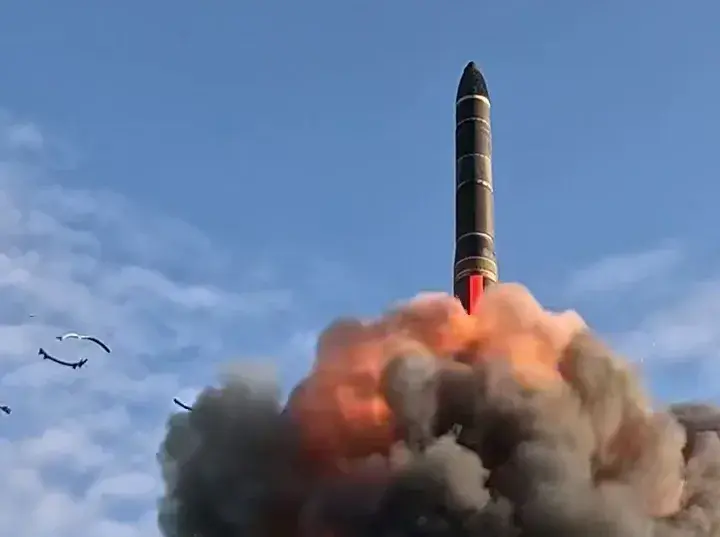
The deeper message is about preparedness.
Russia is demonstrating that its Strategic Missile Forces continue to practice the core tasks required of a mobile nuclear force:
move, disperse, prepare and launch.
That is exactly what strategic missile units are expected to do.
And with the old arms-control framework no longer in place, such activities deserve more attention than they might have received several years ago.
Final Analysis
Russia’s latest ICBM launch is best understood as a demonstration of continuity and readiness rather than an immediate escalation.
The Russian Defense Ministry says a solid-fuel, mobile ICBM was launched from Plesetsk and that training warheads reached the Kura range in Kamchatka. The Strategic Missile Forces also practiced moving a launch battery to a remote location before conducting the launch.
The missile’s identity remains officially undisclosed.
That prevents a definitive conclusion that the launch involved a Yars, even though the characteristics described are consistent with Russia’s mobile solid-fuel ICBM force.
The more important point is broader.
Russia continues to maintain a nuclear force built around mobility, survivability and multiple delivery systems, while the United States is simultaneously modernizing its own nuclear triad.
The expiration of New START has removed the final major treaty framework that constrained the two countries’ strategic arsenals.
That creates a new environment in which missile tests are no longer just technical events.
They are also pieces of a much larger question:
What will the US-Russian nuclear balance look like in the post-New START era?
Friday’s launch does not answer that question.
But it shows that Russia is continuing to invest in the systems it believes will underpin its strategic deterrence for decades to come.