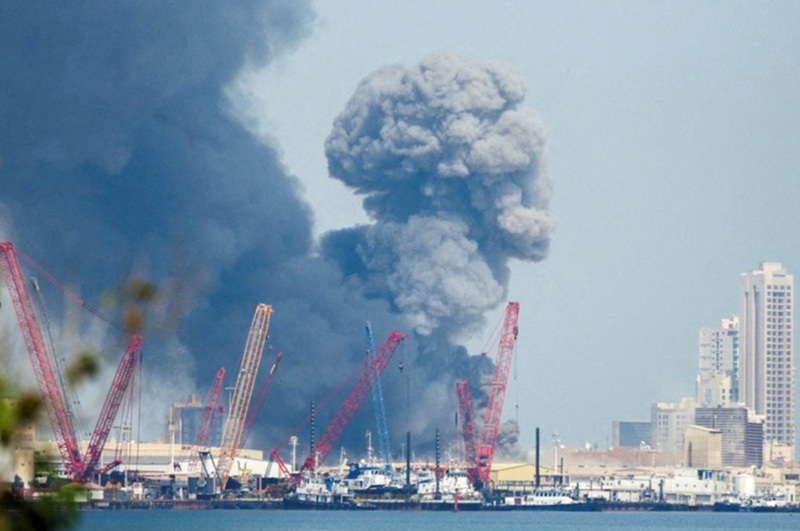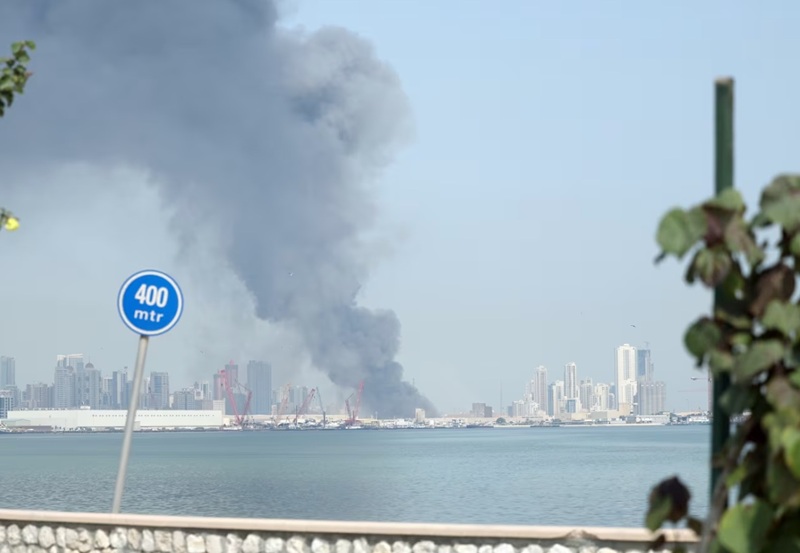

The Israeli Air Force carried out extensive strikes across Iran on Saturday morning in what officials described as an effort to eliminate senior political and military leadership — including Supreme Leader Ali Khamenei.
According to Israeli and U.S. officials cited in media reports, the coordinated operation marks one of the most ambitious attempts to destabilize Iran’s ruling structure since the 1979 Islamic Revolution.
Objective: Regime Destabilization
An Israeli official stated that the broader objective is to create conditions for the downfall of Iran’s leadership.
“The goal is to create all the conditions for the downfall of the Iranian regime,” the official said, adding that the outcome would also depend on whether the Iranian public mobilizes internally.
This signals a shift from purely military deterrence toward a potential regime-change strategy.
Leadership Targets Identified
Israeli officials said the strikes targeted the entire Iranian leadership apparatus — political and military.
Reportedly targeted individuals include:
- Masoud Pezeshkian
- Ahmad Vahidi
- Ali Shamkhani
- Mahmoud Ahmadinejad
Israeli sources also indicated that locations linked to Khamenei’s residence and government compound were struck.
However, officials acknowledged that it may take several hours to determine which, if any, senior figures were killed.
Division of Roles: U.S. and Israeli Focus Areas
A senior U.S. official told reporters that American strikes are primarily targeting Iran’s missile program and launch infrastructure.
In contrast, Israeli operations are focused on two tracks:
- Targeting missile capabilities
- Eliminating senior Iranian leadership
This dual approach suggests a coordinated strategy aimed at both degrading military capabilities and destabilizing political command structures.
Netanyahu and Trump Statements
In a public address, Israeli Prime Minister Benjamin Netanyahu said:
“Our joint action will create the conditions for the brave Iranian people to take their destiny into their own hands.”
He called on various ethnic communities within Iran — Persians, Kurds, Azeris, Baluchis, and Ahwazis — to seek political change.
Meanwhile, U.S. President Donald Trump urged Iranian civilians to remain indoors during the bombing campaign and suggested that, once operations conclude, they should “take over” their government.
His remarks strongly indicate support for internal political upheaval following military pressure.
Strategic Implications
If confirmed, direct targeting of Iran’s Supreme Leader would represent a dramatic escalation in Middle Eastern conflict dynamics.
Potential implications include:
- Intensified Iranian retaliation
- Expansion of hostilities across the Gulf region
- Increased risk to U.S. troops and allies
- Mobilization of Iranian proxy networks
- Heightened regional polarization
Targeting leadership rather than solely infrastructure reflects a high-risk strategy aimed at rapid destabilization.
Uncertainty Remains
Iranian officials have confirmed that multiple senior figures were targeted, but casualty confirmations remain unclear.
The next 24–72 hours will likely determine:
- The survival or loss of key Iranian officials
- The scale of Iran’s retaliation
- Whether regional actors escalate or attempt mediation
Conclusion
The latest Israeli air campaign represents a significant shift in scope and intent. By directly targeting Iran’s senior leadership while the U.S. focuses on missile infrastructure, the operation blends military degradation with political destabilization.
Whether this strategy results in regime collapse, prolonged regional war, or controlled escalation remains uncertain. What is clear is that the Middle East has entered one of its most volatile moments in decades.