The United States is expanding its military effort to keep the Strait of Hormuz open, with CENTCOM commander Admiral Brad Cooper announcing that more than one billion barrels of crude oil have moved through the strategic waterway under coordinated protection in recent months.
Update from CENTCOM Commander: pic.twitter.com/PTX6n9fn56
— U.S. Central Command (@CENTCOM) September 19, 2026
In a video message released on September 19, Cooper said U.S. Central Command forces had supported more than 2,000 commercial ship transits through the Strait of Hormuz while working with Gulf states, other U.S. agencies, insurers and shipping companies to increase maritime traffic.
But the most significant part of the announcement was not the oil figure.
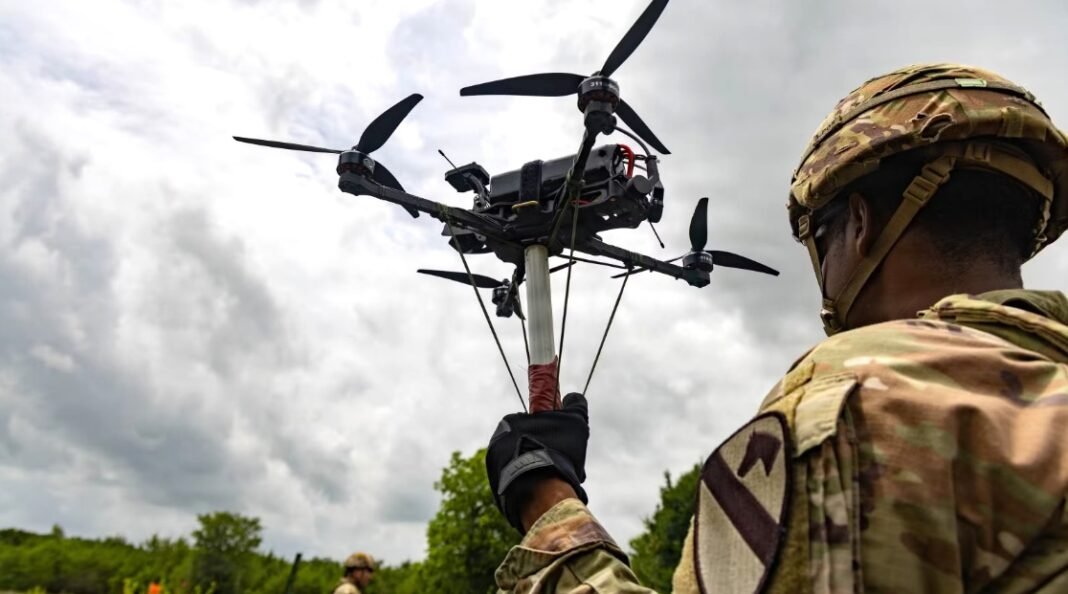
Cooper said the United States is simultaneously strengthening regional air defences and forming a new coalition attack-drone unit, adding a new offensive unmanned capability to the broader effort to secure the waterway.
“We’re also working with every partner in the region, enhancing their air defense, forming a new coalition attack drone unit, and keeping the Strait of Hormuz and surrounding waters open and clear,” Cooper said.
The development points to a broader U.S.-led military framework in the Gulf in which maritime security, air defence and unmanned warfare are increasingly being integrated.
US says more than 1 billion barrels have crossed Hormuz
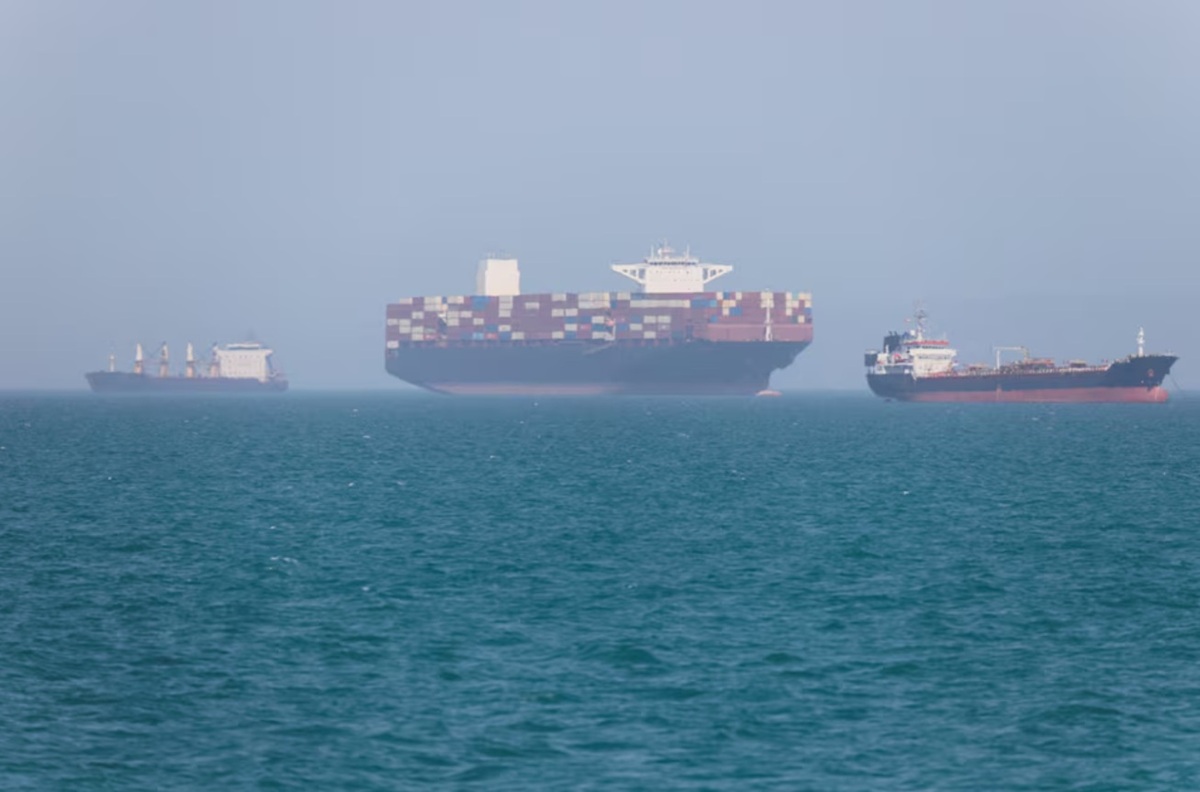
According to Cooper, more than one billion barrels of crude oil from Gulf producers have passed through the Strait of Hormuz in the last several months with CENTCOM support.
He also said U.S. and partner forces have assisted more than 2,000 commercial vessel transits through the waterway.
CENTCOM says the main shipping lanes have been cleared of mines, allowing commercial traffic to resume through portions of the strategically important passage.
The commander also claimed that Iran had exported zero barrels during the period because of what he described as an “ironclad blockade.”
That characterization is a U.S. military claim rather than an independently established description of the entire maritime situation.
Independent shipping data indicates that traffic through Hormuz remains significantly disrupted compared with normal levels. Kpler data cited by Reuters showed only four commodity vessels crossing the strait on September 17, compared with a 10-day average of 16. Some vessels have also reportedly switched off transponders, making precise traffic measurements more difficult.
The apparent difference between the CENTCOM figures and daily vessel-count data is important. Large volumes of oil can move through a relatively limited number of very large tankers, while individual daily transit counts can fluctuate sharply.
CENTCOM says Hormuz traffic is gaining momentum
Cooper said the volume of crude oil, cargo and liquefied natural gas moving through the Strait during the two weeks preceding his statement was higher than at any point during the previous six months.
Satellite-based shipping analysis had already shown signs of renewed tanker movement. TankerTrackers reported on September 15 that very large crude carriers were moving in both directions through Hormuz during daylight hours.
However, the waterway remains far from normal.
The Strait of Hormuz has historically carried a major share of global oil and LNG shipments. Continuing restrictions therefore have consequences well beyond the Gulf, affecting energy prices, shipping insurance, tanker availability and global supply chains.
The current U.S. effort is consequently aimed at restoring not merely military access but commercial confidence in the waterway.
New coalition attack-drone unit marks a major shift

The announcement of a new coalition attack-drone capability is one of the most important elements of Cooper’s message.
CENTCOM had already announced in August that it was establishing Task Force Falcon Strike, described as the first multinational, multidomain attack-drone task force under U.S. Central Command.
The planned force will combine unmanned systems operating above, on and below the sea, bringing together U.S. and regional military personnel. CENTCOM said the task force is intended to scale attack-drone capabilities across the Middle East and develop a unified multinational deterrent.
Falcon Strike builds on Task Force Scorpion Strike, which CENTCOM described as the U.S. military’s first dedicated one-way attack-drone squadron in the Middle East.
Scorpion Strike has already been used in regional operations, including the launch of an aerial attack drone from a U.S. Navy warship and the employment of unmanned attack vessels against Iranian port facilities, according to CENTCOM.
The significance of Falcon Strike is its multinational structure.
Rather than relying exclusively on U.S. unmanned platforms, Washington is seeking to integrate systems and personnel from regional partners into a common operational framework.
That could give CENTCOM greater flexibility in monitoring and responding to threats across the Gulf, Red Sea and surrounding maritime approaches.
Why attack drones matter in the Hormuz fight
The Strait of Hormuz presents a particularly difficult environment for conventional military forces.
The waterway is narrow, heavily trafficked and surrounded by territory from which missiles, drones, fast attack craft and other asymmetric weapons can be employed.
Unmanned systems offer several advantages in such an environment.
They can conduct surveillance for extended periods, monitor maritime traffic, identify suspicious activity and potentially attack relatively small or mobile targets without exposing crewed aircraft or naval personnel to the same level of risk.
The combination of aerial drones, unmanned surface vessels and underwater systems could also allow coalition forces to build a more persistent surveillance network around the shipping lanes.
That is particularly relevant after a series of incidents involving Iranian and U.S. unmanned systems.
The U.S. military recently said it destroyed two Iranian small boats after they attempted to seize an American Saildrone in the Persian Gulf. Iran disputed the U.S. account and said the boats were fishing vessels.
The confrontation illustrated how unmanned maritime technology has become part of the wider contest around the Gulf.
US is building a layered defence around Hormuz
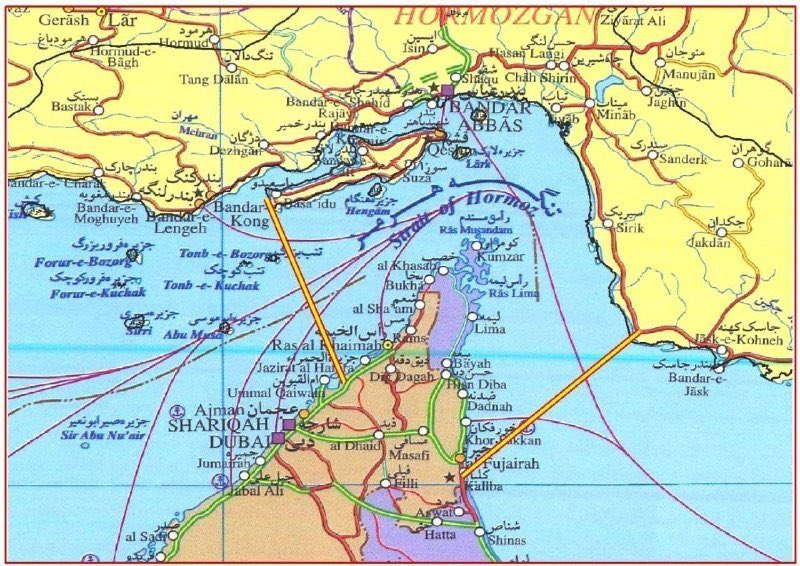
The new attack-drone unit is only one component of the wider U.S. effort.
Cooper said CENTCOM is also working with regional partners to strengthen their air-defence capabilities.
That includes improving the ability of Gulf states to detect and intercept drones and missiles before they can reach ports, energy infrastructure or population centers.
The approach reflects the changing character of the regional threat.
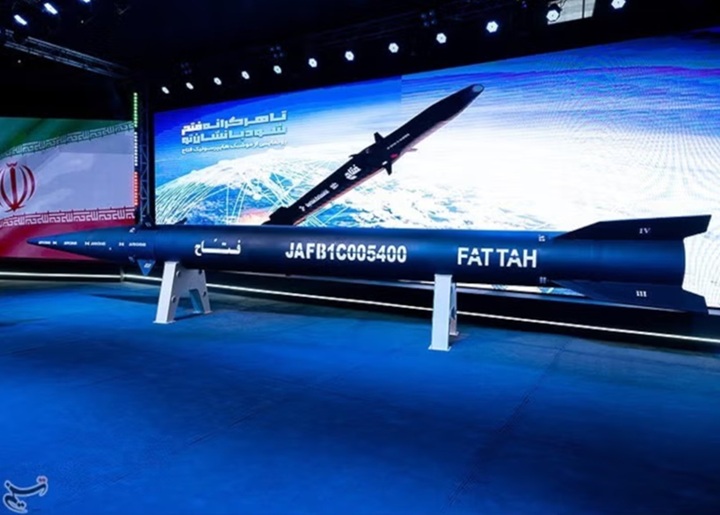
Iran and regional armed groups have increasingly relied on relatively inexpensive drones and missiles to threaten much more expensive military and commercial infrastructure.
The U.S. and Gulf states have consequently placed greater emphasis on integrated air and missile defence, early warning and counter-drone capabilities.
CENTCOM and Saudi Arabia had already conducted major counter-drone exercises, including the Red Sands series, which has focused on detecting, tracking and defeating drone threats.
The new multinational attack-drone force represents the other side of that equation: not simply defending against unmanned attacks, but developing an integrated offensive unmanned capability.
Hormuz is now part of a wider regional maritime crisis
The pressure on Hormuz is occurring alongside a rapidly deteriorating security environment around the Red Sea and Bab al-Mandab.
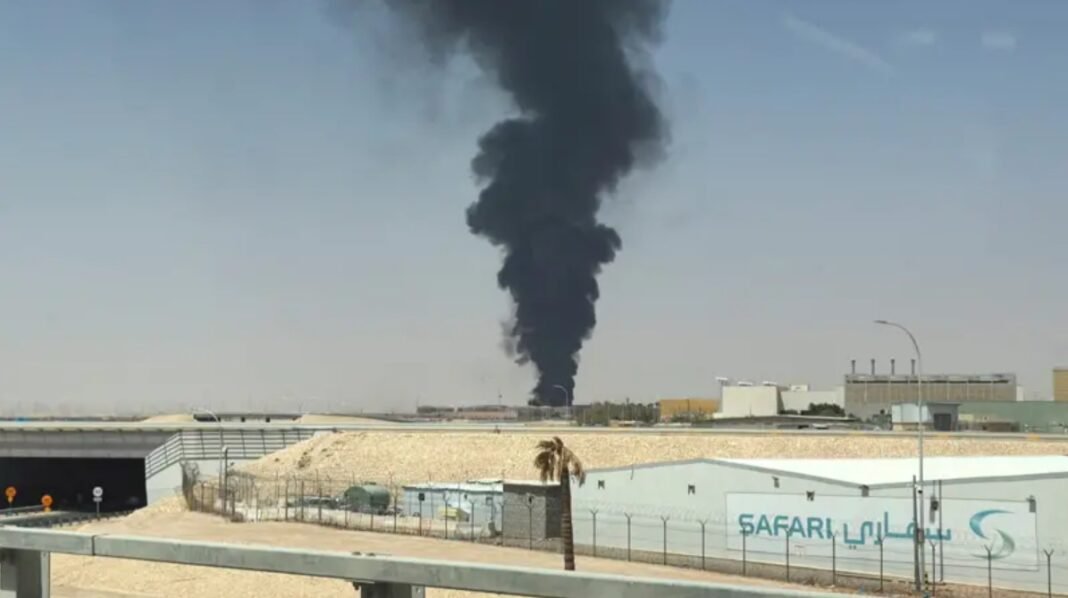
Houthi forces have intensified attacks on Saudi Arabia and expanded pressure on maritime routes around Yemen. Reuters reported on September 19 that Saudi authorities issued aerial attack warnings around Riyadh, while smoke and flames were seen near the capital’s main airport.
The simultaneous pressure around Hormuz and Bab al-Mandab creates a difficult strategic environment for Gulf energy exporters.
Saudi Arabia has alternative export infrastructure, including pipelines designed to bypass Hormuz, but recent attacks have also threatened those routes. Reuters reported that Saudi Arabia shut its East-West oil pipeline after drone attacks it attributed to militants operating from Iraq.
The result is a regional security problem involving multiple maritime and energy corridors rather than a single chokepoint.
Pakistan and the Gulf security equation
The developments also have implications for Pakistan.
Islamabad has reaffirmed support for Saudi Arabia’s sovereignty and territorial integrity while emphasizing the importance of diplomacy and freedom of navigation.
Pakistan is also part of the emerging Saudi-led Makkah defence framework, making the future of Gulf security arrangements particularly relevant for Islamabad.
The United States, meanwhile, is increasingly relying on Gulf partners for regional air defence and maritime security while expanding multinational military structures.
Cooper’s reference to working with all six GCC members is significant because it suggests the current effort is being framed as a collective regional security operation rather than a purely American naval deployment.
The new battlefield is increasingly unmanned

The development of Task Force Falcon Strike points to a broader transformation in the way the United States and its regional partners are preparing for conflict.
The Gulf has become an important testing ground for unmanned warfare.
Drones can be used for reconnaissance, maritime surveillance, electronic warfare and attack missions. Unmanned surface and underwater vehicles can operate in areas where traditional naval platforms may face greater risks.
For CENTCOM, the objective appears to be creating a network in which manned aircraft, air-defence systems, naval forces and unmanned platforms operate together.
That could be particularly important around Hormuz, where geography gives relatively small forces the ability to threaten major commercial traffic.
Hormuz remains open, but the crisis is not over
Admiral Cooper’s announcement represents a significant operational milestone for the United States: more than one billion barrels of crude moving through Hormuz, more than 2,000 assisted commercial transits and the reported clearance of primary shipping lanes from mines.
But the latest shipping data also shows that normal traffic has not yet returned.
The U.S. military is therefore pursuing a dual strategy: increase the number of commercial vessels able to use the waterway while simultaneously making the military environment around those vessels more difficult for Iran or other hostile actors to disrupt.
The formation of a multinational attack-drone task force adds a new dimension to that effort.
If Falcon Strike develops as planned, the Strait of Hormuz could become one of the first major theatres where a multinational military coalition combines conventional naval protection with large-scale deployment of aerial, surface and undersea unmanned systems.
For the global energy market, the immediate measure of success will remain simple: how much oil, LNG and commercial cargo can safely pass through the Strait.
For the military planners in CENTCOM, however, the larger objective is to ensure that the next disruption is harder to achieve—and that the forces protecting the world’s most important energy corridor have more options when it occurs.