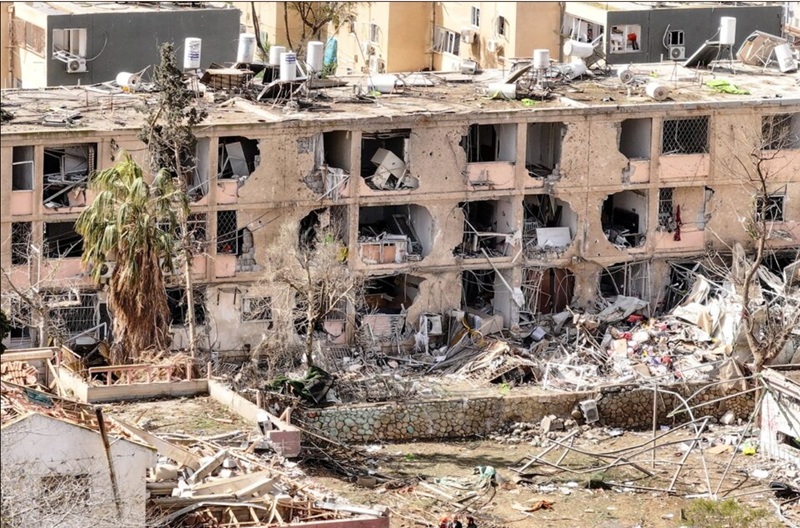
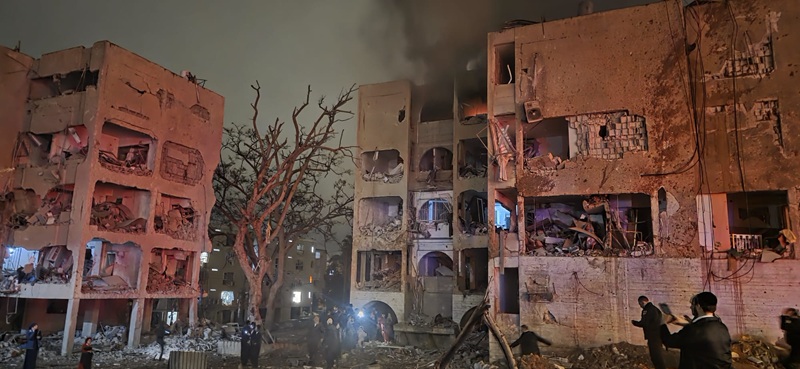
Iran has reportedly launched a retaliatory missile strike near Israel’s Dimona nuclear facility, marking a significant escalation in the ongoing conflict and raising concerns about a shift toward nuclear-linked deterrence in the Middle East.
The attack followed U.S.-Israeli strikes earlier the same day on Iran’s Natanz uranium enrichment facility, with additional links to earlier operations targeting the Bushehr nuclear complex.
At least 100 people were injured in the Dimona-area strike, according to reports.
Very close footage of Iranian missile hitting Dimona tonight. https://t.co/k0eps71ROl pic.twitter.com/sDso1Zqv3E
— Clash Report (@clashreport) March 21, 2026
A New Phase: Nuclear Sites Enter the Battlefield
The strike represents a critical turning point because it directly connects nuclear-related infrastructure on both sides of the conflict.
Key developments include:
- U.S.-Israel strike on Natanz (uranium enrichment hub)
- Earlier targeting of Bushehr (civilian nuclear power plant)
- Iranian retaliation near Dimona (Israel’s primary nuclear research center)
This sequence creates what analysts describe as a “nuclear-shadow conflict”, where symbolic strategic sites become central to escalation dynamics.
Why Dimona Matters
Dimona hosts the Shimon Peres Negev Nuclear Research Center, widely believed to support Israel’s undeclared nuclear arsenal.
Although Israeli authorities stated:
- The nuclear facility itself was not hit
- No radiation leaks were detected
…the proximity of the strike is strategically significant.
Even a near miss challenges the perception of absolute protection around Israel’s most sensitive infrastructure.
Hypersonic Missile Claims Intensify Concerns
Reports suggest Iran may have used hypersonic-capable missiles, though this remains unconfirmed by independent sources.
If true, such weapons would:
- Travel at extreme speeds (Mach 5+)
- Use maneuverable flight paths
- Be designed to evade advanced missile defenses
Even unverified claims of hypersonic use carry major implications because they:
- Influence military planning
- Signal technological escalation
- Undermine confidence in air defense systems
Testing Israel’s Missile Defense Shield
The strike has raised questions about the effectiveness of Israel’s multi-layered air defense systems, which are designed to intercept:
- Ballistic missiles
- Cruise missiles
- Drone threats
The fact that missiles reached the Dimona area suggests:
- Possible saturation or penetration of defenses
- Reduced reaction time due to advanced missile profiles
- Growing complexity of interception scenarios
Strategic Signaling Over Tactical Gain
Military analysts emphasize that the strike was likely symbolic rather than tactical.
Key objectives appear to include:
- Demonstrating reach into sensitive Israeli territory
- Signaling retaliation for nuclear facility attacks
- Reinforcing deterrence through high-value targeting
In modern warfare, perception of vulnerability can be as impactful as actual damage.
The Natanz and Bushehr Connection
Iran explicitly linked the Dimona strike to attacks on its nuclear infrastructure:
Natanz
- Core uranium enrichment facility
- Central to Iran’s nuclear program
- Recently damaged but without radiation leakage
Bushehr
- Civilian nuclear power plant
- Highly sensitive due to reactor risk
- Any strike carries international implications
By linking both sites to its retaliation, Iran signaled that all nuclear-related targets are now within scope.
Global Alarm and Strategic Risk
The incident has triggered concern among global defense analysts and international organizations.
Key risks include:
- Escalation into broader strategic confrontation
- Increased involvement of international monitoring bodies like the IAEA
- Heightened pressure on all parties to respond
The inclusion of nuclear-associated sites raises the stakes far beyond conventional warfare.
A Dangerous Deterrence Cycle
The conflict is now entering a feedback loop:
- Strike on nuclear-related site
- Retaliation targeting another nuclear-linked location
- Increased pressure for further escalation
This cycle increases the risk of:
- Miscalculation
- Unintended escalation
- Strategic-level confrontation
Conclusion
Iran’s strike near Dimona marks a pivotal moment in the Israel-Iran conflict.
By linking retaliation directly to nuclear infrastructure, both sides are moving into a phase where strategic signaling outweighs battlefield objectives.
Even without direct damage to nuclear facilities, the implications are profound—reshaping deterrence, raising global concern, and increasing the risk of a broader regional crisis.