An opinion article published in the Indian newspaper The Tribune, titled “A Naval Race with Strategic Stakes,” argues that India must urgently modernise and expand its navy to respond to China’s growing maritime presence in the Indian Ocean Region (IOR).
Written by strategic affairs commentator Rajat Pandit, the article claims China’s expanding naval capabilities and partnerships with countries such as Pakistan require New Delhi to accelerate warship construction, strengthen defence cooperation with Indo-Pacific partners and increase long-term military investment.
India’s systemic inability to formulate & execute long-term plans to build military capabilities to tackle collusive #ChinaPakistan threat evident again with Govt planning acquisition of 114 #Rafale jets after scrapping similar project a decade ago! My op-ed piece @DeccanHerald pic.twitter.com/OWjTONFbgD
— Rajat Pandit (@IamRajat_Pandit) January 23, 2026
As an opinion piece, the article reflects the author’s assessment rather than official Indian government policy.
What Does the Indian Report Claim?
According to the report, India faces increasing strategic pressure from China’s expanding naval footprint stretching from the western Pacific to the Indian Ocean.
The article argues that China is strengthening its maritime position through:
- A rapidly growing blue-water navy.
- Overseas military and logistics facilities.
- Expanding naval operations in the Indian Ocean.
- Close defence cooperation with Pakistan.
- Increasing influence across the wider Indo-Pacific.
It also urges India to deepen cooperation with countries including the United States, Japan, Australia, France, Indonesia and South Korea to counter Beijing’s regional influence.
Concerns Over Pakistan-China Defence Cooperation
One of the central themes of the Indian article is the growing defence partnership between Pakistan and China.
The report specifically highlights:
- Pakistan’s acquisition of Hangor-class submarines from China.
- Chinese naval access to facilities including Gwadar.
- Expanding military cooperation between the Pakistan Navy and the People’s Liberation Army Navy (PLAN).
From India’s perspective, these developments are presented as factors that could reduce New Delhi’s traditional maritime advantage in the Indian Ocean.
However, Pakistan has consistently described its naval modernisation programme as part of a defensive strategy aimed at protecting its coastline, maritime trade routes and Exclusive Economic Zone (EEZ), rather than altering the regional balance through offensive military expansion.
Hangor-Class Submarines: A Major Capability Upgrade
The Indian article identifies Pakistan’s Hangor-class submarines as a key element of changing regional naval dynamics.
Pakistan’s Hangor programme includes:
- Eight diesel-electric submarines.
- Air Independent Propulsion (AIP).
- Improved underwater endurance.
- Reduced acoustic signature.
- Enhanced anti-surface and anti-submarine warfare capabilities.
Islamabad has maintained that these submarines are intended to strengthen maritime deterrence and safeguard sea lines of communication in the Arabian Sea.
India’s Naval Modernisation Challenges
The report argues that India’s naval expansion has slowed due to procurement delays and budget constraints.
Among the concerns raised are:
- Delays in submarine construction.
- Slow progress on next-generation destroyers.
- Pending frigate programmes.
- Lack of approval for a second indigenous aircraft carrier.
- A shortage of conventional submarines.
According to the author, these delays could affect India’s long-term objective of maintaining a larger blue-water fleet capable of operating across the Indo-Pacific.
China’s Naval Growth Continues
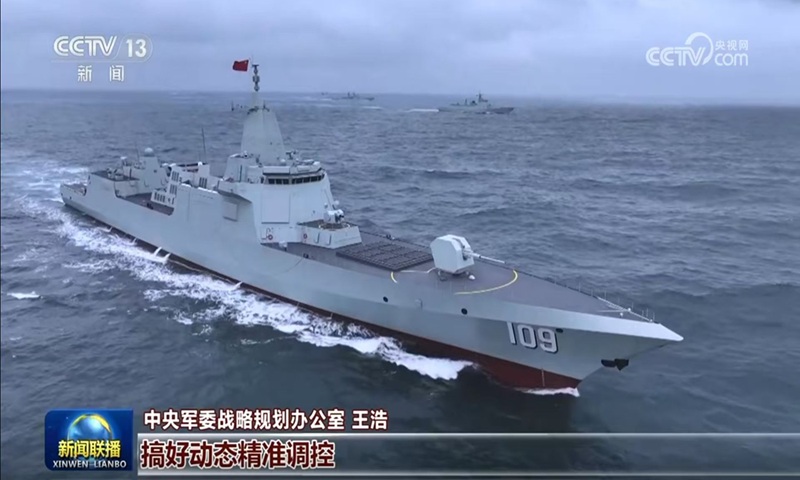
China today operates the world’s largest navy by the number of battle-force ships.
Over the past decade, the People’s Liberation Army Navy has expanded rapidly through:
- New aircraft carriers.
- Modern destroyers.
- Advanced frigates.
- Nuclear and conventional submarines.
- Amphibious assault ships.
- Long-range logistics vessels.
Beijing says these capabilities are necessary to protect its maritime trade, overseas interests and national security.
Regional observers, however, interpret the expansion differently depending on their respective security priorities.
Pakistan’s Perspective: Maritime Security, Not Naval Rivalry
From Pakistan’s perspective, maritime modernisation is driven primarily by evolving security requirements in the Arabian Sea rather than participation in an arms race.
Several factors shape Islamabad’s naval planning:
- Protection of the China-Pakistan Economic Corridor (CPEC) maritime routes.
- Security of Gwadar Port.
- Safeguarding energy imports through the Arabian Sea.
- Counter-piracy and maritime security operations.
- Maintaining a credible conventional deterrent.
Pakistan has repeatedly stated that its defence cooperation with China is based on bilateral security requirements and is not directed at any single country.
Similarly, China has consistently described its military cooperation with Pakistan as a normal partnership between sovereign states.
Indian Ocean Becoming Increasingly Competitive
The Indian Ocean has become one of the world’s most strategically significant maritime regions.
Several major powers—including the United States, China, India, France and the United Kingdom—maintain naval deployments or defence facilities across the region.
Growing competition is being driven by:
- Energy security.
- Protection of sea lines of communication.
- Maritime trade.
- Naval diplomacy.
- Freedom of navigation.
- Strategic competition among major powers.
This broader geopolitical context extends beyond bilateral India-China or India-Pakistan relations.
A Balanced Assessment
The Indian article raises legitimate concerns from New Delhi’s strategic perspective regarding fleet modernisation and evolving regional military balances.
At the same time, many of the developments highlighted—such as Pakistan’s submarine programme and China-Pakistan naval cooperation—have been publicly presented by Islamabad and Beijing as defensive measures linked to maritime security, trade protection and deterrence rather than preparations for offensive operations.
As with many strategic assessments published in national media, the report reflects one country’s security outlook. Regional military planning, however, is influenced by multiple perspectives, including those of Pakistan, China and other Indian Ocean states.
Strategic Outlook
Competition in the Indian Ocean is expected to intensify over the coming decade as regional navies modernise their fleets and invest in submarines, surveillance systems and maritime domain awareness.
For Pakistan, continued investment in platforms such as the Hangor-class submarines, alongside cooperation with China, forms part of a broader effort to enhance maritime security and protect national interests.
For India, the debate outlined in The Tribune reflects concerns about maintaining naval capabilities amid China’s expanding presence and an increasingly complex Indo-Pacific security environment.
The long-term stability of the Indian Ocean is likely to depend not only on naval modernisation but also on confidence-building measures, sustained dialogue and mechanisms to reduce the risk of maritime miscalculation.