The U.S. Army has reached a major milestone in its modernization of tactical precision-strike capabilities after successfully completing the first Lot Acceptance Tests (LAT) for the HERO 120 loitering munition under the Lethal Unmanned System (LUS) program.
Conducted on August 4, 2026, the testing confirmed that production-standard HERO 120 systems consistently meet the Army’s operational and quality requirements, enabling large-scale procurement under a $982 million Indefinite Delivery/Indefinite Quantity (IDIQ) contract awarded to Mistral Inc., with UVision serving as the system’s design authority.
The milestone moves the HERO 120 from prototype validation into sustained production and fielding, allowing the U.S. Army to place recurring delivery orders without repeating extensive qualification testing for each production batch.
What Is Lot Acceptance Testing?
Unlike developmental testing, which evaluates whether a weapon can perform its intended mission, Lot Acceptance Testing verifies that serially manufactured systems consistently match the approved production standard.
During the evaluation, multiple HERO 120 units completed a series of prescribed acceptance missions that examined:
- Assembly consistency
- Software configuration
- Seeker performance
- Datalink reliability
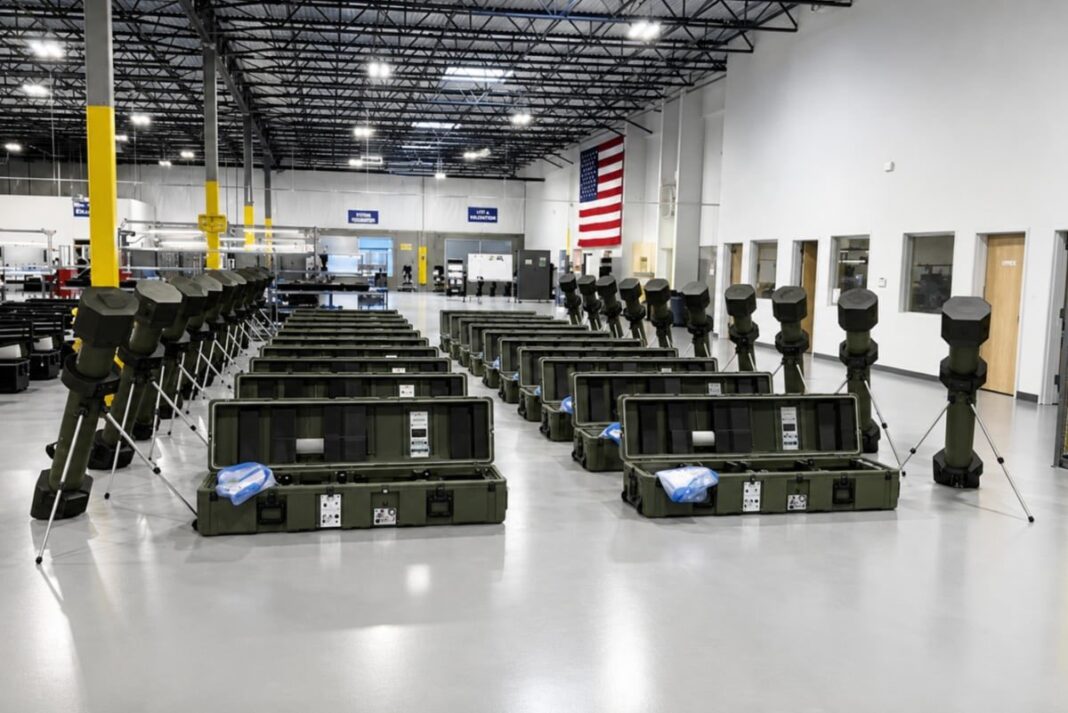
- Launcher compatibility
- Overall mission execution
Successful completion confirms that every production lot can be delivered to operational units while maintaining consistent performance and reliability.
A Key Step in the U.S. Army’s Drone Modernization
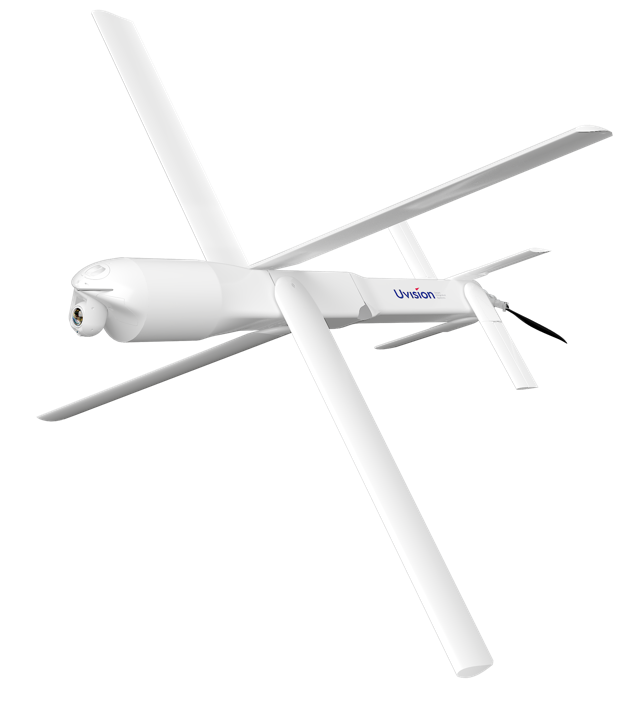
The HERO 120 forms part of the Army’s Lethal Unmanned System (LUS) initiative, designed to provide brigade, battalion and company-level formations with their own organic precision-strike capability.
Instead of relying exclusively on:
- Artillery
- Attack helicopters
- Fighter aircraft
- Long-range missile units
frontline formations will be able to independently detect, track and destroy targets using their own loitering munition.
This significantly shortens the traditional “sensor-to-shooter” timeline by placing reconnaissance and strike capabilities within the same tactical unit.
HERO 120 Specifications

The HERO 120 is a medium-class loitering munition optimized for precision attacks against both armored and high-value targets.
Key Specifications
- Weight: 24 kg
- Operational Range: Up to 60 km
- Flight Endurance: 60 minutes
- Warhead: Up to 4.5 kg
- Guidance: Electro-optical/infrared (EO/IR)
- Control: Man-in-the-loop
- Launch: Pneumatic launcher
- Propulsion: Electric motor
The munition can remain airborne for up to one hour while searching for suitable targets before the operator authorizes an attack.
How HERO 120 Differs from Traditional Missiles
One of the HERO 120’s defining advantages is its ability to delay target selection until after launch.
Unlike conventional anti-tank missiles such as the FGM-148 Javelin, which require the target to be selected before firing, the HERO 120 allows operators to:
- Search for targets after launch
- Observe the battlefield in real time
- Track moving vehicles
- Abort an attack
- Return to loiter mode
- Re-engage another target
This flexibility makes the system particularly valuable against fleeting targets that may only appear briefly on the battlefield.
Advanced Features
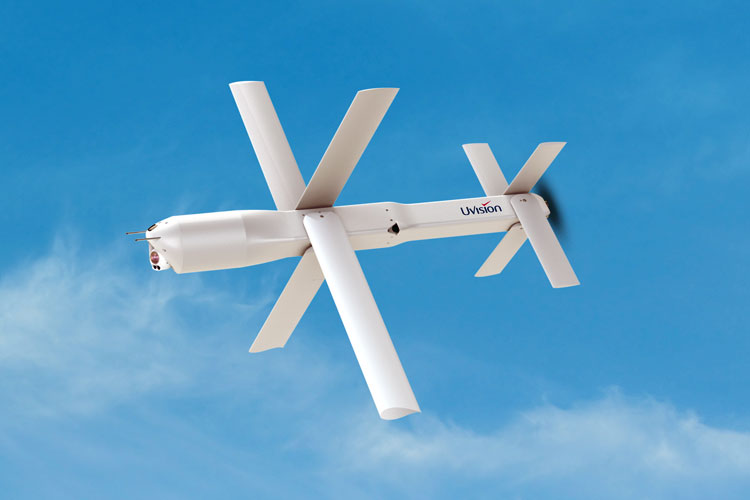
The HERO 120 incorporates several technologies designed for modern multi-domain operations.
Key capabilities include:
- AES-256 encrypted communications
- GPS-denied navigation capability
- AI-assisted target tracking
- Optional automatic target recognition
- Real-time full-motion video
- Live battlefield data transmission
- Operator-to-operator control transfer during flight
The ability to transfer control between units allows one formation to launch the munition while another assumes control later in the mission, extending operational reach and improving tactical flexibility.
Multiple Launch Options
The HERO 120 has been designed as a highly modular system.
According to the program documentation, it can be launched from:
- Individual soldiers
- Tactical vehicles
- Naval vessels
- Helicopters
- Multi-canister launchers
The system also complies with the U.S. Department of Defense’s Modular Open Systems Architecture (MOSA) standards, allowing integration with third-party command-and-control and intelligence systems.
Growing Maritime Role
The HERO 120 has already demonstrated maritime applications.
In 2023, the U.S. Marine Corps integrated the loitering munition onto its Long-Range Unmanned Surface Vessel (LRUSV) program.
An optionally manned vessel carrying eight HERO 120 munitions demonstrated the ability to engage both land and maritime targets while allowing remote operators to assume control of the drones during flight.
This capability significantly expands the system’s operational flexibility beyond traditional ground combat.
Military Advantages
The HERO 120 offers several operational advantages over traditional battlefield weapons.
Extended Reconnaissance and Strike
Units can observe targets for up to one hour before deciding whether to engage.
Organic Precision Fires
Frontline formations no longer need to depend entirely on higher headquarters for precision strike support.
Reduced Battlefield Signature
Electric propulsion and pneumatic launch reduce acoustic, thermal and launch signatures, improving survivability.
Flexible Target Engagement
Operators retain strike authority until the final seconds before impact, reducing the risk of collateral damage and enabling rapid mission changes.
Multi-Domain Employment
The system can support:
- Anti-armor operations
- Counter-artillery missions
- Electronic warfare suppression
- Air defense suppression
- Maritime strike missions
- Command post attacks
- Logistics interdiction
Strategic Significance
The successful completion of the first Lot Acceptance Tests represents more than a manufacturing milestone—it validates the U.S. Army’s broader approach to rapidly fielding mature unmanned systems through streamlined procurement.
Rather than developing an entirely new platform, the Army is leveraging a proven loitering munition and using a multi-year IDIQ contract to accelerate deliveries while ensuring consistent production quality. The program also reflects lessons from recent conflicts, where loitering munitions have demonstrated their effectiveness against armored vehicles, artillery, command posts, and air defense systems.
As the Army prepares for future high-intensity operations, the HERO 120 fills an important capability gap between shoulder-fired anti-tank missiles and higher-echelon fires. Its combination of long endurance, man-in-the-loop precision, modular integration, and repeatable production makes it a key component of the U.S. military’s evolving tactical strike architecture.