Pakistan has announced the implementation phase of the landmark Makkah Joint Defence Agreement, signaling that Islamabad, Saudi Arabia, and Türkiye are moving beyond the signing ceremony toward practical defence and security cooperation.
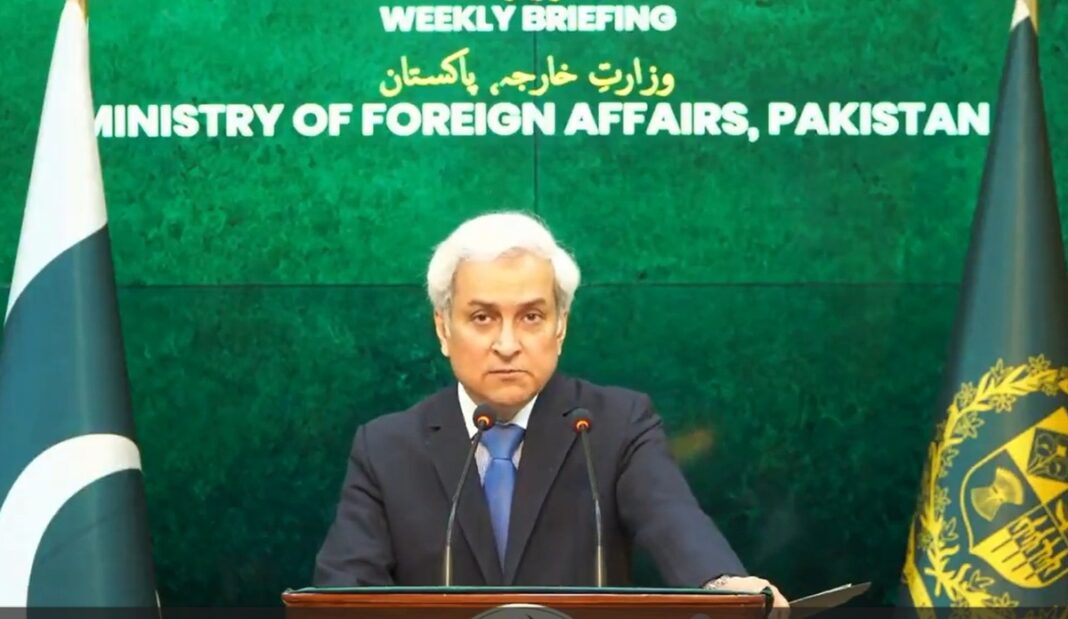
During the Ministry of Foreign Affairs’ weekly media briefing, the Foreign Office emphasized that Pakistan is fully committed to operationalizing the agreement while continuing diplomatic efforts to promote peace across the Middle East.
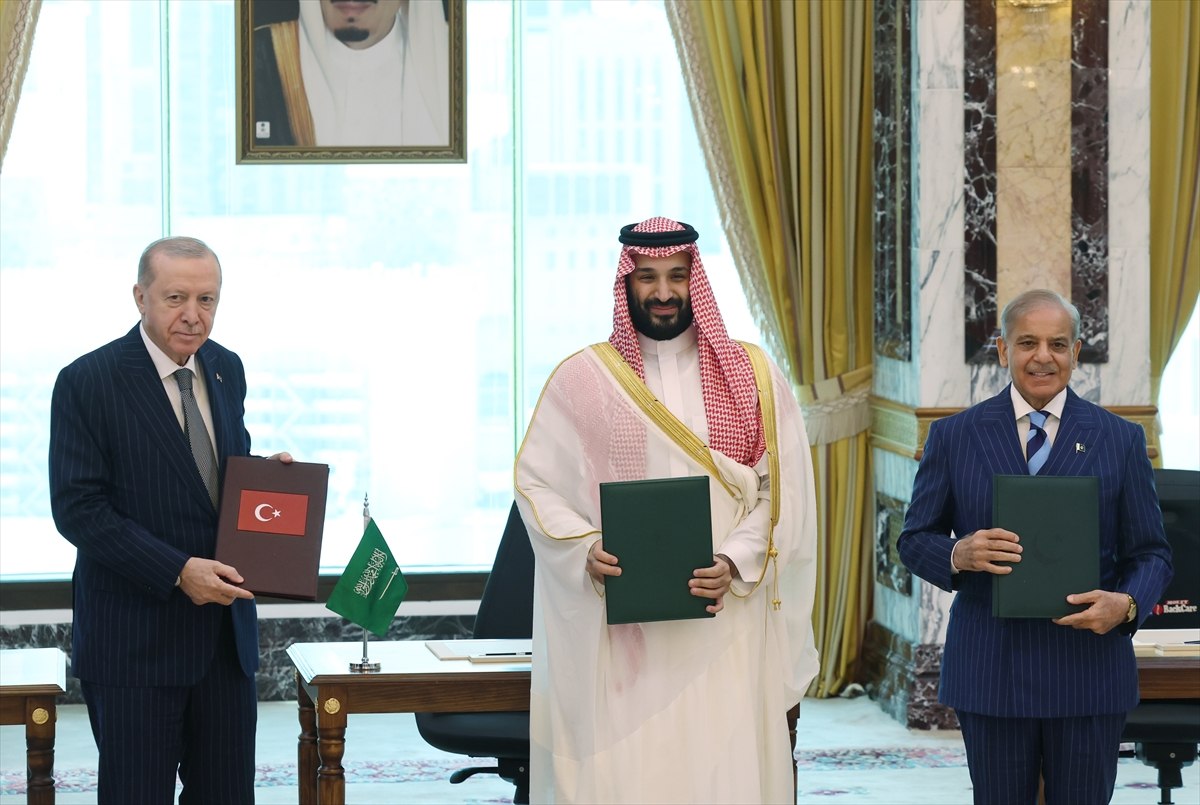
The remarks come less than a week after leaders of the three countries signed the Makkah Joint Defence Agreement in Saudi Arabia, a pact that establishes a framework for collective defence cooperation and coordinated responses to security threats.
Pakistan Ready to Implement Maritime Security Commitments
One of the clearest indications that implementation has begun came during the briefing when the Foreign Office confirmed Pakistan’s readiness to assist Saudi Arabia and coalition partners in safeguarding international waterways.
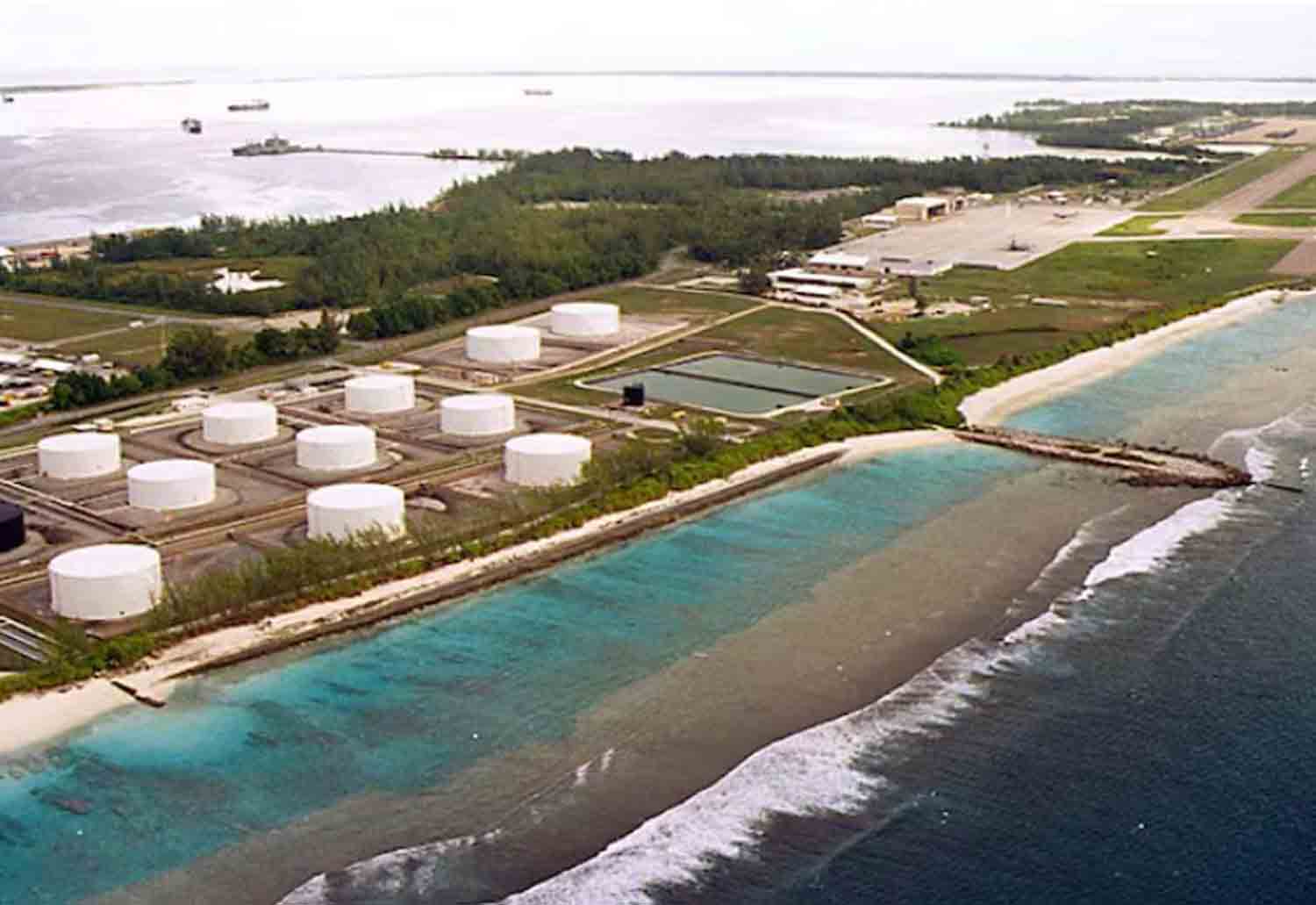
Responding to questions about the deadly Houthi attack on a commercial vessel in the Red Sea, the spokesperson said Pakistan supports freedom of navigation under international law and is prepared to help operationalize the maritime commitments linked to the new defence framework.
“Pakistan is a signatory to this coalition and we are ready and willing to assist Saudi Arabia and other coalition partners in the operationalization of this communiqué to preserve the safety and security of global supply chains and maritime traffic,” the spokesperson said.
The statement marks one of the first official references to the practical implementation of commitments following the signing of the Makkah Accord.
Defence Pact Designed for Collective Security
The Foreign Office reiterated that the agreement is purely defensive and is intended to strengthen collective deterrence rather than create an offensive military alliance.
According to the spokesperson, the agreement enables Pakistan, Saudi Arabia and Türkiye to:
- Strengthen collective defence cooperation
- Improve military coordination
- Jointly confront regional security threats
- Enhance strategic deterrence
- Promote regional peace and stability
Officials stressed that the agreement reflects decades of strategic cooperation among the three countries and is aimed at protecting member states against common security challenges.
More Countries May Join the Agreement
The Foreign Office also confirmed that the Makkah Joint Defence Agreement remains open for additional members.
Although officials declined to identify which countries could join in the future, they emphasized that the agreement has been designed as an inclusive regional security framework focused on collective peace and stability.
The spokesperson said any future expansion would remain consistent with the agreement’s defensive nature rather than transforming it into an offensive military bloc.
Pakistan Rejects Comparisons with Offensive Military Alliances
Responding to questions regarding foreign media commentary, the Foreign Office dismissed claims portraying the Makkah Agreement as an aggressive military alliance.
Officials stressed that the pact focuses on collective deterrence and defence cooperation, not military aggression.
The spokesperson said negative propaganda surrounding the agreement should be viewed in light of regional misinformation campaigns and reiterated that the agreement seeks to contribute to regional security instead of confrontation.
Internal Procedures Completed Before Signing
The Foreign Office also rejected suggestions that the agreement had bypassed Pakistan’s constitutional procedures.
According to the spokesperson, all required government processes under the Rules of Procedure were completed before the Prime Minister signed the agreement.
Officials further emphasized that the agreement enjoys unified support from Pakistan’s civilian and military leadership, rejecting speculation about differences within the country’s leadership over the accord.
Diplomatic Outreach Supporting Implementation
Alongside implementation of the defence agreement, Pakistan has intensified diplomatic engagement across the region.
The Foreign Office highlighted recent conversations by Deputy Prime Minister and Foreign Minister Ishaq Dar with counterparts in Saudi Arabia, Iran, Kuwait, Bahrain, Indonesia, Canada and Senegal, describing these engagements as part of broader efforts to promote regional peace while strengthening cooperation following the signing of the Makkah Accord.
Strategic Significance
The Makkah Joint Defence Agreement represents one of the most significant defence cooperation initiatives undertaken by Pakistan, Saudi Arabia and Türkiye in recent years. Signed on 7 August 2026, the accord commits the three countries to closer strategic coordination and collective security cooperation while remaining officially described as a defensive arrangement rather than an offensive military alliance.