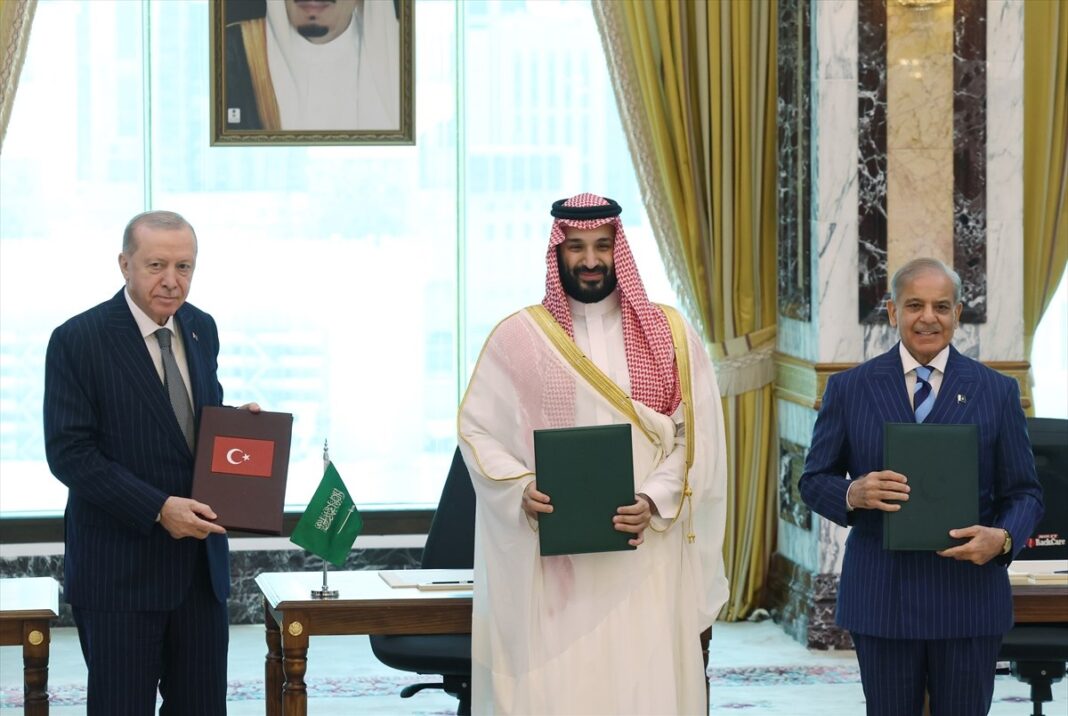
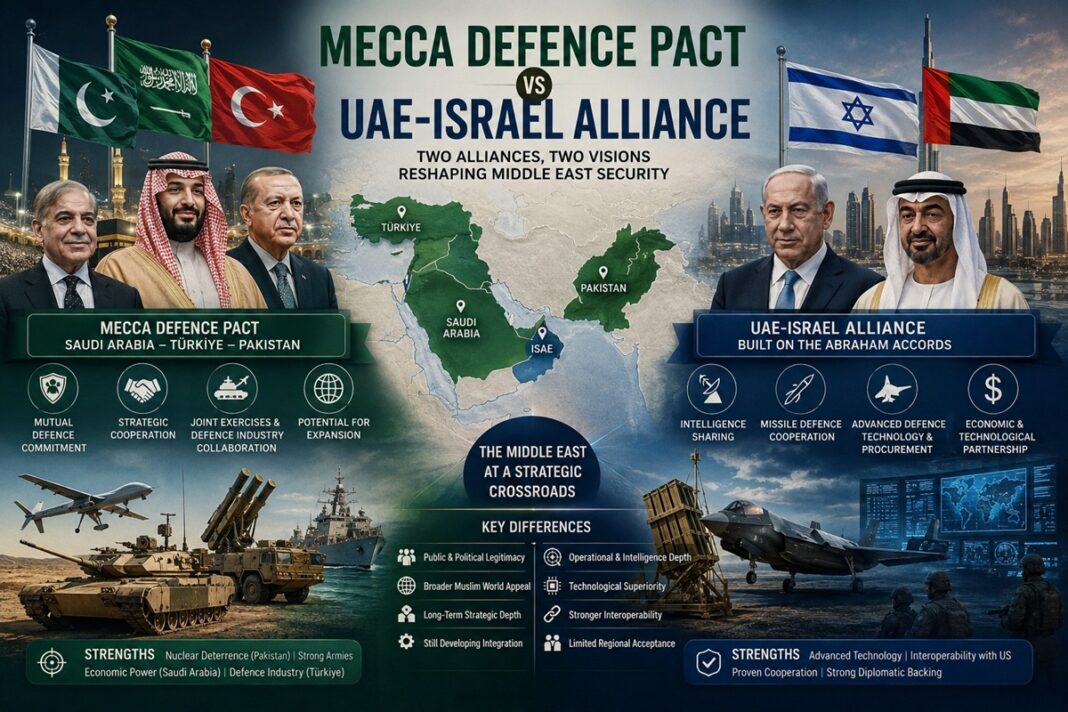
The strategic landscape of the Middle East is undergoing one of its most significant transformations in decades. While the UAE-Israel partnership has steadily evolved since the 2020 Abraham Accords, the recently announced Mecca Defence Pact between Saudi Arabia, Türkiye and Pakistan has introduced an alternative security framework that many analysts believe could reshape regional geopolitics.
A recent report by Middle East Eye argues that the two groupings represent competing security models, with Western diplomats increasingly comparing their long-term strategic potential. However, the reality is more nuanced. Each alliance possesses different strengths, faces different constraints, and pursues different strategic objectives.
Two Alliances, Two Different Philosophies
Although both partnerships involve military cooperation, their political foundations differ considerably.
The UAE-Israel partnership has gradually evolved through intelligence cooperation, advanced military integration, missile defence coordination and shared concerns regarding Iran. Much of this cooperation has remained discreet despite formal diplomatic normalization under the Abraham Accords.
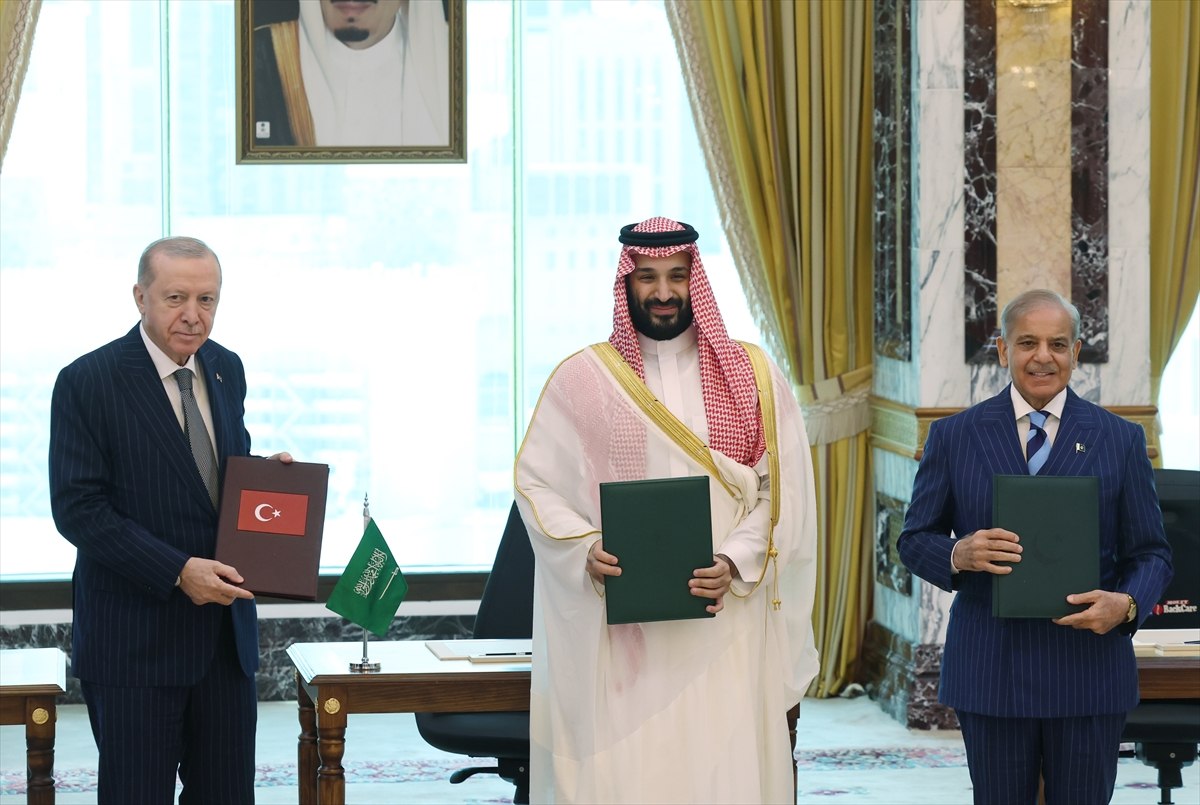
The Mecca Defence Pact, by contrast, was announced publicly and presented as an institutional defence partnership among three influential Muslim-majority states. Rather than emerging from years of covert intelligence cooperation, it begins with an explicit political commitment that leaders publicly endorsed.
This distinction matters.
The UAE-Israel relationship is operationally mature but politically sensitive.
The Mecca Pact is politically visible but operationally still developing.
Why Many Analysts View the UAE-Israel Bloc as More Operational
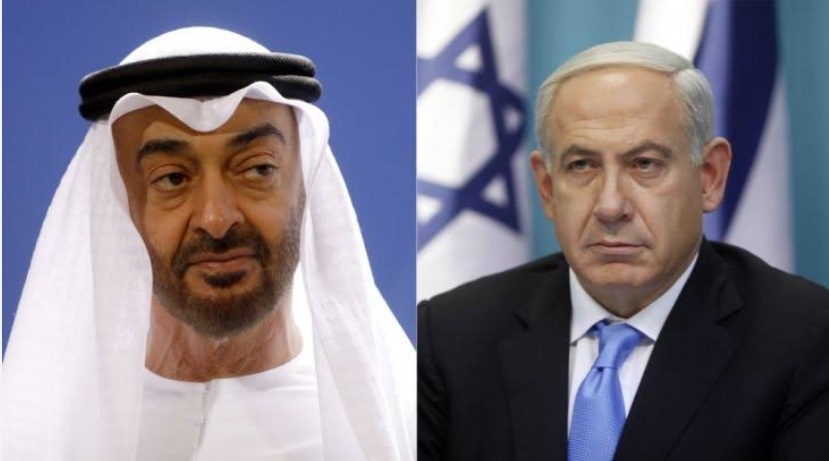
The Middle East Eye report notes that the UAE and Israel have already demonstrated practical military cooperation.
Examples include:
- intelligence collaboration;
- missile defence coordination;
- defence procurement cooperation;
- expanding defence technology partnerships;
- reportedly coordinated responses during regional crises.
Israel possesses one of the world’s most advanced defence industries, extensive intelligence capabilities, sophisticated missile defence systems and decades of operational experience.
The UAE complements these strengths with:
- advanced Western military equipment;
- significant financial resources;
- modern air force capabilities;
- growing regional influence.
Unlike newly established partnerships, this relationship has already undergone multiple real-world security tests.
That gives it a higher level of operational interoperability today.
The Mecca Defence Pact Offers Strategic Depth
Where the Mecca Pact differs is its potential strategic depth.
Collectively, its members possess remarkable geopolitical assets.
Pakistan
- World’s only nuclear-armed Muslim state
- Large, experienced military
- Strong defence relationship with China
- Expanding indigenous defence production
Türkiye
- NATO’s second-largest military
- Rapidly growing defence industry
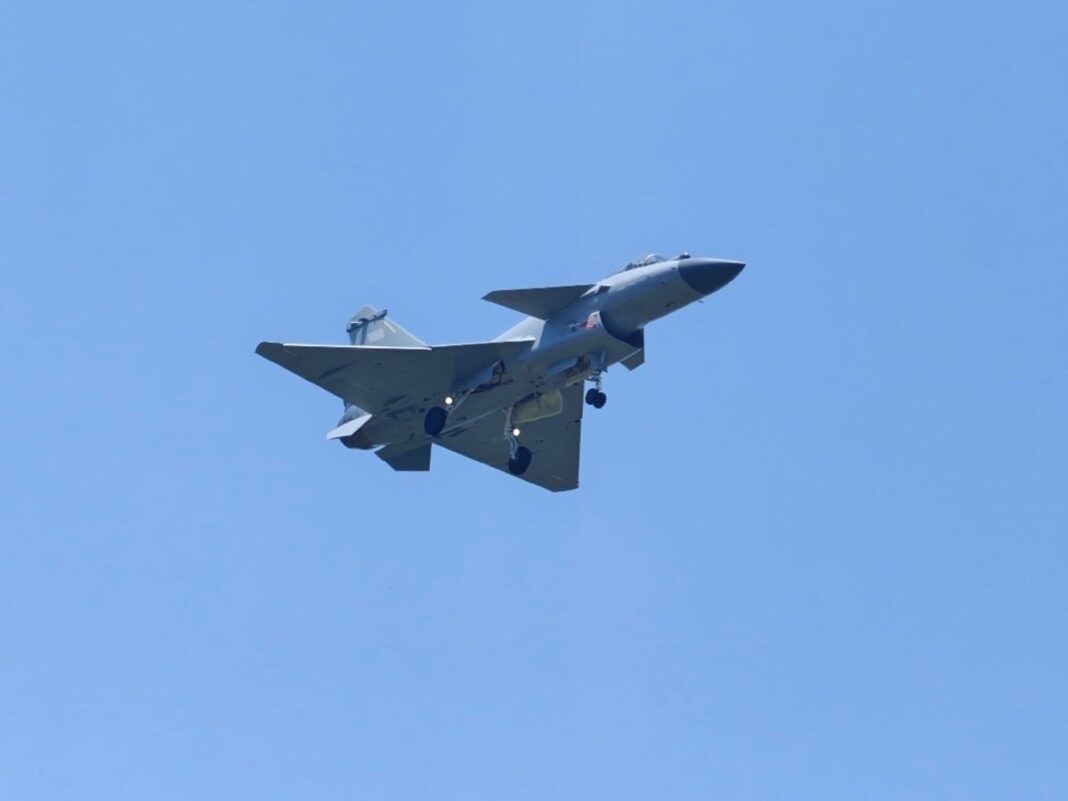
- Global leader in combat drone exports
- Experience across multiple conflict theatres
Saudi Arabia
- Largest Arab economy
- Major defence spender
- Significant influence across the Islamic world
- Vision 2030 emphasis on defence industrialisation
Together, these three countries combine military manpower, economic resources, industrial capabilities and strategic geography in ways few regional alliances can match.
On paper, the combination is formidable.
Public Legitimacy May Become the Pact’s Biggest Strength
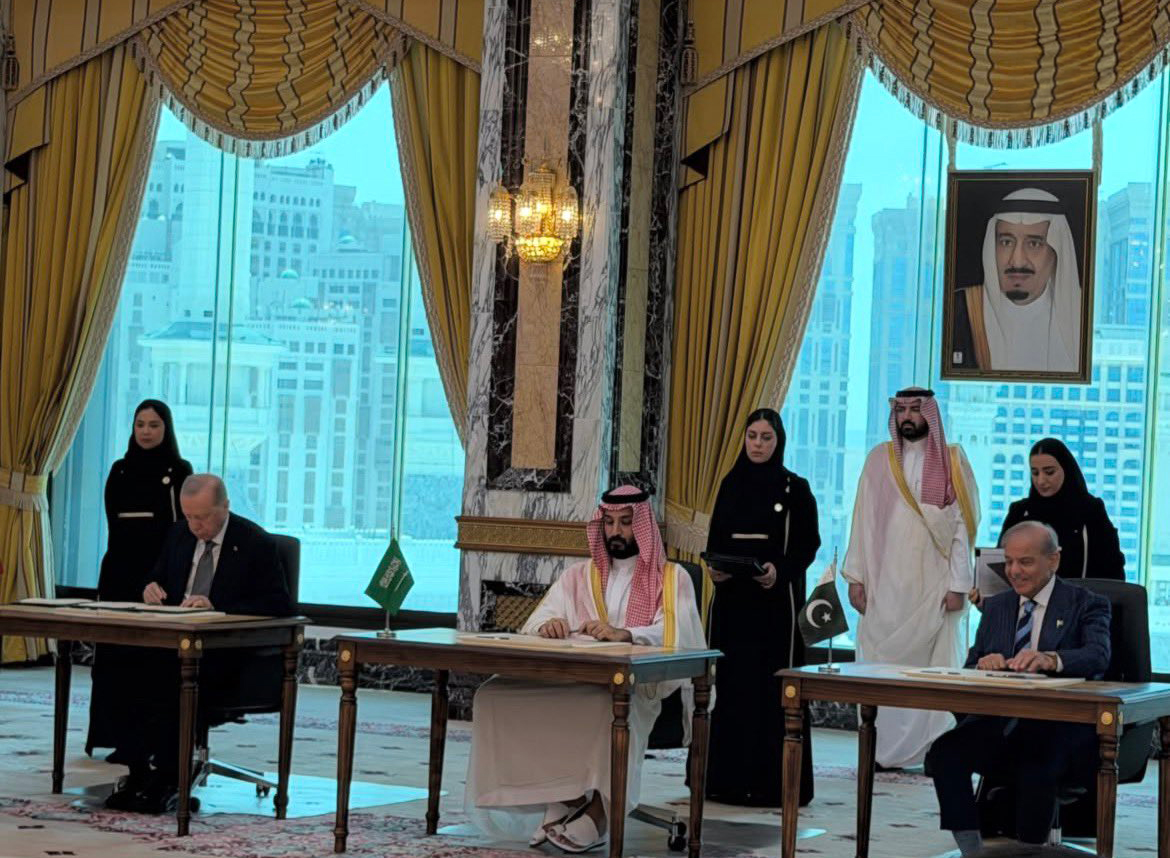
One of the article’s most interesting observations concerns political legitimacy.
The UAE-Israel relationship remains controversial across much of the Arab and Muslim world.
Despite official normalization, several high-profile meetings have reportedly remained politically sensitive.
By comparison, the Mecca Pact was announced publicly in Islam’s holiest city, giving it considerable symbolic value.
That symbolism could make future expansion politically easier.
Potential future partners frequently discussed by analysts include:
- Azerbaijan
- Qatar
- Malaysia
- Indonesia
- Central Asian states
- selected African Muslim-majority countries
At present, however, there is no official indication that additional members are preparing to join.
Such discussions remain speculative.
The Biggest Challenge: Different Strategic Priorities
The greatest obstacle facing the Mecca Pact, its members do not face identical security threats.
Saudi Arabia’s primary concerns include:
- Gulf security
- Iranian regional influence
- Red Sea stability
Türkiye focuses heavily on:
- Syria
- Eastern Mediterranean
- Kurdish militant groups
- Caucasus security
Pakistan’s principal priorities remain:
- India
- border security
- terrorism
- Afghanistan
These different strategic environments mean that agreeing on joint military responses during future crises may prove considerably more complicated than signing the original agreement.
Military alliances succeed not merely because they possess strong armies but because they share common strategic priorities.
That process may take years.
Defence Integration Will Take Time
Military cooperation extends far beyond political declarations.
Successful defence integration requires:
- compatible communications systems;
- shared intelligence networks;
- standardized logistics;
- joint operational planning;
- regular multinational exercises;
- compatible weapons systems.
Here, challenges emerge.
Pakistan relies heavily on Chinese military technology.
Saudi Arabia remains largely equipped with American and Western systems.
Türkiye increasingly emphasizes indigenous defence production while remaining a NATO member.
Integrating these diverse military ecosystems will require substantial investment and sustained political commitment.
Can the Mecca Pact Rival NATO?
Some early commentary has described the agreement as an “Islamic NATO.”
That comparison appears premature.
NATO possesses:
- integrated military commands;
- standardized planning procedures;
- decades of institutional development;
- collective command structures;
- common operational doctrines.
None of these institutional features have yet been publicly announced for the Mecca Defence Pact.
While references to mutual defence and cooperation suggest ambitious intentions, the alliance remains in its formative stage.
Its future effectiveness will depend on implementation rather than declarations.
Strategic Competition Beyond Military Power
The emerging competition between the two blocs is not simply military.
It also reflects competing visions of regional order.
The UAE-Israel partnership aligns closely with the existing US-led security architecture in the Middle East.
The Mecca Defence Pact appears designed to increase regional strategic autonomy while strengthening defence cooperation among key Muslim-majority powers.
Whether these models become competitors or eventually coexist remains uncertain.
Future regional crises—and the responses they generate—will likely determine which framework proves more resilient.
Could the Mecca Pact Expand?
Several analysts argue that the agreement possesses room for future expansion because it enjoys greater public acceptance across many Muslim-majority societies.
That possibility exists.
However, expansion would depend on several factors:
- institutional credibility;
- successful military cooperation;
- political cohesion;
- economic incentives;
- regional security developments.
History shows that military alliances expand only after demonstrating practical value.
The Mecca Pact has yet to reach that stage.
Final Assessment
The Middle East Eye report correctly identifies an emerging strategic competition between two very different security partnerships.
However, portraying one alliance as clearly superior oversimplifies a complex reality.
Today:
- The UAE-Israel partnership enjoys greater operational integration, intelligence cooperation and technological interoperability.
- The Mecca Defence Pact offers broader demographic, geographic, political and long-term strategic potential but remains institutionally immature.
The true measure of the Mecca Pact will not be its founding declaration but its ability to conduct joint military planning, integrate defence industries, coordinate intelligence and respond collectively during future regional crises.
Until those capabilities are demonstrated, the alliance should be viewed as an important strategic development with significant potential rather than a fully developed military bloc.
Key Takeaways
- The UAE-Israel partnership is currently more operationally integrated.
- The Mecca Defence Pact has greater long-term strategic depth but requires institutional development.
- Different threat perceptions among Saudi Arabia, Türkiye and Pakistan remain the alliance’s biggest challenge.
- Defence interoperability—not political symbolism—will determine the pact’s long-term credibility.
- The evolving regional security architecture may increasingly feature parallel rather than competing alliances.