
A new study by researchers at Shanghai Jiao Tong University has warned China against allowing defence contractors, military institutions and political interests to develop the kind of self-reinforcing “iron triangle” that the researchers say has shaped US defence policy. The study is particularly significant because it comes as Beijing itself conducts one of the most extensive anti-corruption and military procurement clean-ups in the People’s Liberation Army’s recent history.
China’s defence industry is expanding rapidly, but Beijing is simultaneously confronting a problem that could undermine that expansion from within: how to increase military production and technological innovation without allowing procurement networks, institutional interests and entrenched groups to distort strategic decision-making.
The study, published Monday by researchers at Shanghai Jiao Tong University’s National Institute of Strategic Studies, uses the US military-industrial complex as a warning.
But the more revealing part of the analysis may actually be what it says about China’s own defence system.
The researchers argue that Beijing needs clearer divisions of responsibility between the government, the military and defence contractors, stronger oversight, greater transparency and mechanisms to prevent narrow interest groups from influencing national security decisions.
That recommendation comes after years of corruption investigations inside the PLA, including major cases involving military procurement and the Rocket Force.
The result is a striking contradiction:
China wants a larger, more technologically advanced defence industry—but at the same time it is trying to prevent that industry from becoming powerful enough to distort military priorities.
China’s Warning About the US Military-Industrial Complex
The Shanghai researchers describe the US system through the concept of an “iron triangle” linking:
- the US Department of Defence;
- private defence contractors;
- congressional committees and political interests.
Their argument is that these three groups can develop mutually reinforcing incentives.
Defence companies benefit from larger contracts.
Military institutions benefit from larger budgets and more capabilities.
Politicians benefit from defence spending in their constituencies and from presenting themselves as strong on national security.
The researchers describe the resulting cycle as essentially:
military expansion → larger budgets → higher industry revenues → greater political influence → further expansion.
Their criticism is that such a system can eventually make defence expansion partly independent of the actual external threat environment.
That is a serious accusation.
But it also reveals a broader Chinese concern: a defence industry should serve national strategy, not become a force that determines national strategy.
Why This Study Matters Now
The timing is particularly important.
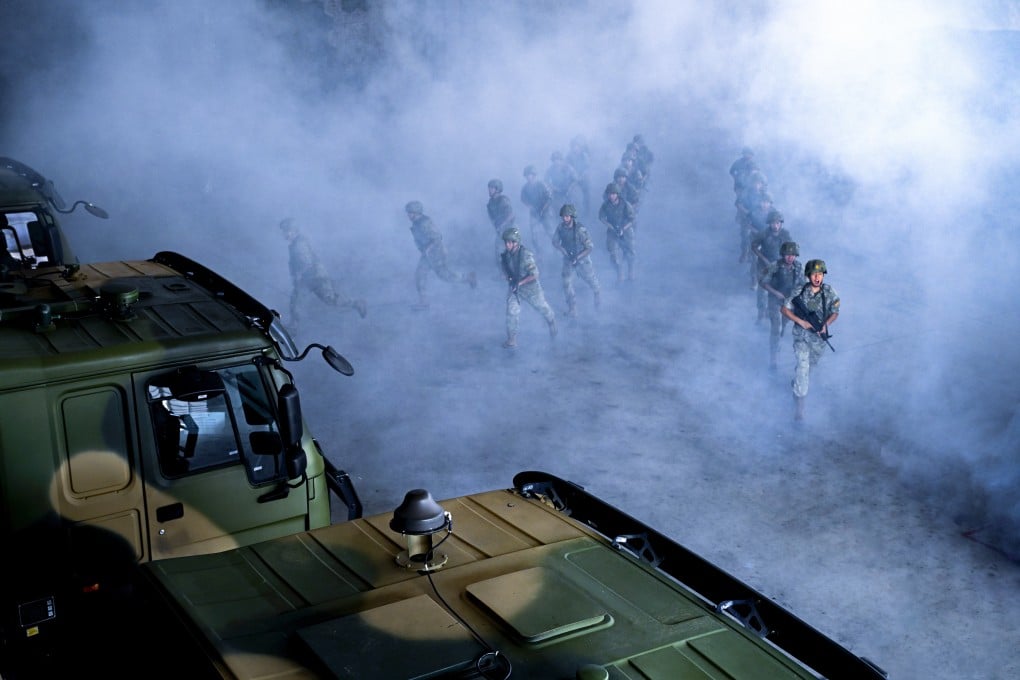
China is undergoing a massive military modernization programme.
The PLA is expanding and modernising:
- nuclear forces;
- ballistic and cruise missiles;
- naval forces;
- air power;
- space capabilities;
- cyber forces;
- unmanned systems;
- electronic warfare;
- artificial intelligence;
- long-range precision strike systems.
Beijing therefore needs a defence-industrial system capable of producing advanced equipment at scale.
But China’s leadership has also spent years investigating corruption within military procurement.
The PLA Rocket Force has been one of the most heavily affected institutions.
In September 2025, the Rocket Force terminated or suspended the procurement qualifications of 74 bid-evaluation experts and 116 suppliers following an investigation into procurement violations dating back years. Investigators found cases involving collusive bidding, forged documents and other irregularities.
That is not evidence that China’s entire defence industry is corrupt.
It is evidence, however, that procurement integrity has become a major concern for Beijing.
The Rocket Force Case Is Particularly Sensitive
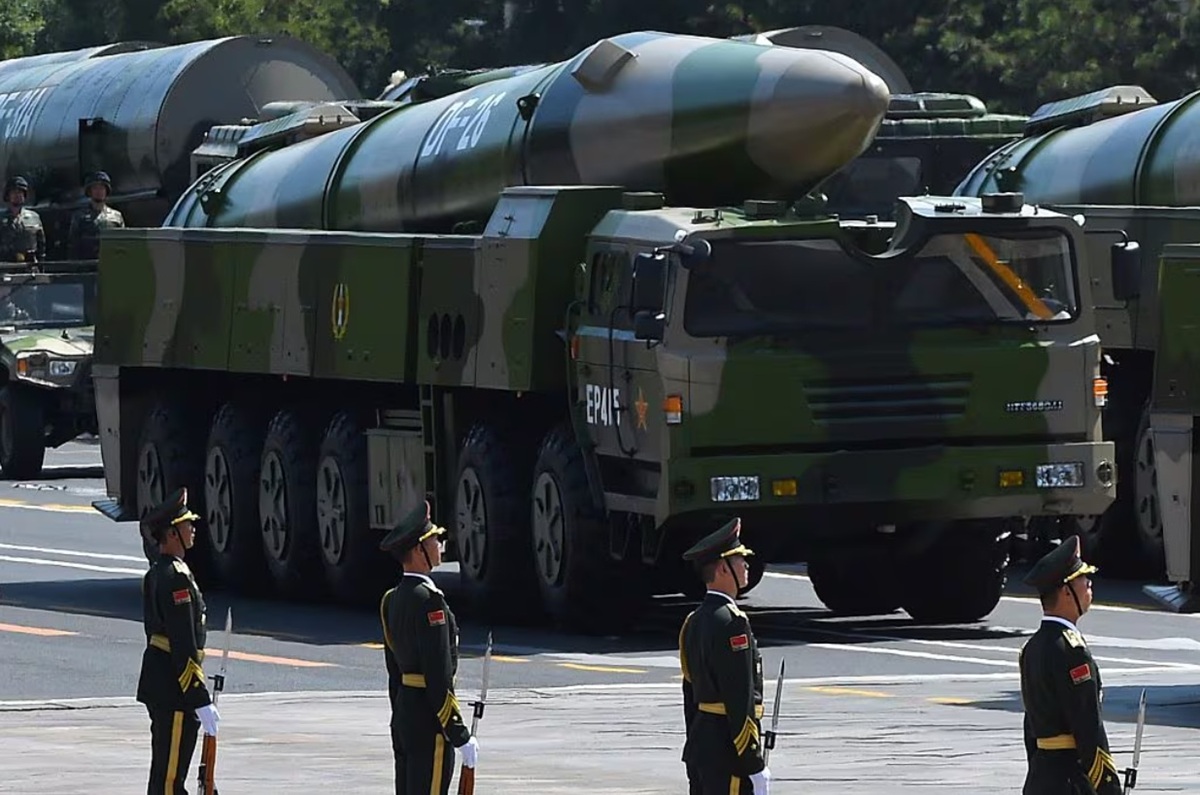
The PLA Rocket Force is responsible for some of China’s most important strategic missile capabilities, including its nuclear missile forces.
Consequently, procurement corruption inside the Rocket Force carries implications beyond financial losses.
If corruption results in:
- inferior components;
- inflated prices;
- falsified testing;
- unreliable suppliers;
- compromised procurement decisions;
the ultimate consequence could be military rather than merely financial.
China’s own procurement investigations have uncovered cases involving bid manipulation and false documentation.
The scale of the Rocket Force clean-up demonstrates why Beijing is concerned about institutional networks developing inside sensitive military organisations.
Nearly 200 Procurement Relationships Were Cut
The 2025 Rocket Force investigation provides an important real-world example of the problem highlighted by the Shanghai study.
The PLA branch banned 116 suppliers and 74 procurement-evaluation experts, with some sanctions extending beyond Rocket Force projects to procurement across the wider PLA.
The investigation reportedly examined procurement activity dating back to 2016.
The use of big-data tools was particularly significant.
China’s military procurement system has increasingly used digital analysis to identify suspicious relationships between bidders, including similarities in bid documents and links involving company personnel and other corporate information.
This suggests that Beijing is not merely conducting conventional disciplinary investigations.
It is trying to digitise procurement oversight.
China’s Defence Purge Is Bigger Than the Rocket Force

The Rocket Force is only one part of a much wider anti-corruption campaign.
Since 2023, investigations have reached senior officers and officials associated with:
- the PLA Rocket Force;
- the Central Military Commission;
- military procurement;
- the Equipment Development Department;
- defence-industry organisations.
The US Department of Defense has assessed that corruption investigations involving senior PLA and defence-industry officials could have short-term effects on military readiness and modernization while potentially improving the PLA over the longer term.
The campaign has also continued into 2026.
China’s Ministry of National Defense said in October 2025 that investigations had been launched into nine senior military figures over alleged serious disciplinary and duty-related violations.
The scale and persistence of the campaign indicate that Beijing views corruption as an institutional threat, not merely a series of isolated criminal cases.
China’s Problem Is Different From America’s
This is where the Shanghai study becomes particularly interesting.
The researchers warn about the danger of private capital gaining excessive influence over defence policy.
But China’s defence-industrial structure is fundamentally different from the US model.
The largest Chinese defence companies are predominantly state-owned enterprises or closely connected to the state.
The Chinese Communist Party maintains political authority over the PLA.
Therefore, Beijing’s problem is not simply:
private contractors lobbying politicians for more defence spending.
Instead, the Chinese concern is more about institutional networks, procurement corruption, bureaucratic interests and entrenched groups inside the military-industrial system.
That is a fundamentally different risk.
China’s “Small Circles” Problem
Chinese military analyst Song Zhongping highlighted the danger of “small circles” or entrenched groups developing inside the military and defence-industrial ecosystem.
The concern is that networks of officials, suppliers, military officers, procurement specialists and other actors could develop relationships that allow them to influence decisions for their own benefit.
Such networks could potentially distort:
- procurement;
- promotions;
- supplier selection;
- technical evaluations;
- project funding;
- weapons development priorities.
The Chinese leadership therefore wants to prevent defence institutions from developing independent power centres.
This is also consistent with the broader direction of Xi Jinping’s military reforms.
The Deeper Issue: Can China Prevent Procurement Corruption Without Slowing Modernization?
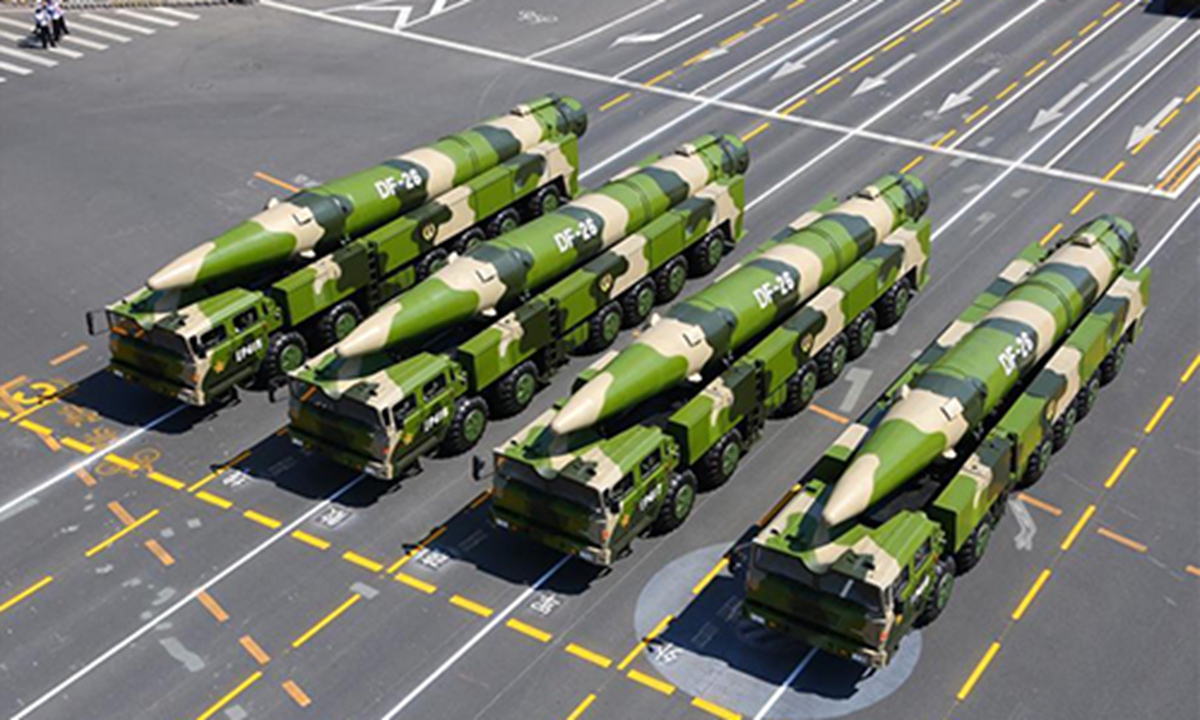
This is China’s central dilemma.
Beijing wants rapid military modernization.
At the same time, it is investigating the very institutions responsible for producing and procuring the equipment needed for that modernization.
The anti-corruption campaign can therefore have two opposing effects.
Short term
It can disrupt:
- contracts;
- leadership;
- suppliers;
- procurement decisions;
- production schedules.
Long term
It could improve:
- procurement discipline;
- equipment quality;
- accountability;
- cost control;
- technological reliability.
This tension is visible in China’s defence industry.
A Reuters report citing SIPRI found that revenues at major Chinese defence companies declined in 2024 amid corruption investigations and procurement disruption. Companies including AVIC, Norinco and other major defence groups were affected.
That suggests the purge has had tangible economic consequences for the defence sector.
Corruption Can Become a Military Problem
This is perhaps the most important lesson from China’s experience.
Defence corruption is not necessarily limited to money.
It can affect military capability.
Imagine a procurement process in which a supplier wins a contract through:
- political connections;
- bid manipulation;
- bribery;
- falsified qualifications.
If that supplier subsequently provides inferior components, the problem moves from the financial system into the weapons system.
China’s own Rocket Force investigations have reportedly uncovered procurement violations that raised concerns about the integrity of military equipment.
The US Department of Defense has specifically noted concerns that corruption in China’s nuclear and missile-related institutions could affect readiness and modernization, although it also assesses that the long-term effects could include improvements after the clean-up.
The Most Sensitive Area Is Strategic Weapons
The consequences become particularly serious when procurement problems involve strategic systems.
The Rocket Force controls China’s nuclear and conventional missile forces.
China is simultaneously expanding its nuclear arsenal and developing more advanced missile systems.
That means Beijing needs not only more weapons but high confidence in their reliability.
A corrupted procurement chain could undermine that confidence.
This helps explain why the Rocket Force has been subjected to such intense scrutiny.
China’s Defence Industry Is Still Expanding Despite the Purge

It would be wrong to interpret the anti-corruption campaign as evidence that China’s military modernization has stopped.
The opposite is happening.
China continues to invest heavily in:
- strategic missiles;
- aircraft carriers;
- advanced fighter aircraft;
- unmanned systems;
- space capabilities;
- long-range strike;
- nuclear forces;
- integrated air and missile defence.
The campaign is therefore better understood as an attempt to clean the system while continuing modernization.
That is considerably more difficult than simply cutting defence spending.
China Wants Defence and Civilian Technology to Reinforce Each Other
The Shanghai researchers also emphasize the need for technology transfer between military and civilian sectors.
This is important because China’s military-industrial strategy increasingly relies on what Beijing calls military-civil fusion.
The objective is to use China’s enormous civilian technology base to strengthen defence innovation.
That can include:
- artificial intelligence;
- robotics;
- electronics;
- advanced manufacturing;
- telecommunications;
- aerospace;
- semiconductors;
- autonomous systems.
The researchers’ warning suggests that Beijing wants this integration without allowing commercial incentives to override national security priorities.
China’s Supply-Chain Problem
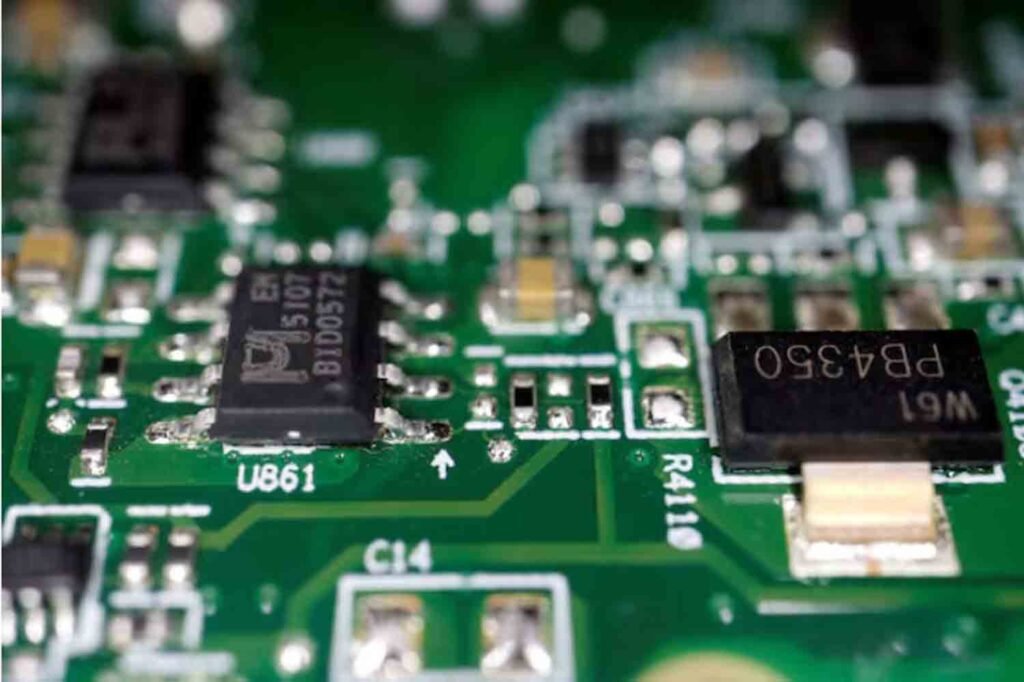
Another important point in the study is the emphasis on self-reliant supply chains.
This is increasingly important because China’s strategic competition with the United States has created restrictions on access to advanced technologies.
Beijing therefore wants domestic alternatives in critical areas.
That includes:
- semiconductors;
- advanced electronics;
- aerospace components;
- machine tools;
- materials;
- sensors;
- propulsion;
- software.
A defence industry that is vulnerable to foreign supply restrictions cannot provide complete strategic autonomy.
But building domestic alternatives is expensive.
This is why China is trying to combine civilian innovation, military research and industrial policy.
The US-China Defence-Industrial Comparison Is More Complicated Than Beijing’s Critique Suggests
The Chinese researchers’ criticism of the US military-industrial complex highlights a real debate in Washington.
US defence procurement has long been criticised for:
- cost overruns;
- lobbying;
- contractor influence;
- delays;
- limited competition;
- political incentives;
- complex procurement bureaucracy.
But there is another side.
The US defence industry has produced an enormous ecosystem of:
- private innovation;
- venture capital;
- advanced research;
- competing contractors;
- university partnerships;
- technology startups.
Some of America’s most important military technologies have emerged from cooperation between government institutions and private companies.
The challenge is therefore not necessarily private defence industry itself.
The challenge is ensuring that private interests do not become more powerful than national strategic requirements.
That distinction is important when evaluating the Chinese study.
China’s Alternative Has Its Own Risks
China’s state-dominated model reduces some of the problems associated with private lobbying.
But it creates other risks.
If defence companies are heavily connected to the state and military bureaucracy, the system can suffer from:
- bureaucratic protection;
- lack of transparency;
- limited external scrutiny;
- information distortion;
- internal patronage networks;
- excessive concentration of decision-making.
This is why Beijing’s current anti-corruption campaign is so important.
The Chinese leadership appears to recognise that state ownership does not automatically eliminate corruption or institutional self-interest.
China’s Defence Companies Are Paying a Price
The corruption purge has already disrupted some defence-industry activity.
SIPRI data cited by Reuters showed that major Chinese arms companies experienced declining revenues in 2024 even as global defence spending and arms-company revenues were rising.
That creates a strategic dilemma.
Beijing wants:
more weapons + faster production + greater technological innovation.
But it also wants:
clean procurement + political control + reliable equipment + secure supply chains.
Achieving all four simultaneously is difficult.
Could the Purge Slow China’s Military Modernization?
In the short term, yes.
Leadership changes and procurement investigations can cause:
- delays;
- uncertainty;
- cancelled contracts;
- supplier disruption;
- project reviews.
The US Department of Defense has assessed that corruption investigations may have short-term consequences for PLA readiness and modernization.
But that does not mean China’s military modernization will necessarily weaken over the long term.
Beijing has enormous financial, industrial and technological resources.
The more plausible outcome is that China is attempting to trade some short-term disruption for a more reliable defence-industrial system.
The Rocket Force Provides a Useful Test Case
The Rocket Force is perhaps the clearest example.
It has faced extensive leadership changes and procurement investigations.
Yet its operational training has continued.
In 2025, Rocket Force units conducted exercises involving degraded communications, damaged infrastructure, enemy surveillance and other battlefield disruptions.
This suggests that the corruption campaign has not paralysed the force.
Instead, Beijing appears to be conducting two processes simultaneously:
purging procurement networks + maintaining operational modernization.
That is strategically significant.
Why This Matters for the US
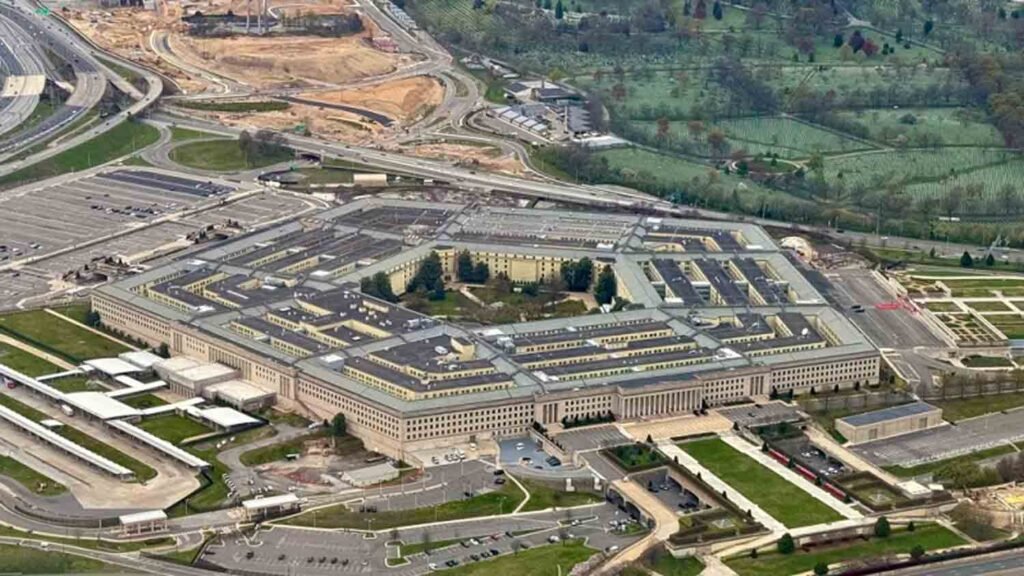
The Chinese study is also a warning aimed indirectly at Washington.
Beijing is essentially arguing that America’s enormous defence budget can become self-reinforcing.
The United States has been increasing defence production capacity in response to lessons from the Ukraine war and growing competition with China.
The Pentagon and Congress are also under pressure to rebuild stocks of:
- missiles;
- air-defence interceptors;
- artillery;
- precision weapons;
- naval munitions.
This inevitably increases the influence and revenues of defence companies.
The Chinese researchers are warning that Washington must ensure that industrial expansion does not become an end in itself.
That is a legitimate policy debate even if one rejects China’s broader political interpretation.
Why This Matters for China
For Beijing, the study may be even more important as an internal warning.
China is entering a period in which its defence industry is becoming increasingly sophisticated and economically significant.
The more money that flows through the system, the greater the potential incentives for corruption and rent-seeking.
Therefore, Beijing needs mechanisms that can answer a fundamental question:
Is a weapons programme being pursued because the PLA genuinely needs it, because the technology is strategically valuable—or because powerful institutions and suppliers have an incentive to keep the programme alive?
That is precisely the problem the “iron triangle” concept is intended to highlight.
The Taiwan Factor

There is also a broader strategic dimension.
China’s military modernization is heavily focused on the possibility of a conflict involving Taiwan and the wider western Pacific.
That requires enormous quantities of:
- missiles;
- aircraft;
- naval systems;
- drones;
- electronic warfare equipment;
- satellites;
- precision-guided weapons.
A corrupt procurement system could become a major vulnerability in a prolonged conflict.
This helps explain why Beijing is treating procurement integrity as a national-security issue rather than simply an administrative matter.
What This Means for China’s Military Capability
The key question is not whether China has corruption.
Almost every major defence establishment has faced corruption scandals.
The more important question is whether corruption has become sufficiently embedded to affect:
weapons quality, operational readiness and strategic decision-making.
China’s unprecedented purge suggests that Beijing believes the risk is serious enough to warrant major intervention.
But the same purge also creates uncertainty about how much disruption has already occurred.
A More Efficient Defence Industry May Ultimately Be the Goal
There is another way to interpret the Chinese study.
It may not simply be an attack on the United States.
It could be part of Beijing’s broader effort to redesign its defence-industrial ecosystem.
The objective would be:
- stronger government oversight;
- more transparent procurement;
- fewer entrenched networks;
- better technology transfer;
- stronger civilian-military cooperation;
- domestic supply chains;
- greater innovation;
- improved equipment reliability.
In other words:
China does not appear to be rejecting defence-industrial expansion. It wants to make that expansion more controllable and strategically directed.
The Real Chinese Concern: Control

Ultimately, the study points toward a much larger principle in China’s defence policy:
The military-industrial complex must remain subordinate to the state and the Communist Party’s strategic objectives.
Beijing does not want a defence industry capable of independently shaping national security policy.
It wants the defence industry to implement decisions made by the political leadership.
That is consistent with China’s political system.
But it also means that China’s defence-industrial efficiency depends heavily on the quality of internal oversight and political decision-making.
Implications for Pakistan
For Pakistan, the Chinese experience offers several relevant lessons.
Pakistan is also seeking greater domestic defence production, technology development and export capacity.
The key lesson is that expanding a defence industry is not simply about building factories.
It requires:
- transparent procurement;
- competitive bidding;
- independent technical evaluation;
- strong quality control;
- protection against supplier cartels;
- secure supply chains;
- effective auditing;
- technology development;
- military oversight.
At the same time, Pakistan’s defence sector operates under a very different institutional and strategic environment from China’s.
Therefore, China’s model cannot simply be copied.
The useful lesson is more specific:
as defence spending and industrial activity increase, procurement governance becomes a national-security issue.
The Bigger Geopolitical Picture
The Chinese study arrives at a time when the world’s major powers are rebuilding their defence-industrial bases.
The United States is expanding production.
Europe is increasing defence spending.
Russia has dramatically expanded wartime production.
China is continuing its military modernization.
India is attempting to expand indigenous defence manufacturing.
The global defence industry is therefore entering another period of rapid growth.
That makes the question raised by the Chinese researchers increasingly relevant:
Who ultimately benefits from rising defence spending—and who decides what weapons are actually needed?
Final Assessment
The Shanghai Jiao Tong University study should not be read simply as another Chinese criticism of the United States.
Its deeper significance lies in the fact that China is confronting a problem within its own defence-industrial system at the same time that it warns against the American model.
Beijing’s concern is that defence institutions, suppliers and political interests can form self-reinforcing networks that encourage procurement expansion for reasons unrelated to genuine military requirements.
The US model and China’s model are fundamentally different.
America’s system is characterised by powerful private defence contractors, congressional politics and extensive lobbying.
China’s defence industry is dominated by state-owned enterprises and operates under Communist Party control.
Yet both systems face a common underlying risk:
institutional interests can begin to influence defence decisions in ways that are not fully aligned with military necessity.
China’s response has been unusually aggressive.
The PLA’s anti-corruption campaign has reached senior generals, defence-industry executives and procurement networks. The Rocket Force alone terminated procurement relationships with 116 suppliers and 74 evaluation experts after investigations uncovered irregularities.
The campaign has created short-term disruption. Major Chinese defence companies experienced revenue declines in 2024 amid the procurement crackdown, according to SIPRI data cited by Reuters.
But Beijing appears willing to accept that disruption in pursuit of a longer-term objective: a defence-industrial system that produces technologically advanced and reliable weapons without allowing procurement networks to become entrenched power centres.
That makes the study particularly revealing.
China is not warning against military-industrial expansion.
It is warning against losing political and strategic control over that expansion.
And as the United States, China, Russia, India and other powers accelerate defence production, that may become one of the defining questions of the next phase of global military competition:
Can states expand their defence industries rapidly without allowing the defence industry itself to become a driver of war, spending and strategic policy?
For China, the answer appears to be tighter political control, aggressive anti-corruption enforcement, stronger procurement oversight and greater technological self-reliance.
Whether that combination can produce a cleaner system without slowing the PLA’s modernization programme is now one of the most important questions to watch.