

President Donald Trump returned to the White House promising to be a “peacemaker”, arguing that American power could be used to end wars rather than become trapped in them.
But as the November 2026 U.S. midterm elections approach, that promise is facing its most serious test.
The Iran war has become a costly strategic stalemate, the Strait of Hormuz remains severely disrupted, efforts to revive a broader U.S.-Iran agreement have stalled, Gaza remains unresolved and the war in Ukraine continues despite repeated American attempts to push Moscow and Kyiv toward negotiations.
The result is an uncomfortable contradiction for Trump: the president who promised to end wars is increasingly being judged by wars he has been unable to end.
The political consequences are becoming harder to ignore. Trump’s approval rating has fallen to 33%, the lowest of his current presidency, while 80% of Americans surveyed by Reuters/Ipsos said they expected U.S. involvement in the Iran conflict to continue for an extended period.
With the November 3 congressional elections approaching, the foreign-policy problem is increasingly becoming an economic and domestic-political problem.
Iran Is Now the Central Test of Trump’s Foreign Policy
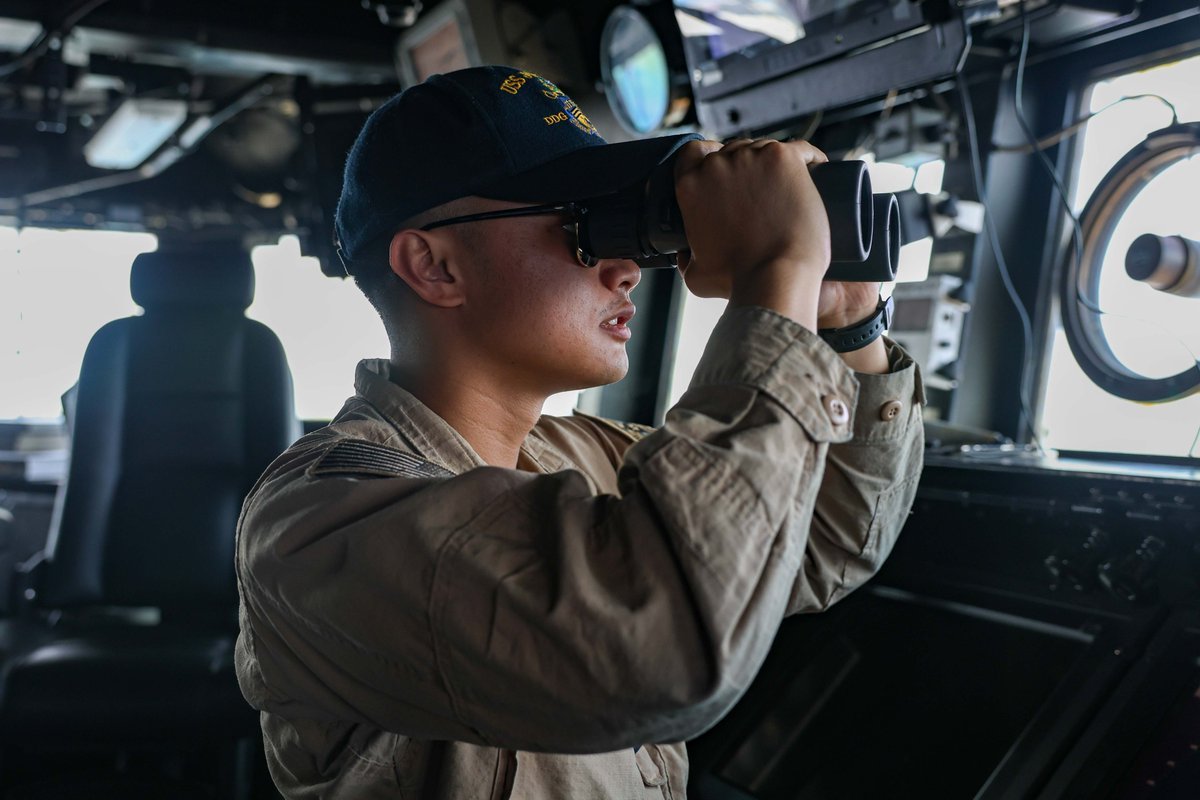
The biggest challenge is Iran.
The United States and Israel launched the war against Iran on February 28, 2026. Washington initially expected military pressure to force Tehran to accept major concessions over its nuclear program and regional posture.
Instead, Iran has demonstrated that military strikes alone have not produced the desired political outcome.
The June memorandum between Washington and Tehran created a 60-day framework for moving toward a broader settlement, including the nuclear issue and the reopening of the Strait of Hormuz.
That deadline expired on August 17 without a permanent agreement.
Iran and the United States now remain far apart over the fundamental issue of the Strait. Washington wants the waterway reopened and rejects arrangements that would effectively give Tehran dominant control over international shipping. Iran, meanwhile, has sought guarantees over the strait and the lifting of the U.S. blockade.
This is the heart of the stalemate.
Trump has military power—but Iran still has leverage
The United States possesses overwhelming conventional military superiority.
But Iran possesses something Washington cannot easily bomb away: geographic leverage.
The Strait of Hormuz is one of the world’s most important energy chokepoints. Before the war, roughly one-fifth of globally traded oil and LNG moved through the waterway.
Shipping has since collapsed.
Reuters reported that only a handful of commodity vessels were passing through the strait on some recent days, compared with more than 130 daily ship transits before the war.
That transforms the conflict from a bilateral U.S.-Iran military confrontation into a global economic crisis.
Oil prices, shipping insurance, tanker availability and inflation are all affected.
And ultimately, American voters feel the consequences at the gasoline pump.
The $4 Gasoline Problem
Trump’s political vulnerability is not simply that the Iran war remains unresolved.
It is that Americans are paying for the conflict.
The Reuters/Ipsos survey found that only about one in five Americans believed the Iran war had been worth the cost, while 80% expected the conflict to last for an extended period. Gasoline prices have risen above $4 a gallon, compared with less than $3 before the war.
This creates a dangerous political equation for Republicans:
Iran war → Hormuz disruption → oil shock → gasoline inflation → higher household costs → declining approval → midterm vulnerability.
Trump has argued that higher fuel prices are a price worth paying to prevent Iran from obtaining a nuclear weapon.
But voters do not necessarily evaluate foreign policy through the same strategic lens as the White House.
For many households, the question is much simpler:
Why is gasoline more expensive?
The Economic War May Be Trump’s Exit Strategy
Washington is now shifting from military pressure toward what Trump calls intensified economic warfare.
The administration is preparing another major round of sanctions against Iran and has warned that countries and companies continuing to do business with Tehran could also face penalties.
China is particularly important because it remains Iran’s largest trading partner and a major buyer of Iranian crude. Reuters reported that China buys more than 80% of Iran’s shipped oil, based on 2025 Kpler data.
This creates another strategic problem.
Trump is attempting to force Iran into a settlement while simultaneously pressuring China, the country with the greatest economic ability to cushion Tehran from sanctions.
The result could turn the Iran conflict into another arena of U.S.-China competition.
Beijing has consistently called for diplomacy, while its economic interests are directly threatened by the disruption of Gulf energy and shipping routes.
Pakistan Has Quietly Become Part of the Diplomatic Equation
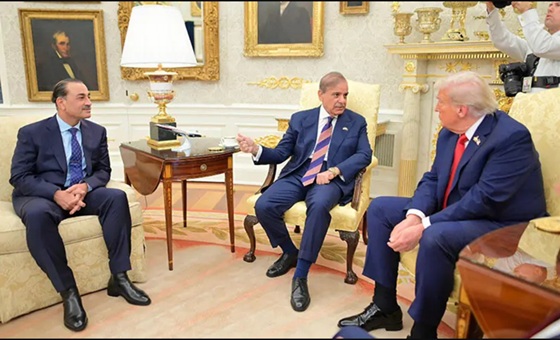
One of the most important but underreported dimensions of the Iran crisis is Pakistan’s emerging mediation role.
Islamabad has attempted to keep communication channels open between Iran and the United States and has been involved in diplomatic efforts aimed at restarting negotiations.
Reuters reported in July that Pakistan was exploring a path toward renewed U.S.-Iran talks following a China-backed diplomatic initiative. Iranian Interior Minister Eskandar Momeni visited Islamabad twice within a short period and met Pakistani officials and military leadership.
Pakistan’s position is strategically complicated.
It has close ties with Iran but is also closely connected to Saudi Arabia and other Gulf states. It has strong economic and strategic relations with China, while maintaining a significant relationship with Washington.
That makes Islamabad potentially useful as a bridge between competing camps.
Pakistan also has a direct interest in preventing the Iran conflict from becoming a permanent regional war.
A prolonged Gulf conflict could affect Pakistan through:
- oil prices;
- remittances;
- Pakistani workers in the Gulf;
- trade routes;
- shipping costs;
- regional security;
- relations with Iran; and
- relations with Saudi Arabia and other Gulf partners.
The fact that Turkey has also highlighted Pakistan and Qatar among the countries involved in mediation efforts demonstrates that the diplomatic architecture is broader than Washington, Tehran and Oman alone.
For Pakistan, however, mediation carries risks.
Islamabad cannot afford to appear to be taking Iran’s side at the expense of Saudi Arabia or the United States.
Its most useful position is therefore not that of an Iranian advocate, but of a facilitator capable of keeping channels open.
Oman: The Diplomatic Front Trump Cannot Ignore
The Oman issue illustrates the contradiction in Trump’s strategy.
Oman has traditionally served as one of the most important channels for quiet U.S.-Iran diplomacy.
Now it is working with Tehran on arrangements for shipping through the Strait of Hormuz.
Trump has reacted angrily to Oman’s engagement with Iran, even threatening military action if Oman obstructs American objectives. Reuters and AP have reported the escalation in Trump’s rhetoric toward the U.S. ally.
This is strategically significant.
Washington needs regional partners to help reopen Hormuz.
But threatening one of the very states involved in negotiating the reopening of the waterway risks weakening the diplomatic infrastructure Washington needs to escape the crisis.
That is perhaps the clearest example of the central problem facing Trump’s foreign policy:
Coercion can create leverage, but diplomacy is required to convert leverage into an agreement.
Gaza: Another Peace Initiative Running Out of Momentum
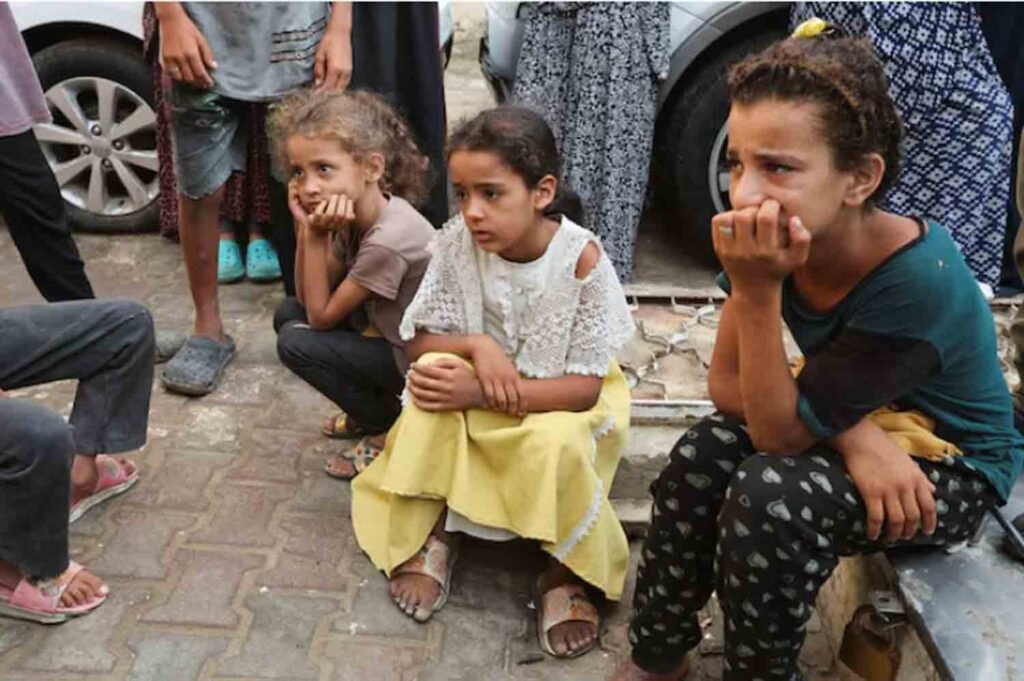
Iran is not Trump’s only foreign-policy problem.
The administration has also struggled to convert its Gaza diplomacy into a durable settlement.
Trump’s negotiator and son-in-law Jared Kushner recently left talks without achieving the progress Washington wanted.
The situation is complicated by continuing Israeli military operations and disagreements between Israel and Hamas over the conditions required for the next stage of a peace arrangement.
The political significance for Trump is substantial.
Gaza was supposed to demonstrate that his transactional diplomacy could achieve what previous administrations could not.
Instead, the issue remains unresolved.
The longer the conflict continues, the harder it becomes for the White House to present Gaza as a completed diplomatic victory.
Ukraine Remains the Biggest Test of Trump’s Peacemaker Image

Then there is Ukraine.
Trump returned to office promising to end the Russia-Ukraine war rapidly.
His administration succeeded in bringing Moscow and Kyiv into negotiations and repeatedly attempted to create a framework for a settlement.
But negotiations have not produced an end to the war.
Russia continues to launch attacks, while Ukraine remains unwilling to accept terms that would permanently compromise its sovereignty or territorial position.
A recent Russian airstrike in Kyiv killed 16 people, according to the Reuters report that forms the basis of the current assessment.
The problem for Trump is therefore not simply that peace has not arrived.
It is that his leverage over both sides has not translated into a settlement.
That distinction is increasingly important.
Trump’s Coercive Diplomacy Has a Structural Weakness
Trump’s foreign policy is based heavily on leverage.
Tariffs, sanctions, military threats, economic pressure and personal diplomacy are used to convince adversaries that the cost of refusing American demands will become unbearable.
This strategy can work.
But it has a weakness.
An adversary does not necessarily surrender simply because the cost of resistance rises.
Iran, Russia and China all possess different forms of strategic endurance.
Iran has geography and asymmetric capabilities.
Russia has nuclear weapons, energy resources, military depth and a willingness to absorb enormous costs.
China has economic scale, industrial capacity and a long-term strategic horizon.
Therefore, maximum pressure does not automatically produce maximum compliance.
Sometimes it produces a prolonged contest of endurance.
And that is exactly what appears to be happening with Iran.
The “Wait Out Trump” Strategy
This may become the most important geopolitical consequence of the current stalemates.
Trump’s political timetable is relatively short.
Russia, China and Iran operate on longer strategic timelines.
The November midterms therefore create an incentive for U.S. adversaries to calculate whether they can simply wait.
If Republicans lose control of one or both chambers of Congress, Trump’s ability to implement his domestic and foreign-policy agenda could be significantly constrained.
That does not mean the United States would suddenly abandon pressure on Iran, Russia or China.
But it could reduce Trump’s political room for manoeuvre.
Analysts cited by Reuters have already warned that America’s rivals may conclude that Trump’s political clock is shorter than theirs.
That is a dangerous perception for Washington.
The Midterms Are Becoming a Foreign-Policy Referendum
The November elections were never going to be solely about foreign policy.
But Iran has changed the equation.
Inflation and the cost of living remain among the most important issues for American voters.
Reuters/Ipsos found Democrats currently hold a small advantage over Republicans on who would handle the economy better—38% to 35%. Republican advantages on immigration have also narrowed substantially compared with early 2025.
This is particularly dangerous for the Republican Party because the traditional political argument is straightforward:
If Trump cannot deliver peace abroad and cannot control economic consequences at home, why should voters give his party greater congressional power?
The White House has a counterargument.
Trump officials insist that military pressure, sanctions and economic warfare have severely damaged Iran and that the administration’s ultimate objective is preventing Tehran from acquiring a nuclear weapon.
White House spokeswoman Anna Kelly has also pointed to the administration’s claimed diplomatic and military achievements, including ending conflicts and securing hostage releases.
The political battle will therefore be over competing definitions of success.
Is Trump Actually Failing?
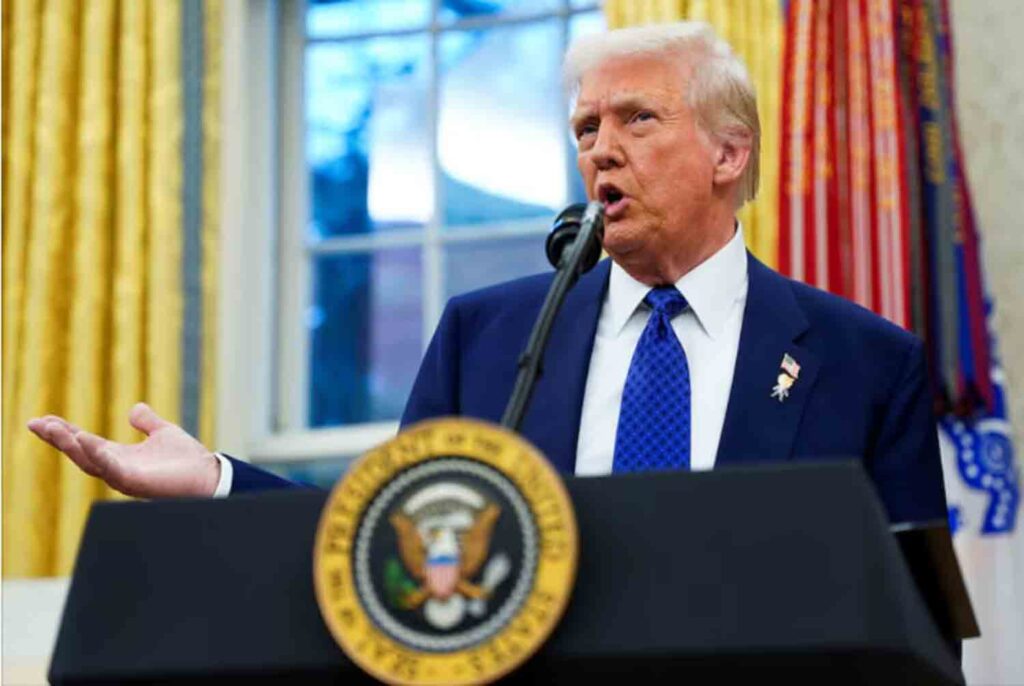
The answer is more complicated than either supporters or critics suggest.
Trump has undeniably disrupted the traditional American foreign-policy model.
He has been willing to pressure allies, threaten adversaries, use tariffs as diplomatic instruments and combine military action with negotiations.
He has also demonstrated that he is willing to take risks that previous presidents often avoided.
That has forced many international actors to reconsider their assumptions about American power.
But disruption is not the same thing as resolution.
A successful foreign policy ultimately has to produce sustainable outcomes.
That is where the Trump administration is currently struggling.
The Iran war remains unresolved.
Hormuz remains severely disrupted.
Gaza remains unsettled.
Ukraine remains at war.
And Washington is increasingly turning toward sanctions and economic pressure after military pressure failed to produce the concessions initially sought.
The Iran War Could Become Trump’s Defining Foreign-Policy Test
The central question is no longer whether Trump can inflict damage on Iran.
The United States has already demonstrated its ability to impose enormous military and economic costs.
The real question is:
Can Trump convert that power into a political settlement acceptable to Washington, Tehran and the wider region?
That is much harder.
Iran’s economy is badly damaged. Its infrastructure and military capabilities have suffered. Its energy exports have been disrupted.
Yet Tehran has not capitulated.
The Strait of Hormuz remains the central bargaining chip.
Iran has even allowed some Iraqi tankers to pass following discussions with Baghdad, showing that Tehran can selectively manipulate access rather than simply choosing between complete closure and complete reopening.
This gives Iran continuing diplomatic leverage.
The Bigger Geopolitical Picture
Trump’s foreign-policy predicament is ultimately bigger than Trump himself.
The United States still possesses unmatched military capabilities and enormous economic power.
But the current crises demonstrate the limits of military supremacy when the political objective is unclear or when the adversary has the ability to impose costs of its own.
The Iran war has also exposed the vulnerability of the global economy to a single maritime chokepoint.
A conflict that began as an attempt to prevent Iran from acquiring a nuclear capability has evolved into a wider confrontation involving:
Iran, the United States, Israel, Gulf states, Oman, China, Russia, Pakistan, Turkey and global energy markets.
That is why the Strait of Hormuz has become much more than a military issue.
It is now the economic centre of the conflict.
What Happens Next?
Three broad scenarios appear possible.
1. A negotiated Hormuz deal
The most favourable outcome for Trump would be a limited agreement allowing shipping to resume while creating a pathway toward renewed nuclear negotiations.
That could bring oil prices down, ease pressure on American consumers and give Trump a badly needed foreign-policy victory before the midterms.
2. Prolonged economic warfare
Washington could continue sanctions and maritime pressure without returning to substantive negotiations.
This would deepen Iran’s economic crisis but could also prolong the global energy shock and increase political pressure on Trump.
3. Renewed military escalation
If diplomacy collapses completely, either side could escalate.
This would be the most dangerous option.
A wider regional conflict could threaten shipping in both the Persian Gulf and Red Sea, push energy prices sharply higher and create a political nightmare for a president who returned to office promising to end wars.
Conclusion: Trump’s Real Problem Is Not Power—It Is Results
Donald Trump still has enormous power.
He can impose sanctions, deploy military forces, pressure allies, threaten adversaries and mobilize American economic power.
But the events of 2026 are demonstrating that power is not the same as leverage, and leverage is not the same as a settlement.
Iran has survived the military campaign without accepting Washington’s core demands.
Russia remains at war with Ukraine.
Gaza remains unresolved.
And the global economic consequences of the Iran conflict are now reaching American consumers.
For Pakistan and other regional states, the emerging diplomatic contest presents both opportunity and danger. Islamabad’s ability to maintain channels with Iran while retaining strong relations with Saudi Arabia, China and Washington gives it potential diplomatic value—but also makes neutrality increasingly difficult.
For Trump, meanwhile, the clock is running.
The November midterms are approaching.
If he can reopen the Strait of Hormuz and transform the Iran confrontation into a durable agreement, he can still revive his “peacemaker” narrative.
If he cannot, the Iran war may become the defining example of the limits of his coercive foreign-policy model.
And that is the central paradox of Trump’s second term:
The president who promised to end America’s wars may enter the midterms having to explain why one of his biggest wars still has no clear exit.