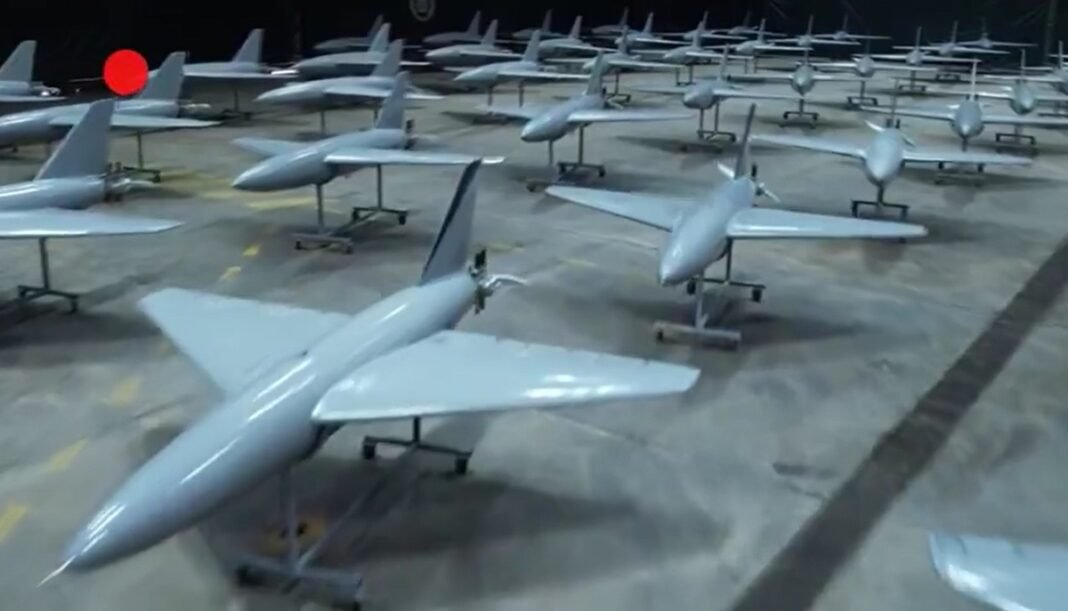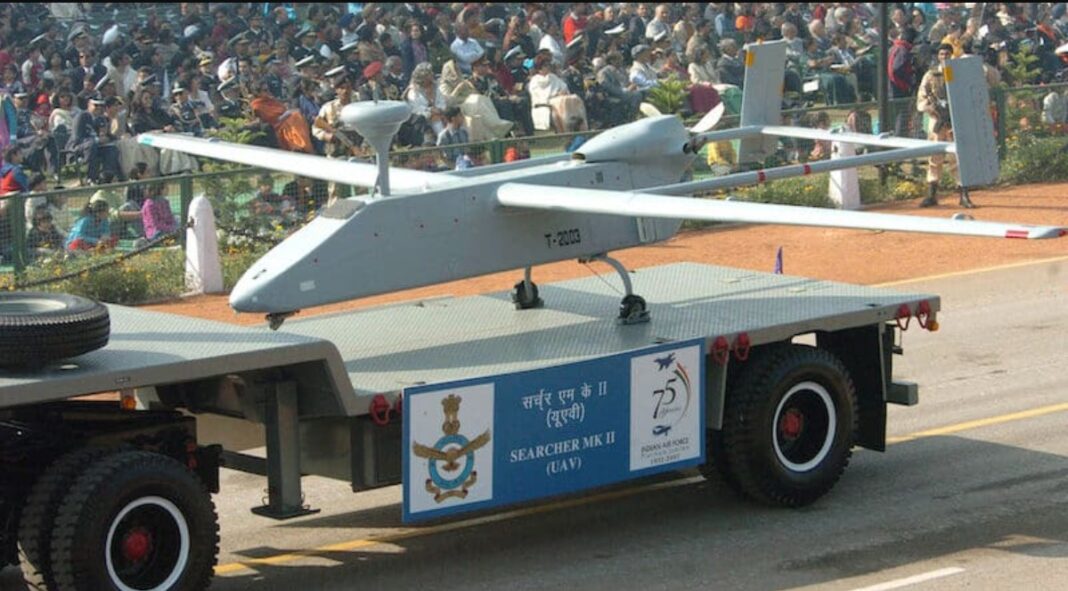
India is accelerating its shift towards drone warfare and counter-drone technology as its border force chief warns that conventional methods may struggle to match China’s military modernisation. A new radar contract and an updated land-warfare doctrine underline the scale of the change.
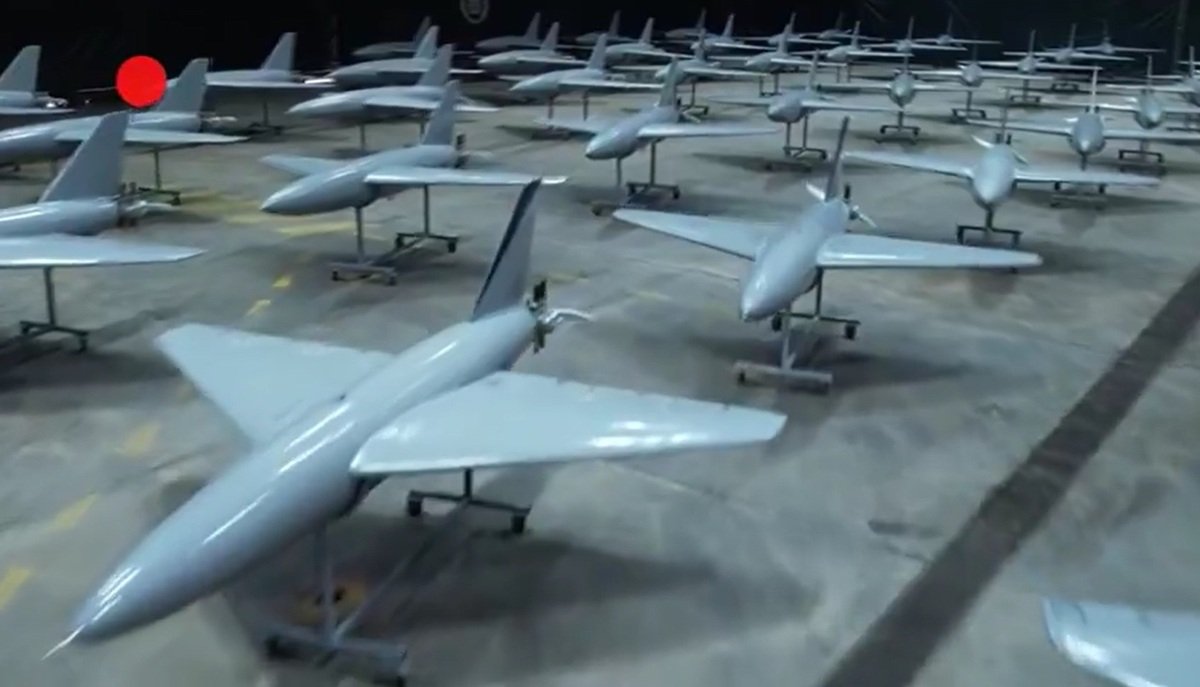 India’s response to China’s military modernisation is increasingly focused on technology, surveillance and new battlefield tactics, with fresh developments pointing to a broader reassessment of how the country prepares for conflict along the Himalayan frontier.
Indo-Tibetan Border Police (ITBP) Director General Shatrujeet Singh Kapur recently warned that confronting China through conventional methods had become increasingly difficult because of the scale of the People’s Liberation Army’s (PLA) military modernisation. His remarks have gained added significance as India moves to strengthen its drone and counter-drone capabilities, expand protective infrastructure along the Line of Actual Control (LAC), and update its military doctrine.
The immediate context is particularly revealing. On October 21, India’s Ministry of Defence announced a ₹770 crore contract with Bharat Electronics Limited (BEL) for improved low-level radars capable of detecting and tracking fighter-sized aircraft as well as mini and micro drones. Separately, the ITBP chief disclosed plans to allocate ₹1,000 crore for drone and counter-drone systems under a larger modernisation programme that has received in-principle approval.
India is also preparing to release a new Land Warfare Doctrine, with drones, precision strikes, artificial intelligence and multi-domain operations expected to feature prominently in its evolving military approach.
These developments do not establish that India is incapable of defending its border with China. They do, however, demonstrate that Indian security planners recognise the need to adapt to a battlefield in which surveillance, unmanned systems, electronic warfare and rapid targeting increasingly shape military operations.
₹1,000 Crore for Drone Warfare: What the ITBP Chief Revealed

Speaking at an ITBP event in Alwar, Rajasthan, on October 22, Kapur described China as a powerful neighbour whose military modernisation requires India to rethink traditional approaches to border security.
According to reports by The Economic Times and other Indian outlets, the ITBP has established drone platoons in its border-guarding battalions. The force is also training drone pilots and developing in-house drone manufacturing capabilities.
Kapur said the force had received approximately ₹400 crore for modernisation, with around 70 per cent earmarked for drone-related capabilities. He also said the Ministry of Home Affairs had granted in-principle approval to a larger modernisation scheme worth approximately ₹4,000 crore, including ₹1,000 crore for drone and anti-drone systems.
The distinction between allocated funds and approved funding is important: the larger programme’s in-principle approval does not mean that the entire amount has already been released or spent.
Nevertheless, the figures show that unmanned systems have become a major component of India’s planned investment in border-force modernisation.
Drones can support reconnaissance, surveillance, communications and situational awareness in mountainous terrain where ground patrols face significant physical and logistical challenges. Counter-drone systems are intended to detect and respond to hostile unmanned aircraft, although their effectiveness depends on sensor coverage, electronic warfare capabilities, operator training and integration with wider air-defence networks.
For the ITBP, the objective is to combine these technologies with conventional border duties rather than rely on personnel and patrols alone.
India’s ₹770 Crore Radar Contract Adds Another Layer to the Strategy
India’s recent radar procurement provides a concrete example of the technological shift described by the ITBP chief.
On October 21, the Ministry of Defence signed a contract worth approximately ₹770 crore with BEL for Improved Low Level Light Weight Radars, designated LLLR-I.
According to the ministry’s official announcement, the systems can detect and track fighter-sized aircraft and mini and micro drones, while also prioritising aerial targets.
The procurement is intended to strengthen the Indian Army’s ability to counter unmanned aerial-system threats and support domestic defence manufacturing.
The key point is that India’s modernisation effort is not limited to acquiring drones. It also requires the ability to detect, track and respond to them.
Offensive drones, reconnaissance platforms and loitering munitions can create persistent threats to troops and installations. Radar systems can help identify aerial activity, while other components of an integrated air-defence network may be required to classify, disrupt or intercept a threat.
The ₹770 crore contract therefore complements the ITBP’s announced focus on counter-drone capabilities, although the radar procurement is a separate Indian Army programme rather than an ITBP purchase.
China’s Military Modernisation Is Forcing a Wider Operational Reassessment
China’s military modernisation extends beyond drones. The PLA has invested in advanced aviation, missiles, command-and-control systems, electronic warfare, surveillance and the integration of information technology into military operations.
These capabilities matter along the LAC, where forces must operate in extreme weather, across difficult terrain and amid competing territorial claims.
A modern border force needs more than manpower. It requires reliable intelligence, protected communications, mobility, suitable infrastructure and the ability to respond quickly to developments across remote areas.
Kapur’s remarks suggest that the ITBP is seeking to close operational gaps through a combination of technology, specialised training and improved infrastructure.
However, the ITBP is a border-guarding force, not a replacement for the Indian Army. Its modernisation addresses particular surveillance, border-security and tactical requirements within India’s broader military posture.
The larger challenge for India is to ensure that improvements in equipment and training are integrated with the Army’s operational planning, intelligence networks and logistics.
Lessons From Galwan: India Plans Specialised Combat Training
Another element of the ITBP’s modernisation programme is the new “Strike” training course, designed to improve readiness for confrontations resembling the June 2020 Galwan Valley clash.
The Galwan incident resulted in the deaths of 20 Indian soldiers. China subsequently acknowledged four military fatalities.
The confrontation exposed the risks of close-contact clashes along the disputed frontier and reinforced the importance of training, force protection and mechanisms for managing encounters between Indian and Chinese troops.
Kapur said the new course would familiarise ITBP personnel with updated tactics and battlefield methods. The entire force is expected to undergo the training by the end of 2027.
The ITBP has also raised Shaurya commando teams for specialised duties. Kapur said these units had demonstrated their capabilities during face-offs with Chinese troops at multiple locations in Arunachal Pradesh.
The training initiatives are intended to prepare personnel for difficult and rapidly changing situations without assuming that every border encounter will develop into conventional warfare.
They also underline a distinction often overlooked in discussions of military modernisation: advanced equipment cannot compensate fully for weaknesses in training, leadership, communications or tactical coordination.
Underground Shelters and High-Altitude Infrastructure Remain Essential
Technology is only one part of India’s response to the challenges posed by China.
Kapur said the ITBP was expanding underground infrastructure at forward locations, including through a pilot project. The force is also upgrading accommodation and equipment for personnel deployed in extreme cold.
According to The Economic Times, 342 of the force’s 383 barracks in extremely cold areas had been insulated. The force had also procured generator sets and introduced cold-start kits to improve vehicle performance in freezing temperatures.
These measures address a basic operational requirement: personnel must be able to remain at forward positions, maintain equipment and sustain patrols despite severe weather and limited access.
Underground shelters can potentially improve protection in conflict conditions, but their effectiveness depends on construction quality, location, ventilation, access and the threats they are designed to withstand.
For high-altitude forces, logistics and infrastructure can be as important as weapons systems. Surveillance technology has limited value if troops lack reliable communications, suitable transport or the facilities required to operate through harsh winters.
India’s New Land Warfare Doctrine Signals a Broader Shift
The ITBP announcement comes as India’s Army leadership prepares for the release of an updated Land Warfare Doctrine.
The doctrine is being presented as a framework for preparing the Army for changing forms of warfare and future conflicts. Reporting ahead of the October 23 release has highlighted drones, artificial intelligence, precision weapons, networked operations and coordination across military domains.
The document follows a period in which conflicts in Ukraine and West Asia have demonstrated the growing importance of unmanned systems, electronic warfare, missile strikes and persistent battlefield surveillance.
These developments have implications for India’s northern frontier with China and its western security environment.
A land-warfare doctrine can provide common principles for training, force development, operational planning and the integration of new technologies. Its practical value, however, depends on the detail of its provisions and how effectively they are implemented.
The announced doctrine should therefore be viewed as part of a wider modernisation effort rather than proof that India has already completed the transformation of its land forces.
What This Means for the India-China Military Balance
The combination of Kapur’s warning, new radar procurement and increased investment in unmanned systems points to a clear priority: India wants to improve its ability to monitor the border, protect personnel and respond to emerging aerial threats.
China’s larger defence-industrial base and sustained military modernisation provide an important part of the strategic context. But the military balance cannot be assessed through a single statement or procurement announcement.
Actual capability depends on the number and quality of systems deployed, operational readiness, training, logistics, intelligence, electronic warfare resilience and coordination between different military organisations.
India’s planned investments suggest that its security establishment sees technology as increasingly important to countering China’s advantages. The extent to which these measures narrow capability gaps remains to be demonstrated.
For Pakistan, the wider lesson is that regional military competition is increasingly shaped by unmanned systems, integrated surveillance, counter-drone capabilities and the industrial capacity to produce and sustain advanced equipment.
Conclusion: India Is Moving Beyond Traditional Border Guarding
The significance of the ITBP chief’s remarks lies in the modernisation measures accompanying them.
India is expanding drone platoons, investing in counter-drone systems, procuring additional radar capabilities, improving high-altitude infrastructure and introducing specialised training. The planned Land Warfare Doctrine adds a broader operational framework to this effort.
Together, these developments show that India is adapting its border-security approach to a more technologically demanding environment.
The challenge for India will be to translate announced funding and procurement plans into operational capabilities that function reliably under difficult conditions. For China, the developments demonstrate that its military modernisation is influencing the planning priorities of its neighbours.
The emerging contest along the Himalayan frontier will therefore be shaped not only by troop deployments, but also by technology, logistics, training and the ability to integrate new systems into effective military operations.