Iran has offered a rare public look inside its combat-drone production infrastructure, with Army Chief Amir Hatami highlighting industrial-scale manufacturing, domestic technological expertise and preparations for future conflicts amid tensions with the United States and Israel.

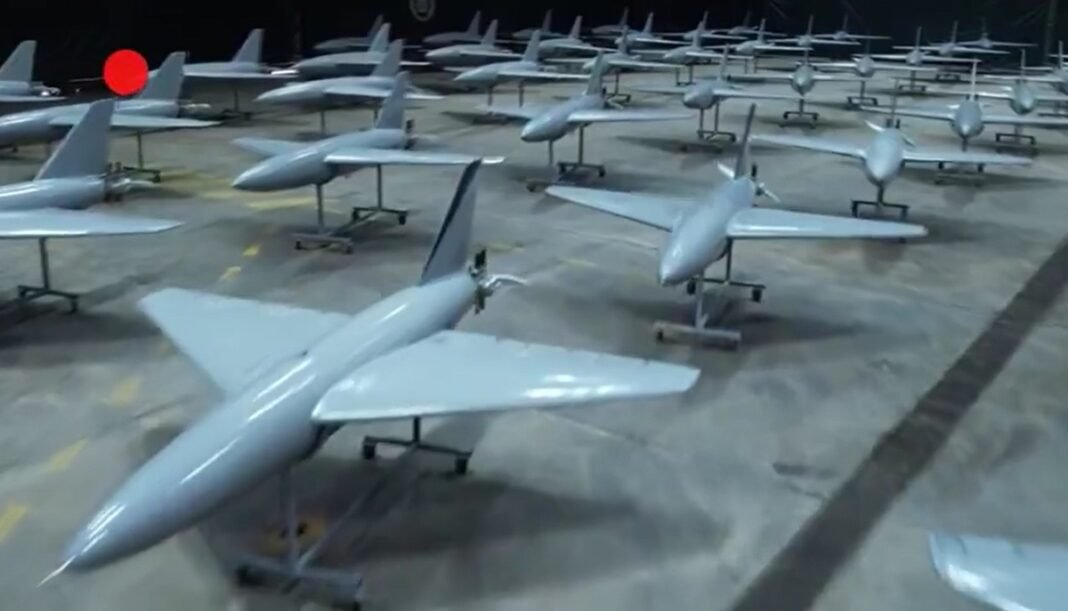
Iran has showcased its combat-drone manufacturing capabilities during a visit by Army Commander-in-Chief Major General Amir Hatami to an Iranian Army production facility, highlighting the country’s efforts to expand domestic unmanned weapons production.
Footage and details published by Iran’s state broadcaster, IRIB, on October 22, 2026, show the military leadership placing particular emphasis on the industrial development of combat and attack drones, including the Arash family of unmanned systems.
The report describes a production ecosystem involving the Iranian Army, the Ministry of Defence, universities, technical specialists and knowledge-based companies. Hatami said the programme had progressed beyond individual weapons development towards an organised industrial effort encompassing production, distribution, maintenance and military training.
The visit provides a glimpse into how Iran says it is developing the industrial infrastructure needed to sustain its drone capabilities. However, the report does not disclose the facility’s location, production capacity, output figures or a complete inventory of the systems being manufactured.
Iran Highlights Industrial-Scale Combat Drone Production
The central development is not simply Hatami’s warning about Iran’s adversaries, but his description of a domestic manufacturing system designed to support the production and operation of unmanned weapons.
According to IRIB, the army chief said Iran had established strong infrastructure for developing its drone capabilities, drawing on technical specialists, universities and knowledge-based companies.
He explained that cooperation between the Iranian Army and the Ministry of Defence had developed into a broader programme focused particularly on Arash drones.
The programme encompasses several elements:
- Drone manufacturing: Developing and producing combat and attack unmanned aerial vehicles.
- Industrial infrastructure: Building the facilities and organisational capacity required to support production.
- Maintenance and distribution: Supporting the deployment and continued operation of unmanned systems.
- Personnel training: Preparing military operators to use the weapons.
- Research and development: Drawing on universities, specialists and domestic technology companies.
The report does not provide independently verified production figures or confirm how many drones the facility can manufacture daily or annually.
Nevertheless, the emphasis on the wider production ecosystem is significant because a military drone programme depends not only on designing an aircraft, but also on producing it consistently, maintaining it and preparing personnel to operate it.
Arash Drone Programme at the Centre of Iran’s Showcase
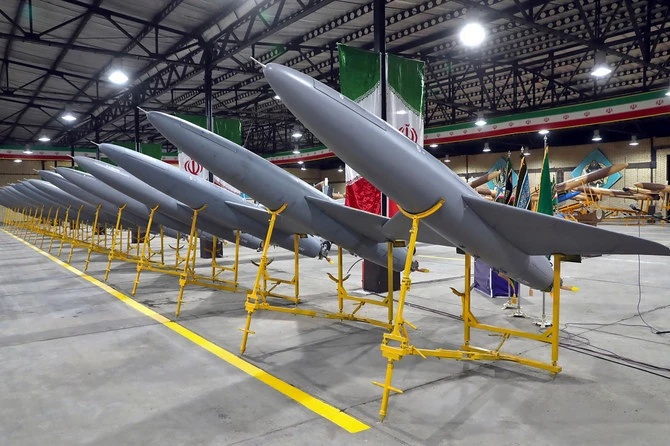
Hatami specifically highlighted the Arash family of drones, identifying it as a major focus of cooperation between the Iranian Army and the Ministry of Defence.
Iran has presented the programme as part of its broader effort to develop indigenous unmanned weapons and reduce dependence on foreign military technology.
The latest IRIB report does not identify the precise Arash variant being manufactured at the facility. It also does not provide new technical specifications, including range, payload, endurance or guidance systems.
The Arash name is associated with Iranian one-way attack drone designs, including the Arash-2. However, the existence of different variants means their capabilities should not be treated as interchangeable.
For context, Iran Watch’s assessment of Iran’s drone fleet documents the broader range of Iranian unmanned systems and explains how their different roles, propulsion systems and technical characteristics shape their military applications.
The latest facility visit therefore offers more information about Iran’s stated production and support arrangements than about any new drone design or technical breakthrough.
Iran Has Previously Announced Large-Scale Drone Inductions

The October showcase follows an earlier announcement by the Iranian Army in January 2026, when Iran said 1,000 strategic drones had been incorporated into its military organisation.
According to Tasnim News Agency, the drones were developed by Army specialists in cooperation with the Ministry of Defence. Iranian officials said the systems covered offensive, strike, reconnaissance and electronic-warfare roles.
The January announcement and the October facility visit concern different aspects of Iran’s drone programme. The earlier announcement concerned the induction of systems into military service, while the latest report focuses on production infrastructure and the industrial organisation supporting unmanned weapons.
Neither announcement independently establishes Iran’s total drone inventory, actual manufacturing output or the number of operational systems available at any given time.
The distinction is important: military inductions, factory capacity, completed production and deployable inventory are separate measures of defence-industrial capability.
Why Drone Manufacturing Matters to Iran’s Military Strategy
Iran has long placed importance on unmanned systems as part of its military strategy. Domestic production offers a way to develop weapons suited to the country’s requirements while reducing reliance on foreign suppliers.
Drones can perform a variety of missions, including surveillance, reconnaissance and one-way attack operations. Their military value depends on their design, reliability, range, payload, communications and integration with other weapons and intelligence systems.
A sustained manufacturing programme can also help a military replenish equipment, maintain a supply of replacement systems and train additional operators.
However, manufacturing capacity does not automatically translate into battlefield effectiveness. Operational performance also depends on the ability to protect production facilities, secure components, maintain supply chains and overcome an adversary’s electronic-warfare and air-defence systems.
Iran’s latest announcement highlights the production infrastructure it says it has developed, but independent information is insufficient to quantify the facility’s contribution to the country’s overall drone output.

Iran Emphasises Lessons From Recent Conflicts
During the visit, Hatami said Iran had drawn important lessons from two recent wars and was preparing its forces for conflicts in which its adversaries could possess more advanced conventional equipment.
He argued that Iran had developed capabilities for what military planners describe as asymmetric warfare, in which a force seeks to offset an opponent’s advantages through different tactics, weapons and operational methods.
The army chief said Iran had sustained damage to some equipment and facilities during recent conflicts but maintained that its preparations for asymmetric warfare had continued.
These statements reflect the Iranian military leadership’s assessment. The IRIB report does not provide independent operational data demonstrating the extent of Iran’s recovery or the effectiveness of its preparations.
The emphasis on domestic drone production nevertheless illustrates why Iran regards the ability to manufacture and sustain unmanned weapons as an important element of its defence planning.
Drone Production and the Wider US-Israel-Iran Confrontation
Iran’s public presentation of its drone infrastructure comes amid continuing tensions involving Tehran, Washington and Israel.
Unmanned weapons have become an increasingly important part of regional military planning because they can be used for surveillance and attacks and may impose substantial defensive costs on countries seeking to intercept them.
Iran’s drone programme has also attracted international scrutiny because of the country’s wider military relationships and the use of Iranian-designed systems in regional conflicts.
For background, the Washington Institute’s analysis of Iran’s drone strategy discusses the role of long-range one-way attack drones, dispersed production and supply networks in Iran’s military approach. Its analysis provides an external perspective rather than an independent verification of the facility shown in the latest IRIB report.
The new footage should therefore be understood as evidence of what Iran is willing to disclose publicly about its drone production efforts, not proof of a decisive change in the regional military balance.

What the Footage Does—and Does Not—Reveal
The visit raises several questions that remain unanswered by the official report.
First, Iran has not publicly disclosed the facility’s production capacity or the number of drones it manufactures over a given period. Second, the report does not establish how much of the production process takes place at this particular site or how many other facilities contribute to the programme.
It also remains unclear whether the facility is dedicated exclusively to the Arash family or produces multiple types of unmanned systems.
Finally, the announcement does not provide independent evidence of production costs, component availability, manufacturing bottlenecks or the rate at which completed drones enter operational service.
These details matter when assessing the scale and resilience of a defence-industrial programme. Images of a production facility can demonstrate industrial activity, but they cannot alone establish total output or operational effectiveness.
Conclusion: Iran Puts Its Drone Manufacturing Infrastructure in the Spotlight
Iran’s latest military presentation has shifted attention towards the industrial foundations of its drone programme.
By highlighting the Arash family, cooperation with the Ministry of Defence and the involvement of universities and domestic technology companies, Army Chief Amir Hatami has presented unmanned weapons production as a continuing industrial effort rather than an isolated weapons-development project.
The showcase also follows Iran’s January announcement that 1,000 strategic drones had entered military service, although the two announcements do not establish the programme’s total output or current operational inventory.
For observers tracking Iran’s military capabilities, the key questions now concern production scale, the range of systems manufactured, supply-chain resilience and the extent to which domestic manufacturing can sustain operational requirements.
The facility visit offers a useful window into Iran’s stated defence-industrial priorities. Its broader military significance, however, will depend on evidence about actual production and operational performance rather than official statements alone.