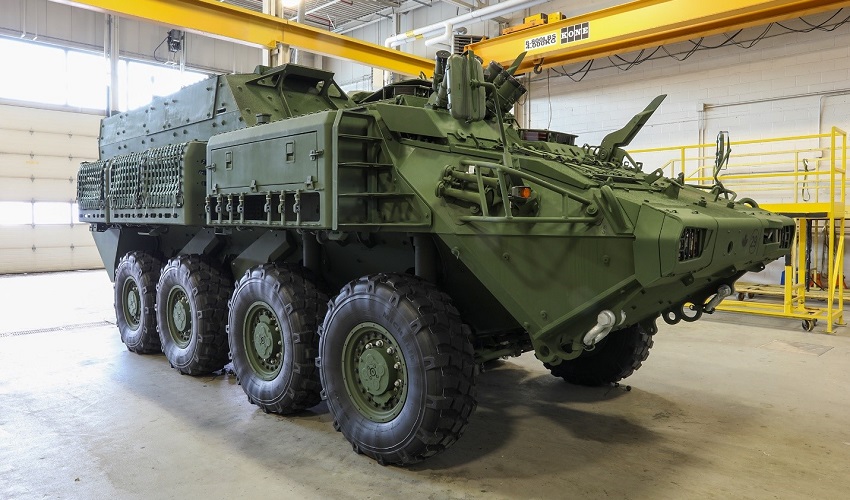
Kongsberg has secured a NOK 1.1 billion contract to supply additional PROTECTOR RS4 remote weapon systems for Canada’s Armoured Combat Support Vehicle fleet, strengthening the Norwegian company’s position in one of Canada’s largest land-force modernisation programmes.
Norwegian defence company Kongsberg has signed a new NOK 1.1 billion contract with General Dynamics Land Systems–Canada (GDLS-Canada) to supply additional PROTECTOR RS4 Remote Weapon Systems (RWS) for the Canadian Army’s Armoured Combat Support Vehicle (ACSV) programme.
The contract, announced on August 20, 2026, is a follow-on order rather than a new programme win. It builds on Kongsberg’s earlier deliveries of PROTECTOR systems for Canadian ACSV vehicles and further embeds the RS4 within Canada’s expanding armoured support fleet.
The value is roughly US$118 million, depending on exchange rates. Kongsberg has not disclosed the number of RS4 systems covered by the latest contract.
The order comes at an important moment for the Canadian Army. Ottawa announced in July that it would add 190 more ACSVs, increasing the planned fleet from 360 to 550 vehicles as Canada expands its land-force capabilities and prepares for a more demanding NATO security environment.

Kongsberg Wins Another Major Canadian Remote Weapon Station Order
The new contract reinforces a relationship between Kongsberg and the Canadian military that stretches back well before the current ACSV programme.
In May 2020, Kongsberg announced a NOK 500 million contract with GDLS-Canada for PROTECTOR remote weapon stations for Canada’s armoured combat support vehicles. Kongsberg said at the time that Canada had already purchased PROTECTOR systems in 2005, 2012 and 2014.
The latest order therefore represents the continuation of a long-standing Canadian procurement relationship rather than a one-off purchase.
Kongsberg Executive Vice President Kjetil Reiten Myhra said the latest contract demonstrates Canadian confidence in the PROTECTOR system and strengthens the company’s long-term relationship with GDLS-Canada.
The Norwegian company describes the RS4 as a key capability for modern armoured vehicles, providing improved crew protection, situational awareness and operational flexibility.
Why the PROTECTOR RS4 Matters
A remote weapon station allows a vehicle crew to operate the weapon from inside the protected hull rather than exposing a gunner in an open turret.
That distinction is increasingly important on modern battlefields, where armoured vehicles face threats ranging from small arms and machine guns to drones, precision weapons and anti-armour systems.
The PROTECTOR RS4 is designed around a stabilised sensor-and-weapon architecture that allows the operator to detect, track and engage targets while the vehicle is moving.
Kongsberg’s current RS4 configuration supports a broad range of weapons, including:
- 5.56 mm machine guns;
- 7.62 mm machine guns;
- 12.7 mm heavy machine guns;
- 40 mm automatic grenade launchers;
- coaxial weapons; and
- selected anti-tank guided missiles, depending on configuration.
The system incorporates day cameras, thermal imaging and a laser rangefinder. Its stabilised four-axis architecture allows the operator to maintain a steady line of sight while the vehicle and weapon move independently.
This makes the RS4 more than a remotely operated machine-gun mount.
It is effectively a sensor, fire-control and weapon-integration package that can turn a support vehicle into a more capable armed platform.
Drone Warfare Is Changing the Role of Remote Weapon Stations
One of the most important developments in modern armoured warfare is the rapid expansion of small unmanned aerial systems.
The battlefield experience of Ukraine has demonstrated how inexpensive drones can locate armoured vehicles, direct artillery fire and attack vulnerable vehicles.
Kongsberg has consequently developed the PROTECTOR family with counter-UAS applications in mind.
The company says the RS4 can be integrated with its PROTECTOR Counter-UAS software and connected to battlefield-management systems and defensive systems.
This is particularly relevant for support vehicles.
An ambulance, command vehicle, repair vehicle or logistics platform may not be intended to fight like an infantry fighting vehicle, but it can still become a target for drones and other threats.
Giving these vehicles an integrated remote weapon station provides them with an additional layer of self-defence.
The ACSV Is More Than a Troop Carrier
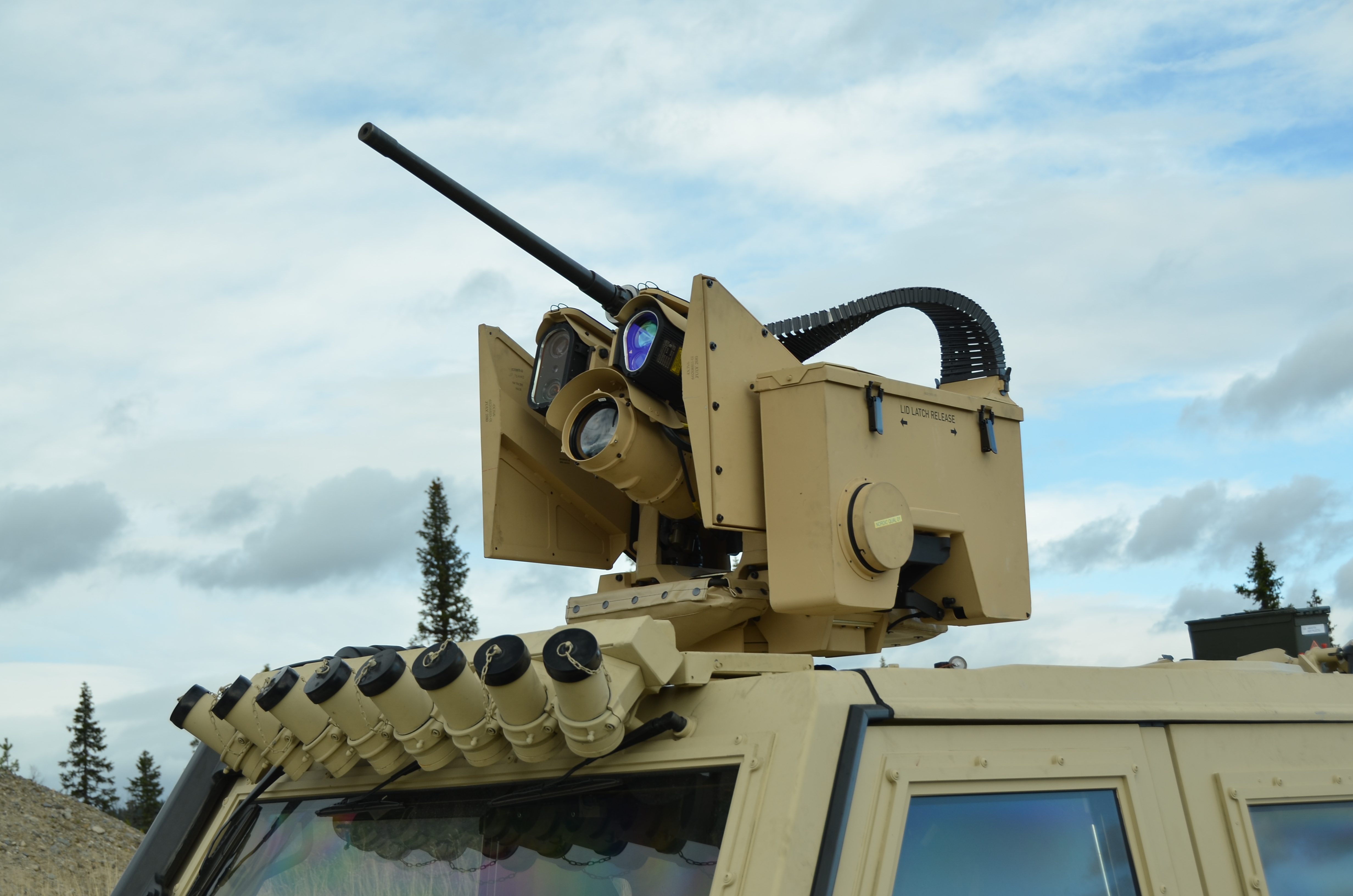
The Canadian ACSV programme is based on the LAV 6.0 platform, which is also the foundation of Canada’s broader modern armoured vehicle fleet.
The original programme covered 360 vehicles in eight variants designed to provide capabilities including troop and cargo transport, ambulance support, command and control, engineering, repair and recovery.
Canada selected the common platform partly to simplify training, maintenance and logistics across the fleet.
The Canadian government’s latest programme information shows that the ACSV project has now expanded to 550 vehicles.
The 190 additional vehicles announced in July 2026 are part of Ottawa’s broader effort to increase defence investment and expand the Canadian Armed Forces’ vehicle capacity.
This expansion makes the timing of Kongsberg’s new order particularly significant.
But Not Every ACSV Will Necessarily Carry an RS4
This is an important distinction.
The existence of a 550-vehicle ACSV fleet does not mean Canada will install a PROTECTOR RS4 on every vehicle.
Kongsberg’s latest announcement does not state how many systems are covered by the NOK 1.1 billion contract.
Earlier Canadian procurement decisions demonstrate why the distinction matters.
The ACSV was designed to accept a remote weapon station, but Canada has previously procured fewer weapon stations than the number of vehicles in the fleet.
Vehicles without an RWS can instead use other weapon configurations.
Therefore, it would be inaccurate to calculate the number of new RS4 systems simply by subtracting previous vehicle numbers from the new 550-vehicle total.
The only confirmed figure from the latest Kongsberg announcement is the contract value: NOK 1.1 billion.
Canada’s ACSV Programme Has Reached an Important Stage
The Canadian government says the ACSV programme achieved Initial Operational Capability on January 15, 2025.
The first vehicle was accepted in December 2020, while the first ACSV deliveries followed later as production and configuration work progressed.
The government’s current schedule puts full operational capability for equipment at 2029, with infrastructure completion planned for 2031.
This means the programme is now moving from initial fielding toward a larger operational fleet.
The addition of 190 vehicles reinforces that trajectory.
Why Canada Is Expanding the Fleet
The expansion reflects a broader shift in Canada’s defence priorities.
Ottawa announced in July 2026 that it would invest nearly C$2 billion over four years to build the additional 190 ACSVs, taking the total fleet to 550.
The Canadian government described the programme as part of a wider effort to strengthen national defence, NATO commitments and the country’s industrial base.
The new vehicles will be built at GDLS-Canada’s facility in London, Ontario.
Ottawa said the broader partnership is expected to sustain more than 6,000 Canadian jobs annually over eight years.
That makes the ACSV programme both a military modernisation project and an industrial policy initiative.
NATO Is an Important Part of the Equation
Canada’s renewed investment in armoured vehicles is taking place against the backdrop of a significantly more demanding NATO security environment.
The war in Ukraine has changed how European and North American militaries think about land warfare.
The return of large-scale conventional warfare has increased emphasis on:
- protected mobility;
- battlefield surveillance;
- counter-drone systems;
- electronic warfare;
- artillery protection;
- logistics survivability;
- distributed command posts; and
- rapid repair and recovery.
Support vehicles are increasingly recognised as essential components of a modern combat formation.
An army cannot sustain combat forces without ammunition, fuel, medical evacuation, maintenance and command-and-control vehicles.
The ACSV is designed precisely around those requirements.
Ukraine Has Also Affected Canada’s ACSV Fleet
Canada has already transferred ACSV vehicles to Ukraine.
Ottawa has supplied armoured support vehicles to Ukraine as part of its military assistance, while GDLS-Canada has continued production for the Canadian fleet.
The Canadian government’s July 2026 announcement specifically noted that the company had also been producing additional armoured vehicles for Ukraine.
This creates another reason for Canada to expand production.
The country needs to support Ukraine while simultaneously maintaining and modernising its own military fleet.
The additional 190 ACSVs therefore help address both capability and replenishment pressures.
Kongsberg’s Position in Canada Goes Beyond One Contract
The latest deal also matters for Kongsberg.
The Norwegian company has established itself as a major supplier of remote weapon stations to NATO and other military customers.
Kongsberg says more than 20,000 PROTECTOR systems had been delivered to 23 countries by 2020, demonstrating the scale of the system’s international user base.
The RS4 has subsequently become a major product in the company’s remote weapon station portfolio.
Its presence across multiple vehicle platforms creates potential advantages in training, logistics, upgrades and interoperability.
For Canada, continuing with an established system reduces the risk associated with introducing an entirely new weapon station.
For Kongsberg, repeat orders strengthen its position within the Canadian defence supply chain.
Why the Follow-On Order Is Significant
The word “follow-on” is important.
Canada is not simply experimenting with the RS4.
The Canadian Army has already integrated the system into the ACSV programme and is now ordering additional units.
That suggests the system has passed the initial integration and procurement hurdles.
Repeat orders are particularly important in defence procurement because a weapon station becomes part of a much larger ecosystem involving:
- vehicle integration;
- ammunition;
- operator training;
- maintenance;
- software;
- spare parts;
- sensors;
- fire-control systems; and
- future upgrades.
Once a system becomes embedded in that ecosystem, replacing it can become expensive and disruptive.
Kongsberg’s latest order therefore strengthens the company’s long-term position in Canada’s armoured vehicle fleet.
ACSV and the Changing Concept of the Support Vehicle
The ACSV also reflects an important shift in armoured warfare.
Traditional support vehicles were often treated as relatively lightly armed platforms operating behind the front line.
Modern warfare has made that distinction increasingly blurred.
Long-range fires, drones, loitering munitions and persistent surveillance can expose logistics and support vehicles far behind the immediate contact line.
As a result, armies increasingly want support vehicles that can:
move with combat formations, survive under fire, communicate across the battlefield and defend themselves.
A remote weapon station provides one part of that equation.
The RS4 does not turn an ACSV into a main battle tank or infantry fighting vehicle.
But it can provide a vehicle crew with a stabilised weapon and sensor system without requiring personnel to expose themselves above the armour.
The Sensor Advantage May Be as Important as the Weapon
One of the less visible advantages of modern remote weapon stations is situational awareness.
Kongsberg’s RS4 integrates optical and thermal sensors with laser ranging and fire-control functions.
That means the system can contribute to the vehicle’s ability to:
- detect potential threats;
- identify targets;
- track moving objects;
- engage targets while moving; and
- operate under reduced visibility.
In a drone-saturated battlefield, the ability to detect threats early can be as important as the calibre of the weapon itself.
The Contract Does Not Mean 550 Armed Vehicles
This point deserves emphasis because it is likely to be misunderstood in online reporting.
Canada’s expanded ACSV fleet will comprise 550 vehicles.
But Kongsberg has not said that the new NOK 1.1 billion contract equips all 190 newly ordered vehicles, nor has it disclosed the number of RS4 systems included.
The most defensible conclusion is that Canada is buying additional RS4 systems as the ACSV programme expands.
The precise allocation will need to be confirmed by Canadian defence procurement authorities or Kongsberg.
What the New Order Says About Canadian Defence Policy
The broader significance of the contract is that Canada is moving away from a minimal approach to land-force procurement.
Ottawa’s decision to increase the ACSV fleet by 190 vehicles comes alongside broader defence spending increases and efforts to strengthen Canada’s domestic defence industrial capacity.
The Canadian government has said it reached NATO’s 2% defence-spending target for the first time since the end of the Cold War, while announcing a wider series of defence partnerships.
The ACSV expansion fits into that broader shift.
Canada is rebuilding capacity at a time when NATO members are reassessing the requirements of high-intensity warfare.
Kongsberg and GDLS-Canada: A Long-Term Defence Partnership
The new RS4 contract also strengthens the relationship between Kongsberg and GDLS-Canada.
GDLS-Canada serves as the prime contractor for the ACSV programme, while Kongsberg is one of the key international technology suppliers.
Canadian government programme documentation lists Kongsberg Defence & Aerospace/Protech Systems among the ACSV programme’s major subcontractors.
That relationship gives Kongsberg a continuing role in Canada’s armoured vehicle modernisation.
It also demonstrates how modern defence programmes are increasingly multinational.
A Canadian armoured vehicle can combine:
Canadian vehicle production + Norwegian remote weapon technology + multinational sensors and subsystems.
That is typical of contemporary NATO defence procurement.
What Comes Next?
Several questions remain unanswered.
The most important is the number of RS4 systems included in the NOK 1.1 billion contract.
The second is whether the new order is directly tied to Canada’s 190 additional ACSVs or represents a broader replenishment and expansion requirement across the programme.
The third is how extensively Canada will use the RS4’s counter-drone and sensor capabilities as the ACSV fleet becomes more operationally mature.
Those details will determine the full military significance of the latest procurement.
The Bottom Line
Kongsberg’s NOK 1.1 billion PROTECTOR RS4 contract is more than another defence export deal.
It strengthens a long-standing Kongsberg-GDLS-Canada relationship, expands the Canadian Army’s remote weapon station inventory and arrives as Ottawa increases the ACSV fleet from 360 to 550 vehicles.
The timing is significant.
Canada is rebuilding land-force capacity while NATO prepares for a security environment shaped by the war in Ukraine, drone warfare, long-range precision weapons and the return of large-scale conventional conflict.
The PROTECTOR RS4 gives Canadian vehicle crews a combination of protected operation, stabilised weapons, thermal and day sensors, laser ranging and potential counter-UAS integration.
At the same time, the latest contract illustrates an important trend in modern armoured warfare:
support vehicles are no longer being designed simply to support the fight from behind the lines. They are increasingly expected to survive, sense, communicate and defend themselves in the same contested battlespace as frontline forces.
Kongsberg’s repeat selection by Canada suggests that the PROTECTOR RS4 has become an established component of that approach.
And with Ottawa now expanding the ACSV fleet to 550 vehicles, the Norwegian company’s role in Canada’s armoured vehicle ecosystem is likely to remain strategically important for years to come.