
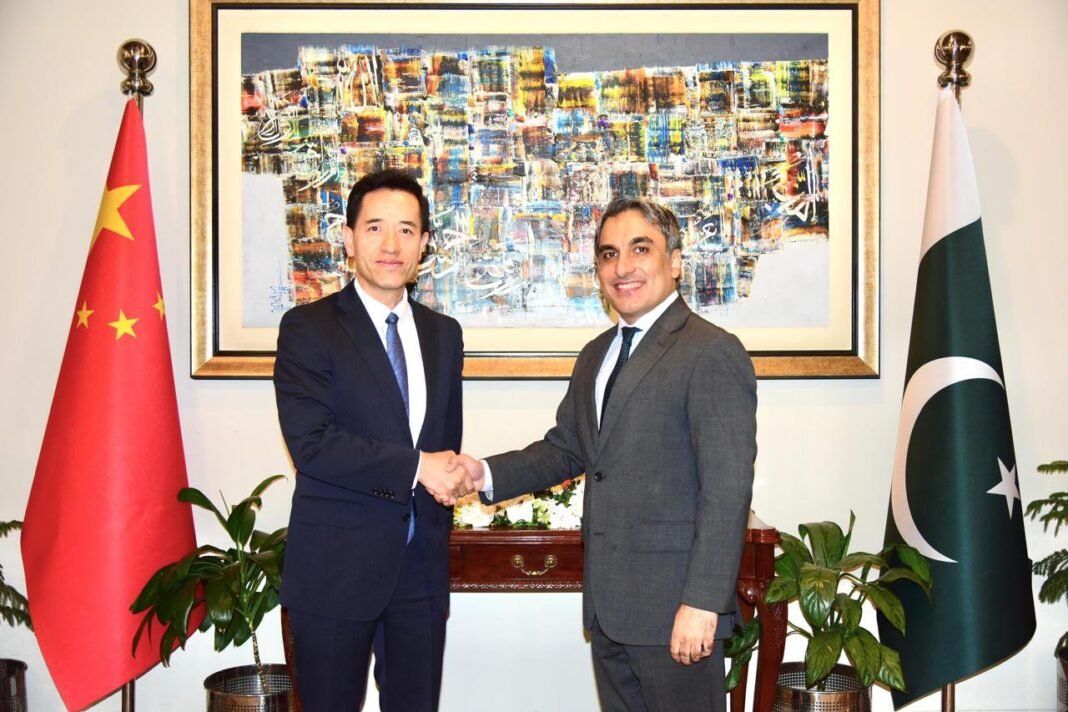
Pakistan and China have moved their border relationship into a new institutional phase with the operationalization of the Pakistan-China Boundary Joint Commission, creating a formal mechanism for cooperation on border management, joint surveys, trade flows and people-to-people connectivity.
The inaugural meeting was held in Islamabad and was co-chaired by Li Ya, Deputy Director General of the Department of Boundary and Ocean Affairs at China’s Ministry of Foreign Affairs, and Bilal Mahmood Chaudhary, Director General (China) at Pakistan’s Ministry of Foreign Affairs.
On the surface, the development is administrative.
Its broader significance is strategic.
The new commission gives Beijing and Islamabad a dedicated diplomatic mechanism for dealing with practical issues along their shared frontier at a time when both countries are simultaneously expanding cooperation on border security, immigration, counterterrorism, CPEC 2.0 and regional connectivity.
In a significant milestone for Pakistan- China relations, the two sides today operationalized the Pakistan-China Boundary Joint Commission, setting the stage for enhanced cooperation in border management, joint border surveys, trade flows and people to people connectivity.
The… pic.twitter.com/q5uNn8qpN0
— Ministry of Foreign Affairs – Pakistan (@ForeignOfficePk) September 16, 2026
What the Pakistan-China Boundary Joint Commission Will Do
According to Pakistan’s Foreign Office, the commission is designed to enhance cooperation in four major areas: border management, joint border surveys, trade flows and people-to-people connectivity.
That combination is important.
The Pakistan-China border is not simply a security boundary. It is also a commercial and transportation corridor, with the Khunjerab Pass providing the principal land connection between the two countries.
The May 2026 Pakistan-China joint statement specifically called for greater use of Khunjerab Pass to strengthen land connectivity and linked the route to the wider development of CPEC 2.0.
The new commission can therefore become a bridge between diplomatic border management and the economic ambitions attached to the China-Pakistan Economic Corridor.
Why the Timing Matters

The commission comes after a series of moves by Islamabad and Beijing to strengthen practical cooperation along the border.
In July, Pakistan and China’s National Immigration Administration agreed to increase cooperation against illegal immigration, smuggling and cross-border crime. The two sides also agreed to establish a joint working group on border management and security and to accelerate work on an agreement designed to streamline immigration procedures.
Pakistan also announced stronger security arrangements at Khunjerab Pass, including the establishment of a Gilgit-Baltistan Scouts checkpoint.
At the operational level, Chinese and Pakistani frontier forces also conducted a joint patrol at Khunjerab earlier this year. China’s frontier defence personnel from the PLA Xinjiang Military Command participated alongside Pakistan’s Khunjerab Security Force, according to reporting based on China’s defence media.
Taken together, these developments show that border cooperation is moving across several levels:
- diplomatic coordination;
- immigration management;
- customs and trade facilitation;
- border-security cooperation;
- military and frontier-force coordination;
- infrastructure and connectivity.
The Boundary Joint Commission provides another institutional layer to that expanding framework.
China’s Message: Border Stability and Connectivity

Chinese official messaging on Pakistan has increasingly placed security and economic connectivity in the same strategic framework.
During Prime Minister Shehbaz Sharif’s May 2026 visit to China, Beijing and Islamabad agreed to deepen the all-weather strategic cooperative partnership, accelerate CPEC 2.0 and make greater use of the Khunjerab Pass for land connectivity.
China also stated its readiness to work with Pakistan on a China-Pakistan Security Partnership, including continued bilateral and multilateral counterterrorism cooperation and stronger military-to-military coordination.
That context gives the new boundary commission greater significance.
For Beijing, a secure and efficiently managed border is directly connected to the reliability of its western trade and connectivity routes.
For Pakistan, better border administration can help turn the northern frontier into a more efficient channel for trade and movement rather than treating it primarily as a security line.
Chinese Media and the PLA Angle
Chinese defence reporting has already highlighted practical cooperation between Pakistani and Chinese frontier forces.
The recent Khunjerab joint patrol was reported by Chinese defence-linked media as an activity involving the PLA Xinjiang Military Command and Pakistan’s Khunjerab Security Force. The patrol included discussion of the China-Pakistan border situation and demonstrated coordination between the two sides’ frontier personnel.
That is significant because the latest commission is being established alongside, rather than instead of, operational border cooperation.
In other words, the emerging framework has both a civil-diplomatic component and a security component.
Chinese official statements have also repeatedly connected the Pakistan relationship with regional stability, counterterrorism and the protection of Chinese personnel and projects in Pakistan. Beijing said in May that Pakistan would take targeted measures to strengthen security cooperation for Chinese personnel, projects and institutions, while China would support Pakistan’s counterterrorism efforts.
Chinese messaging therefore points toward a model in which border security, infrastructure security and connectivity are increasingly treated as interconnected issues.
The CPEC Connection
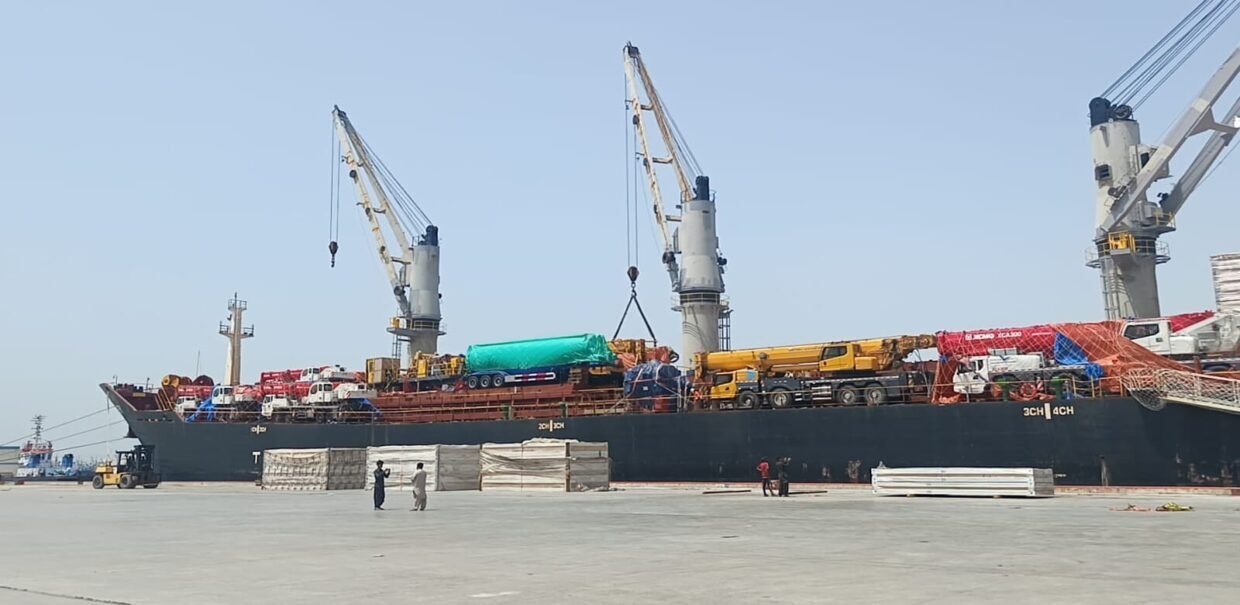
The biggest economic reason for strengthening border coordination is CPEC.
CPEC 2.0 is intended to move beyond the original emphasis on major infrastructure and expand cooperation into industrial development, agriculture, technology, minerals and other sectors.
The May joint statement specifically mentioned the Karakoram Highway Thakot-Raikot realignment, Gwadar’s development as a regional connectivity hub and greater use of Khunjerab for land connectivity.
That makes the management of the Pakistan-China frontier increasingly important to the wider CPEC architecture.
Better coordination at the border can affect:
Trade: Faster and more predictable movement of goods.
Customs: More efficient clearance procedures.
Immigration: Smoother movement of authorized personnel.
Security: Better coordination against smuggling and cross-border crime.
Infrastructure: More effective management of projects connecting the two countries.
People-to-people links: Greater movement of traders, workers, students and visitors.
The boundary commission could consequently become a relatively low-profile but important component of the next phase of CPEC.
Pakistan’s Border Is Also China’s Western Gateway
There is another dimension that deserves attention.
Pakistan’s northern border connects China’s Xinjiang region with the wider South Asian and Arabian Sea environment.
That geographical reality gives Pakistan importance in China’s connectivity calculations.
China has been developing transport links through Xinjiang while Pakistan provides access toward the Arabian Sea through the Karakoram corridor and CPEC infrastructure.
The two countries therefore have a mutual interest in making the border predictable.
A border crossing that works efficiently is an economic asset. A border crossing affected by security problems, administrative delays or inadequate infrastructure becomes a constraint on connectivity.
This is why the new commission’s mandate includes both security and trade.
The Security Dimension Is Becoming Harder to Ignore
The security component is particularly relevant because Chinese citizens and companies operating in Pakistan have increasingly become part of the bilateral security agenda.
The May joint statement explicitly linked CPEC and bilateral development with stronger counterterrorism cooperation and measures to protect Chinese personnel, projects and institutions.
The July agreement between Pakistan and China’s National Immigration Administration added another layer, focusing on illegal immigration, arms smuggling and cross-border crime.
The new Boundary Joint Commission should therefore not be viewed as an isolated diplomatic initiative.
It fits into a wider process in which Islamabad and Beijing are attempting to institutionalize cooperation across the entire border-management chain.
What Foreign Military and Strategic Observers Will Watch
From a military perspective, the most important issue will be whether diplomatic coordination translates into more effective operational coordination.
The recent joint patrol at Khunjerab provides an example of what that could look like at the ground level. Chinese and Pakistani frontier forces have already demonstrated the ability to conduct coordinated activity in the high-altitude border environment.
But the new commission itself is not a military alliance mechanism.
Its announced mandate is broader and primarily diplomatic and administrative: border management, surveys, trade and connectivity.
That distinction matters.
The commission should instead be understood as part of a layered Pakistan-China relationship in which diplomacy, economic connectivity, internal security and defence cooperation increasingly overlap.
The May joint statement’s reference to a China-Pakistan Security Partnership and stronger military-to-military cooperation provides the broader strategic context.
Why Joint Border Surveys Matter
One of the less discussed elements is joint surveying.
Boundary management requires accurate and mutually accepted geographic information, particularly in mountainous terrain.
Joint surveys can help the two sides maintain common technical references and address practical questions concerning border infrastructure, routes, crossings and changing conditions.
This is especially relevant in a high-altitude environment where terrain, weather and infrastructure can complicate movement.
It also gives the two governments a formal channel for discussing technical border matters before they become larger diplomatic problems.
A More Institutionalized Pakistan-China Border
The evolution is clear.
Pakistan and China are moving from individual arrangements toward a more interconnected institutional framework.
There are now several pieces:
Boundary Joint Commission: diplomatic and technical border coordination.
Border-management working group: security and immigration coordination.
Joint frontier patrols: operational cooperation.
Khunjerab connectivity: trade and transportation.
CPEC 2.0: broader economic integration.
Security Partnership: strategic and counterterrorism cooperation.
Each mechanism has a different function, but together they point toward deeper management of the Pakistan-China relationship at its most sensitive geographical interface.
China-Pakistan Relations Enter Their 75th Anniversary Year
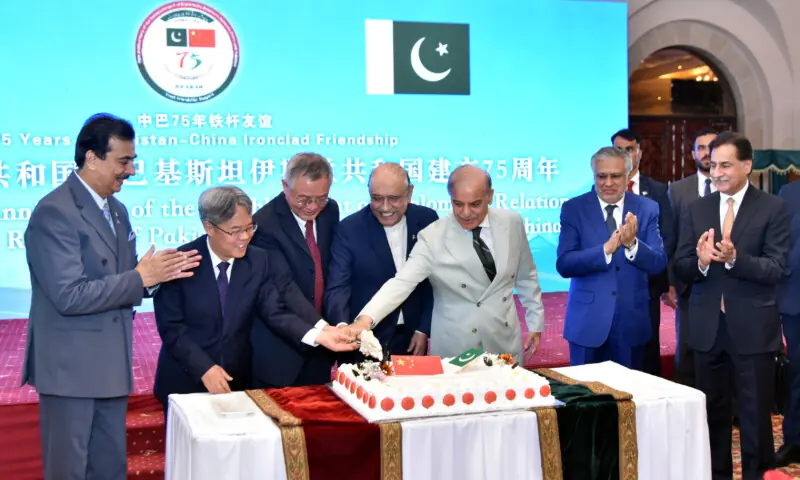
The development also comes during the 75th anniversary of Pakistan-China diplomatic relations.
The two governments have described the relationship as an all-weather strategic cooperative partnership and agreed in May to accelerate construction of an even closer China-Pakistan community with a shared future.
Chinese officials have continued to emphasize the long-term character of the partnership.
On September 7, Chinese Assistant Foreign Minister Liu Bin told a Pakistani delegation of former senior diplomats that Beijing was ready to work with Pakistan to implement the understandings reached by the two countries’ leaders and deepen bilateral and multilateral cooperation.
That political messaging now has a growing practical component along the border.
The Strategic Meaning for Pakistan
For Islamabad, the Boundary Joint Commission offers several potential advantages.
First, it creates a permanent channel for addressing border-management issues with Beijing.
Second, it can help reduce friction affecting cross-border trade.
Third, it can support the development of Khunjerab as a more effective trade and connectivity route.
Fourth, it strengthens institutional coordination at a time when Pakistan and China are expanding cooperation on counterterrorism and the security of CPEC-related projects.
And finally, it gives Pakistan another mechanism through which the political commitments made at the leadership level can be translated into routine government-to-government cooperation.
The Bigger Picture
The operationalization of the Pakistan-China Boundary Joint Commission may not generate the same headlines as a new defence agreement or a major CPEC project.
Its importance lies elsewhere.
It creates an institutional mechanism at the point where Pakistan’s security interests, China’s western-border concerns, CPEC connectivity, trade and regional movement intersect.
The July border-management agreement, the Khunjerab joint patrol and the May commitments on CPEC 2.0 and the China-Pakistan Security Partnership all provide context for understanding the development.
For Beijing, a stable and efficiently managed Pakistan-China border supports its wider connectivity and security interests.
For Islamabad, it can help convert the northern frontier into a more productive economic gateway while strengthening coordination with its most important strategic partner.
The Boundary Joint Commission is therefore best understood not as another bureaucratic body, but as another piece in the institutional architecture of Pakistan-China relations—one that links the border, trade, security and CPEC more closely than before.