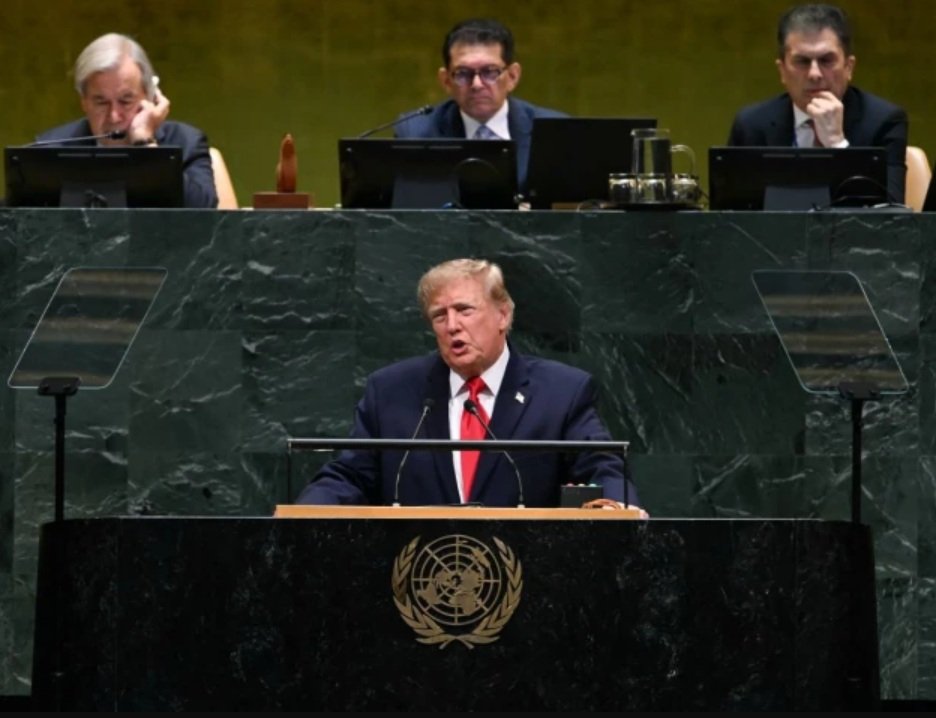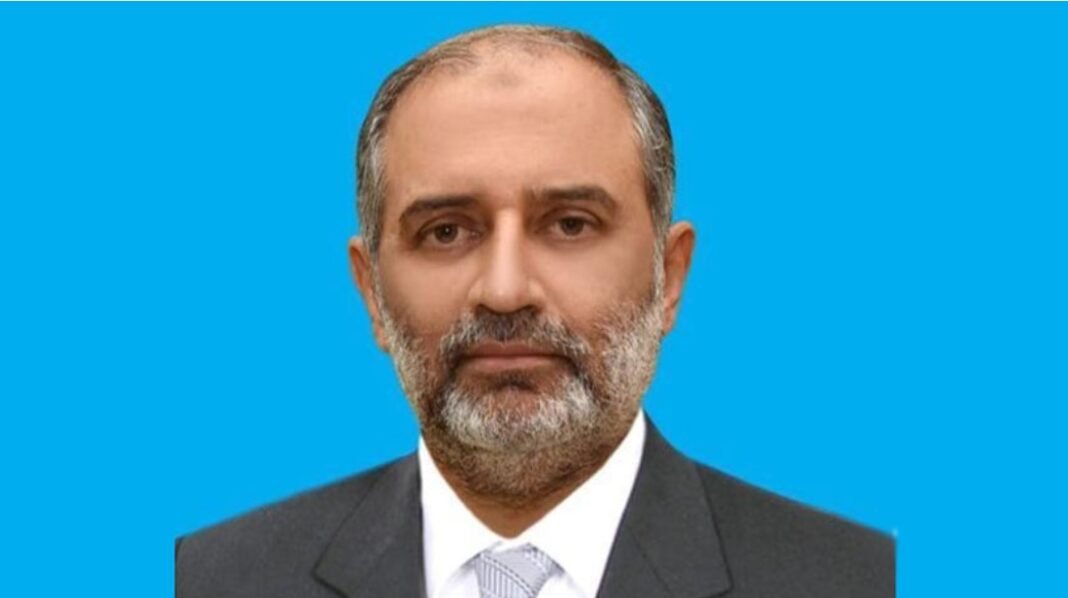
Pakistan has appointed retired Lieutenant General Nauman Mahmood, Hilal-e-Imtiaz (Military), as the first Secretary General of the Makkah Joint Defence Agreement, taking the trilateral defence framework with Saudi Arabia and Türkiye into a new institutional phase.
The Foreign Office announced the appointment on Wednesday, September 23, saying the Secretary General will lead the General Secretariat of the alliance being established in Riyadh.
The announcement is significant because it moves the Makkah agreement beyond its original political commitment and toward the creation of a permanent organisational structure.
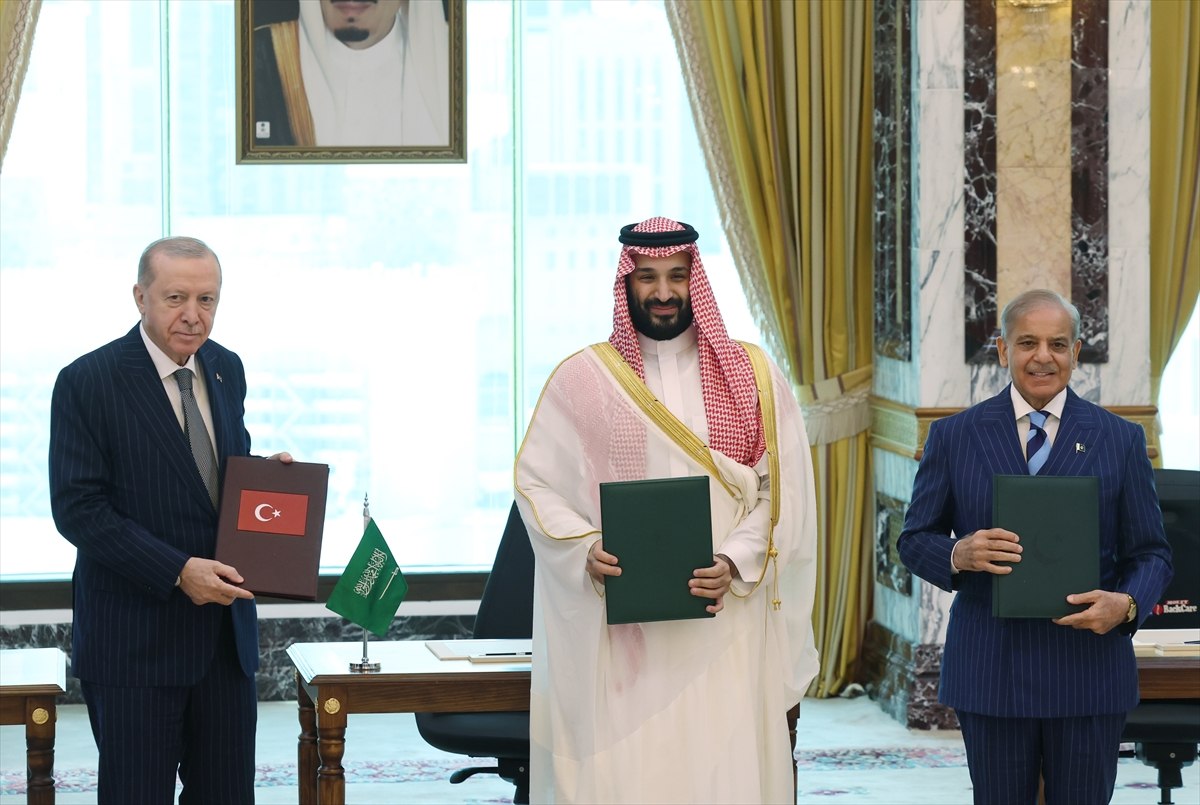
Pakistan, Saudi Arabia and Türkiye signed the Makkah Joint Defence Agreement on August 7. On August 31, senior foreign, defence and military officials from the three countries met in Istanbul and agreed to establish a Secretariat in Saudi Arabia, initially headed by a Pakistani Secretary General for three years.
Nauman Mahmood’s appointment now gives that Secretariat its first head.
Why the appointment matters
The significance of the announcement is not simply that Pakistan has secured the first Secretary General position.
It indicates that the three countries are beginning to build the institutional machinery required to make the Makkah agreement function on a continuing basis.
The August 31 joint statement said the three countries would take steps to institutionalise their cooperation, strengthen collective deterrence and defence, and improve coordination between their armed forces. It also called for greater cooperation in defence industries, joint technology development and production.
The Riyadh Secretariat will therefore be the administrative centre through which much of this cooperation can be organised.
However, the appointment should not be interpreted as the creation of a unified Pakistan-Saudi-Türkiye military command.
The agreement is still being institutionalised, and the three countries have yet to publicly set out a detailed structure for joint command, force deployment or automatic military intervention.
That distinction will remain important as the framework develops.
Who is Lieutenant General Nauman Mahmood?
Nauman Mahmood is a retired Pakistan Army three-star officer whose career includes operational command, intelligence analysis, communications, strategic studies and senior military education.
He belongs to the Baloch Regiment and was commissioned into the Pakistan Army in 1987.
During his career, he commanded an infantry division in North Waziristan, served in senior corps-level positions and later commanded XI Corps in Peshawar. His career included responsibilities connected with Pakistan’s counterterrorism and border-security environment.
Mahmood also served in Pakistan’s military intelligence establishment, including as Director General Analysis at the Inter-Services Intelligence Directorate. He subsequently served at General Headquarters as Inspector General of the Communication and Information Technology Branch.
He later became President of the National Defence University in Islamabad, a position that placed him at the centre of Pakistan’s strategic and defence-education environment.
His background is relevant to the new assignment because the Makkah Secretariat will require someone familiar not only with military operations but also with strategic planning, intelligence assessment, defence institutions and interaction between senior military establishments.
What will the Makkah Secretariat actually do?
The Secretariat’s precise organisational structure has not yet been publicly detailed.
But the August 31 joint statement provides an indication of the areas the three countries want to develop.
The Secretariat is expected to support cooperation between Pakistan, Saudi Arabia and Türkiye and help coordinate the work conducted under the agreement.
Its responsibilities could eventually include:
- coordinating meetings between the three governments and military leadership;
- preparing and implementing decisions of the Strategic Political and Defence Committee;
- supporting joint military activities and exercises;
- facilitating defence-policy coordination;
- developing mechanisms for military-to-military cooperation;
- supporting defence-industry collaboration;
- coordinating work on joint technology development;
- facilitating joint production initiatives; and
- maintaining institutional communication between the three member states.
These are areas supported by the agreement’s stated objectives. The exact internal structure and procedures will have to be worked out by the three countries.
Riyadh becomes the centre of the new defence structure
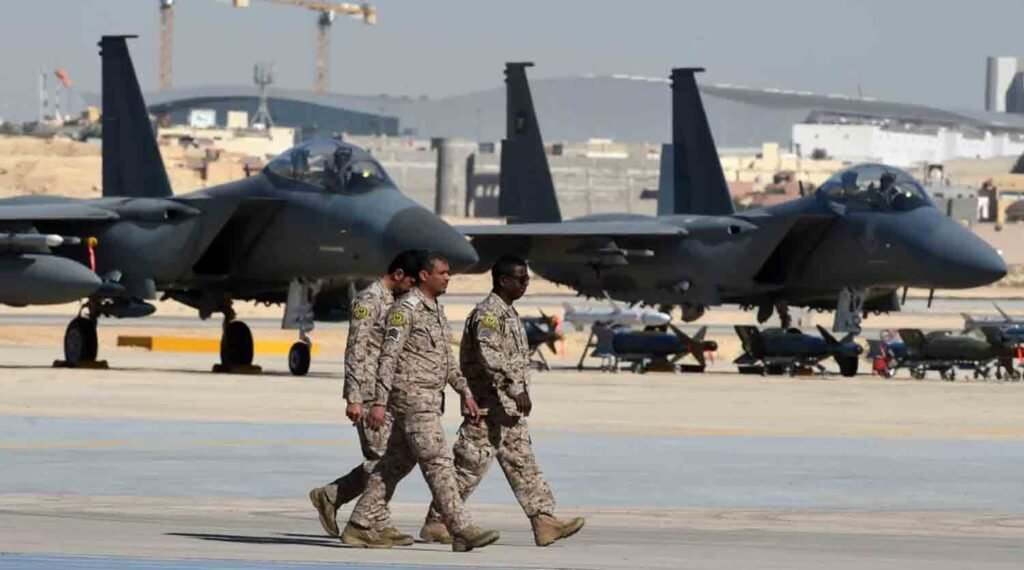
The decision to establish the Secretariat in Riyadh gives Saudi Arabia an important institutional role within the arrangement.
The Kingdom is not only a founding member but will also host the permanent administrative machinery of the agreement.
For Saudi Arabia, the Secretariat provides a mechanism through which defence coordination with Pakistan and Türkiye can continue between high-level political meetings.
For Pakistan, the appointment of the first Secretary General gives Islamabad a central role during the organisation’s formative period.
For Türkiye, the arrangement creates a permanent channel for trilateral defence coordination with two strategically important Muslim-majority states.
The location and leadership structure therefore give all three countries a stake in the institution’s development.
The collective-defence clause is at the heart of the pact
The most important provision of the Makkah agreement is its collective-defence principle.
The agreement states that an armed attack against one member is to be considered an attack against all three, within the framework of the inherent right of individual and collective self-defence under Article 51 of the UN Charter.
Pakistan has described the arrangement as defensive in nature and said it is intended to strengthen collective deterrence, sovereignty and territorial integrity.
But the practical application of that principle will depend on mechanisms that have yet to be developed.
For example, the agreement still leaves important operational questions.
What constitutes an armed attack?
Who determines whether the collective-defence provision has been triggered?
How quickly would the three governments consult each other?
What forms of assistance could be provided?
Would a response necessarily involve combat troops, or could it involve intelligence, air defence, logistics, naval support or other military assistance?
The Secretariat will likely become an important part of developing procedures around such questions.
The timing of Nauman Mahmood’s appointment is significant

The September 23 announcement comes at a particularly sensitive moment for the region.
Saudi Arabia has faced renewed attacks from Yemen’s Houthis, while the Houthi movement has made territorial gains and increased pressure around the Red Sea and Bab el-Mandeb.
Türkiye has already indicated that it is prepared to help Saudi Arabia meet military requirements under the Makkah agreement.
Turkish Foreign Minister Hakan Fidan said last week that Ankara could provide support for Saudi military needs under the pact, including technical military requirements. The comments came amid intensified Houthi attacks on Saudi territory, energy infrastructure and maritime routes.
The timing gives the new Secretariat an immediate regional context.
The three countries are not building the framework in an environment of relative stability. They are doing so while major security questions are developing across the Gulf, Red Sea and wider Middle East.
Pakistan has so far stressed the defensive nature of the pact
Islamabad has been careful to distinguish the Makkah agreement from automatic participation in every regional military operation.
The pact establishes a collective-defence commitment, but Pakistan has not publicly said that it will automatically participate in offensive operations in Yemen or elsewhere simply because a member is involved in a conflict.
That distinction could become increasingly important as Saudi Arabia faces pressure from the Houthis.
Pakistan’s approach has been to emphasise the agreement’s defensive character and the need for institutional mechanisms before drawing conclusions about specific military deployments.
This suggests that the new Secretariat’s first phase is likely to focus heavily on coordination, planning and institutional development.
Defence industry could become one of the pact’s biggest areas
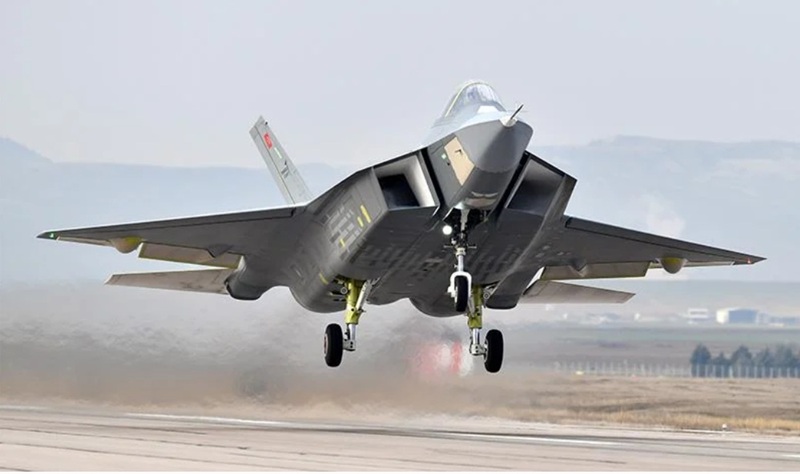
The Makkah framework is not limited to traditional military cooperation.
The August 31 joint statement specifically mentioned defence industries, joint technology development and production.
That opens a potentially important avenue for cooperation between three countries with different but complementary capabilities.
Pakistan has an established defence-production base and experience in aircraft, armoured vehicles, missiles, naval systems and other military equipment.
Türkiye has rapidly expanded its indigenous defence industry, particularly in unmanned systems, electronics, naval platforms, missiles and advanced military technologies.
Saudi Arabia has substantial financial resources and a national strategy aimed at increasing domestic defence production and localisation.
A structured trilateral mechanism could eventually connect these capabilities.
The first Secretary General could therefore find that defence-industrial cooperation becomes as important to the Makkah framework as traditional military exercises.
Joint technology could become the next phase
The reference to joint technology development is particularly significant.
Modern regional security increasingly depends on areas such as:
- unmanned aerial systems;
- counter-drone technology;
- electronic warfare;
- air and missile defence;
- secure communications;
- artificial intelligence;
- surveillance and reconnaissance;
- cyber defence; and
- battlefield data networks.
A permanent Secretariat could help identify areas where the three countries could cooperate rather than simply purchasing equipment separately.
Such cooperation would also give the pact an economic dimension.
Joint production could create defence-industrial links between Pakistan, Saudi Arabia and Türkiye while reducing dependence on external suppliers in selected areas.
Saudi Arabia brings strategic geography and resources
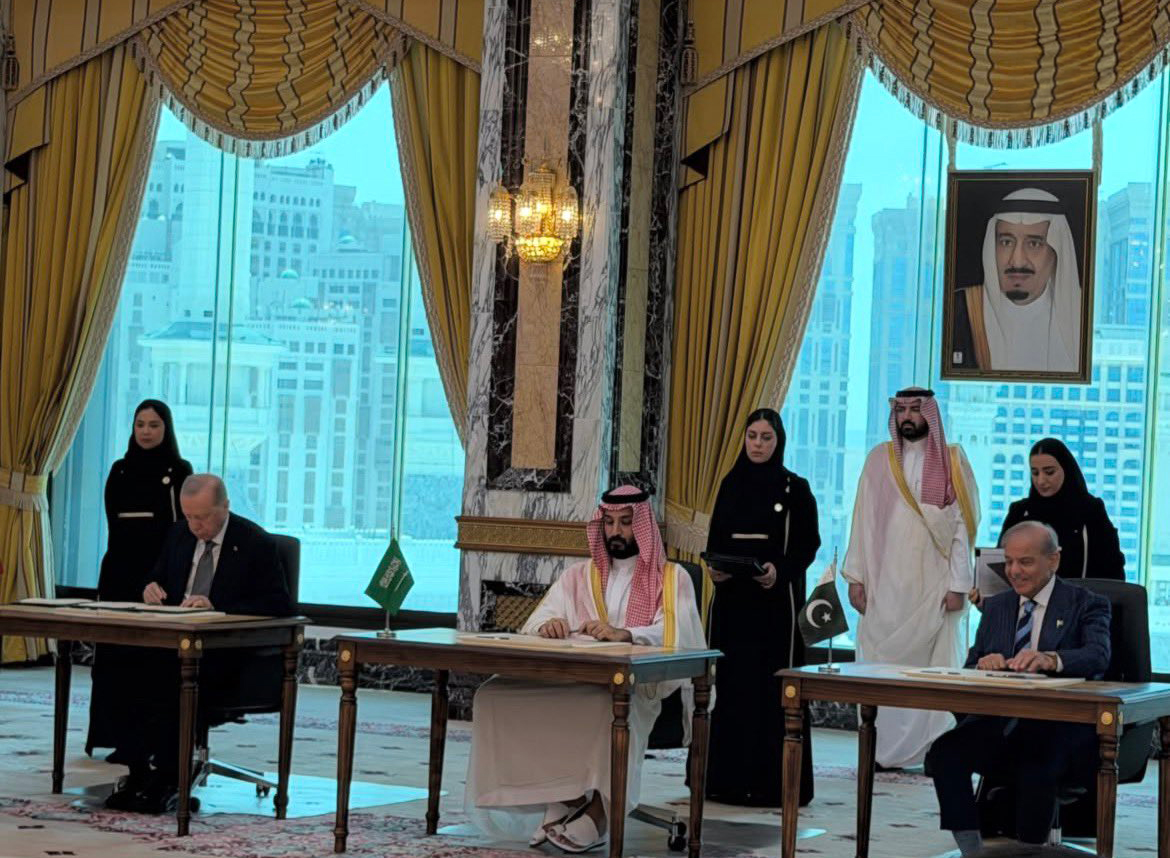
Saudi Arabia’s role is not limited to hosting the Secretariat.
The Kingdom occupies a strategically important position linking the Gulf, Red Sea and wider Arab region.
Its military requirements are also significant because of its geographic exposure and the threats emerging from Yemen and the wider regional conflict.
Saudi Arabia’s financial capacity could support joint defence projects, while Pakistan and Türkiye could contribute manpower, military expertise, technology and industrial capabilities.
That combination could eventually give the Makkah framework a broader foundation than a conventional defence pact.
Pakistan brings long-standing Saudi defence ties
Pakistan and Saudi Arabia have maintained decades of military cooperation.
Pakistani military personnel have historically trained and supported Saudi forces, while the two countries have conducted military exercises and maintained close defence contacts.
The Makkah agreement adds Türkiye to that relationship.
That creates a three-way structure in which Pakistan’s longstanding defence relationship with Saudi Arabia intersects with Türkiye’s expanding strategic and military partnership with both countries.
The Secretariat could provide a mechanism for moving these largely bilateral relationships into a more coordinated trilateral format.
Türkiye’s role is also expanding
Türkiye brings a growing defence-industrial base and increasing regional military influence.
Ankara has developed significant capabilities in drones, precision weapons, electronic systems, naval platforms and other military technologies.
The country’s willingness to discuss military support for Saudi Arabia under the Makkah agreement gives the pact an immediate practical dimension.
At the same time, Türkiye has emphasised that the agreement is based on sovereignty, territorial integrity and non-interference principles.
That language indicates that the three countries are seeking to present the framework as a collective-security arrangement rather than an offensive bloc directed against a specific regional state.
The Makkah pact is not yet a NATO-style military command
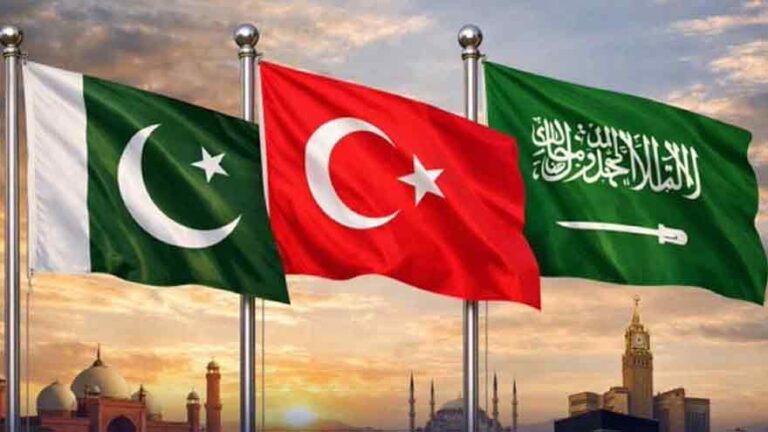
This is perhaps the most important distinction for understanding what happens next.
The agreement contains a collective-defence commitment, but there is currently no public evidence that Pakistan, Saudi Arabia and Türkiye have created a single integrated military command comparable to NATO’s command structure.
The new Secretary General will lead a General Secretariat, not a publicly announced unified armed force.
That means the coming months will be important.
The credibility of the agreement will depend on whether the three countries establish clear procedures for consultations, intelligence exchange, military coordination and collective responses.
The institutional framework will have to be built before its full strategic potential can be assessed.
Could the pact be tested by the Yemen crisis?
The current situation around Yemen could provide an early test of how the agreement works in practice.
Saudi Arabia is facing Houthi attacks and has sought greater external military support.
Türkiye has publicly discussed assistance under the pact.
Pakistan has emphasised its commitment to the agreement while also maintaining a cautious position regarding direct participation in offensive operations.
That leaves the new Secretariat facing a sensitive question: how does a defensive collective-security framework respond when one member is under attack but the conflict is part of a much larger regional confrontation?
The answer will help determine how the pact functions in future crises.
It may also establish precedents for how the collective-defence clause is interpreted.
Expansion could come later
The Makkah framework could eventually attract interest from other countries, but expansion is not the immediate priority.
The three founding states first need to establish their own mechanisms and demonstrate that the arrangement can function effectively.
The Istanbul meeting focused on institutionalising the existing three-country framework, while Turkish officials have indicated that the arrangement could remain open to broader regional participation.
An expansion decision would therefore likely come after the founding members have developed the Secretariat and clarified the pact’s operating procedures.
Nauman Mahmood’s first task will be institution-building
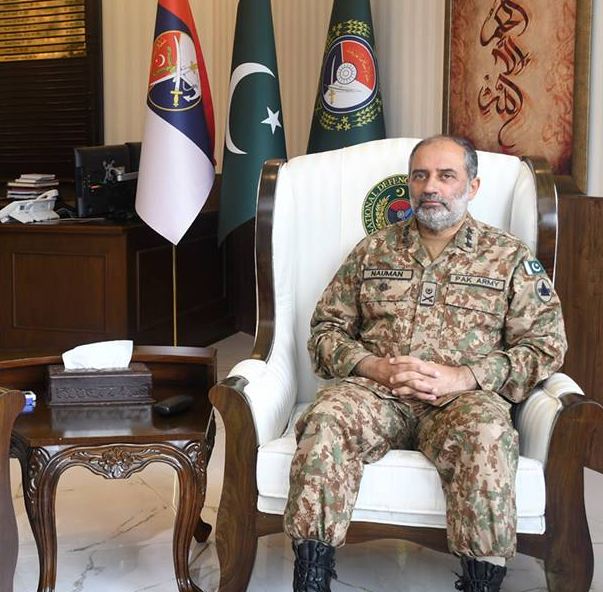
The first Secretary General faces a role that is different from a conventional military command.
His immediate challenge will be to help turn broad strategic commitments into working institutions.
That could involve building the Riyadh Secretariat, establishing communication channels with the three defence ministries and military headquarters, supporting the Strategic Political and Defence Committee and developing mechanisms for joint activities.
He will also have to navigate three different defence establishments with different structures, priorities and regional relationships.
His background across operational command, intelligence analysis, communications and strategic education could prove relevant to that task.
From agreement to institution
The Makkah Joint Defence Agreement was signed on August 7.
On August 31, Pakistan, Saudi Arabia and Türkiye agreed in Istanbul to establish a permanent Secretariat in Saudi Arabia and specified that the first Secretary General would come from Pakistan for a three-year term.
On September 23, Pakistan announced the appointment of Lieutenant General Nauman Mahmood.
That timeline shows the speed with which the three countries are moving to create an institutional framework.
The next stage will be considerably more difficult.
The members will need to determine how the Secretariat functions, how military cooperation is coordinated, how collective defence is interpreted, how joint exercises are organised and whether the defence-industrial component can produce concrete projects.
The answers will determine whether the Makkah agreement remains primarily a political-security commitment or develops into a durable regional defence institution.
For the wider Middle East, the development comes as regional security arrangements are undergoing rapid change.
The Makkah agreement has now entered its institution-building phase. The appointment of Nauman Mahmood is the first visible sign that the framework is moving from the signing table to a permanent structure in Riyadh.
What follows — the Secretariat’s organisation, military coordination mechanisms, defence-industrial projects and the practical interpretation of collective defence — will determine how much strategic weight the agreement eventually carries.