The United Nations General Assembly has become the latest arena for an increasingly complicated effort to end the nearly seven-month U.S.-Iran war, with Gulf states working through diplomatic channels while President Donald Trump simultaneously threatens further escalation and predicts that Washington and Tehran will eventually reach a deal.
The conflicting signals were on full display in New York on Tuesday.
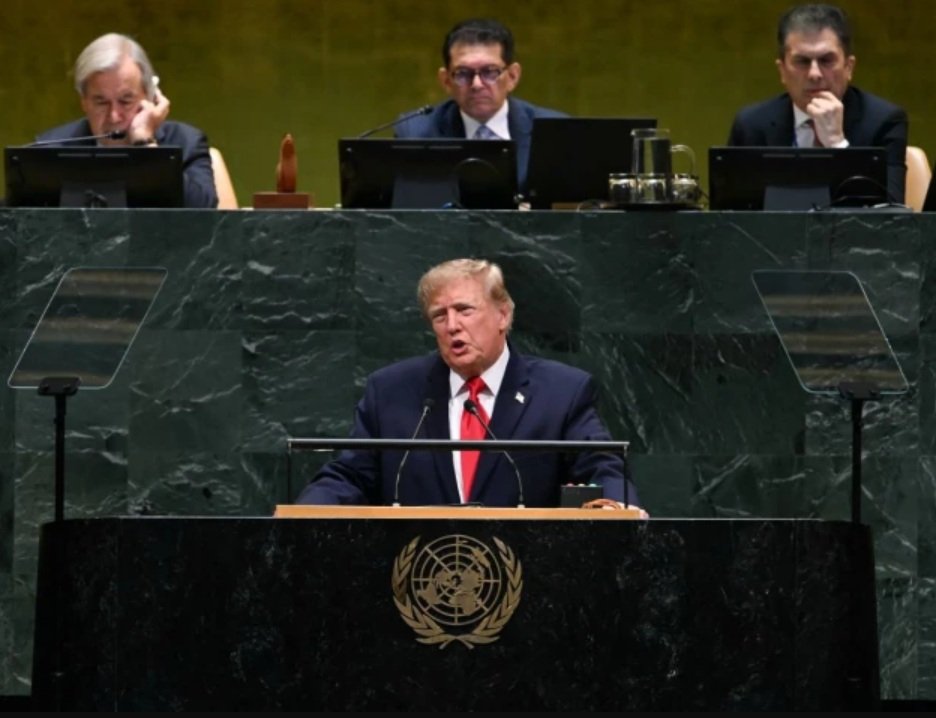
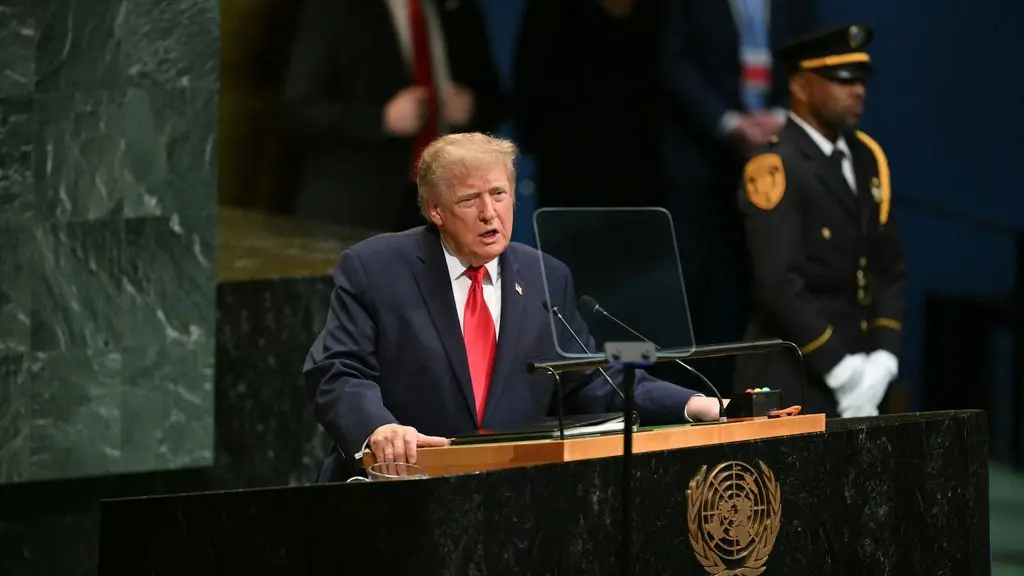
Secretary of State Marco Rubio said the Trump administration was open to meeting Iranian officials at the UN because direct engagement could help resolve the conflict, although no meeting had been scheduled. At almost the same time, Trump used his General Assembly speech to demand greater international pressure on Tehran and warned that Iran faced catastrophic consequences if it refused an agreement.
Trump also said he expected a deal with Iran after the November 3 U.S. midterm elections, arguing that Tehran was waiting to see how Republicans perform at the polls.
That combination — diplomatic openness, economic pressure and threats of further military action — has become the defining feature of Washington’s approach to the conflict.
Gulf states push for talks in New York
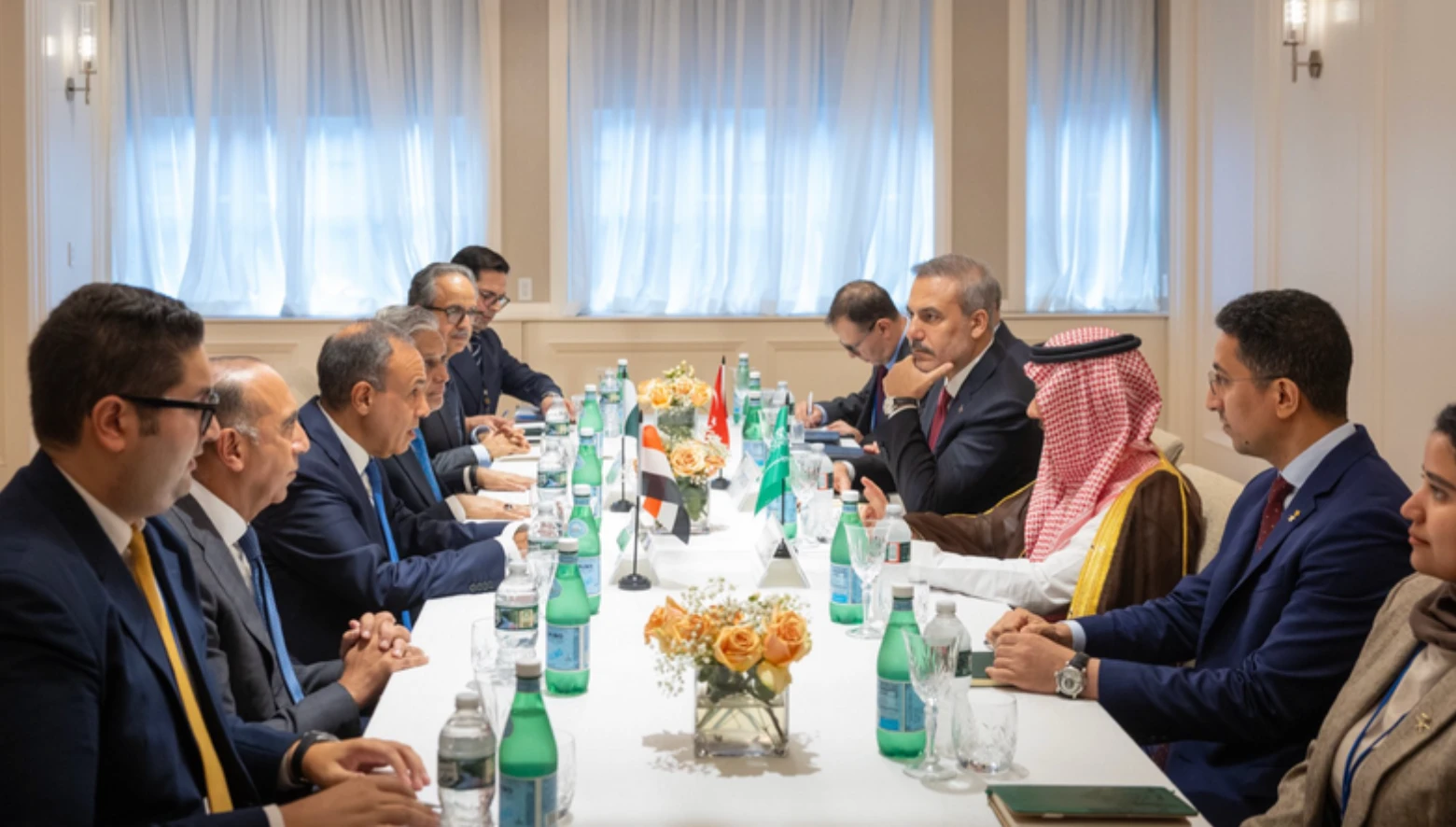
Several Arab governments that have maintained contacts with both Washington and Tehran are working to create an opportunity for high-level discussions during the UN General Assembly, according to regional sources involved in the diplomatic effort.
The timing is significant.
Gulf states have increasingly found themselves caught between the military confrontation and its economic consequences. The war has disrupted shipping through the Strait of Hormuz, raised energy prices and increased the risk of attacks spreading across the Gulf and Red Sea.
Qatar has been particularly active in attempting to keep communication channels open.
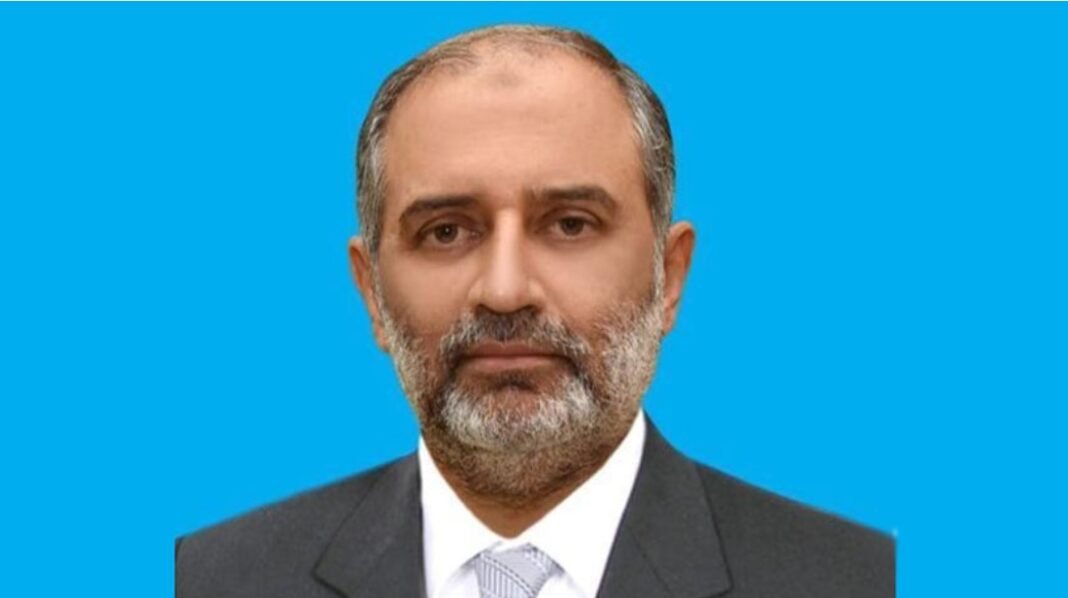
Iranian Foreign Minister Abbas Araghchi met Qatari Prime Minister Sheikh Mohammed bin Abdulrahman Al-Thani in New York, while Qatar has been communicating with both sides about possible negotiations.
Qatar’s role is important because Doha has previously served as an intermediary in difficult U.S.-Iran negotiations and has maintained working relations with Tehran.
The UAE and other Gulf states have also pushed for greater regional dialogue, while Saudi Arabia has reportedly discussed broader security arrangements with Iran as the war has altered the regional balance.
Trump is open to meeting Iran — but no meeting is set
Rubio’s comments have kept open the possibility of an unexpected encounter between Trump and Iranian President Masoud Pezeshkian.
“We’re open to that,” Rubio told NBC, while stressing that no meeting had been scheduled.
The significance lies less in the likelihood of an immediate summit than in the fact that Washington has not closed the diplomatic door.
Pezeshkian is in New York for the UN General Assembly, while Araghchi has already been conducting diplomatic consultations.
That creates an unusual situation in which senior American and Iranian officials are physically in the same city while their countries remain at war.
Yet the political distance remains substantial.
Iran wants the military confrontation and blockade ended before accepting a broader negotiating process.
Washington continues to demand major restrictions on Iran’s nuclear capabilities and has maintained economic and military pressure on Tehran.
Iran offers a possible opening through the Strait of Hormuz
The most concrete diplomatic opening currently concerns the Strait of Hormuz.
Iran has reportedly told mediators that it could reopen the waterway within seven days if Washington begins reducing military pressure and lifts its blockade.
The proposal was conveyed through intermediaries as Tehran sought a route back toward negotiations.
That offer is significant because Hormuz has become one of the main pressure points of the war.
For Iran, control over the waterway provides leverage over Washington and global energy markets.
For the United States, restoring reliable freedom of navigation is a major strategic objective.
For Gulf countries, prolonged disruption threatens both energy exports and economic stability.
That creates a rare area where the interests of all three sides overlap.
The difficulty is that neither Washington nor Tehran appears willing to give up its bargaining leverage first.
Trump gives Iran a stark choice at the UN
Trump’s General Assembly speech showed how far apart the two sides remain.
The president defended his decision to launch military action against Iran and said Washington had acted to prevent Tehran from acquiring a nuclear weapon.
He presented Iran with a choice between reaching an agreement with Washington and facing the possibility of further destruction.
Trump also called for other countries to join the U.S. pressure campaign against Iran. Reuters reported that he urged complete economic isolation of Tehran while simultaneously saying he expected an eventual deal after the U.S. election.
The language was deliberately coercive.
But the speech did not close the diplomatic channel.
Instead, Trump’s message was essentially that negotiations remain available, but only while the United States maintains overwhelming pressure.
Trump predicts a deal after the midterms

One of the most striking elements of Trump’s remarks was his repeated prediction that the war would end after the U.S. midterm elections.
Trump said Iran was waiting to see how he performs in the November 3 elections but argued that the election would not determine his approach to the nuclear issue.
He said he expected a deal after the vote and insisted that the United States would eventually reach an agreement.
Trump has previously made similar predictions about the conflict’s duration.
The administration’s other senior officials have been more cautious.
Treasury Secretary Scott Bessent said Monday that he could not predict whether the war would end in one week, one month or six months, while emphasizing that Washington was applying unprecedented pressure on Tehran.
That difference matters.
The president is offering a relatively clear political timeline, while members of his administration are avoiding a firm prediction about when the conflict will actually end.
Why the midterm date matters
The November election is an unavoidable backdrop to the current diplomacy, even though it does not establish that electoral considerations are determining Trump’s Iran policy.
The war has already affected energy markets and fuel prices, while the White House is trying to demonstrate that military pressure has produced strategic gains.
An eventual agreement after the midterms would allow Trump to argue that his campaign of maximum pressure forced Tehran to negotiate.
Iran, however, could present the same agreement differently — as the result of resisting American military pressure until Washington was prepared to negotiate.
That distinction could become important to both governments.
Neither side wants to appear to have surrendered.
Seven months of war have changed the original calculations

The conflict has now lasted far longer than the initial timelines suggested.
The United States and Israel launched military operations against Iran in late February, with Washington arguing that Iran’s nuclear capabilities posed a strategic threat.
Nearly seven months later, the conflict remains unresolved.
Iran’s military infrastructure has suffered extensive damage, according to U.S. and Israeli claims and independent reporting, but Tehran has not accepted the political conditions Washington wants.
The war has also produced consequences beyond Iran.
Shipping through Hormuz has been severely disrupted.
Oil prices have risen sharply.
Gulf states have faced increased security risks.
And the conflict has intersected with the separate escalation involving Yemen’s Houthis and the Red Sea.
The longer the war continues, the harder it becomes to separate the nuclear issue from the wider regional security crisis.
Gulf countries want the war to end
The Arab states now involved in mediation have their own reasons for pushing diplomacy.
They are not necessarily acting simply as intermediaries between Washington and Tehran.
They are also trying to protect their own economies and security.
Saudi Arabia, Qatar, the UAE and other Gulf states have major interests in stable energy markets and uninterrupted maritime trade.
They also face the possibility that a prolonged Iran war could trigger attacks against their territory or critical infrastructure.
That has encouraged some Gulf governments to move beyond traditional alignment with Washington and explore direct regional diplomacy.
Qatar has advocated a broader security dialogue involving Iran and Gulf states, while Saudi Arabia has reportedly considered a non-aggression arrangement with Tehran.
The war is therefore producing a regional diplomatic movement that could eventually outlast the current conflict.
Iran is not entering negotiations from a position of complete weakness
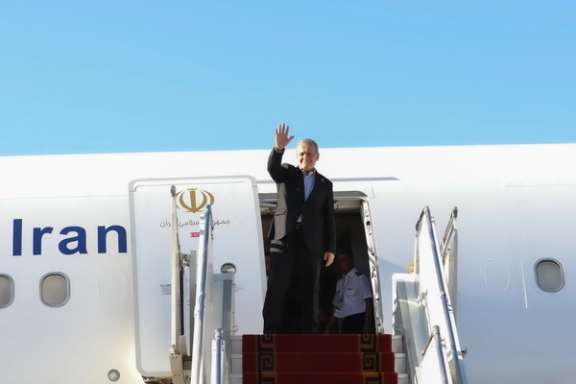
Washington has imposed severe military and economic pressure on Iran.
But Tehran retains several sources of leverage.
Its ability to disrupt or influence shipping around Hormuz remains one.
Its missile and drone capabilities remain another.
Iran also has relationships with armed groups across the region, including the Houthis in Yemen, although the precise degree of operational control exercised by Tehran over those groups varies.
The latest Houthi advances in Yemen have added another layer of pressure on Gulf security and international shipping.
This gives Iran additional strategic depth even as its own territory remains under pressure.
Tehran’s demands remain far from Washington’s
Iranian officials have communicated several conditions for returning to negotiations.
These include an end to the war, lifting of the U.S. naval blockade and the release of frozen Iranian funds, alongside demands concerning sanctions and guarantees against renewed military action.
Washington’s priorities are different.
The Trump administration wants restrictions on Iran’s nuclear program, assurances that Tehran cannot acquire a nuclear weapon and a stable regional security arrangement.
The two sides therefore agree that negotiations are possible in principle while disagreeing fundamentally over the starting point.
Iran wants the pressure reduced before meaningful negotiations.
Washington wants negotiations to occur while its pressure campaign remains in place.
That sequencing problem could prove more difficult than the underlying issues.
Trump’s broader UN message goes beyond Iran
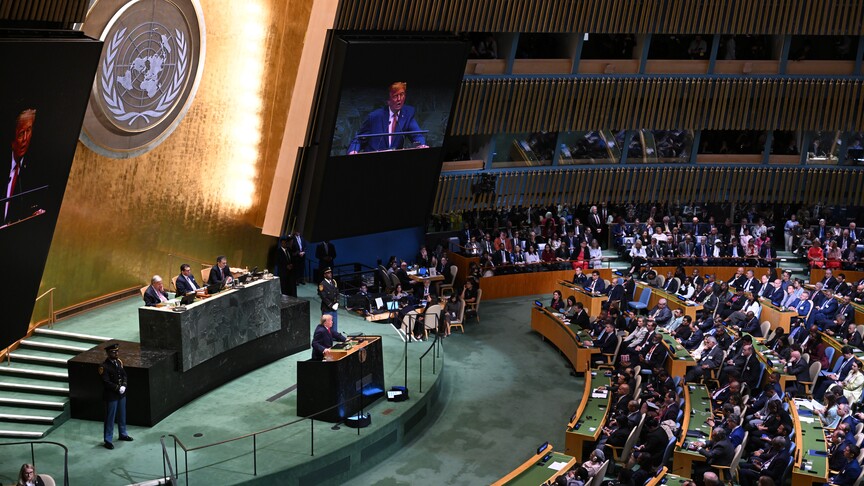
Trump’s General Assembly speech was not limited to the Iran war.
He used the address to present a broader vision of American military power and a more assertive U.S. role in global affairs.
He highlighted American actions in Venezuela and his campaign against drug cartels, while also issuing strong remarks about Mexico and Cuba.
Trump said the United States would use its military strength where necessary to protect American interests in the Western Hemisphere and beyond.
That broader message matters for the Iran negotiations.
Tehran is hearing not only a demand over its nuclear program but a larger declaration that Washington intends to use military power against perceived threats.
For Iranian leaders, that could reinforce concerns about accepting an agreement without security guarantees.
For Washington, however, reducing pressure too quickly could undermine the credibility of the broader strategy Trump outlined at the UN.
The diplomatic opportunity may be bigger than the meeting itself
A Trump-Pezeshkian meeting in New York would attract enormous attention.
But the more important development could occur behind closed doors.
If Qatar, Oman and other intermediaries can establish a sequence for de-escalation, the two presidents may not need to reach a comprehensive agreement immediately.
A more realistic first step could involve limited reciprocal measures:
- reducing military operations;
- restoring commercial navigation through Hormuz;
- establishing a mechanism for nuclear inspections;
- easing selected economic restrictions;
- and creating a channel for resolving violations.
Such steps could then form the basis for a broader agreement.
The challenge is that both governments have reasons to demand concessions before making their own.
The war has reached a point where pressure alone may not settle it
Trump’s strategy has produced significant military and economic pressure on Iran.
But nearly seven months into the conflict, Washington has not secured the political settlement it seeks.
At the same time, Iran has not been able to force an end to the U.S. campaign.
That creates an unusual situation in which both sides retain enough leverage to continue but face growing costs from doing so.
The Gulf states appear increasingly convinced that prolonging the confrontation carries unacceptable economic and security risks.
Their involvement could therefore become one of the most important elements of the next phase.
What happens after the UN General Assembly?
The immediate question is whether the diplomatic contacts in New York produce a direct U.S.-Iran meeting or a framework for negotiations.
Rubio has said Washington remains open to contact.
Iran has signaled through mediators that it is prepared to discuss an end to the war and reopening Hormuz.
Trump is simultaneously demanding maximum pressure and predicting a future agreement.
Those positions are contradictory only on the surface.
They represent a familiar form of coercive diplomacy in which military pressure is maintained while negotiations remain possible.
Whether it succeeds depends on whether Washington and Tehran can agree on the first reciprocal step.
If Iran reopens Hormuz without receiving meaningful concessions, Tehran risks losing one of its strongest bargaining tools.
If Washington eases military pressure without securing nuclear commitments, Trump risks weakening the leverage he has spent months building.
That is why the diplomatic process is likely to begin with smaller, reversible measures rather than an immediate grand bargain.
New York could become the starting point for the next phase
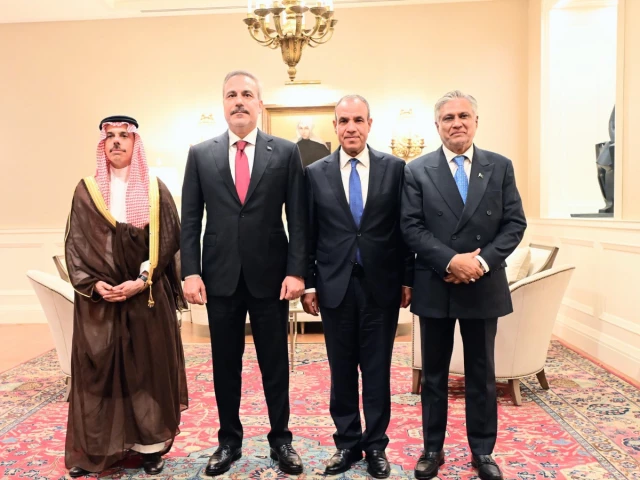
The UN General Assembly has brought together the key players at a rare moment.
Trump is in New York.
Pezeshkian is expected to participate.
Araghchi is conducting diplomatic meetings.
Qatar is actively mediating.
Other Gulf states are urging de-escalation.
And the economic pressure created by Hormuz is affecting countries far beyond Iran and the United States.
A direct Trump-Pezeshkian meeting is not yet scheduled, and there is no guarantee it will take place.
But the diplomatic activity surrounding the possibility is itself significant.
After nearly seven months of war, the question is no longer whether Washington and Tehran can impose costs on each other.
They have demonstrated that repeatedly.
The harder task is finding a sequence that allows both sides to step away from the conflict while claiming that their core interests have been protected.
The UN General Assembly may not produce that agreement this week.
But the combination of Gulf mediation, Iran’s Hormuz proposal, Trump’s continued openness to talks and the growing economic cost of the war has created one of the most important diplomatic openings since the conflict began.
Whether that opening becomes negotiations — or disappears under another round of military escalation — may determine the next phase of the Iran war.