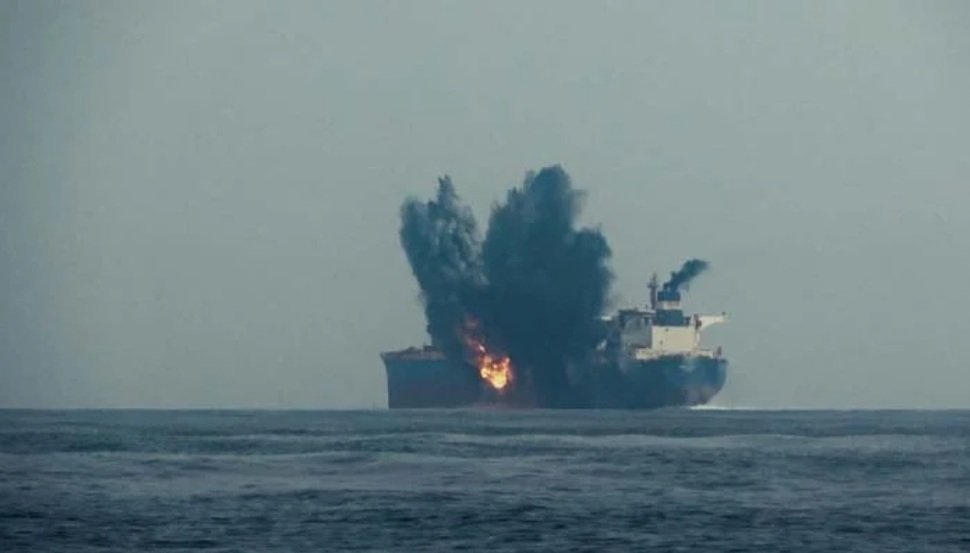
The most consequential battle in Yemen may not be taking place where missiles are being launched or where ground forces are fighting along the Red Sea coast.
It may be taking place above and around the battlefield — inside the electromagnetic spectrum, satellite imagery, communications networks and intelligence-fusion systems that determine who sees the battlefield first.
A new Al Jazeera analysis has put that hidden contest into unusually sharp focus, arguing that Russian satellite intelligence and Iranian command integration played an important role in the Houthi seizure of large sections of Yemen’s western coastline. At the same time, Saudi Arabia, Pakistan and Türkiye are moving toward deeper intelligence cooperation and military capability integration under their newly established Makkah Joint Defence Agreement.
The result is the emergence of a potentially important new layer of the Yemen conflict: an ISR and command-and-control competition involving Russian, Iranian, Saudi, Pakistani and Turkish capabilities.
But publicly available evidence currently supports describing this as an emerging intelligence competition, rather than claiming that Pakistani and Turkish naval ISR platforms are already directly confronting Russian reconnaissance assets over Yemen.

Al Jazeera’s Russian-Iranian intelligence claim
In an analysis published on September 26, King’s College London senior fellow Nawaf Obaid argued that the collapse of the western Yemeni front was connected to a fused Russian-Iranian intelligence architecture.
According to the analysis, Russian space-based GEOINT and SIGINT were integrated into an Iranian-led command-and-control system, with Houthi tactical reporting and human intelligence helping convert technical collection into battlefield effects.
The significance of that claim is considerable.
GEOINT — geospatial intelligence — can help identify force positions, movement corridors, headquarters, logistics infrastructure and changes in battlefield deployment.
SIGINT — signals intelligence — can reveal communications patterns, electronic emissions and relationships between command nodes.
ELINT — electronic intelligence — is more specifically concerned with non-communication electromagnetic emissions, including radar and other electronic systems.
When these streams are fused with human intelligence and battlefield reporting, the result is not simply a collection of information. It can become a near-real-time operational picture.
That is the real significance of the Russian-Iranian model described by Al Jazeera.
How intelligence helped the Houthi western advance
The Al Jazeera analysis argues that the intelligence architecture helped expose weaknesses within forces aligned with Yemen’s internationally recognised government.
It describes a situation in which commanders did not always possess an accurate picture of friendly-force locations, command relationships or battlefield readiness.
That matters enormously in a modern networked war.
A military formation can possess aircraft, artillery, missiles and armoured vehicles and still become vulnerable if its command network is unreliable.
A headquarters that does not know exactly where subordinate units are located cannot safely employ airpower.
A commander who receives inaccurate battlefield reporting can make the wrong decision even when possessing superior weapons.
And a communications network that can be intercepted, disrupted or manipulated can become a liability rather than an advantage.
According to Al Jazeera’s analysis, these weaknesses contributed to the rapid collapse of parts of the western front around Mokha and the wider Red Sea coastline.
Independent reporting confirms the scale of the Houthi advance, although it does not independently establish every element of the Russian-intelligence explanation.
Reuters reported that Iranian weapons, advisers and tactical assistance played a significant role in the Houthi capture of Mokha. AP subsequently reported that Iranian Revolutionary Guard advisers were directly involved in the operation and that the offensive benefited from intelligence support, including satellite and communications analysis.
That provides important corroboration for Iranian operational involvement, while the specific extent of Russian intelligence assistance remains principally supported by the Al Jazeera analysis rather than independently established through public official documentation.
The battlefield is now changing
The Houthi advance has not automatically translated into an irreversible military victory.
Recent reporting indicates that Saudi Arabia and its partners are adapting.
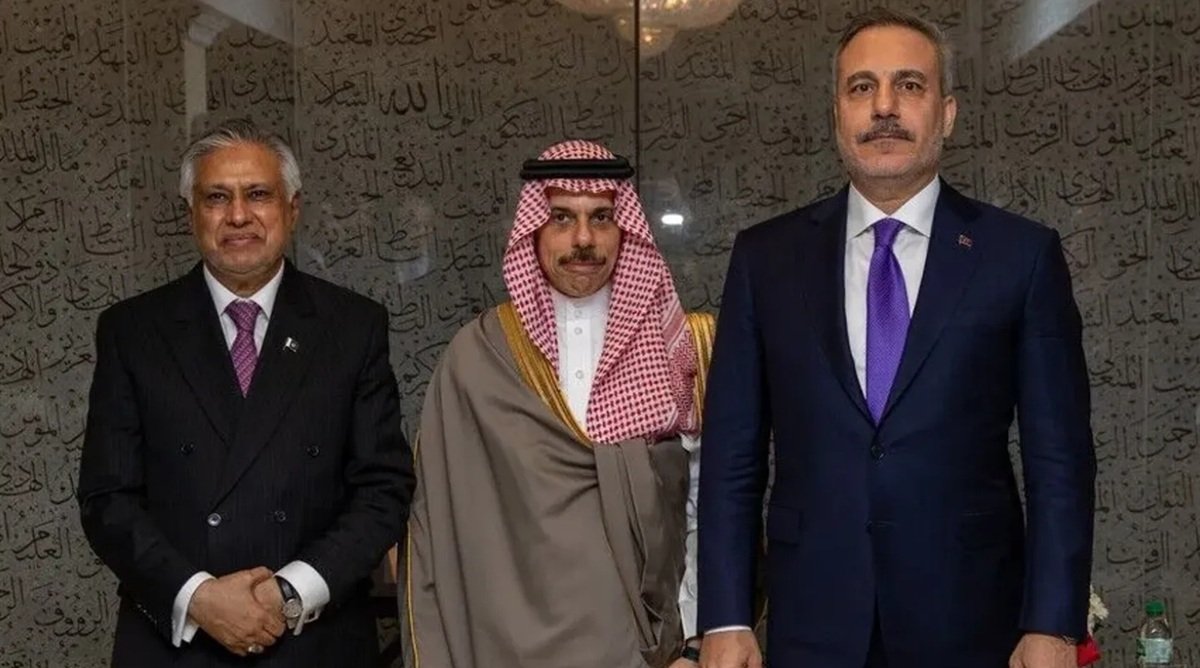
On September 25, the military chiefs of Saudi Arabia, Pakistan and Türkiye met in Riyadh and discussed precisely the areas that matter in an intelligence-driven conflict: intelligence cooperation, military coordination and capability integration. Saudi Arabia’s official news agency said the three sides were seeking to translate their defence commitments into practical military cooperation.
Reuters similarly reported that the three military chiefs met to strengthen trilateral defence cooperation, including intelligence sharing and capability integration.
That development is much more significant than a routine diplomatic meeting.
It suggests that the Makkah defence framework is moving from political language toward institutional military coordination.
Pakistan’s role could become particularly important in the ISR layer
There is currently no public confirmation that Pakistan has deployed a dedicated naval ISR force into the Yemeni theatre as part of a direct contest with Russian reconnaissance assets.
However, Pakistan is not entering the discussion without relevant military capabilities.
Pakistan Navy has been training for increasingly complex multidomain operations. Its September 2026 SEASPARK exercise incorporated ships, submarines, aircraft, unmanned systems, special forces and joint Army-Air Force elements, with an explicit focus on maritime, air, cyber and space-enabled capabilities and operations in the information environment.
That does not prove Pakistani ISR assets are currently operating over Yemen.
It does, however, demonstrate the direction in which Pakistan’s maritime warfare architecture is evolving.
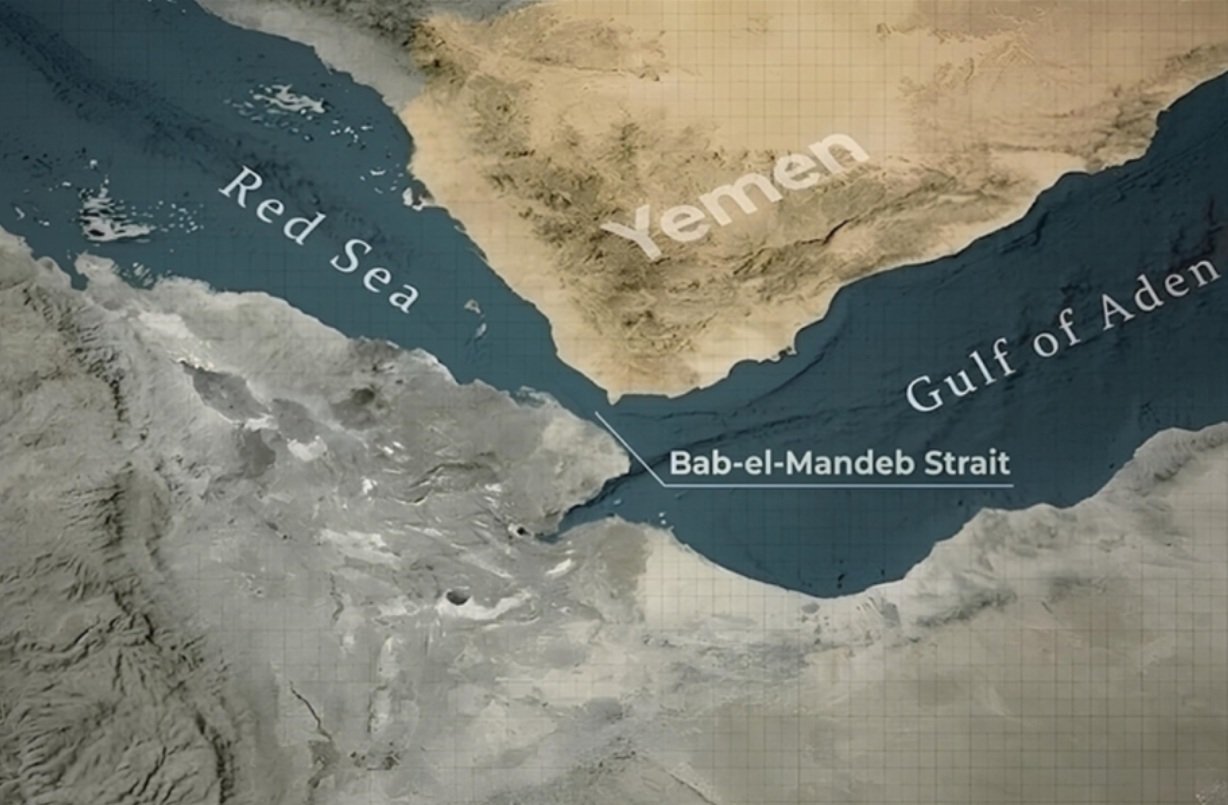
For Saudi Arabia, Pakistani participation could potentially add another layer to maritime surveillance, communications, information fusion and operational coordination — particularly around the Red Sea, Gulf of Aden and approaches to the Bab el-Mandeb.
Türkiye brings another intelligence dimension
Türkiye’s role is equally significant, although again, claims about Turkish naval ISR deployment into the Yemeni theatre should not be presented as confirmed unless Ankara publicly establishes such activity.
On September 17, Turkish intelligence chief Ibrahim Kalin visited Pakistan and met senior Pakistani officials, including the army and intelligence leadership. Turkish reporting said the discussions covered regional security and the rapidly changing Middle Eastern security environment.
Days later, Turkish Foreign Minister Hakan Fidan said Ankara was ready to meet Saudi Arabia’s military needs under the trilateral defence agreement. Reuters reported that Fidan specifically referred to possible Saudi military and technical requirements.
The sequence is notable:
intelligence consultations → defence coordination → military chiefs’ meeting → intelligence cooperation → capability integration.
That is the architecture from which a more integrated regional ISR network could emerge.
The real competition is sensor-to-shooter speed
The Yemen conflict demonstrates why modern warfare cannot be understood simply through the number of missiles, aircraft or warships each side possesses.
The decisive question increasingly becomes:
Who can detect, identify, verify, decide and strike faster?
That chain is often described through the concept of C4ISR or C5ISR — command, control, communications, computers, intelligence, surveillance and reconnaissance.
A satellite may identify a changing military position.
An electronic intelligence platform may detect an unusual radar emission.
A signals intelligence system may identify a communications pattern.
A drone may provide persistent visual surveillance.
Human intelligence may explain what the technical systems cannot.
The information is then fused at a command centre.
The faster that information can be authenticated and transferred to a weapon system, the shorter the sensor-to-shooter cycle becomes.
This is why the electromagnetic and space domains can have a direct effect on what eventually happens on the ground.
Russia’s advantage is not necessarily permanent
The Al Jazeera analysis makes another important argument: the Russian-Iranian intelligence architecture itself has vulnerabilities.
A sophisticated intelligence network requires communications links, analysts, technical personnel, command nodes, data-fusion facilities and reliable pathways between strategic headquarters and tactical units.
Destroy or disrupt enough of those links and the quality of the battlefield picture deteriorates.
That creates a paradox.
The more sophisticated a military force’s command-and-control architecture becomes, the more valuable it is — but also the more important it becomes to protect the network itself.
The loss of a headquarters may therefore be less important than the loss of the information pathways connecting headquarters to commanders and sensors.
Why Pakistan-Türkiye cooperation matters now
The timing of the Makkah defence arrangement is important.
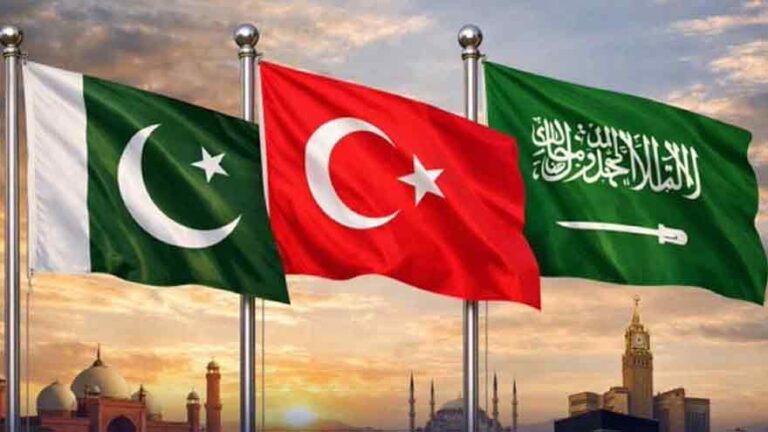
Saudi Arabia, Pakistan and Türkiye signed the agreement on August 7. The three countries subsequently began establishing its institutional mechanisms, including committees and a secretariat.
On September 25, their military chiefs met in Riyadh as the Yemen conflict was intensifying.
Saudi Arabia is also seeking additional defensive support. France has announced military assets including radars and defence systems for the protection of Yanbu, while Italy has called for greater naval presence around the Red Sea.
This means the Red Sea security environment is becoming increasingly multinational and multidomain.
It is no longer simply Saudi Arabia versus the Houthis.
The wider contest involves:
- satellite reconnaissance;
- maritime surveillance;
- signals intelligence;
- electronic warfare;
- drones;
- air defence;
- naval patrols;
- communications security;
- target identification;
- cyber and information operations;
- and increasingly integrated command-and-control.
Bab el-Mandeb is becoming an ISR battlefield
The geography makes this particularly important.
The Bab el-Mandeb connects the Red Sea with the Gulf of Aden and is one of the world’s critical maritime chokepoints.
Reuters reported that shipping traffic through the strait remained significant even amid the conflict, while the Houthi expansion along Yemen’s Red Sea coastline has increased pressure on maritime traffic.
Control of territory around the waterway therefore provides more than military prestige.
It can create opportunities for surveillance, coastal missile operations, drone launches, maritime interdiction and intelligence collection.
For Saudi Arabia and its partners, the challenge is consequently not simply to retake territory.
It is to restore a reliable information picture of the entire battlespace.
Has the tide actually turned?
This requires caution.
The phrase “the tide is turning” is increasingly appearing in commentary surrounding the conflict, but the publicly available battlefield evidence does not justify treating a decisive reversal as an established fact.
Al Jazeera’s September 26 analysis argues that the intelligence war is turning against the Houthis and that the Russian-Iranian system supporting their operations is coming under pressure.
But Al Jazeera’s own reporting also shows that the Houthis retain substantial territorial and strategic advantages along the western coast and around Bab el-Mandeb. Government forces have struggled to hold some of their recent gains, while more than 230,000 people were displaced during the latest escalation, according to UNHCR figures cited by Al Jazeera.
So the more defensible conclusion is narrower:
The intelligence balance may be changing even though the territorial balance has not yet clearly changed.
That distinction could become one of the most important features of the next phase of the Yemen war.
The unseen war above Yemen
The most consequential contest may therefore be invisible to people watching missile launches and battlefield maps.
It will involve satellites passing hundreds of kilometres above the region, aircraft and drones collecting electromagnetic signatures, maritime platforms monitoring shipping corridors, intelligence agencies fusing communications data and commanders attempting to distinguish genuine information from deception.
Russia’s reported intelligence contribution to the Iranian-Houthi system gives Moscow an important indirect role in this contest.
Iran provides the operational bridge into the Houthi command structure.
Saudi Arabia is attempting to rebuild and harden its own C6ISR architecture.
Pakistan and Türkiye are now being incorporated into a formal framework centred on intelligence cooperation, military coordination and capability integration.
Whether that eventually produces a genuine Pakistani-Turkish ISR presence over the Yemeni battlespace remains to be demonstrated publicly.
But the direction is clear.
Yemen’s next phase will be fought not only for territory, ports and missile positions, but for information dominance.
And in that contest, the side that can see the battlefield most accurately — while denying the other side the same visibility — could gain an advantage disproportionate to the number of ships or aircraft it possesses.