
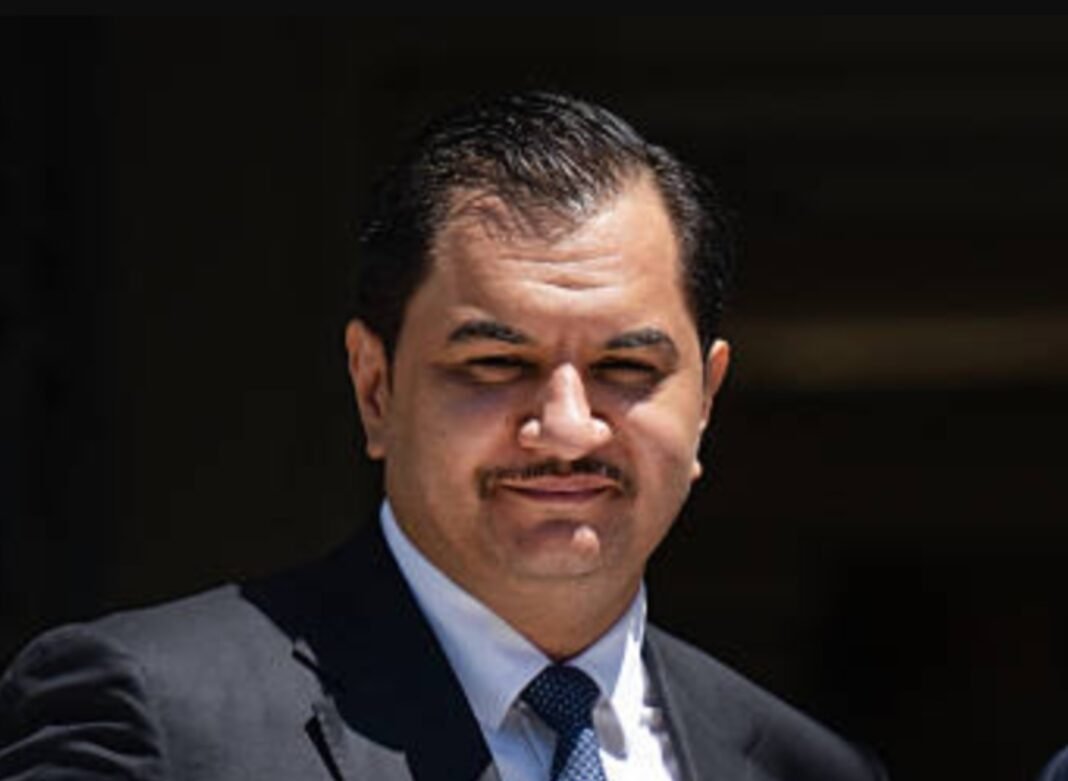
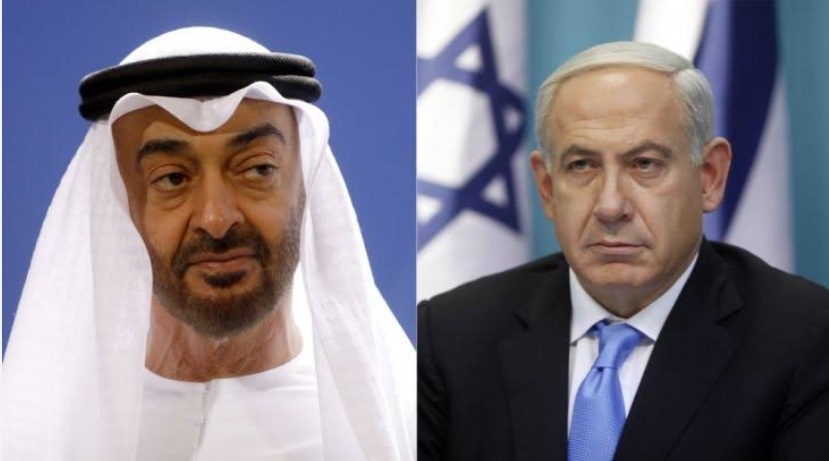
A reported meeting between Israeli Prime Minister Benjamin Netanyahu and eastern Libyan military commander Saddam Haftar in Abu Dhabi has opened a new and potentially significant chapter in the international competition surrounding Libya’s political future.
The alleged meeting was reported on September 29 by the Italian newspaper Il Foglio, which linked Saddam Haftar’s presence in Abu Dhabi to Netanyahu’s secret visit to the United Arab Emirates.
The report cited Mohamed Buisier, a former political adviser to Khalifa Haftar, as saying that Saddam Haftar met Netanyahu to seek political backing for his ambitions to become Libya’s president.
The meeting itself has not been publicly confirmed by Netanyahu’s office, the UAE or Saddam Haftar. However, there is independently confirmed evidence that Saddam Haftar was in Abu Dhabi days before Netanyahu’s visit and held high-level meetings with UAE officials.
That distinction is important.
Rather than treating the reported Netanyahu-Haftar encounter as an established fact, the available evidence points to a broader pattern of diplomatic activity around Saddam Haftar and Libya’s future leadership.
Saddam Haftar was already in Abu Dhabi
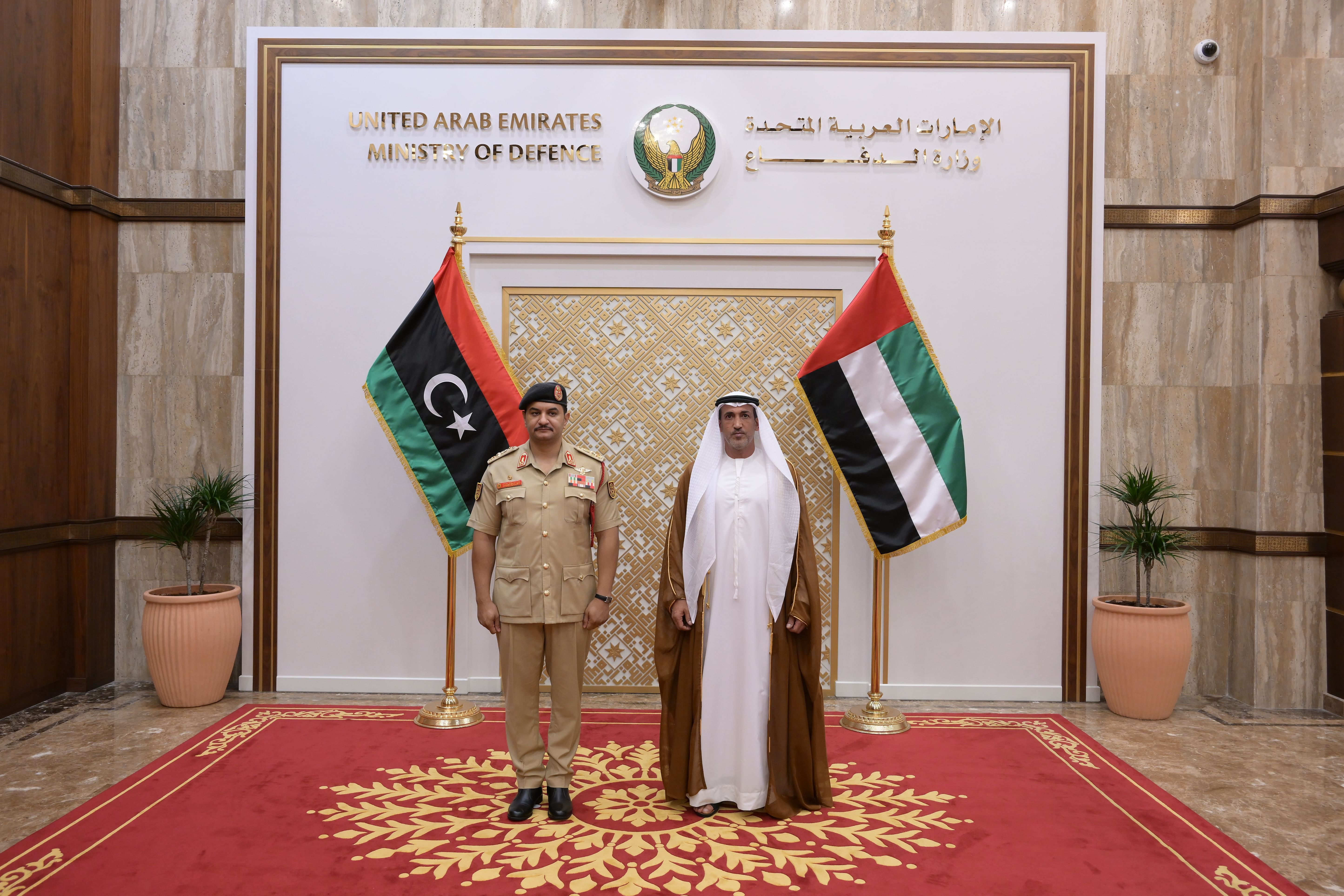
On September 25, the UAE’s official news agency reported that Lieutenant General Saddam Khalifa Haftar, deputy commander-in-chief of the Libyan Arab Armed Forces, met UAE Vice President Sheikh Mansour bin Zayed Al Nahyan in Abu Dhabi.
The UAE said the two discussed strengthening relations between the UAE and Libya and exchanged views on regional developments.
Saddam Haftar also met UAE Minister of State for Defence Affairs Mohamed bin Mubarak Al Mazrouei in the presence of the UAE Armed Forces chief of staff. The two sides discussed continued coordination and enhanced defence cooperation.
These meetings are confirmed by UAE official sources.
They also establish that Saddam Haftar was conducting senior-level meetings in Abu Dhabi shortly before Netanyahu’s arrival.
The Italian report links Haftar’s aircraft to Netanyahu’s visit
Il Foglio reported that a Libyan aircraft associated with Saddam Haftar arrived at Abu Dhabi’s Al Bateen airport around the same period as Netanyahu.
The Italian newspaper identified the aircraft as an Airbus A319 linked to Saddam Haftar and reported that it arrived roughly 20 minutes after Netanyahu’s aircraft.
Mohamed Buisier subsequently claimed on social media that the timing was not coincidental and that Saddam Haftar met Netanyahu to obtain political support for a possible Libyan presidential bid.
The aircraft-tracking evidence establishes the movement of the aircraft, but it does not independently establish who was aboard or prove that Saddam Haftar met Netanyahu.
That remains an allegation reported by Il Foglio.
Why the alleged meeting matters
The timing is what makes the report particularly significant.
Libya is entering a new phase of political manoeuvring after years of division between rival institutions in Tripoli and eastern Libya.
The United Nations-backed political process reached an important milestone in August, when representatives of Libya’s rival institutions agreed on steps intended to prepare the country for parliamentary and presidential elections.
The agreement calls for work on the electoral framework and the High National Elections Commission, with the aim of holding national elections within 24 months.
That means the question of who could eventually emerge as a national political figure is becoming increasingly important.
Saddam Haftar is one of the figures associated with the eastern Libyan power structure and has increasingly appeared in international diplomatic and military engagements.
Pakistan is already involved in the Libya political equation
One of the most important developments surrounding Saddam Haftar has received relatively little attention outside diplomatic circles.
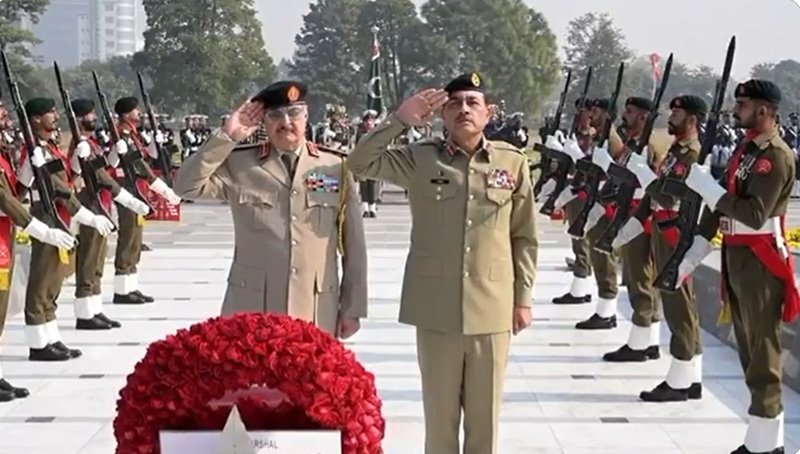
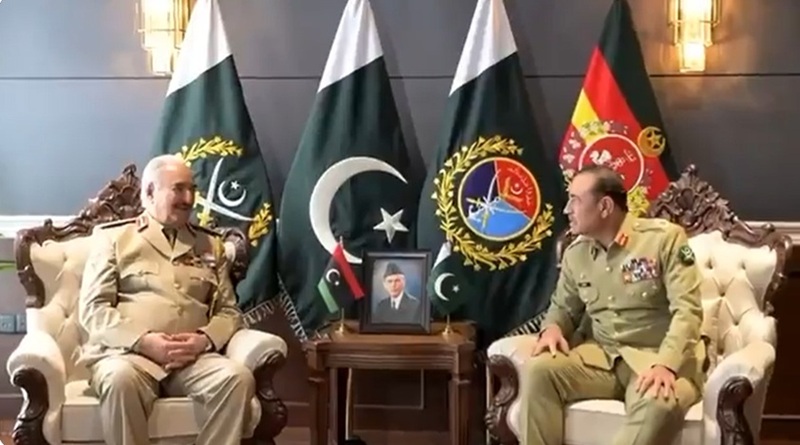
In July, Reuters reported that Pakistan had begun a behind-the-scenes effort to mediate between Libya’s rival eastern and western factions.
According to Pakistani sources cited by Reuters, both Libyan sides had requested Pakistan’s involvement.
The reported US-backed reunification framework included a possible transitional arrangement in which Abdulhamid Dbeibah would remain prime minister while Saddam Haftar could become head of a presidential council.
The proposal was not an agreed Libyan settlement, and Reuters noted uncertainty over whether such an arrangement could endure.
Nevertheless, it demonstrated that Saddam Haftar is being discussed internationally as part of possible future power-sharing arrangements.
For Pakistan, the Libya file is therefore no longer merely a diplomatic issue. Islamabad has positioned itself as a potential intermediary between the rival eastern and western camps.
Türkiye is also recalibrating its Libya policy
Another major shift is taking place in Türkiye’s relationship with eastern Libya.
For years, Ankara was closely aligned with the Tripoli-based government and opposed Khalifa Haftar’s military campaign against the west.
That position has been changing.
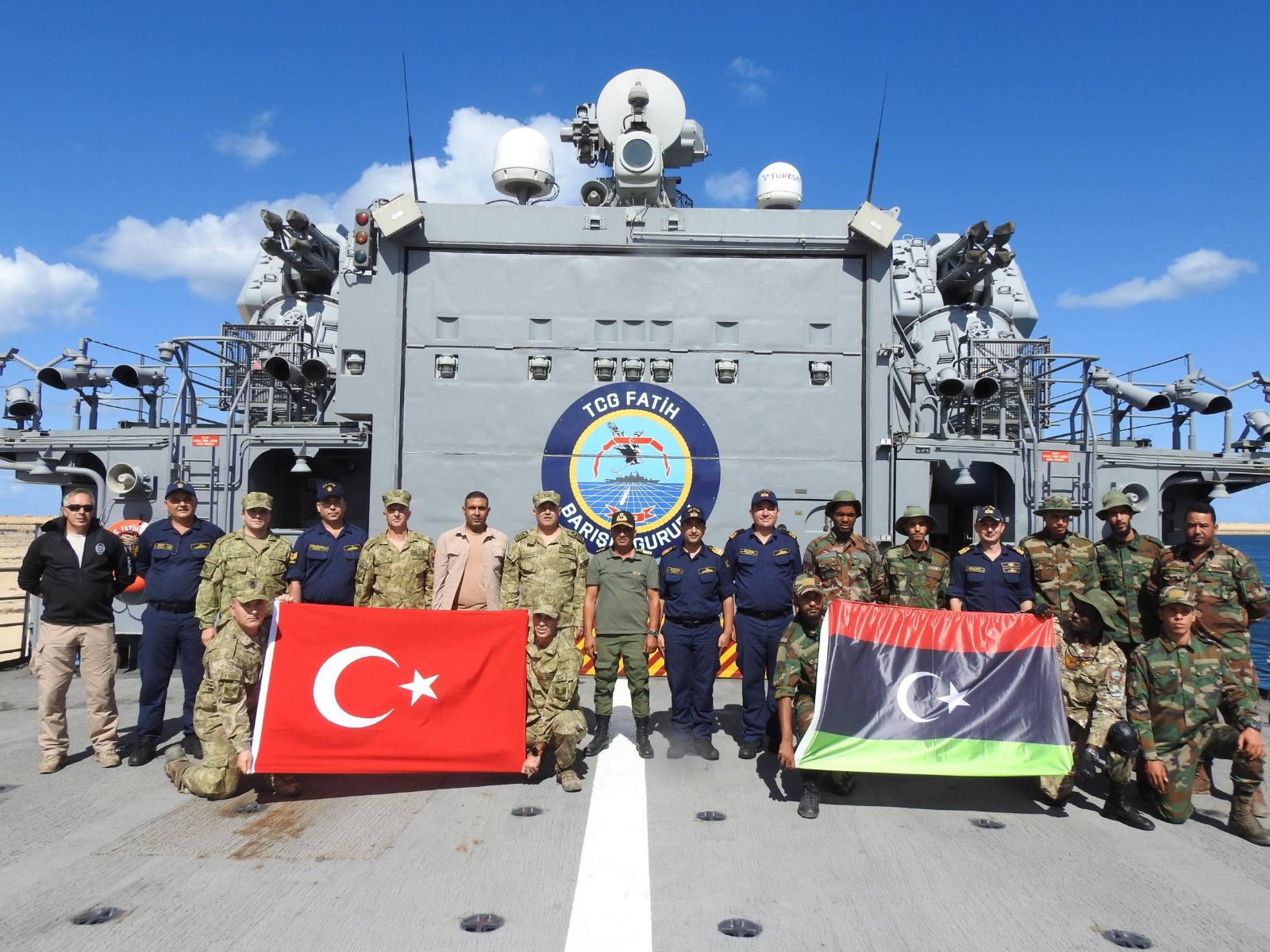
Al Jazeera reported in July that Türkiye had expanded military and technical contacts with the eastern Libyan authorities and that Saddam Haftar was playing an important role in those contacts.
The report said discussions included military facilities, advanced surveillance systems and training for eastern Libyan officers, although the governments involved have not publicly confirmed all of those details.
The change is strategically important because it means Libya’s former rival external camps are increasingly engaging with one another rather than maintaining rigid opposing alliances.
Türkiye, Egypt, the UAE, Pakistan, the United States and other powers are now interacting with different Libyan factions through overlapping diplomatic channels.
The UAE remains central to the Haftar network
The UAE’s relationship with the Haftar camp is not new.
Abu Dhabi has maintained close relations with eastern Libya, and Saddam Haftar’s September 25 meetings demonstrate that relationship remains active.
The UAE’s official statement did not mention Israel, Netanyahu or any presidential arrangement for Libya.
It described the meetings in terms of bilateral relations, regional developments and defence cooperation.
Therefore, it would be premature to conclude that the UAE meeting was part of a coordinated plan involving Israel and Saddam Haftar.
But the sequence is notable.
Saddam Haftar met senior UAE officials on September 25.
Netanyahu travelled to Abu Dhabi on September 27.
Israeli and regional reports subsequently emerged about the participation of Arab representatives in discussions focused on Iran and the Houthis.
And Il Foglio reported that a Haftar-linked aircraft arrived in Abu Dhabi around the time of Netanyahu’s visit.
Taken together, these developments have generated questions about whether several regional diplomatic tracks were overlapping in Abu Dhabi.
Netanyahu’s Abu Dhabi meeting was primarily focused on regional security
Reuters confirmed that Netanyahu met UAE President Sheikh Mohammed bin Zayed Al Nahyan in Abu Dhabi on Sunday.
The UAE’s official news agency later confirmed the meeting, saying it focused on bilateral relations and regional challenges.
Israeli officials separately told Reuters that the meeting lasted around six hours and focused heavily on Iran.
Israeli media have reported additional details, including claims that representatives from Saudi Arabia, Jordan and Morocco attended discussions concerning Iran and its regional proxies, particularly the Houthis.
Those details have not been included in the UAE’s official account of the meeting.
Israeli reports also claimed that Israel offered to assist regional states with air-defence systems, drawing on support it had provided to the UAE during the war with Iran.
Again, these details should be treated as Israeli media reporting rather than independently confirmed elements of the official meeting record.
The Houthi factor adds another layer
The reported discussions about Iran and the Houthis are important because the Red Sea conflict has widened the strategic calculations of Gulf states.
Saudi Arabia faces continuing security concerns from Houthi missile and drone capabilities.
The UAE has also experienced direct attacks during periods of regional escalation.
Israel, meanwhile, has increasingly framed Iran’s regional network as a strategic threat extending beyond its immediate borders.
A regional discussion involving air defence, missile threats and Iranian-backed groups therefore has a direct connection to the security environment surrounding the Red Sea and Arabian Peninsula.
But Libya is geographically separate from Yemen.
The significance of Saddam Haftar’s alleged presence at the same diplomatic venue is therefore more likely to concern political networking and future regional alignment than direct Libyan involvement in the Yemen conflict.
Libya’s election timetable is changing the calculations
The biggest underlying factor may be Libya’s approaching electoral process.
The UN Support Mission in Libya says the August 30 agreement addresses two critical elements of its political roadmap: reforming the High National Elections Commission and resolving outstanding electoral-law issues.
The agreement envisages presidential and parliamentary elections within two years.
The UN Security Council has supported the agreement, while UNSMIL has continued consultations with Libyan actors to broaden political support.
For Saddam Haftar, this creates a potentially important political window.
The eastern Libyan military structure already controls substantial territory and has considerable influence over security and energy infrastructure.
The challenge is converting military and regional influence into a political arrangement that can gain acceptance in western Libya and among international actors.
That is why contacts with Washington, Ankara, Abu Dhabi and other capitals matter.
The US connection is another important piece
Il Foglio reported that Saddam Haftar is also seeking closer links with senior figures in the Trump administration.
Reuters had previously reported that Pakistan’s Libya mediation effort was taking place alongside a broader US-led attempt to encourage a political settlement.
The American dimension is therefore particularly important.
If Washington continues to support a formula for reunifying Libya’s eastern and western institutions, Saddam Haftar’s international diplomatic outreach could become increasingly significant.
But there remains a major difference between being discussed as part of a possible political arrangement and actually securing international or Libyan consensus for the presidency.
The UN process is formally aimed at elections and a Libyan-owned political settlement rather than imposing a predetermined presidential candidate.
What the Netanyahu-Haftar report could mean
If the Il Foglio account is eventually confirmed, a meeting between Netanyahu and Saddam Haftar would represent another strand in Haftar’s international diplomatic outreach.
It would also have historical context.
In 2021, Israeli media reported that Saddam Haftar travelled to Israel and that the Haftar camp was exploring possible diplomatic relations with Israel in exchange for political and military support.
The latest report would therefore not represent the first alleged contact between the Haftar family and Israeli officials.
It would instead suggest that the relationship, if it continued, has resurfaced at a time when Libya’s political succession and regional security arrangements are again being reshaped.

The bigger story is Libya’s emerging network politics
Libya’s political landscape is increasingly defined by overlapping relationships rather than fixed alliances.
The eastern camp has historically relied heavily on the UAE, Egypt and Russia.
Türkiye has traditionally backed the Tripoli authorities but is now engaging eastern Libya.
Pakistan has opened channels with both sides.
The United States is attempting to influence a reunification process.
The UAE continues to maintain close ties with eastern Libya.
And Israel’s regional security relationships are expanding around concerns involving Iran, missiles, drones and the Red Sea.
This creates an increasingly complicated diplomatic environment in which Libyan actors can approach multiple external powers simultaneously.
Saddam Haftar’s recent international activity fits into that wider pattern.
What is confirmed — and what remains unverified?
Several elements of the story can now be separated clearly.
Confirmed: Saddam Haftar was in Abu Dhabi on September 25 and met senior UAE officials, including the UAE vice president and defence leadership.
Confirmed: Netanyahu visited Abu Dhabi and met UAE President Mohammed bin Zayed.
Reported by Il Foglio: A Haftar-linked aircraft arrived in Abu Dhabi around the time of Netanyahu’s visit.
Claimed by former Haftar adviser Mohamed Buisier: Saddam Haftar met Netanyahu to seek political backing for a presidential bid.
Reported by Israeli media: Saudi, Jordanian and Moroccan representatives participated in discussions focused on Iran and the Houthis and heard an Israeli offer concerning air-defence assistance.
Not publicly confirmed: That Saddam Haftar personally met Netanyahu.
Not publicly confirmed: That the reported Arab representatives participated in the Netanyahu-MBZ meeting itself.
That distinction should remain central to any credible assessment of the story.
Libya could become the next major arena of regional diplomatic competition
The significance of the Abu Dhabi episode extends beyond one reported meeting.
Libya is approaching another attempt to break its political deadlock.
Saddam Haftar is expanding his international profile.
Pakistan is pursuing a mediation role.
Türkiye is opening new channels with eastern Libya.
The UAE remains deeply engaged with the Haftar camp.
Washington is pushing its own reunification diplomacy.
And the UN is trying to preserve an election-centred political roadmap.
Against that background, reports of an Israeli-Haftar channel deserve attention — but also careful verification.
The central question is no longer simply whether Saddam Haftar travelled to Abu Dhabi.
It is whether the eastern Libyan leadership is successfully building a sufficiently broad international network to influence the shape of Libya’s next political order.
For now, the evidence shows an increasingly active diplomatic network around Haftar. Whether that network ultimately translates into a presidential pathway for Saddam Haftar remains an open political question.