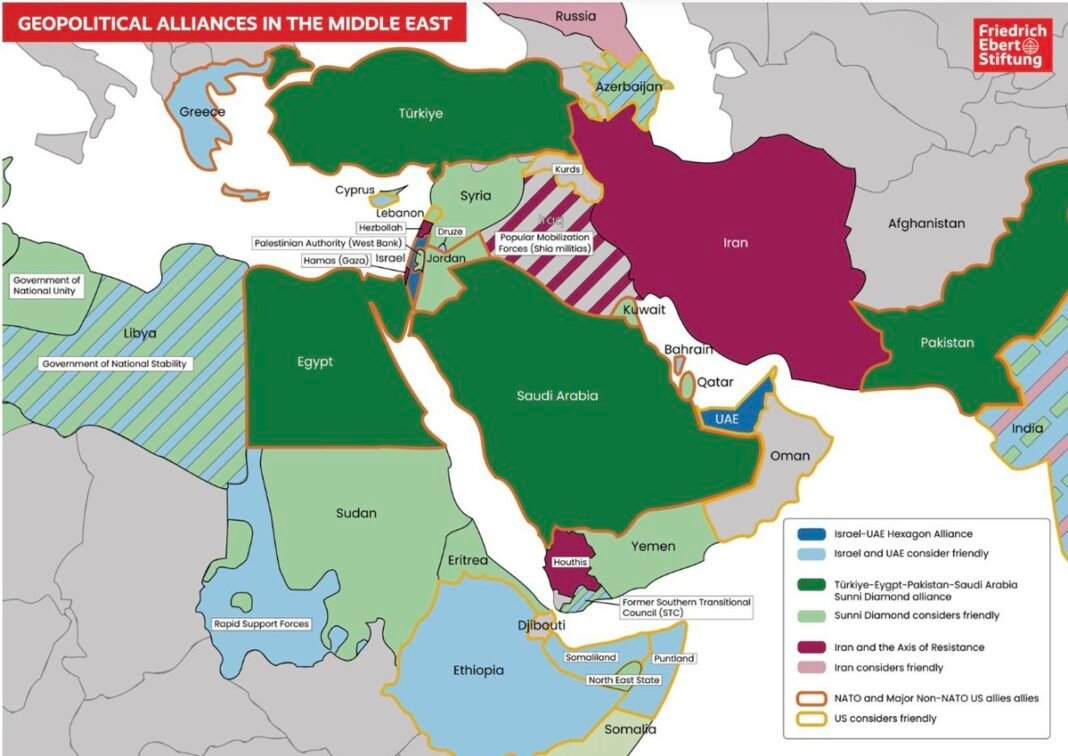
The US Navy’s USS Theodore Roosevelt is heading towards the Middle East as Washington maintains pressure on Iran and prepares contingency plans for a possible resumption of military operations. Iranian Foreign Minister Abbas Araghchi has warned President Donald Trump against another campaign, while Tehran threatens to expand retaliation to energy facilities, shipping and critical digital infrastructure.
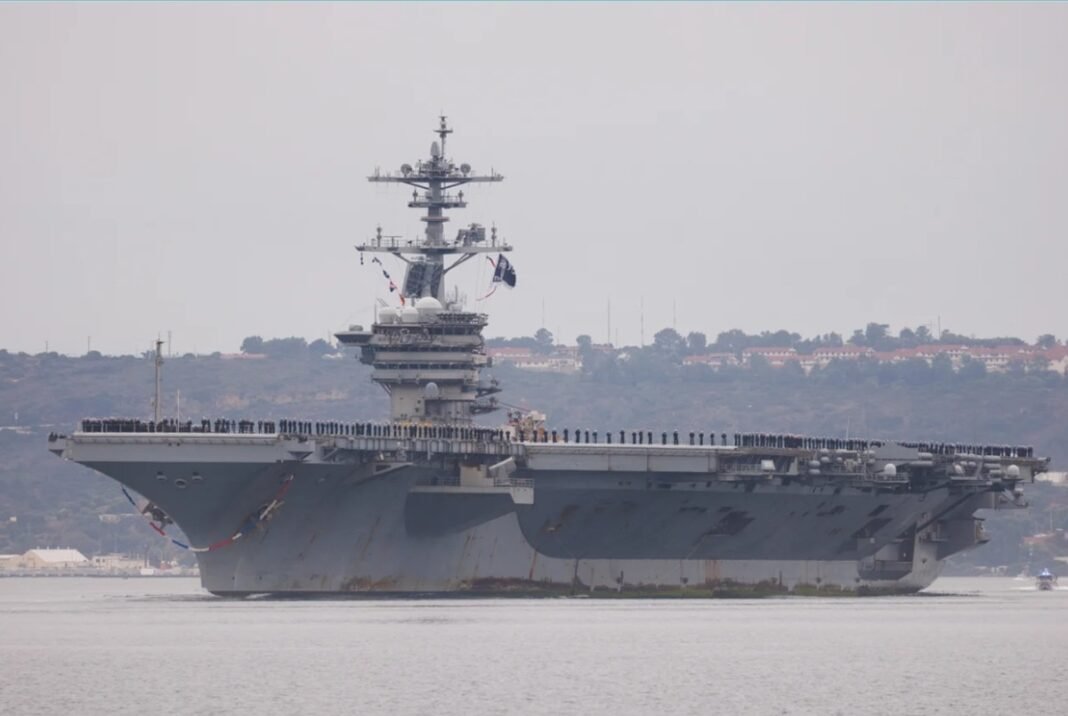
The deployment of the nuclear-powered aircraft carrier USS Theodore Roosevelt towards the Middle East is adding another major military asset to an already volatile confrontation between the United States and Iran.
The Nimitz-class carrier departed San Diego on September 27 and is expected to enter the US Central Command (CENTCOM) area of responsibility, according to USNI News. Its deployment comes as Washington maintains a naval blockade against Iran and evaluates possible responses to Tehran’s continued attacks on shipping and threats against American interests.
The carrier’s arrival would strengthen the US ability to sustain air operations, protect naval forces and support maritime security missions across the Gulf of Oman, the Arabian Sea and surrounding waters.
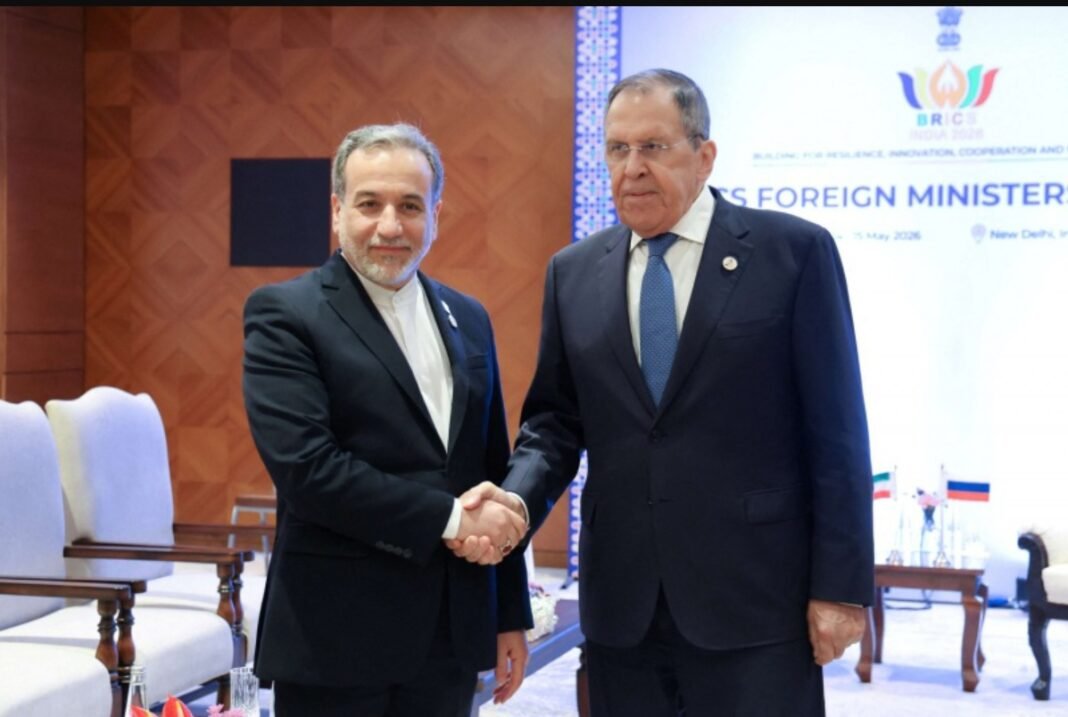
The move is taking place against a backdrop of increasingly hostile rhetoric from Tehran. Iranian Foreign Minister Abbas Araghchi issued a direct warning on October 19, challenging Trump to reconsider the consequences of renewed military action.
“Last time you wanted to ‘finish the job’, Iran emerged even stronger. Want to try your luck again? Be our guest. But be careful, we have unfinished jobs too,” Araghchi wrote in a post on X.
His remarks came after Trump publicly backed Israeli Prime Minister Benjamin Netanyahu and warned that Washington could take further action against Iran if the confrontation remained unresolved.
The immediate concern is that both sides are preparing for the possibility that the current stalemate could collapse into another round of fighting.
The arrival of another US carrier would strengthen Washington’s military options, but it would not by itself resolve the central question: whether renewed strikes could achieve a lasting political and security outcome rather than trigger a wider regional war.
USS Theodore Roosevelt: What the Deployment Means
The USS Theodore Roosevelt (CVN-71) is a nuclear-powered Nimitz-class aircraft carrier and the centrepiece of Carrier Strike Group 9.
The carrier operates with an embarked air wing, guided-missile escorts and supporting vessels that provide a combination of airpower, surveillance, maritime defence and command capabilities.
Its deployment gives US commanders additional flexibility if the confrontation with Iran escalates.
Carrier-based aircraft can support a range of missions, including air defence, surveillance, electronic warfare and strikes against designated military targets. Escort ships contribute air and missile defence, while the wider strike group provides command, communications and logistical support.
The carrier’s presence could also help the US Navy maintain a sustained operational tempo if other naval forces require replenishment or redeployment.
However, the precise missions assigned to the Roosevelt and its escorts will depend on orders from US military commanders. Its deployment should not automatically be interpreted as confirmation that another offensive against Iran has been authorised.
USNI News reported that the Roosevelt was expected to relieve the Japan-based USS George Washington as part of a planned Middle East deployment.
That transition would also have implications for the US naval posture in the Indo-Pacific, where the Navy must continue balancing commitments involving China and other regional security challenges.
The Roosevelt’s movement therefore reflects both the immediate confrontation with Iran and the wider demands placed on the US global force posture.
Three US Carrier Strike Groups and the Naval Blockade
The movement of the Roosevelt comes amid reporting that three American carrier strike groups are being concentrated in or directed towards the wider Middle East theatre.
The USS Theodore Roosevelt is the latest carrier reported to be heading towards the CENTCOM area, while the USS George Washington and USS George H.W. Bush have also been reported operating in the wider region.
The exact number of carrier strike groups actively enforcing the blockade, however, should be distinguished from the number deployed in the broader theatre. A carrier’s presence does not establish that every ship in its strike group is directly participating in blockade enforcement.
A carrier strike group is a substantial military formation. In addition to the carrier itself, it normally includes destroyers or other escort vessels, an embarked air wing and supporting elements.
Its principal advantage is the ability to sustain a wide range of operations without depending entirely on land-based airfields.
For Washington, additional carriers could strengthen air cover for maritime forces, provide greater operational flexibility and increase the number of aircraft available for missions if hostilities resume.
For Tehran, the deployment is a reminder that the United States retains the ability to concentrate considerable naval and air power around Iran.
Yet the military balance is not determined by carrier numbers alone. Geography, coastal missile systems, mines, drones, submarines, intelligence and the ability to sustain operations would all influence the outcome of a confrontation in the Gulf.
The presence of additional US carriers raises the potential cost of renewed Iranian attacks, but it also creates more high-value American assets that Tehran could attempt to threaten.
Araghchi’s Warning: Iran Says It Is Ready for Another War
Araghchi’s latest warning reflects Tehran’s effort to deter Washington from resuming offensive operations.
The Iranian foreign minister argued that the previous campaign had not achieved the political outcome sought by the United States and Israel. He also accused Netanyahu of pushing Washington towards another conflict for political reasons.
These are Iranian political claims rather than independently established assessments of the previous campaign’s results.
Nevertheless, the message is strategically important.
Iran wants Washington to believe that another round of strikes would impose costs on American forces and regional partners without necessarily producing a decisive result.
The warning also suggests that Tehran intends to preserve its ability to retaliate, even after suffering military damage.
The Islamic Revolutionary Guard Corps (IRGC) has issued separate warnings that a renewed conflict could involve targets beyond traditional military installations.
Iranian officials have referred to energy facilities, shipping, data centres and communications infrastructure as potential targets if the United States resumes military action.
Such threats broaden the potential consequences of the confrontation.
A conflict that initially centres on nuclear facilities or military infrastructure could expand into attacks affecting commercial aviation, energy production, telecommunications and international trade.
The danger is that each side may attempt to deter the other by demonstrating its capacity to impose wider economic costs.
That strategy can make escalation more difficult to control.
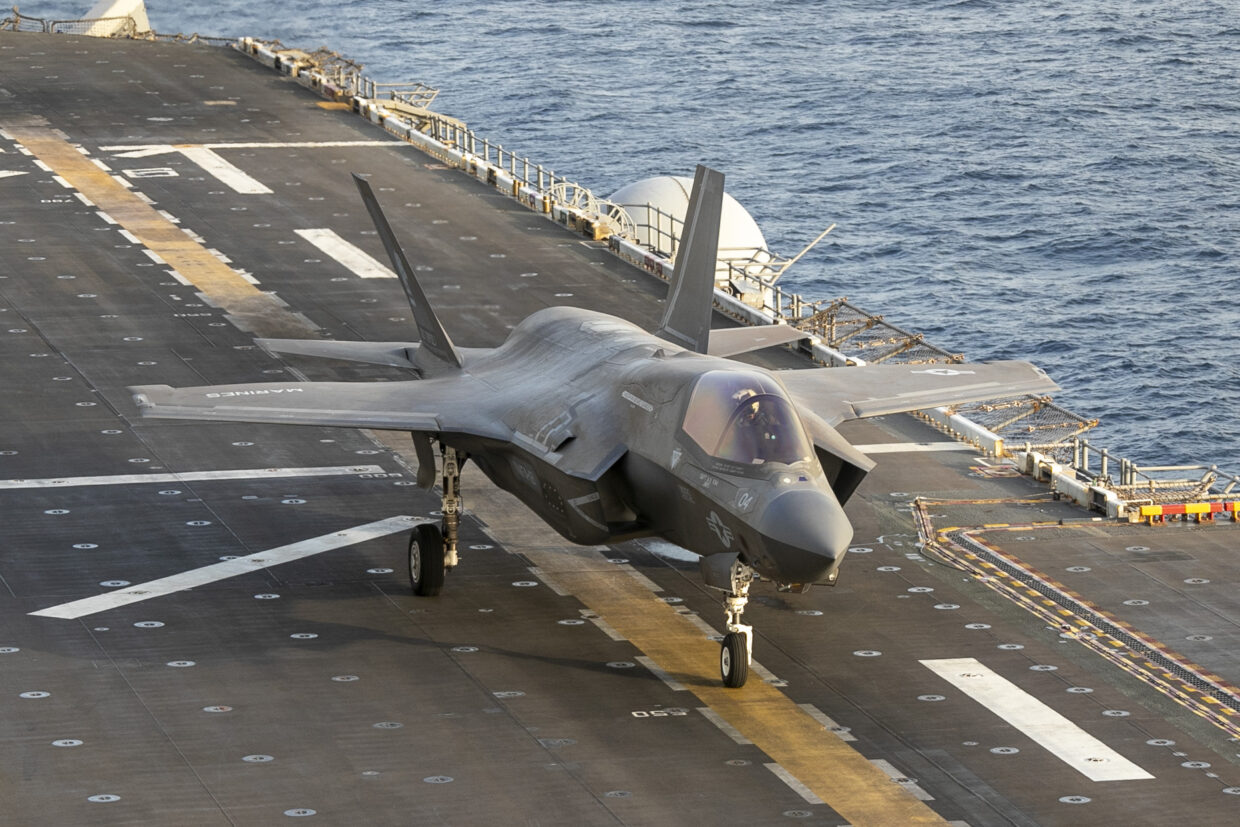
Iran’s New Target List: Data Centres and Undersea Cables
One of the most significant developments is Iran’s reported threat to target critical digital infrastructure in the event of another war.
Iranian security official Mohsen Rezaei has warned that regional undersea cables, data centres and artificial-intelligence infrastructure could become targets.
The threats were reported by Al Jazeera on October 13, which examined the exposure of Gulf digital infrastructure to a wider conflict.
Data centres are particularly important because they support cloud computing, banking services, telecommunications, business applications and artificial-intelligence workloads.
Their operations depend on reliable electricity, cooling systems, communications links and physical security. An attack does not necessarily have to destroy every server in a facility to disrupt its services.
Undersea communications cables present a different challenge. They carry enormous volumes of international data traffic and connect regional telecommunications networks with Europe, Asia and other markets.
Damage to a major cable can force traffic onto alternative routes, reduce network capacity and increase the difficulty of restoring normal services.
The Red Sea and Gulf region are particularly important because several international communications routes pass through or near strategically sensitive maritime areas.
Iran’s threats therefore highlight a broader change in the character of modern conflict: commercial infrastructure that supports the digital economy can become part of the strategic calculations of states engaged in military confrontation.
However, the distinction between a threat and an actual operation remains essential. The public statements establish that Iranian officials have identified such infrastructure as potential targets; they do not establish that every threatened facility has been designated for attack or that a new operation has been ordered.
Could Iran Strike US AI Infrastructure in the Gulf?
The possibility of attacks against AI-related infrastructure has attracted particular attention because American technology companies operate major cloud and digital services across the Gulf region.
Facilities supporting cloud computing and AI depend on extensive networks of power generation, cooling, fibre-optic communications and international data links.
Their vulnerability is not limited to direct missile strikes. Disruption to electricity, telecommunications or supporting infrastructure could also affect operations.
Iran’s threats appear intended to widen Washington’s assessment of the potential costs of renewed military action.
By signalling that commercial and digital assets could be targeted, Tehran is attempting to demonstrate that the consequences of a conflict would extend beyond the battlefield.
That message is also directed towards Gulf governments, which have invested heavily in technology, AI, financial services and economic diversification.
A wider conflict could threaten these investments and create pressure on regional governments to discourage further escalation.
Nevertheless, the ability to cause disruption should not be confused with the ability to systematically destroy an entire regional digital network. The actual impact would depend on the targets involved, redundancy in communications systems, protective measures and the effectiveness of emergency response arrangements.

Iran’s Missile and Drone Preparations
Iran has also signalled that it is preparing its missile, drone and air-defence forces for the possibility of renewed hostilities.
The Institute for the Study of War’s Critical Threats Project reported on October 13 that Iranian sources and open-source analysts had reported missile and drone exercises in several parts of the country.
Some reports described the launch of more than 30 ballistic missiles during the reported activity.
The researchers cautioned that they could not independently verify all the claims concerning the exercises, the precise missile types or the full scope of the activity.
The reports nevertheless suggest that Iran is seeking to demonstrate readiness and test systems that could be relevant in a renewed conflict.
Ballistic missiles, cruise missiles and drones serve different operational purposes. Together, they can complicate an adversary’s air-defence planning by creating multiple types of incoming threats.
Iran could seek to use its missile force to threaten military installations, naval assets and regional infrastructure, while drones could provide additional options for surveillance and attacks.
The effectiveness of these capabilities would depend on factors including accuracy, survivability, intelligence, command arrangements and the ability of US and regional air defences to detect and intercept incoming weapons.
The reported exercises should therefore be understood as evidence of preparation and signalling, rather than proof that Iran has acquired a decisive new capability.
US Considers a More Powerful Strike Option
The US military is reportedly developing contingency plans that could involve the GBU-43/B Massive Ordnance Air Blast bomb, commonly known as the MOAB or the “mother of all bombs.”
CNN reported on October 15, citing multiple US officials familiar with internal military planning, that the weapon had been included among possible options for striking Iranian energy infrastructure and nuclear-related targets if Trump authorised a resumption of combat operations.
The GBU-43/B is a large conventional explosive weapon, not a nuclear bomb. Its inclusion in reported planning would represent a notable escalation in the types of weapons potentially considered for the campaign.
However, there are important limitations.
The MOAB is not a substitute for every type of specialised weapon. Its actual usefulness would depend on the target, the surrounding terrain, the desired military effect and the ability to deliver the weapon under the prevailing operational conditions.
The bomb’s inclusion in contingency planning does not establish that it will be used, that a final target list has been approved or that the White House has decided to restart the war.
Trump has also publicly discussed the possibility of striking Pickaxe Mountain, a heavily fortified site associated with Iran’s nuclear programme, according to Reuters on October 16.
The remarks indicate that the administration is keeping military options under consideration, but they do not establish a final decision to launch another campaign.
The central question is whether a new round of strikes would produce a durable strategic result.
Destroying additional infrastructure could impose costs on Iran, but it would not automatically eliminate its ability to retaliate or resolve the political disputes driving the confrontation.
The Strait of Hormuz Remains the Central Strategic Flashpoint
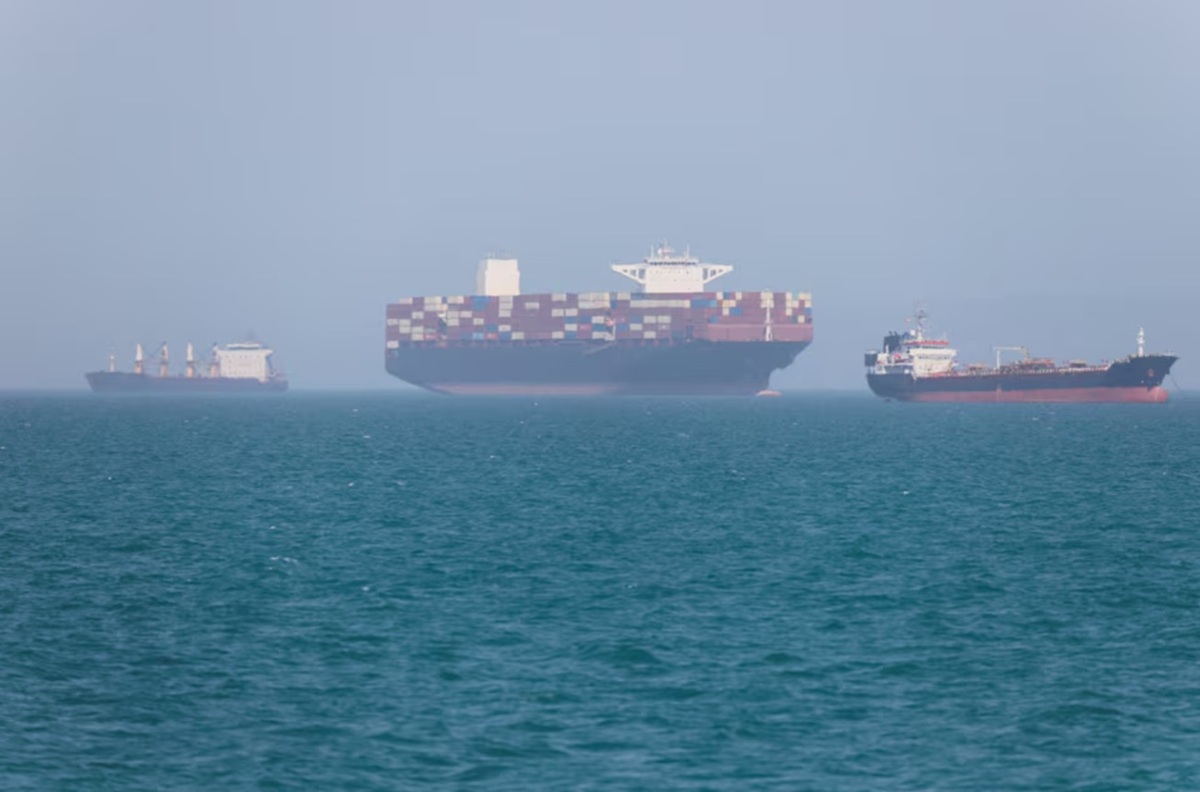
The Strait of Hormuz is one of the most important maritime chokepoints in the world.
It connects the Persian Gulf with the Gulf of Oman and the Arabian Sea and carries a substantial share of global oil and liquefied natural gas shipments.
Iran’s ability to threaten maritime traffic gives it a means of imposing economic costs even when it cannot match American naval power in a conventional fleet-to-fleet confrontation.
Reuters reported on October 14 that Iran was changing its tactics against shipping ahead of the US midterm elections, with attacks and threats affecting vessels in and around the strait.
The confrontation has raised concerns about oil prices, marine insurance, shipping schedules and the security of energy supplies.
For Washington, maintaining freedom of navigation is a major military and economic objective.
For Tehran, maritime pressure can serve as leverage by increasing the cost of the confrontation for the United States and its partners.
But the strategy is dangerous for both sides.
A prolonged disruption could damage Iran’s own economic interests, intensify international opposition and prompt a stronger US response.
An attempt to enforce a naval blockade could also lead to further encounters between warships, commercial vessels and Iranian forces.
The presence of additional US naval assets may strengthen Washington’s ability to protect shipping, but it does not eliminate the possibility of miscalculation or escalation.
US Warns Americans of Travel Disruption and Security Risks
The State Department has warned American citizens to exercise heightened vigilance amid the deteriorating security environment in the Middle East.
Its worldwide caution notice, updated on July 22, advises Americans in the region to prepare for flight cancellations, periodic airspace closures and wider travel disruption. It also warns that US diplomatic facilities and other American interests overseas could face threats from Iran or groups aligned with it.
The notice is a standing security warning rather than confirmation of a specific imminent attack.
Nevertheless, its guidance reflects the practical consequences of an unstable regional environment.
Airlines may adjust routes or suspend services when airspace becomes unsafe. Governments may impose temporary restrictions, while businesses and diplomatic missions may review their security arrangements.
For travellers, the immediate priority is to check airline notifications, monitor official government advisories and follow instructions issued by local authorities.
For the United States, the warning also illustrates how a conflict involving military targets can affect citizens, commercial institutions and diplomatic facilities far beyond the immediate battlefield.
US Midterm Elections Add Political Pressure
The US midterm elections on November 3 are becoming an important factor in the political calculations surrounding Iran.
The outcome will determine control of Congress for the remainder of Trump’s current term and could affect the administration’s room for manoeuvre on budgets, oversight and domestic policy.
Recent reporting suggests that Iranian officials believe pressure on oil prices and shipping could create political costs for the White House before the vote.
Iran may calculate that a prolonged conflict and higher fuel prices would increase domestic opposition to further military action.
Washington, however, may reach a different conclusion. If the administration believes that Iran’s actions threaten freedom of navigation or American personnel, it could decide that military action is necessary regardless of the electoral timetable.
Trump’s public statements have not established a definitive commitment to avoid military action until after the election.
The political calendar may affect the timing and presentation of decisions, but it does not determine whether a campaign would be militarily effective or strategically worthwhile.
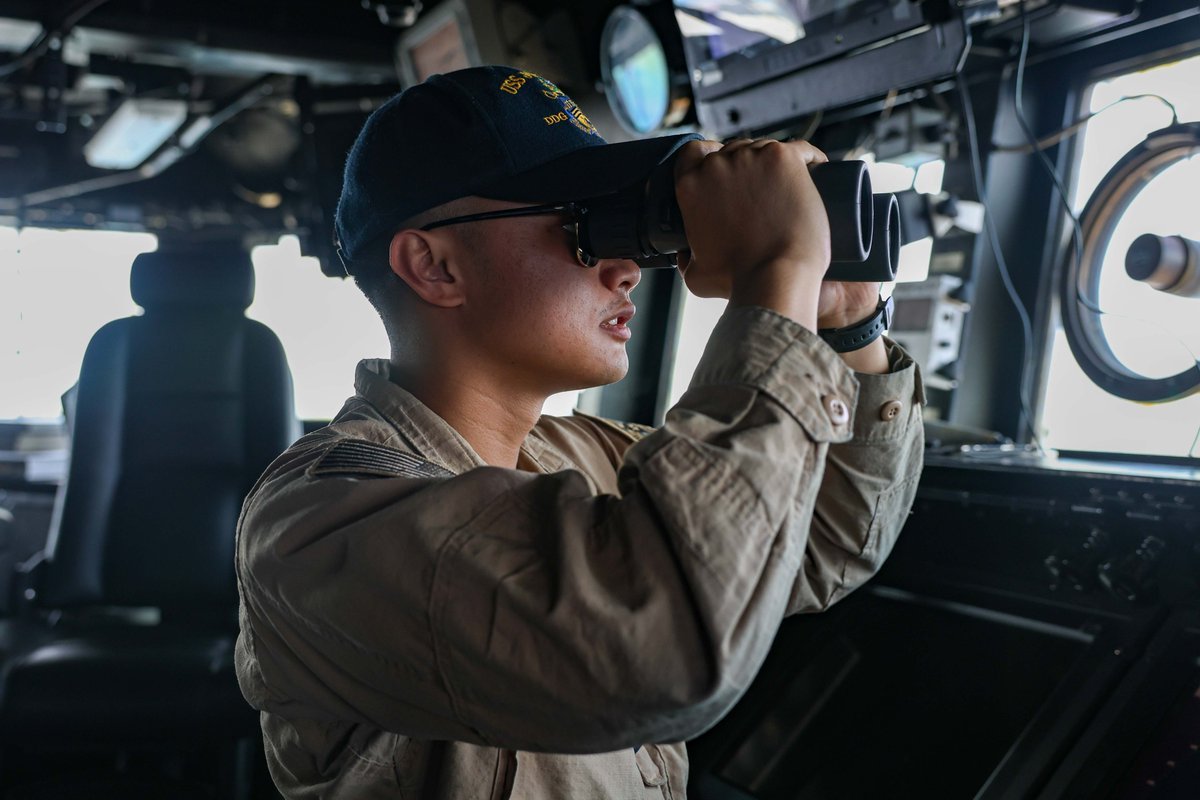
What Another War Could Mean for the Middle East
A renewed US-Iran conflict could affect several interconnected theatres.
The Persian Gulf would remain central because of its energy infrastructure and maritime routes. Regional military installations could face retaliatory threats, while Israel would remain a major part of the confrontation.
The Red Sea and Yemen could also become more dangerous if regional armed groups increase attacks on shipping or other targets.
Digital infrastructure, including data centres and undersea cables, could face additional risks if threats made by Iranian officials translate into actual operations.
These possibilities do not mean every theatre would necessarily become active. They illustrate how a conflict involving Iran can create overlapping security challenges across the region.
For Gulf states, the priority is to protect critical infrastructure while avoiding a wider war that could undermine economic diversification and investor confidence.
For Washington, the challenge is to maintain deterrence without committing to an open-ended military campaign.
For Tehran, the objective is to demonstrate that renewed attacks on Iran would impose costs on its adversaries, while avoiding a level of escalation that threatens the state’s own survival.
These competing calculations make the situation difficult to predict.
Conclusion: A Third US Carrier Raises Pressure, but Does Not Guarantee Victory
The deployment of the USS Theodore Roosevelt towards the Middle East adds another important military asset to the US posture around Iran.
Its arrival could strengthen maritime security, support carrier-based air operations and provide additional flexibility if the confrontation escalates.
At the same time, Araghchi’s warning, Iran’s reported missile exercises and threats against energy and digital infrastructure show that Tehran is attempting to prepare for another round of conflict while deterring Washington from initiating it.
The reported US planning involving the MOAB further demonstrates that the administration is examining options beyond the military measures already employed.
Yet contingency planning is not the same as a decision to attack, and the arrival of another carrier does not establish that a new offensive is inevitable.
The strategic challenge remains unresolved.
Additional strikes could damage Iranian military capabilities, but they could also prompt retaliation against shipping, regional bases, energy facilities and commercial infrastructure.
The outcome would depend on the objectives selected, Iran’s response and whether either side could translate military pressure into a durable political arrangement.
The USS Theodore Roosevelt’s deployment strengthens Washington’s options. Whether those options lead to deterrence, renewed warfare or a return to diplomacy will depend on decisions that have not yet been publicly settled.