Saudi Arabia and the United Arab Emirates are moving towards renewed military coordination in Yemen as Houthi advances along the Red Sea coast intensify pressure on the anti-Houthi coalition. A reported arrangement involving Emirati funding for southern forces and Saudi air cover could mark a significant shift in Gulf security cooperation, although deep disagreements over southern Yemen’s political future remain unresolved.

Saudi Arabia and the United Arab Emirates appear to be rebuilding military coordination in Yemen as the Houthi movement expands its battlefield pressure and threatens strategically important areas near the Bab al-Mandab Strait.
The renewed engagement follows a period of serious friction between Riyadh and Abu Dhabi over the future of Yemen, particularly their competing relationships with armed factions operating in the country’s south.
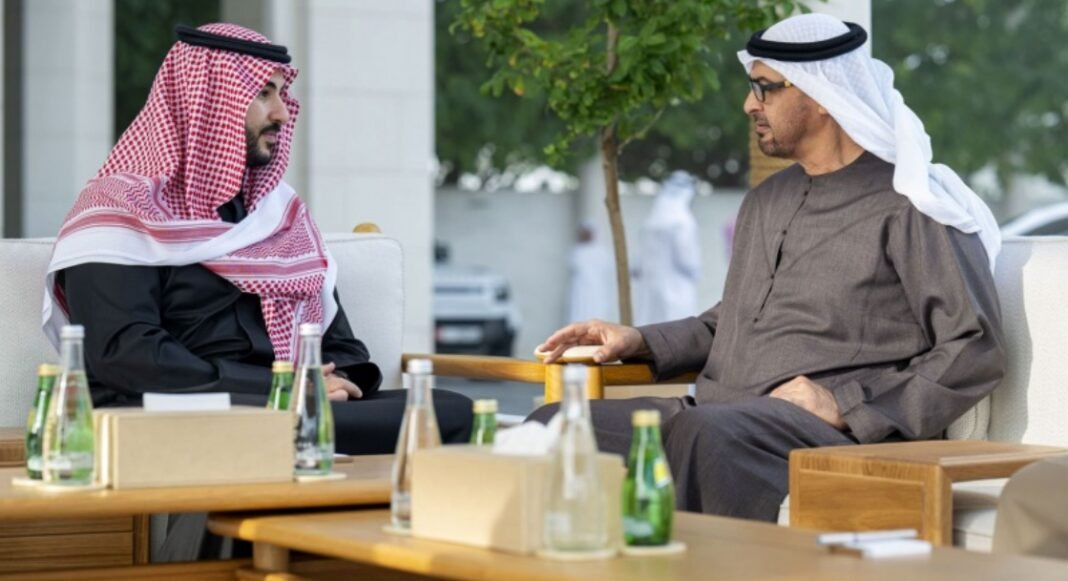
Saudi Defence Minister Prince Khalid bin Salman visited Abu Dhabi on Sunday, where he met senior Emirati leadership, including Vice President Sheikh Mansour bin Zayed Al Nahyan and UAE President Sheikh Mohammed bin Zayed Al Nahyan.
According to official Saudi and Emirati statements, the discussions covered bilateral relations, regional developments and ways to strengthen cooperation in support of regional security and stability.
The meetings came amid reports that the UAE had agreed to resume financial support for southern Yemeni forces, particularly the Southern Giants Brigades, in exchange for Saudi air cover.
The British newspaper The Guardian reported the arrangement on October 17, citing the rapidly changing military situation in Yemen. Neither government had publicly confirmed all the reported operational details at the time of writing.
If implemented, the arrangement would represent a pragmatic adjustment by two Gulf powers whose approaches to Yemen have diverged sharply over the past year.
The immediate priority appears to be containing the Houthi advance, but renewed military coordination will not automatically resolve the political rivalry that has weakened Yemen’s anti-Houthi camp.

Why Saudi Arabia and the UAE Are Moving Closer Again
The changing battlefield situation is creating pressure on Riyadh and Abu Dhabi to reconsider their differences.
The Houthis have expanded their positions along Yemen’s western coast, threatening areas of strategic importance to international shipping and increasing military pressure on forces aligned with Yemen’s internationally recognised government.
Their advances have also raised concerns about Taiz, a densely populated governorate whose position makes it important to the wider military balance in western Yemen.
For Saudi Arabia, the immediate concern is the security of its territory, the effectiveness of its Yemeni partners and the threat posed by the Houthis to Red Sea maritime routes.
For the UAE, the changing situation threatens years of investment in southern Yemeni security formations and the strategic relationships Abu Dhabi has developed along the country’s southern and western coastline.
Neither country can easily ignore the consequences of further Houthi advances.
The result is an emerging convergence of military interests, even though their longer-term political objectives remain different.
The reported arrangement would allow the UAE to support forces familiar with its training and organisational methods while Saudi Arabia provides air support and potentially other forms of assistance.
Such cooperation could strengthen the anti-Houthi campaign without requiring the two countries to restore the full military structure of the coalition they established in 2015.
Khalid bin Salman’s Abu Dhabi Visit Signals Renewed Engagement

The Saudi defence minister’s visit is significant because it brings senior military and political leadership into direct contact at a time of growing regional insecurity.
The Saudi Press Agency reported that Prince Khalid bin Salman met Sheikh Mansour bin Zayed to discuss matters of mutual interest and regional developments.
He subsequently met UAE President Sheikh Mohammed bin Zayed Al Nahyan.
The Emirati news agency WAM said the discussions focused on bilateral relations, ways to expand joint cooperation and developments affecting regional security and stability.
The official statements did not disclose a detailed military agreement or confirm the reported arrangement concerning the Giants Brigades.
Nevertheless, the meetings indicate that both governments are maintaining high-level communication while confronting a rapidly deteriorating security environment.
Earlier contacts between Saudi Crown Prince Mohammed bin Salman and Sheikh Mansour bin Zayed in Riyadh also formed part of the wider diplomatic engagement.
The sequence of meetings suggests an effort to rebuild confidence and coordinate responses to developments that could affect both countries’ security interests.
However, diplomatic engagement should not be mistaken for proof that all previous disagreements have been settled.
The real test will be whether the two governments can establish effective coordination between their preferred Yemeni partners while avoiding another confrontation over the distribution of political and military power in the south.
The Southern Giants Brigades: A Key Force in Yemen’s Battlefield

The Southern Giants Brigades, also known as the Giants Brigades or Al-Amaliqa Brigades, have become one of the most important military formations in Yemen’s anti-Houthi camp.
The force emerged during the fighting along Yemen’s western coast and developed with substantial Emirati support, including training, equipment and organisational assistance.
Its fighters have participated in operations against the Houthis and have played an important role in campaigns involving strategically significant areas along the Red Sea coast.
The formation’s military experience makes it an important partner for any renewed campaign intended to reverse Houthi territorial gains.
In October 2026, the Giants Brigades participated in the wider anti-Houthi offensive near Bab al-Mandab alongside forces linked to the former Southern Transitional Council and troops aligned with Yemen’s internationally recognised government.
Al Jazeera reported that these forces made gains around the Mocha area and sought to disrupt Houthi control over important coastal routes.
Their effectiveness is particularly relevant because the anti-Houthi camp is not a unified military organisation. It includes formations with different command structures, political affiliations and regional interests.
The Giants Brigades’ connections to the UAE give Abu Dhabi an established relationship with a force that remains operationally important.
If Emirati financial support resumes, the formation could receive additional resources for personnel, logistics and sustained operations, although the precise scope of any renewed assistance has not been officially confirmed.
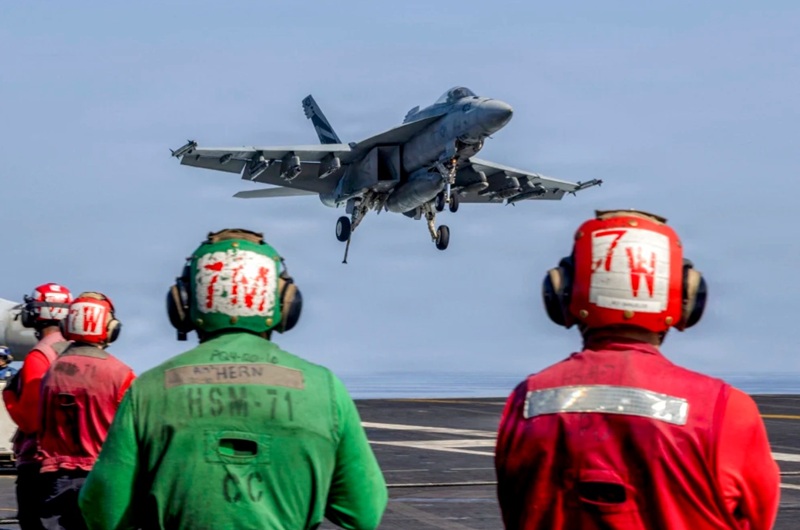
Saudi air cover could complement these capabilities by providing support against identified military targets, subject to the operational arrangements agreed by the parties.
However, the effectiveness of this model would depend on intelligence sharing, coordination with Yemeni government forces and the ability to maintain supplies and positions after battlefield gains.
Saudi-UAE Rivalry Has Weakened the Anti-Houthi Coalition
The renewed engagement follows a serious deterioration in relations between Riyadh and Abu Dhabi over Yemen’s political future.
Although Saudi Arabia and the UAE joined the same coalition in 2015, their priorities gradually diverged.
Saudi Arabia has generally supported Yemen’s internationally recognised government and efforts to preserve a unified Yemeni state.
The UAE has developed strong relationships with southern armed formations, including groups associated with the Southern Transitional Council, which has historically advocated independence for southern Yemen.
These differences have produced competing security arrangements and disagreements over the composition of political authority in areas outside Houthi control.
The dispute escalated during the Southern Transitional Council’s territorial expansion in late 2025 and the subsequent counteroffensive by forces aligned with Yemen’s Presidential Leadership Council in January 2026.
The reversal of the STC’s gains and the UAE’s withdrawal of its remaining forces from Yemen intensified the rift between the two Gulf partners.
The episode demonstrated how competition among anti-Houthi factions could undermine the wider campaign against the movement.
It also exposed a structural weakness: the coalition’s members share an opponent but do not necessarily agree on what Yemen should look like after that opponent is defeated.
The latest Saudi-Emirati engagement appears to reflect recognition that continued fragmentation could provide the Houthis with additional opportunities to expand their influence.
Yet rebuilding cooperation on the battlefield will be easier than agreeing on the future political structure of southern Yemen.
Bab al-Mandab: The Strategic Prize Behind the Fighting
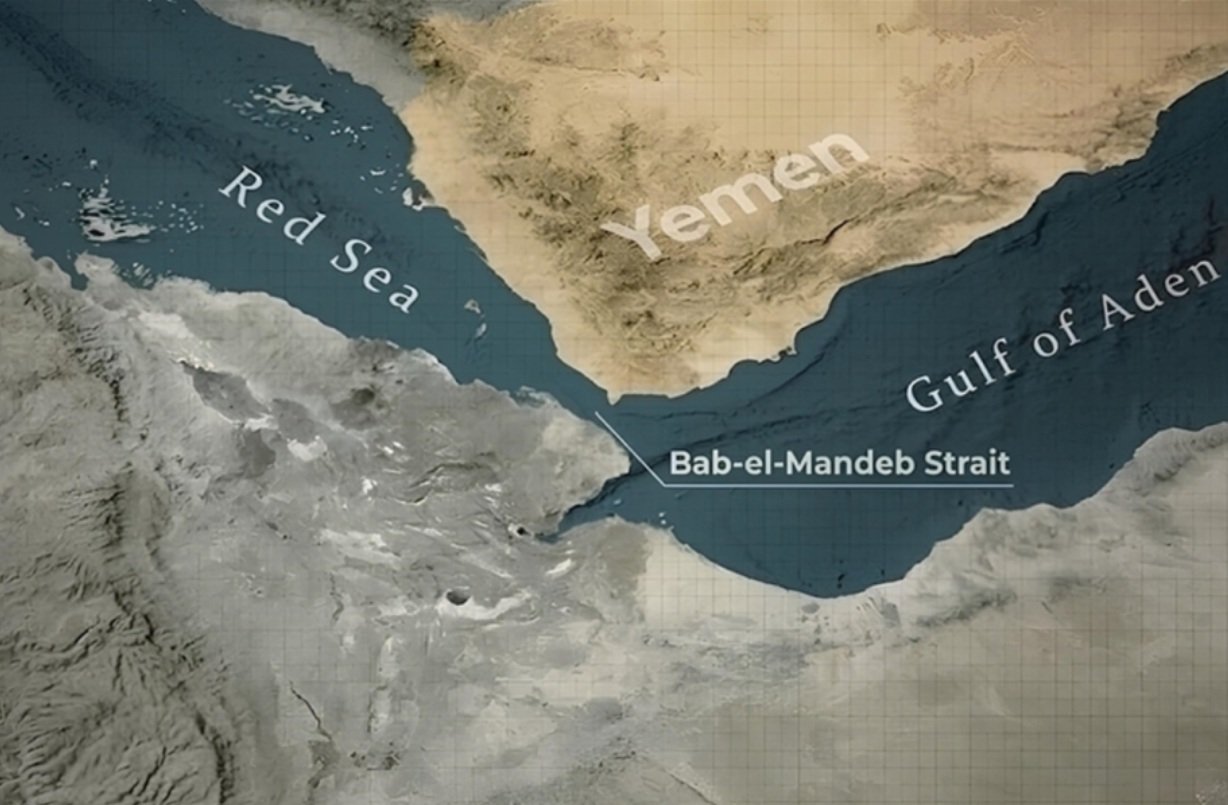
The renewed coordination has implications far beyond Yemen’s internal conflict.
The Bab al-Mandab Strait connects the Red Sea with the Gulf of Aden and the wider Indian Ocean. It is a vital maritime passage for commercial vessels travelling between Asia and Europe through the Suez Canal.
Its strategic importance has increased as attacks on shipping and regional military escalation have disrupted commercial traffic across the Red Sea.
Control of coastal areas near the strait can provide military advantages, including opportunities to monitor maritime movements and threaten shipping routes.
The Houthis’ ability to employ missiles, drones and other weapons against vessels has demonstrated how a regional armed movement can impose economic costs well beyond the territory it controls.
Saudi Arabia therefore has strong reasons to prevent the Houthis from consolidating their positions along the western coastline.
The UAE also has significant interests in maritime security, regional ports and commercial access across the Gulf of Aden and the Red Sea.
For both countries, renewed cooperation could help protect important shipping routes and reduce the risk that further Houthi advances will create a more dangerous regional security environment.
However, securing the coastline would require more than airstrikes.
Anti-Houthi forces would need to maintain territorial control, protect supply lines, coordinate coastal security and prevent the movement from rebuilding its capabilities.
Without a sustainable ground presence and effective command arrangements, temporary battlefield gains might not translate into lasting control.
Saudi Arabia’s Military Calculations
Saudi Arabia faces a difficult choice as the Houthi threat grows.
The kingdom has advanced combat aircraft and substantial airpower, but years of fighting have demonstrated the limitations of relying on airstrikes to defeat an entrenched adversary.
The Houthis have developed experience in asymmetric warfare and continue to operate in difficult terrain.
A larger Saudi ground deployment could increase military pressure, but it would also expose Saudi forces to prolonged fighting and impose significant logistical and financial costs.
Supporting capable Yemeni partners offers an alternative.
Saudi air support, combined with better coordination among anti-Houthi formations, could help local forces apply pressure without requiring Riyadh to assume full responsibility for every ground operation.
Nevertheless, the approach would depend on the reliability of those partners and the clarity of their objectives.
Saudi Arabia would also need to avoid a situation in which support for one formation deepens divisions with other groups within Yemen’s internationally recognised government.
The reported arrangement with the UAE could therefore be an attempt to balance immediate military requirements against the longer-term need for a more coherent political and security structure.

The UAE’s Strategic Interests in Southern Yemen
Abu Dhabi’s role in Yemen has historically focused on maritime security, counterterrorism and the development of relationships with local military formations.
Its support for southern groups has given the UAE influence in strategically important parts of the country, particularly along the coast.
But the collapse of the STC’s territorial gains and the withdrawal of Emirati forces created uncertainty about the future of that influence.
Renewed financial support for the Giants Brigades, if confirmed, would provide Abu Dhabi with a way to maintain a role in the conflict without necessarily returning its own forces to Yemen.
It could also help preserve relationships with a military formation that has experience fighting the Houthis.
For the UAE, the arrangement would offer potential strategic benefits, but it would carry risks.
Its forces and partners could become more deeply involved in a renewed campaign, while disagreements over southern autonomy and political representation would remain unresolved.
Abu Dhabi would therefore have to weigh its immediate security interests against the possibility that renewed military involvement could reopen tensions with Riyadh.
The reported arrangement is best understood as a possible practical compromise rather than evidence of a complete Saudi-Emirati reconciliation.
Will Renewed Coordination Defeat the Houthis?
The outcome will depend on whether the anti-Houthi camp can convert its improved coordination into sustainable military gains.
The Houthis retain substantial influence in northern Yemen and have demonstrated an ability to adapt to changing battlefield conditions.
They also benefit from divisions among their opponents, particularly when competing Yemeni factions pursue incompatible political objectives.
A coordinated offensive could put pressure on Houthi positions near the western coast and improve the security of important transport routes.
But a campaign focused only on recovering territory may not eliminate the movement’s ability to conduct missile and drone attacks.
The Houthis could continue to operate through dispersed military networks even if they lose some coastal positions.
A lasting change in the balance of power would require effective coordination between Yemeni forces, reliable logistical support and a credible political framework for governing areas recovered from Houthi control.
Without those elements, renewed Saudi-Emirati cooperation could produce temporary gains while leaving the underlying conflict largely unresolved.

What the Rapprochement Means for Regional Security
The latest developments show how quickly the security environment in the Gulf and Red Sea can reshape relationships between regional powers.
Saudi Arabia and the UAE have substantial shared interests, but their rivalry in Yemen has demonstrated that common security concerns do not automatically produce unified military or political strategies.
The reported funding-for-air-cover arrangement suggests that both governments may be prepared to separate immediate battlefield cooperation from their unresolved disagreements over Yemen’s future.
That could improve the effectiveness of the anti-Houthi camp in the short term.
It could also provide a foundation for broader security coordination if the two governments establish clear responsibilities and mechanisms for resolving disputes.
For regional shipping, energy markets and neighbouring states, the immediate concern is whether the renewed campaign will improve security or trigger another cycle of retaliation.
The situation will also be watched by Iran, whose relationship with the Houthis remains an important element of the wider regional confrontation.
Tehran’s influence over the movement should not be treated as proof that every Houthi decision is directly controlled by Iran. The Houthis have their own political agenda and domestic power base.
Nevertheless, developments in Yemen have implications for the regional balance between Iran and its Gulf rivals.
Conclusion: Military Cooperation May Return Before Political Trust
Saudi Arabia and the UAE appear to be moving towards closer coordination as Houthi advances threaten strategically important areas of Yemen’s western coast.
The reported arrangement involving Emirati funding for the Southern Giants Brigades and Saudi air cover could offer a practical way to strengthen anti-Houthi forces without fully restoring the military coalition established in 2015.
However, the arrangement remains based on media reporting rather than a publicly confirmed bilateral operational agreement.
Its effectiveness will depend on whether the two countries can coordinate their military support, establish clear objectives and prevent renewed fighting from deepening divisions within Yemen’s anti-Houthi camp.
The political questions remain substantial. Saudi Arabia and the UAE continue to have different relationships with Yemeni factions and different perspectives on southern autonomy and the structure of national authority.
The coming weeks will show whether their renewed engagement produces a more coherent military campaign or merely a temporary alignment of interests.
The immediate objective is to contain the Houthi advance. The longer-term challenge is to ensure that military cooperation does not collapse again over the unresolved question of who will control southern Yemen and how the country will be governed.