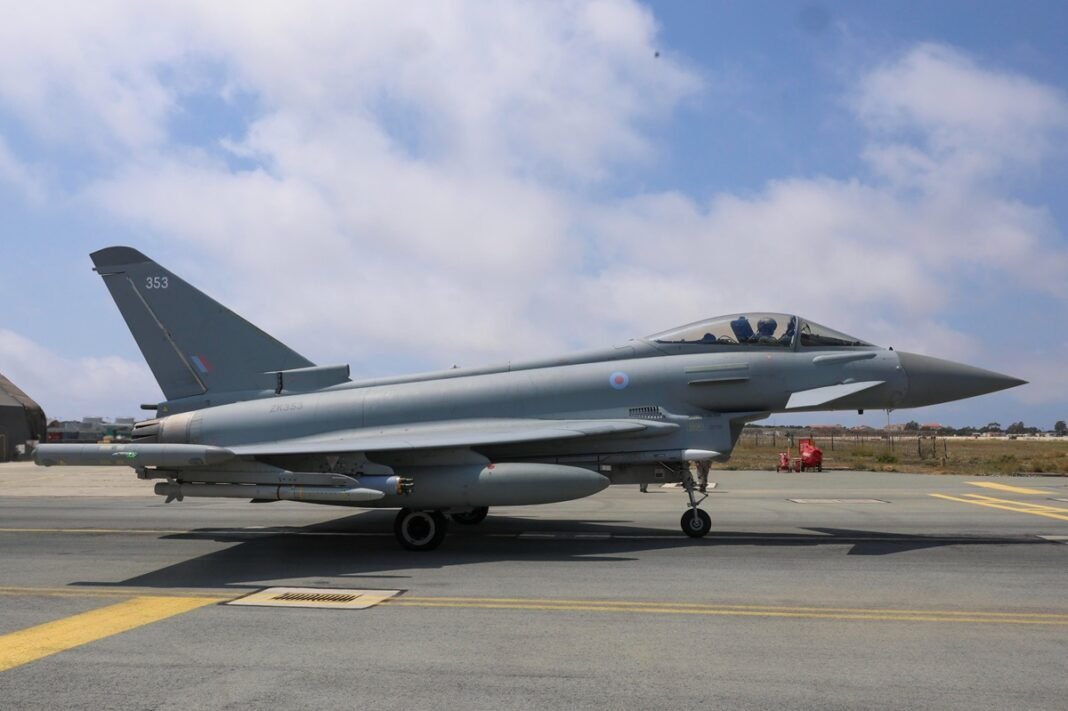
Britain is preparing to expand military support for Saudi Arabia, with RAF Typhoon fighters, an A400M Atlas transport aircraft and military advisers reportedly being added to defensive assistance as Houthi missile and drone attacks intensify.
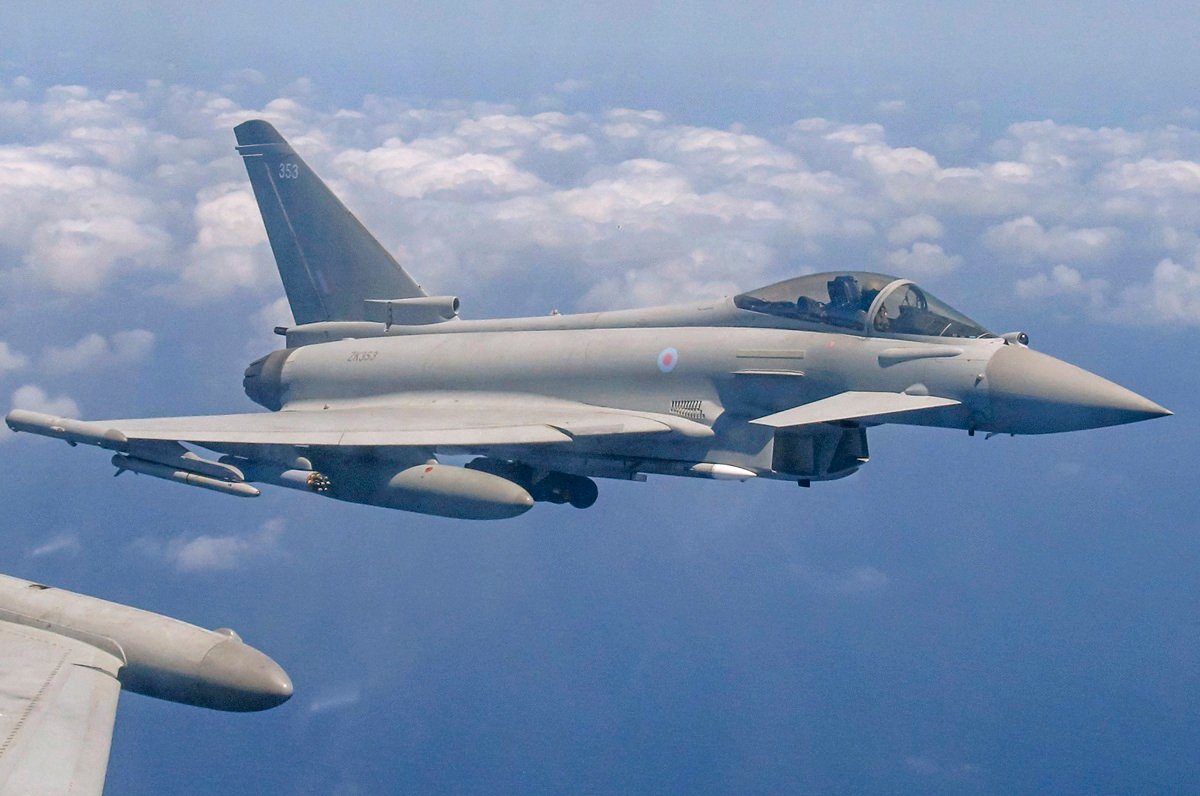
The United Kingdom is preparing to expand its military support for Saudi Arabia as a renewed wave of Houthi missile and drone attacks threatens Saudi cities, airports and critical infrastructure.
According to a report published by Bloomberg, the Royal Air Force (RAF) will deploy Typhoon fighter jets on defensive missions to help protect Saudi territory against aerial attacks launched by Yemen’s Houthi movement.
Britain is also expected to provide an Airbus A400M Atlas transport aircraft to move equipment around Saudi Arabia, along with military advisers, the report said. The UK Ministry of Defence had not immediately commented on these additional deployments at the time of publication.
The reported expansion follows Britain’s earlier decision to provide an RAF Voyager aerial-refuelling aircraft to support Saudi defensive operations. Prime Minister Andy Burnham confirmed on October 14 that the Voyager had already completed 14 operational missions. The UK government’s September announcement had confirmed the initial refuelling support and existing British contributions to Saudi air defence.
The move would mark a significant expansion of Britain’s direct operational support for Saudi Arabia as the conflict in Yemen threatens to spread further across the Gulf and Red Sea region.
RAF Typhoon deployment: What Britain is reportedly planning

The reported package includes three main elements, each addressing a different operational requirement.
RAF Typhoon fighter jets: The aircraft are expected to support defensive missions against aerial threats, including missiles and drones. Their reported deployment would add British combat-air capability to Saudi Arabia’s efforts to protect cities, airports and strategically important infrastructure.
A400M Atlas transport aircraft: The military transport aircraft would provide heavy-lift capability, helping move equipment and supplies around Saudi Arabia. Such logistical support can be important when air-defence units and other military assets need to be repositioned quickly across a large territory.
Military advisers: British personnel would provide additional military expertise and support. The precise number of advisers, their responsibilities and the operational arrangements have not been publicly detailed in the report.
The reported deployment should not automatically be interpreted as British participation in offensive strikes against Houthi positions in Yemen. The stated purpose is defensive, and the UK’s previously announced support was specifically intended to help Saudi aircraft defend against attacks.
The distinction matters because intercepting incoming aerial threats is operationally different from conducting airstrikes against launch sites, weapons depots or command facilities inside Yemen.
Britain had already sent an RAF Voyager tanker

The reported Typhoon deployment builds on an existing British military commitment.
On September 22, the UK Ministry of Defence announced that Britain would provide an RAF Voyager aircraft for air-to-air refuelling following a request from the Saudi government.
The Voyager is a military version of the Airbus A330 Multi Role Tanker Transport. Its refuelling capability allows compatible aircraft to remain airborne longer and operate over greater distances without returning to base for fuel.
On October 14, British Prime Minister Andy Burnham told Parliament that the Voyager had already completed 14 operational missions. He said the support was needed to protect civilians and reiterated Britain’s commitment to stand with Saudi Arabia against Houthi attacks.
The UK had also previously supplied air-defence equipment and deployed personnel to assist Saudi Arabia in protecting against missile and drone threats.
The newly reported Typhoon and A400M package would therefore represent an expansion of an existing defensive effort rather than the beginning of British military involvement in Saudi air defence.
Houthi attacks expose vulnerabilities in Saudi air defence
The British decision comes amid a sharp escalation in attacks attributed to Yemen’s Houthis.
The group has targeted King Khalid International Airport in Riyadh and other Saudi locations, including energy-related infrastructure. The attacks have caused casualties, disrupted civilian activity and raised concerns about the protection of critical national assets.
Al Jazeera reported that Saudi authorities said an October 10 attack on Riyadh’s airport killed at least 12 people and wounded more than 300. Subsequent reporting described additional attacks and further disruption around the capital.
Reuters reported on October 15 that Houthi attacks had struck Riyadh’s international airport and the headquarters of Saudi Aramco, exposing vulnerabilities in the kingdom’s defences.
According to analysts cited by Reuters, the challenge involves several factors: the Houthis’ evolving missile and drone capabilities, their experience in prolonged conflict, the geographical scale of Saudi Arabia and pressure on regional stocks of air-defence interceptors.
Saudi Arabia has invested heavily in modern combat aircraft, missile-defence systems and radar networks. However, defending a large country with widely dispersed civilian, military and energy facilities presents a demanding task, particularly when attacks involve relatively inexpensive drones alongside more sophisticated missiles.
The challenge is not simply whether a country possesses advanced weapons. It is also whether its detection, command-and-control and interception systems can identify and respond to multiple threats across a wide area.
Why the RAF Typhoon matters

The Eurofighter Typhoon is a multirole combat aircraft operated by the RAF and several European air forces. It is designed for air defence and air superiority missions, while also possessing capabilities for other combat roles.
In a defensive mission, fighter aircraft can contribute to the identification, tracking and interception of hostile aircraft and other airborne threats, depending on the weapons, sensors, rules of engagement and wider air-defence network available.
Their effectiveness against different types of drones and missiles depends on the characteristics of the incoming weapon, detection time, altitude, speed and the overall tactical situation. A fighter deployment alone cannot guarantee protection against every attack.
If the reported mission proceeds, British aircraft would be operating within a broader defensive environment involving Saudi military assets and potentially other allied capabilities.
The operational details remain unclear. Neither the number of Typhoons nor their basing arrangements, arrival date, weapons configuration or rules of engagement had been confirmed in the reporting available at publication time.
A400M Atlas: The logistical dimension
The reported inclusion of an A400M Atlas transport aircraft highlights the logistical demands of the expanded mission.
The A400M is a four-engine military transport aircraft designed to carry personnel, equipment and cargo. It can support strategic and tactical airlift requirements, helping armed forces move supplies between bases and operational areas.
In a country as large as Saudi Arabia, the ability to move military equipment quickly can complement combat aircraft and air-defence systems. Transport aircraft can help sustain deployments, although they do not themselves provide an air-interception capability.
The reported assignment of military advisers could also support coordination between British and Saudi personnel. However, the precise scope of that advisory role has not been publicly established.
Why Britain is increasing support for Saudi Arabia
The UK has cited regional stability, the protection of trade and energy supplies, and the security of its partners as reasons for assisting Saudi Arabia.
The Gulf remains strategically important to international energy markets, while the Red Sea and Bab al-Mandeb Strait connect major shipping routes between Europe and Asia.
A prolonged conflict involving Saudi Arabia and the Houthis could disrupt maritime traffic, raise transport and insurance costs and increase pressure on energy markets. Such consequences would affect not only regional economies but also countries dependent on imported fuel and international shipping.
The British government has also linked its military support to the internationally recognised government of Yemen and called for a diplomatic resolution to the conflict.
In a statement to the United Nations Security Council, the UK condemned Houthi attacks against Saudi Arabia and warned that continued fighting threatens civilian infrastructure, freedom of navigation and humanitarian conditions in Yemen.
London’s position combines military assistance to Saudi Arabia with calls for the Houthis to halt their attacks and return to a political process.
The wider regional implications
The reported expansion of British support comes at a time when Saudi Arabia is seeking assistance from partners to strengthen its response to the renewed Houthi campaign.
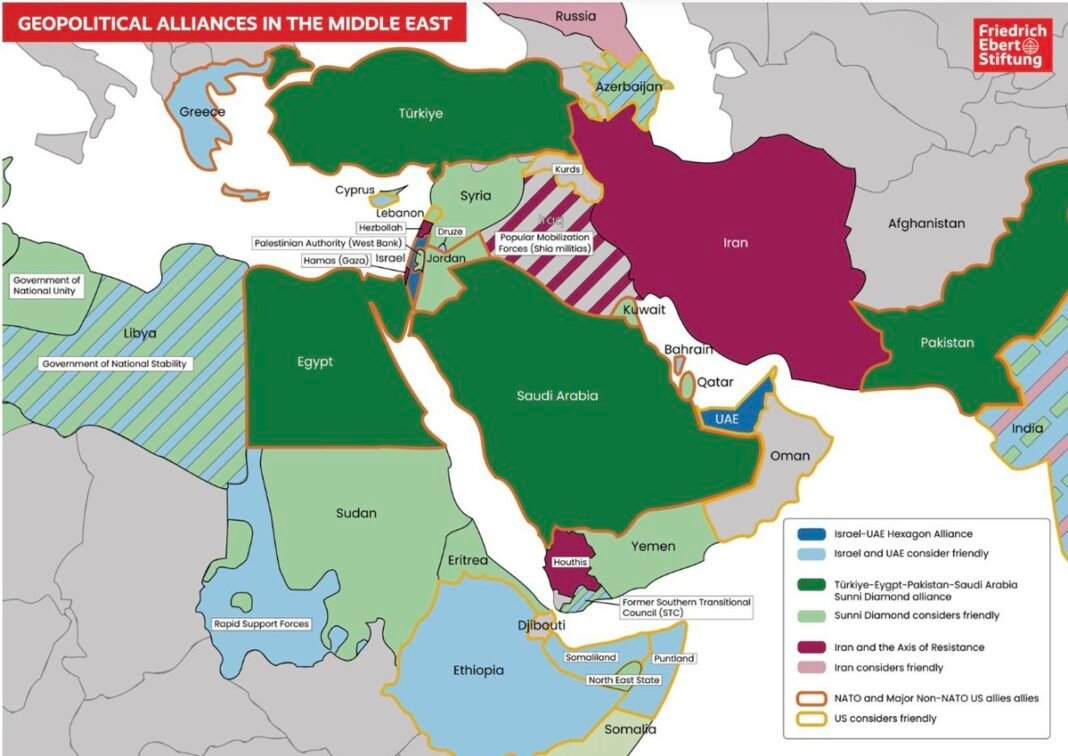
On October 12, Pakistan, Türkiye, Egypt and Saudi Arabia condemned attacks on Riyadh and described them as a dangerous escalation. The four countries have also been associated with broader discussions about regional defence cooperation.
The situation places additional attention on how Saudi Arabia’s partners might contribute to protecting its airspace, energy infrastructure and maritime interests. However, the involvement of one partner should not be treated as proof that every country in a wider diplomatic or defence grouping has committed forces to the same operation.
For Pakistan, the security situation has direct implications because of its defence relationship with Saudi Arabia, geographical proximity to Iran and exposure to disruptions in Gulf energy supplies. Any wider conflict could affect energy prices, shipping costs and regional stability.
For the United Kingdom, the reported deployment would demonstrate a willingness to extend military support to a longstanding Gulf partner while publicly framing the mission around defence rather than offensive action.

What happens next?
The main questions are whether the UK Ministry of Defence formally confirms the reported Typhoon deployment, when the aircraft and transport support might arrive, and what operational restrictions would govern their missions.
Further details would also be needed to determine whether British fighters would operate independently, integrate directly into Saudi air-defence arrangements or support a wider multinational effort.
The immediate objective is to help protect Saudi territory against further aerial attacks. The longer-term challenge is more complex: preventing the conflict from widening, protecting international shipping and critical infrastructure, and restoring a political process capable of reducing the threat from Yemen.
For now, the reported RAF package signals a potential escalation in the level of British defensive assistance. Its actual military significance will depend on the final deployment arrangements, the threats encountered and whether the additional capabilities help Saudi Arabia improve its protection against repeated missile and drone attacks.