
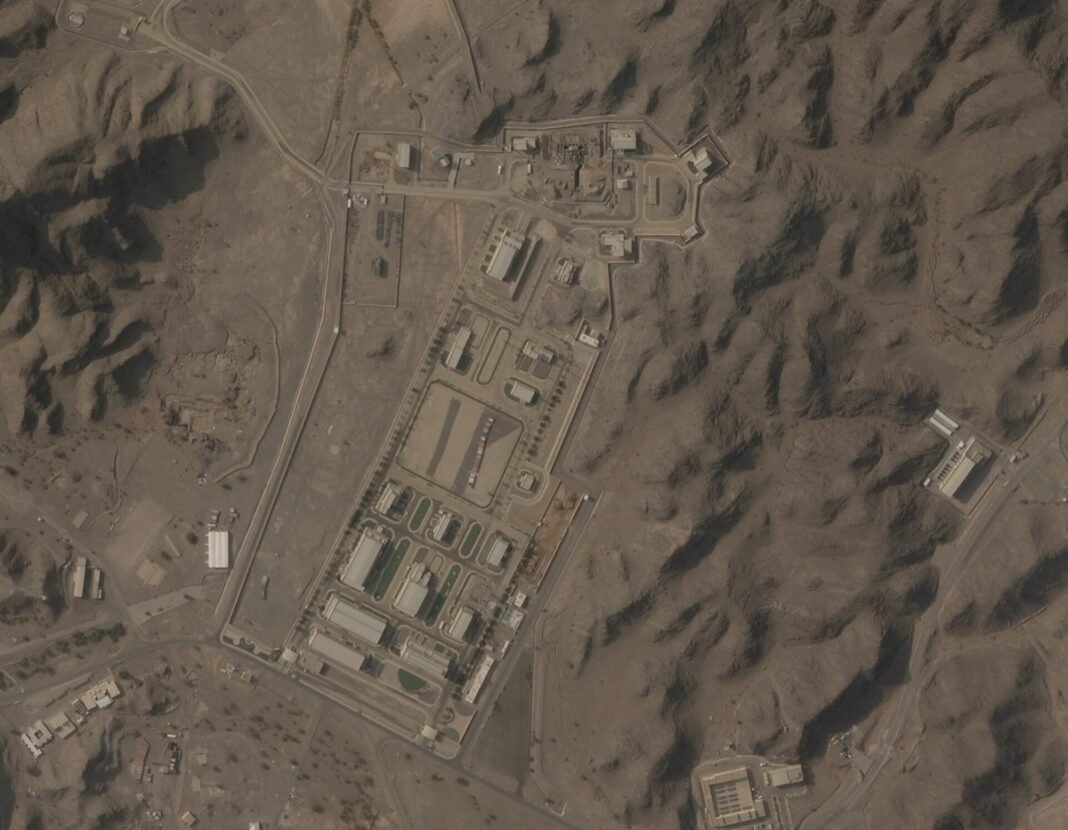
Satellite imagery suggests a major expansion at Saudi Arabia’s al-Duwadimi missile complex, potentially enabling the kingdom to manufacture larger ballistic missiles with longer ranges or heavier payloads, according to researchers cited by Reuters.

Saudi Arabia appears to be expanding its domestic ballistic missile production infrastructure in a move that could strengthen its ability to deter Iran and reduce its dependence on foreign suppliers for advanced missile systems.
An investigation published by Reuters on October 23, 2026, found that commercial satellite imagery of the al-Duwadimi missile complex, approximately 200 kilometres west of Riyadh, shows construction of a new building believed to house facilities for producing solid-fuel rocket motors. A second new structure may be intended for storing fuel ingredients or completed missile components.
The assessment was conducted by Sam Lair and Michael Duitsman of the Foreign Policy Research Institute (FPRI), who examined satellite imagery collected between April 2025 and September 2026.
According to the researchers, the new production building is at least twice the size of the existing structure believed to house missile-motor casting pits. They assessed that the expansion could support the manufacture of larger solid-fuel missiles capable of carrying heavier payloads or reaching greater distances.
The facility could begin production as early as the end of 2026, although this remains a projection rather than a confirmed Saudi government announcement.
The development is significant because it points towards a potential expansion of Saudi Arabia’s domestic missile-manufacturing capacity, rather than merely the acquisition of additional weapons from abroad.
Satellite Images Reveal Expansion at Al-Duwadimi Missile Complex
The al-Duwadimi complex has attracted attention from missile researchers for several years because of evidence suggesting Saudi Arabia is developing the infrastructure required to manufacture solid-fuel ballistic missiles.
The latest satellite imagery indicates that construction work on the new facilities began in April 2025.
Researchers identified a building containing what they assessed to be casting pits, where solid-propellant material is poured into rocket-motor casings and allowed to harden. The structure also features substantial protective walls that the researchers believe are intended to limit damage to surrounding facilities in the event of an accidental explosion.
A second building could be used to store fuel ingredients or finished missile components, although its precise function has not been independently confirmed.
The researchers noted that the new casting-pit building is significantly larger than the existing facility. This may indicate preparations for producing larger missile motors, expanding production capacity or accommodating a different class of missile.
The imagery does not establish the precise missile design, the number of missiles that could eventually be produced or the range of any new system.
Nevertheless, the scale and configuration of the construction have led the researchers to assess that Saudi Arabia is preparing to expand its solid-fuel missile manufacturing capabilities.
Reuters reported that experts from the International Institute for Strategic Studies (IISS), the CNA research organisation and the defence intelligence company Janes also reviewed aspects of the assessment.
Why Solid-Fuel Ballistic Missiles Matter
The potential expansion is important because solid-fuel ballistic missiles offer operational advantages over many liquid-fuel systems.
Solid-fuel missiles use propellant stored within the rocket motor. They can generally be stored for longer periods in a ready condition and launched more rapidly because they do not require the same pre-launch fuelling process associated with liquid-fuel systems.
These characteristics can improve operational readiness and reduce the time during which a missile force is vulnerable to detection before launch.
Solid-fuel systems can also offer advantages in transportation, storage and deployment, depending on the missile’s design and supporting infrastructure.
For Saudi Arabia, domestic production could provide greater control over manufacturing schedules, maintenance, replacement components and future improvements.
However, producing larger solid-fuel missiles requires more than constructing a bigger factory. It depends on specialised engineering, quality control, propellant manufacturing, testing facilities and a reliable industrial supply chain.
The al-Duwadimi expansion therefore represents a potential step towards greater industrial capacity, but the extent of that capability will depend on the equipment installed, the technology available and the programme’s eventual production output.
Could Saudi Arabia Be Producing Chinese DF-15 or DF-21 Missiles?
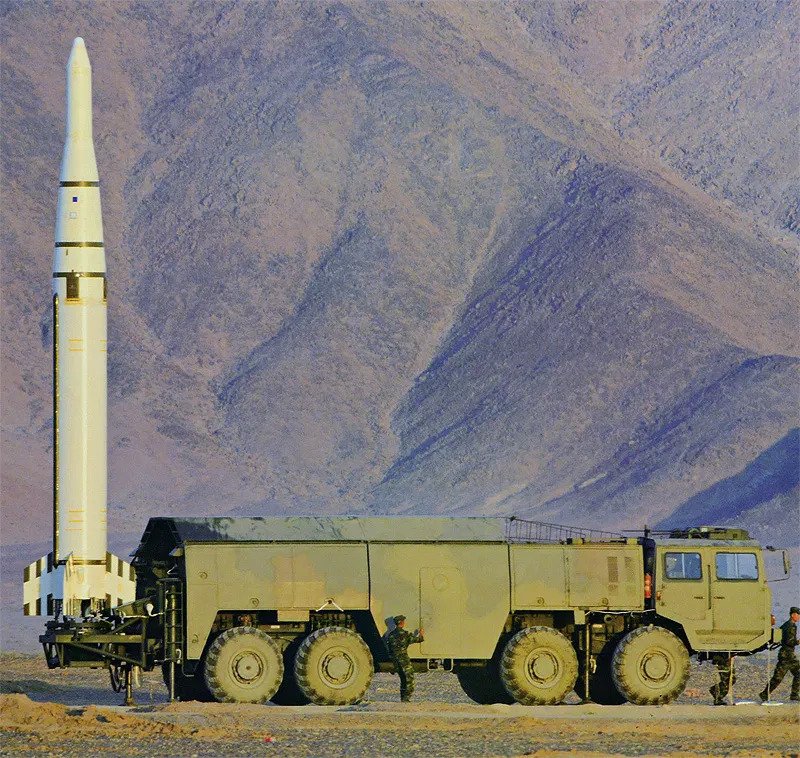
The possible connection to Chinese missile technology is one of the most significant aspects of the Reuters investigation.
Saudi Arabia has a longstanding history of acquiring ballistic missiles from China. The kingdom secretly obtained approximately 40 liquid-fuel DF-3 ballistic missiles from Beijing in 1987, according to a declassified US intelligence estimate cited by Reuters.
Saudi Arabia publicly displayed some of these missiles during a military parade in 2014.
Researchers believe that China’s technical assistance may also be relevant to the al-Duwadimi production complex. They point to similarities between the facility’s characteristics and Chinese missile-manufacturing infrastructure.
Sam Lair told Reuters that Saudi Arabia may now be producing the solid-fuel DF-15 and that the new expansion could be intended for the longer-range DF-21 or a similar missile.
These are analytical assessments, not confirmed identifications of missiles being manufactured at the expanded facility. Saudi Arabia has not publicly confirmed the precise missile type associated with the new construction, and the satellite imagery alone cannot establish the design or origin of every component.
The potential Chinese connection is nevertheless strategically important. Access to technical expertise and manufacturing support could help Saudi Arabia develop capabilities that would otherwise require a longer domestic research and development process.
China’s role in Saudi missile development also illustrates how defence cooperation between Beijing and Gulf states extends beyond conventional arms purchases.
Saudi Arabia Seeks Greater Deterrence Against Iran
The potential expansion comes amid continuing strategic competition between Saudi Arabia and Iran.
Iran has developed an extensive ballistic-missile and drone arsenal, providing Tehran with options for striking targets across the Gulf and the wider region.
Saudi Arabia, meanwhile, has invested in advanced aircraft, air-defence systems and other military capabilities, while also seeking to strengthen its own missile options.
Longer-range Saudi ballistic missiles could provide an additional means of deterring attacks by threatening military infrastructure and other strategic targets at greater distances.
They could also reduce Riyadh’s dependence on aircraft for certain strike missions. However, missiles and combat aircraft perform different operational roles, and the effectiveness of either depends on the target, the opposing defences and the circumstances of a conflict.
Sascha Bruchmann, a research fellow at IISS who reviewed the FPRI assessment for Reuters, said longer-range missiles could give Saudi Arabia an option for striking Iran without exposing its US-supplied F-15 fighter aircraft to Iranian air defences.
The potential strategic effect would depend on the missiles’ actual range, payload, accuracy, survivability and operational readiness.
If Saudi Arabia succeeds in expanding domestic production, it could gain more flexibility in maintaining its arsenal and developing a wider range of deterrence options.
But an expanded missile force would not automatically eliminate Saudi Arabia’s vulnerabilities to Iranian missiles and drones. Riyadh would still need effective air defences, early-warning systems and protection for critical infrastructure.
Yemen and the Wider Regional Security Environment
Saudi missile development also has implications for the kingdom’s security concerns in Yemen, where the Houthi movement has developed capabilities to launch missiles and drones against Saudi territory and regional targets.
The Houthi movement has previously attacked Saudi energy infrastructure and other strategic sites, highlighting the difficulties of defending a large territory against relatively inexpensive aerial threats.
Reuters reported that Saudi Arabia’s potential acquisition of more capable ballistic missiles could strengthen its position in its broader regional security environment, including its confrontation with Iran-aligned Houthi forces.
However, the utility of longer-range ballistic missiles against the Houthis would depend on the targets involved and the operational circumstances. Such weapons are not a substitute for air defence, intelligence, surveillance or other military capabilities.
The larger issue is that several regional powers are investing in both offensive and defensive systems as they reassess the risks of missile and drone attacks.
CNA analyst Decker Eveleth told Reuters that the expansion of missile-related infrastructure is part of a wider regional trend, with the United Arab Emirates and Turkey also seeking to expand their military capabilities.
This broader pattern suggests that missile production and defence technology are becoming increasingly important elements of regional military planning.
Could the Expansion Affect US-Saudi Nuclear Cooperation?
Saudi Arabia’s apparent missile ambitions could also complicate political debate in Washington over civilian nuclear cooperation with Riyadh.
The United States and Saudi Arabia have pursued an agreement intended to support civilian nuclear energy cooperation. However, the prospect of transferring nuclear-related technology has generated concerns among some US lawmakers about safeguards, monitoring and the possibility of future proliferation.
The concerns arise because ballistic missiles can serve as delivery systems for conventional warheads and, in some circumstances, nuclear warheads. A country’s possession of ballistic missiles does not, by itself, establish an intention to acquire nuclear weapons.
Saudi Arabia has denied plans to develop a nuclear weapon and is a party to the Nuclear Non-Proliferation Treaty.
Nevertheless, an expanded domestic missile-manufacturing capability could intensify scrutiny of the kingdom’s long-term strategic intentions and the safeguards attached to civilian nuclear cooperation.
The central policy question is whether any nuclear agreement provides sufficient verification and oversight to ensure that civilian nuclear activities remain peaceful.
For Washington, the issue involves balancing strategic cooperation with Saudi Arabia against longstanding non-proliferation objectives.
What the Expansion Means for the Middle East’s Missile Balance
If the new facilities become operational, Saudi Arabia could gain additional domestic capacity to produce solid-fuel ballistic missiles and potentially develop larger systems.
Such a capability could improve supply resilience, provide more flexibility in missile procurement and strengthen the kingdom’s ability to sustain its arsenal over time.
However, the strategic impact cannot be measured solely by the size of a production building.
A missile programme requires suitable designs, testing, quality assurance, launch platforms, trained personnel and a reliable supply chain. Its effectiveness also depends on how the weapons are integrated into wider military planning.
Saudi Arabia’s expansion should therefore be understood as a potential industrial development whose military implications will depend on the systems ultimately produced.
The precise production capacity, missile types and operational timetable remain uncertain. The facility’s projected readiness by the end of 2026 is based on the researchers’ assessment of the construction and installation process, not an official production schedule.
If the project advances as anticipated, it could represent another step in Saudi Arabia’s effort to develop a more self-reliant defence industry while maintaining strategic partnerships with external suppliers.
Conclusion: Saudi Arabia Moves Towards Greater Missile-Manufacturing Capacity
The reported expansion at al-Duwadimi points to a potential new phase in Saudi Arabia’s ballistic-missile programme.
Satellite imagery analysed by researchers suggests that Riyadh is constructing facilities that could support larger solid-fuel missile motors, with possible implications for range, payload and production capacity.
The potential use of Chinese technology, the kingdom’s strategic competition with Iran and the ongoing debate over US-Saudi nuclear cooperation make the development significant beyond the factory itself.
For now, the precise missile types and production output remain unconfirmed. The most important developments to watch will be the completion of the new facilities, evidence of installed production equipment, any subsequent missile testing and official statements clarifying the programme’s objectives.
If the expansion produces the capabilities researchers anticipate, it could strengthen Saudi Arabia’s domestic defence-industrial base and add another dimension to the evolving missile balance in the Middle East.