Washington is reportedly considering a significant rethink of its military and intelligence footprint in the Middle East, as months of conflict with Iran have exposed the vulnerability—and growing cost—of America’s sprawling network of regional bases.
The United States is quietly examining the possibility of reducing the number of troops, intelligence personnel and permanent facilities stationed across the Middle East once the conflict with Iran eventually ends, according to a report citing multiple US officials familiar with internal discussions.
The deliberations could mark the beginning of another major shift in American strategy towards a region that Washington has repeatedly tried—but failed—to leave behind since the September 11 attacks.
The immediate trigger is the Iran conflict.
Repeated Iranian missile and drone attacks have exposed weaknesses in US military infrastructure across the Gulf and surrounding region, forcing Pentagon and intelligence officials to reconsider whether the traditional model of maintaining large numbers of personnel at permanent bases remains sustainable.
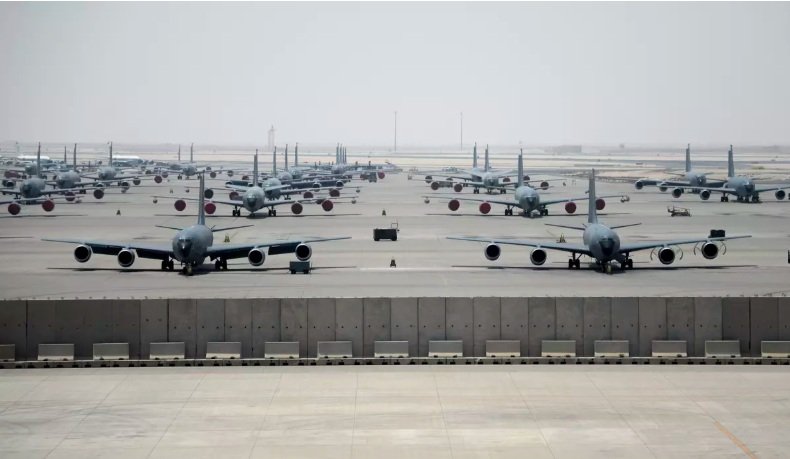
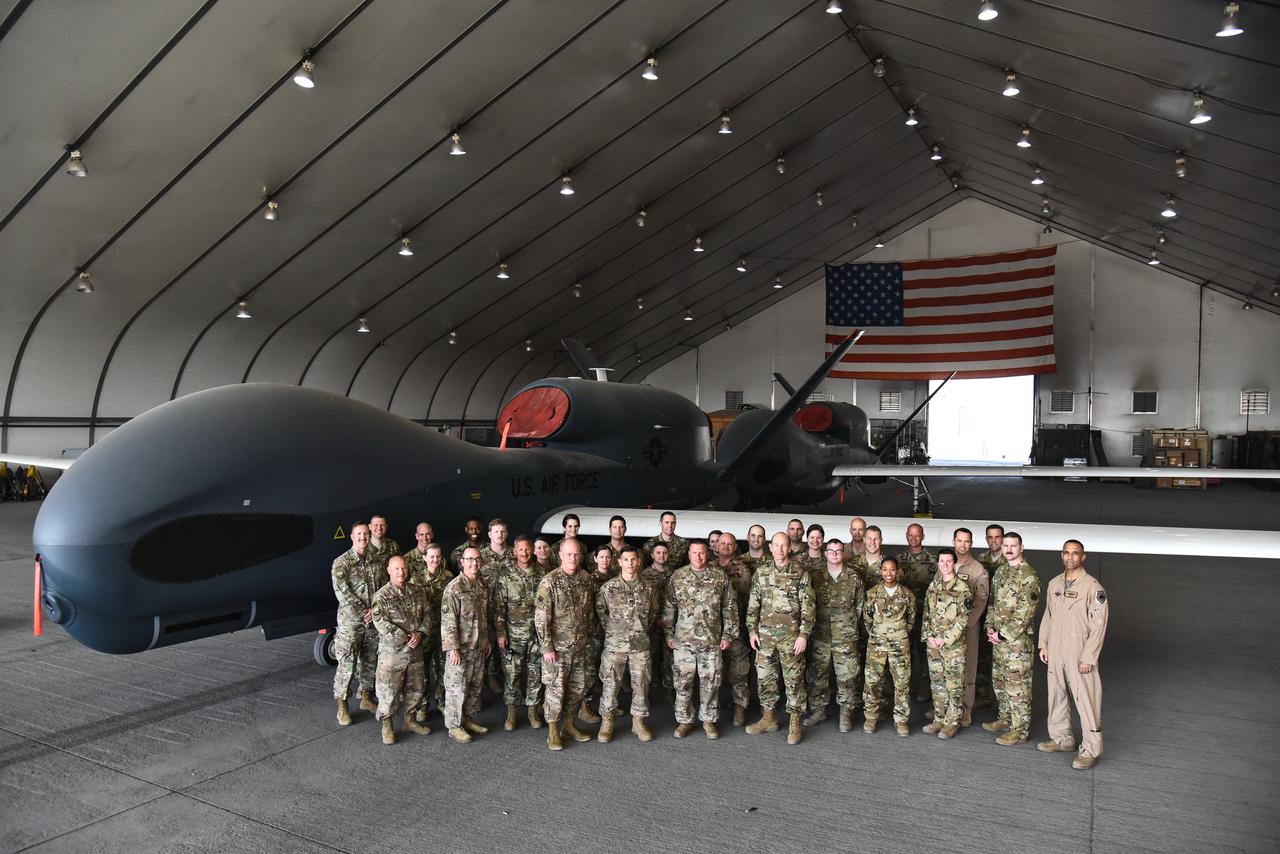
Around 50,000 US troops and substantial naval and air assets remain deployed across the Middle East, including two aircraft carriers and more than a dozen guided-missile destroyers. Yet the same concentration of military power that gives Washington the ability to rapidly project force has also created an extensive network of fixed targets for Iranian missiles and drones.
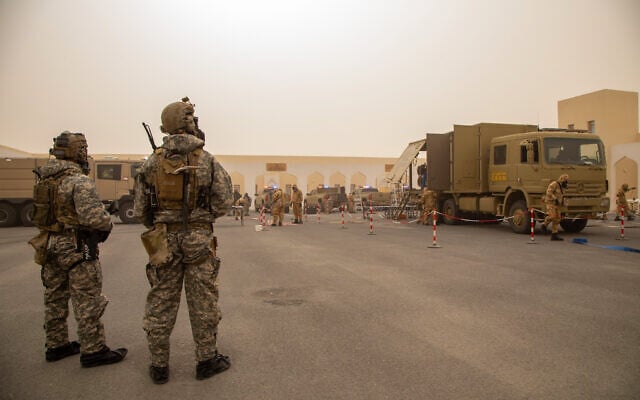
Iran War Forces Washington to Reconsider Its Bases
The reported discussions do not yet constitute a formal Pentagon force posture review, nor has the Trump administration announced an official plan to withdraw from the Middle East.
However, officials within the US military and intelligence community are reportedly developing options that could reshape America’s regional presence as early as next year if the Iran conflict reaches a political settlement.
The debate is being driven by an uncomfortable military reality: American bases that were designed to project overwhelming US power have themselves become vulnerable in a conflict dominated by precision missiles, drones and long-range strike capabilities.
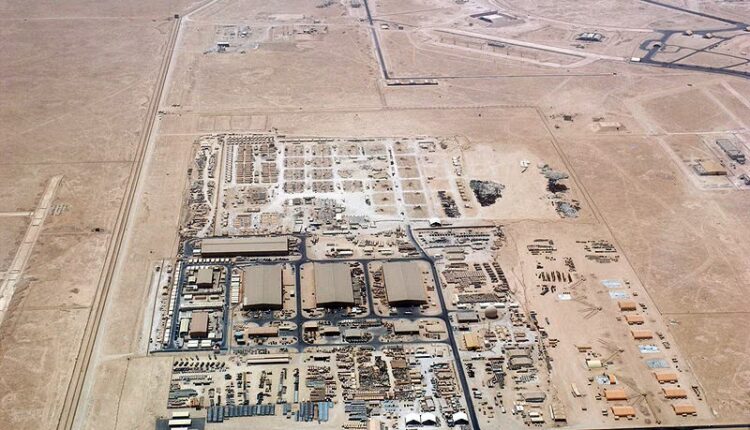
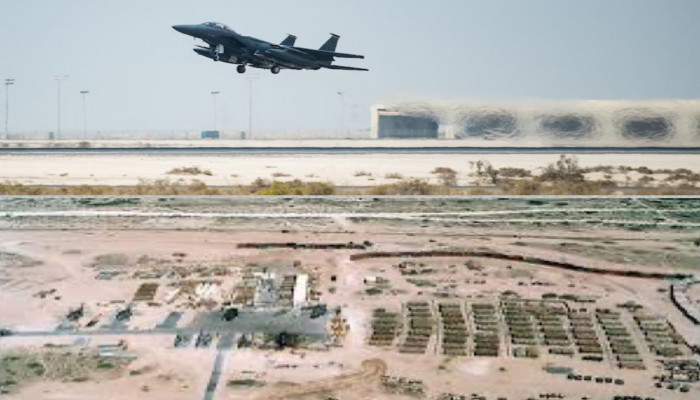
Military installations in Bahrain, Qatar, Saudi Arabia and Kuwait have reportedly been targeted during the conflict. The CIA outpost in Riyadh was effectively destroyed in an Iranian attack, although US officials have not publicly provided a comprehensive assessment of damage to American military and intelligence infrastructure.
The Pentagon has acknowledged that decisions about repairing damaged facilities could depend on broader decisions about America’s future military posture.
That raises a significant question: Will Washington rebuild every facility that has been damaged—or use the destruction caused by the war as an opportunity to permanently reduce its footprint?
From Permanent Bases to Rotational Deployments?
One option reportedly under discussion would involve reducing the dependence on permanent deployments.
For the CIA and elite US special operations forces, officials have reportedly considered whether some sensitive missions could be conducted by keeping personnel and equipment based in the United States and deploying them to the Middle East only when required.
Such a model would represent a major change from the post-9/11 strategy.
For the past quarter-century, American military and intelligence operations have relied heavily on permanent forward bases. These facilities provided Washington with the ability to launch aircraft, conduct surveillance, deploy special forces and respond rapidly to regional crises.
But permanent bases also require large numbers of personnel, expensive infrastructure and extensive logistics.
More importantly, Iran’s missile and drone campaign has demonstrated that fixed installations are increasingly vulnerable.
The alternative being considered is a more flexible model based on rotational deployments, expeditionary forces and temporary mission-specific deployments.
Such a strategy could reduce the number of Americans permanently stationed within range of Iranian missiles while preserving Washington’s ability to return quickly during a crisis.
Underground Bases Become a Serious Option
The United States is also reportedly examining ways to strengthen the defenses of facilities that it intends to retain.
One of the options receiving renewed attention is the construction or expansion of underground infrastructure.
The Pentagon has previously considered moving sensitive facilities below ground, but the Iran war has reportedly given the idea greater urgency.
Iran’s use of missiles and drones has reinforced a lesson that militaries around the world are increasingly confronting: large, visible and fixed military installations are becoming easier to target.
The future American base in the Middle East may therefore look very different from the enormous facilities built during the wars in Iraq and Afghanistan.
Rather than expanding large surface installations, Washington could invest more heavily in hardened command centers, underground hangars, dispersed equipment and smaller facilities spread across multiple locations.
This would make it more difficult for an adversary to disable US military operations through a limited number of missile strikes.
The End of the Post-9/11 Military Model?
The current debate is part of a much larger strategic question that has followed successive US administrations.
How does America leave the Middle East without being forced to return?
Before the September 11 attacks, the United States already maintained a significant regional military presence. By the late 1990s, roughly 27,000 active-duty American troops were deployed across the Middle East.
After 9/11, however, the US military footprint expanded dramatically.
The wars in Afghanistan and Iraq, followed by counterterrorism operations in Syria, Yemen, Libya and elsewhere, transformed the Middle East into one of the largest concentrations of American military power outside the United States.
During the Iraq War, the number of US troops deployed in the wider Middle East reached an estimated 250,000.
Even after the withdrawal from Iraq and the gradual reduction of operations in Afghanistan, the regional military presence generally remained between tens of thousands of personnel.
Every US president since Barack Obama has, in one form or another, attempted to reduce America’s military commitment to the Middle East.
Obama spoke of a strategic “pivot” towards Asia.
Donald Trump’s first administration identified China as America’s principal long-term strategic competitor.
Yet repeated crises kept pulling Washington back.
The rise of ISIS forced the US to return to Iraq and Syria. Iran-backed groups repeatedly targeted American personnel. The killing of Iranian General Qassem Soleimani brought Washington and Tehran close to a wider confrontation.
The current war has now produced the same strategic dilemma on an even larger scale.
Trump Faces a Difficult Political and Military Choice
The reported discussions are also influenced by uncertainty about President Donald Trump’s long-term plans for the region.
Trump has historically presented himself as a critic of long overseas wars and large American troop deployments.
At the same time, the current Iran conflict has required Washington to deploy substantial military power across the Middle East and maintain a major naval presence near the Strait of Hormuz.
This creates a political contradiction.
A large military footprint may be necessary to sustain the current pressure campaign against Iran.
But maintaining that footprint indefinitely would conflict with Trump’s previous arguments that the United States should avoid expensive and open-ended military commitments overseas.
US officials reportedly believe that the administration may eventually seek to shift a larger share of regional security responsibilities to Gulf states and other American partners.
That could mean fewer American troops stationed permanently in countries that host major US bases and greater pressure on regional governments to finance infrastructure and assume more responsibility for their own defense.
The future of rebuilding damaged facilities could also depend on whether host governments are willing to contribute billions of dollars to reconstruction.
Why a US Withdrawal Would Not Mean an End to American Power
A reduction in permanent bases should not automatically be interpreted as an American withdrawal from the Middle East.
The United States would still possess enormous advantages.
Its aircraft carriers, long-range bombers, naval forces, overseas logistics network and air bases outside the immediate conflict zone would allow Washington to project military power into the region even with fewer permanently deployed troops.
The Pentagon could also increasingly rely on:
- Rotational troop deployments;
- Long-range air power;
- Carrier strike groups;
- Temporary expeditionary bases;
- Regional partner forces;
- Intelligence and surveillance systems;
- Pre-positioned military equipment.
The strategic objective would be to retain the ability to intervene without maintaining the same expensive and vulnerable permanent presence created during the post-9/11 wars.
However, this model also carries risks.
A smaller footprint could reduce America’s ability to respond quickly to a sudden regional crisis. It could also create security gaps that Iran or armed groups allied with Tehran might attempt to exploit.
This is precisely the dilemma that Washington faced after withdrawing combat troops from Iraq in 2011, when the rise of ISIS eventually forced the United States back into the region.
The Iran Conflict Is Not Yet Over
The biggest obstacle to any American drawdown is that the Iran conflict itself remains unresolved.
The United States and Iran have recently returned to direct military exchanges after a period of reduced fighting, with Iranian attacks targeting American forces and Washington continuing military operations against Iranian targets.
The diplomatic path remains uncertain, while economic pressure and military action have failed to produce a clear political settlement.
Recent fighting has also intensified concerns over the security of the Strait of Hormuz and the wider Gulf energy infrastructure, with renewed regional attacks contributing to higher oil prices and increased anxiety about global energy supplies.
As long as the conflict continues, US planners are unlikely to abandon strategically important airfields, naval facilities and logistical hubs.
The military’s immediate priority remains protecting the forces already deployed.
Bahrain and the Future of the US Navy Presence
One of the most significant questions concerns Bahrain, traditionally home to the US Navy’s Fifth Fleet.
The facility has played a central role in American naval operations across the Persian Gulf, Arabian Sea and Red Sea.
But the vulnerability of installations close to Iran’s missile arsenal could force the Pentagon to reconsider how it deploys naval forces.
The Navy’s top officer recently indicated that personnel would not be returning to Bahrain anytime soon, underlining the continuing security concerns surrounding fixed installations in the Gulf.
That does not necessarily mean the Fifth Fleet will permanently abandon Bahrain.
But it illustrates a broader shift in military thinking.
The United States may increasingly seek to disperse forces across multiple locations rather than concentrating personnel and assets at a handful of major installations.
A Strategic Victory for Iran’s Missile Doctrine?
From a military perspective, one of the most important consequences of the war may be the impact on how countries evaluate missile and drone warfare.
Iran has spent decades developing missiles and unmanned systems designed partly to counter America’s technological and conventional military superiority.
The objective was not necessarily to defeat the United States in a conventional war.
Instead, Iran sought to raise the cost of American military intervention.
The reported reconsideration of US basing strategy suggests that this approach may be having a strategic effect.
Even if American forces remain militarily superior, the ability of Iranian missiles and drones to threaten expensive bases creates a financial and political burden for Washington.
This could influence future US military planning far beyond the Middle East.
American forces operating in the Indo-Pacific, Europe and other regions are also increasingly concerned about the vulnerability of large fixed bases to precision weapons.
The Middle East conflict could therefore become an important case study for the future of American military basing worldwide.
The Real Question: Smaller Footprint or Different Footprint?
The debate inside Washington may ultimately not be about whether the United States leaves the Middle East.
History suggests that a complete American departure remains unlikely.
The region remains strategically important because of global energy routes, the Strait of Hormuz, Israel’s security, Iranian military capabilities and the continuing threat posed by armed groups.
Instead, the more important question may be whether America replaces its post-9/11 model with a fundamentally different military posture.
The old strategy relied on large permanent bases and substantial numbers of troops stationed across the region.
The emerging model could be based on fewer personnel, hardened installations, underground facilities, dispersed forces and the ability to deploy rapidly when required.
For Washington, the Iran war may therefore become more than another Middle Eastern conflict.
It could accelerate the end of the military architecture built after September 11, 2001.
But America’s long history in the region offers one warning.
Washington has announced or attempted a Middle East “pivot” several times before.
Each time, a new crisis brought American military power back.
Whether the current rethink finally produces a lasting reduction in the US presence—or simply creates a smaller and more technologically sophisticated version of the same military network—may depend entirely on how the Iran conflict ends.
For now, the Pentagon appears to be preparing for both possibilities.