
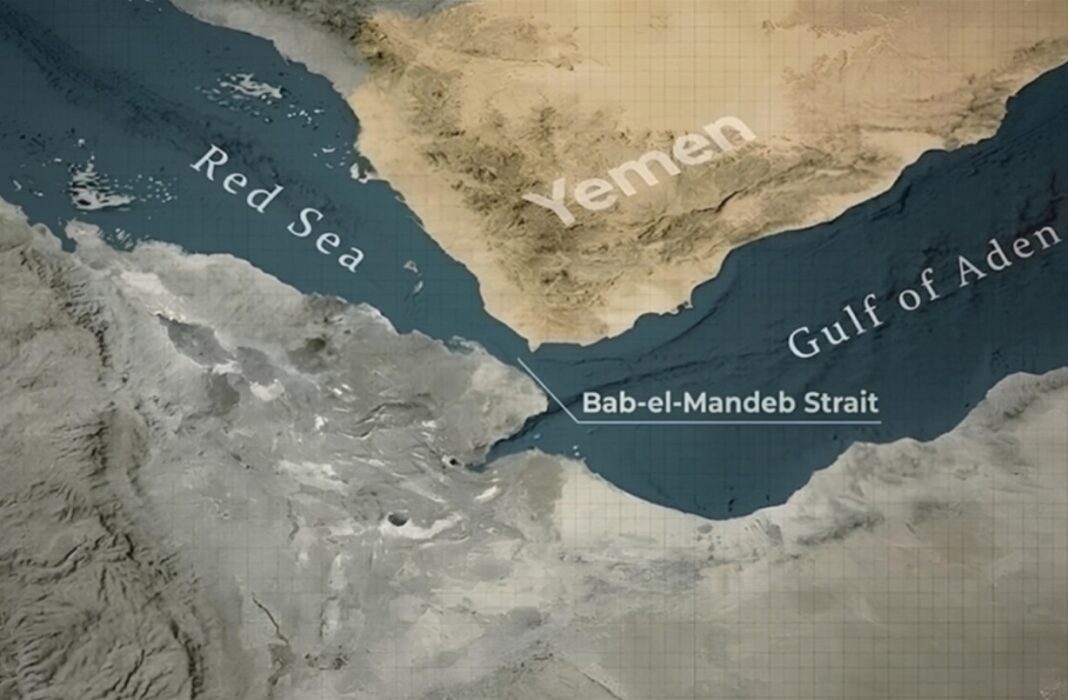
Pakistan has delivered one of its strongest foreign policy messages in recent months, declaring that any attack on Pakistani-flagged vessels or Pakistan’s maritime interests in the Red Sea would be considered a direct threat to national security.
During the weekly Foreign Office press briefing, the spokesperson strongly condemned Houthi threats against Saudi Arabia and commercial shipping while reiterating Islamabad’s unwavering support for the Kingdom’s sovereignty and security. The briefing also covered Pakistan’s diplomatic outreach on the Middle East crisis, relations with Iran, China, Russia, ASEAN, Canada and the Shanghai Cooperation Organization (SCO), while firmly rejecting Amnesty International’s allegations regarding Pakistan’s counterterrorism operations in Afghanistan.
Pakistan Issues Strong Warning Over Red Sea Security
The Foreign Office condemned recent Houthi threats to impose a maritime embargo on Saudi Arabia’s commercial shipping in the Red Sea, describing such actions as dangerous for regional stability and global commerce.
The spokesperson emphasized that:
- Pakistan fully supports Saudi Arabia’s security, sovereignty and territorial integrity.
- Threats to freedom of navigation in the Red Sea endanger international trade and energy security.
- Any attack on Pakistani-flagged ships or Pakistan’s maritime interests would be treated as a grave threat to Pakistan’s national security.
- Pakistan reserves the right to take all necessary measures in self-defence under international law.
When questioned whether Pakistan could deploy naval assets in the Red Sea or protect Saudi shipping, the spokesperson declined to discuss operational details but confirmed that all bilateral defence agreements with Saudi Arabia remain fully operational.
Pakistan Continues Diplomatic Push for Middle East De-escalation
Despite escalating tensions in the Middle East, Islamabad maintained that diplomacy remains the only viable solution.
According to the Foreign Office:
- Pakistan continues intensive diplomatic engagement with regional countries.
- Iranian Interior Minister Eskandar Momeni recently visited Pakistan and held meetings with Prime Minister Shehbaz Sharif, Interior Minister Mohsin Naqvi and military leadership.
- Deputy Prime Minister and Foreign Minister Ishaq Dar has engaged counterparts from Kuwait, Egypt, Oman and other countries to promote dialogue and de-escalation.
- Pakistan believes the Islamabad Memorandum of Understanding (MoU) and the Pakistan-Qatar Joint Statement remain the best framework for peace efforts.
The spokesperson refused to confirm media reports regarding a proposed 10-day Iran-US ceasefire, saying sensitive diplomatic exchanges cannot be discussed publicly.
Pakistan Rejects Amnesty International Report on Afghanistan
One of the most significant moments of the briefing came when Pakistan categorically rejected Amnesty International’s report alleging civilian casualties during Pakistani strikes inside Afghanistan.
The Foreign Office argued that:
- Amnesty’s allegations lack credible evidence.
- Pakistan’s military actions were conducted solely in self-defence.
- Operations targeted only terrorist infrastructure and logistical bases.
- Pakistan followed the principles of necessity, proportionality and distinction under international law.
The spokesperson instead accused the Taliban administration of allowing terrorist organizations including Tehreek-e-Taliban Pakistan (TTP), the Balochistan Liberation Army (BLA) and other militant groups to operate from Afghan territory.
Pakistan urged the international community to focus on what it described as the Taliban’s continued failure to prevent Afghan soil from being used for cross-border terrorism.
Pakistan Defends Illegal Foreigners Repatriation Plan
Responding to questions about Afghan deportations, the Foreign Office defended Pakistan’s Illegal Foreigners Repatriation Plan (IFRP).
Officials stated that:
- More than 89,000 Afghan nationals have been successfully relocated to third countries since 2021 with Pakistan’s assistance.
- Several countries have failed to complete promised resettlement programmes.
- Pakistan cannot indefinitely host undocumented foreign nationals.
- Around 16,000 vulnerable individuals have been granted temporary humanitarian exemptions.
- A 24-hour complaint mechanism exists for Afghan nationals facing mistreatment.
The spokesperson stressed that Pakistan distinguishes between peaceful Afghan citizens and individuals involved in terrorism.
Pakistan Responds to EU GSP+ Report
Commenting on the European Commission’s latest GSP+ monitoring report, Pakistan welcomed recognition of legislative progress but expressed disappointment over what it described as an unbalanced assessment.
According to the Foreign Office:
- GSP+ remains vital for Pakistan’s exports and employment.
- The report understates Pakistan’s reforms since joining the programme in 2014.
- Islamabad remains committed to implementing all 27 international conventions linked to the GSP+ framework.
- Pakistan will continue constructive engagement with European institutions.
Expanding Global Diplomacy
The briefing highlighted Pakistan’s active diplomatic calendar.
China
Ishaq Dar attended the launch of the World Artificial Intelligence Cooperation Organization (WAICO) in Shanghai and held talks with Chinese Foreign Minister Wang Yi on:
- CPEC implementation
- Strategic partnership
- Regional connectivity
- SCO cooperation
- Artificial intelligence collaboration
Russia
Dar also met Russian Foreign Minister Sergey Lavrov, where both countries discussed expanding cooperation in:
- Trade
- Energy
- Connectivity
- Multilateral diplomacy
ASEAN
Pakistan reaffirmed its commitment to regional dialogue during the ASEAN Regional Forum in Manila, while Dar held multiple bilateral meetings with participating foreign ministers.
Canada
The Foreign Office described Canadian Foreign Minister Anita Anand’s visit as historic—the first by a Canadian foreign minister in nearly two decades.
Both countries agreed to:
- Expand bilateral trade.
- Increase investment cooperation.
- Enhance security collaboration.
- Strengthen agricultural trade after signing a phytosanitary protocol for genetically modified canola imports.
Kashmir, Palestine and India
The Foreign Office also reiterated Pakistan’s longstanding positions on several regional issues.
Regarding Indian-administered Kashmir, Pakistan condemned what it called a fresh wave of arbitrary arrests and said it continues to raise human rights concerns before international organizations.
On Palestine, Islamabad reaffirmed support for Palestinian statehood and pledged continued diplomatic efforts through multilateral forums, including the recently established peace initiatives involving Islamic and Arab countries.
The spokesperson declined to comment on India’s domestic political protests but described Kulbhushan Jadhav as evidence of what Pakistan calls Indian support for terrorism inside Pakistan.
Analysis: Pakistan Signals Firmer Regional Security Posture
The latest Foreign Office briefing signals a noticeable shift in Pakistan’s messaging on regional security.
While Islamabad continues positioning itself as a diplomatic mediator in the Middle East, it simultaneously delivered an unusually strong warning regarding threats to its maritime interests. By describing attacks on Pakistani vessels as a “red line” and reaffirming defence commitments with Saudi Arabia, Pakistan has indicated that it is prepared to protect its strategic interests if regional tensions spill into the Red Sea.
At the same time, Islamabad continues balancing its close ties with Iran and Saudi Arabia by advocating dialogue while avoiding public disclosure of sensitive mediation efforts. Its rejection of Amnesty International’s allegations also reflects Pakistan’s increasingly assertive defence of its counterterrorism policy amid persistent cross-border security challenges.