The Middle East is entering another dangerous phase in which conflicts that appear geographically separate are increasingly connected by the same underlying struggle: who controls territory, weapons, strategic waterways and the political decisions of the state.
The latest escalation in Yemen has put Saudi Arabia under direct pressure, while Iraq is approaching a critical deadline over the state’s monopoly on weapons and Lebanon is still struggling to establish the authority of its government and armed forces over the country’s security decisions.
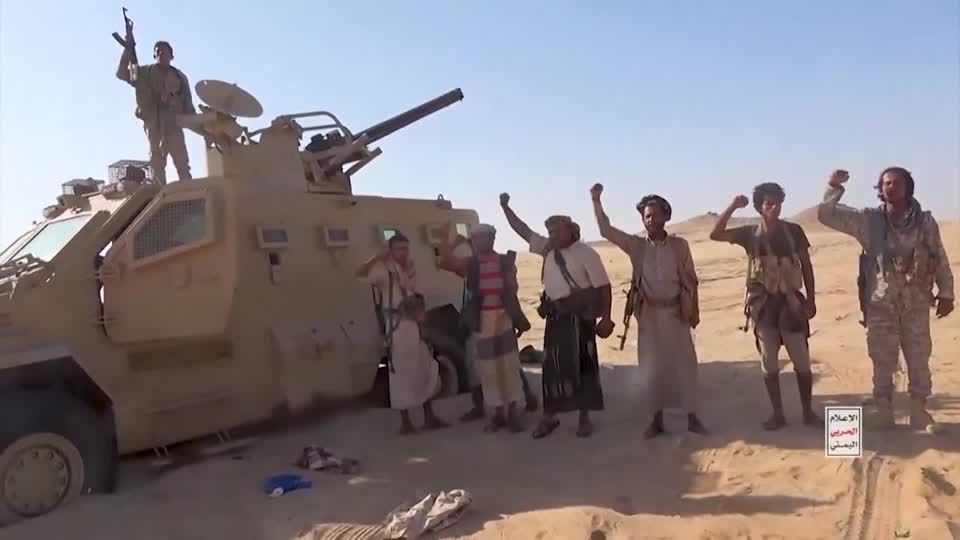
At the center of the immediate crisis is Yemen, where the Houthi movement has expanded its military pressure on Saudi Arabia while consolidating positions along the Red Sea coast and around the Bab al-Mandab Strait.
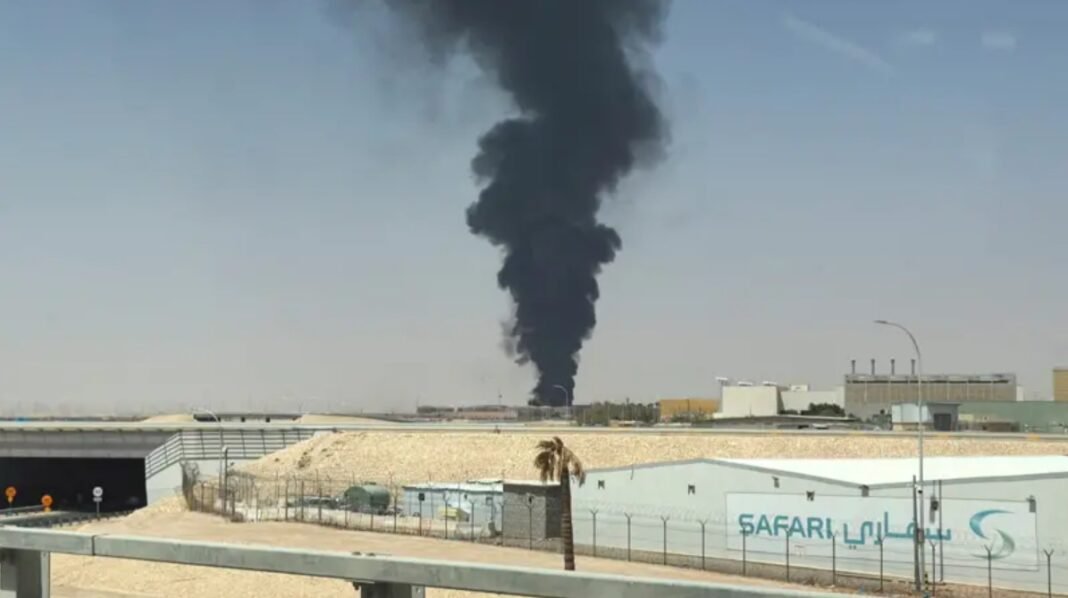
On September 19, Saudi authorities issued air-raid alerts in Riyadh and other areas after warnings of a potential aerial threat. Explosions were heard in the capital and smoke and flames were reported near Riyadh airport, although authorities subsequently lifted the alert and no casualties or damage were immediately confirmed.
The development marked a significant expansion of the confrontation. The Houthis have already targeted Saudi cities, energy infrastructure and maritime interests, while Saudi Arabia has intensified airstrikes against Houthi positions in Yemen. Houthi authorities, meanwhile, have claimed dozens of Saudi strikes in recent days.
The result is a rapidly widening security problem for Riyadh.
Saudi Arabia faces a difficult Yemen calculation
The central Saudi dilemma is straightforward but difficult to resolve.
Military escalation can impose costs on the Houthis, but there is no guarantee that additional airpower will force the movement to abandon its objectives. Saudi Arabia’s previous experience in Yemen demonstrated the limitations of relying on airpower to achieve a decisive political settlement.
At the same time, diplomacy carries its own risks.
Negotiations could require Riyadh to accept arrangements that give the Houthis greater political or economic influence. Such an outcome could also increase Iran’s regional leverage, although the Houthis have their own leadership, interests and decision-making structures and cannot simply be treated as an organization controlled entirely by Tehran.
That distinction matters.
Iranian support and links to the Houthis are well documented in international reporting, but the movement has developed its own military and political agenda. Recent reporting has also highlighted the group’s ability to operate independently and use the geography of Yemen to pressure Saudi Arabia and influence maritime security.
The latest escalation therefore leaves Riyadh with two difficult tracks: increase military pressure or seek a political mechanism capable of reducing the threat without producing an outcome it considers strategically damaging.
Riyadh is now facing pressure beyond the battlefield
The expansion of Houthi attacks toward Saudi energy and aviation infrastructure gives the conflict a much wider significance.
Energy infrastructure is directly connected to Saudi Arabia’s economic position, while attacks or threats against airports and major population centers challenge the image of security and connectivity that Riyadh has sought to establish under Vision 2030.
The issue is no longer confined to Yemen’s internal conflict.
It is increasingly linked to Saudi economic security, international energy markets and the credibility of regional security arrangements.
The maritime dimension is even more consequential.
The Houthis have advanced along Yemen’s Red Sea coastline toward the Bab al-Mandab Strait, one of the world’s most important maritime chokepoints. The United Nations has warned that the area has become increasingly volatile, while fighting along Yemen’s western coast has displaced large numbers of civilians.
The humanitarian consequences are already substantial. UN-linked reporting cited by Reuters says at least 112,000 people have been internally displaced by the renewed fighting, while nearly 3,000 people have crossed the sea toward Djibouti.
Bab al-Mandab and Hormuz turn a regional war into a global economic problem
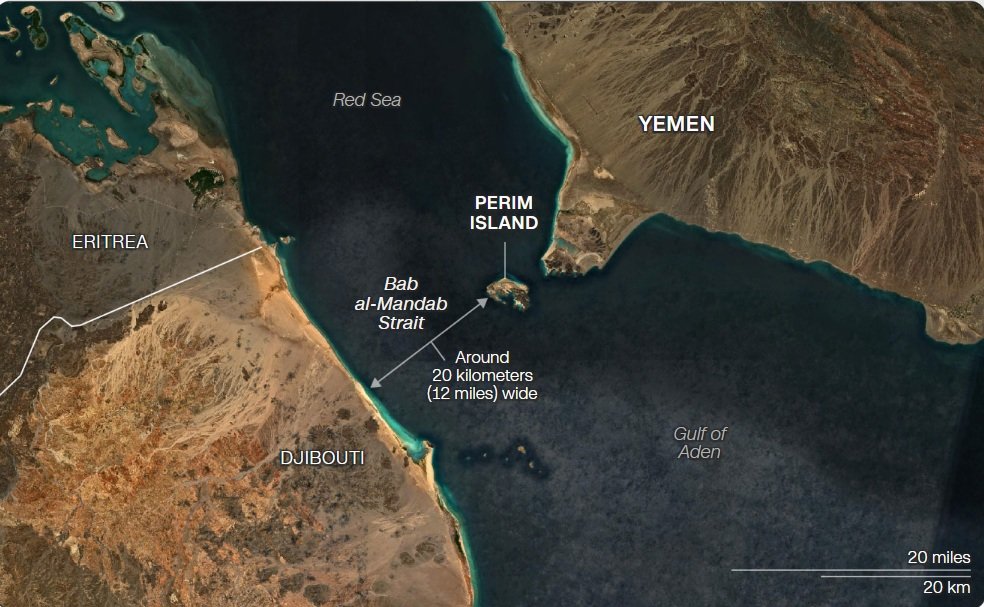
The simultaneous instability around Bab al-Mandab and the Strait of Hormuz creates a particularly sensitive situation for global trade.
Shipping traffic through both routes has been affected. Preliminary Kpler data cited by Reuters showed sharply reduced traffic through Hormuz, while Bab al-Mandab traffic was also below its recent average.
That means the Yemen conflict can no longer be viewed only through the Saudi-Houthi military equation.
Any prolonged disruption to Red Sea shipping can affect freight costs, insurance, energy transportation and supply chains. When combined with instability around Hormuz, the potential economic impact extends far beyond the Arabian Peninsula.
Pakistan has explicitly warned about this broader danger.
At the UN Security Council, Pakistan called for an immediate end to Houthi attacks around Bab al-Mandab and reaffirmed support for Saudi Arabia’s sovereignty and territorial integrity. Islamabad also stressed that attacks on commercial shipping threaten maritime security, international trade and energy security.
Pakistan’s Foreign Office has separately said Islamabad’s approach is centered on dialogue and diplomacy and that the Houthis should stop their activities around Bab al-Mandab.
This position is particularly significant because Pakistan maintains relations with both Saudi Arabia and Iran and has previously sought to play a diplomatic role in reducing regional tensions.
The Mecca defence arrangement faces its first major test
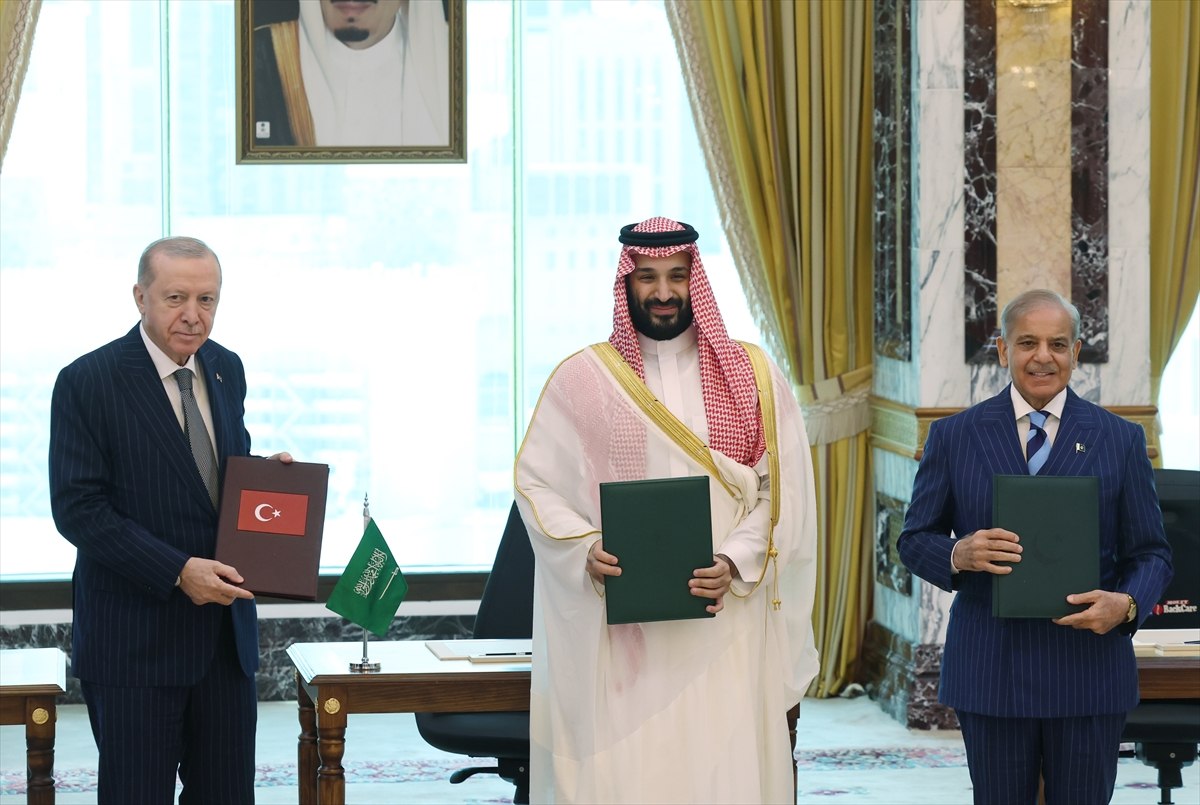
The Yemen escalation also places greater attention on the emerging Saudi-led security architecture involving Pakistan, Türkiye and other partners.
The question is not simply whether the partners support Saudi Arabia politically. It is what practical security role they are prepared to play if the kingdom faces sustained attacks against its territory and strategic infrastructure.
Pakistan has publicly confirmed its commitment in principle to implementing the Makkah Joint Defence Agreement, while stressing that operational details—including when, where and what forces might be used—require discretion.
The distinction between political solidarity and operational military involvement is important.
Recent reporting has indicated that Saudi Arabia has explored foreign recruitment and military support options for Yemen. A report by Türkiye Today said Damascus rejected a Saudi request to organize and deploy Syrian fighters to Yemen, while Turkish sources denied involvement in transporting or organizing Syrian personnel for the conflict.
The same reporting said Riyadh has continued exploring other options.
This suggests that Saudi Arabia is looking not simply for additional combat forces but for ways to strengthen its defensive capacity while managing the political consequences of a wider intervention.
Iraq is facing a different version of the same state-authority problem
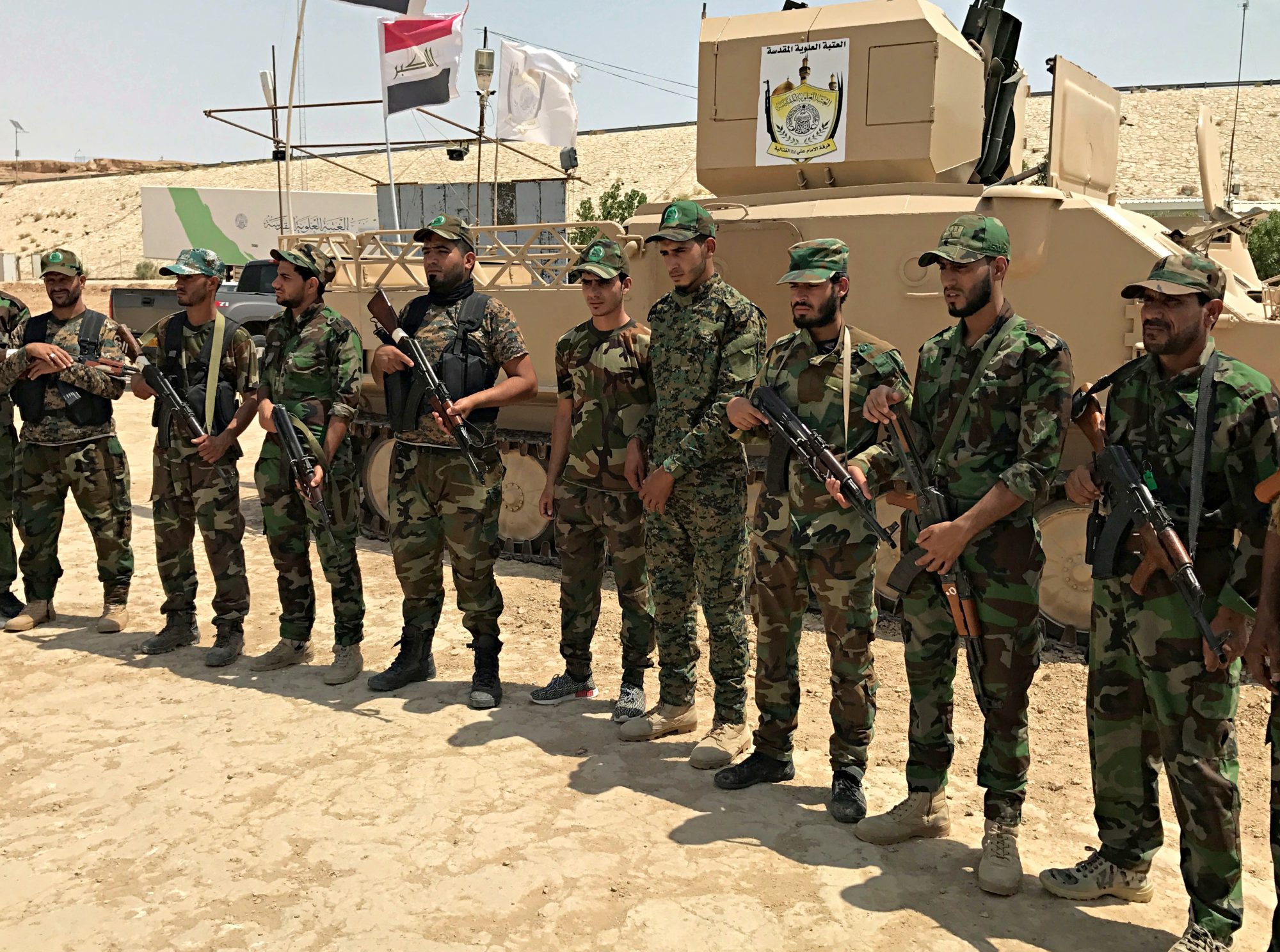
Thousands of kilometers away, Baghdad is confronting another difficult question: who ultimately controls weapons and decisions about war and peace?
Iraq’s government has been working toward a state monopoly on weapons, with September 30 emerging as an important deadline amid pressure from armed factions to retain their arsenals. The government has increasingly emphasized dialogue and gradual implementation rather than an immediate confrontation.
Iraq and Lebanon are facing a similar struggle over state authority, with their governments seeking to bring powerful armed groups and their weapons under greater state control.
In both countries, armed organizations possess military capabilities outside the conventional state security structure. Their supporters describe those weapons in terms of resistance, sovereignty or protection against external threats, while governments face the challenge of bringing all armed power under state authority.
That produces a form of dual security authority: the government formally controls the state, but armed groups retain the capacity to make independent security decisions.
For Baghdad, the problem is complicated by regional politics.
Some armed factions maintain close relations with Iran, while others have built their political legitimacy around resistance to the United States and Israel. Their demands over weapons are therefore tied not only to domestic politics but also to the wider regional confrontation.
Recent reporting has indicated that some factions have resisted disarmament while Iraqi authorities continue negotiations to avoid a direct military confrontation.
Lebanon remains the more mature version of the same problem
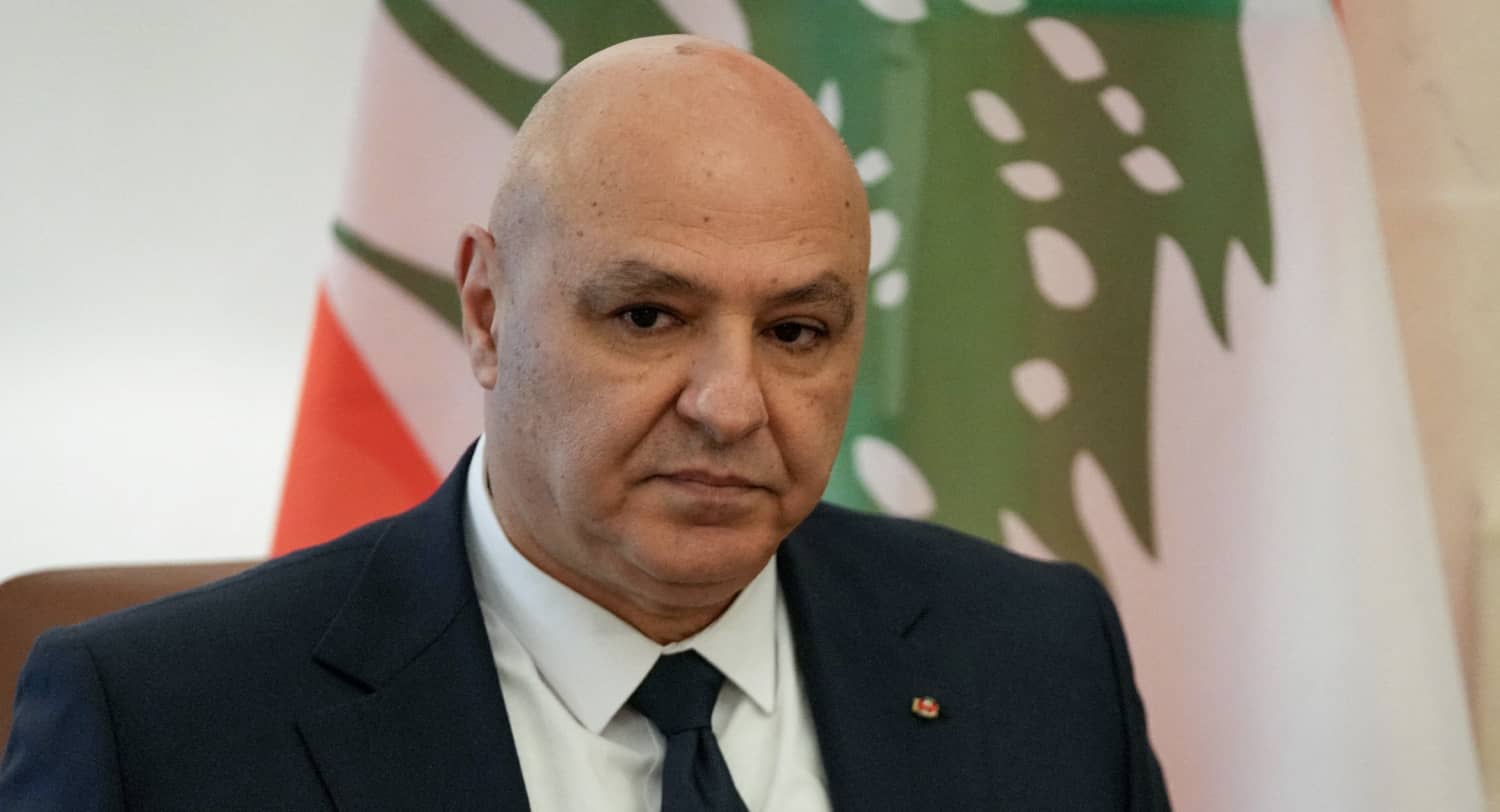
Lebanon presents an even longer-running example.
President Joseph Aoun has sought dialogue with Hezbollah as Beirut attempts to address the question of armed power and strengthen the authority of the Lebanese state.
Hezbollah has maintained that dialogue is possible but has attached conditions concerning earlier government decisions, the framework of negotiations and the wider political relationship between Lebanon, Israel and the armed group.
At the same time, international efforts are focused on strengthening the Lebanese Armed Forces and preparing for the future of the international security presence in southern Lebanon.
European and Arab officials met in Paris this week to discuss Lebanon’s security requirements ahead of the planned withdrawal of UNIFIL beginning in 2027. The discussions included possible alternative international arrangements and increased support for the Lebanese military.
The challenge for Beirut is therefore twofold: strengthen the formal security institutions while preventing the process of disarming or containing Hezbollah from triggering another major internal confrontation.
Iraq does not want to repeat Lebanon’s prolonged deadlock
This is where the Iraqi debate becomes strategically important.
The concern in Baghdad is that prolonged negotiations over weapons could gradually normalize the continued existence of armed power outside state institutions.
Lebanon’s experience demonstrates how extended political negotiations can postpone implementation of state authority.
For Iraq, the September 30 deadline therefore has significance beyond the immediate question of weapons.
It is also a test of whether Baghdad can translate formal sovereignty into practical control.
Three fronts, one wider regional problem
The Saudi-Houthi confrontation, Iraq’s militia question and Lebanon’s Hezbollah problem are not identical conflicts.
Their histories, domestic politics and military structures are different.
But they increasingly intersect around four issues: state authority, armed non-state actors, regional influence and strategic geography.
In Yemen, the immediate pressure is being felt through missiles, drones, airstrikes and maritime disruption.
In Iraq, the contest is centered on the state’s attempt to establish a monopoly over weapons.
In Lebanon, the government is trying to strengthen the authority of the Lebanese Armed Forces while navigating the political and military weight of Hezbollah.
And around both Bab al-Mandab and Hormuz, local conflicts are producing consequences for international shipping and energy markets.
That is why the current Middle East crisis cannot be understood as a series of isolated wars.
Saudi Arabia’s strategic dilemma is becoming wider
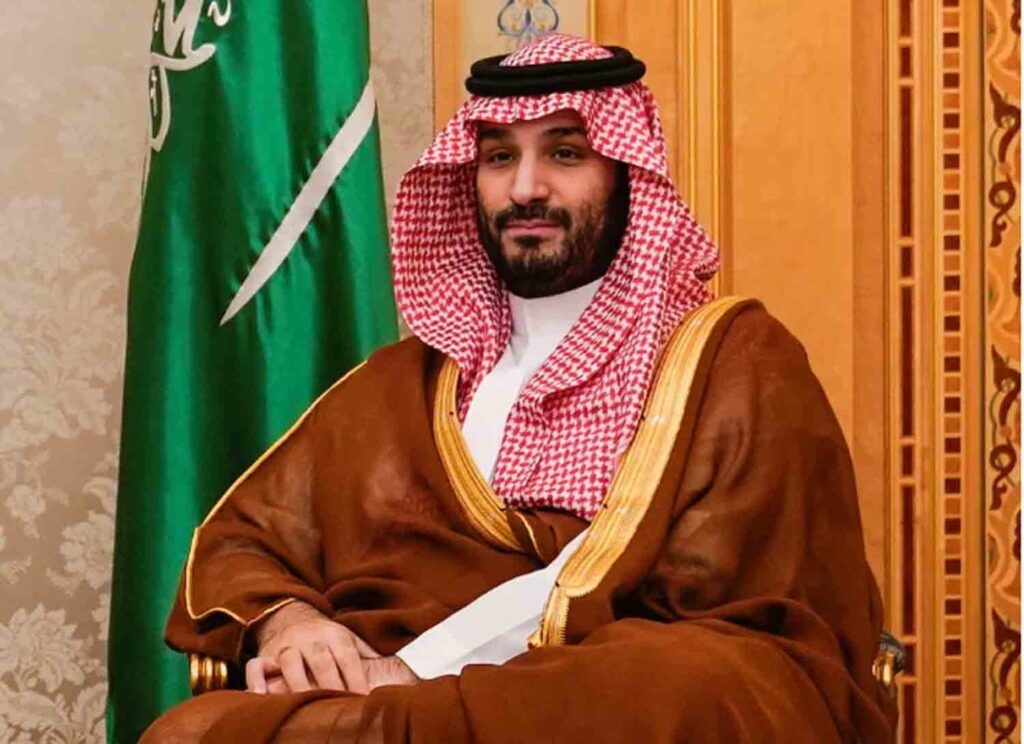
For Riyadh, the immediate priority is protecting its territory, population centers, energy infrastructure and maritime routes.
But every option carries consequences.
Further escalation could increase the military and economic cost without guaranteeing a political settlement. Negotiations could reduce the immediate threat but potentially strengthen the Houthis’ political position. International military assistance could improve Saudi defensive capabilities but could also deepen the regionalization of the Yemen conflict.
The emergence of the Makkah defence framework adds another layer.
Its practical credibility will ultimately depend on how its members translate political commitments into coordinated defensive capabilities, particularly if attacks on Saudi territory continue.
For Pakistan, this creates a delicate strategic balance. Islamabad has reaffirmed support for Saudi Arabia while simultaneously emphasizing diplomacy and the need to prevent a wider regional war.
The Middle East is entering a new phase of strategic pressure
The immediate danger is not necessarily that every regional confrontation will merge into one war.
The greater danger is that several separate conflicts continue escalating at the same time, with each one reinforcing the strategic pressures created by the others.
A missile attack on Saudi Arabia affects the Yemen conflict.
Control of the Yemeni coastline affects Bab al-Mandab.
Bab al-Mandab affects global shipping.
The question of armed groups in Iraq is linked to Iran’s wider regional relationships.
Lebanon’s struggle over Hezbollah’s weapons is connected to the balance between state sovereignty, Israel and regional armed networks.
And the instability around Hormuz adds another layer of pressure to an already fragile economic environment.
The immediate priority for the region is therefore not simply military victory on any single front. It is preventing these separate pressure points from becoming a connected escalation cycle.
For Saudi Arabia, that means finding a way to protect its territory without becoming trapped in an open-ended Yemen war.
For Iraq and Lebanon, it means determining whether state institutions can ultimately regain exclusive authority over weapons and security decisions.
For Pakistan and other regional powers, it means balancing defence commitments with diplomacy.
And for the wider international community, the central concern is increasingly clear: keeping the Middle East’s strategic waterways open while preventing another round of regional escalation from turning local conflicts into a broader international crisis.