

The Trump administration is pressing Ukraine and Russia to take three immediate steps aimed at reducing the intensity of the war and reopening a diplomatic channel: a mutual halt to attacks on energy infrastructure, restoration of the Black Sea grain corridor and a trilateral meeting involving the United States, Russia and Ukraine.
Ukrainian President Volodymyr Zelenskyy disclosed the proposals in an interview with Axios after meeting U.S. President Donald Trump on the sidelines of the United Nations General Assembly in New York. Kyiv, Zelenskyy said, is prepared to accept an energy ceasefire if Russia also stops attacks on Ukraine’s electricity, heating, water and other energy infrastructure.
The initiative comes as Washington attempts to revive diplomacy after months of stalled negotiations, while attacks on energy infrastructure have intensified ahead of another Ukrainian winter.
But there is a major obstacle: Moscow says the conditions for restarting negotiations have not yet been created.
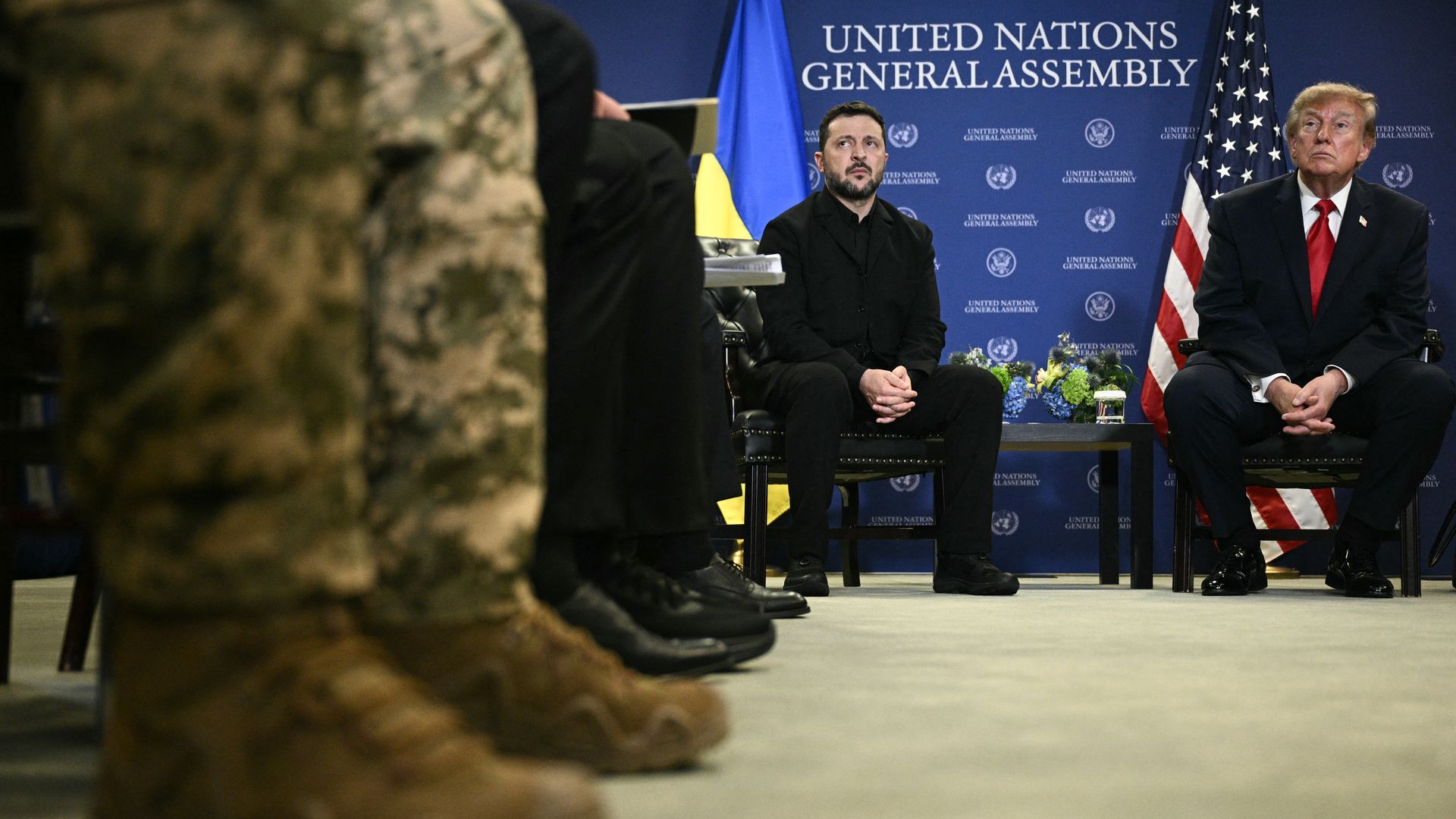
Three Steps at the Center of the U.S. Diplomatic Push
According to Zelenskyy’s account, the Trump administration is currently focusing on three measures:
- A mutual ceasefire covering energy infrastructure
- Reopening the Black Sea grain corridor
- A U.S.-Russia-Ukraine trilateral meeting, potentially in Abu Dhabi
Zelenskyy said Ukraine is open to the proposed format and would accept discussions involving technical teams before a possible leaders’ meeting.
He also suggested that the G20 summit in Miami in December could provide an opportunity for a leader-level meeting.
The proposals are significant because they would address three areas with immediate consequences: military escalation, global food shipments and the broader diplomatic deadlock.
Energy Ceasefire Becomes Washington’s Immediate Priority
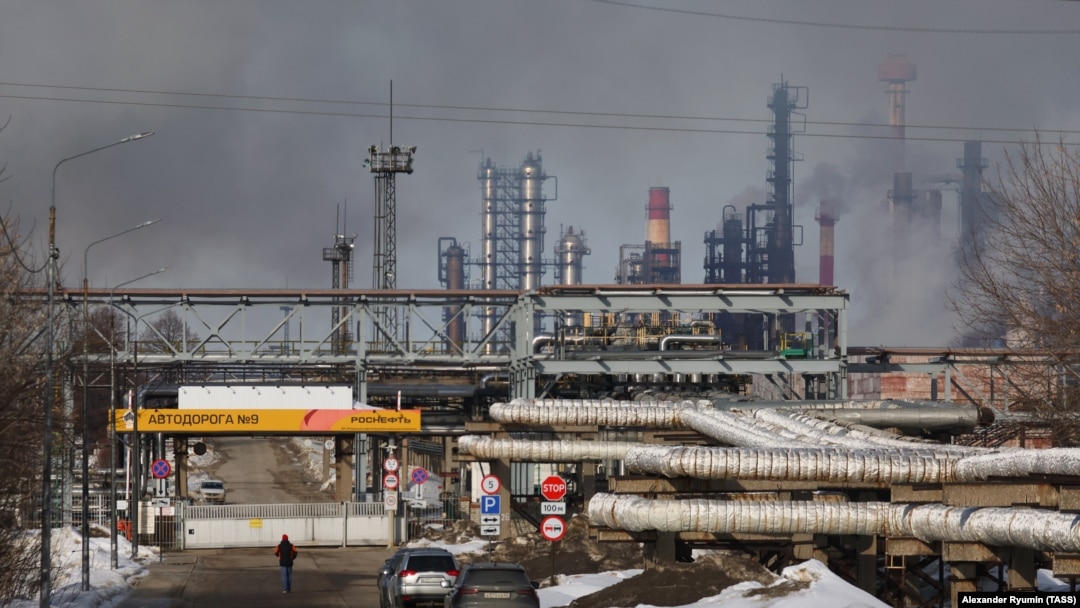
The energy proposal has emerged as the most immediate focus of the Trump administration.
Ukraine has increasingly used long-range drones to attack Russian oil refineries and other energy facilities, while Russia has continued striking Ukrainian power, fuel and infrastructure targets.
Zelenskyy told Axios that Washington proposed a reciprocal arrangement rather than asking Ukraine alone to stop its attacks.
“If they don’t want us to attack their diesel and refineries, we are ready,” Zelenskyy said, provided Russia stops attacking Ukraine’s electricity, heating and water systems. Al Jazeera
That distinction is important.
A unilateral Ukrainian halt to attacks on Russian refineries would reduce pressure on Russia’s fuel industry. A reciprocal energy ceasefire would also constrain Moscow’s ability to target Ukraine’s energy infrastructure as winter approaches.
Why Trump Is Focused on Russian Refineries
Energy has acquired an additional importance for Washington because of the sharp rise in diesel prices.
Ukraine’s expanding campaign against Russian oil infrastructure has disrupted refining capacity, while the wider global energy market has also been affected by the Middle East conflict and disruptions to energy flows.
Reuters reported this month that U.S. diesel prices had reached record levels, with diesel shortages creating wider economic pressure because the fuel is essential to trucking, agriculture, construction and other sectors.
Trump has therefore increasingly linked the Ukraine war to energy prices.
The president has urged Zelenskyy to stop attacks on Russian refineries, arguing that the strikes are contributing to higher diesel prices.
The issue has created a complicated diplomatic equation: Washington wants Russia pressured economically, but it also wants the attacks that are contributing to fuel-market disruption reduced.
Ukraine Has Expanded Its Deep-Strike Campaign

Kyiv’s willingness to discuss an energy ceasefire comes after months of increasingly ambitious attacks against Russia’s energy sector.
Ukrainian drones have struck facilities hundreds and, in some cases, thousands of kilometers inside Russian territory.
A September 20 strike reportedly forced the Moscow oil refinery to halt crude processing. Reuters reported that the refinery processed about 230,000 barrels of crude per day in 2024.
Ukraine has presented the campaign as a way to reduce Russia’s ability to finance and sustain its military operations.
Moscow, meanwhile, has continued attacks against Ukrainian energy and fuel infrastructure.
That creates a potential basis for reciprocal negotiations—but also makes verification one of the most difficult elements of any agreement.
Russia Says Conditions for Talks Are Not Ready
The biggest uncertainty surrounding the American initiative is Moscow’s position.
Kremlin spokesman Dmitry Peskov said on September 23 that there were still no prerequisites for moving onto a peaceful negotiating track, although Russia remained open to talks.
That position contrasts with the optimism expressed by some U.S. officials involved in the diplomatic effort.
The difference matters because an energy ceasefire would require both sides to accept clearly defined restrictions at a time when Russia and Ukraine continue to attack targets deep behind each other’s lines.
The Kremlin has previously shown interest in an energy moratorium while seeking broader measures affecting Russian energy exports and sanctions.
Black Sea Grain Corridor Back on the Diplomatic Agenda

The second major component of the U.S. proposal is the reopening of a Black Sea grain corridor.
The Black Sea remains strategically important not only to Ukraine and Russia but also to global food markets.
Before the current disruptions, the Black Sea was the principal route for much of Russia’s seaborne grain exports. Reuters reported this week that Russian companies have begun adapting terminals in the Baltic and Arctic to compensate for disruptions to Black Sea shipments.
The Ukrainian side has separately sought greater security for its agricultural exports.
A functioning corridor could therefore serve as a limited confidence-building measure even if negotiations over the wider war remain unresolved.
It would also provide Washington with a concrete diplomatic achievement that does not require the two sides to immediately settle their most difficult territorial and security disputes.
Abu Dhabi Could Host Trilateral Talks
The United States has also raised the possibility of a trilateral U.S.-Russia-Ukraine meeting.
Zelenskyy said Abu Dhabi had been discussed as a possible venue, although he indicated Kyiv was open to other locations and formats.
The immediate possibility could be a meeting of technical teams rather than a summit involving Trump, Putin and Zelenskyy.
That approach would allow negotiators to test whether there is enough common ground before committing the leaders to a highly visible meeting.
Zelenskyy nevertheless said he would prefer a leaders-level trilateral format and identified the December G20 summit in Miami as another potential opportunity.
U.S.-Russia Contacts Are Already Underway

The renewed diplomatic effort has involved a series of contacts between American and Russian officials.
According to Zelenskyy’s account, CIA Director John Ratcliffe’s visit to Moscow several weeks ago was followed by trips by U.S. envoys Steve Witkoff and Jared Kushner to Moscow and Kyiv.
Witkoff and Kushner reportedly met Russian President Vladimir Putin in Moscow before traveling to Kyiv for discussions with Zelenskyy.
Zelenskyy recalled that the American envoys were optimistic after their meeting with Putin, telling him they believed Moscow was ready and that the sides were close to progress.
Zelenskyy said he remained more cautious about Putin’s intentions.
That difference in assessment remains one of the central uncertainties surrounding the latest diplomatic initiative.
Rubio-Lavrov Meeting Adds Another Channel
U.S. Secretary of State Marco Rubio and Russian Foreign Minister Sergey Lavrov also met in New York on the sidelines of the UN General Assembly.
The meeting provided another direct channel between Washington and Moscow as the administration attempts to restart negotiations.
Rubio said Trump had invited Putin to the G20 summit, adding another potential venue for high-level engagement. VOI
Whether that invitation develops into a substantive summit depends heavily on whether the technical negotiations can first produce measurable progress.
Winter Adds Urgency to the Energy Question
The timing of the initiative is particularly important.
Ukraine is approaching another winter in which attacks on electricity generation, heating systems and energy distribution could have severe consequences for civilians.
Russia has repeatedly targeted Ukrainian energy infrastructure during the war, while Kyiv’s attacks on Russian refineries and fuel facilities have created a different form of economic pressure on Moscow.
Zelenskyy has also asked Washington for additional Patriot air-defense interceptors to protect Ukraine’s infrastructure.
The United States is facing its own constraints on Patriot stocks because of demand generated by conflicts elsewhere, including the war involving Iran. Zelenskyy has proposed that U.S. interceptors supplied now could be replaced by future German deliveries, while discussions about licensed production in Ukraine continue.
An energy ceasefire would not solve the air-defense problem, but it could reduce some of the immediate pressure on Ukraine’s infrastructure if both sides actually complied.
The Verification Problem
The biggest technical problem would be defining exactly what constitutes an energy target.
Modern energy infrastructure is deeply integrated with military and civilian systems.
Refineries can produce fuel for both civilian transportation and military logistics. Power plants can serve military bases as well as cities. Oil storage facilities can support commercial markets and armed forces simultaneously.
Any agreement would therefore require:
- a precise list of protected facilities;
- clear rules covering drones and missiles;
- agreement on what constitutes a violation;
- rapid investigation mechanisms;
- independent monitoring;
- a procedure for responding to alleged violations.
Without those mechanisms, either side could accuse the other of breaking the agreement and use that allegation to resume attacks.
That concern has particular relevance given the history of temporary ceasefire arrangements during the war.

What Makes the Current Initiative Different?
The current proposal differs from a comprehensive peace settlement because it focuses on limited, measurable steps.
An energy ceasefire does not require Russia and Ukraine to immediately resolve their disputes over territory, security guarantees or the future status of occupied regions.
The grain corridor similarly addresses a specific economic and humanitarian issue.
A technical-level meeting could then establish whether broader negotiations are possible.
That makes the proposal potentially more manageable diplomatically, although its success would still depend on political decisions in Moscow and Kyiv.
A Diplomatic Opening, Not Yet a Peace Deal
The latest U.S. initiative should therefore be viewed as an attempt to create a negotiating pathway rather than evidence that a final settlement is close.
Washington is trying to establish a sequence:
Energy ceasefire → grain corridor → technical negotiations → trilateral meeting → broader peace discussions.
Ukraine has publicly indicated that it is prepared to participate.
Russia’s public position remains considerably more cautious. The Kremlin says there are currently no conditions for restarting a full peace process, even while maintaining that it remains open to negotiations.
The immediate test will therefore be whether Moscow accepts a reciprocal energy arrangement and whether the two sides can establish rules that survive the first serious dispute over an alleged violation.
For Trump, the issue also carries an economic dimension because the Ukraine conflict is now interacting with global fuel markets.
For Ukraine, the calculation is heavily tied to the coming winter and protection of its energy system.
For Russia, an agreement would mean limiting a Ukrainian campaign that has increasingly targeted its oil infrastructure while potentially reducing the pressure of Russian attacks on Ukraine.
That combination explains both the potential value of the proposal—and why reaching an agreement remains difficult.